   Many fabric printing methods are derived from
    technologies that were originally designed for use
    on other materials.

   This results in the application of inks to the
    surface of a shirt or piece of clothing where it can
    be easily peeled away or affected by weather.
   Screen printing uses pressure from a squeegee or
    other mechanical device to force the ink into the
    fibers where it is absorbed and integrated into the
    fabric.

   This creates printed products that have very
    durable graphics. The graphics will not wash away
    or respond to physical contact. Items printed in
    this way will last for years.
   One of the advantages of printing with screens is
    that a single image can be scaled upwards or
    downwards as needed.

   This means that a business logo or other graphic
    can be scaled to cover the entire front of a shirt or
    just a small area over a pocket.
   Photosensitive masks make it possible to
    generate these types of screens quickly. This is
    not always possible with some other applications
    that require separate graphic files in order to
    change image sizes.

   This saves businesses money and time creating
    multiple designs for different formats.
   Screen printing is a method
    that can accommodate a
    wide range of different
    materials. This means
    printers can produce tshirts,
    promotional banners, hats
    and even posters all from
    the same screens.
   Additionally, the quality of each product will
    remain consistent despite the underlying ground.
    This gives businesses the opportunity to produce
    a range of branded products for customers,
    storefronts or the office.
   A disadvantage of the printing process is that the
    ink must be pushed through the screens. This
    means that it is difficult to mix colors in an
    accurate and painterly way in order to simulate
    smooth gradients and other effects.

   This is why most items printed in this way are
    made from a combination of different color zones
    with no intermediary mixing.
   Screen printing is a process that requires fewer
    initial steps than most other techniques.

   The printing, however, is a multistep process that
    involves placing different screens over a shirt in
    perfect alignment in order to create the final
    graphic.
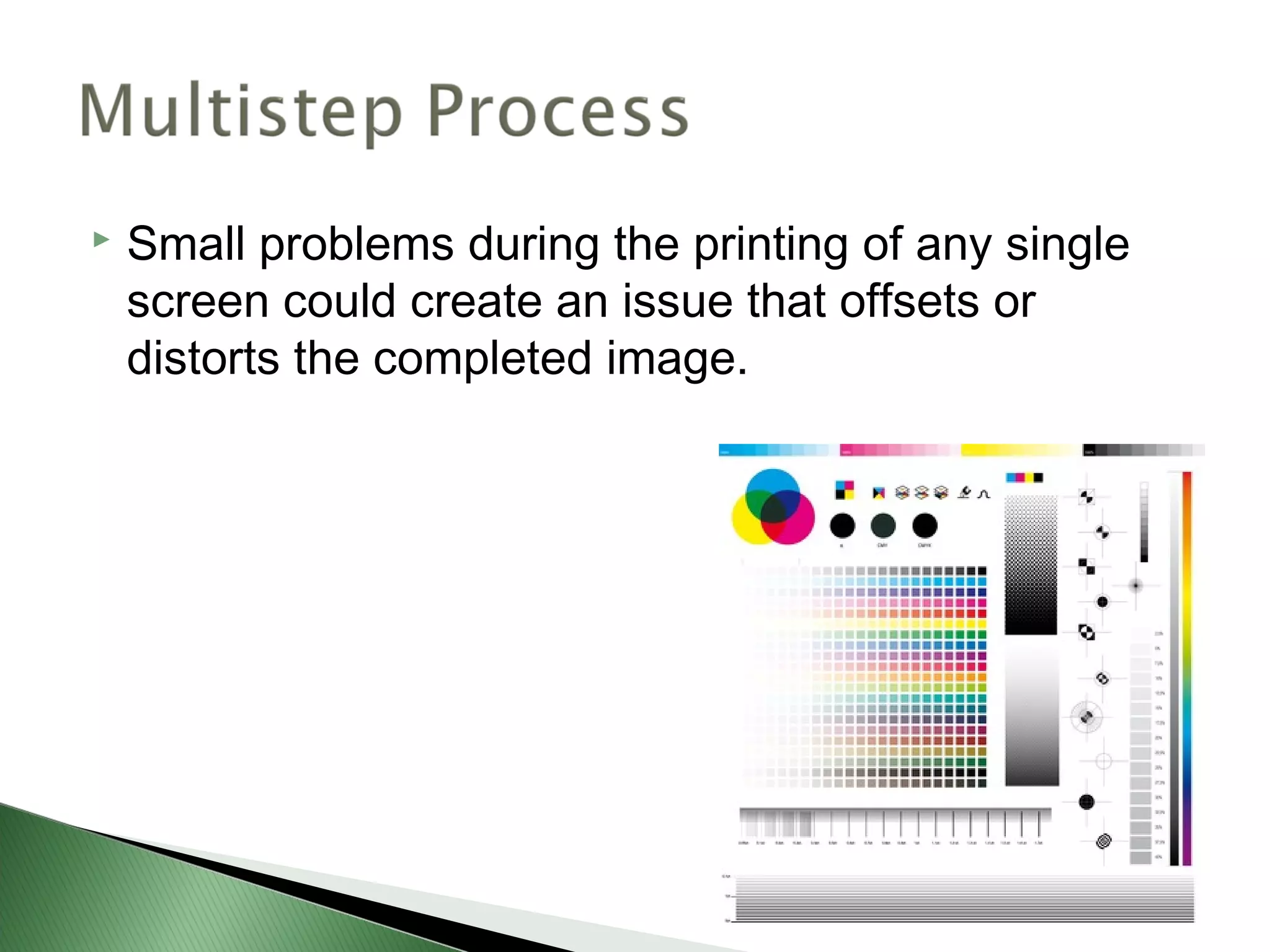
   Small problems during the printing of any single
    screen could create an issue that offsets or
    distorts the completed image.
   The limitations of screens as well as the
    techniques used to apply the ink to the fabric
    make it difficult to create small intricate details.
   The exact limitations vary depending on the
    printer and the equipment. Attempting to print
    designs with small details can sometimes result in
    technical problems, bleeding and poor quality
    results.

   New techniques and screen materials are slowly
    removing this restriction.

Advantages & disadvantages of screen printing

  • 2.
    Many fabric printing methods are derived from technologies that were originally designed for use on other materials.  This results in the application of inks to the surface of a shirt or piece of clothing where it can be easily peeled away or affected by weather.
  • 3.
    Screen printing uses pressure from a squeegee or other mechanical device to force the ink into the fibers where it is absorbed and integrated into the fabric.  This creates printed products that have very durable graphics. The graphics will not wash away or respond to physical contact. Items printed in this way will last for years.
  • 4.
    One of the advantages of printing with screens is that a single image can be scaled upwards or downwards as needed.  This means that a business logo or other graphic can be scaled to cover the entire front of a shirt or just a small area over a pocket.
  • 5.
    Photosensitive masks make it possible to generate these types of screens quickly. This is not always possible with some other applications that require separate graphic files in order to change image sizes.  This saves businesses money and time creating multiple designs for different formats.
  • 6.
    Screen printing is a method that can accommodate a wide range of different materials. This means printers can produce tshirts, promotional banners, hats and even posters all from the same screens.
  • 7.
    Additionally, the quality of each product will remain consistent despite the underlying ground. This gives businesses the opportunity to produce a range of branded products for customers, storefronts or the office.
  • 8.
    A disadvantage of the printing process is that the ink must be pushed through the screens. This means that it is difficult to mix colors in an accurate and painterly way in order to simulate smooth gradients and other effects.  This is why most items printed in this way are made from a combination of different color zones with no intermediary mixing.
  • 9.
    Screen printing is a process that requires fewer initial steps than most other techniques.  The printing, however, is a multistep process that involves placing different screens over a shirt in perfect alignment in order to create the final graphic.
  • 10.
    Small problems during the printing of any single screen could create an issue that offsets or distorts the completed image.
  • 11.
    The limitations of screens as well as the techniques used to apply the ink to the fabric make it difficult to create small intricate details.
  • 12.
    The exact limitations vary depending on the printer and the equipment. Attempting to print designs with small details can sometimes result in technical problems, bleeding and poor quality results.  New techniques and screen materials are slowly removing this restriction.