WELCOME
COMMUNICATION 1.  Meaning of communication 2. Nature of communication   A) A pervasive function   B) A continuous process   C) Create mutual understanding and  cooperative human relationships.   D) Two way process
PROCESS OF COMMUNCATION 1. SENDER 2. MESSAGE 3. ENCODING 4. CHANNEL 5. RECEIVER 6. DECODING 7. FEEDBACK
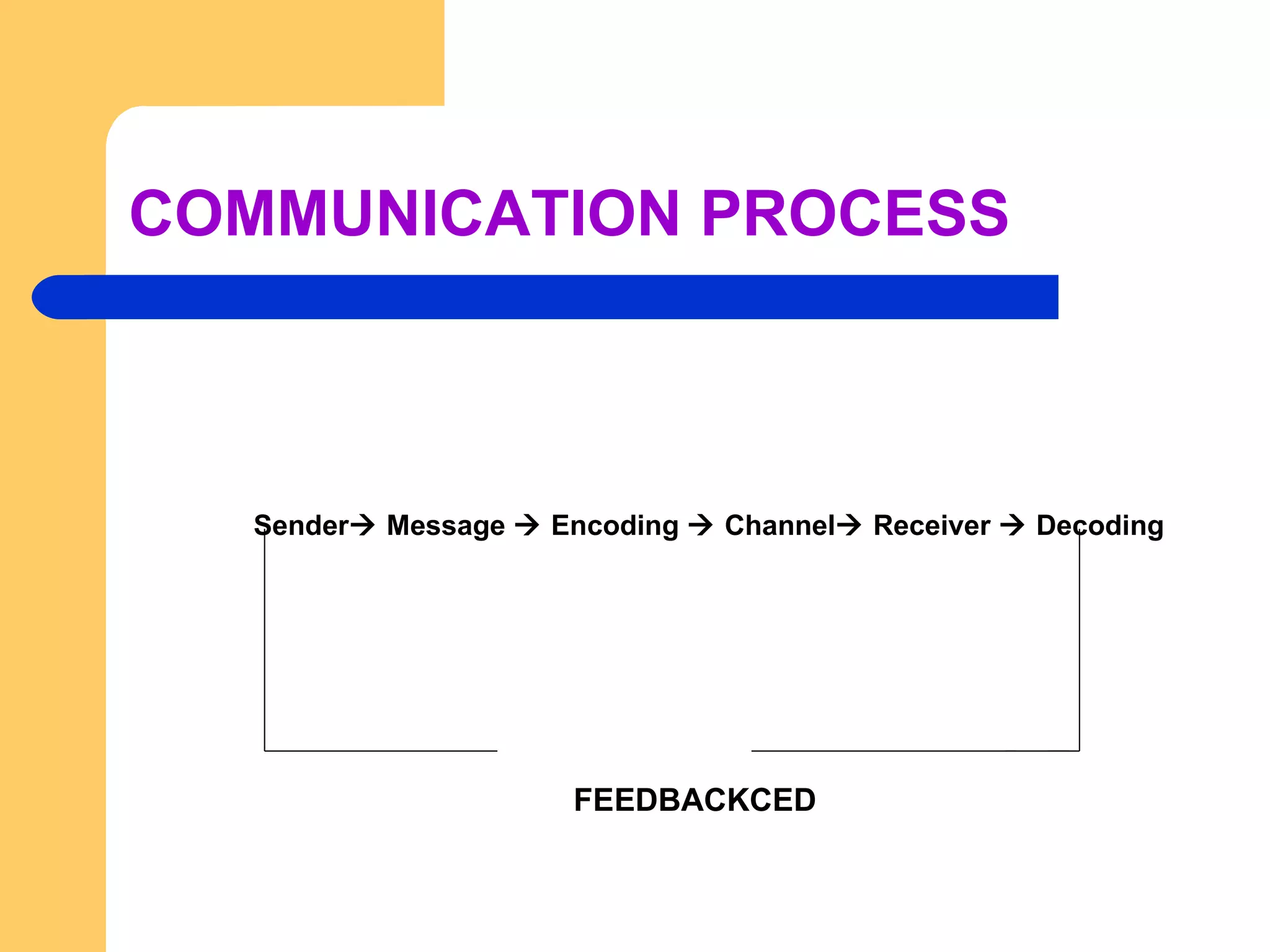
COMMUNICATION PROCESS   Sender   Message    Encoding    Channel   Receiver    Decoding   FEEDBACKCED
ROLE & SIGNIFICANCE OF COMMUNICATION Planning and Decision-making Implementation of Plans Motivation and Morale Human relations Training and Development Coordination Public Relations
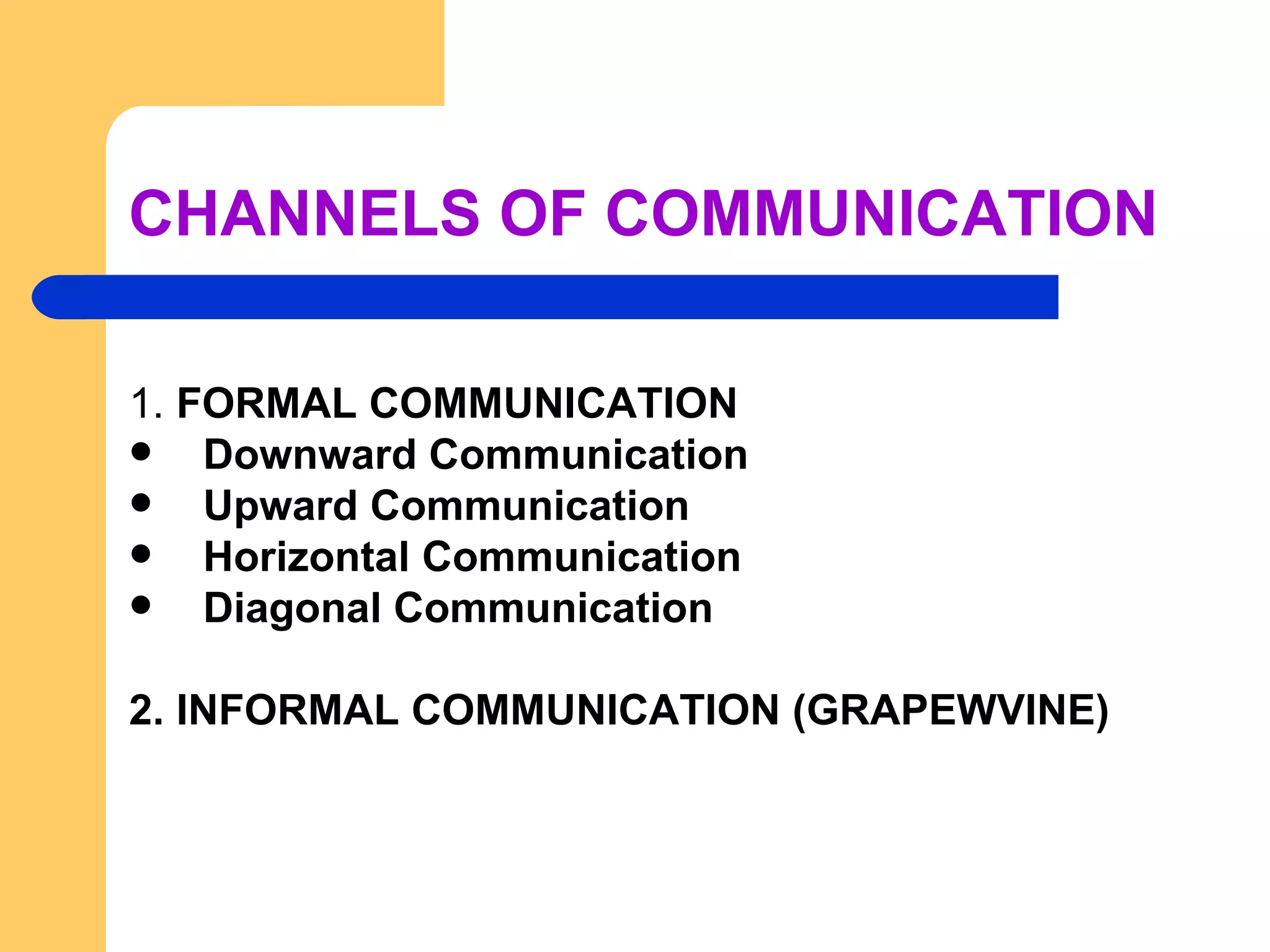
CHANNELS OF COMMUNICATION 1.  FORMAL COMMUNICATION Downward Communication Upward Communication Horizontal Communication Diagonal Communication  2. INFORMAL COMMUNICATION (GRAPEWVINE)
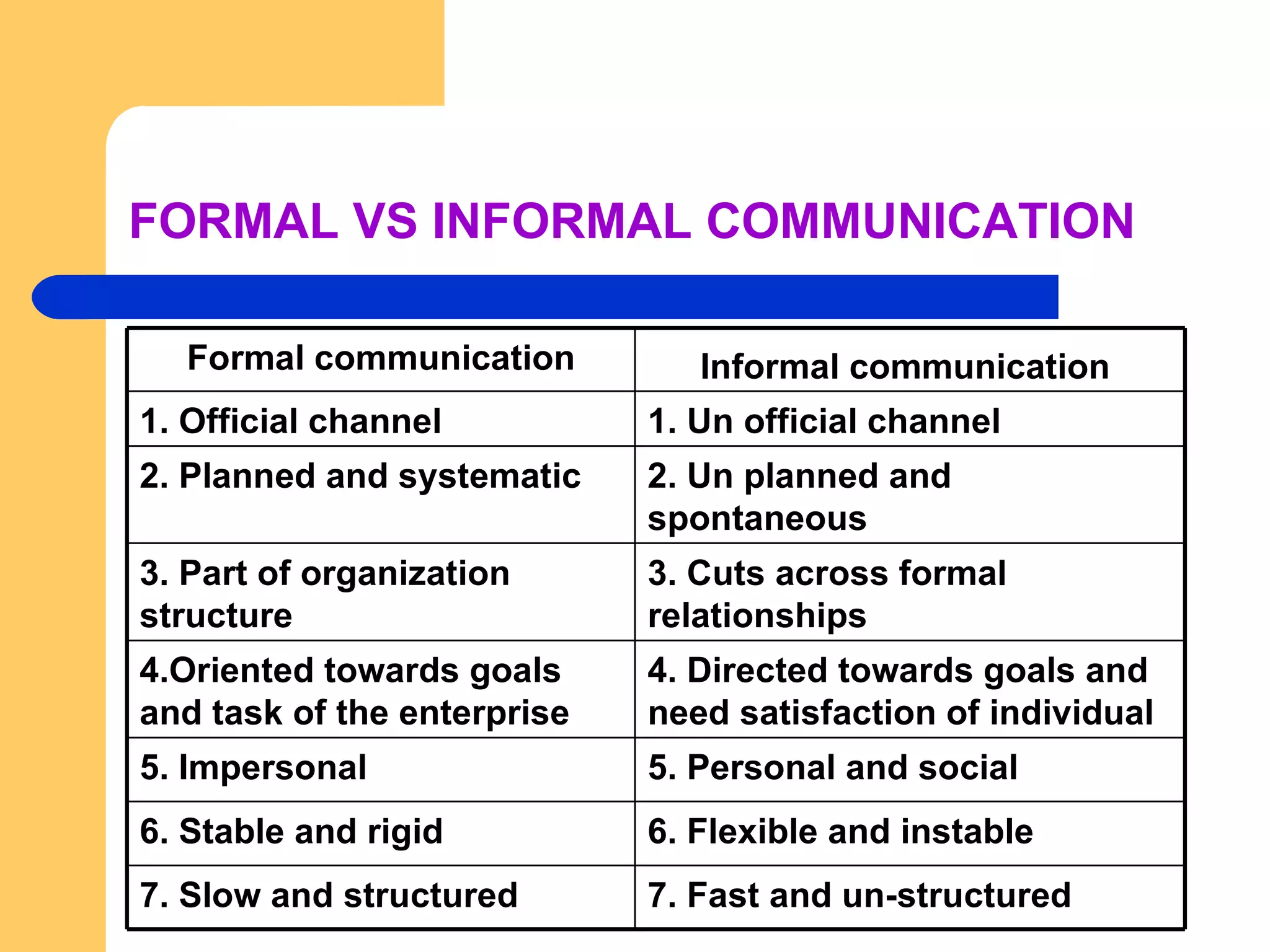
FORMAL VS INFORMAL COMMUNICATION 7. Fast and un-structured   7. Slow and structured   6. Flexible and instable   6. Stable and rigid   5. Personal and social   5. Impersonal   4. Directed towards goals and need satisfaction of individual 4.Oriented towards goals and task of the enterprise   3. Cuts across formal relationships   3. Part of organization structure   2. Un planned and  spontaneous   2. Planned and systematic 1. Un official channel 1. Official channel Informal communication   Formal communication
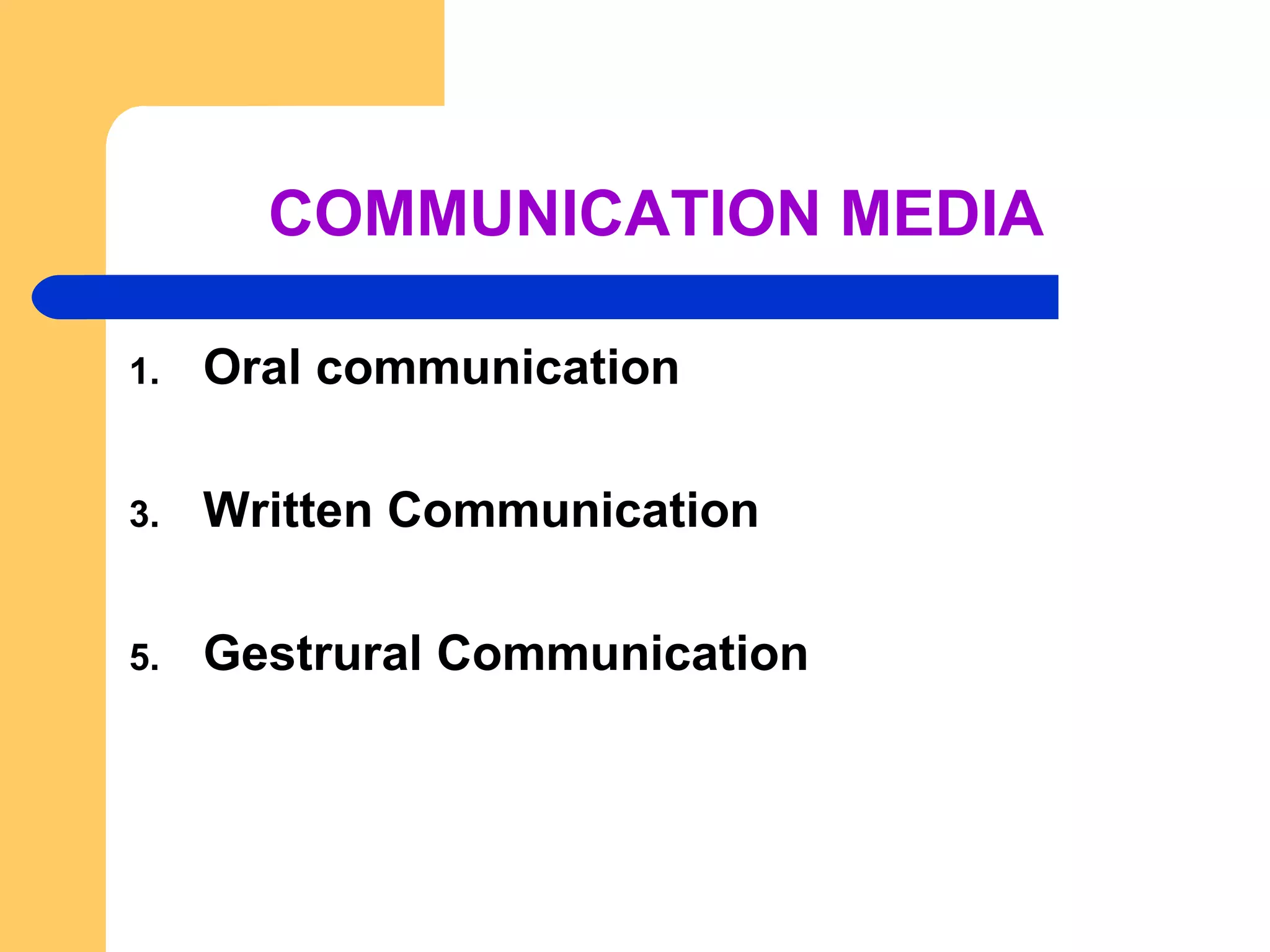
COMMUNICATION MEDIA Oral communication Written Communication Gestrural Communication
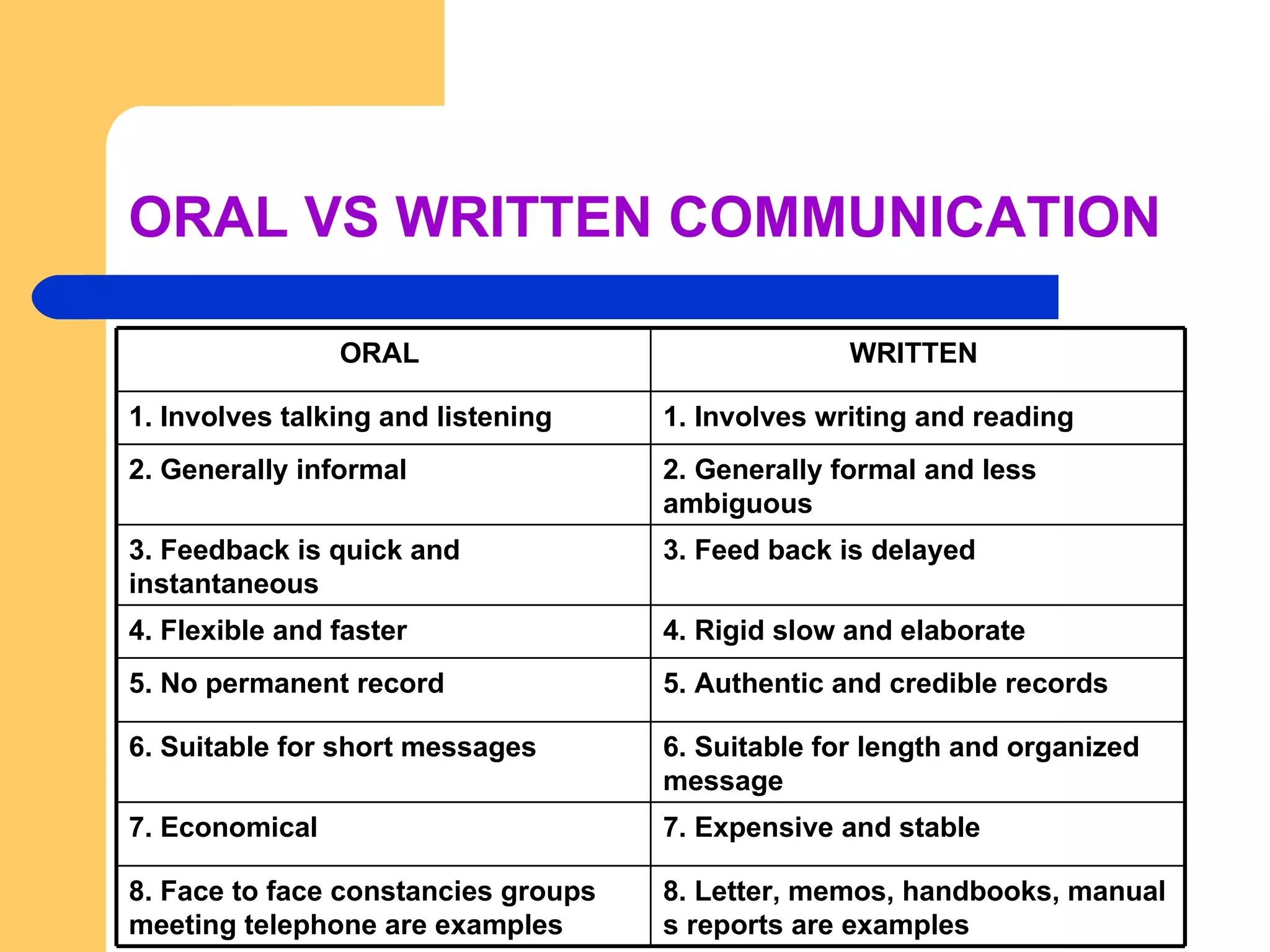
ORAL VS WRITTEN COMMUNICATION 8. Letter, memos, handbooks, manual s reports are examples 8. Face to face constancies groups meeting telephone are examples 7. Expensive and stable 7. Economical 6. Suitable for length and organized message 6. Suitable for short messages 5. Authentic and credible records 5. No permanent record 4. Rigid slow and elaborate 4. Flexible and faster 3. Feed back is delayed  3. Feedback is quick and instantaneous 2. Generally formal and less ambiguous 2. Generally informal 1. Involves writing and reading 1. Involves talking and listening WRITTEN  ORAL
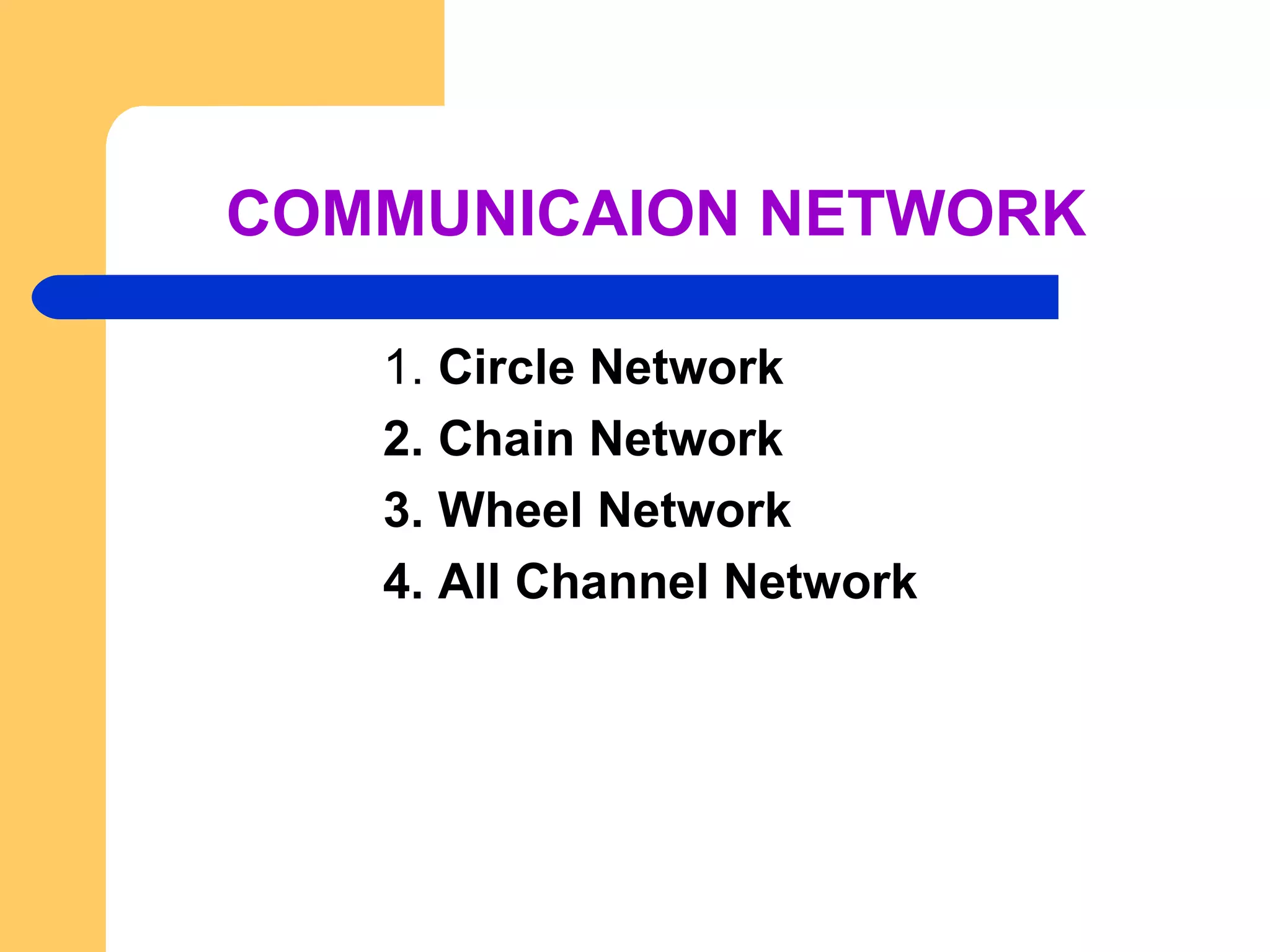
COMMUNICAION NETWORK 1.  Circle Network 2. Chain Network 3. Wheel Network 4. All Channel Network
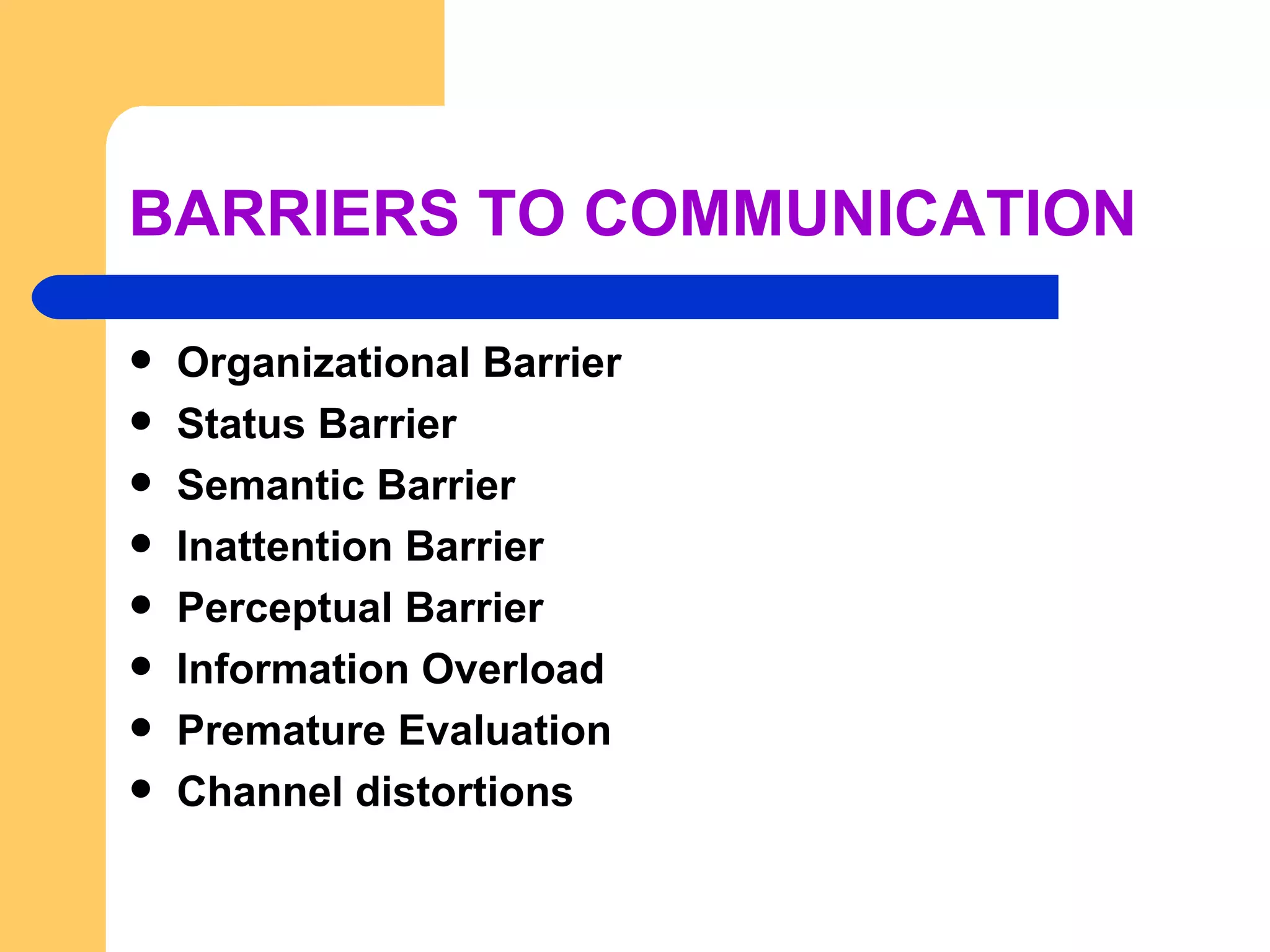
BARRIERS TO COMMUNICATION Organizational Barrier Status Barrier Semantic Barrier Inattention Barrier Perceptual Barrier Information Overload Premature Evaluation Channel distortions
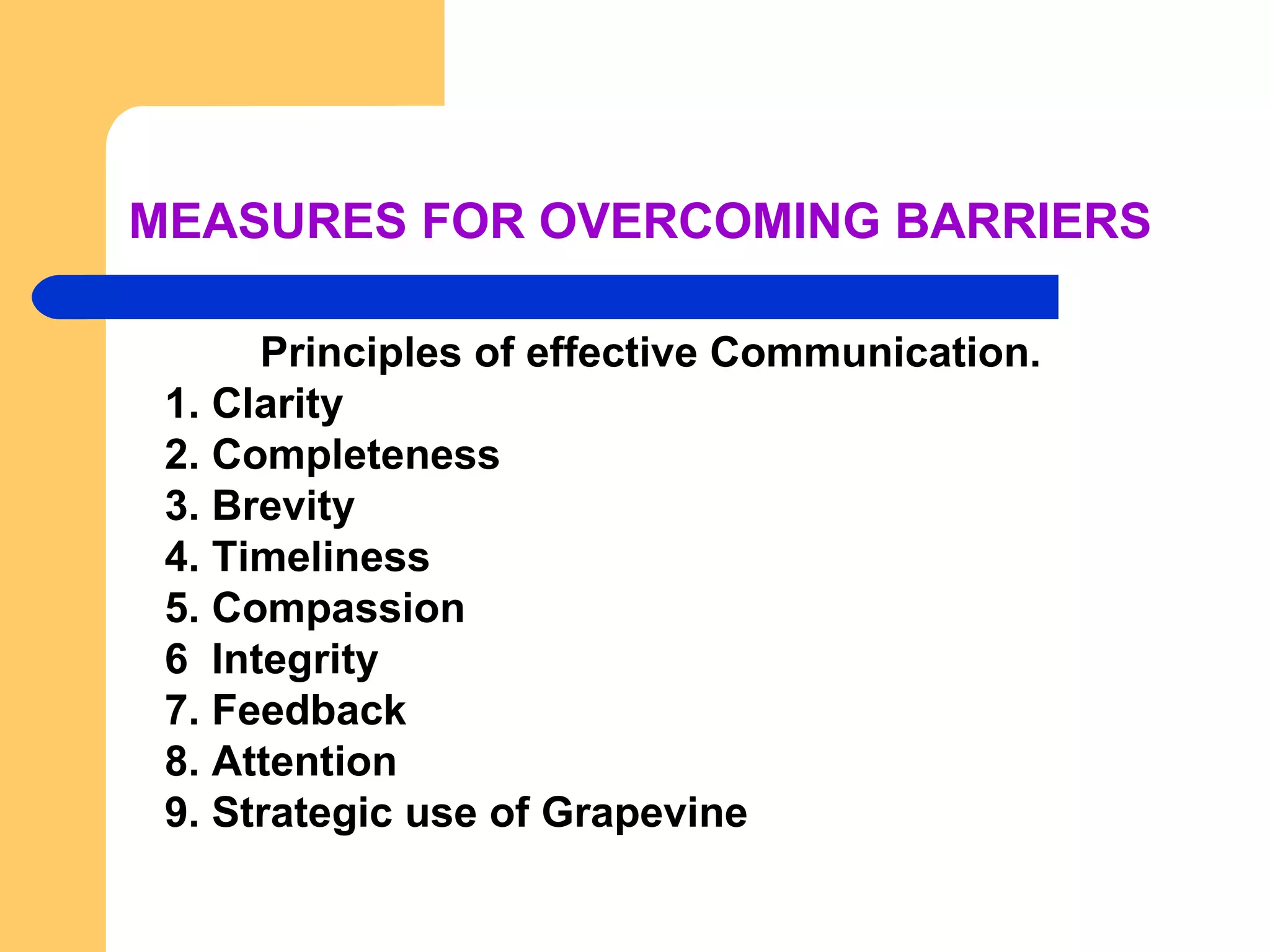
MEASURES FOR OVERCOMING BARRIERS Principles of effective Communication. 1. Clarity 2. Completeness 3. Brevity 4. Timeliness 5. Compassion 6  Integrity 7. Feedback 8. Attention 9. Strategic use of Grapevine
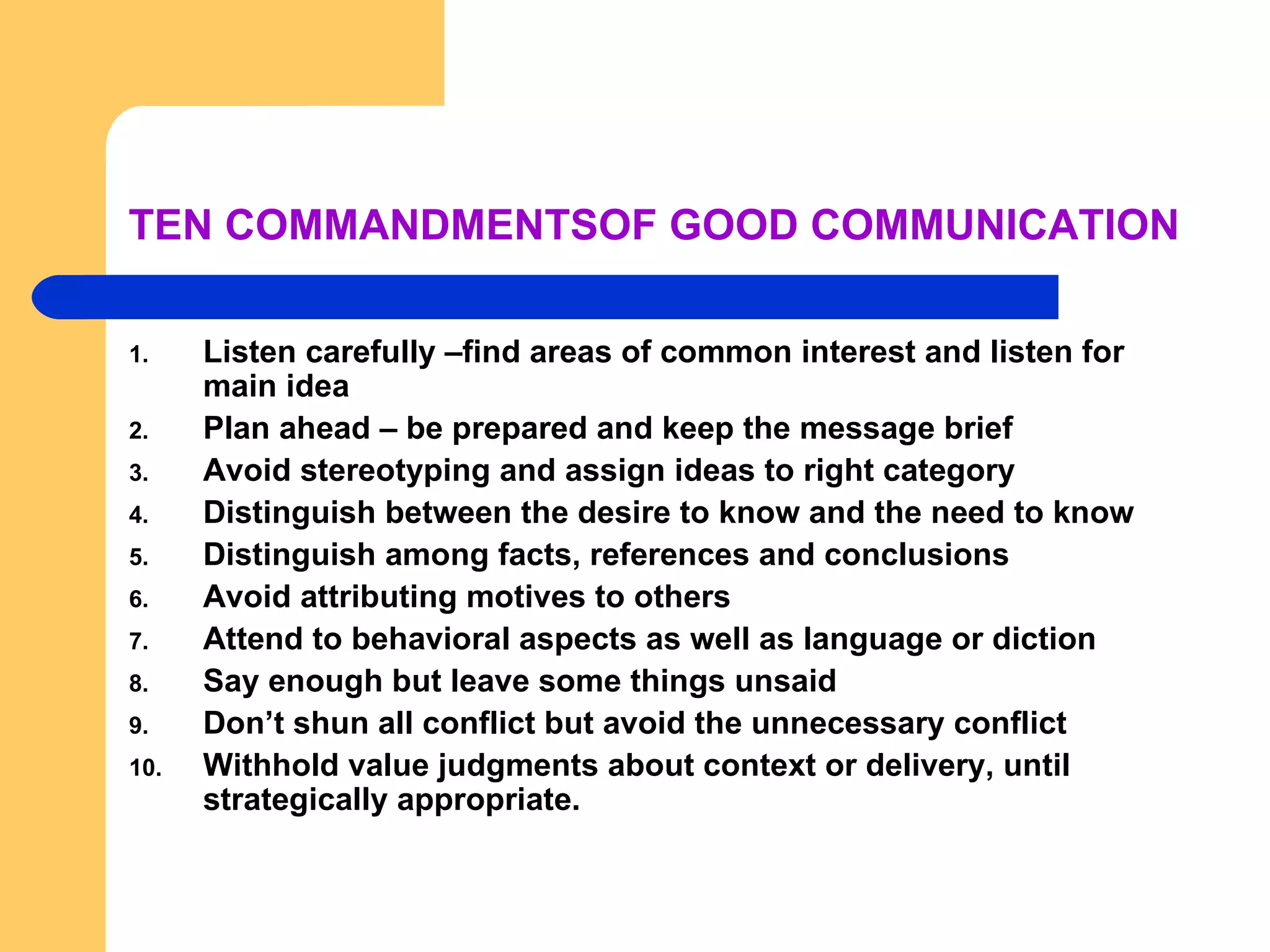
TEN COMMANDMENTSOF GOOD COMMUNICATION Listen carefully –find areas of common interest and listen for main idea Plan ahead – be prepared and keep the message brief Avoid stereotyping and assign ideas to right category Distinguish between the desire to know and the need to know Distinguish among facts, references and conclusions Avoid attributing motives to others Attend to behavioral aspects as well as language or diction Say enough but leave some things unsaid Don’t shun all conflict but avoid the unnecessary conflict Withhold value judgments about context or delivery, until strategically appropriate.
MANAGEMENT INFORMATION SYSTEM Define and describe the informational needs Identify the problems and constraints and pitfalls Define sources of information Design alternative blueprints of MIS Select the MIS pattern that best suits
INTERACTION SESSION
THANK YOU

Communication

  • 1.
  • 2.
    COMMUNICATION 1. Meaning of communication 2. Nature of communication A) A pervasive function B) A continuous process C) Create mutual understanding and cooperative human relationships. D) Two way process
  • 3.
    PROCESS OF COMMUNCATION1. SENDER 2. MESSAGE 3. ENCODING 4. CHANNEL 5. RECEIVER 6. DECODING 7. FEEDBACK
  • 4.
    COMMUNICATION PROCESS Sender  Message  Encoding  Channel  Receiver  Decoding FEEDBACKCED
  • 5.
    ROLE & SIGNIFICANCEOF COMMUNICATION Planning and Decision-making Implementation of Plans Motivation and Morale Human relations Training and Development Coordination Public Relations
  • 6.
    CHANNELS OF COMMUNICATION1. FORMAL COMMUNICATION Downward Communication Upward Communication Horizontal Communication Diagonal Communication 2. INFORMAL COMMUNICATION (GRAPEWVINE)
  • 7.
    FORMAL VS INFORMALCOMMUNICATION 7. Fast and un-structured 7. Slow and structured 6. Flexible and instable 6. Stable and rigid 5. Personal and social 5. Impersonal 4. Directed towards goals and need satisfaction of individual 4.Oriented towards goals and task of the enterprise 3. Cuts across formal relationships 3. Part of organization structure 2. Un planned and spontaneous 2. Planned and systematic 1. Un official channel 1. Official channel Informal communication Formal communication
  • 8.
    COMMUNICATION MEDIA Oralcommunication Written Communication Gestrural Communication
  • 9.
    ORAL VS WRITTENCOMMUNICATION 8. Letter, memos, handbooks, manual s reports are examples 8. Face to face constancies groups meeting telephone are examples 7. Expensive and stable 7. Economical 6. Suitable for length and organized message 6. Suitable for short messages 5. Authentic and credible records 5. No permanent record 4. Rigid slow and elaborate 4. Flexible and faster 3. Feed back is delayed 3. Feedback is quick and instantaneous 2. Generally formal and less ambiguous 2. Generally informal 1. Involves writing and reading 1. Involves talking and listening WRITTEN ORAL
  • 10.
    COMMUNICAION NETWORK 1. Circle Network 2. Chain Network 3. Wheel Network 4. All Channel Network
  • 11.
    BARRIERS TO COMMUNICATIONOrganizational Barrier Status Barrier Semantic Barrier Inattention Barrier Perceptual Barrier Information Overload Premature Evaluation Channel distortions
  • 12.
    MEASURES FOR OVERCOMINGBARRIERS Principles of effective Communication. 1. Clarity 2. Completeness 3. Brevity 4. Timeliness 5. Compassion 6 Integrity 7. Feedback 8. Attention 9. Strategic use of Grapevine
  • 13.
    TEN COMMANDMENTSOF GOODCOMMUNICATION Listen carefully –find areas of common interest and listen for main idea Plan ahead – be prepared and keep the message brief Avoid stereotyping and assign ideas to right category Distinguish between the desire to know and the need to know Distinguish among facts, references and conclusions Avoid attributing motives to others Attend to behavioral aspects as well as language or diction Say enough but leave some things unsaid Don’t shun all conflict but avoid the unnecessary conflict Withhold value judgments about context or delivery, until strategically appropriate.
  • 14.
    MANAGEMENT INFORMATION SYSTEMDefine and describe the informational needs Identify the problems and constraints and pitfalls Define sources of information Design alternative blueprints of MIS Select the MIS pattern that best suits
  • 15.
  • 16.