How Does a
CPAP Machine
Work?
   A restful sleep is one of the things that can really make a
    difference in the overall state of your health. There are
    many different reasons that a person may have interrupted
    sleep, and obstructive sleep apnea is one of the most
    disruptive.

   Obstructive sleep apnea is caused by the obstruction of
    your upper airway, which results in regular and sometimes
    frequent pauses in breathing while you sleep. Naturally,
    when you stop breathing, you wake up and your restful
    sleep is no more.
 
   One way that many obstructive sleep apnea patients are
    able to combat the problem is with a CPAP machine.
What Is CPAP?
 CPAP  stands for ‘Continuous Positive
 Airway Pressure’. The CPAP machine that
 you use to help get that restful sleep
 generally consists of the actual unit, plus a
 mask that covers your mouth and nose, or
 a smaller mask that only covers your nose.
  There are also two prongs that are
 positioned in your nose. Most patients use
 the nose-only kind of mask.
   The chinstrap helps keep the mouth closed so
    the bulk of breathing is done through the
    nose. Once the machine is turned on, a
    continuous flow of air flows through the tube
    and into the airway. The pressure that this
    airflow creates prevents the airway from
    collapsing and keeps the patient breathing
    freely all night.

   Sometimes it takes a while to get used to the
    machine and the mask, so if it isn’t working
    talk to your doctor. You may just need to try
    a different type of mask, or have some simple
    adjustments made with the mask you’re
    using.
How the CPAP Machine Works
   The purpose of a CPAP machine is
    to keep the airways open as you
    sleep, preventing any breathing
    disturbances and allowing you and
    your sleeping partner to get a
    proper sleep. Using the machine
    also reduces snoring, which is an
    added benefit to anyone sleeping
    with an obstructive sleep apnea
    sufferer.

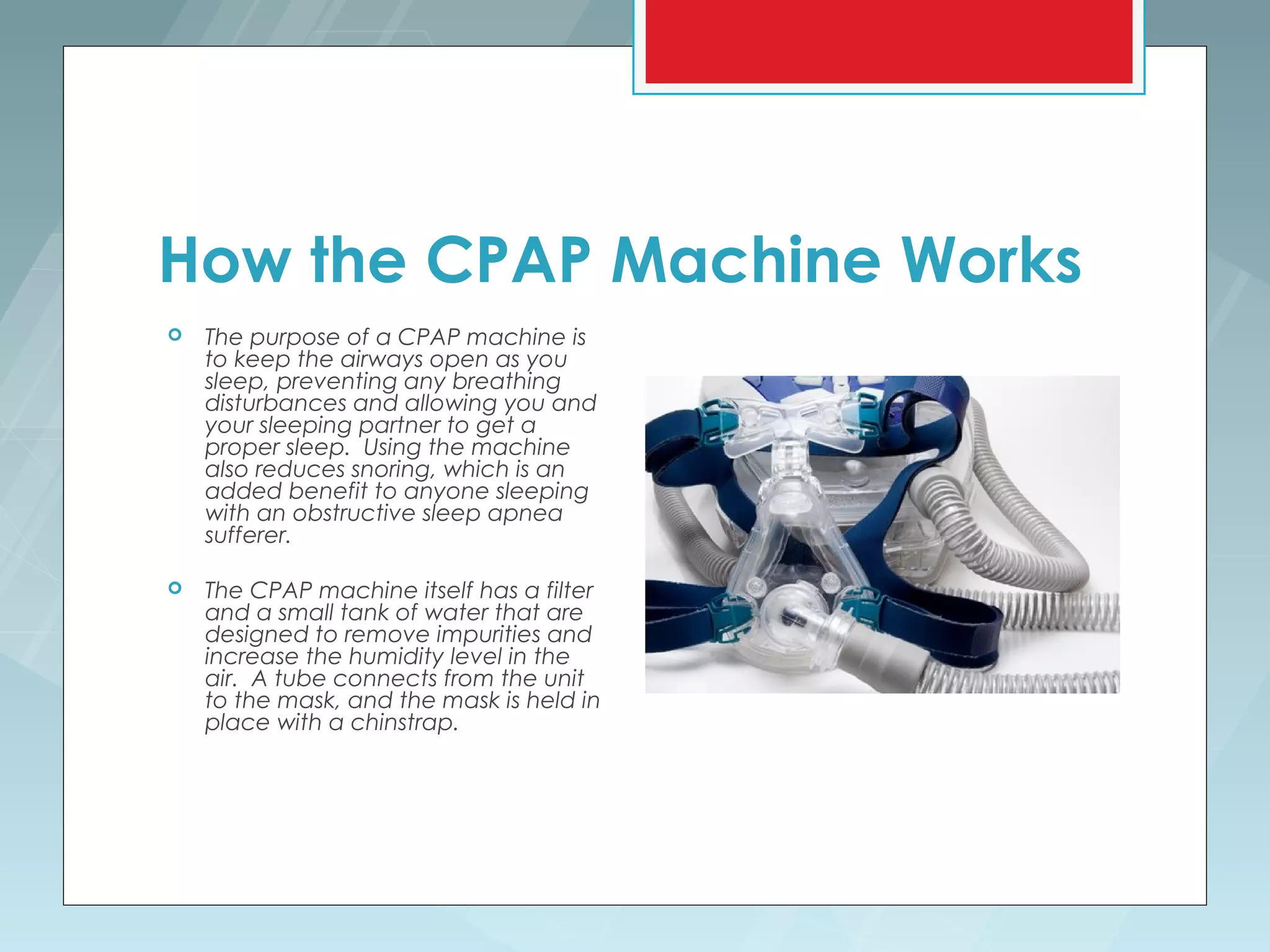
   The CPAP machine itself has a filter
    and a small tank of water that are
    designed to remove impurities and
    increase the humidity level in the
    air. A tube connects from the unit
    to the mask, and the mask is held in
    place with a chinstrap.
Benefits of a CPAP Machine
   There are many benefits to getting a more
    restful sleep, and for people with obstructive
    sleep apnea, the CPAP machine helps to
    provide them. Some of the common benefits
    include:

       Less daytime sleepiness or drowsiness
       Non-surgical method to correct the problem
       Better blood circulation
   Less likelihood of cardiovascular disease
       More overall energy
       Stronger immune system
       Better mood and ability to concentrate

   Over time, the negative effects of not getting
    enough sleep continue to grow, until you are
    faced with a health issue that could have
    been prevented. If there is an underlying
    issue causing your obstructive sleep apnea
    such as obesity, your doctor will help you work
    on it. However, using the CPAP machine is an
    effective solution to help reverse your
    sleeping issues in the meantime.
Some Common Problems
   Just as there are benefits to using a CPAP machine,
    there are also some common problems that patients
    notice when they first start using the machine.

       Difficulty wearing the mask – it’s perfectly normal to
        have some trouble wearing something on your face
        while you’re trying to fall asleep. If you’re having
        trouble, start slowly and try to wear the mask for short
        periods of time while you are awake. Once you get
        used to that, attach the hose and then when you’re
        used to that flip on the air pressure. After you get used
        to have it on, falling asleep should be much easier.
   Difficulty taking in forced air – having air forced into
    your airways is a feeling that many people are too
    fond of, either. Luckily, many machines have a
    feature that enables you to start off with a lower air
    pressure. Then, the pressure gradually builds
    automatically until it is up to the pressure you need it
    to be. Your doctor can help with this feature if you
    need it.

   Dry or stuffed up nose – if you find that the forced air
    is causing your nasal passages to dry up or become
    stuffy, you have a couple of different options. You
    can adjust the humidity level on your machine to get
    more moisture in the air, or you can try a nasal saline
    spray to keep your nasal passages moist. Also, check
    to make sure your mask fits well and isn’t leaking.
 Removing    the mask while you sleep - if
 you find that you are waking up n the
 morning with the mask off your face, you
 may need to switch to a different mask.
 It’s also a good idea to check the
 humidity level in case you’re removing the
 mask in response to dryness in your nose
 or mouth. If your mask doesn’t include a
 chinstrap, you might want to try one.

How Does a CPAP Machine Work?

  • 1.
    How Does a CPAPMachine Work?
  • 2.
    A restful sleep is one of the things that can really make a difference in the overall state of your health. There are many different reasons that a person may have interrupted sleep, and obstructive sleep apnea is one of the most disruptive.  Obstructive sleep apnea is caused by the obstruction of your upper airway, which results in regular and sometimes frequent pauses in breathing while you sleep. Naturally, when you stop breathing, you wake up and your restful sleep is no more.    One way that many obstructive sleep apnea patients are able to combat the problem is with a CPAP machine.
  • 3.
    What Is CPAP? CPAP stands for ‘Continuous Positive Airway Pressure’. The CPAP machine that you use to help get that restful sleep generally consists of the actual unit, plus a mask that covers your mouth and nose, or a smaller mask that only covers your nose. There are also two prongs that are positioned in your nose. Most patients use the nose-only kind of mask.
  • 4.
    The chinstrap helps keep the mouth closed so the bulk of breathing is done through the nose. Once the machine is turned on, a continuous flow of air flows through the tube and into the airway. The pressure that this airflow creates prevents the airway from collapsing and keeps the patient breathing freely all night.  Sometimes it takes a while to get used to the machine and the mask, so if it isn’t working talk to your doctor. You may just need to try a different type of mask, or have some simple adjustments made with the mask you’re using.
  • 5.
    How the CPAPMachine Works  The purpose of a CPAP machine is to keep the airways open as you sleep, preventing any breathing disturbances and allowing you and your sleeping partner to get a proper sleep. Using the machine also reduces snoring, which is an added benefit to anyone sleeping with an obstructive sleep apnea sufferer.  The CPAP machine itself has a filter and a small tank of water that are designed to remove impurities and increase the humidity level in the air. A tube connects from the unit to the mask, and the mask is held in place with a chinstrap.
  • 6.
    Benefits of aCPAP Machine  There are many benefits to getting a more restful sleep, and for people with obstructive sleep apnea, the CPAP machine helps to provide them. Some of the common benefits include:  Less daytime sleepiness or drowsiness  Non-surgical method to correct the problem  Better blood circulation
  • 7.
    Less likelihood of cardiovascular disease  More overall energy  Stronger immune system  Better mood and ability to concentrate  Over time, the negative effects of not getting enough sleep continue to grow, until you are faced with a health issue that could have been prevented. If there is an underlying issue causing your obstructive sleep apnea such as obesity, your doctor will help you work on it. However, using the CPAP machine is an effective solution to help reverse your sleeping issues in the meantime.
  • 8.
    Some Common Problems  Just as there are benefits to using a CPAP machine, there are also some common problems that patients notice when they first start using the machine.  Difficulty wearing the mask – it’s perfectly normal to have some trouble wearing something on your face while you’re trying to fall asleep. If you’re having trouble, start slowly and try to wear the mask for short periods of time while you are awake. Once you get used to that, attach the hose and then when you’re used to that flip on the air pressure. After you get used to have it on, falling asleep should be much easier.
  • 9.
    Difficulty taking in forced air – having air forced into your airways is a feeling that many people are too fond of, either. Luckily, many machines have a feature that enables you to start off with a lower air pressure. Then, the pressure gradually builds automatically until it is up to the pressure you need it to be. Your doctor can help with this feature if you need it.  Dry or stuffed up nose – if you find that the forced air is causing your nasal passages to dry up or become stuffy, you have a couple of different options. You can adjust the humidity level on your machine to get more moisture in the air, or you can try a nasal saline spray to keep your nasal passages moist. Also, check to make sure your mask fits well and isn’t leaking.
  • 10.
     Removing the mask while you sleep - if you find that you are waking up n the morning with the mask off your face, you may need to switch to a different mask. It’s also a good idea to check the humidity level in case you’re removing the mask in response to dryness in your nose or mouth. If your mask doesn’t include a chinstrap, you might want to try one.