DBMS Emraan Ahmad Reg no. 520789486 Bsc-it 6 th  Sem Sikkim manipal university
Content Objectives Introduction of DBMS Component of Dbms environment Features of Dbms Roles in the Database environment History of Database system Functions of Dbms Advantages of Dbms Disadvantages of Dbms
Introduction Collection of interrelated data. Set of programs to access data. Database Applications : Banking: all transactions  Airlines: reservations, schedules Universities:  registration, grades Sales: customers, products, purchases Human resources:  employee records, salaries, tax deductions DBMS
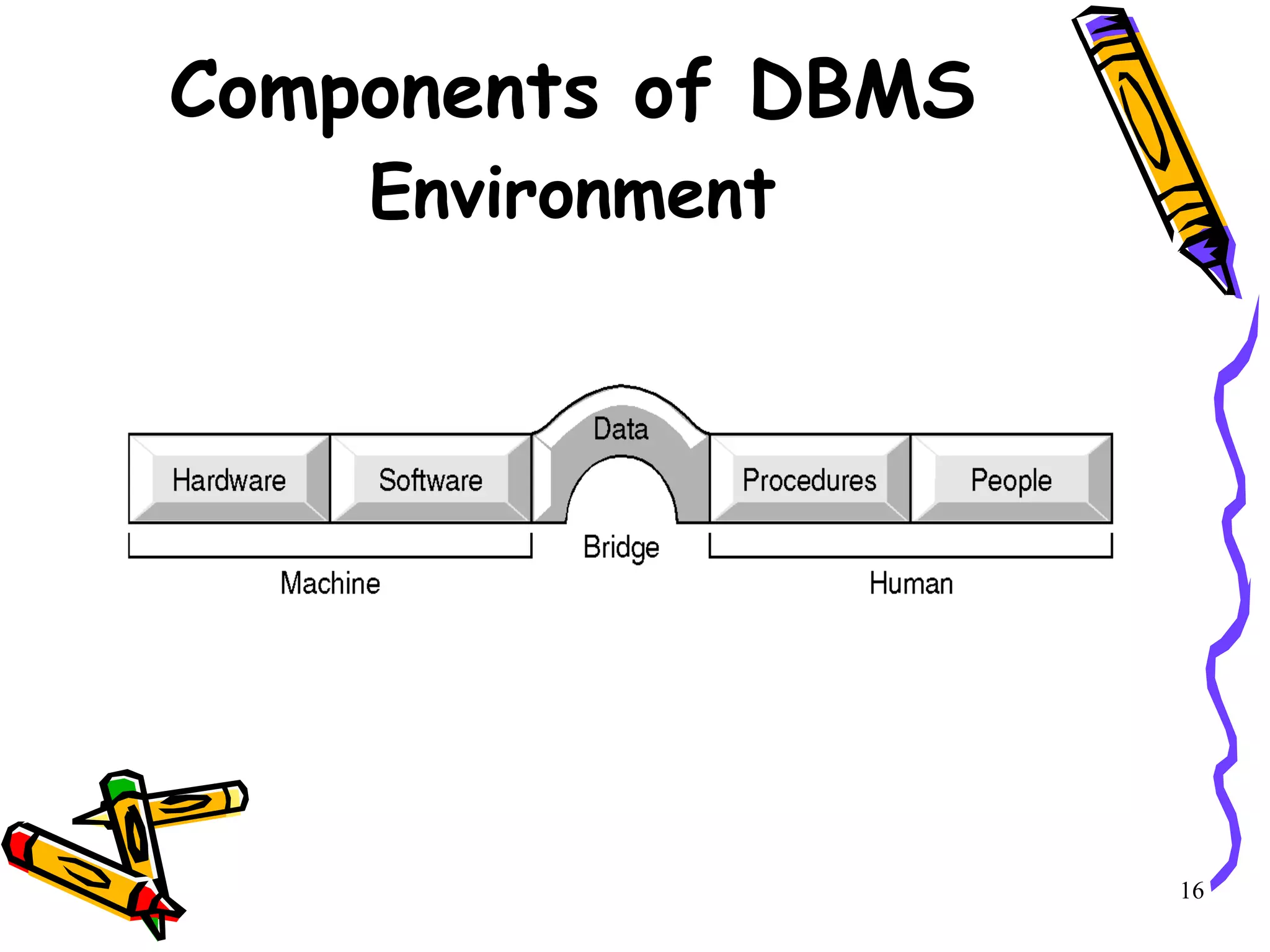
Components of DBMS  Environment 16
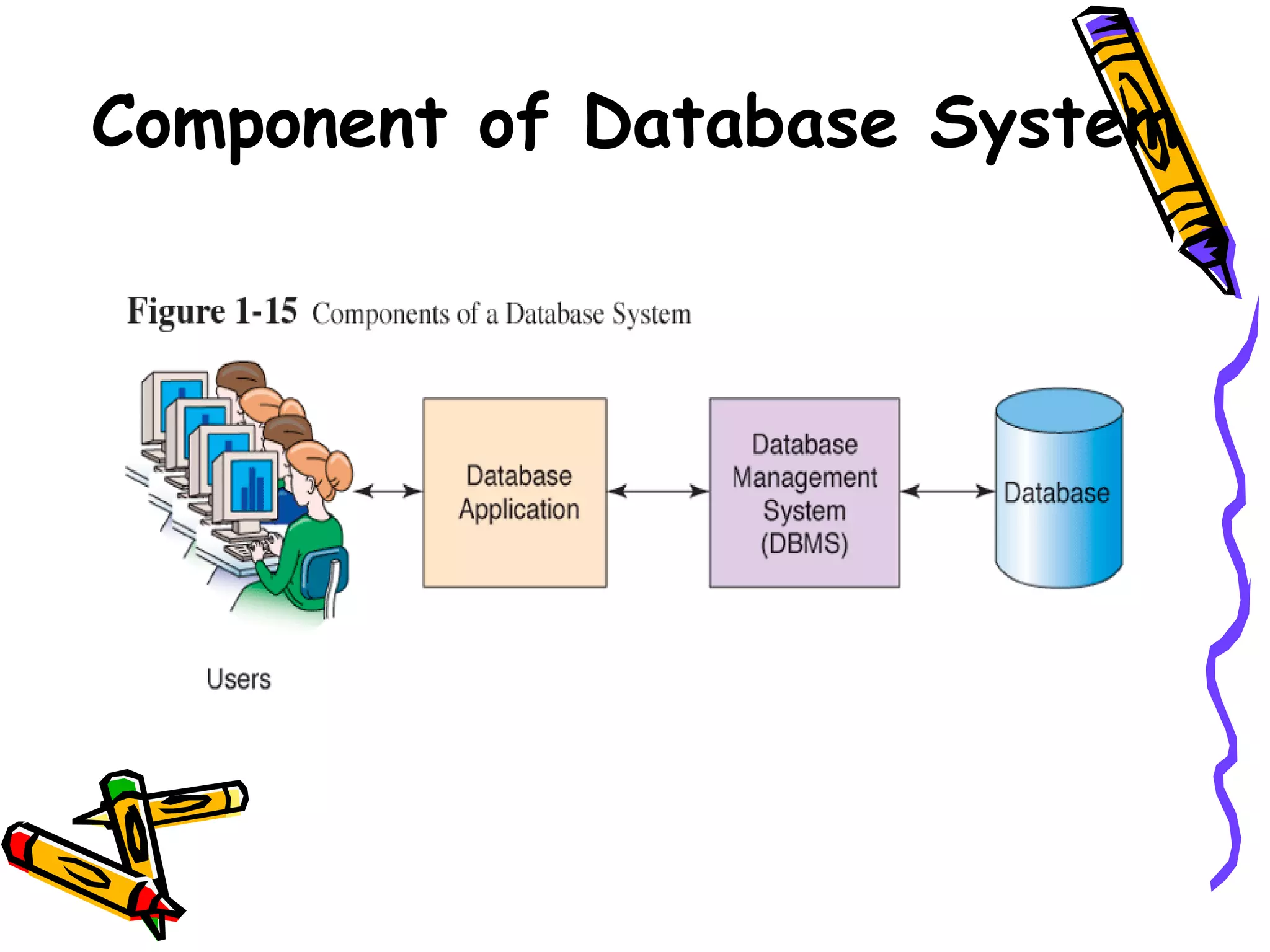
Component of Database System
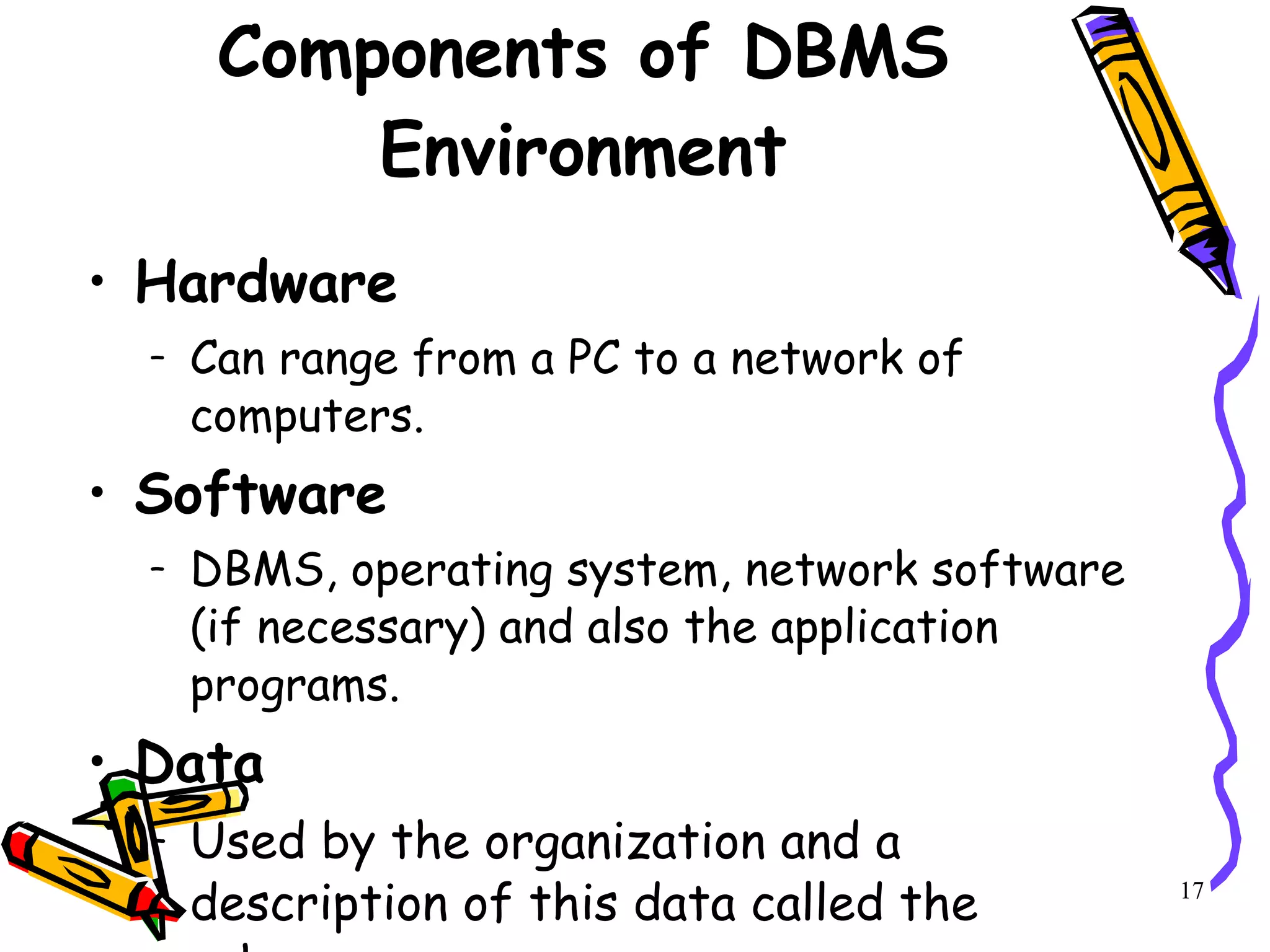
Components of DBMS Environment Hardware Can range from a PC to a network of computers. Software DBMS, operating system, network software (if necessary) and also the application programs. Data Used by the organization and a description of this data called the schema. 17
Components of DBMS  Environment Procedures Instructions and rules that should be applied to the design and use of the database and DBMS. People 18
Features of DBMS Accept data input & store  Multi-user access  Security Query languages (searching, sorting) DBMS
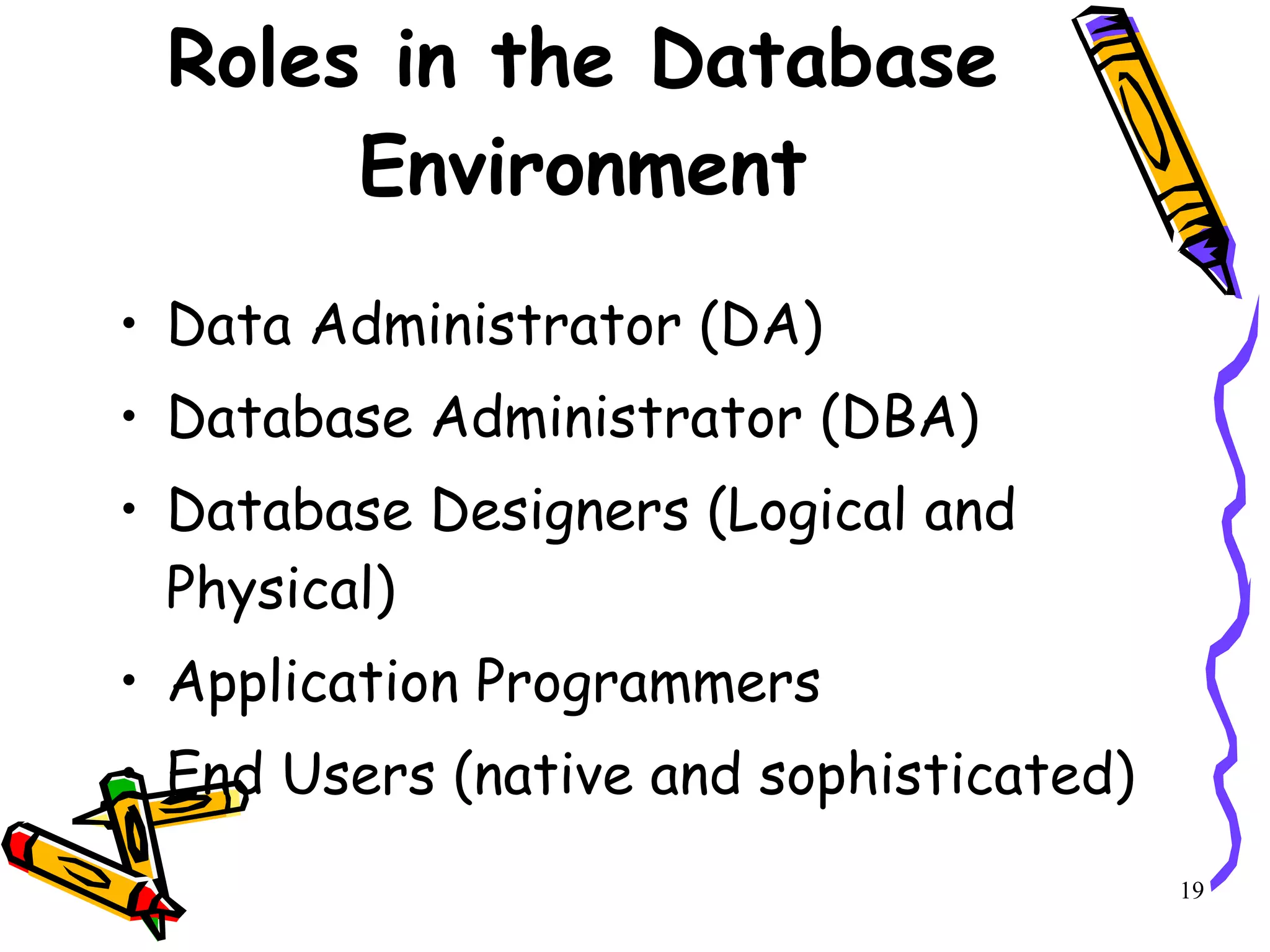
Roles in the Database Environment Data Administrator (DA) Database Administrator (DBA) Database Designers (Logical and Physical) Application Programmers End Users (native and sophisticated) 19
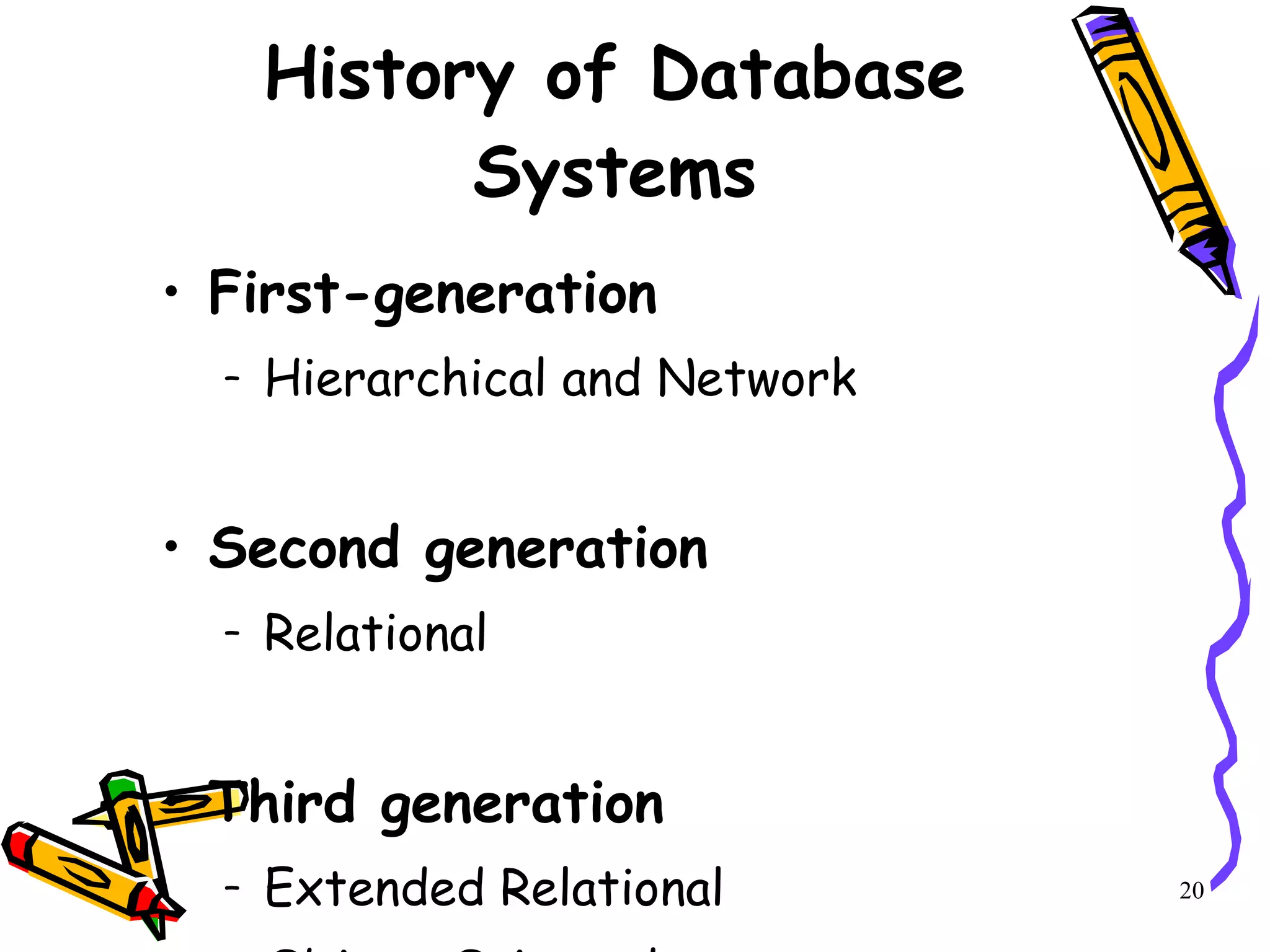
History of Database Systems First-generation  Hierarchical and Network Second generation Relational Third generation Extended Relational Object-Oriented 20
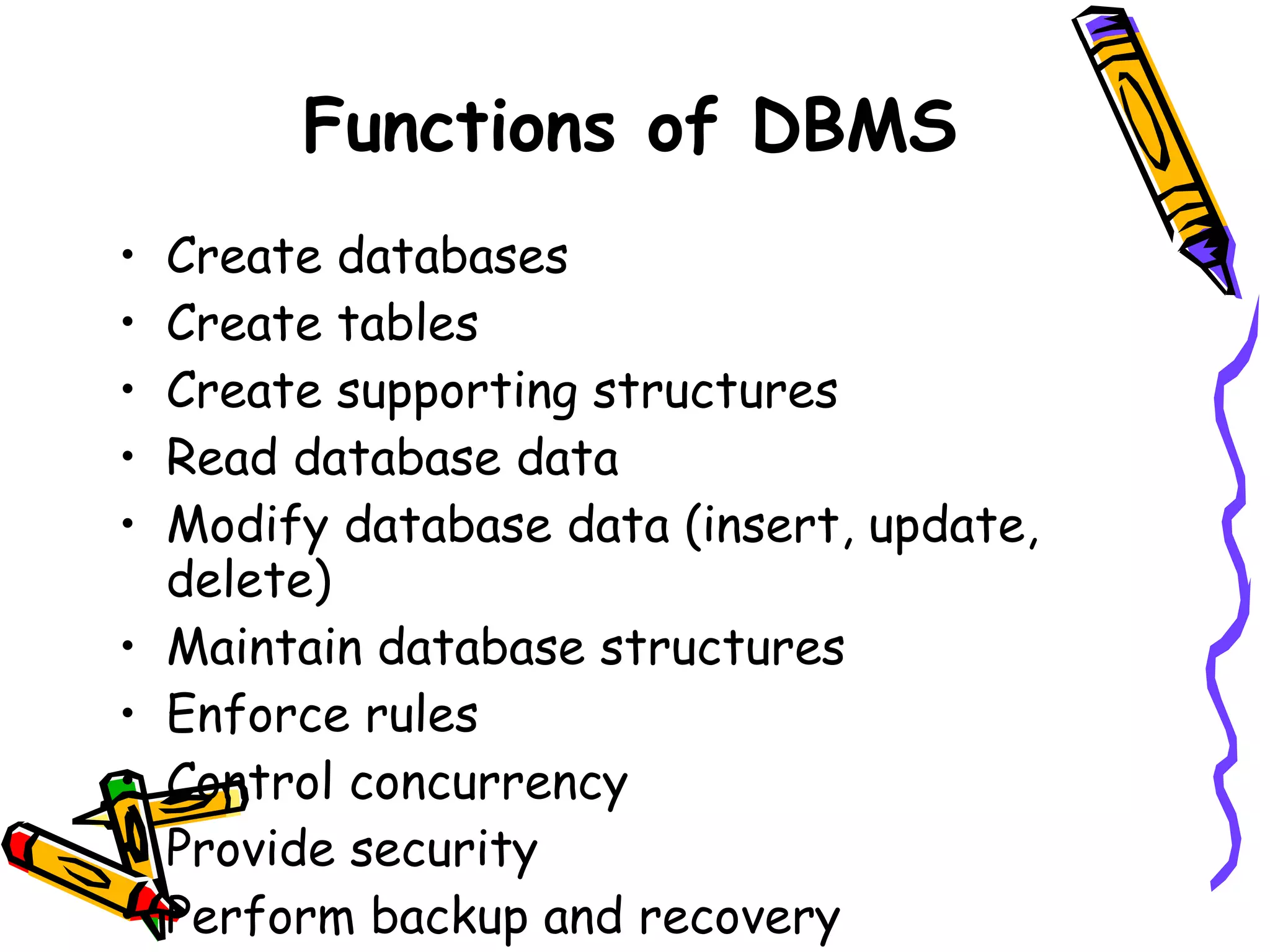
Create databases Create tables Create supporting structures Read database data Modify database data (insert, update, delete) Maintain database structures Enforce rules Control concurrency Provide security Perform backup and recovery Functions of DBMS
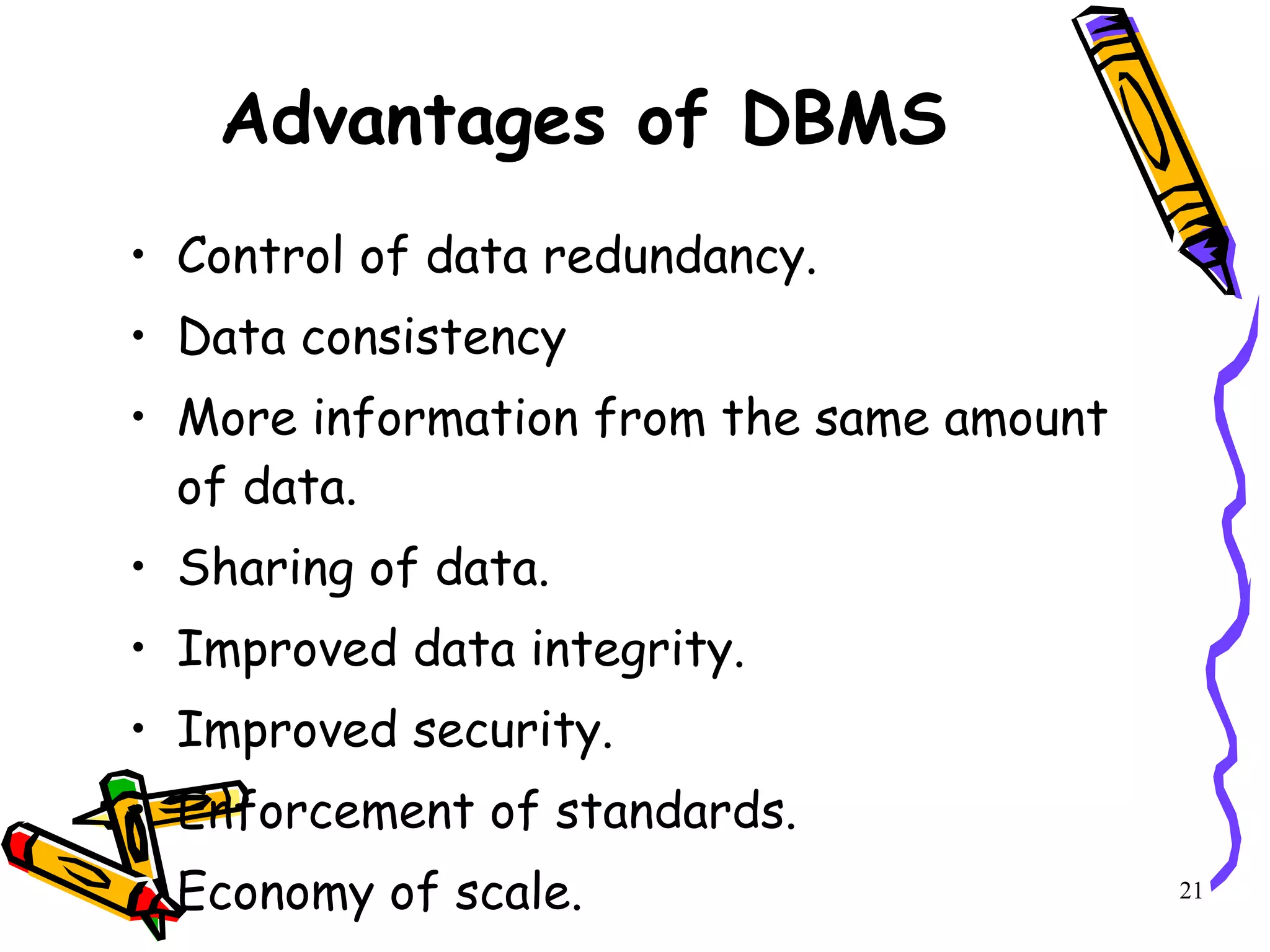
Advantages of DBMS Control of data redundancy. Data consistency More information from the same amount of data. Sharing of data. Improved data integrity. Improved security. Enforcement of standards. Economy of scale. 21
Advantages  of DBMS Balanced conflicting requirements Improved data accessibility and responsiveness Increased productivity Improved maintenance through data independence Increased concurrency Improved backup and recovery services 22
Disadvantages of DBMS Complexity Size Cost of DBMS Additional hardware costs Cost of conversion Performance Higher impact of a failure 23
ORACLE ORACLE is the no.1 RDBMS. ORACLE Corporation Ltd. is the name of the company. It belongs to backend section & also to the frontend s/w is D2k(Developer 2000), now it is J Developer. It is a two Tier Application.

DbMs

  • 1.
    DBMS Emraan AhmadReg no. 520789486 Bsc-it 6 th Sem Sikkim manipal university
  • 2.
    Content Objectives Introductionof DBMS Component of Dbms environment Features of Dbms Roles in the Database environment History of Database system Functions of Dbms Advantages of Dbms Disadvantages of Dbms
  • 3.
    Introduction Collection ofinterrelated data. Set of programs to access data. Database Applications : Banking: all transactions Airlines: reservations, schedules Universities: registration, grades Sales: customers, products, purchases Human resources: employee records, salaries, tax deductions DBMS
  • 4.
    Components of DBMS Environment 16
  • 5.
  • 6.
    Components of DBMSEnvironment Hardware Can range from a PC to a network of computers. Software DBMS, operating system, network software (if necessary) and also the application programs. Data Used by the organization and a description of this data called the schema. 17
  • 7.
    Components of DBMS Environment Procedures Instructions and rules that should be applied to the design and use of the database and DBMS. People 18
  • 8.
    Features of DBMSAccept data input & store Multi-user access Security Query languages (searching, sorting) DBMS
  • 9.
    Roles in theDatabase Environment Data Administrator (DA) Database Administrator (DBA) Database Designers (Logical and Physical) Application Programmers End Users (native and sophisticated) 19
  • 10.
    History of DatabaseSystems First-generation Hierarchical and Network Second generation Relational Third generation Extended Relational Object-Oriented 20
  • 11.
    Create databases Createtables Create supporting structures Read database data Modify database data (insert, update, delete) Maintain database structures Enforce rules Control concurrency Provide security Perform backup and recovery Functions of DBMS
  • 12.
    Advantages of DBMSControl of data redundancy. Data consistency More information from the same amount of data. Sharing of data. Improved data integrity. Improved security. Enforcement of standards. Economy of scale. 21
  • 13.
    Advantages ofDBMS Balanced conflicting requirements Improved data accessibility and responsiveness Increased productivity Improved maintenance through data independence Increased concurrency Improved backup and recovery services 22
  • 14.
    Disadvantages of DBMSComplexity Size Cost of DBMS Additional hardware costs Cost of conversion Performance Higher impact of a failure 23
  • 15.
    ORACLE ORACLE isthe no.1 RDBMS. ORACLE Corporation Ltd. is the name of the company. It belongs to backend section & also to the frontend s/w is D2k(Developer 2000), now it is J Developer. It is a two Tier Application.