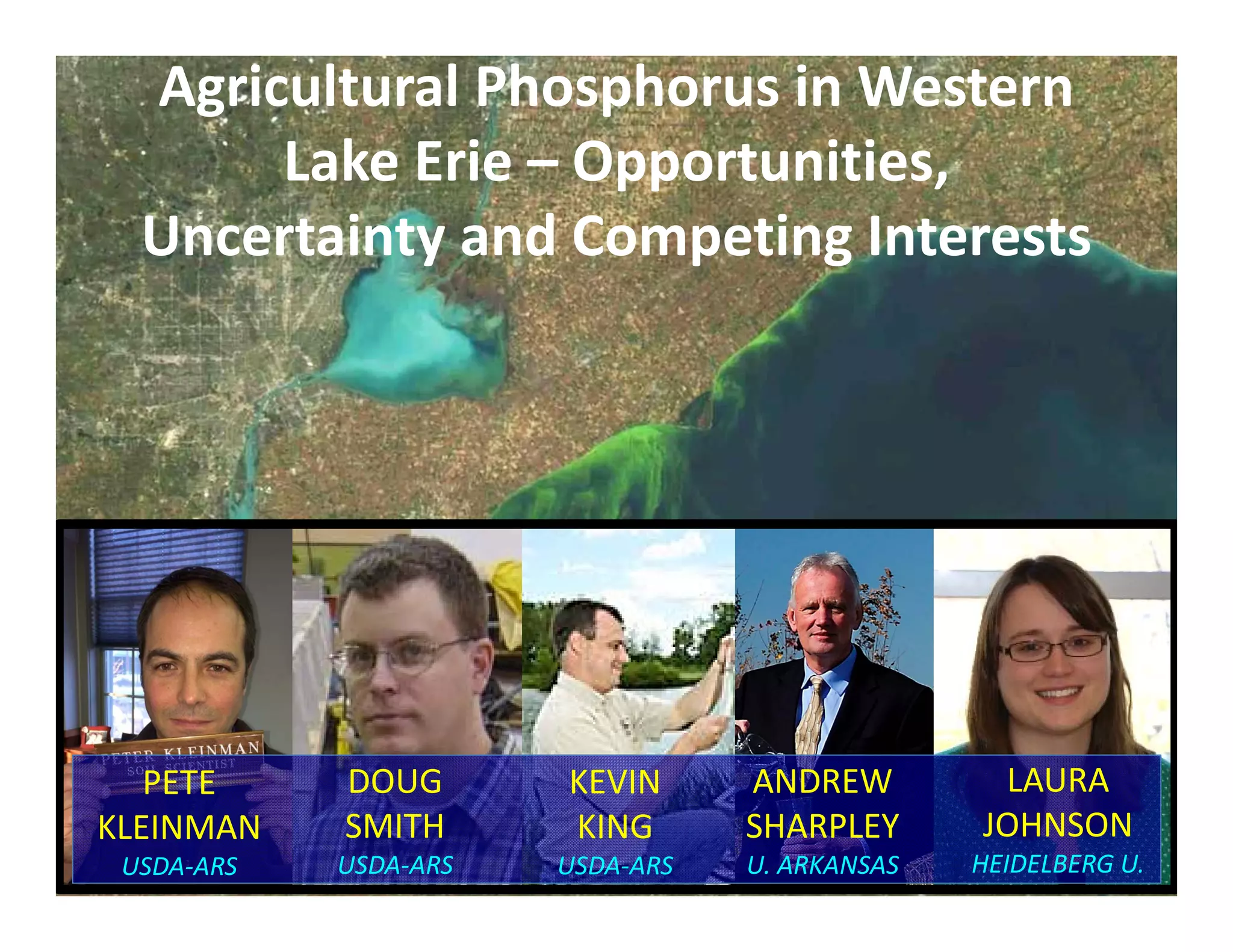
Agricultural Phosphorus in Western 
Lake Erie – Opportunities,
Uncertainty and Competing Interests
KEVIN
KING
USDA‐ARS
DOUG
SMITH
USDA‐ARS
PETE
KLEINMAN
USDA‐ARS
ANDREW
SHARPLEY
U. ARKANSAS
LAURA
JOHNSON
HEIDELBERG U.
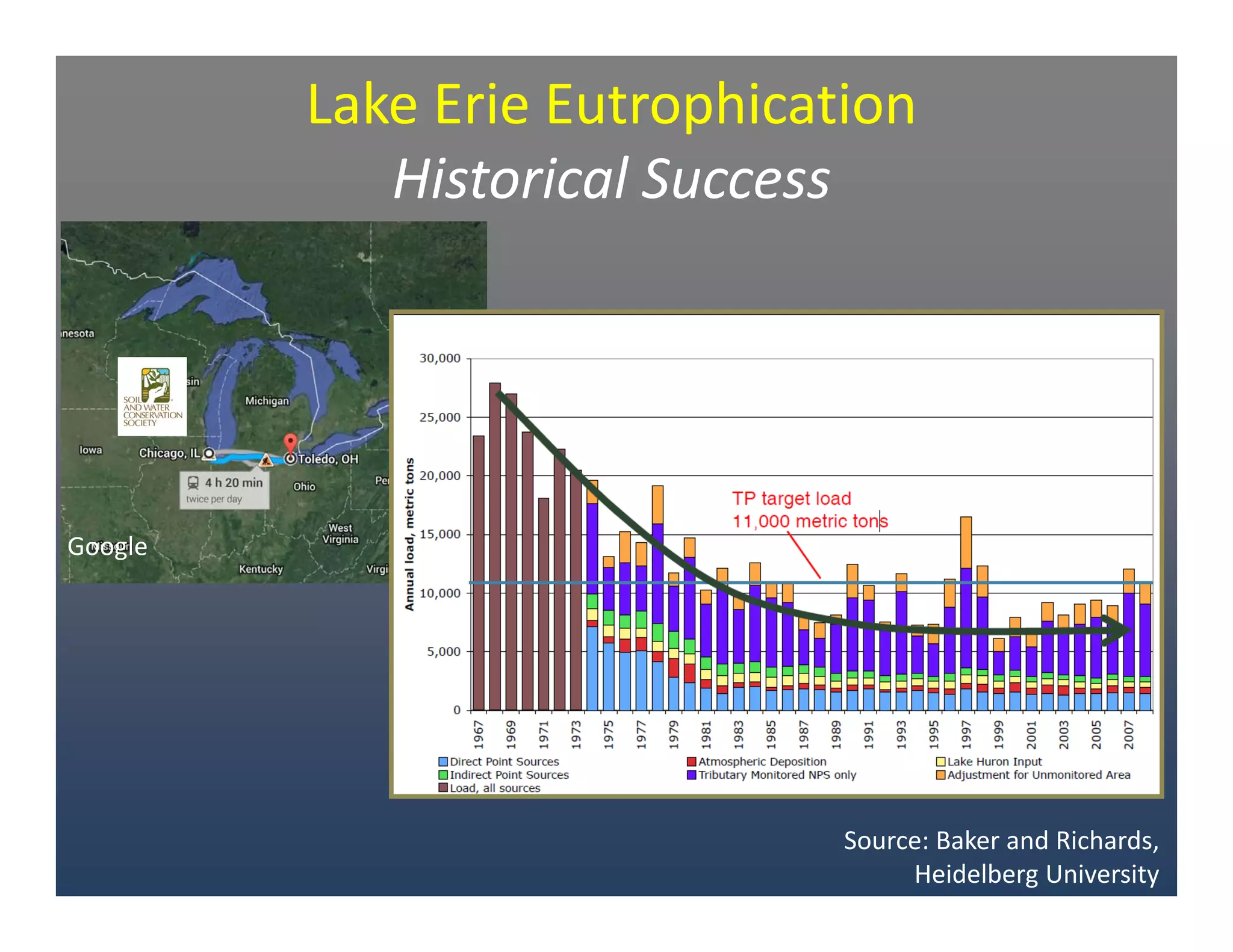
Lake Erie Eutrophication 
Historical Success
Source: Baker and Richards, 
Heidelberg University
Google
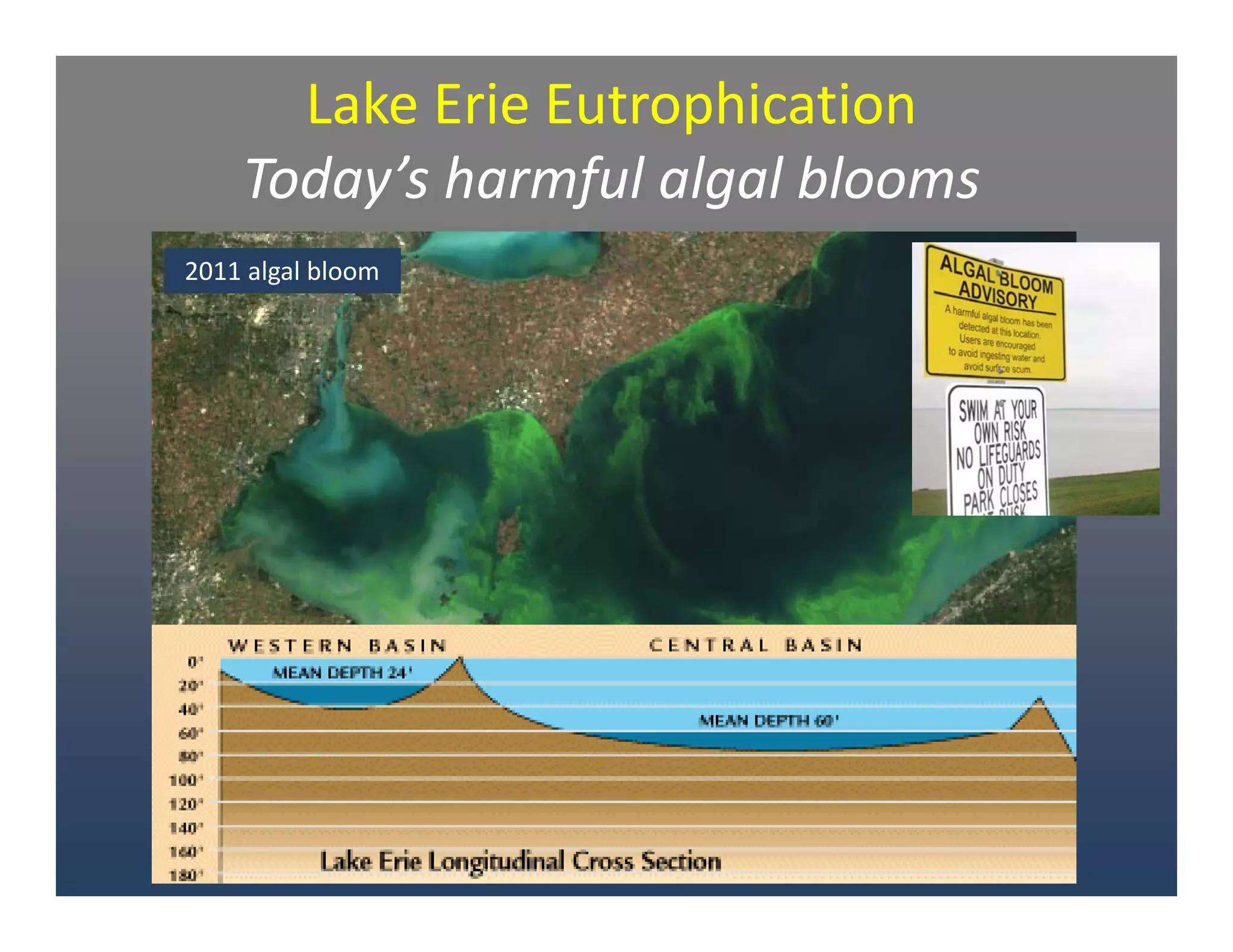
Lake Erie Eutrophication 
Today’s harmful algal blooms
Source: NOAA
2011 algal bloom
0.00
0.02
0.04
0.06
0.08
0.10
0.12
0.14
DissolvedReactivePhosphorusFWMC(mg/L)
0.00
0.02
0.04
0.06
0.08
0.10
0.12
0.14
1975 1980 1985 1990 1995 2000 2005 2010
0.00
0.02
0.04
0.06
0.08
0.10
0.12
0.14
Maumee 
Sandusky
Cuyahoga
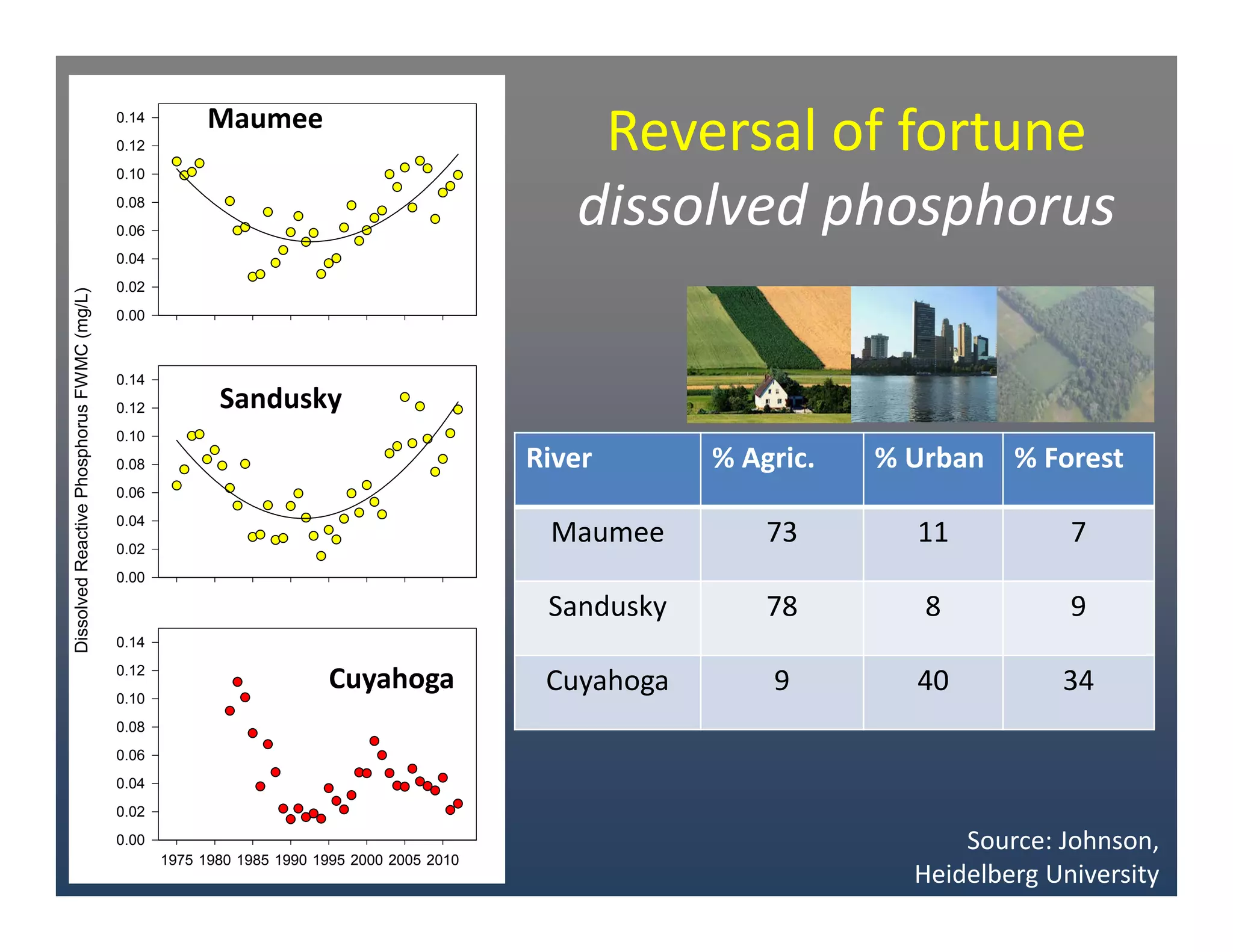
River % Agric. % Urban % Forest
Maumee 73 11 7
Sandusky 78 8 9
Cuyahoga 9 40 34
Source: Johnson,
Heidelberg University
Reversal of fortune
dissolved phosphorus
DRP 
(kg P/ha)
TP 
(kg P/ha)
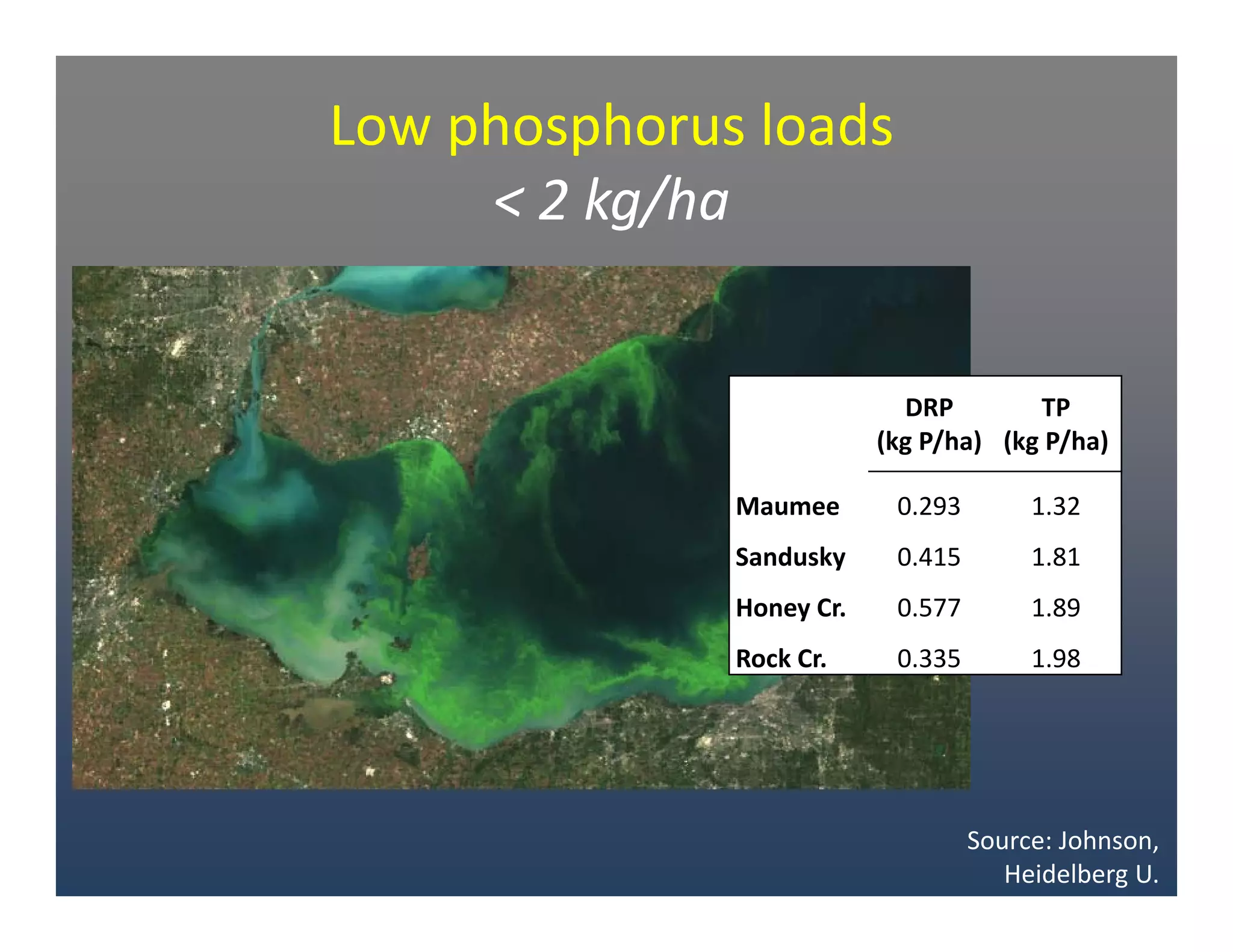
Maumee 0.293 1.32
Sandusky 0.415 1.81
Honey Cr. 0.577 1.89
Rock Cr. 0.335 1.98
Low phosphorus loads
< 2 kg/ha
Source: Johnson,
Heidelberg U.
7.5
5.0
2.5
0
ParticulateP(kgha-1)
Penrichmentratio
1
6
4
2
8
10
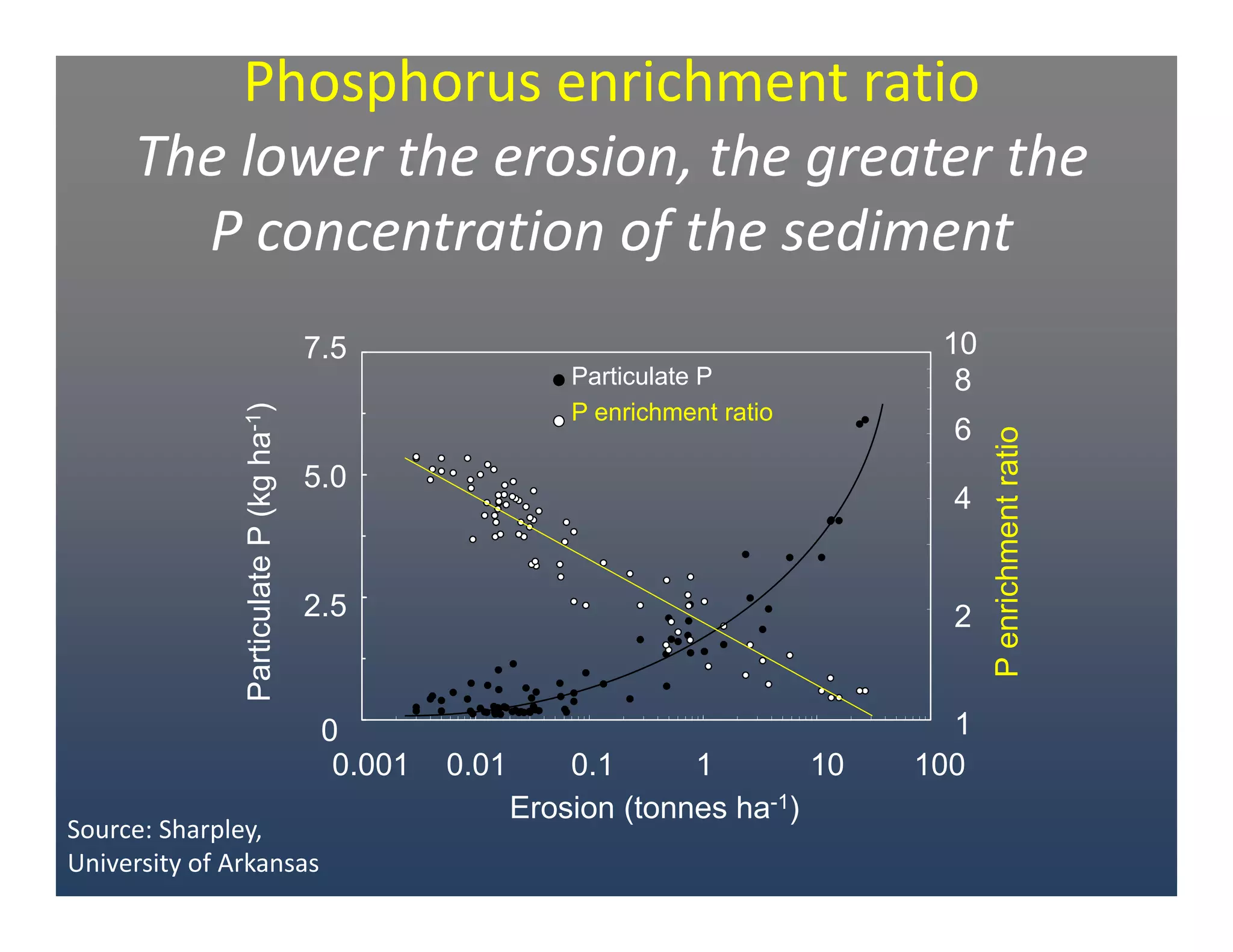
Particulate P
P enrichment ratio
Erosion (tonnes ha-1)
10 10010.10.010.001
Phosphorus enrichment ratio
The lower the erosion, the greater the 
P concentration of the sediment
Source: Sharpley,
University of Arkansas
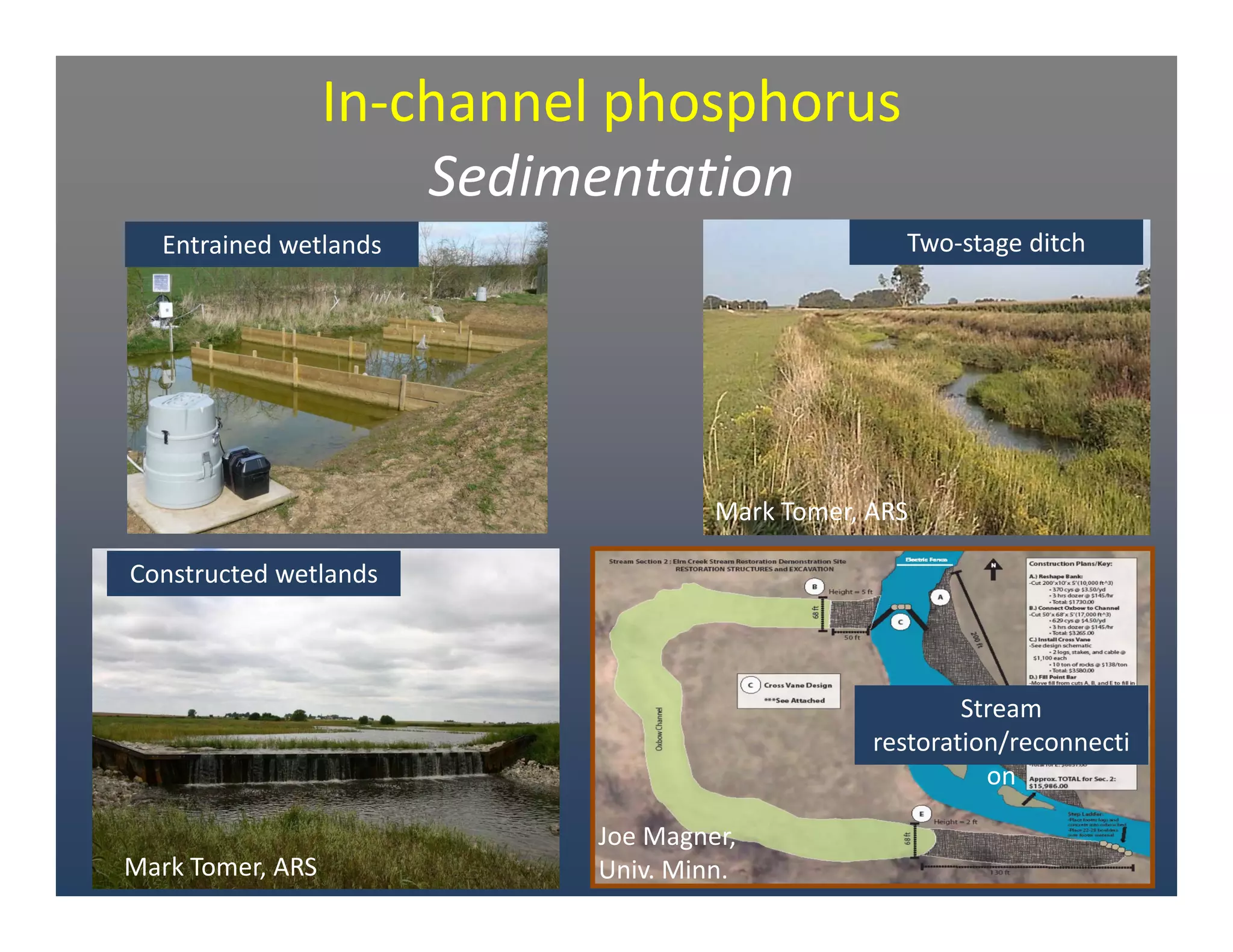
In‐channel phosphorus
Sedimentation
Mark Tomer, ARS
Mark Tomer, ARS
Joe Magner, 
Univ. Minn.
Entrained wetlands
Constructed wetlands
Two‐stage ditch
Stream 
restoration/reconnecti
on
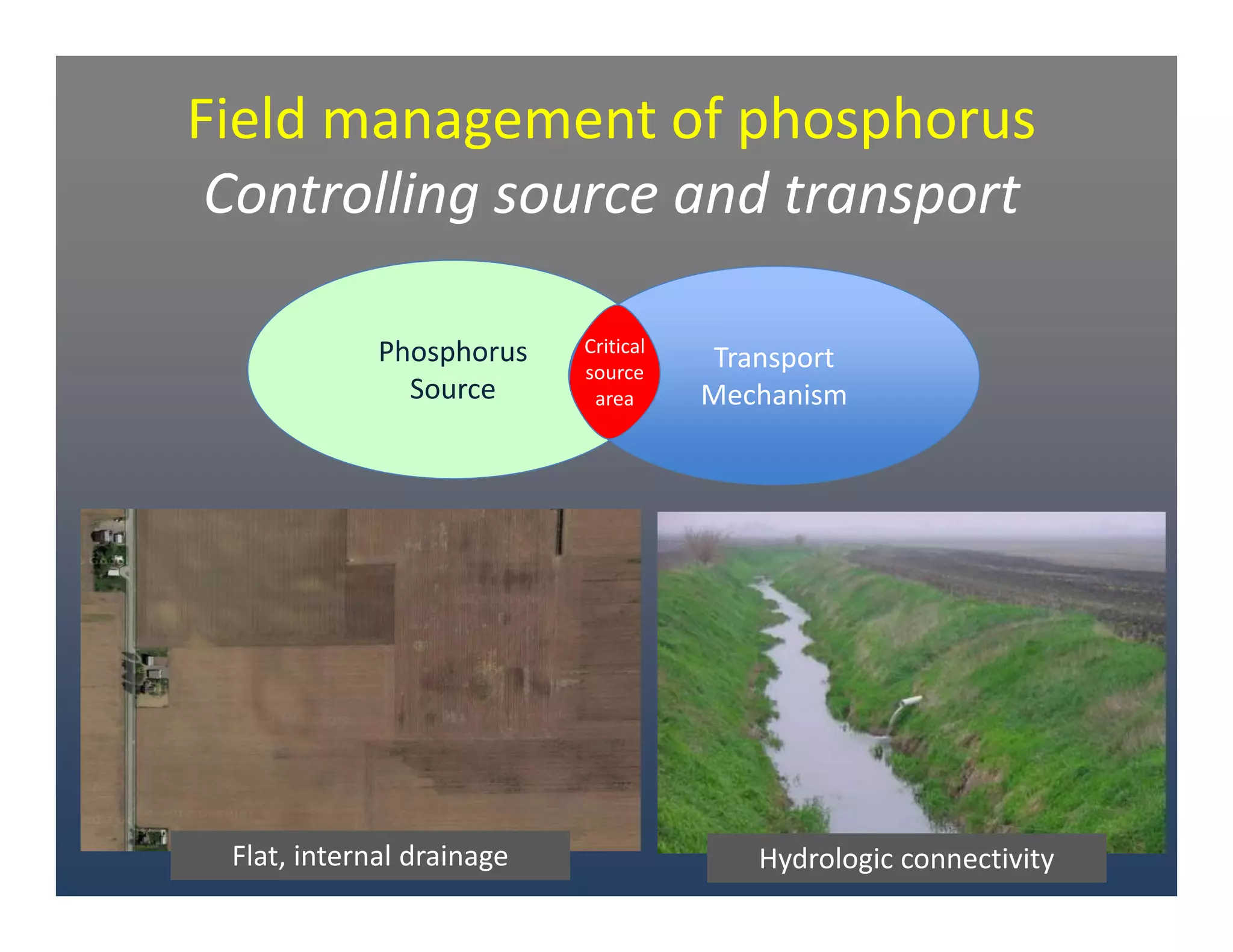
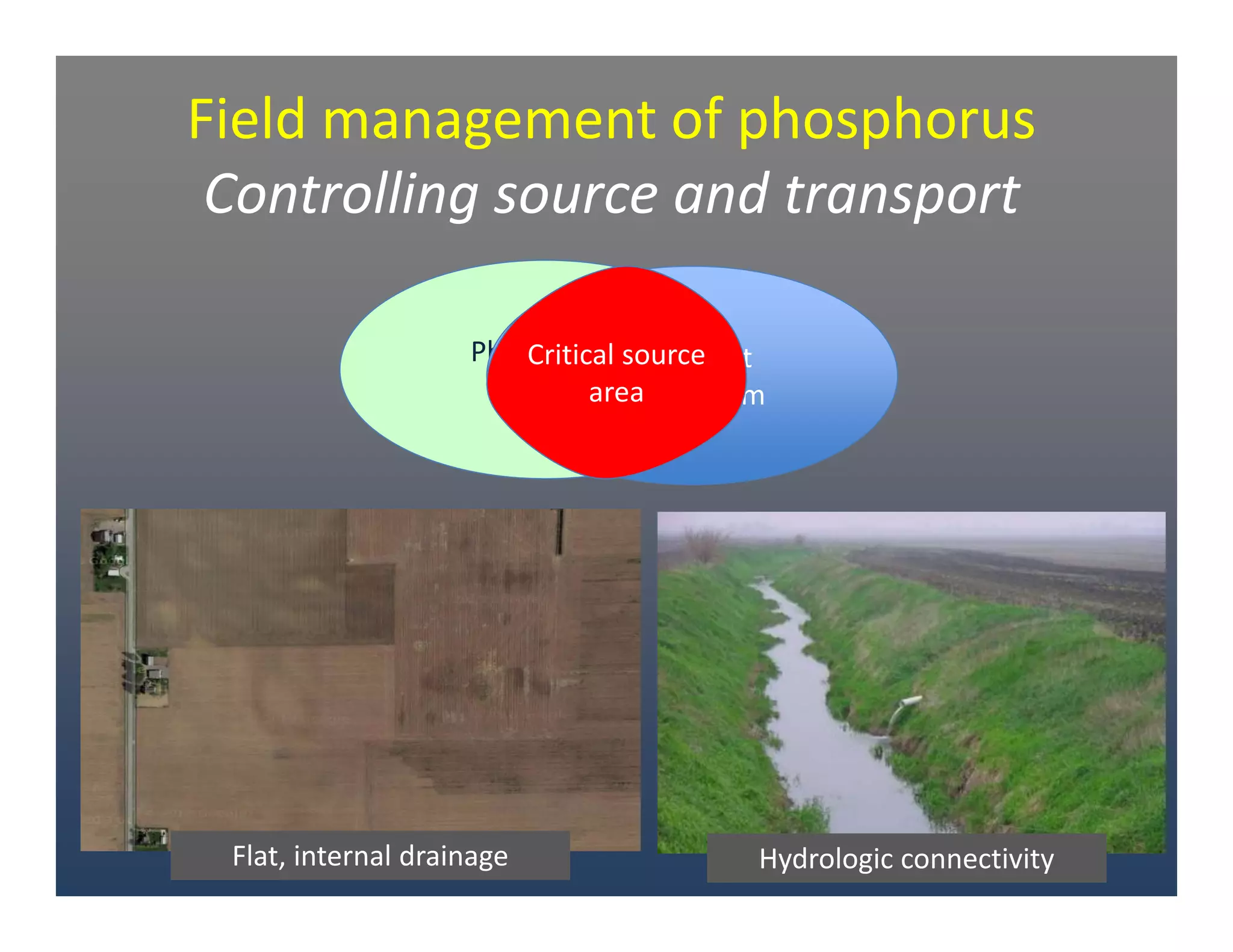
Field management of phosphorus
Controlling source and transport
Phosphorus
Source
Transport
Mechanism
Critical Critical 
source 
area
Hydrologic connectivityFlat, internal drainage
Field management of phosphorus
Controlling source and transport
Phosphorus
Source
Transport
Mechanism
Transport
Mechanism
Critical source 
area
Hydrologic connectivityFlat, internal drainage
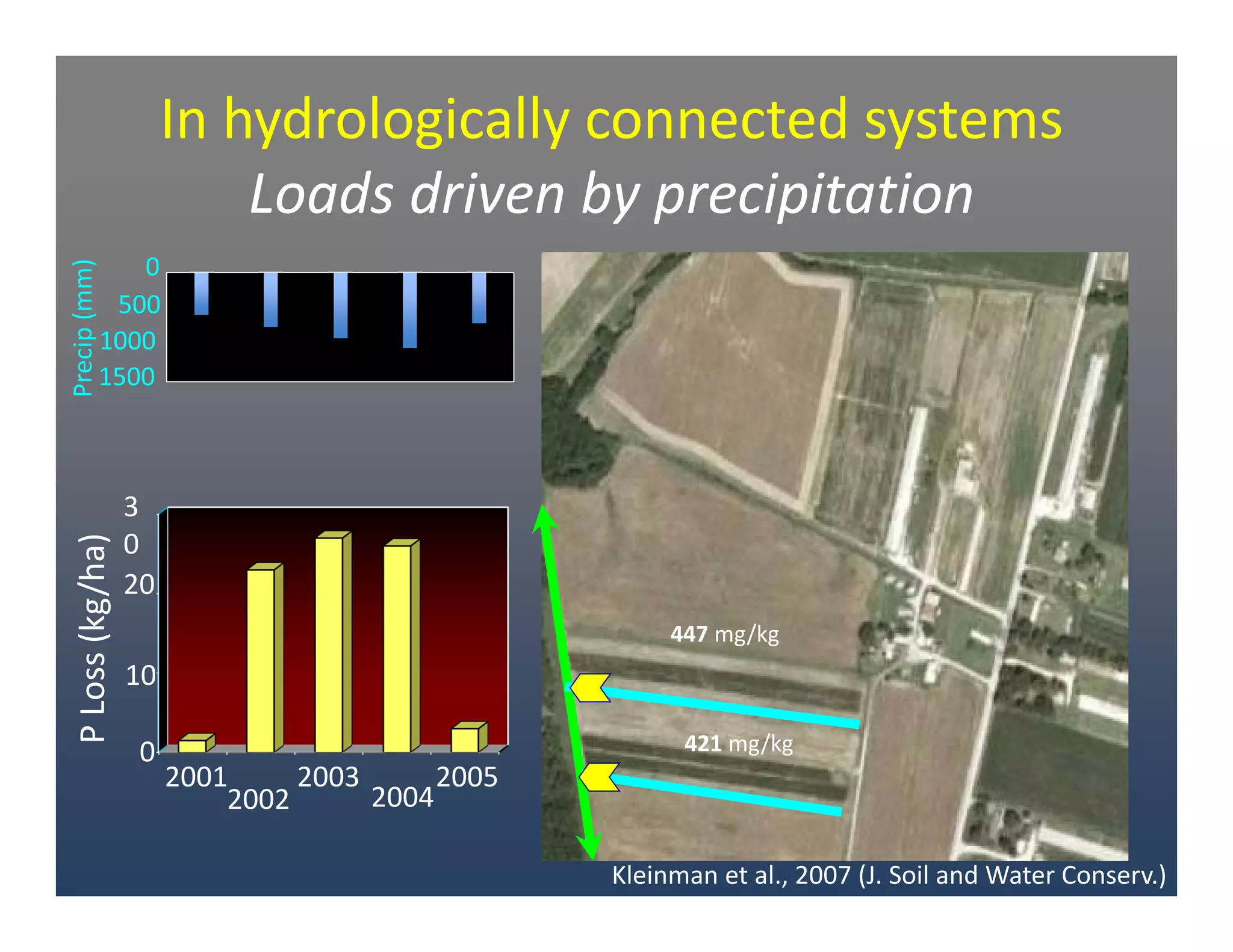
P Loss (kg/ha)
10
20
3
0
0 421 mg/kg
447 mg/kg
2001
2002
2003
2004
2005
Kleinman et al., 2007 (J. Soil and Water Conserv.) 
1500
500
0
1000
Precip(mm)
In hydrologically connected systems
Loads driven by precipitation 
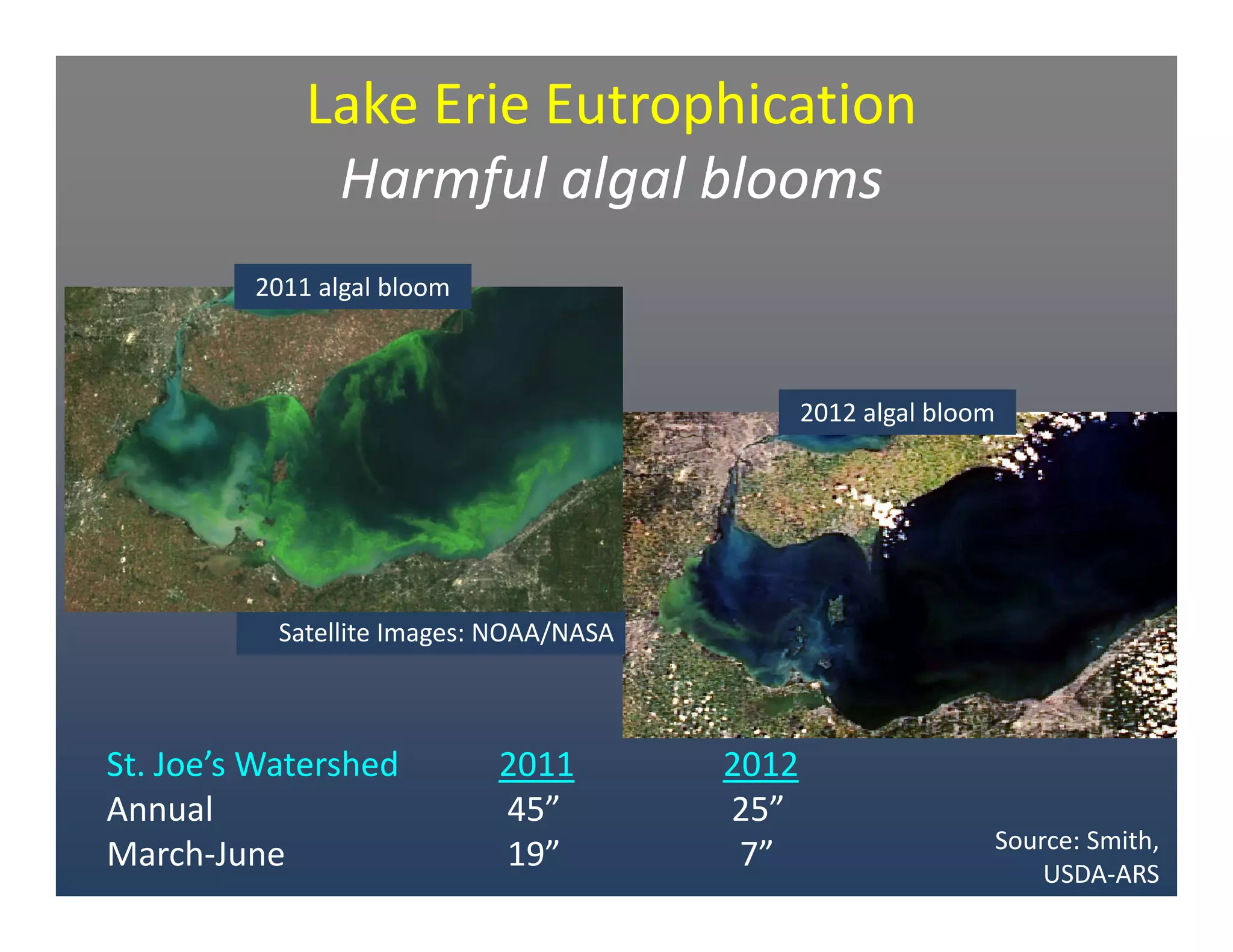
Lake Erie Eutrophication 
Harmful algal blooms
Satellite Images: NOAA/NASA
2012 algal bloom
St. Joe’s Watershed 2011 2012
Annual 45” 25”
March‐June 19” 7” Source: Smith,
USDA‐ARS
2011 algal bloom
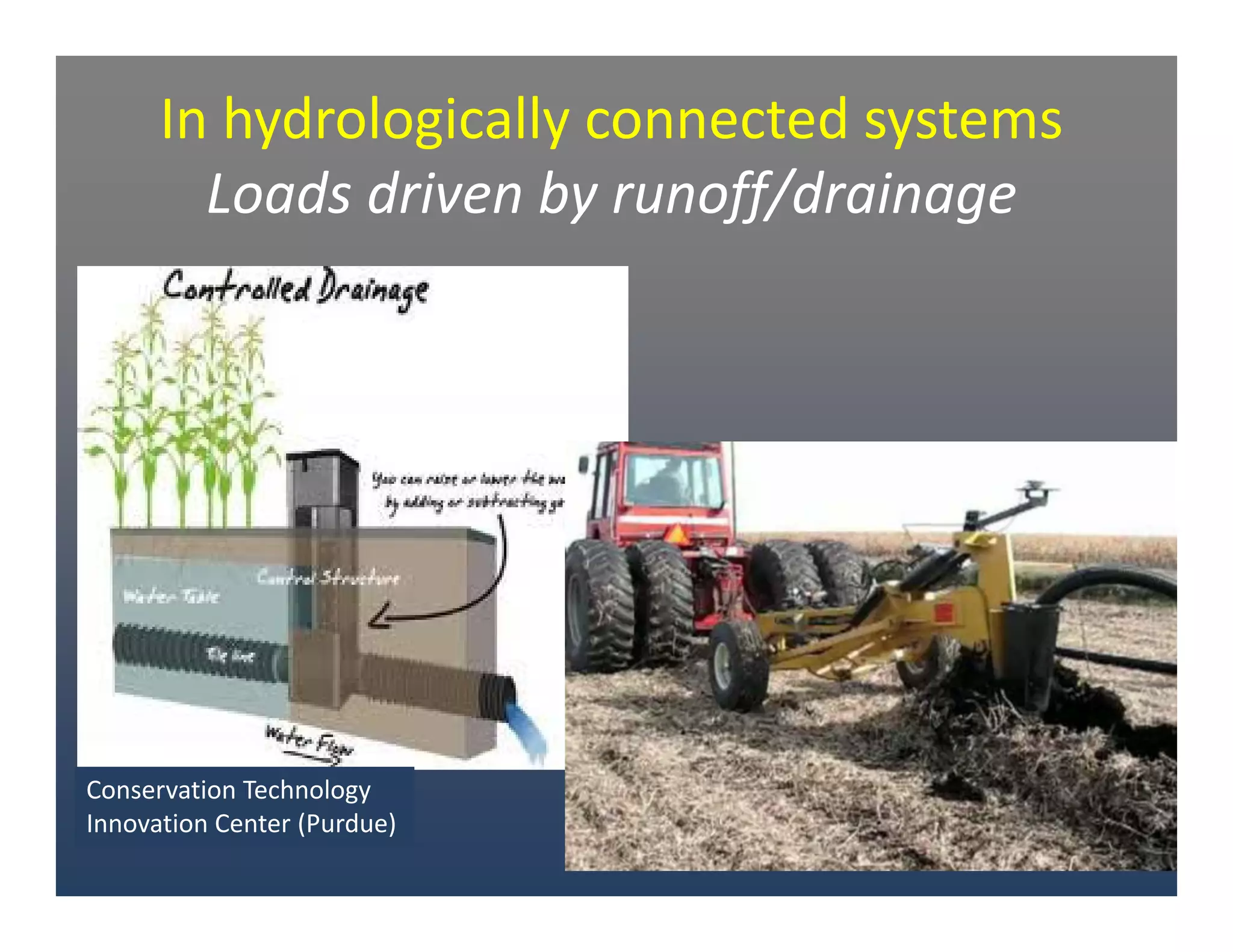
In hydrologically connected systems
Loads driven by runoff/drainage
Conservation Technology 
Innovation Center (Purdue)
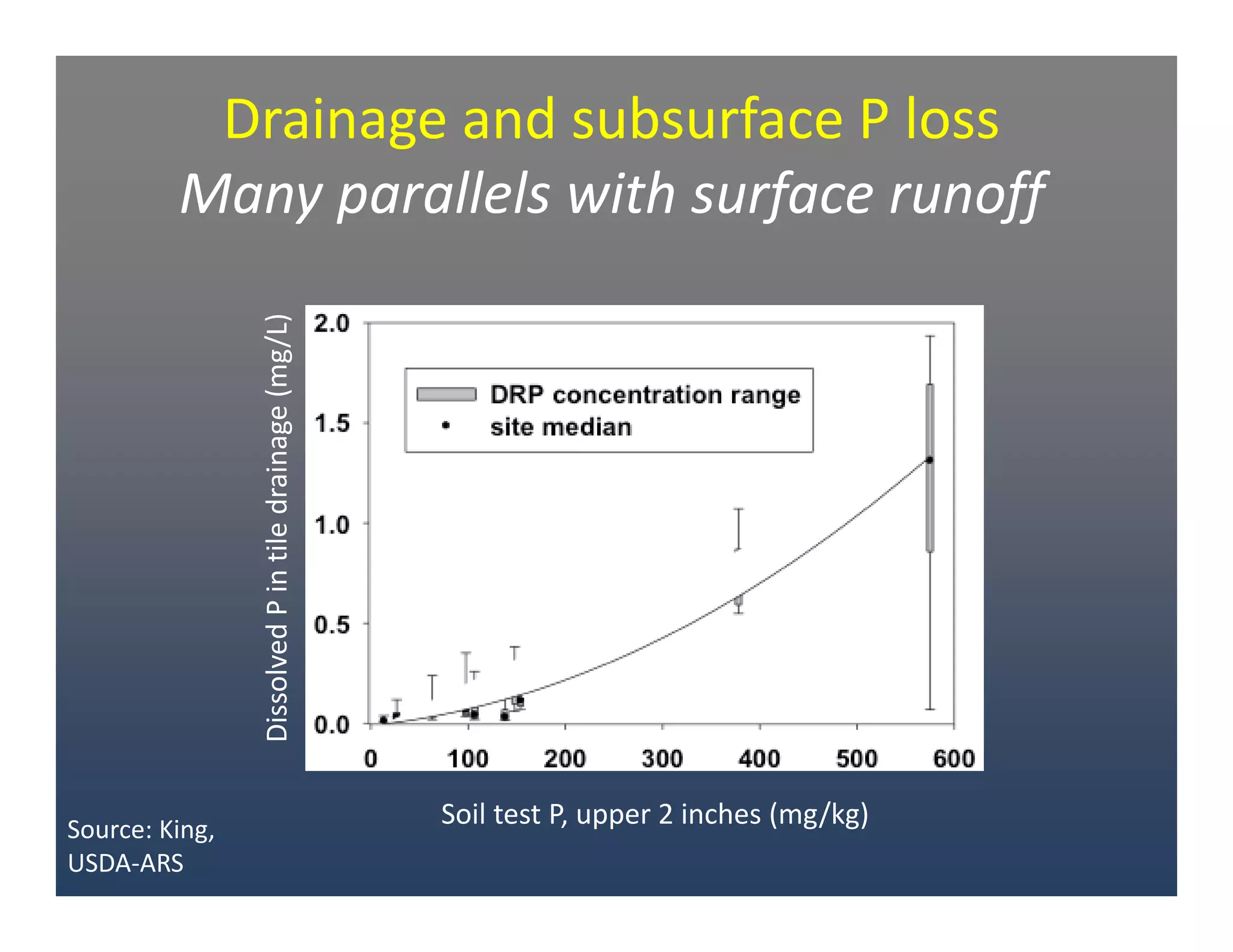
Drainage and subsurface P loss 
Many parallels with surface runoff
Dissolved P in tile drainage (mg/L)
Soil test P, upper 2 inches (mg/kg)Source: King,
USDA‐ARS
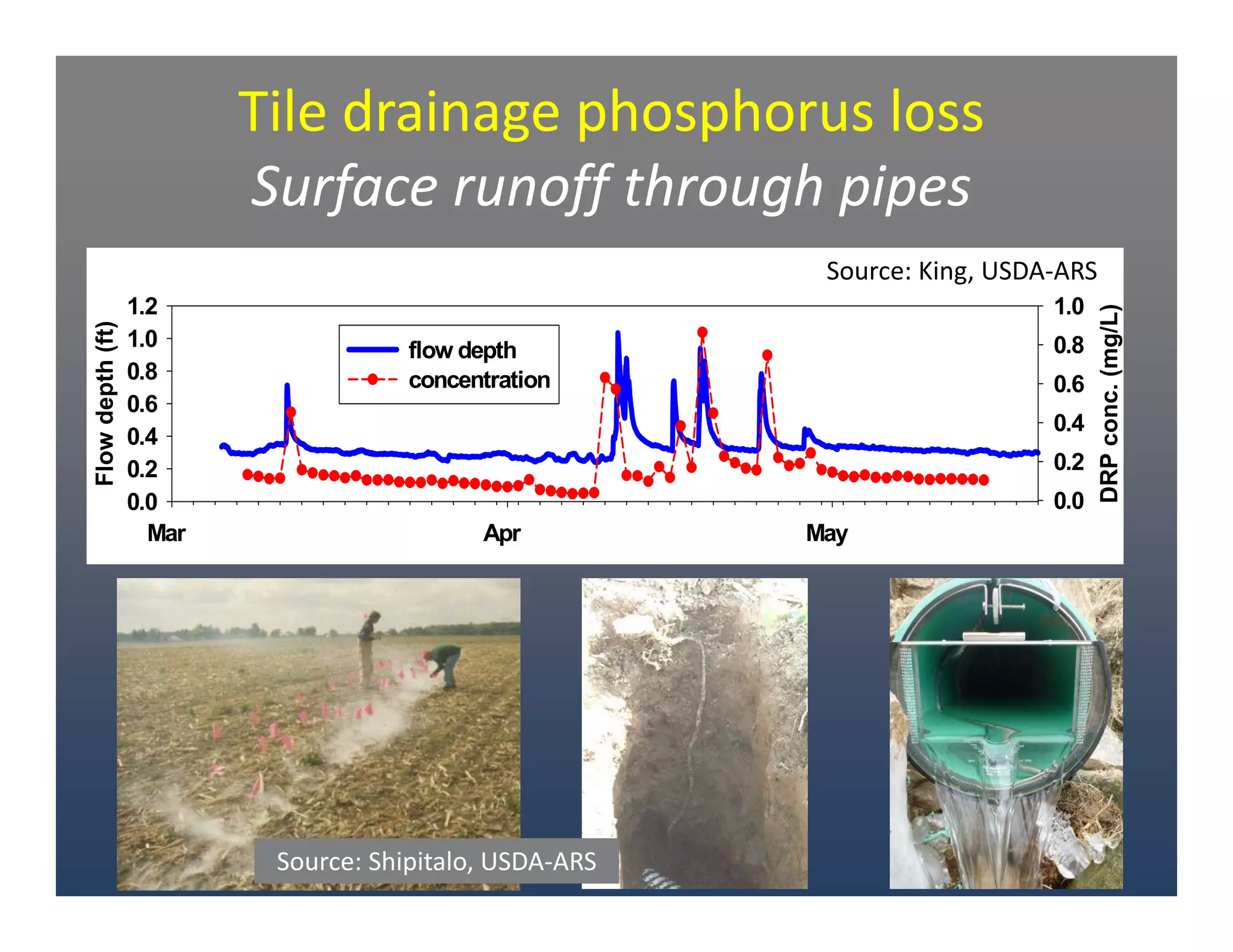
Tile drainage phosphorus loss 
Surface runoff through pipes
Source: M. Shipitalo, USDA‐ARS
Mar Apr May
Flowdepth(ft)
0.0
0.2
0.4
0.6
0.8
1.0
1.2
DRPconc.(mg/L)
0.0
0.2
0.4
0.6
0.8
1.0
flow depth
concentration
Source: King, USDA‐ARS
Source: Shipitalo, USDA‐ARS
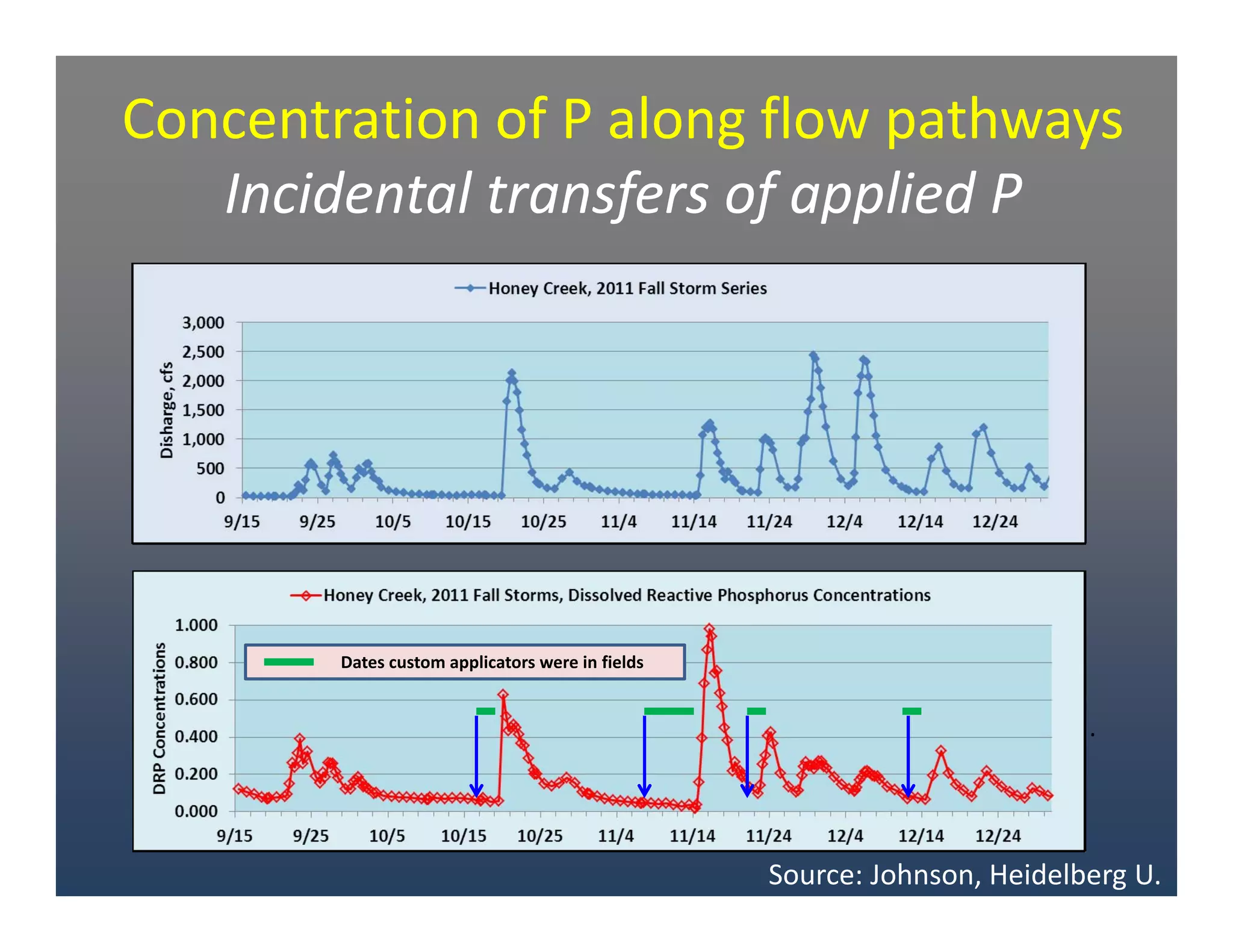
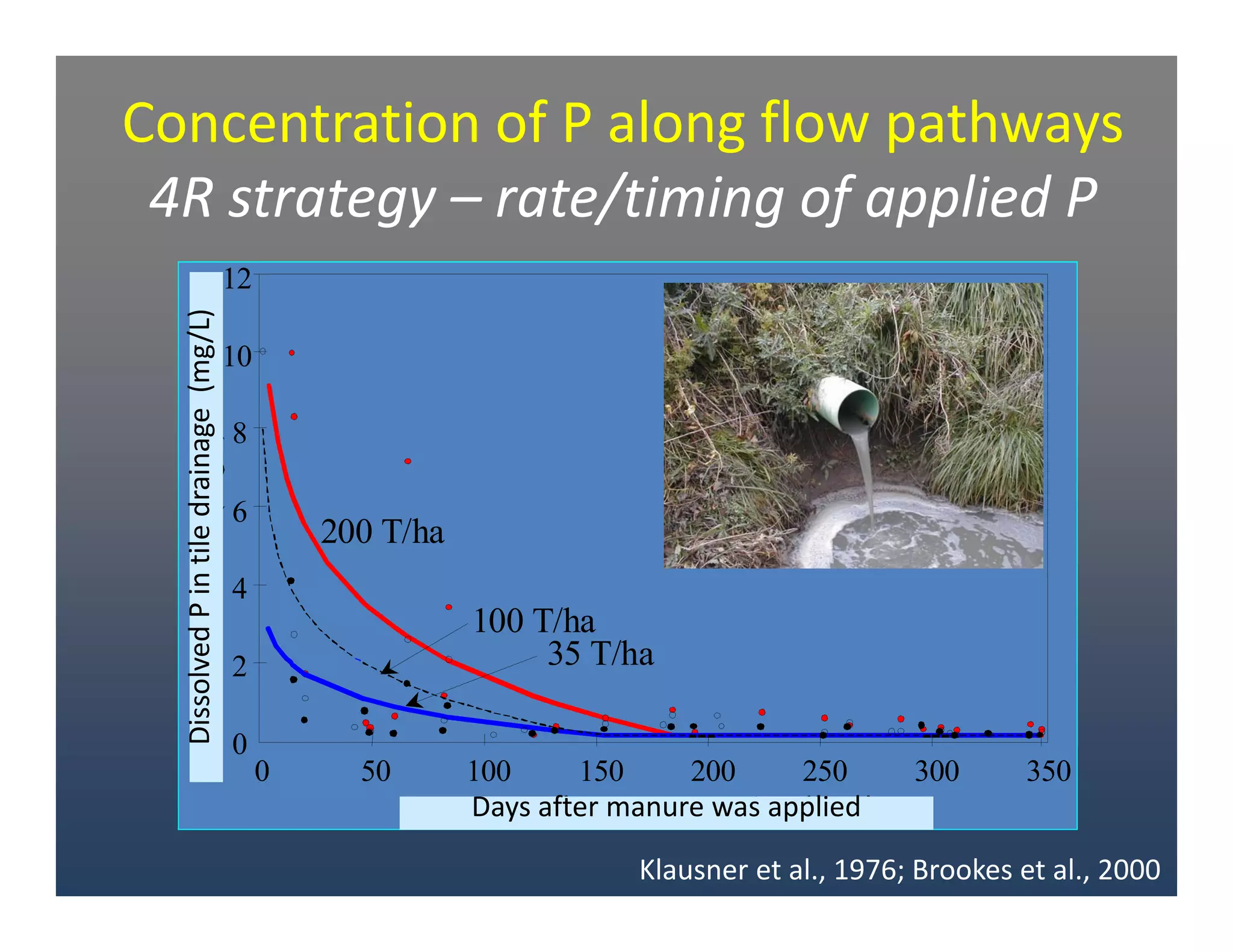
Concentration of P along flow pathways
Incidental transfers of applied P
.
Dates custom applicators were in fields
Source: Johnson, Heidelberg U.
0
1
2
3
4
Before Broadcast Tilled‐in
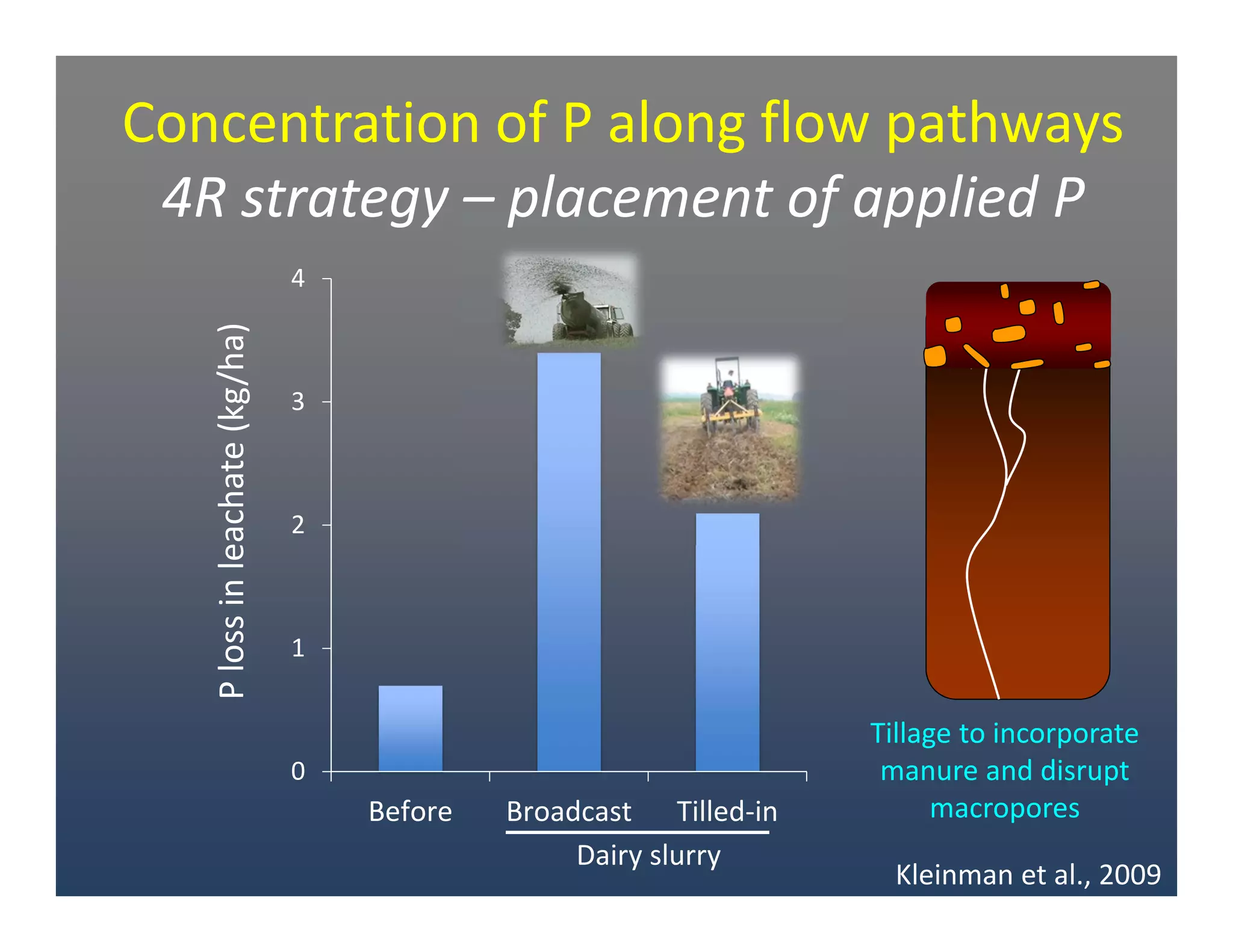
Concentration of P along flow pathways
4R strategy – placement of applied P
Dairy slurry
P loss in leachate (kg/ha)
Kleinman et al., 2009
Tillage to incorporate 
manure and disrupt 
macropores
Concentration of P along flow pathways
4R strategy – rate/timing of applied P
0
2
4
6
8
10
12
0 50 100 150 200 250 300 350
Days since Manure Application
100 T/ha
35 T/ha
200 T/ha
Dissolved P in tile drainage  (mg/L)
Klausner et al., 1976; Brookes et al., 2000
Days after manure was applied
Source: Johnson, Heidelberg U.
0
12
8
6
4
2
10
36
28
55 60
49
34
26
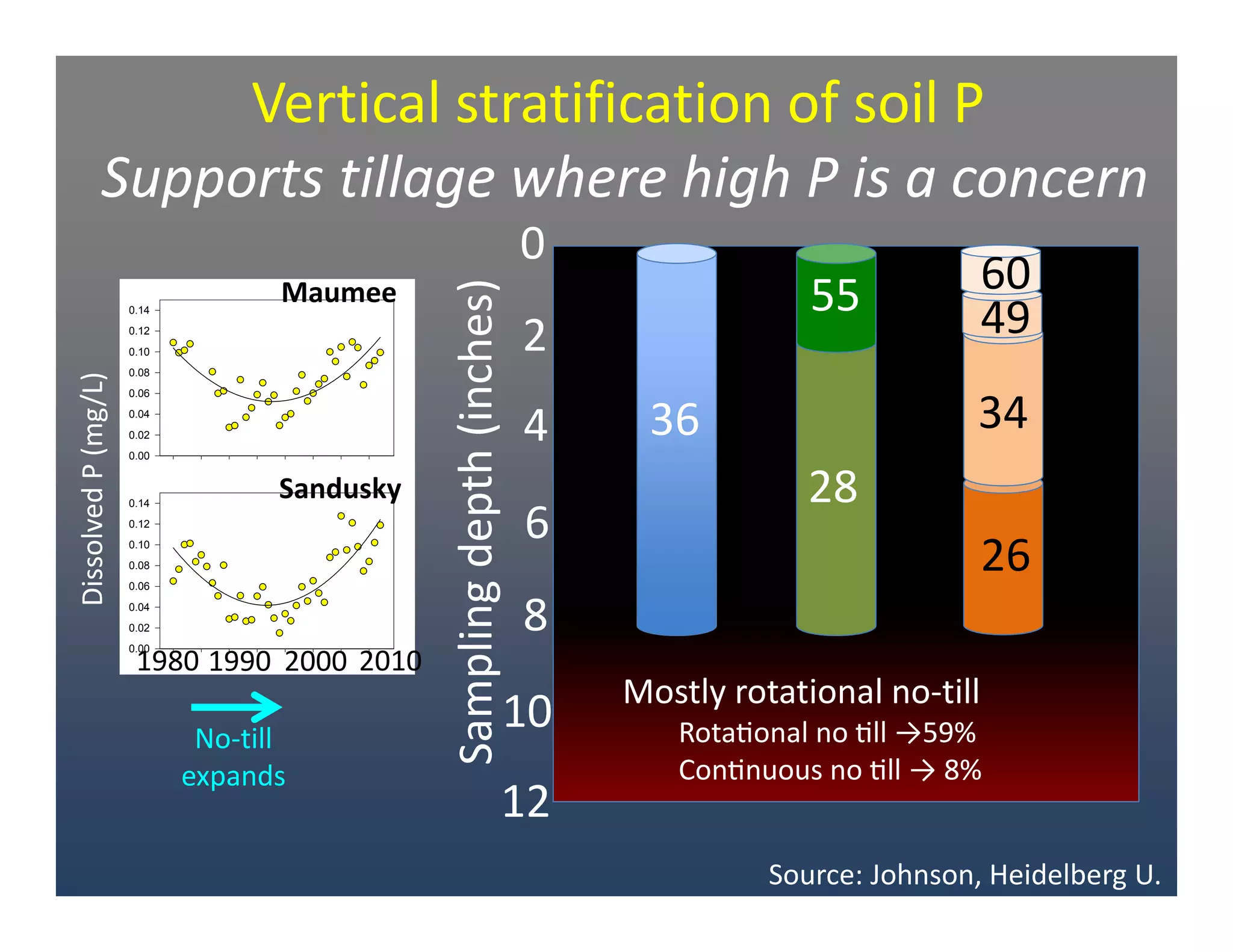
Vertical stratification of soil P
Supports tillage where high P is a concern
Sampling depth (inches)
0.00
0.02
0.04
0.06
0.08
0.10
0.12
0.14
0.00
0.02
0.04
0.06
0.08
0.10
0.12
0.14
Dissolved P (mg/L)
Maumee 
Sandusky
20101980 20001990
No‐till 
expands
Mostly rotational no‐till
Rota onal no  ll →59%
Con nuous no  ll → 8%
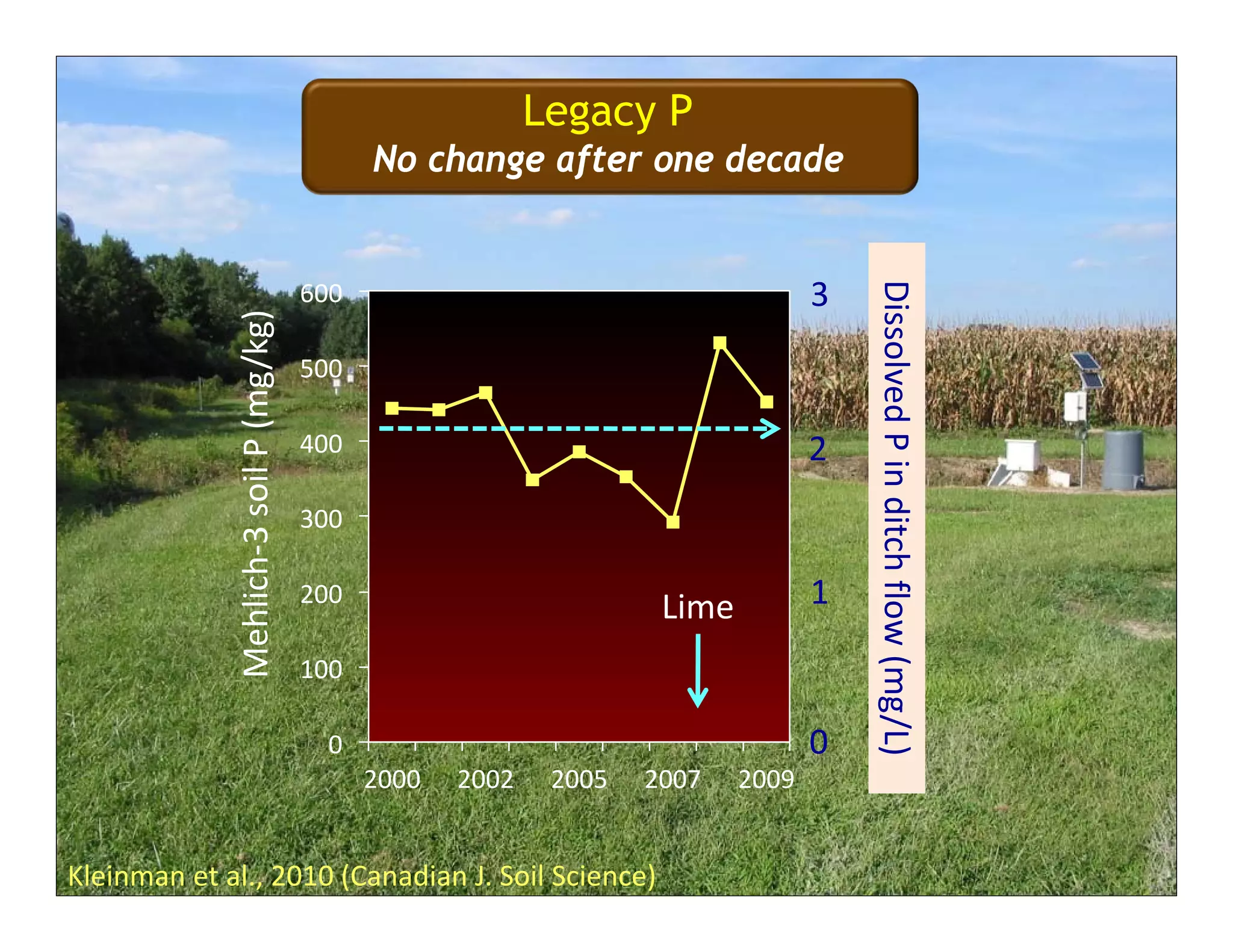
Kleinman et al., 2010 (Canadian J. Soil Science) 
0
100
200
300
400
500
600
2000 2002 2005 2007 2009
Mehlich‐3 soil P (mg/kg)
Lime
0
1
2
3
Dissolved P in ditch flow (mg/L)
Legacy P
No change after one decade
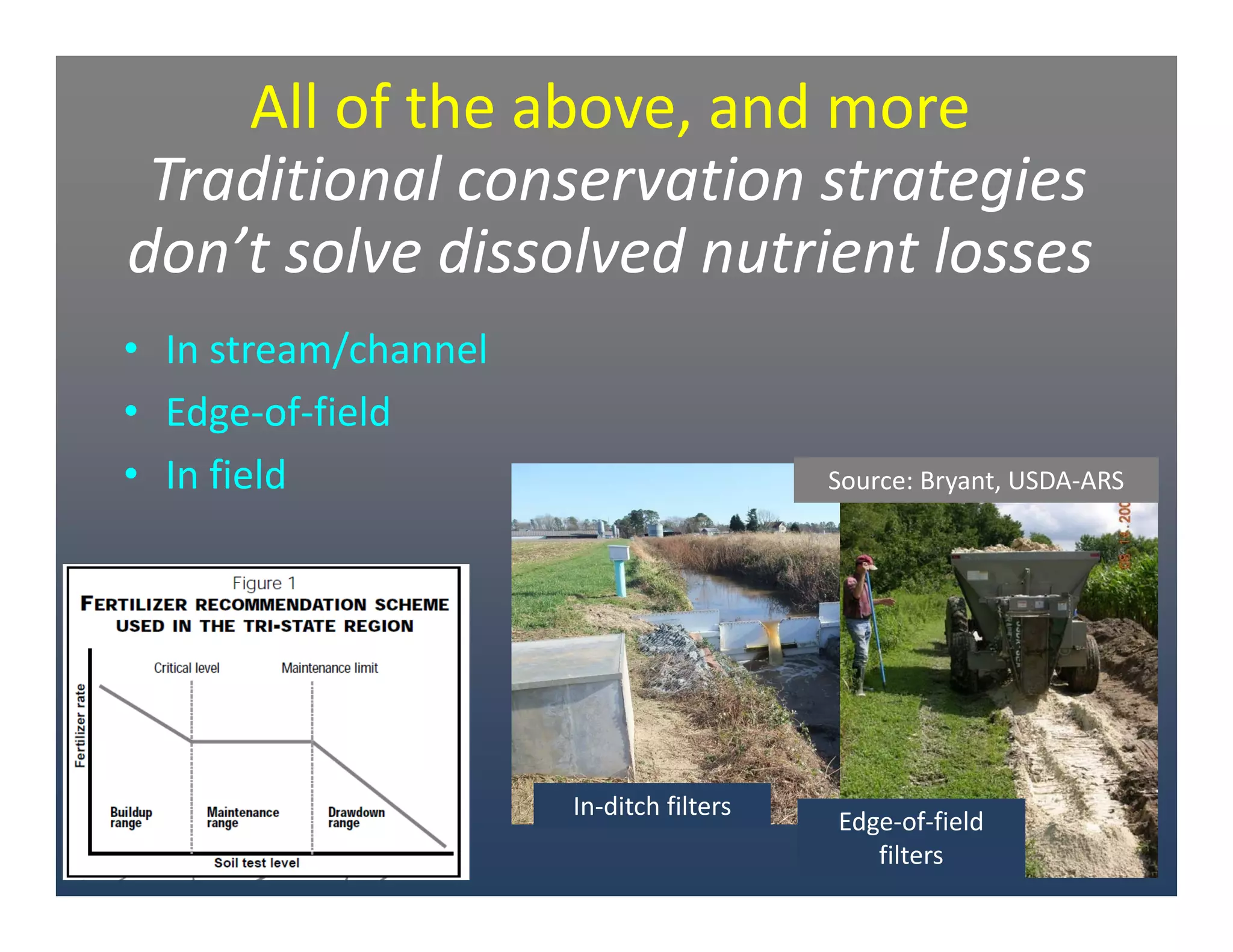
• In stream/channel
• Edge‐of‐field
• In field
All of the above, and more
Traditional conservation strategies 
don’t solve dissolved nutrient losses
In‐ditch filters
Edge‐of‐field 
filters
Source: Bryant, USDA‐ARS
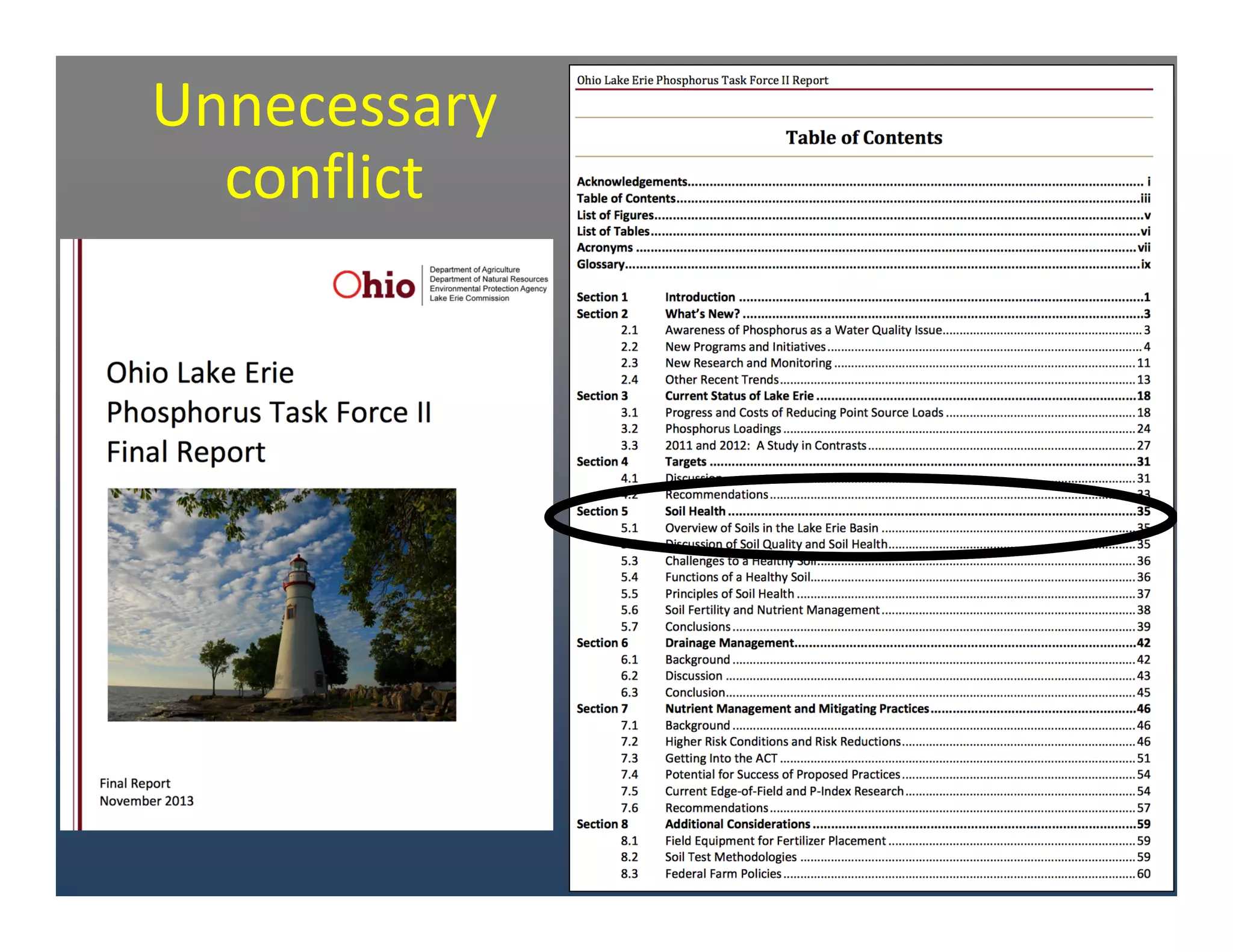
Unnecessary
conflict
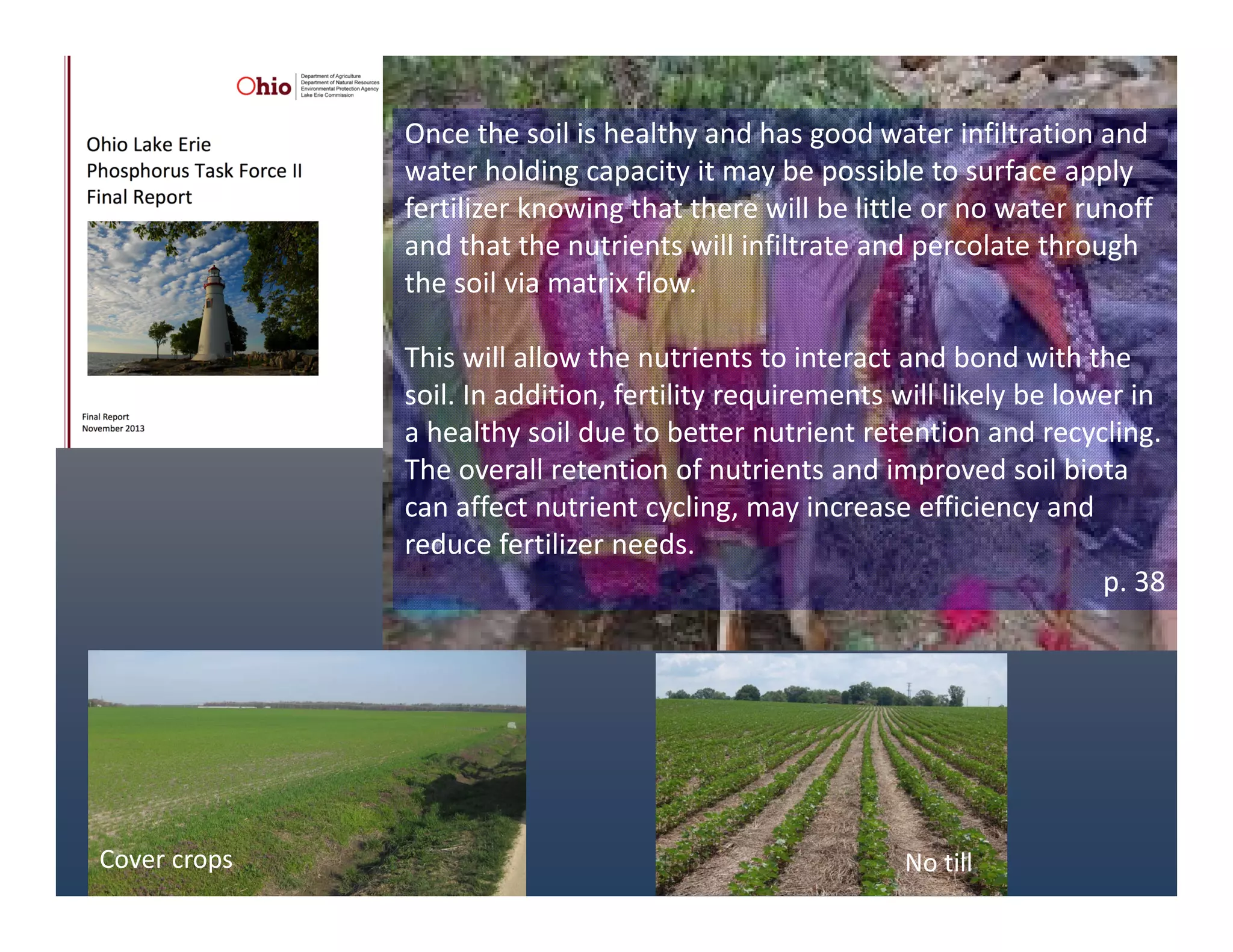
Once the soil is healthy and has good water infiltration and 
water holding capacity it may be possible to surface apply 
fertilizer knowing that there will be little or no water runoff 
and that the nutrients will infiltrate and percolate through 
the soil via matrix flow. 
This will allow the nutrients to interact and bond with the 
soil. In addition, fertility requirements will likely be lower in 
a healthy soil due to better nutrient retention and recycling. 
The overall retention of nutrients and improved soil biota 
can affect nutrient cycling, may increase efficiency and 
reduce fertilizer needs. 
p. 38
No tillCover crops
Kleinman   solutions to new challenges

Kleinman solutions to new challenges