
Integration of e-Learning in Teaching & Learning in Malaysian Higher Education Institutions By:Prof. Dr. Mohamed Amin Embi
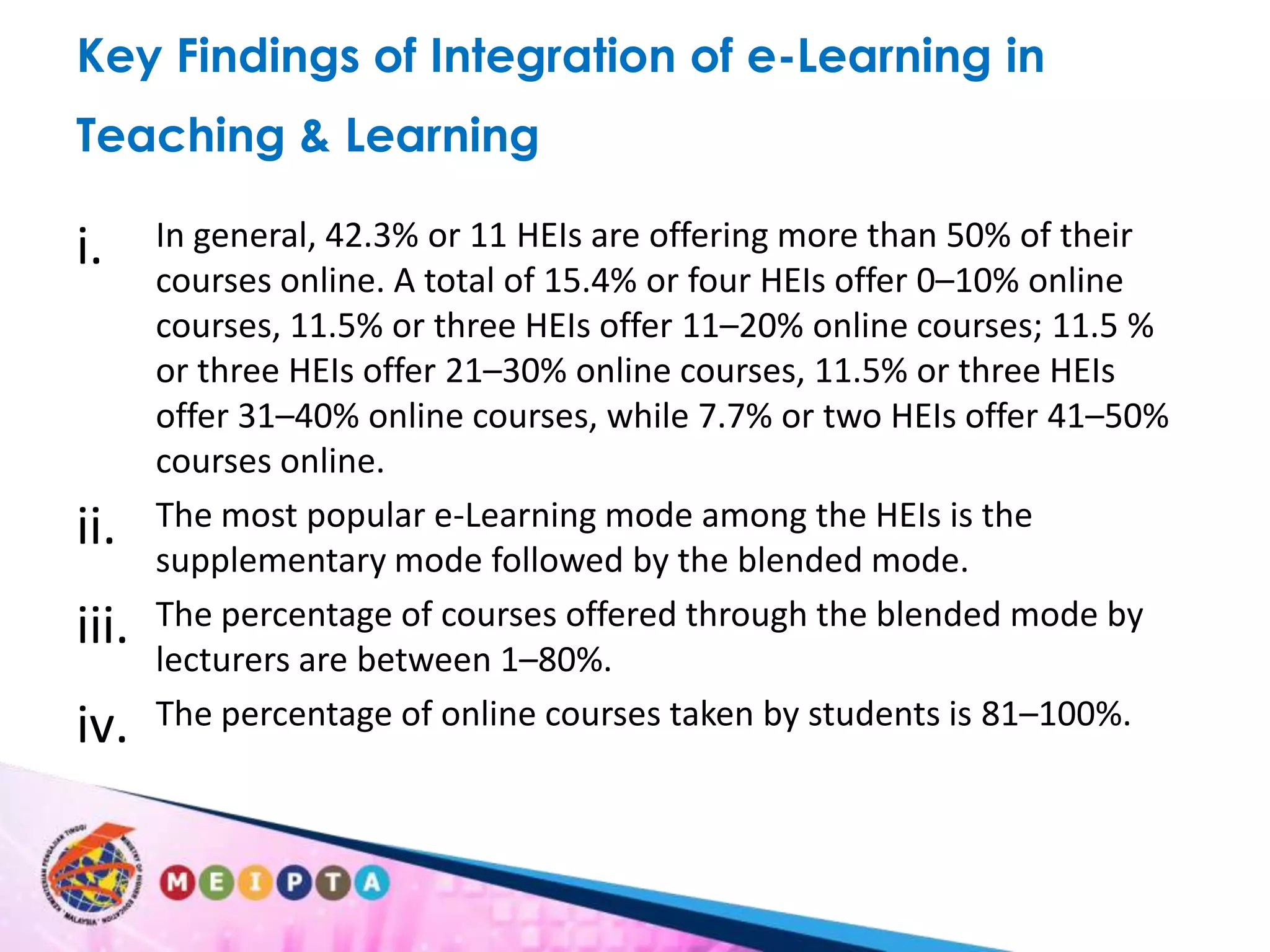
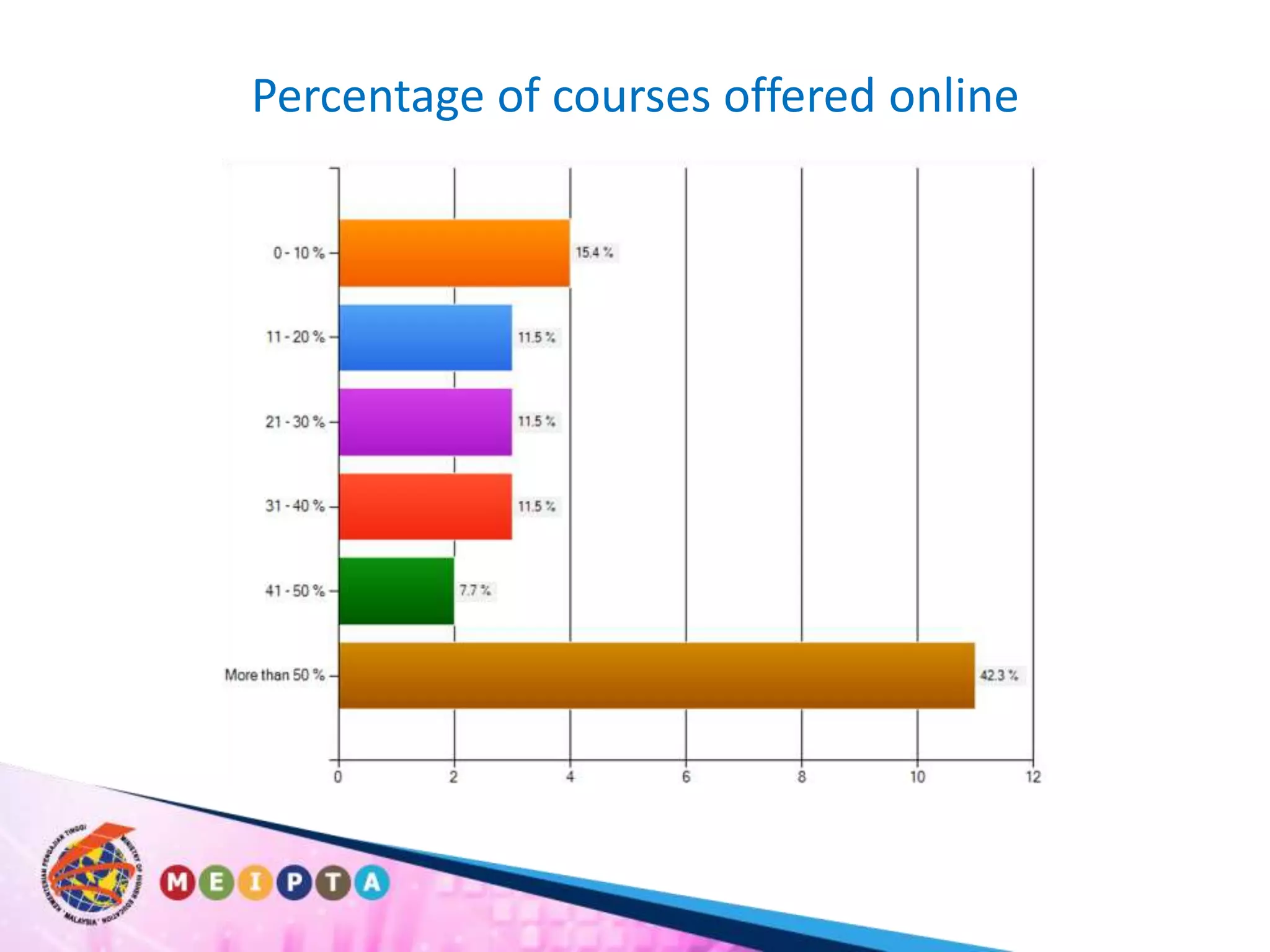
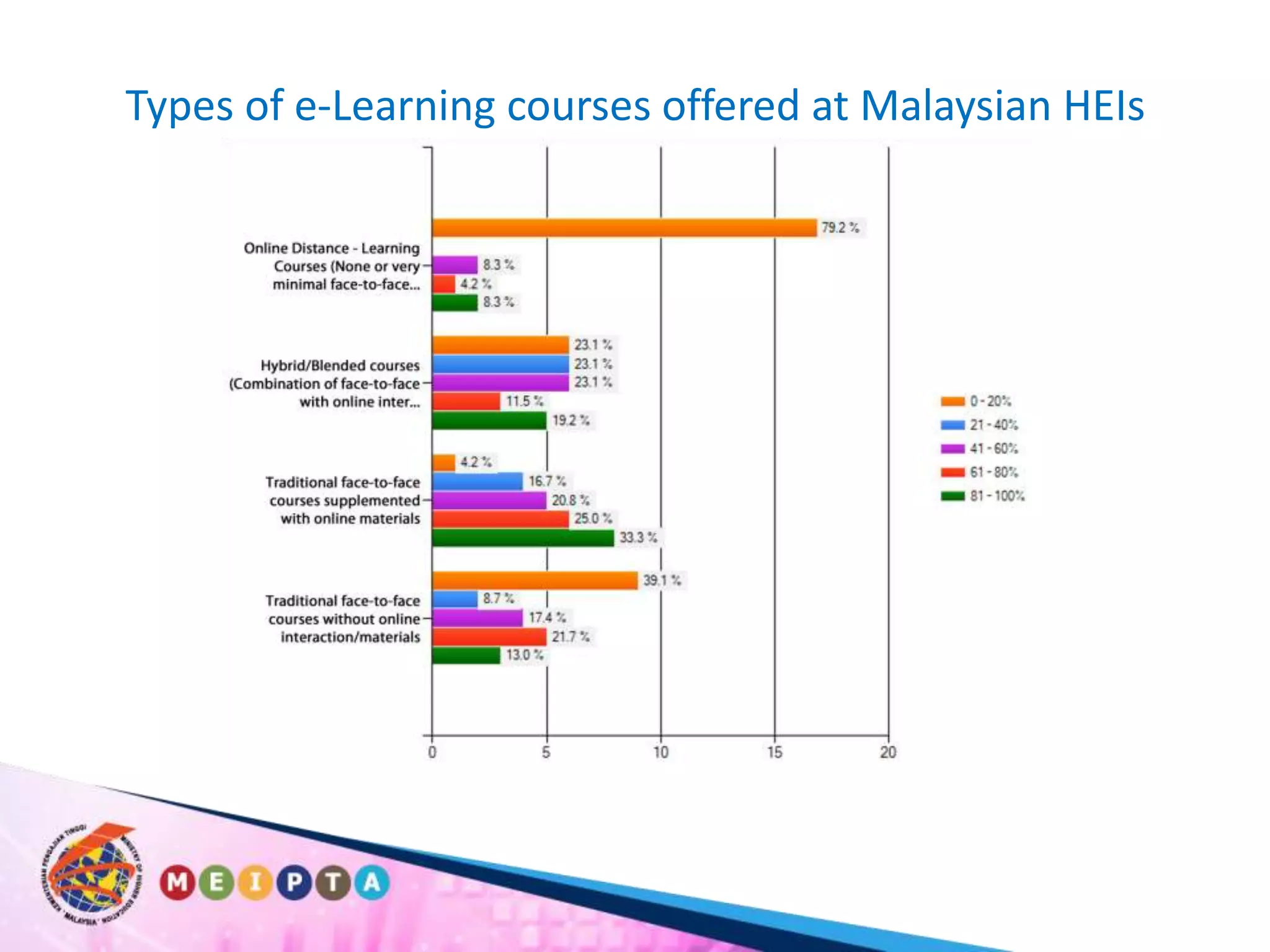
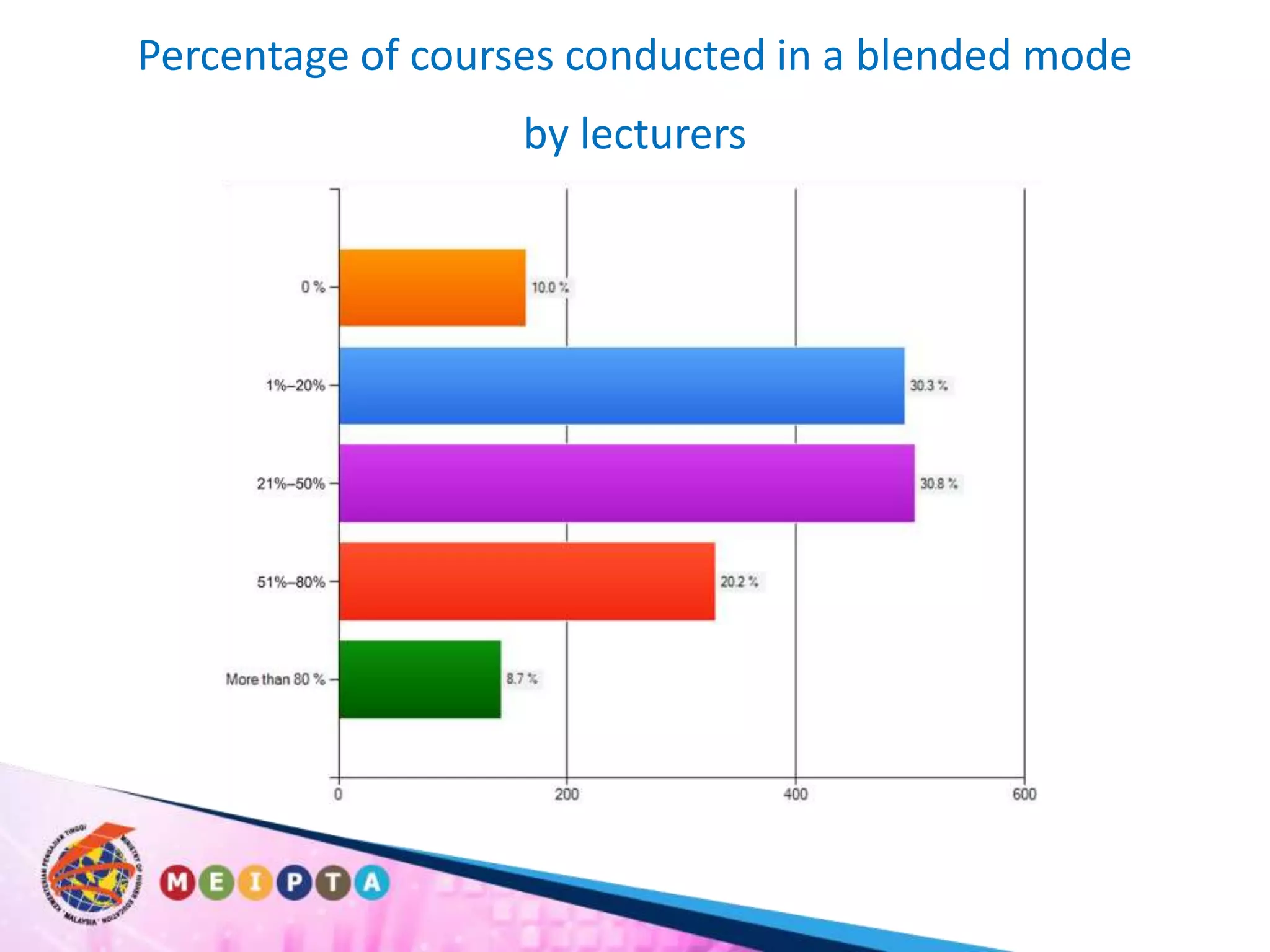
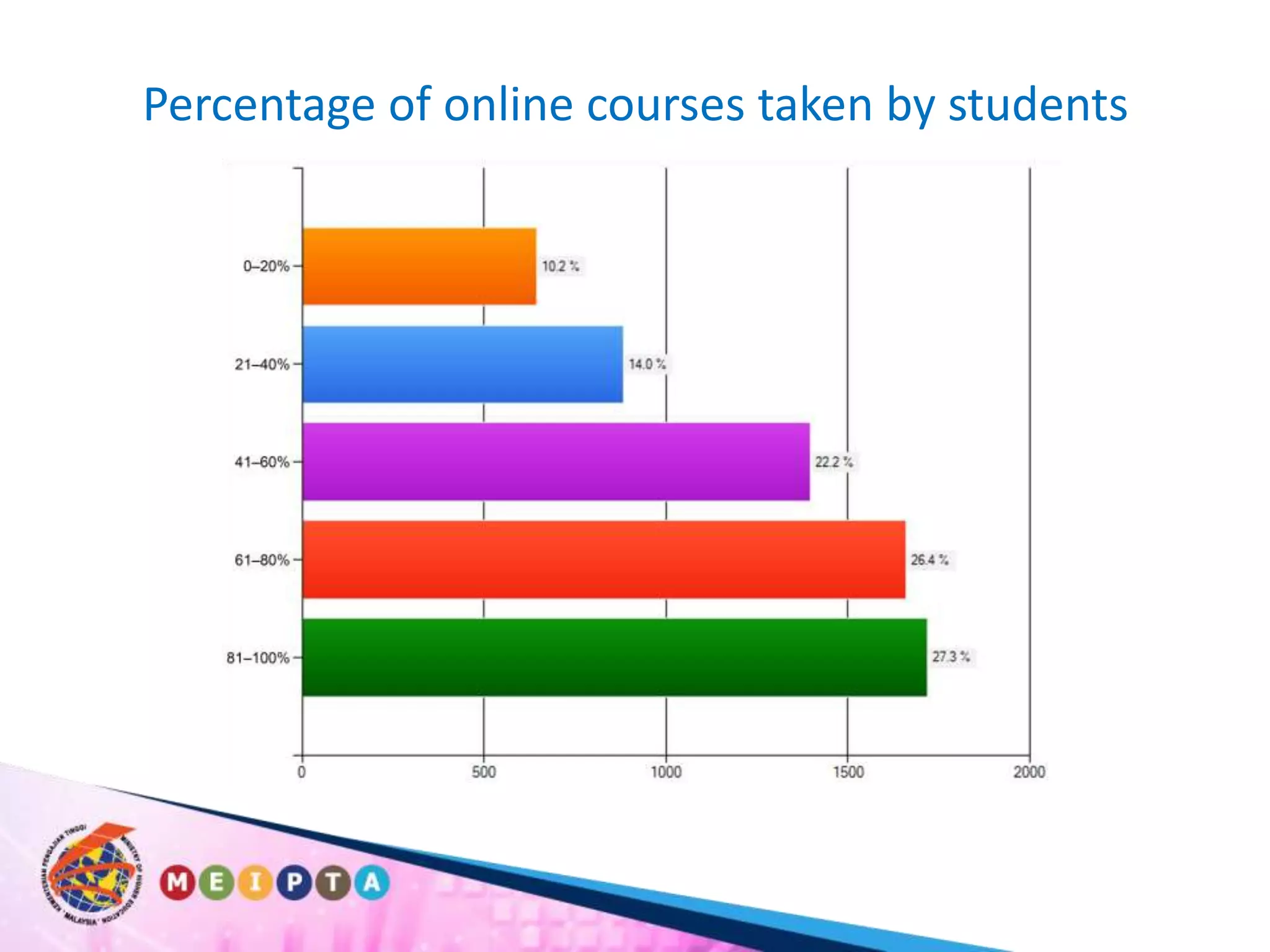
Key Findings of Integration of e-Learning in Teaching & Learning In general, 42.3% or 11 HEIs are offering more than 50% of their courses online. A total of 15.4% or four HEIs offer 0–10% online courses, 11.5% or three HEIs offer 11–20% online courses; 11.5 % or three HEIs offer 21–30% online courses, 11.5% or three HEIs offer 31–40% online courses, while 7.7% or two HEIs offer 41–50% courses online. The most popular e-Learning mode among the HEIs is the supplementary mode followed by the blended mode. The percentage of courses offered through the blended mode by lecturers are between 1–80%. The percentage of online courses taken by students is 81–100%.
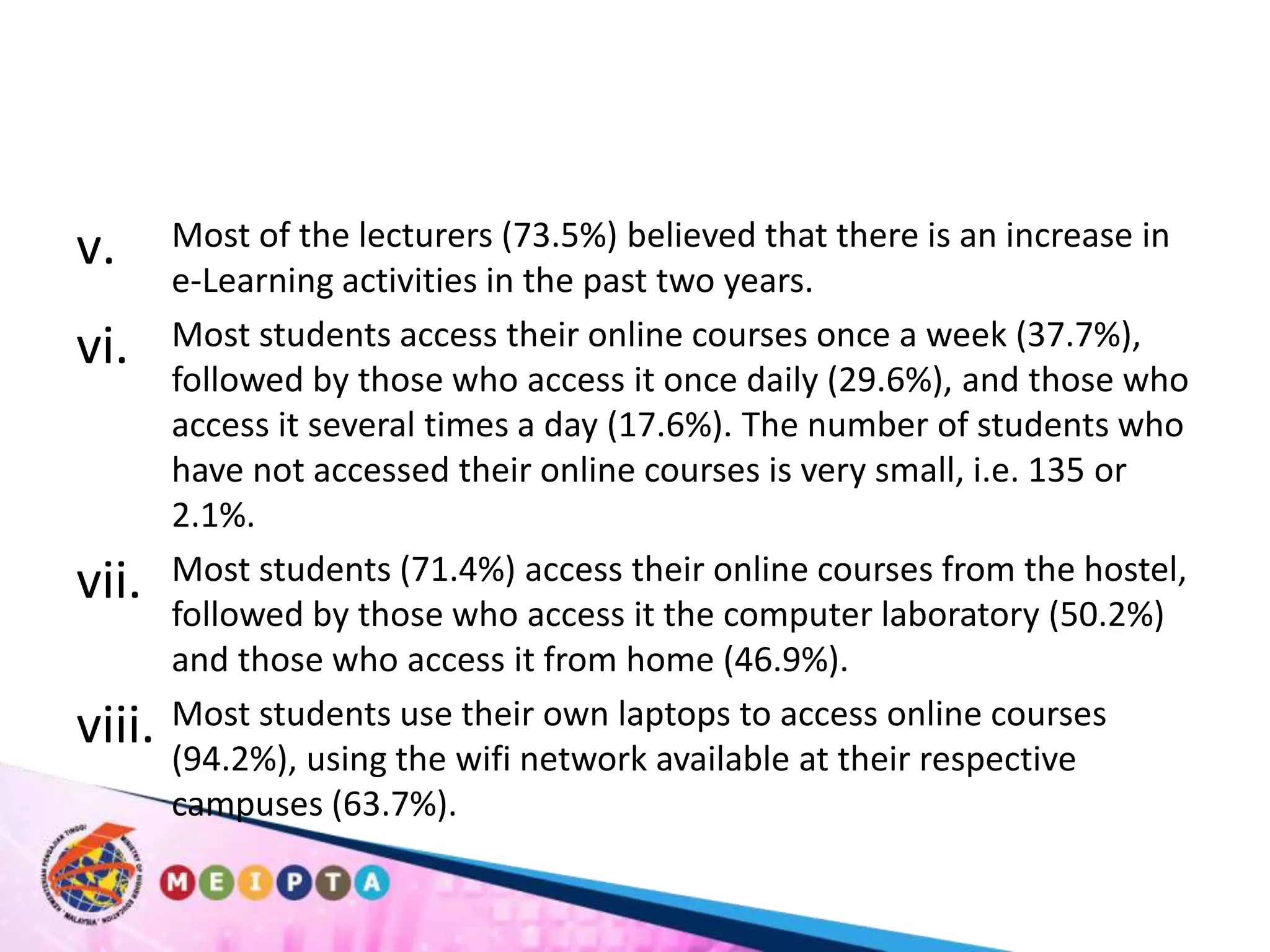
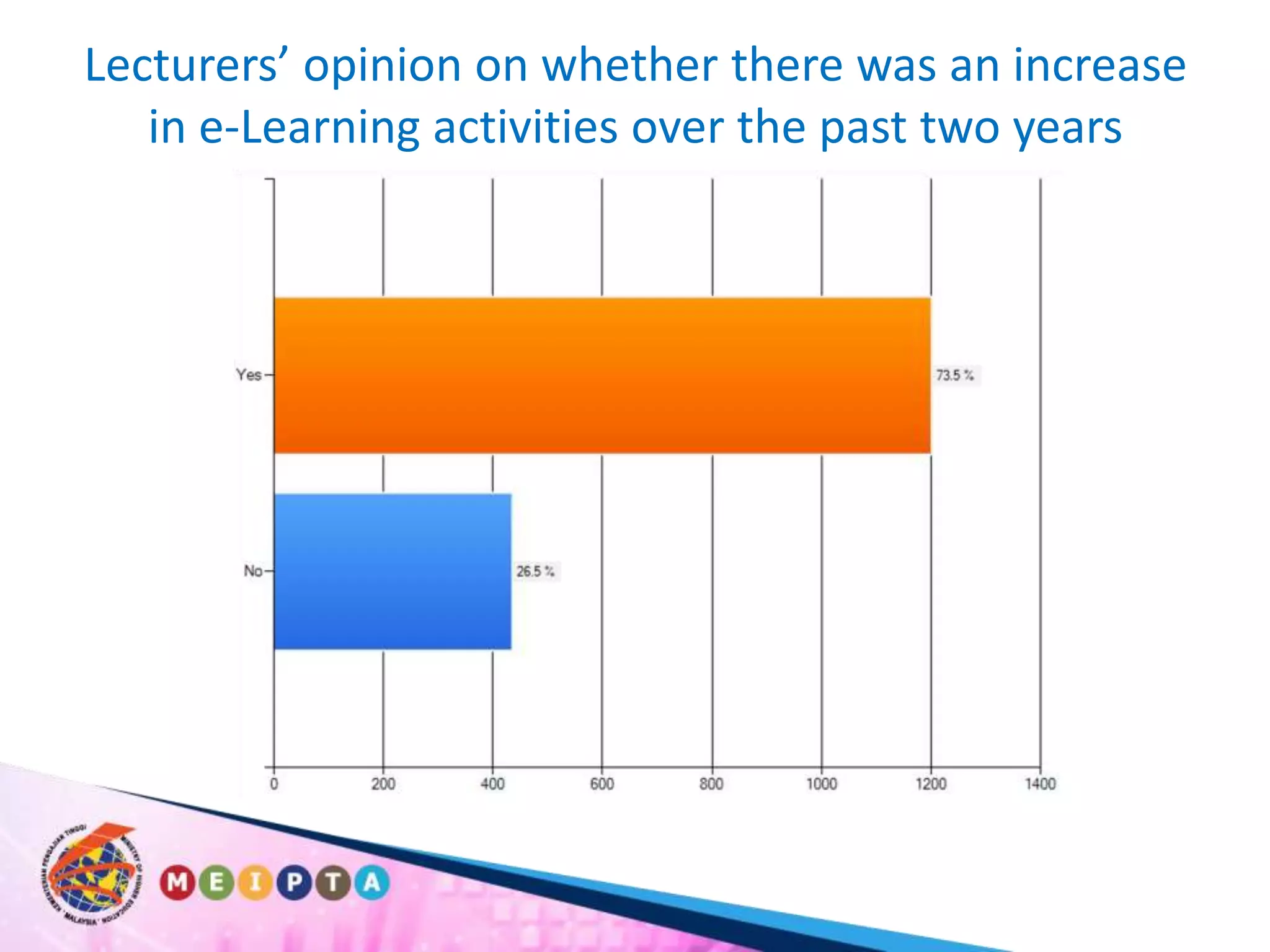
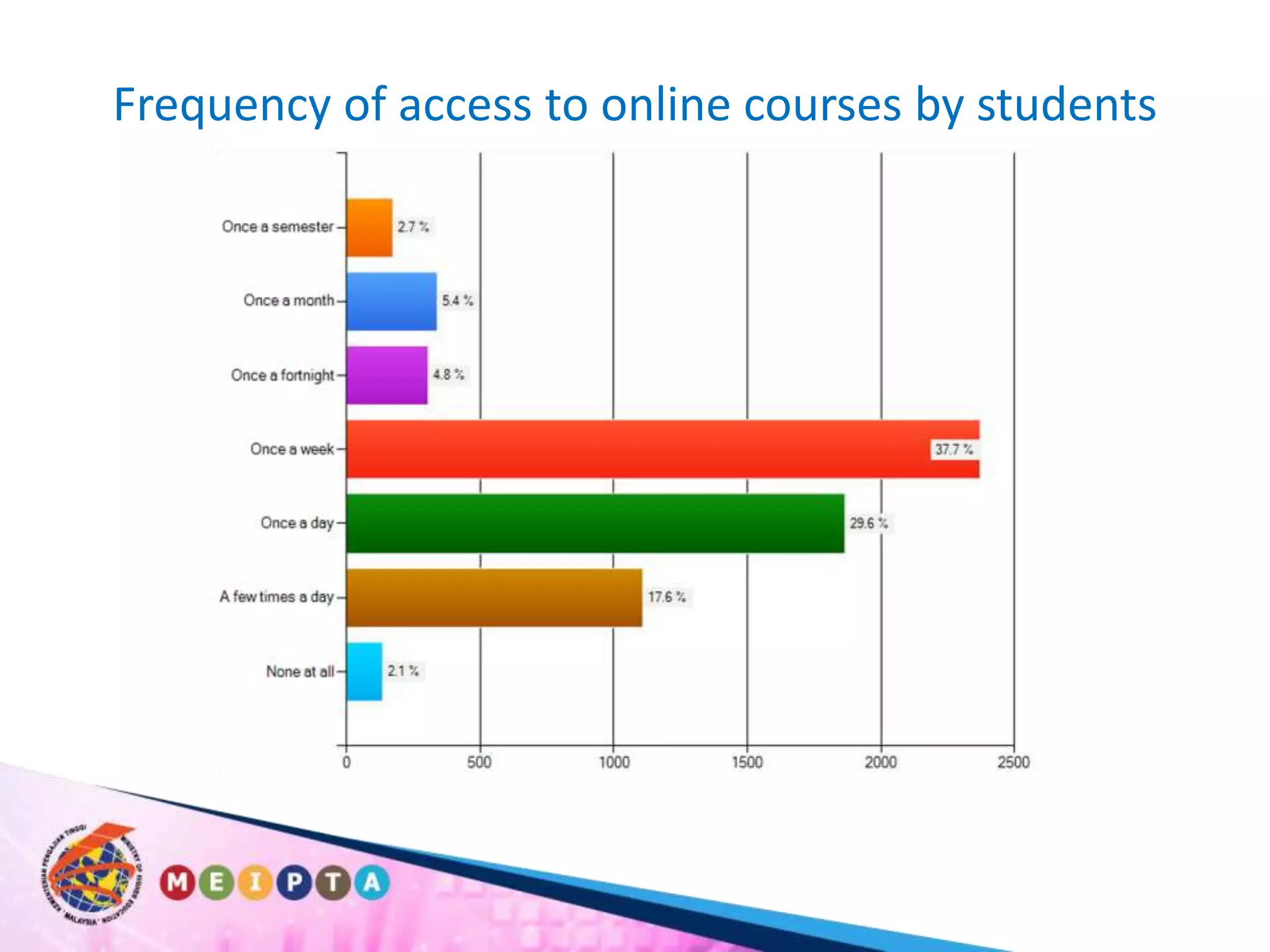
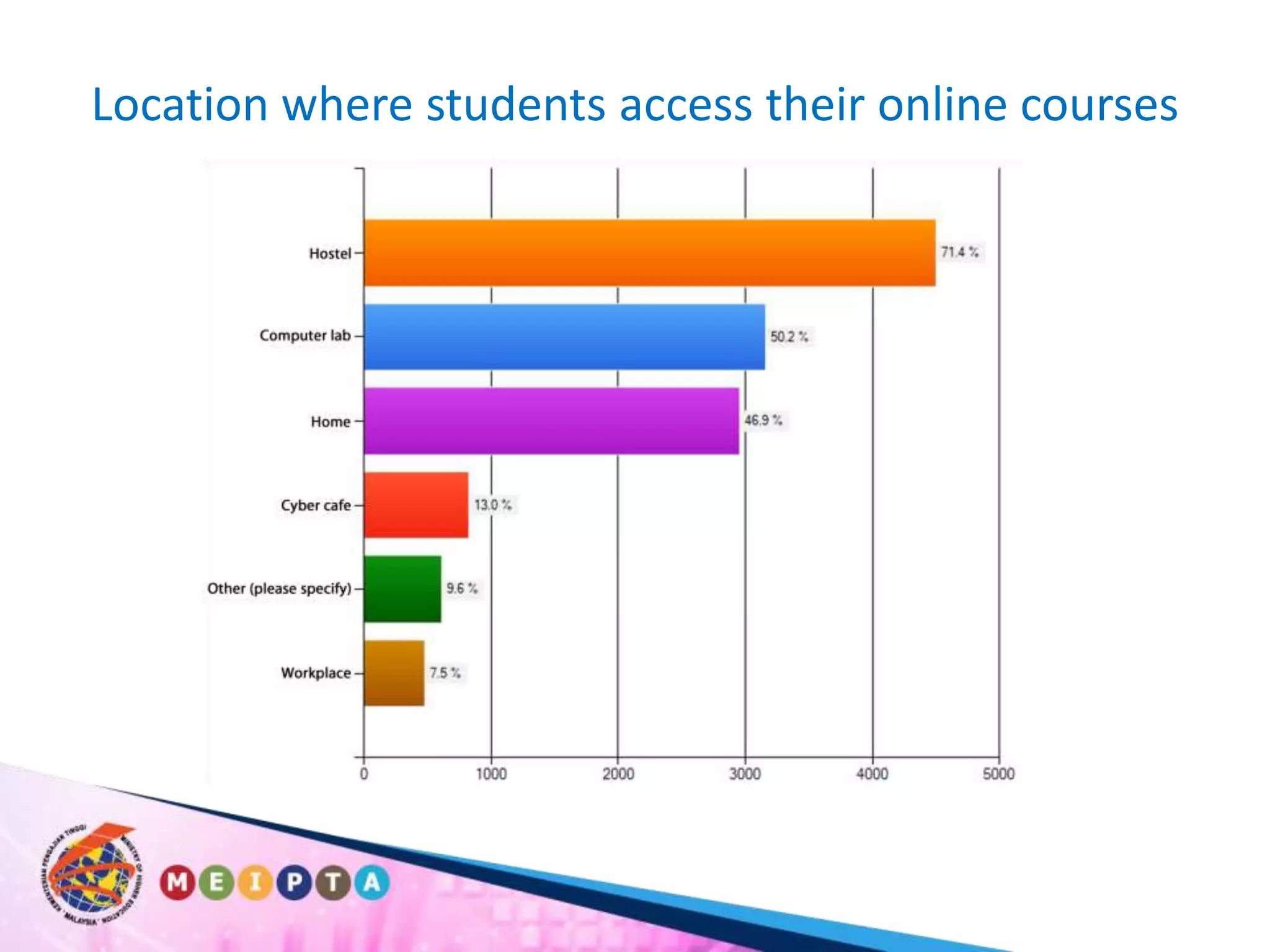
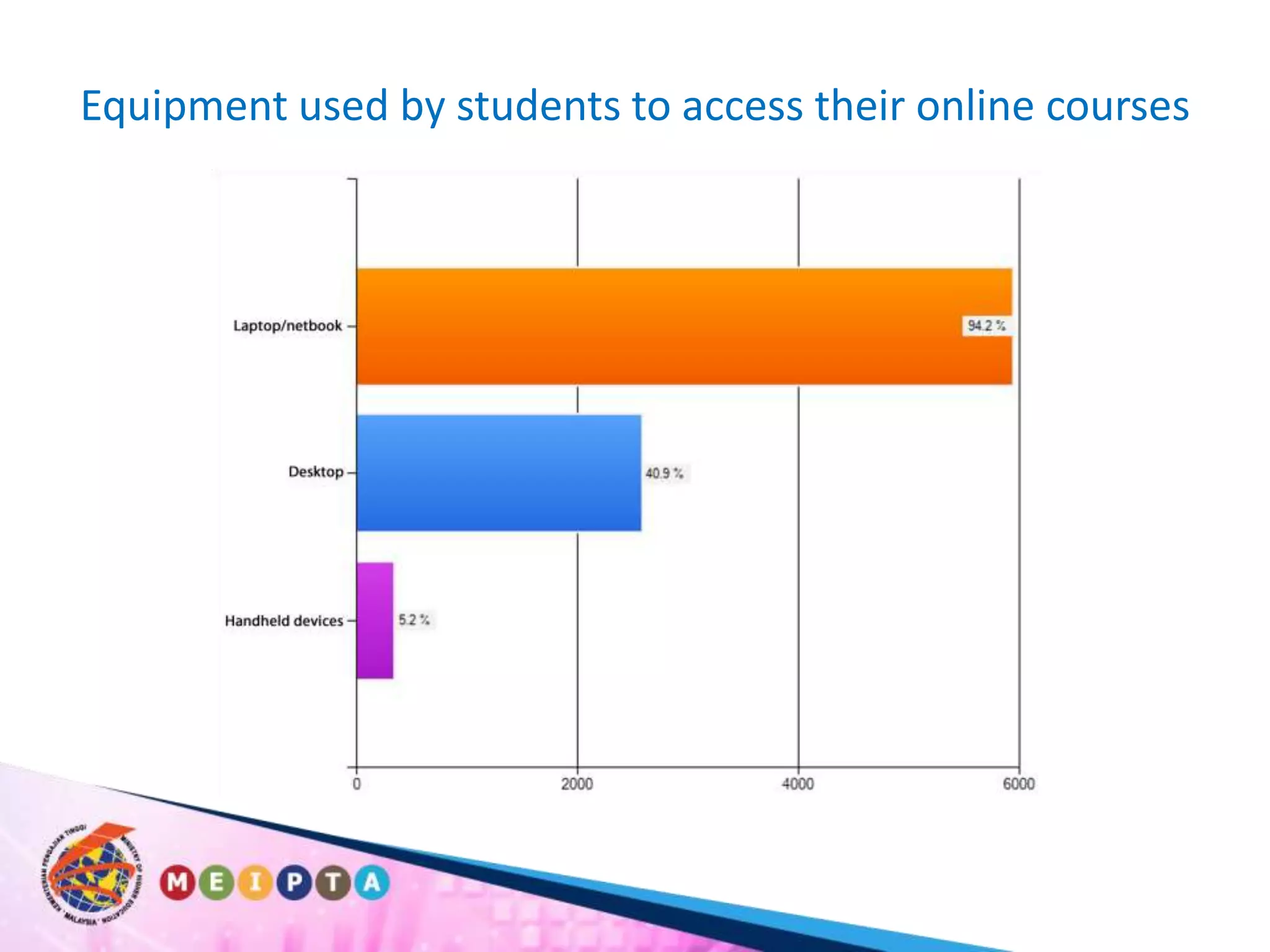
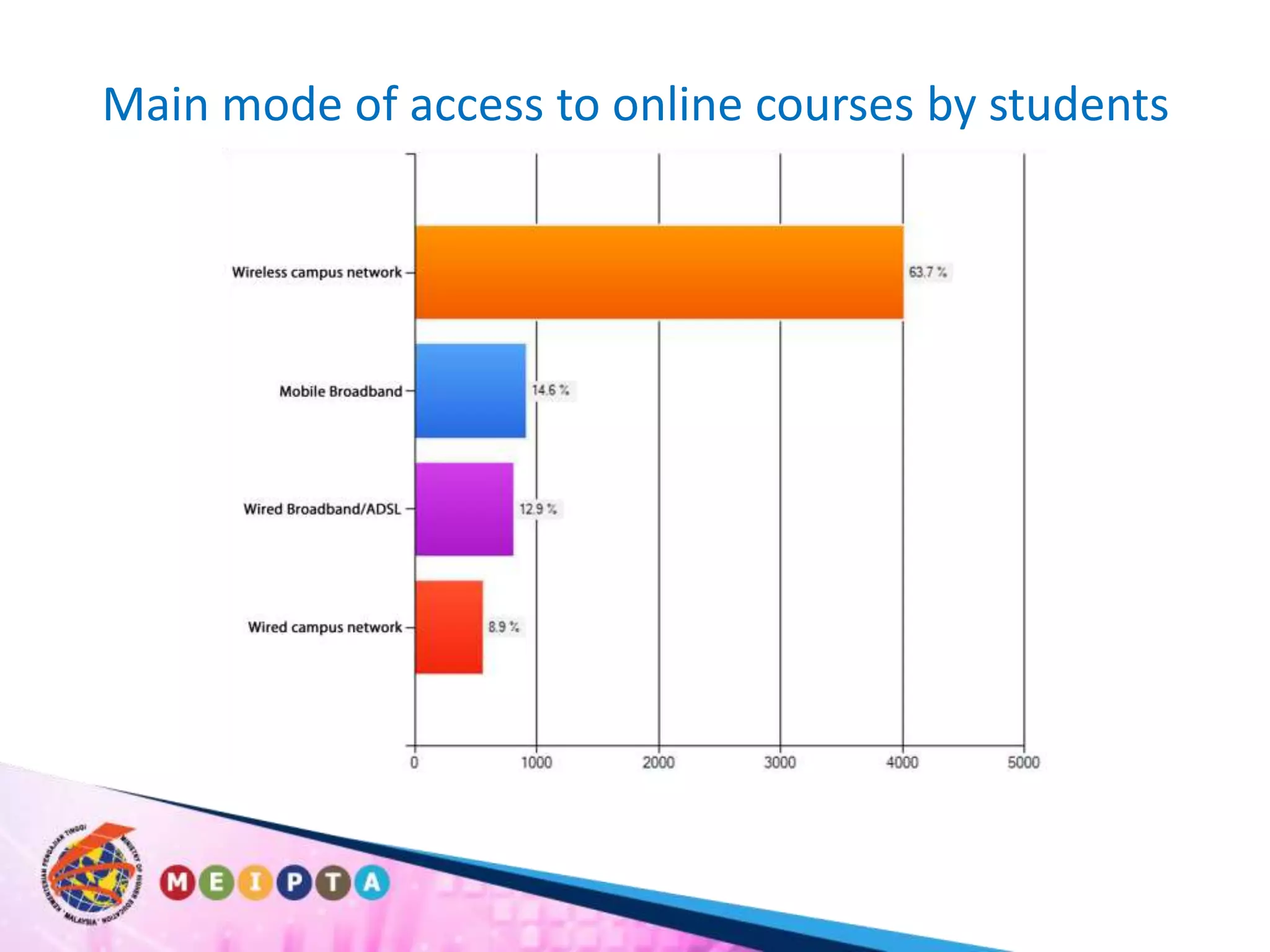
Most of the lecturers (73.5%) believed that there is an increase in e-Learning activities in the past two years. Most students access their online courses once a week (37.7%), followed by those who access it once daily (29.6%), and those who access it several times a day (17.6%). The number of students who have not accessed their online courses is very small, i.e. 135 or 2.1%. Most students (71.4%) access their online courses from the hostel, followed by those who access it the computer laboratory (50.2%) and those who access it from home (46.9%). Most students use their own laptops to access online courses (94.2%), using the wifi network available at their respective campuses (63.7%).
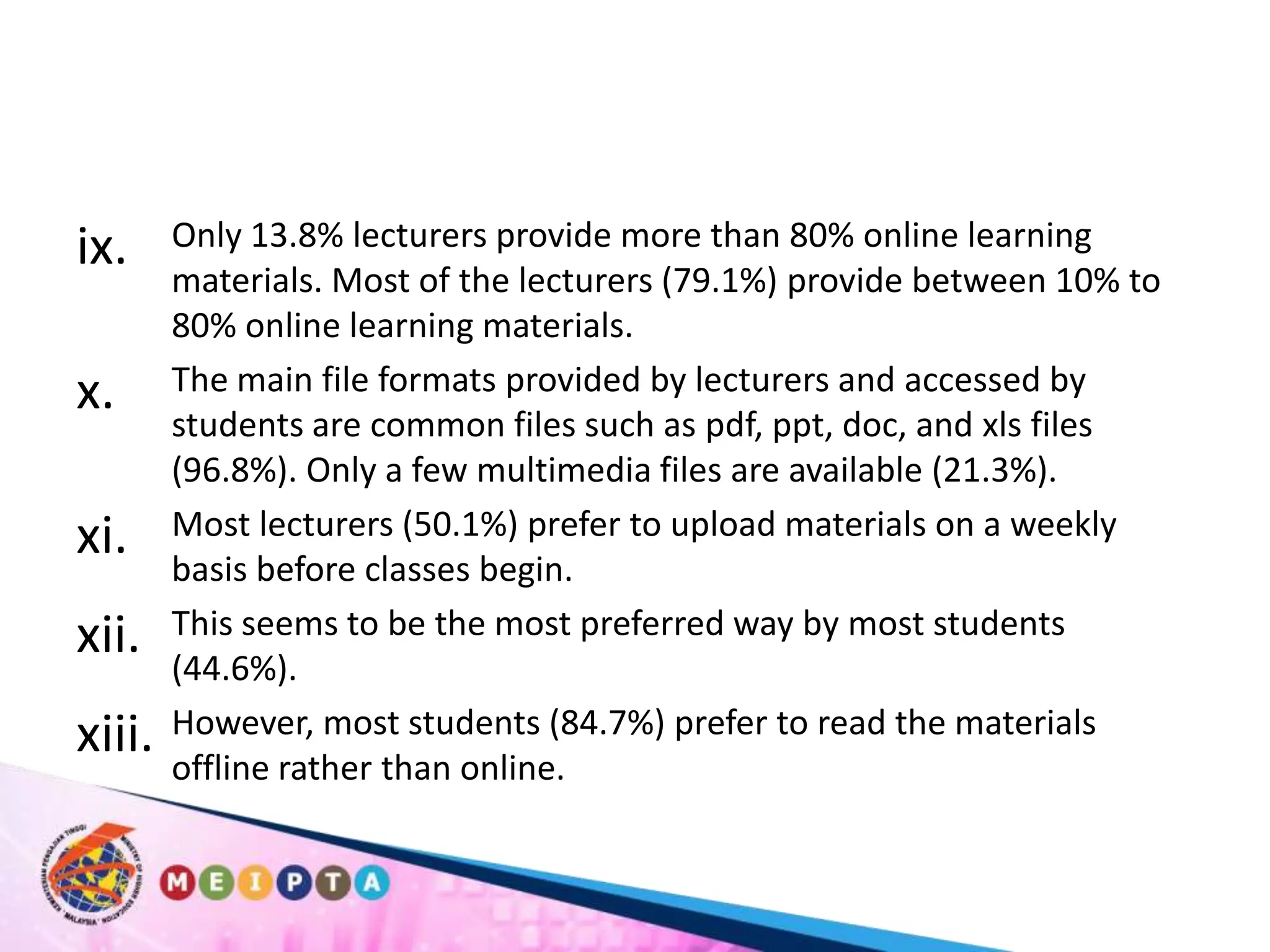
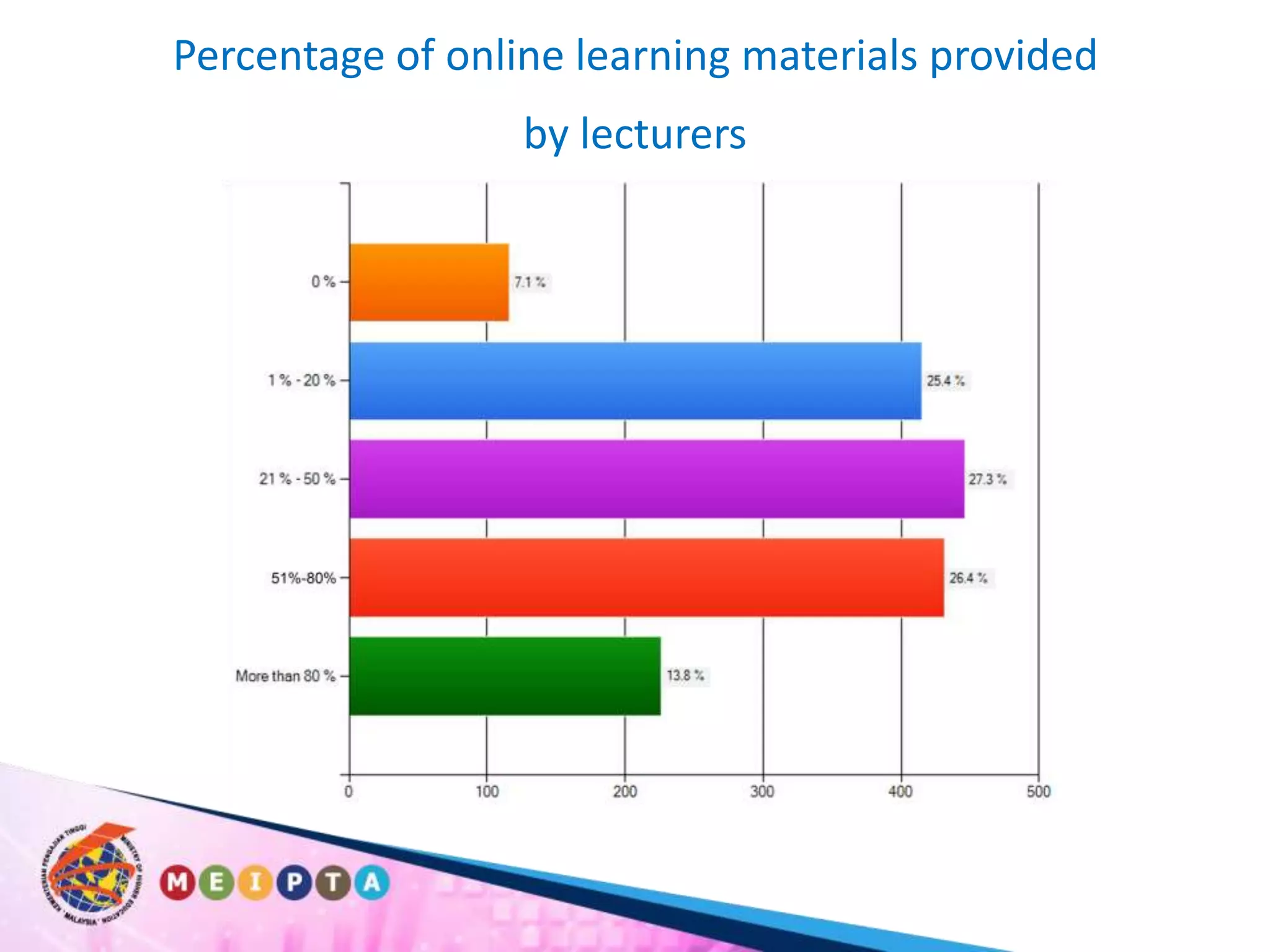
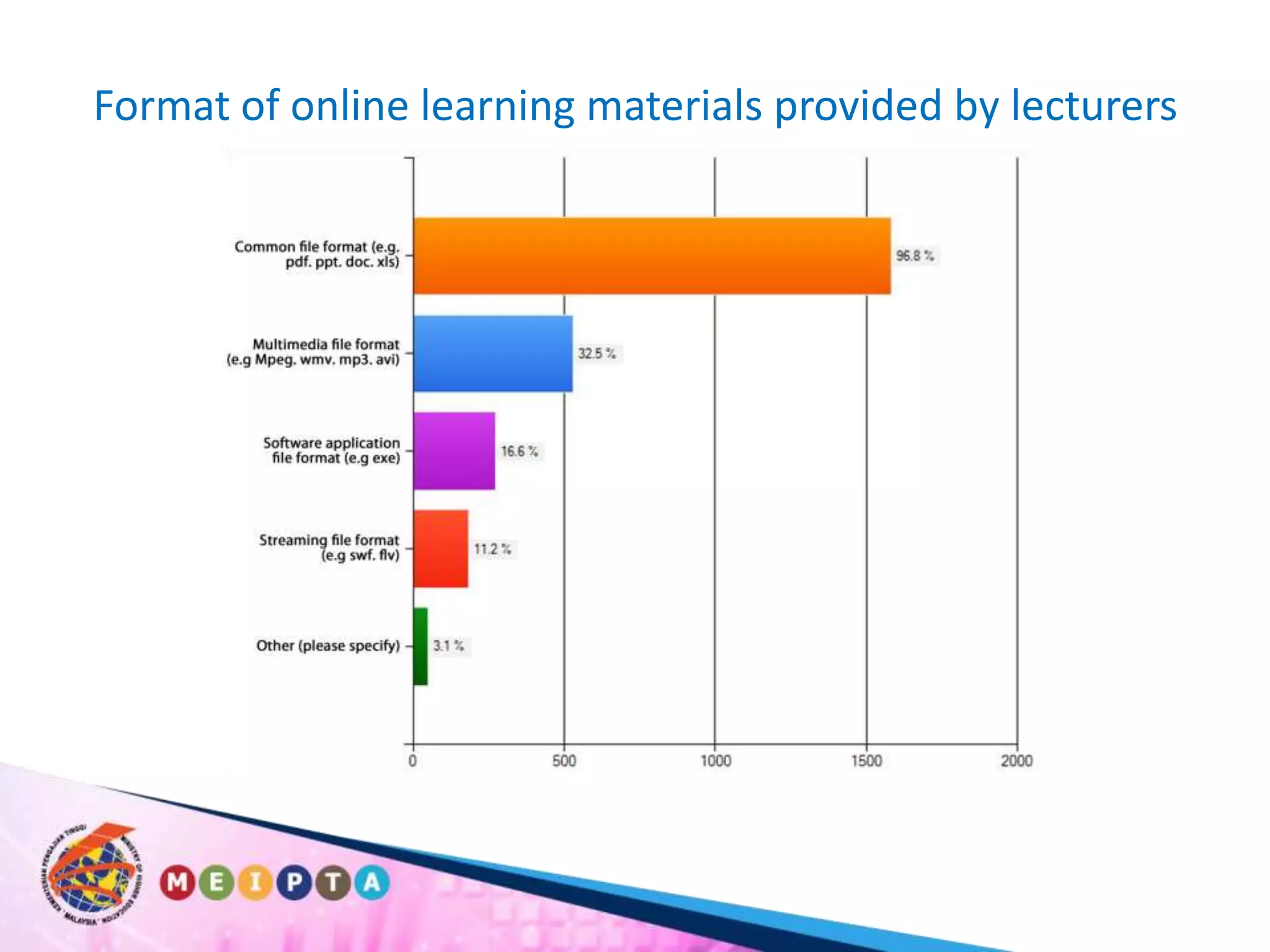
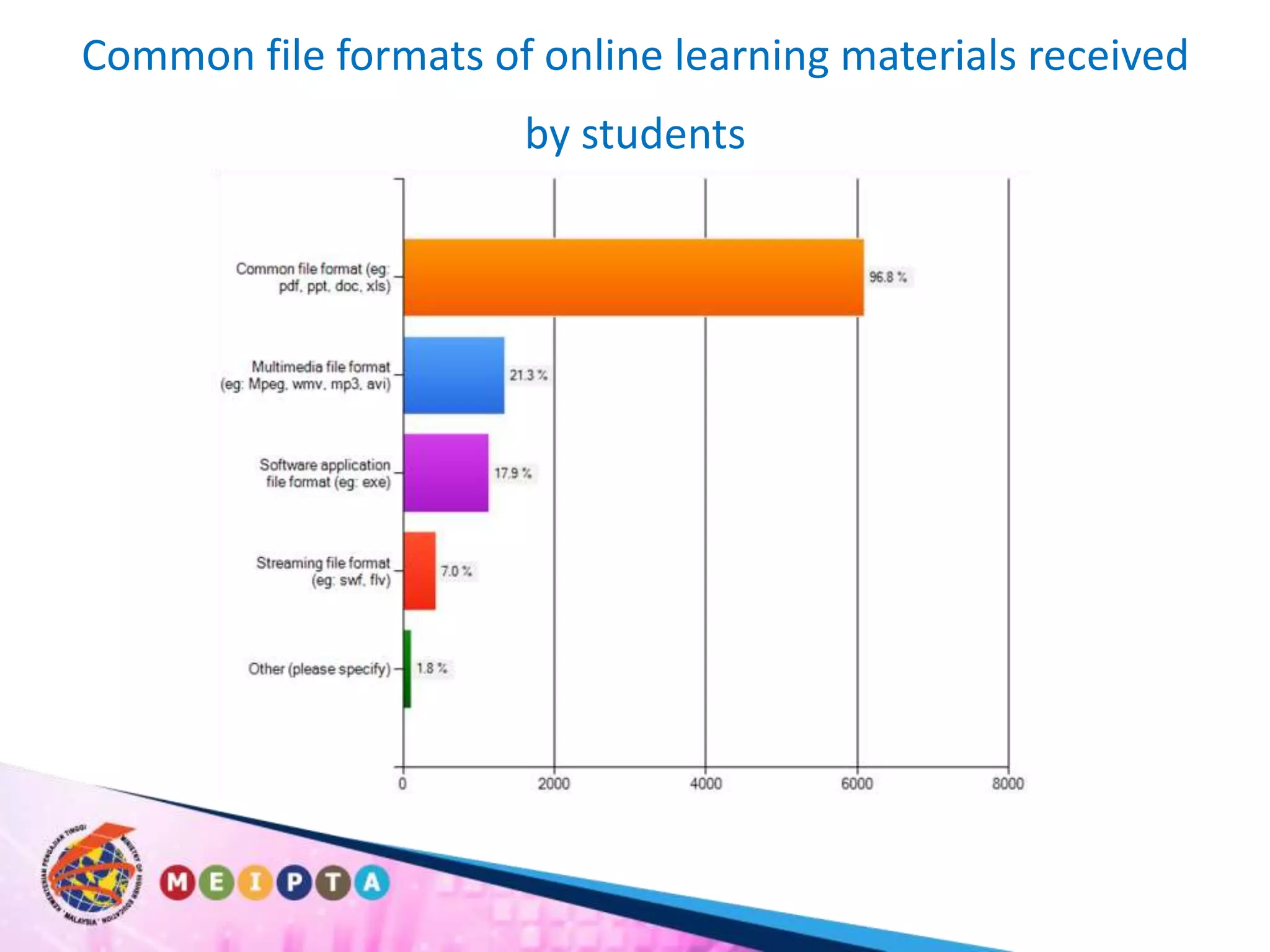
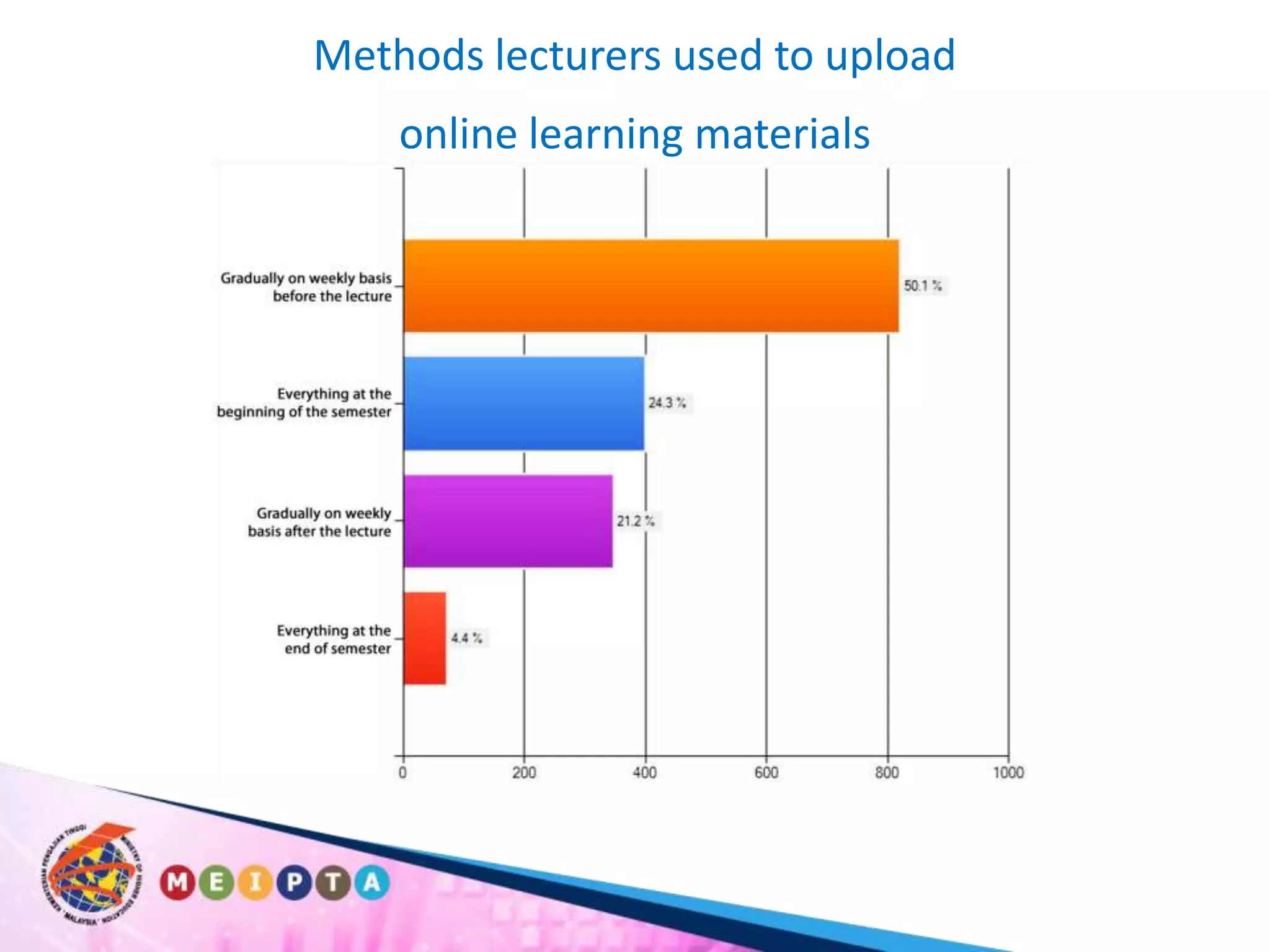
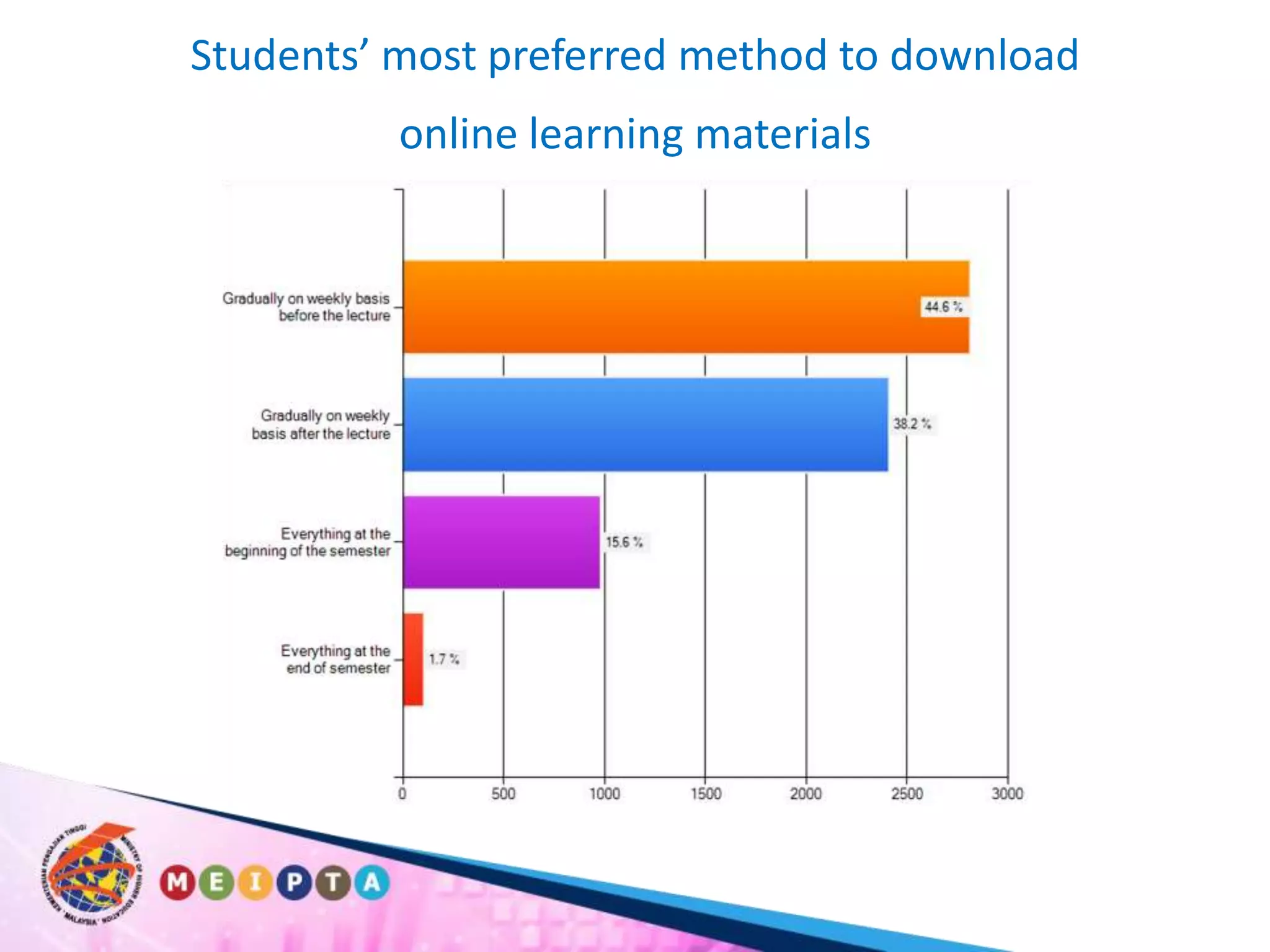
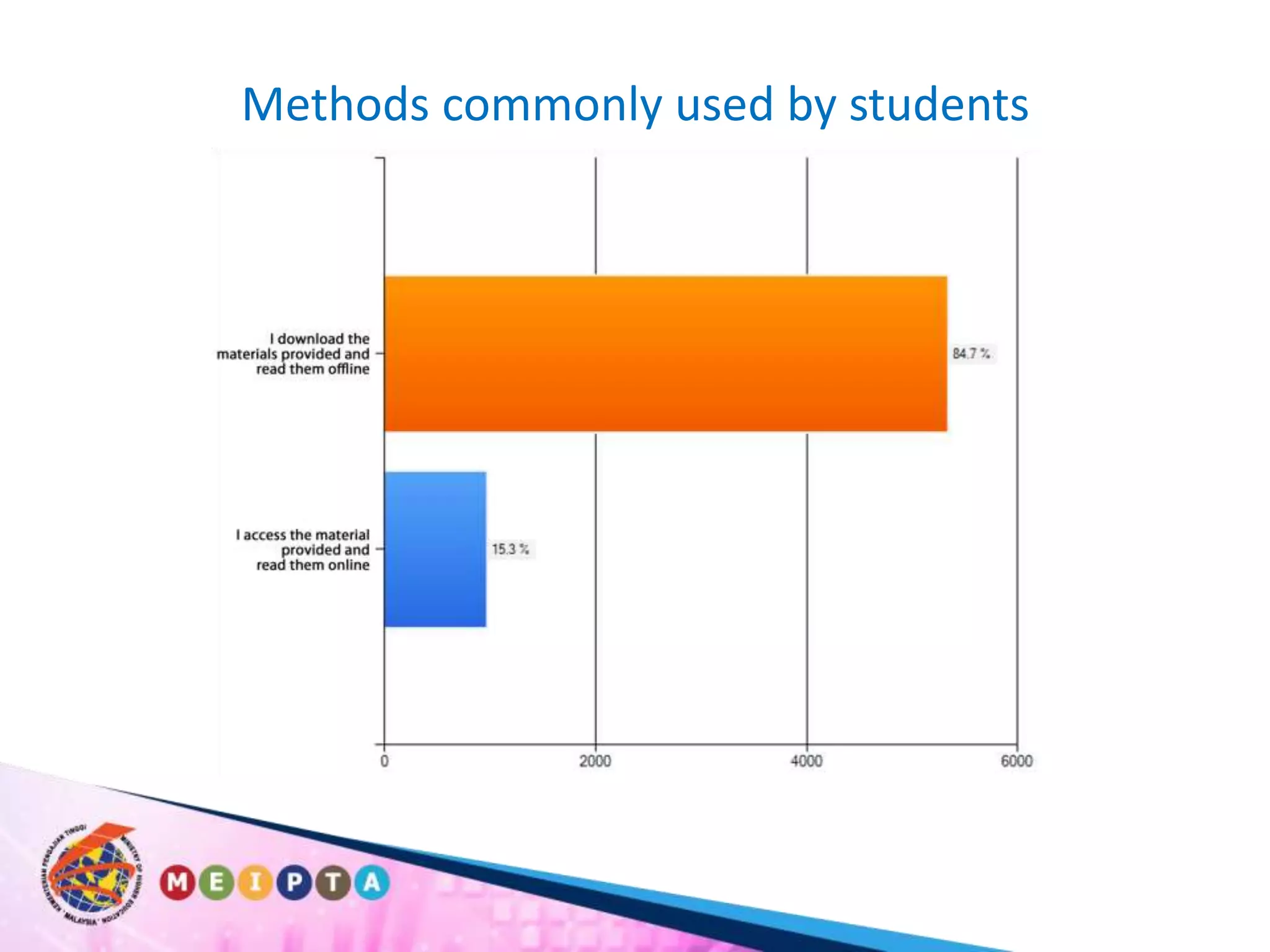
Only 13.8% lecturers provide more than 80% online learning materials. Most of the lecturers (79.1%) provide between 10% to 80% online learning materials. The main file formats provided by lecturers and accessed by students are common files such as pdf, ppt, doc, and xls files (96.8%). Only a few multimedia files are available (21.3%). Most lecturers (50.1%) prefer to upload materials on a weekly basis before classes begin. This seems to be the most preferred way by most students (44.6%). However, most students (84.7%) prefer to read the materials offline rather than online.
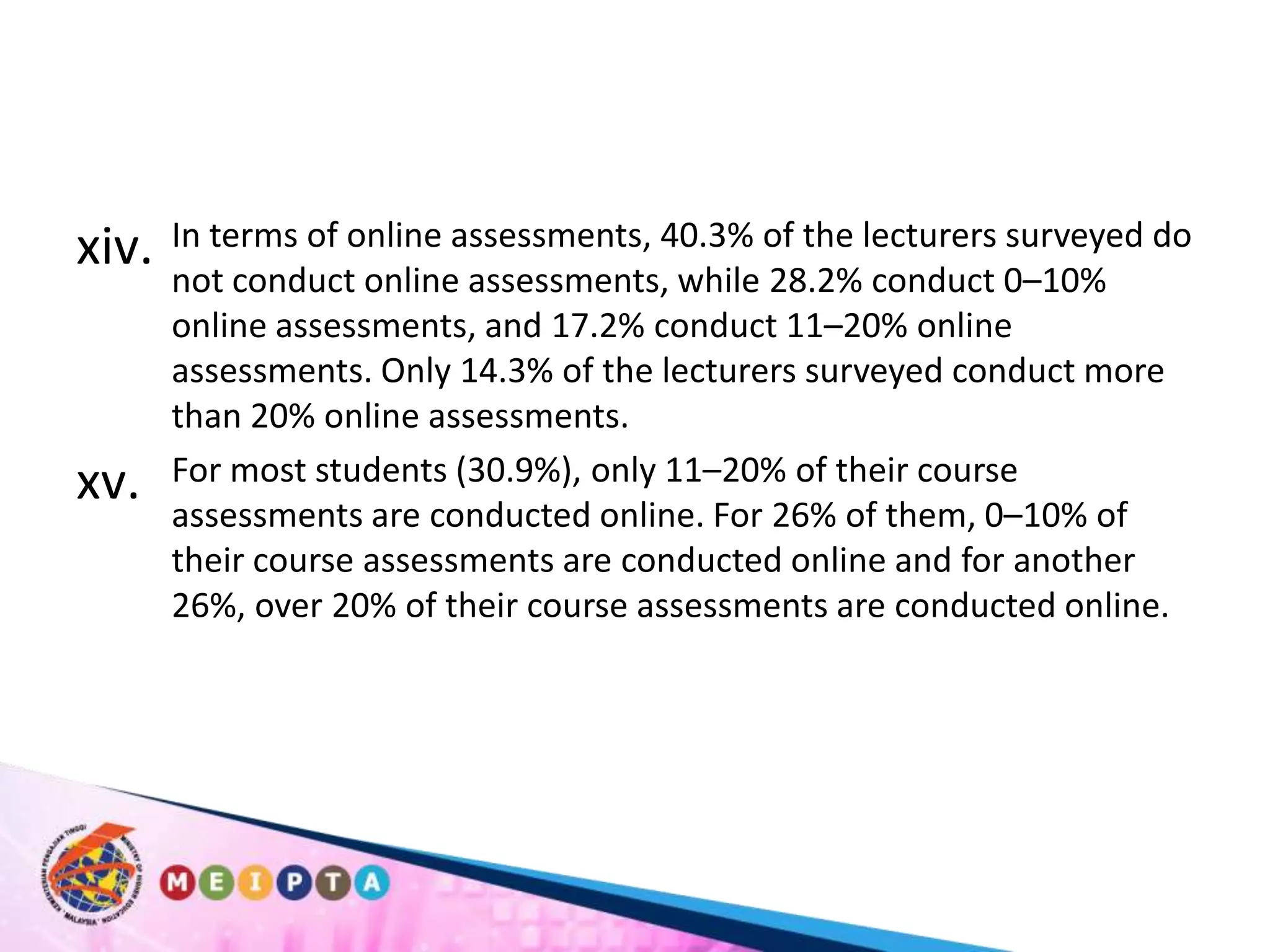
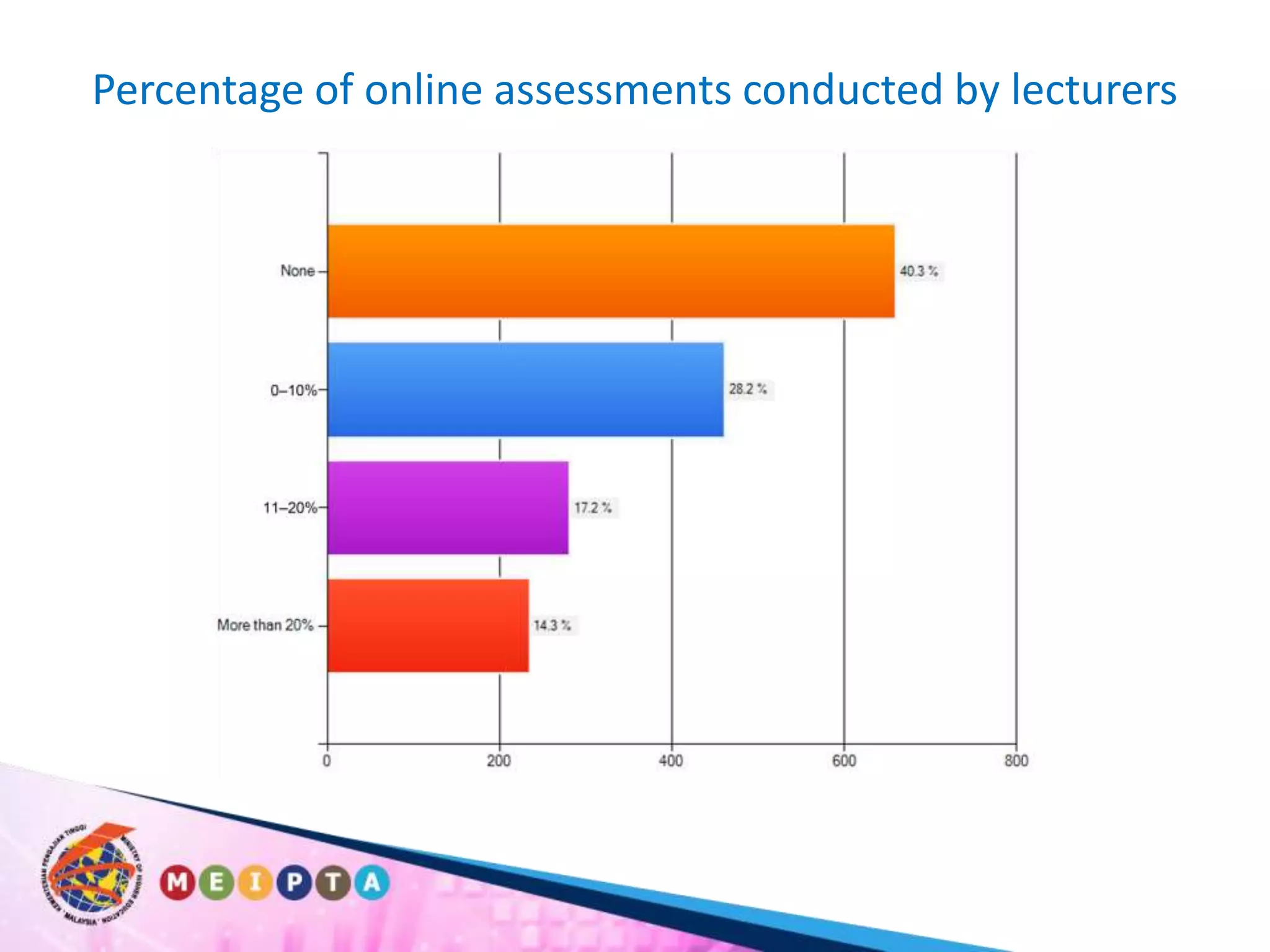
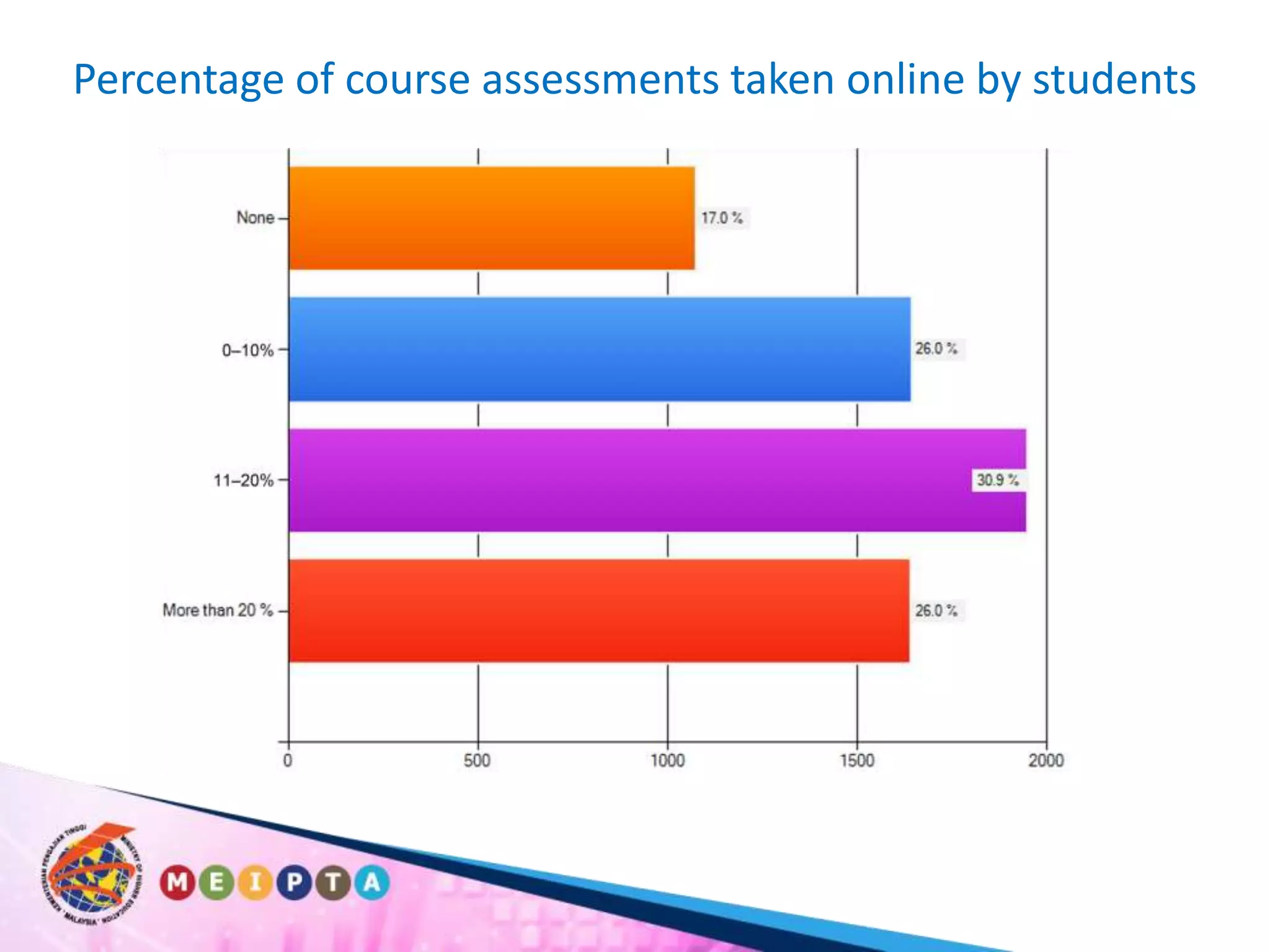
In terms of online assessments, 40.3% of the lecturers surveyed do not conduct online assessments, while 28.2% conduct 0–10% online assessments, and 17.2% conduct 11–20% online assessments. Only 14.3% of the lecturers surveyed conduct more than 20% online assessments. For most students (30.9%), only 11–20% of their course assessments are conducted online. For 26% of them, 0–10% of their course assessments are conducted online and for another 26%, over 20% of their course assessments are conducted online.
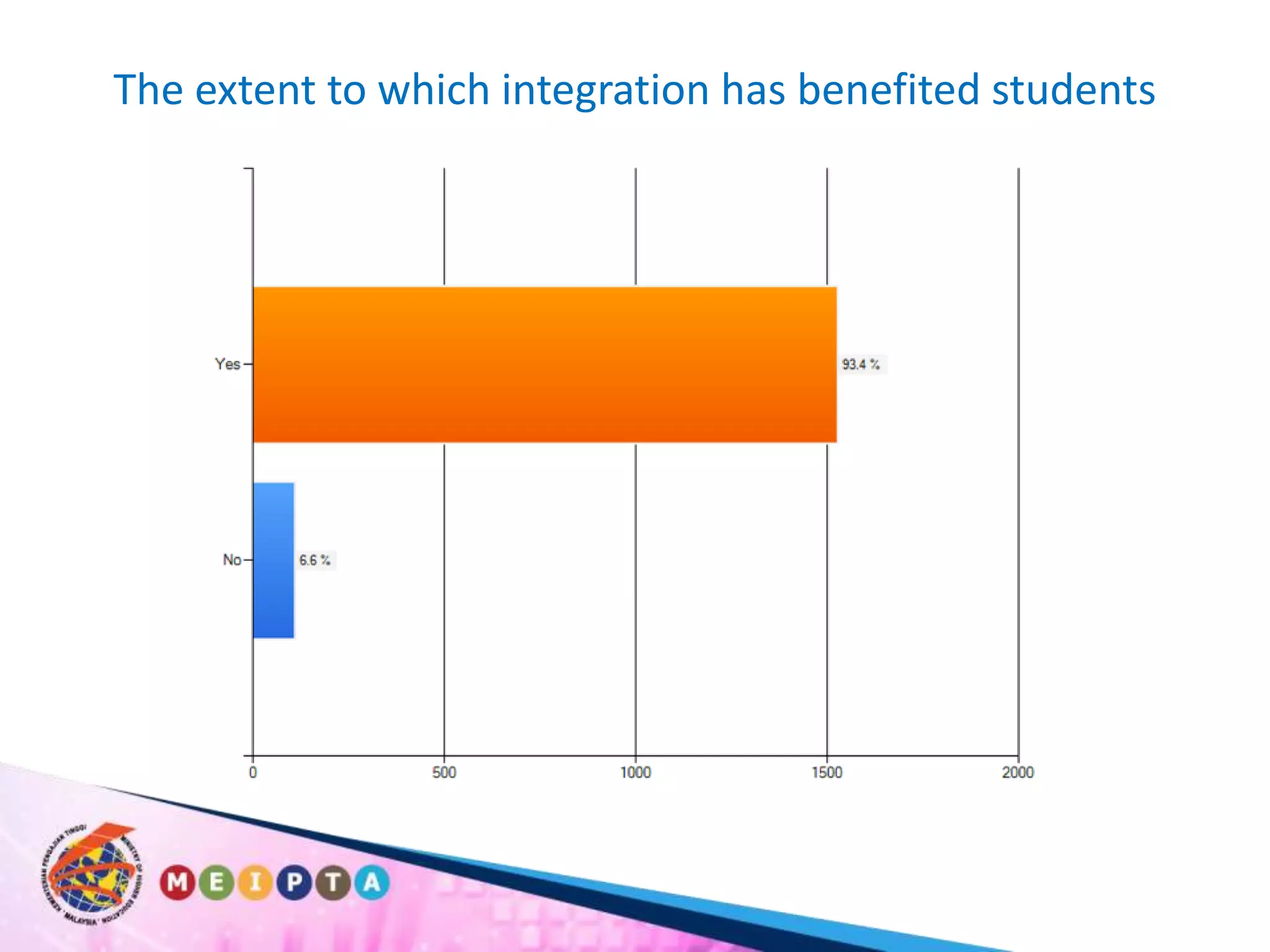
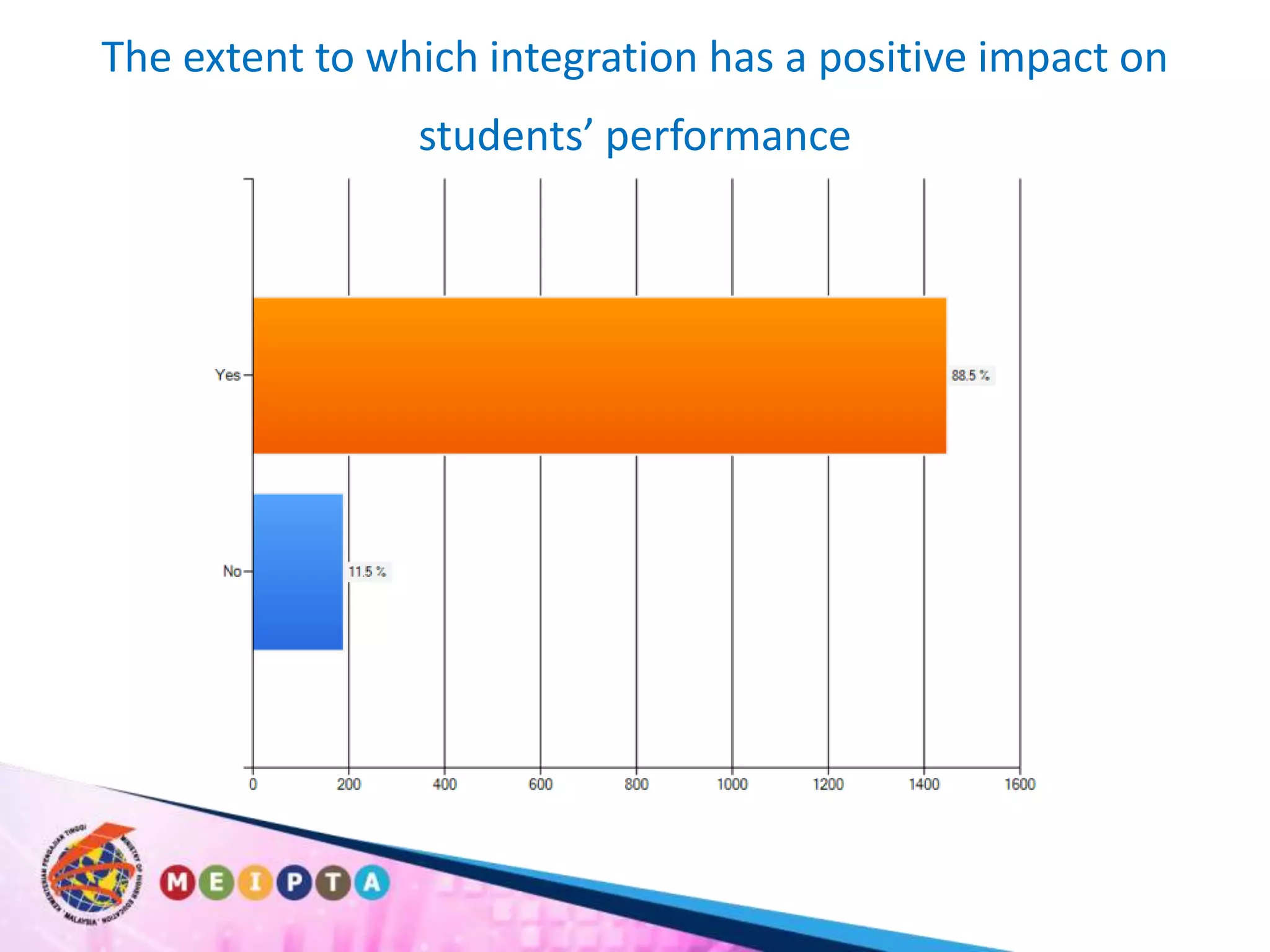
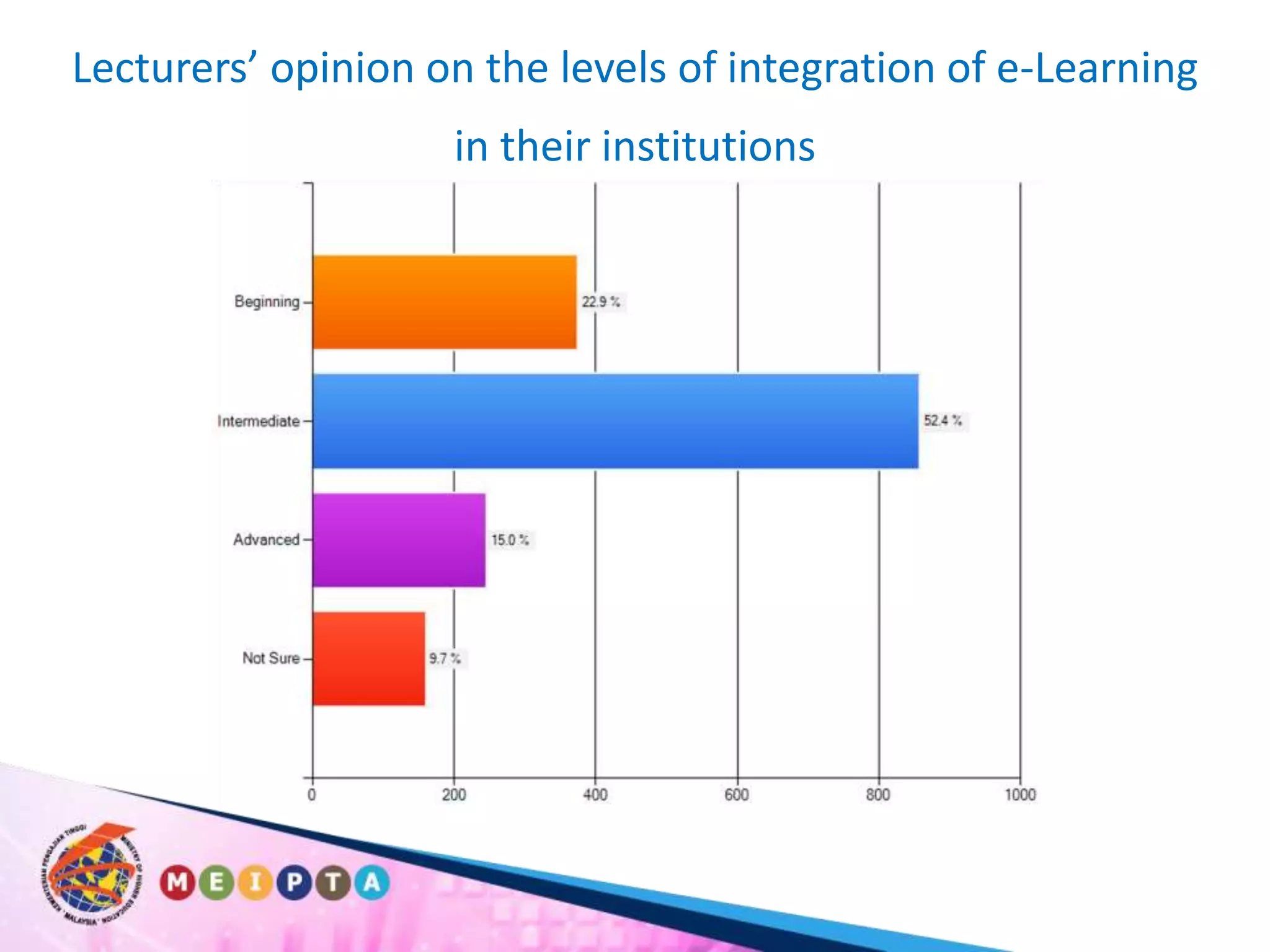
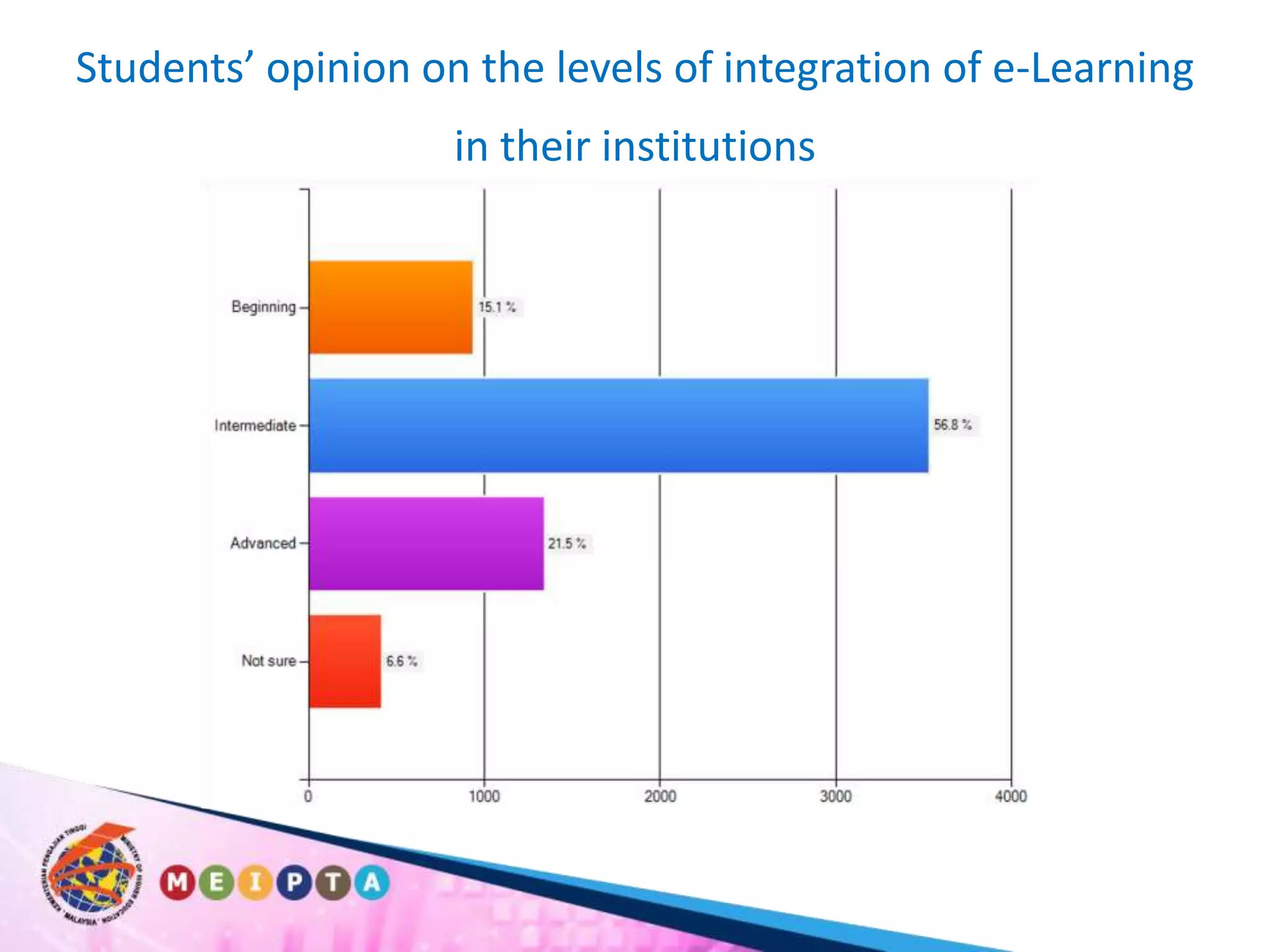
Most of the lecturers (93.4%) surveyed believe that the integration of e-Learning in their courses have been beneficial to students. Most of the lecturers (88.5%) surveyed also believe that the use of e-Learning has a positive impact on the performance of their students. Half of the lecturers (52.4%) surveyed are of the view that the integration of e-Learning in their institution is still at the middle stage, and slightly more than half of the students (56.8%) surveyed believed that the integration of e-Learning in their respective institutions are at the middle stage.
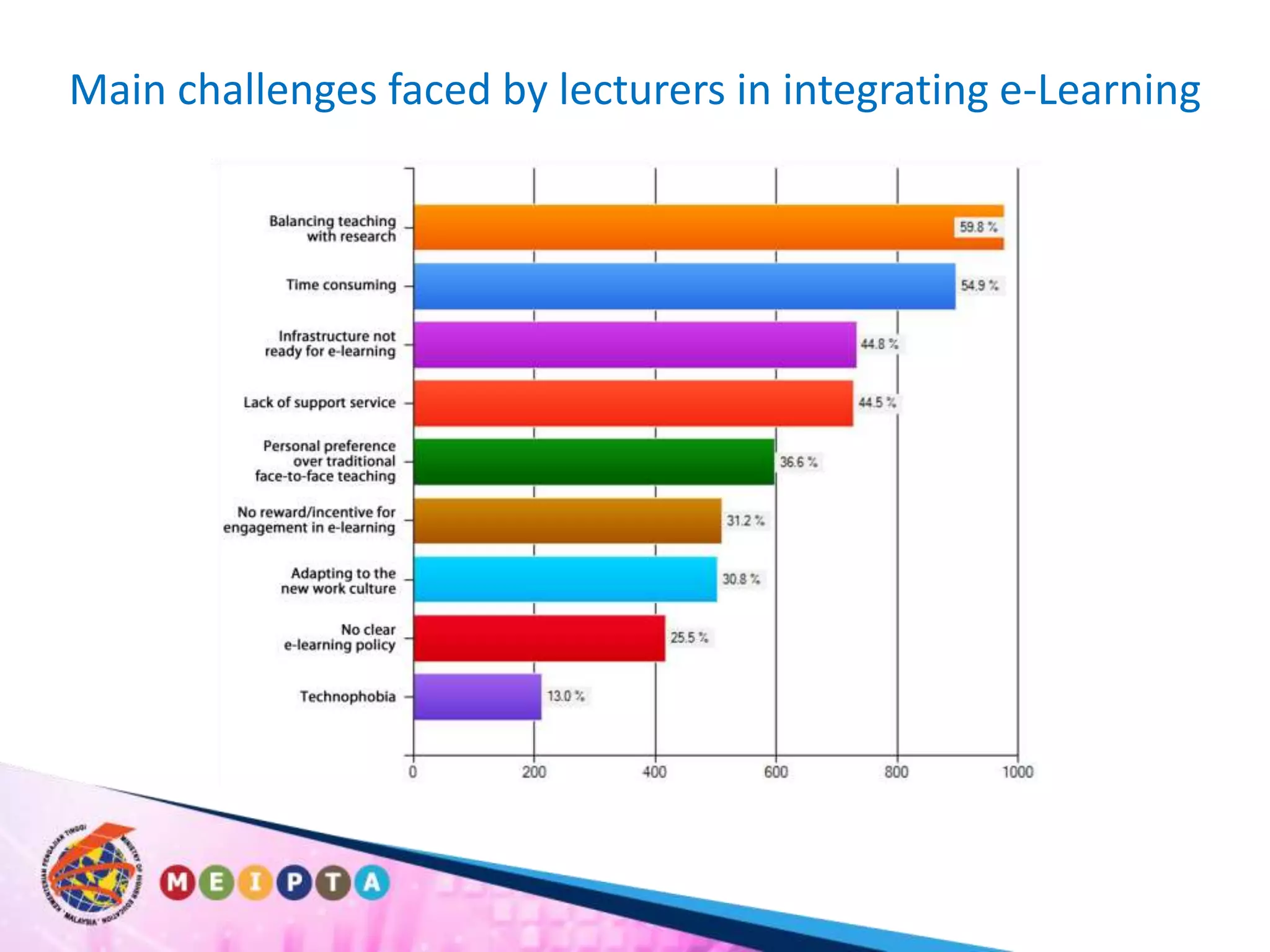
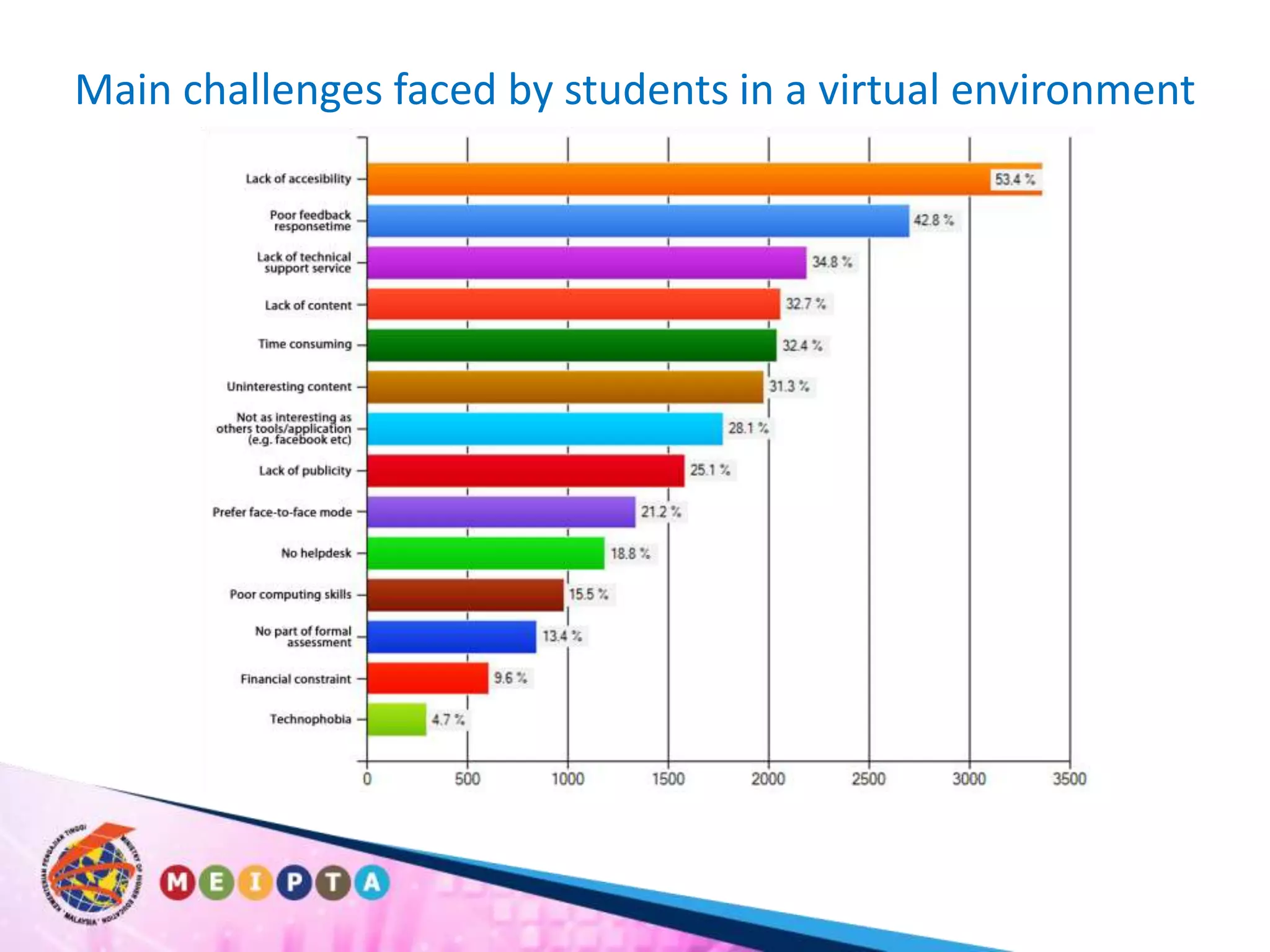
Two major challenges faced by lecturers to integrate e-Learning in their teaching and learning are trying to balance between teaching and research (59.8%) and time constraints (54.9%). Technophobia (13%) was the least responsible challenge among the challenges faced by lecturers in order to integrate e-Learning. For students, the challenges they face in the virtual environment are lack of access (53.4%), feedback from lecturers taking too long (42.8%), lack of content (32.7%), takes too long (32.4%), lack of interesting content (31.3 %), and uninteresting content as compared to applications such as Facebook. Only 294 students (4.7%) felt that technophobia is the main problem.
Percentage of courses offered online
Types of e-Learning courses offered at Malaysian HEIs
Percentage of courses conducted in a blended mode by lecturers
Percentage of online courses taken by students
Lecturers’ opinion on whether there was an increase in e-Learning activities over the past two years
Frequency of access to online courses by students
Location where students access their online courses
Equipment used by students to access their online courses
Main mode of access to online courses by students
Percentage of online learning materials provided by lecturers
Format of online learning materials provided by lecturers
Common file formats of online learning materials received by students
Methods lecturers used to upload online learning materials
Students’ most preferred method to download online learning materials
Methods commonly used by students
Percentage of online assessments conducted by lecturers
Percentage of course assessments taken online by students
The extent to which integration has benefited students
The extent to which integration has a positive impact on students’ performance
Lecturers’ opinion on the levels of integration of e-Learning in their institutions
Students’ opinion on the levels of integration of e-Learning in their institutions
Main challenges faced by lecturers in integrating e-Learning
Main challenges faced by students in a virtual environment

integration of e-learning in teaching & learning by Mohamed Amin Embi

  • 1.
    Integration of e-Learningin Teaching & Learning in Malaysian Higher Education Institutions By:Prof. Dr. Mohamed Amin Embi
  • 2.
    Key Findings ofIntegration of e-Learning in Teaching & Learning In general, 42.3% or 11 HEIs are offering more than 50% of their courses online. A total of 15.4% or four HEIs offer 0–10% online courses, 11.5% or three HEIs offer 11–20% online courses; 11.5 % or three HEIs offer 21–30% online courses, 11.5% or three HEIs offer 31–40% online courses, while 7.7% or two HEIs offer 41–50% courses online. The most popular e-Learning mode among the HEIs is the supplementary mode followed by the blended mode. The percentage of courses offered through the blended mode by lecturers are between 1–80%. The percentage of online courses taken by students is 81–100%.
  • 3.
    Most of thelecturers (73.5%) believed that there is an increase in e-Learning activities in the past two years. Most students access their online courses once a week (37.7%), followed by those who access it once daily (29.6%), and those who access it several times a day (17.6%). The number of students who have not accessed their online courses is very small, i.e. 135 or 2.1%. Most students (71.4%) access their online courses from the hostel, followed by those who access it the computer laboratory (50.2%) and those who access it from home (46.9%). Most students use their own laptops to access online courses (94.2%), using the wifi network available at their respective campuses (63.7%).
  • 4.
    Only 13.8% lecturersprovide more than 80% online learning materials. Most of the lecturers (79.1%) provide between 10% to 80% online learning materials. The main file formats provided by lecturers and accessed by students are common files such as pdf, ppt, doc, and xls files (96.8%). Only a few multimedia files are available (21.3%). Most lecturers (50.1%) prefer to upload materials on a weekly basis before classes begin. This seems to be the most preferred way by most students (44.6%). However, most students (84.7%) prefer to read the materials offline rather than online.
  • 5.
    In terms ofonline assessments, 40.3% of the lecturers surveyed do not conduct online assessments, while 28.2% conduct 0–10% online assessments, and 17.2% conduct 11–20% online assessments. Only 14.3% of the lecturers surveyed conduct more than 20% online assessments. For most students (30.9%), only 11–20% of their course assessments are conducted online. For 26% of them, 0–10% of their course assessments are conducted online and for another 26%, over 20% of their course assessments are conducted online.
  • 6.
    Most of thelecturers (93.4%) surveyed believe that the integration of e-Learning in their courses have been beneficial to students. Most of the lecturers (88.5%) surveyed also believe that the use of e-Learning has a positive impact on the performance of their students. Half of the lecturers (52.4%) surveyed are of the view that the integration of e-Learning in their institution is still at the middle stage, and slightly more than half of the students (56.8%) surveyed believed that the integration of e-Learning in their respective institutions are at the middle stage.
  • 7.
    Two major challengesfaced by lecturers to integrate e-Learning in their teaching and learning are trying to balance between teaching and research (59.8%) and time constraints (54.9%). Technophobia (13%) was the least responsible challenge among the challenges faced by lecturers in order to integrate e-Learning. For students, the challenges they face in the virtual environment are lack of access (53.4%), feedback from lecturers taking too long (42.8%), lack of content (32.7%), takes too long (32.4%), lack of interesting content (31.3 %), and uninteresting content as compared to applications such as Facebook. Only 294 students (4.7%) felt that technophobia is the main problem.
  • 8.
    Percentage of coursesoffered online
  • 9.
    Types of e-Learningcourses offered at Malaysian HEIs
  • 10.
    Percentage of coursesconducted in a blended mode by lecturers
  • 11.
    Percentage of onlinecourses taken by students
  • 12.
    Lecturers’ opinion onwhether there was an increase in e-Learning activities over the past two years
  • 13.
    Frequency of accessto online courses by students
  • 14.
    Location where studentsaccess their online courses
  • 15.
    Equipment used bystudents to access their online courses
  • 16.
    Main mode ofaccess to online courses by students
  • 17.
    Percentage of onlinelearning materials provided by lecturers
  • 18.
    Format of onlinelearning materials provided by lecturers
  • 19.
    Common file formatsof online learning materials received by students
  • 20.
    Methods lecturers usedto upload online learning materials
  • 21.
    Students’ most preferredmethod to download online learning materials
  • 22.
  • 23.
    Percentage of onlineassessments conducted by lecturers
  • 24.
    Percentage of courseassessments taken online by students
  • 25.
    The extent towhich integration has benefited students
  • 26.
    The extent towhich integration has a positive impact on students’ performance
  • 27.
    Lecturers’ opinion onthe levels of integration of e-Learning in their institutions
  • 28.
    Students’ opinion onthe levels of integration of e-Learning in their institutions
  • 29.
    Main challenges facedby lecturers in integrating e-Learning
  • 30.
    Main challenges facedby students in a virtual environment