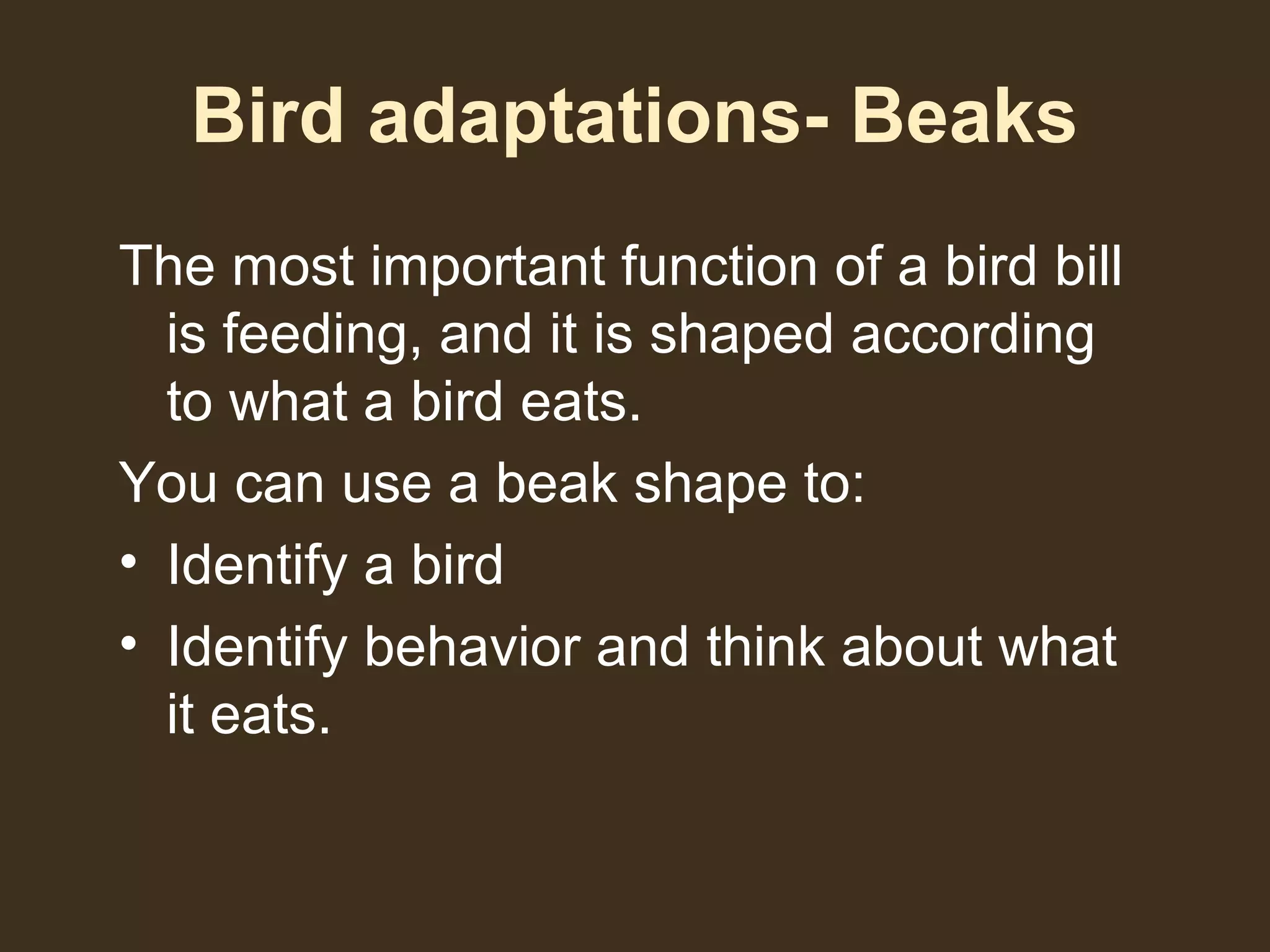
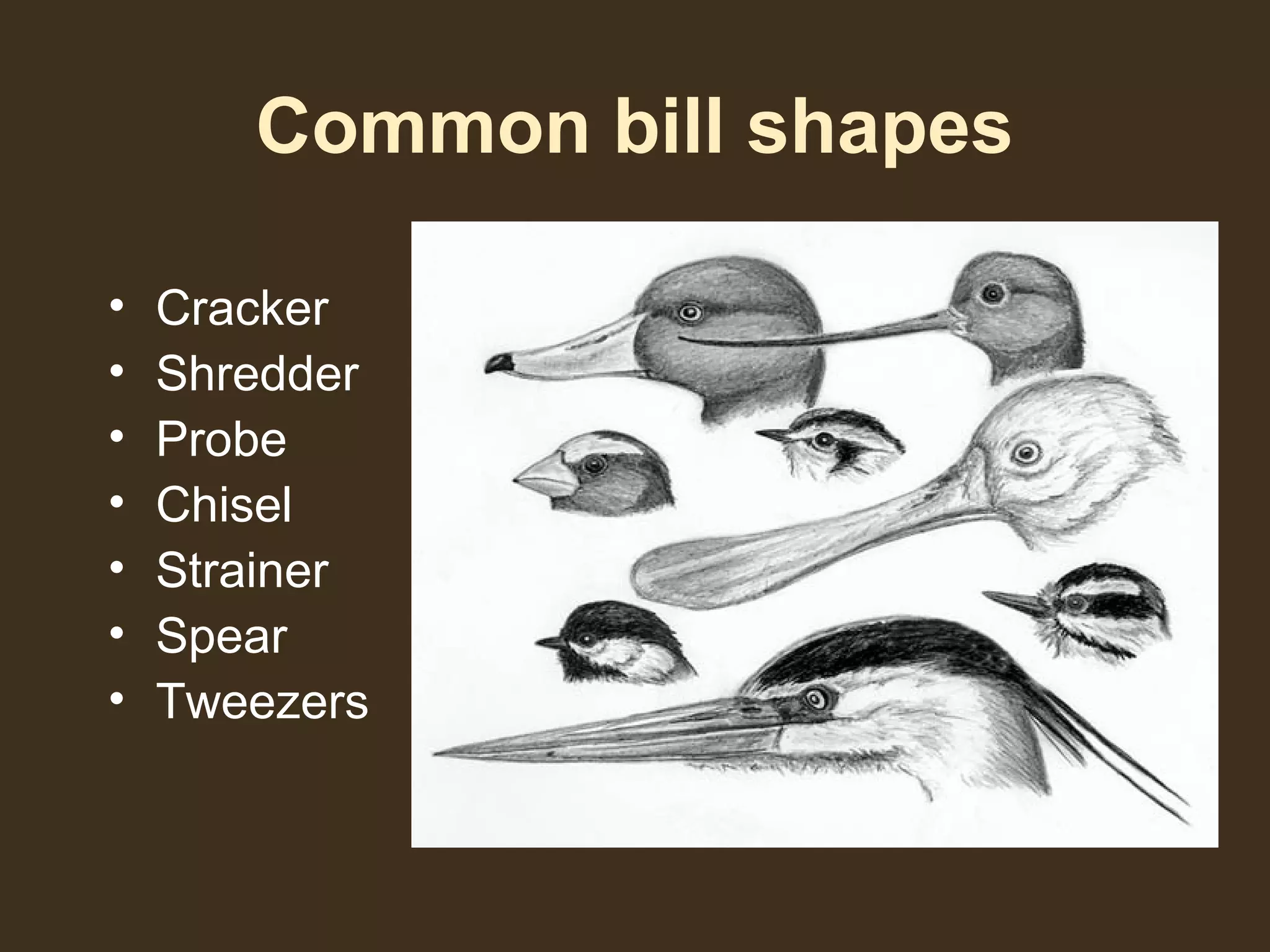
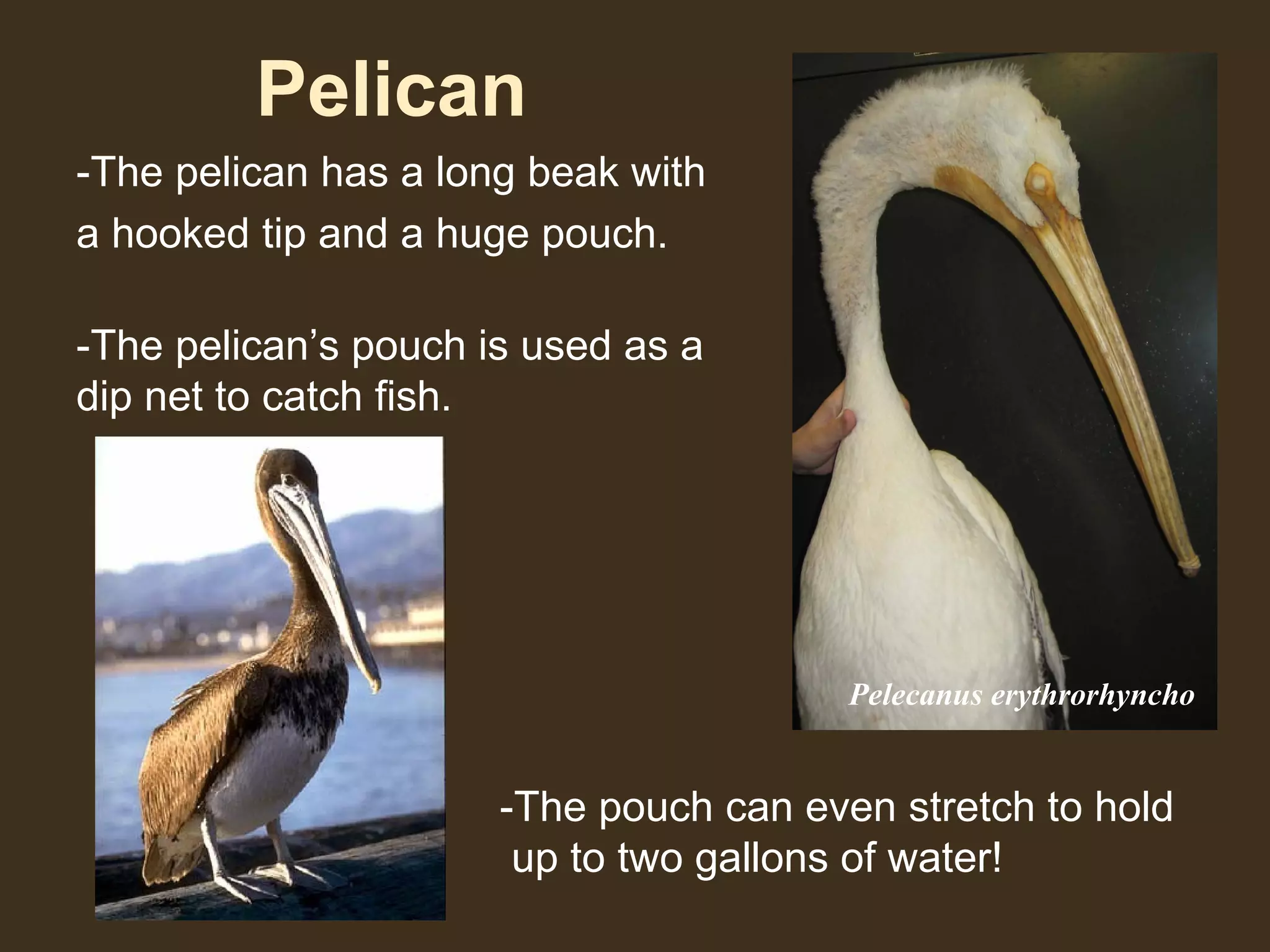
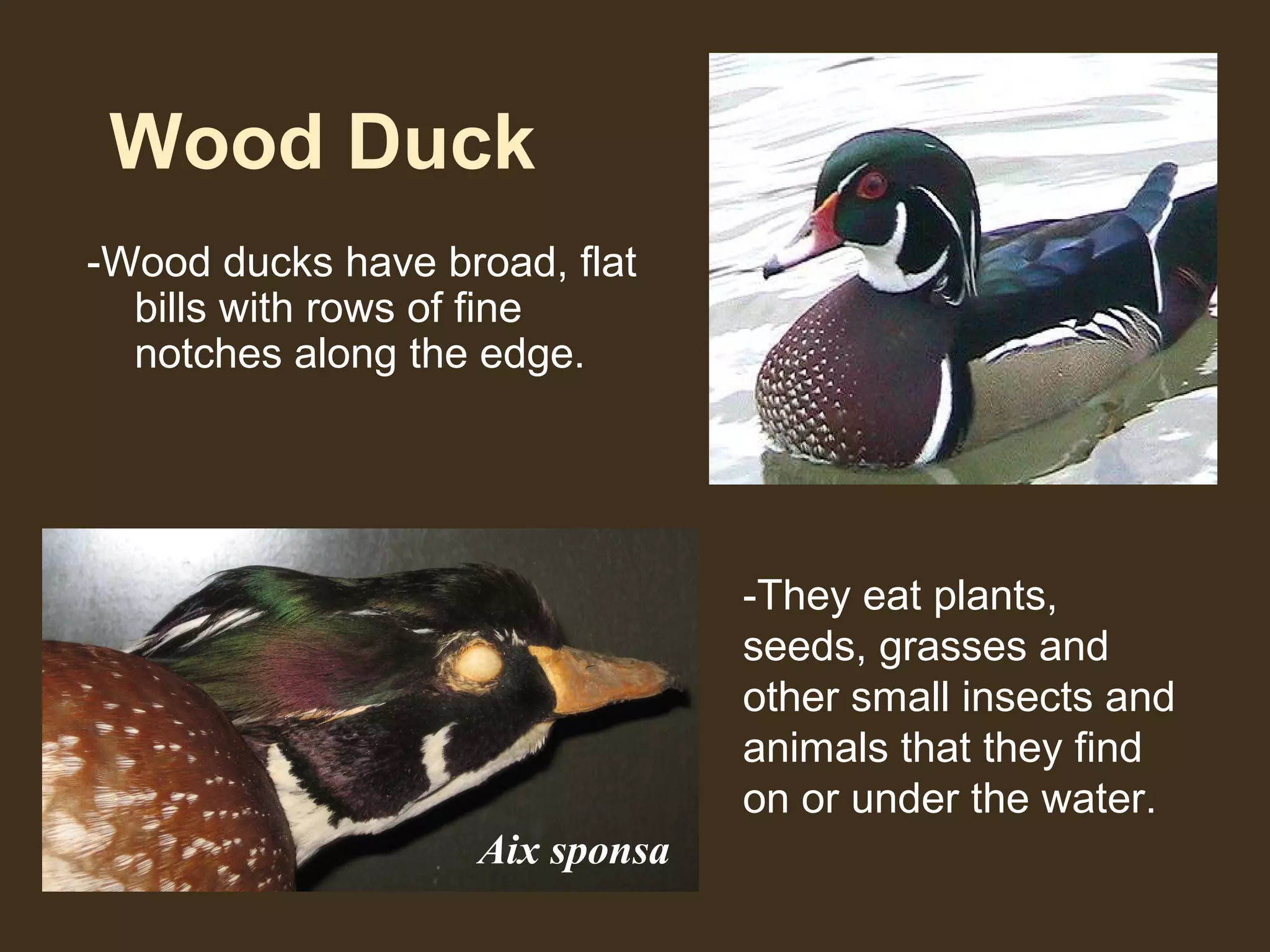
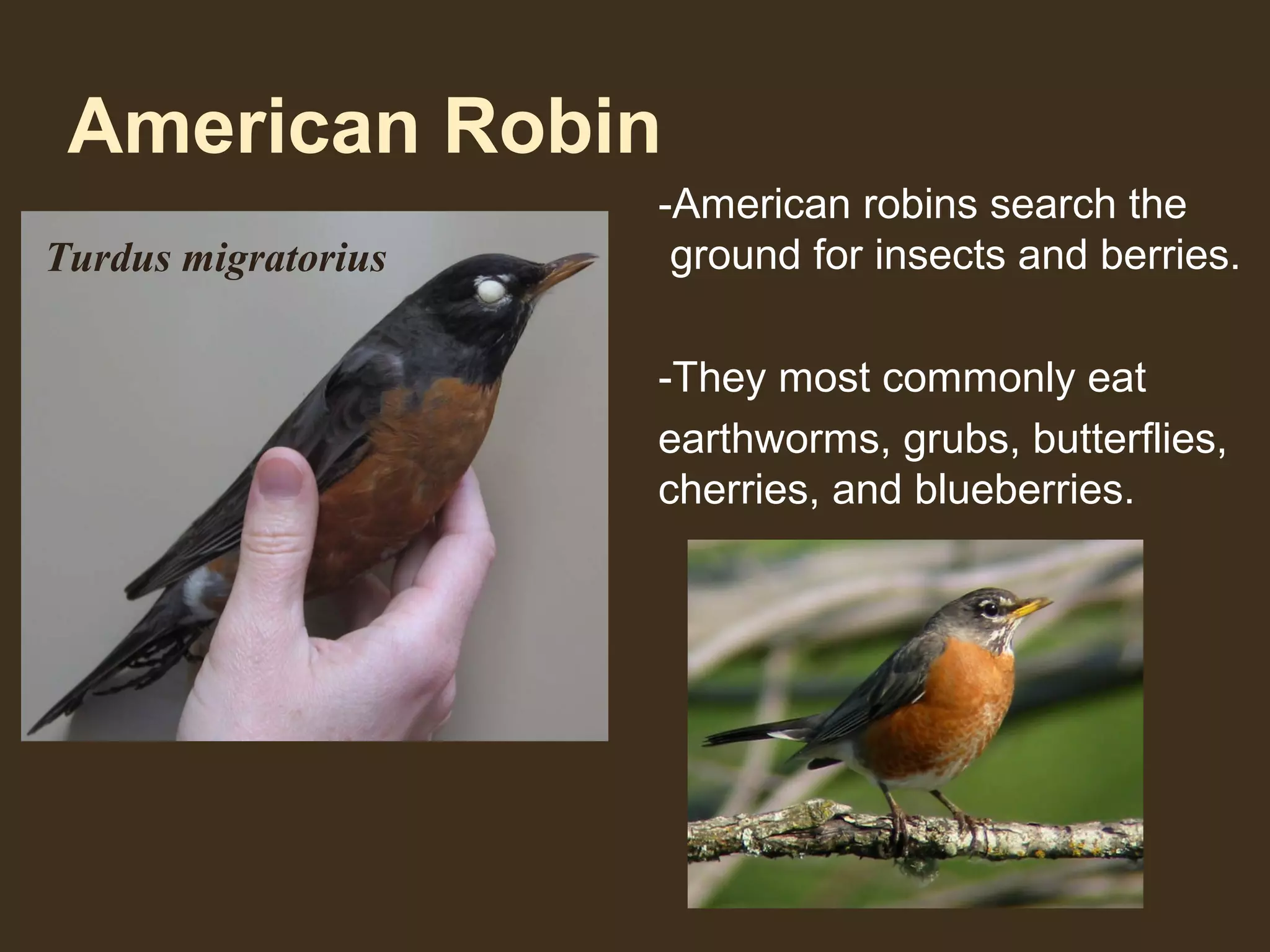
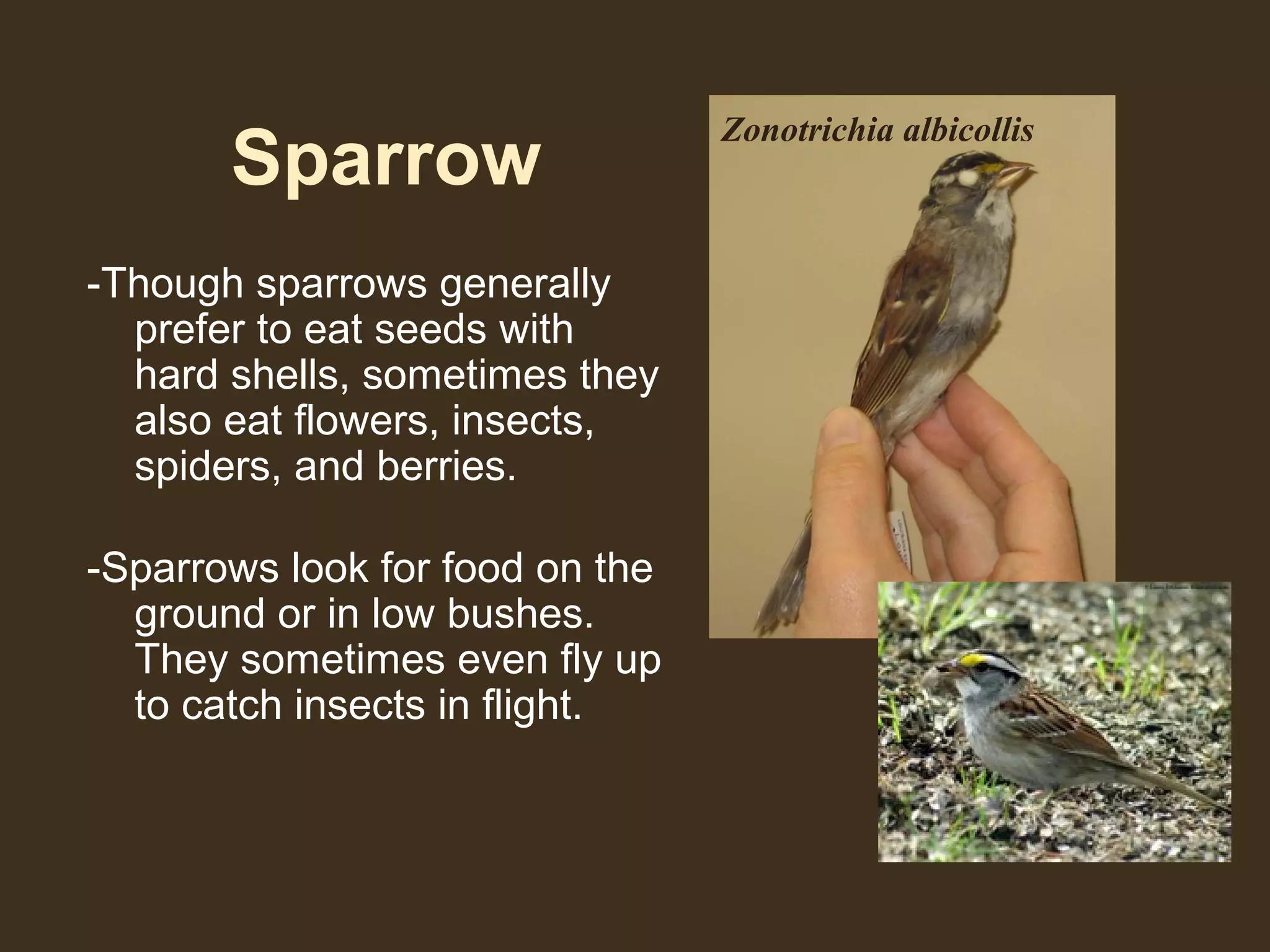
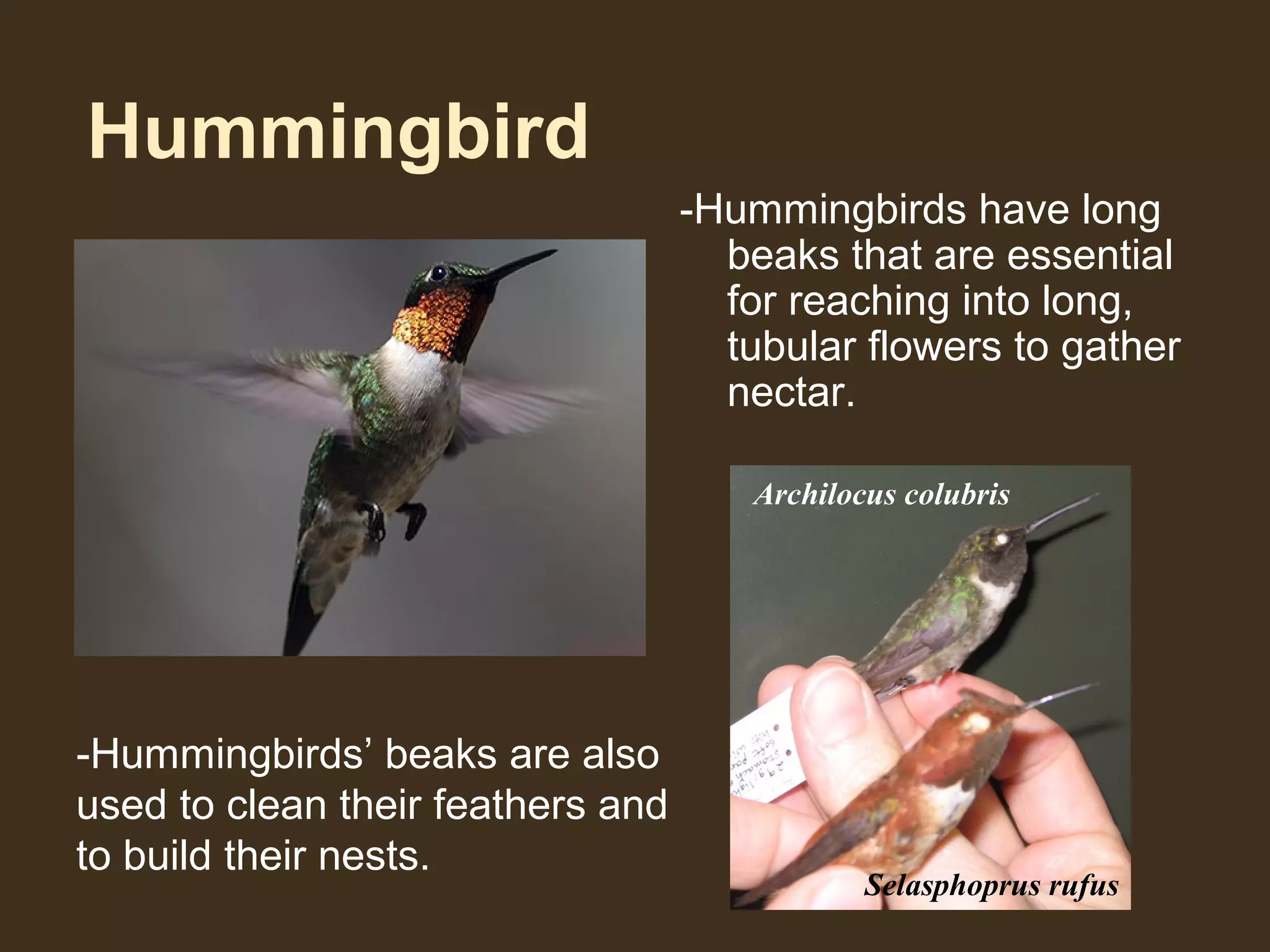
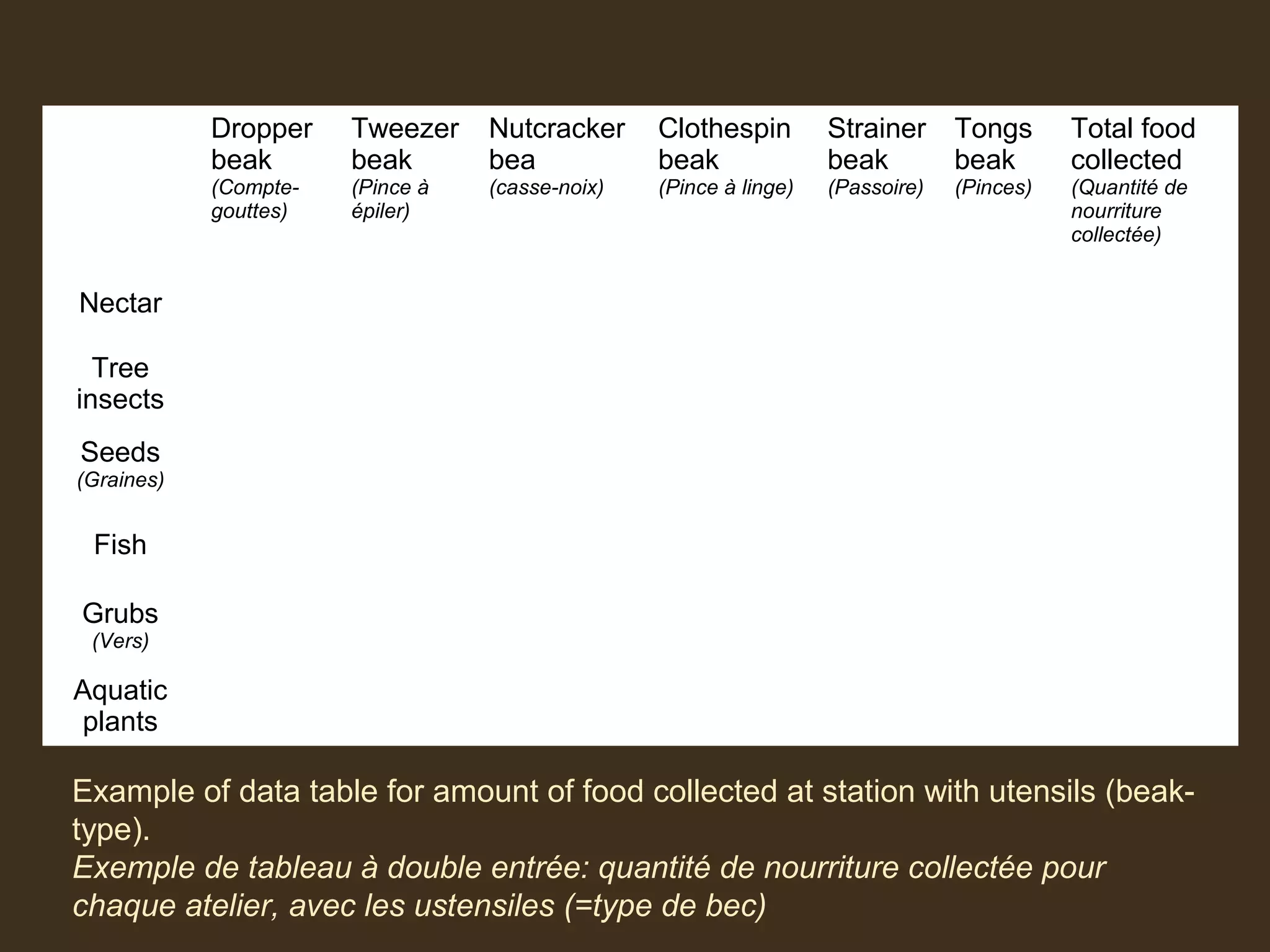
This document discusses bird beak adaptations for feeding. It explains that a bird's beak shape is determined by its diet and can be used to identify birds and infer their feeding behaviors. Common beak shapes include cracker, shredder, probe, chisel, strainer, and spear beaks. Examples are then given of several birds' beak shapes and how they correspond to the birds' diets, including pelicans using their pouch to catch fish, wood ducks having notched beaks to eat plants and insects from water surfaces, and hummingbirds having long, thin beaks to access nectar in tubular flowers.