Facility Decisions

Network Design in a Supply Chain


                                   1
The Role of Distribution
in the Supply Chain
   x   Distribution: the steps taken to move and store a
       product from the supplier stage to the customer
       stage in a supply chain
   x   Distribution directly affects cost and the customer
       experience and therefore drives profitability
   x   Choice of distribution network can achieve supply
       chain objectives from low cost to high
       responsiveness
   x   Examples: Wal-Mart, Dell, Proctor & Gamble,
       Grainger

                                                             2
Factors Influencing
Distribution Network Design
   x   Distribution network performance evaluated along
       two dimensions at the highest level:
       – Customer needs that are met
       – Cost of meeting customer needs
   x   Distribution network design options must
       therefore be compared according to their impact
       on customer service and the cost to provide this
       level of service


                                                          3
Factors Influencing
Distribution Network Design
x   Elements of customer service influenced by network
    structure:
    –   Response time
    –   Product variety
    –   Product availability
    –   Customer experience
    –   Order visibility
    –   Returnability
x   Supply chain costs affected by network structure:
    – Inventories
    – Transportation
    – Facilities and handling                            4
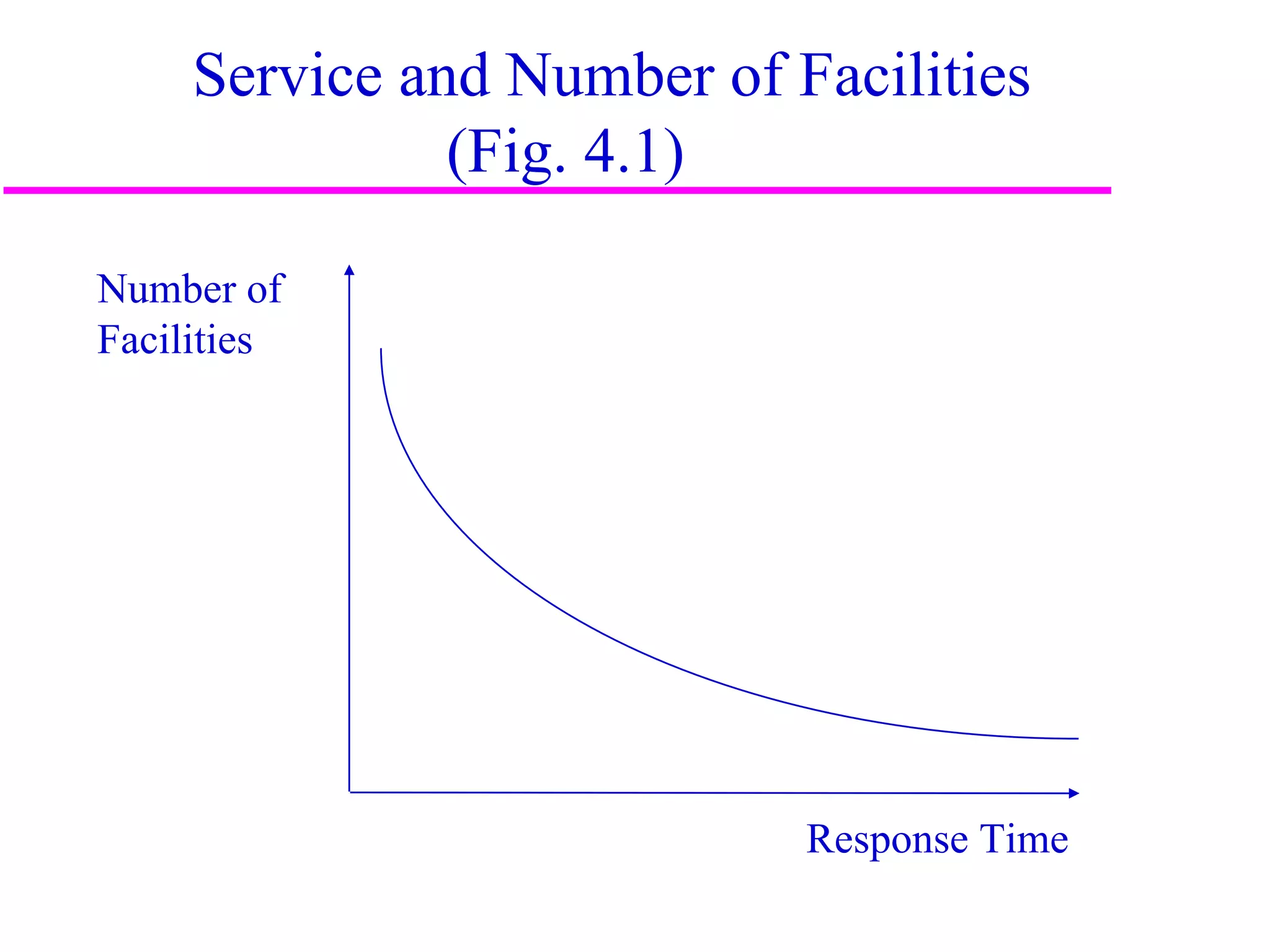
Service and Number of Facilities
               (Fig. 4.1)

Number of
Facilities


                            Response Time
                                            5
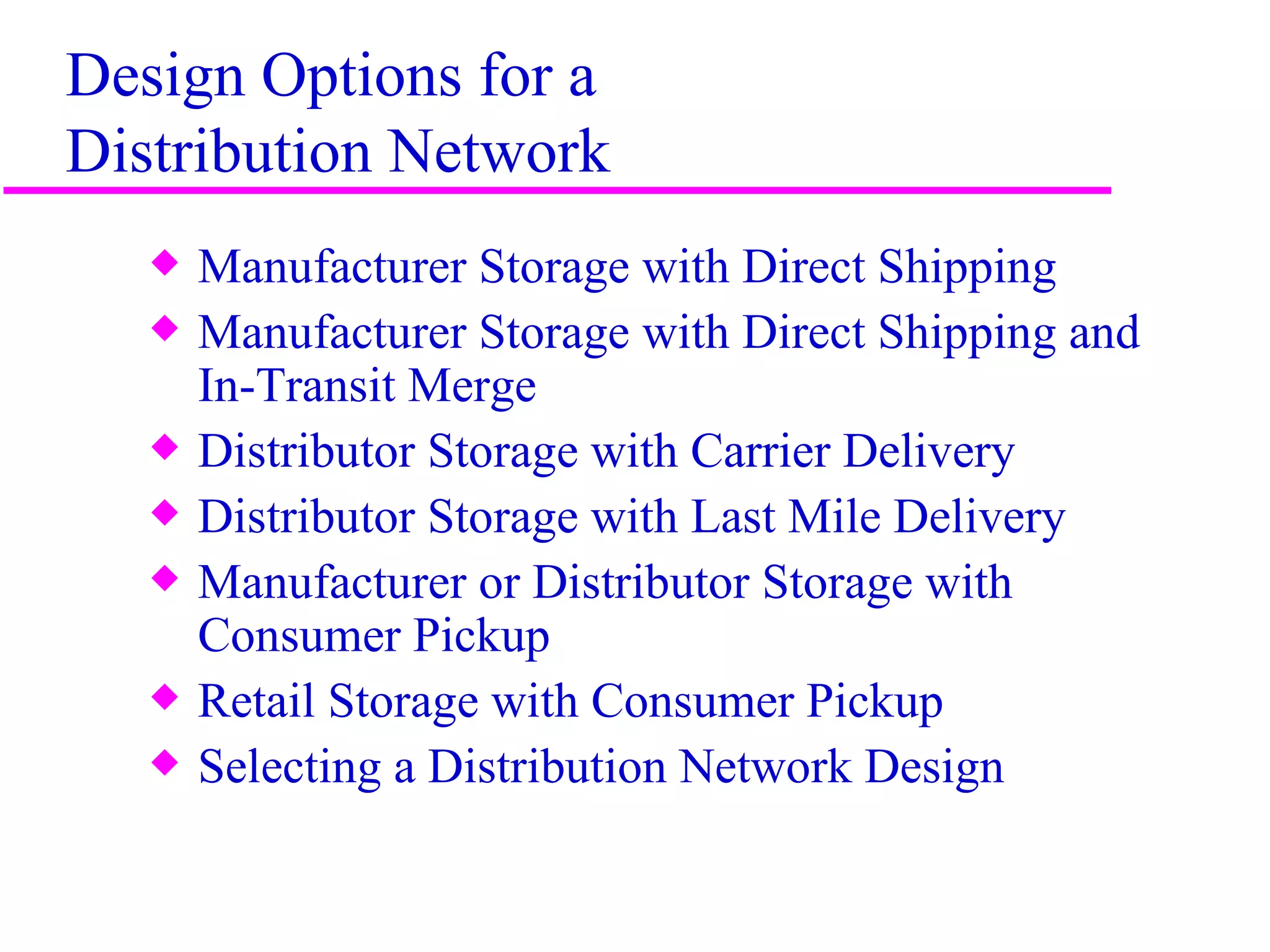
Design Options for a
Distribution Network
   x   Manufacturer Storage with Direct Shipping
   x   Manufacturer Storage with Direct Shipping and
       In-Transit Merge
   x   Distributor Storage with Carrier Delivery
   x   Distributor Storage with Last Mile Delivery
   x   Manufacturer or Distributor Storage with
       Consumer Pickup
   x   Retail Storage with Consumer Pickup
   x   Selecting a Distribution Network Design


                                                       6
Manufacturer Storage with
Direct Shipping (Fig. 4.6)

                                    Manufacturer


                                     Retailer


                                     Customers


                             Product Flow
                             Information Flow

                                                   7
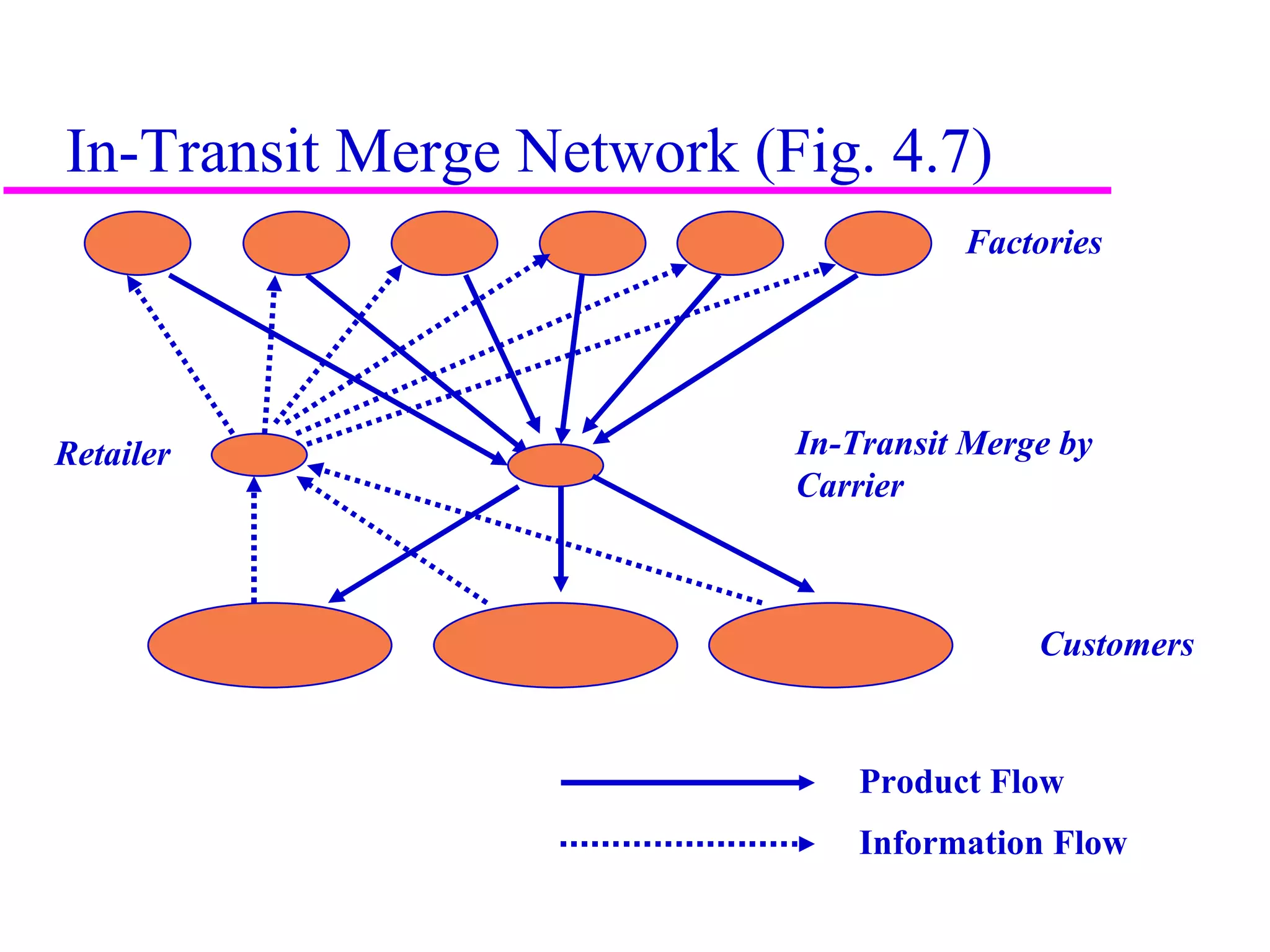
In-Transit Merge Network (Fig. 4.7)
                                     Factories


Retailer                   In-Transit Merge by
                           Carrier


                                          Customers


                               Product Flow
                               Information Flow

                                                      8
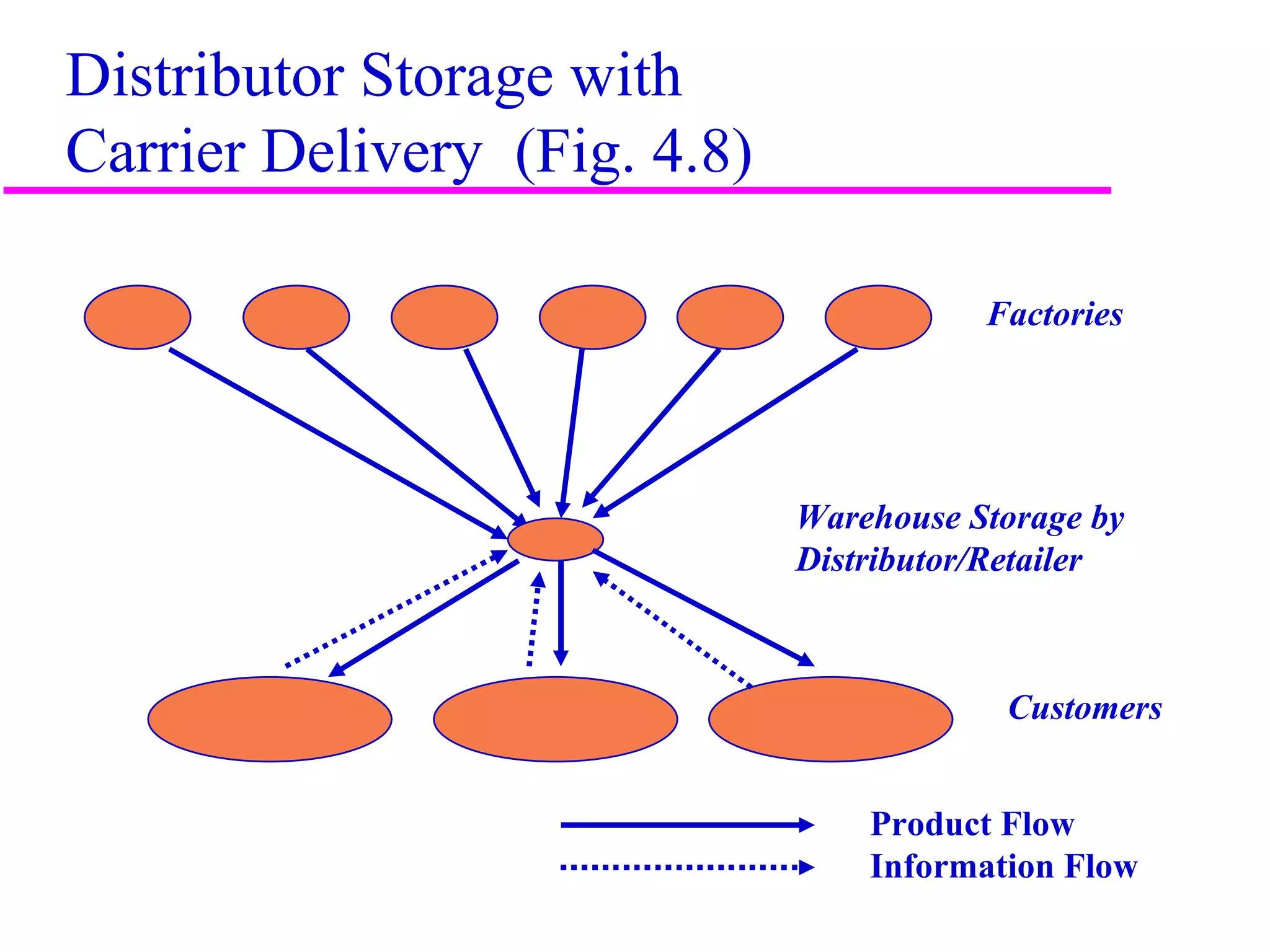
Distributor Storage with
Carrier Delivery (Fig. 4.8)

                                         Factories


                              Warehouse Storage by
                              Distributor/Retailer


                                          Customers


                                  Product Flow
                                  Information Flow
                                                      9
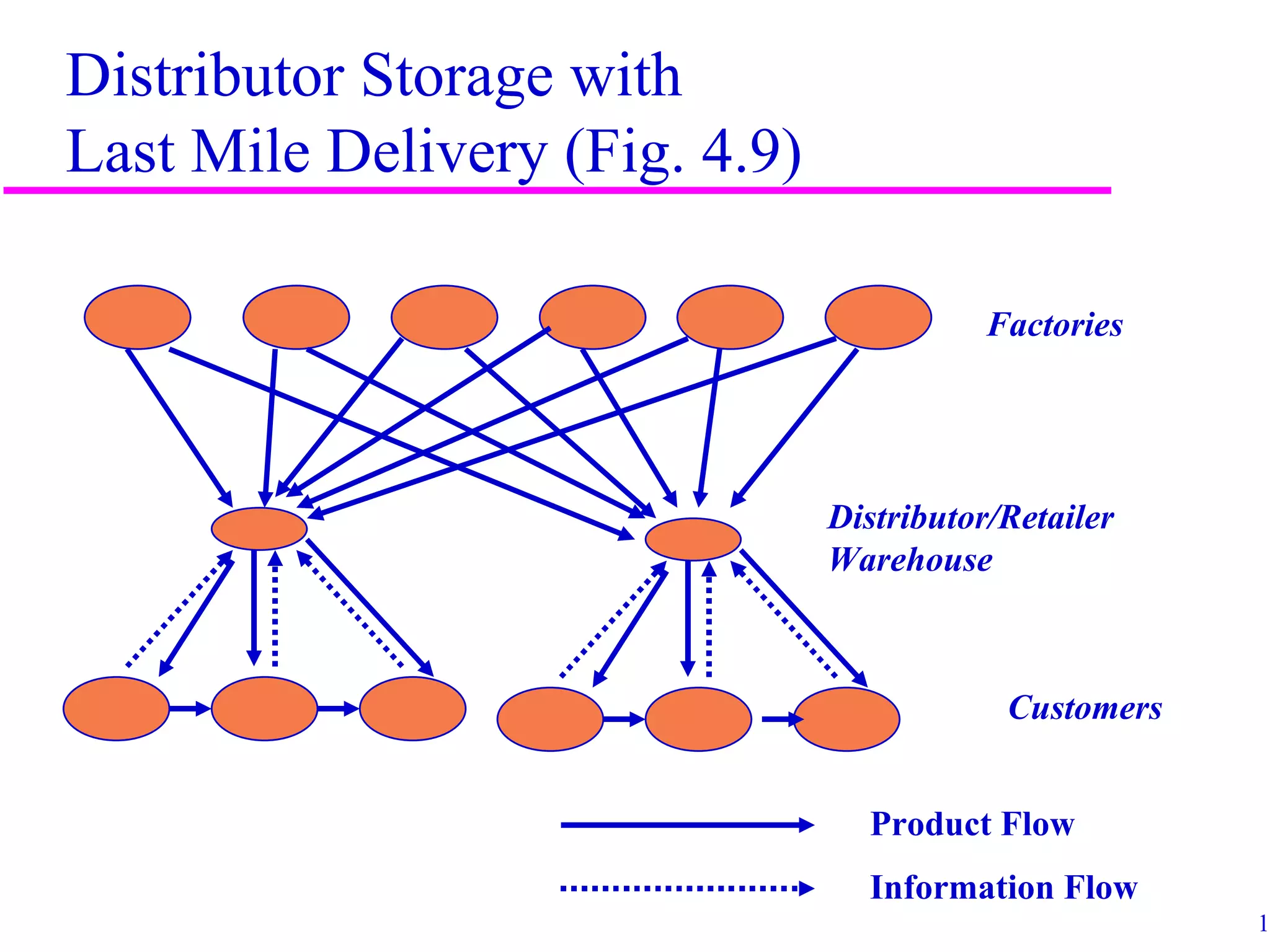
Distributor Storage with
Last Mile Delivery (Fig. 4.9)

                                           Factories


                                Distributor/Retailer
                                Warehouse


                                            Customers


                                  Product Flow
                                  Information Flow
                                                        10
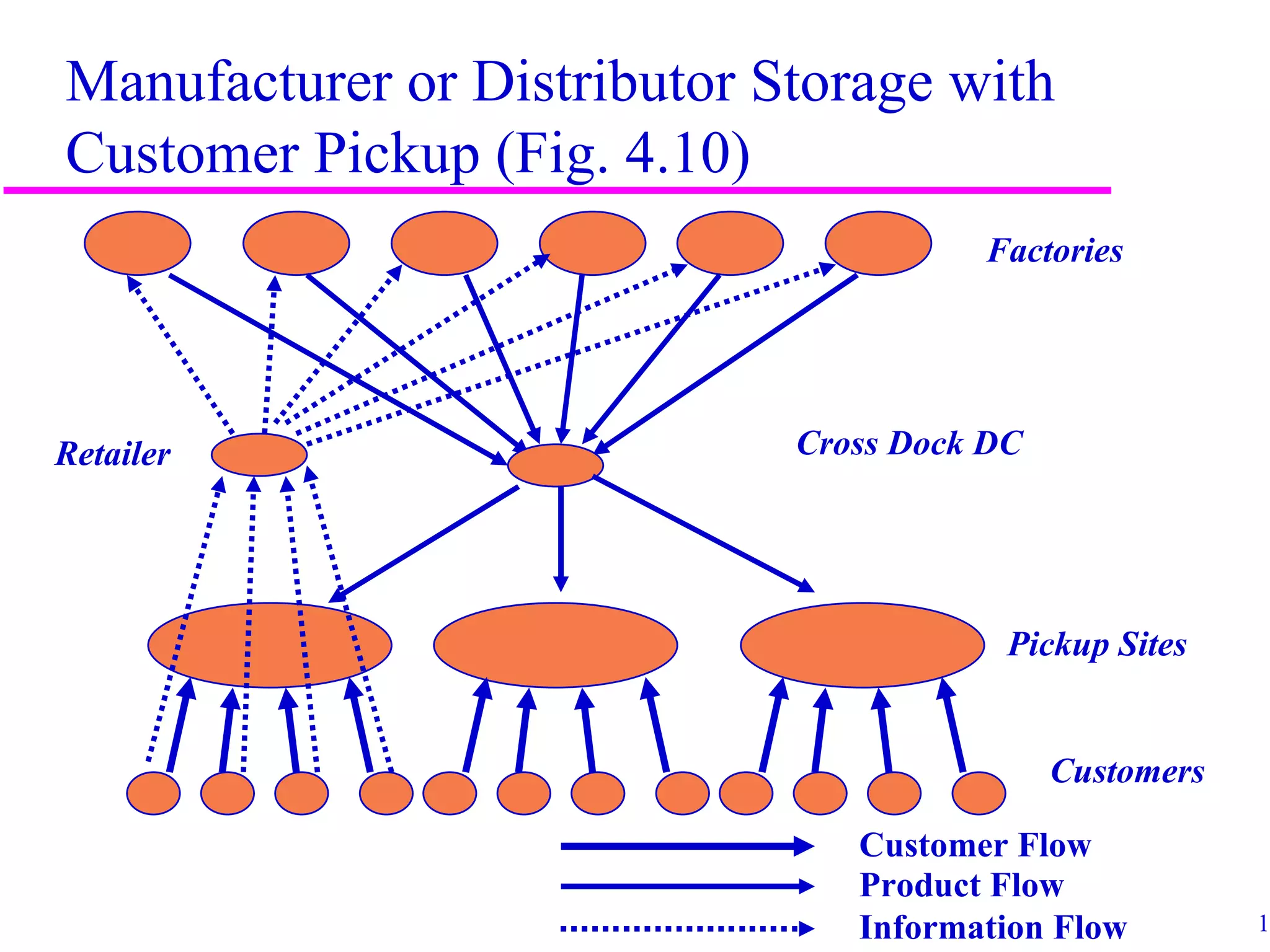
Manufacturer or Distributor Storage with
Customer Pickup (Fig. 4.10)
                                       Factories


Retailer                     Cross Dock DC


                                         Pickup Sites


                                             Customers

                                Customer Flow
                                Product Flow
                                Information Flow         11
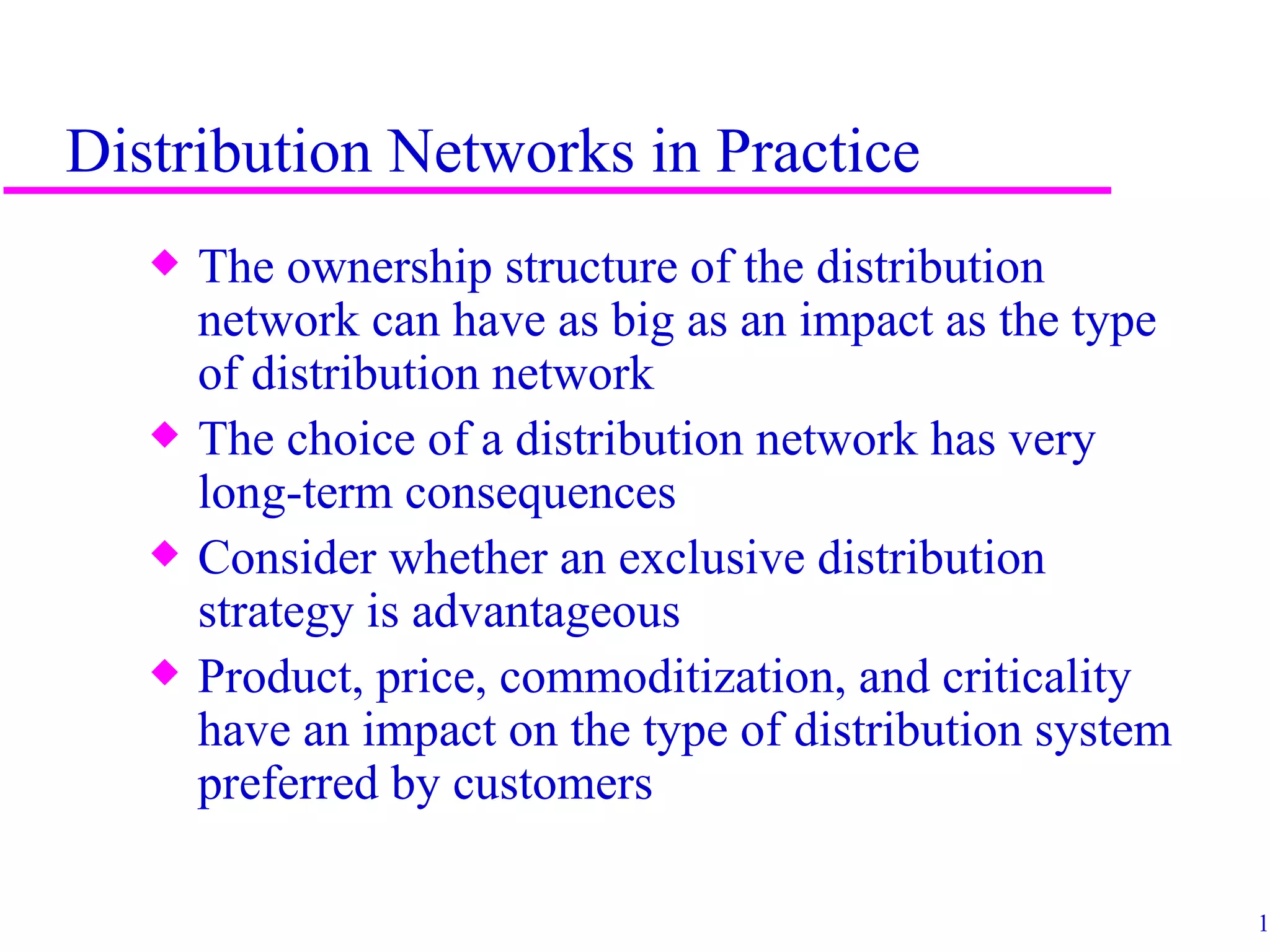
Distribution Networks in Practice
   x   The ownership structure of the distribution
       network can have as big as an impact as the type
       of distribution network
   x   The choice of a distribution network has very
       long-term consequences
   x   Consider whether an exclusive distribution
       strategy is advantageous
   x   Product, price, commoditization, and criticality
       have an impact on the type of distribution system
       preferred by customers

                                                           12
Network Design Decisions
x   Facility role
    - flexibility of Toyota since 1997
x   Facility location
    - Amazon.com : a single warehouse in Seattle
x   Capacity allocation
    - Allocating too much  poor utilization
    - Allocating too little  poor responsiveness, high cost
x   Market and supply allocation
    - Amazon.com : built new warehouses due to grown markets
                                                               13
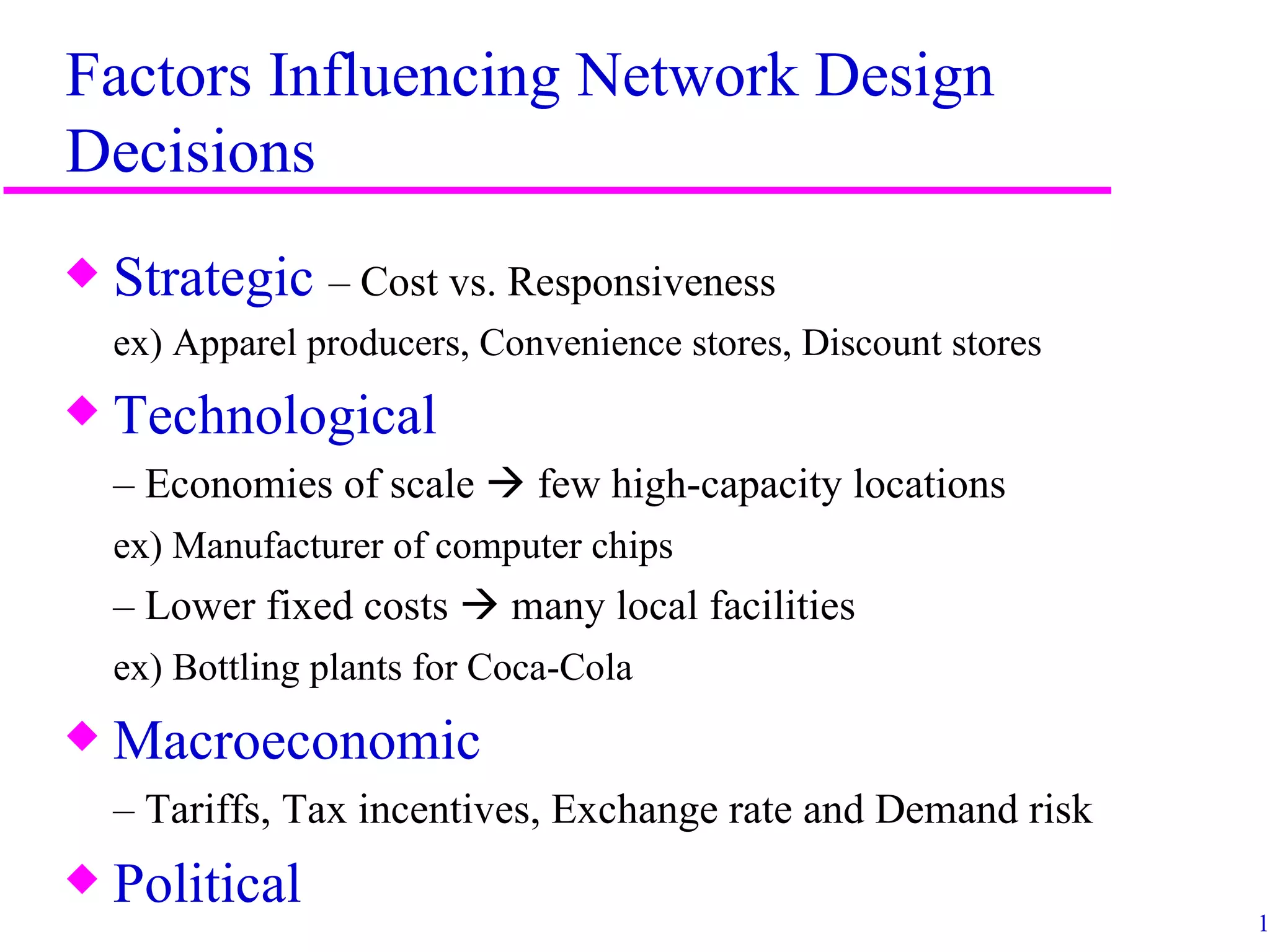
Factors Influencing Network Design
Decisions
x   Strategic – Cost vs. Responsiveness
    ex) Apparel producers, Convenience stores, Discount stores
x   Technological
    – Economies of scale  few high-capacity locations
    ex) Manufacturer of computer chips
    – Lower fixed costs  many local facilities
    ex) Bottling plants for Coca-Cola
x   Macroeconomic
    – Tariffs, Tax incentives, Exchange rate and Demand risk
x   Political
                                                                 14
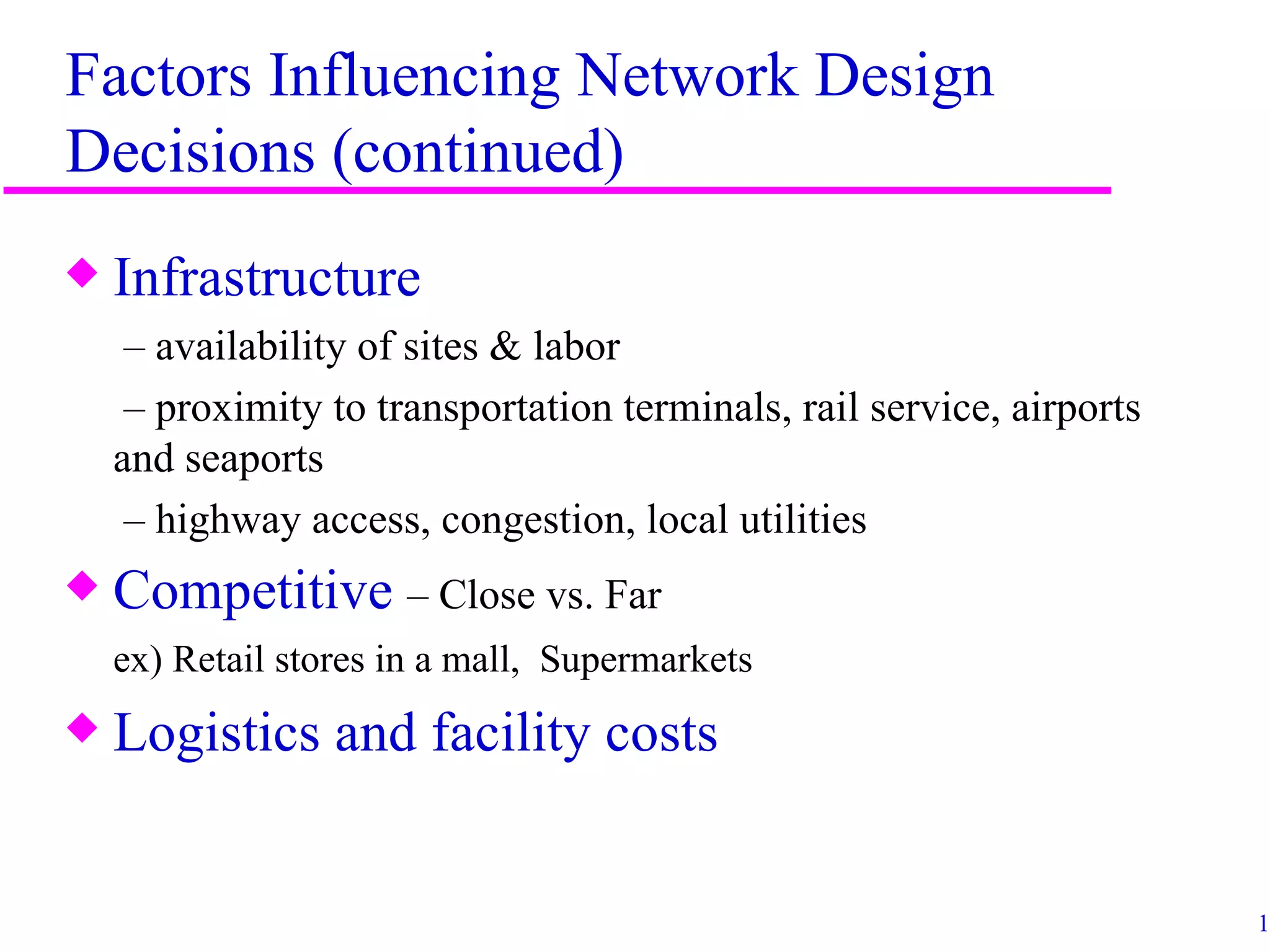
Factors Influencing Network Design
Decisions (continued)
x   Infrastructure
     – availability of sites & labor
     – proximity to transportation terminals, rail service, airports
    and seaports
     – highway access, congestion, local utilities
x   Competitive – Close vs. Far
    ex) Retail stores in a mall, Supermarkets
x   Logistics and facility costs


                                                                       15

Network design

  • 1.
  • 2.
    The Role ofDistribution in the Supply Chain x Distribution: the steps taken to move and store a product from the supplier stage to the customer stage in a supply chain x Distribution directly affects cost and the customer experience and therefore drives profitability x Choice of distribution network can achieve supply chain objectives from low cost to high responsiveness x Examples: Wal-Mart, Dell, Proctor & Gamble, Grainger 2
  • 3.
    Factors Influencing Distribution NetworkDesign x Distribution network performance evaluated along two dimensions at the highest level: – Customer needs that are met – Cost of meeting customer needs x Distribution network design options must therefore be compared according to their impact on customer service and the cost to provide this level of service 3
  • 4.
    Factors Influencing Distribution NetworkDesign x Elements of customer service influenced by network structure: – Response time – Product variety – Product availability – Customer experience – Order visibility – Returnability x Supply chain costs affected by network structure: – Inventories – Transportation – Facilities and handling 4
  • 5.
    Service and Numberof Facilities (Fig. 4.1) Number of Facilities Response Time 5
  • 6.
    Design Options fora Distribution Network x Manufacturer Storage with Direct Shipping x Manufacturer Storage with Direct Shipping and In-Transit Merge x Distributor Storage with Carrier Delivery x Distributor Storage with Last Mile Delivery x Manufacturer or Distributor Storage with Consumer Pickup x Retail Storage with Consumer Pickup x Selecting a Distribution Network Design 6
  • 7.
    Manufacturer Storage with DirectShipping (Fig. 4.6) Manufacturer Retailer Customers Product Flow Information Flow 7
  • 8.
    In-Transit Merge Network(Fig. 4.7) Factories Retailer In-Transit Merge by Carrier Customers Product Flow Information Flow 8
  • 9.
    Distributor Storage with CarrierDelivery (Fig. 4.8) Factories Warehouse Storage by Distributor/Retailer Customers Product Flow Information Flow 9
  • 10.
    Distributor Storage with LastMile Delivery (Fig. 4.9) Factories Distributor/Retailer Warehouse Customers Product Flow Information Flow 10
  • 11.
    Manufacturer or DistributorStorage with Customer Pickup (Fig. 4.10) Factories Retailer Cross Dock DC Pickup Sites Customers Customer Flow Product Flow Information Flow 11
  • 12.
    Distribution Networks inPractice x The ownership structure of the distribution network can have as big as an impact as the type of distribution network x The choice of a distribution network has very long-term consequences x Consider whether an exclusive distribution strategy is advantageous x Product, price, commoditization, and criticality have an impact on the type of distribution system preferred by customers 12
  • 13.
    Network Design Decisions x Facility role - flexibility of Toyota since 1997 x Facility location - Amazon.com : a single warehouse in Seattle x Capacity allocation - Allocating too much  poor utilization - Allocating too little  poor responsiveness, high cost x Market and supply allocation - Amazon.com : built new warehouses due to grown markets 13
  • 14.
    Factors Influencing NetworkDesign Decisions x Strategic – Cost vs. Responsiveness ex) Apparel producers, Convenience stores, Discount stores x Technological – Economies of scale  few high-capacity locations ex) Manufacturer of computer chips – Lower fixed costs  many local facilities ex) Bottling plants for Coca-Cola x Macroeconomic – Tariffs, Tax incentives, Exchange rate and Demand risk x Political 14
  • 15.
    Factors Influencing NetworkDesign Decisions (continued) x Infrastructure – availability of sites & labor – proximity to transportation terminals, rail service, airports and seaports – highway access, congestion, local utilities x Competitive – Close vs. Far ex) Retail stores in a mall, Supermarkets x Logistics and facility costs 15

Editor's Notes

  • #6 Notes: Increasing the number of facilities moves them closer to the end consumer. This reduces the response time. As Amazon has built warehouses, the average time from the warehouse to the end consumer has decreased. McMaster-Carr provides 1-2 day coverage of most of the U.S from 6 facilities. W.W. Grainger is able to increase coverage to same day delivery using about 370 facilities.