Presentation
on
Types of microbial
contamination
&
detection of microbial
contamination
DH Sani
GEB, SUST
MICROBIAL CONTAMINATION
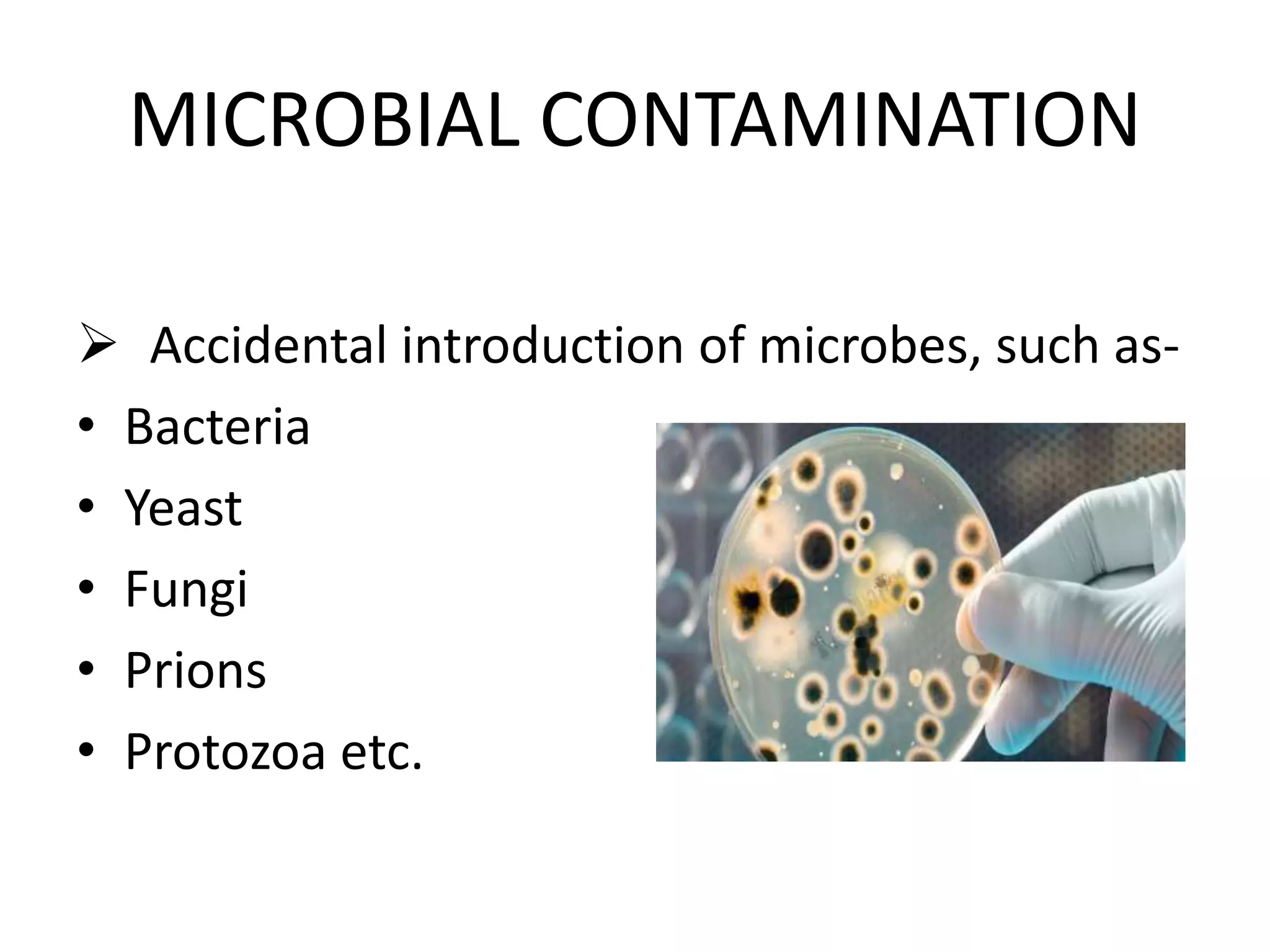
 Accidental introduction of microbes, such as-
• Bacteria
• Yeast
• Fungi
• Prions
• Protozoa etc.
TYPES OF MICROBES
BACTERIA
Size of up to 5 μm.
Some “Commensal” bacteria are also
responsible.
Most virulent type.
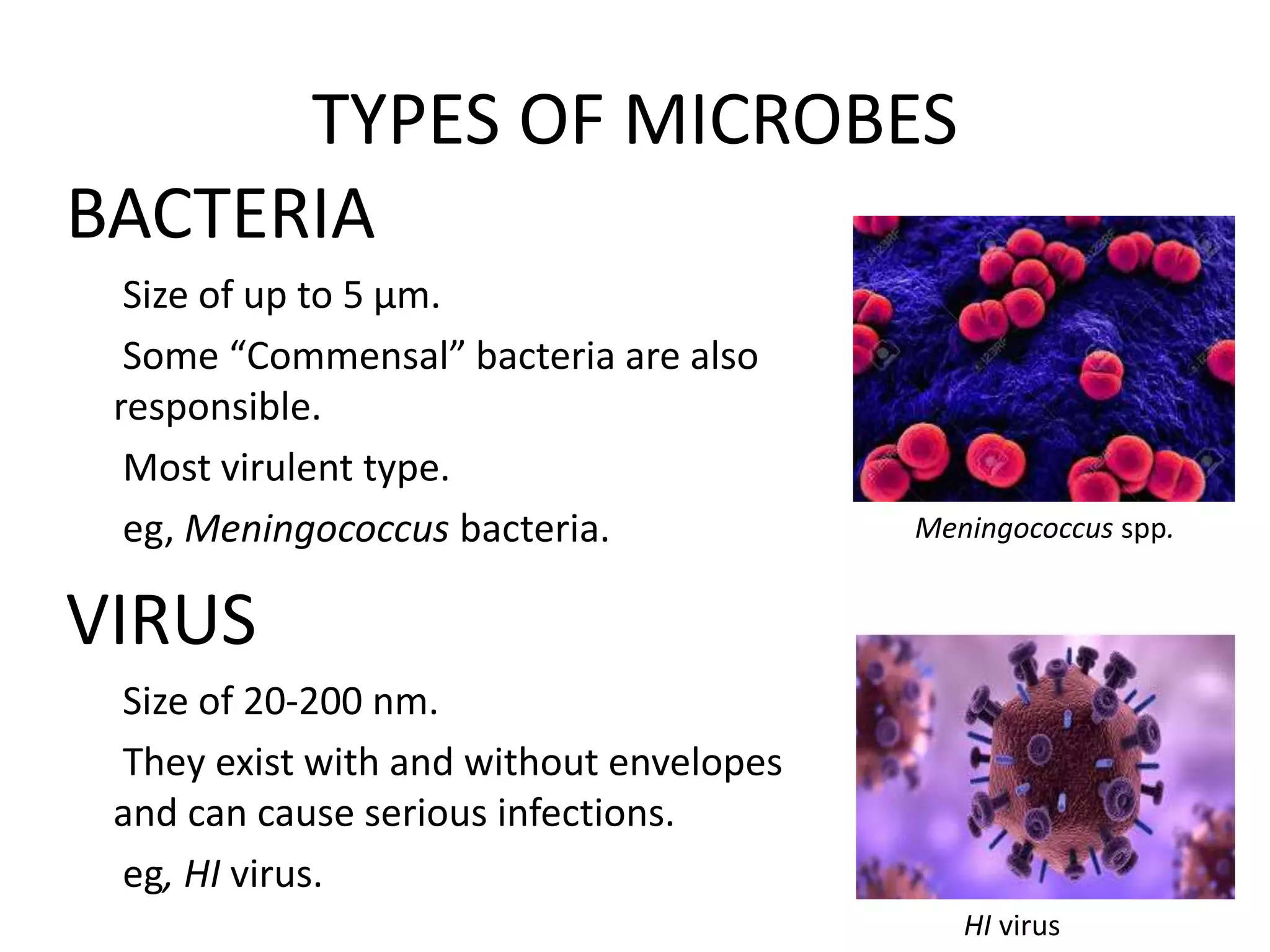
eg, Meningococcus bacteria.
VIRUS
Size of 20-200 nm.
They exist with and without envelopes
and can cause serious infections.
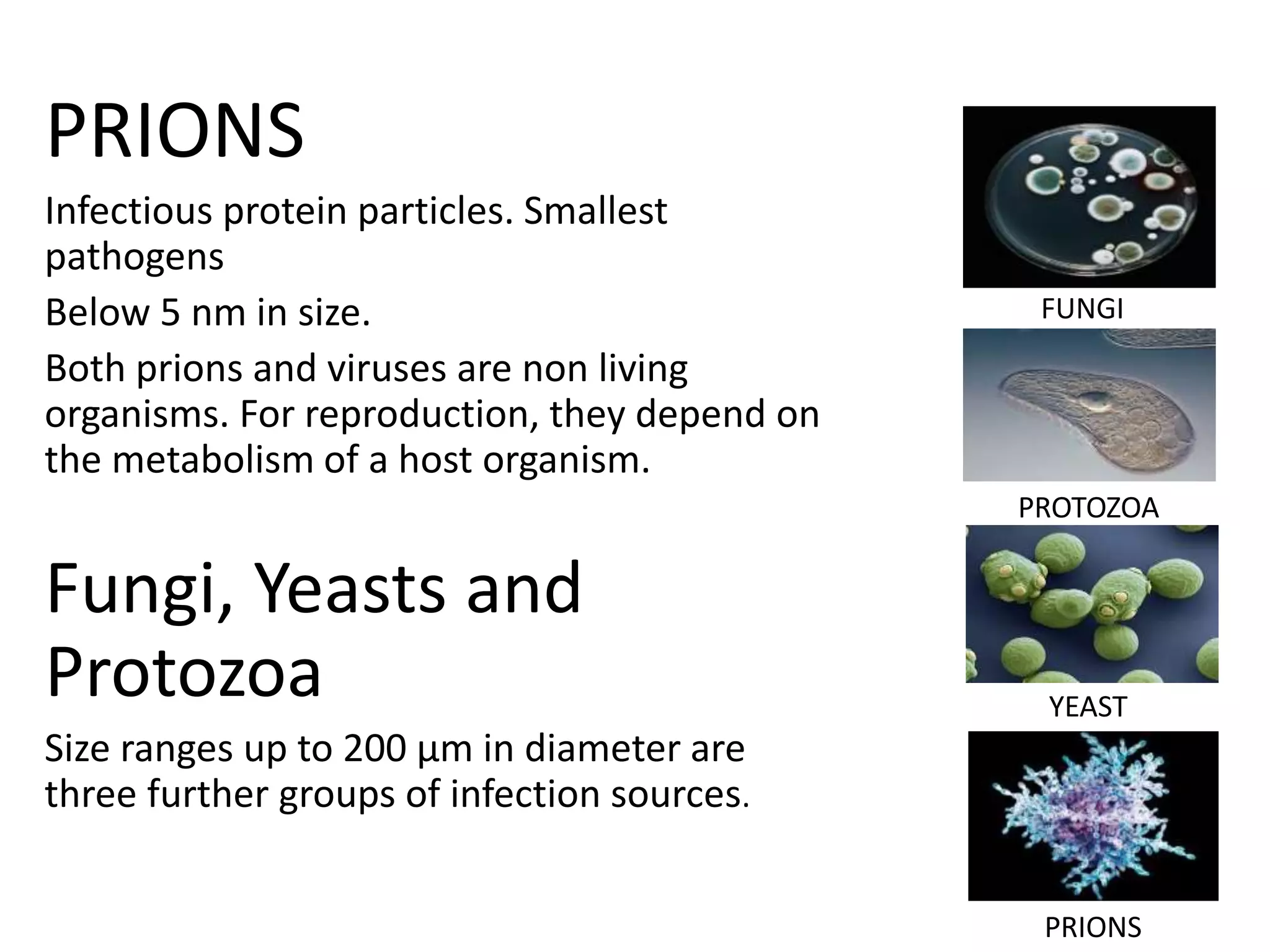
eg, HI virus.
Meningococcus spp.
HI virus
PRIONS
Infectious protein particles. Smallest
pathogens
Below 5 nm in size.
Both prions and viruses are non living
organisms. For reproduction, they depend on
the metabolism of a host organism.
Fungi, Yeasts and
Protozoa
Size ranges up to 200 μm in diameter are
three further groups of infection sources.
YEAST
PROTOZOA
FUNGI
PRIONS
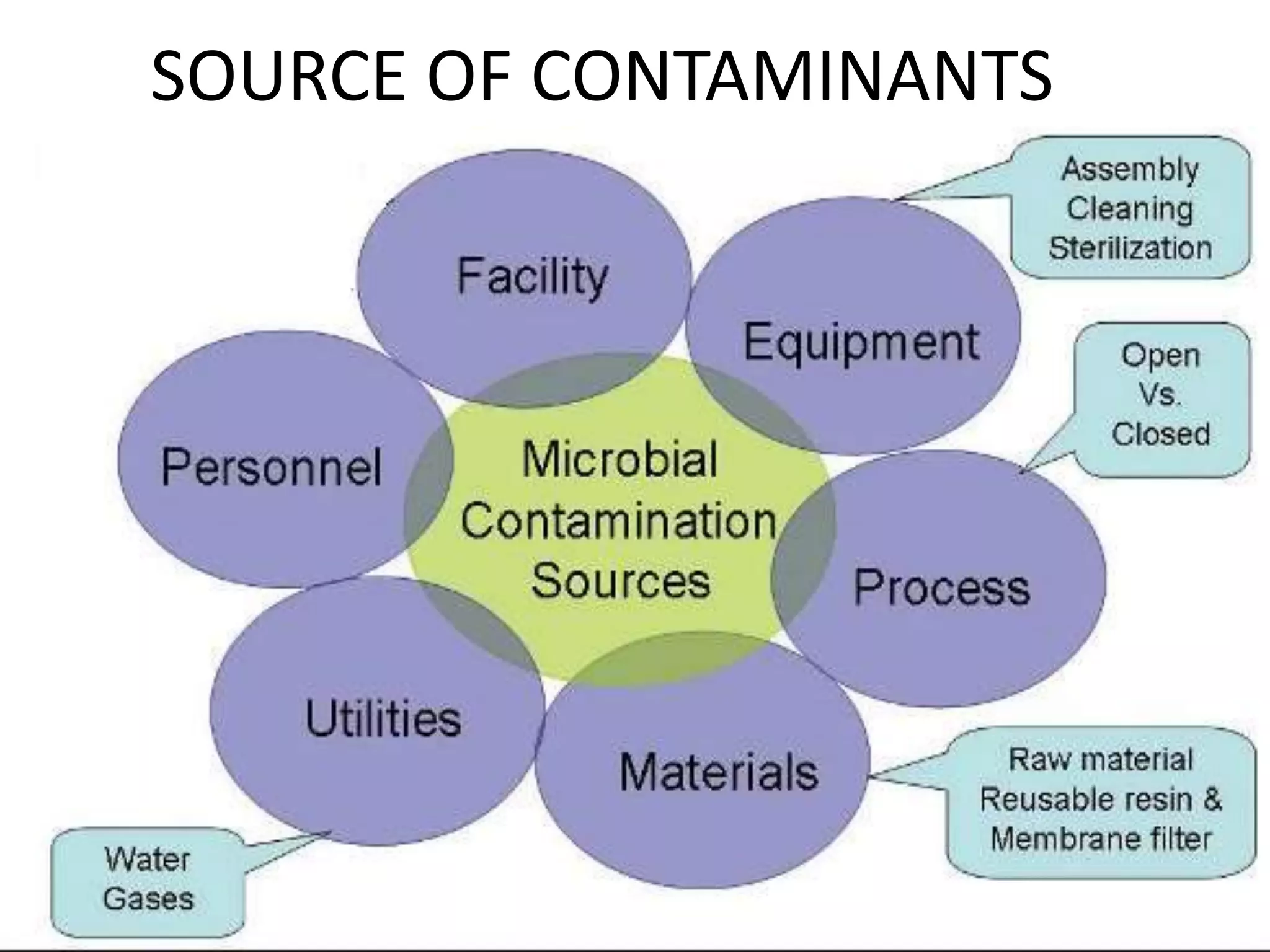
SOURCE OF CONTAMINANTS
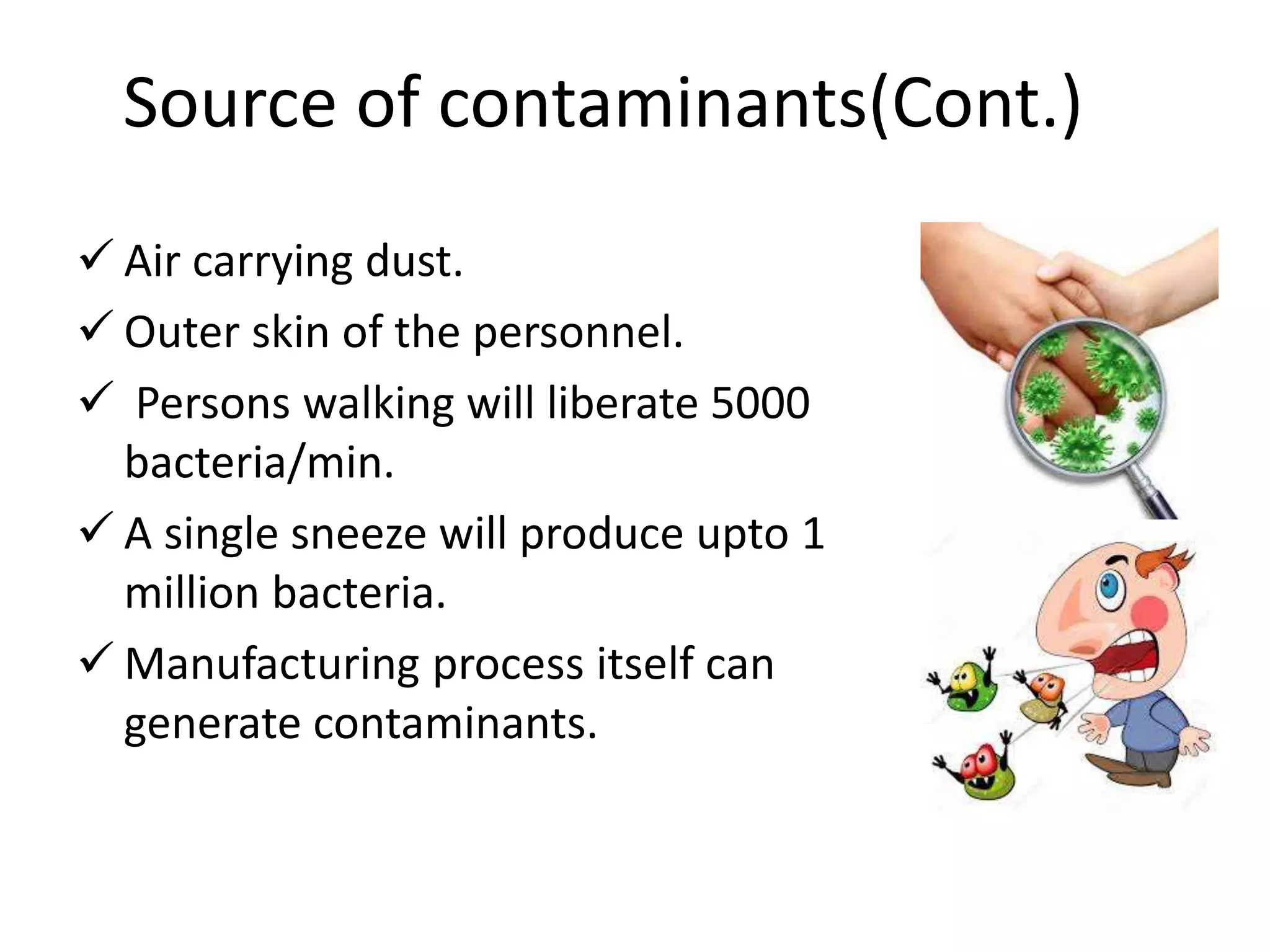
Source of contaminants(Cont.)
 Air carrying dust.
 Outer skin of the personnel.
 Persons walking will liberate 5000
bacteria/min.
 A single sneeze will produce upto 1
million bacteria.
 Manufacturing process itself can
generate contaminants.
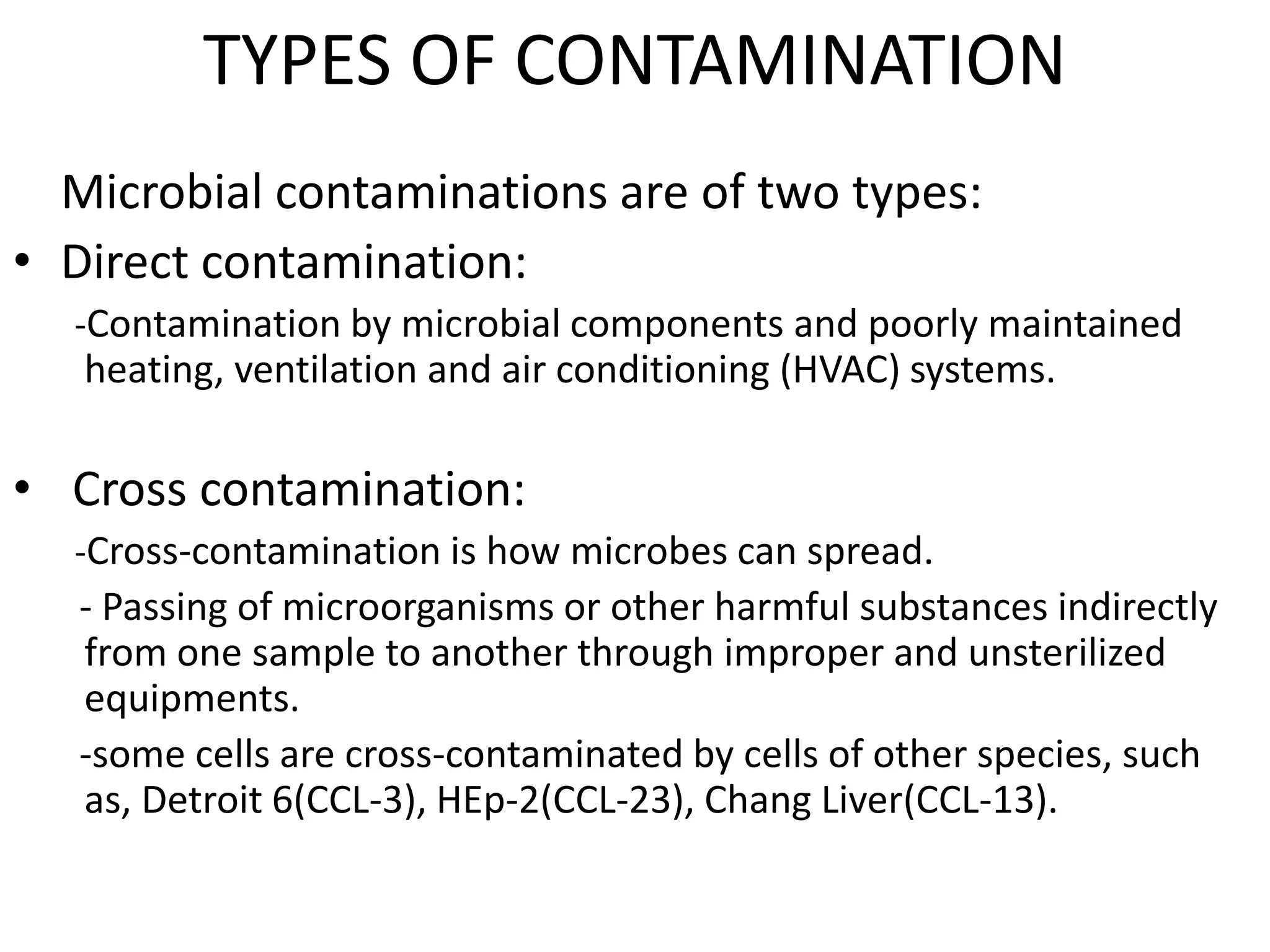
TYPES OF CONTAMINATION
Microbial contaminations are of two types:
• Direct contamination:
-Contamination by microbial components and poorly maintained
heating, ventilation and air conditioning (HVAC) systems.
• Cross contamination:
-Cross-contamination is how microbes can spread.
- Passing of microorganisms or other harmful substances indirectly
from one sample to another through improper and unsterilized
equipments.
-some cells are cross-contaminated by cells of other species, such
as, Detroit 6(CCL-3), HEp-2(CCL-23), Chang Liver(CCL-13).
The detection of microbial contaminants
typically involves three main steps:
• (1) Recovery and Concentration
• (2) Purification and Separation
• (3) Assay and Characterization
Principles of detection
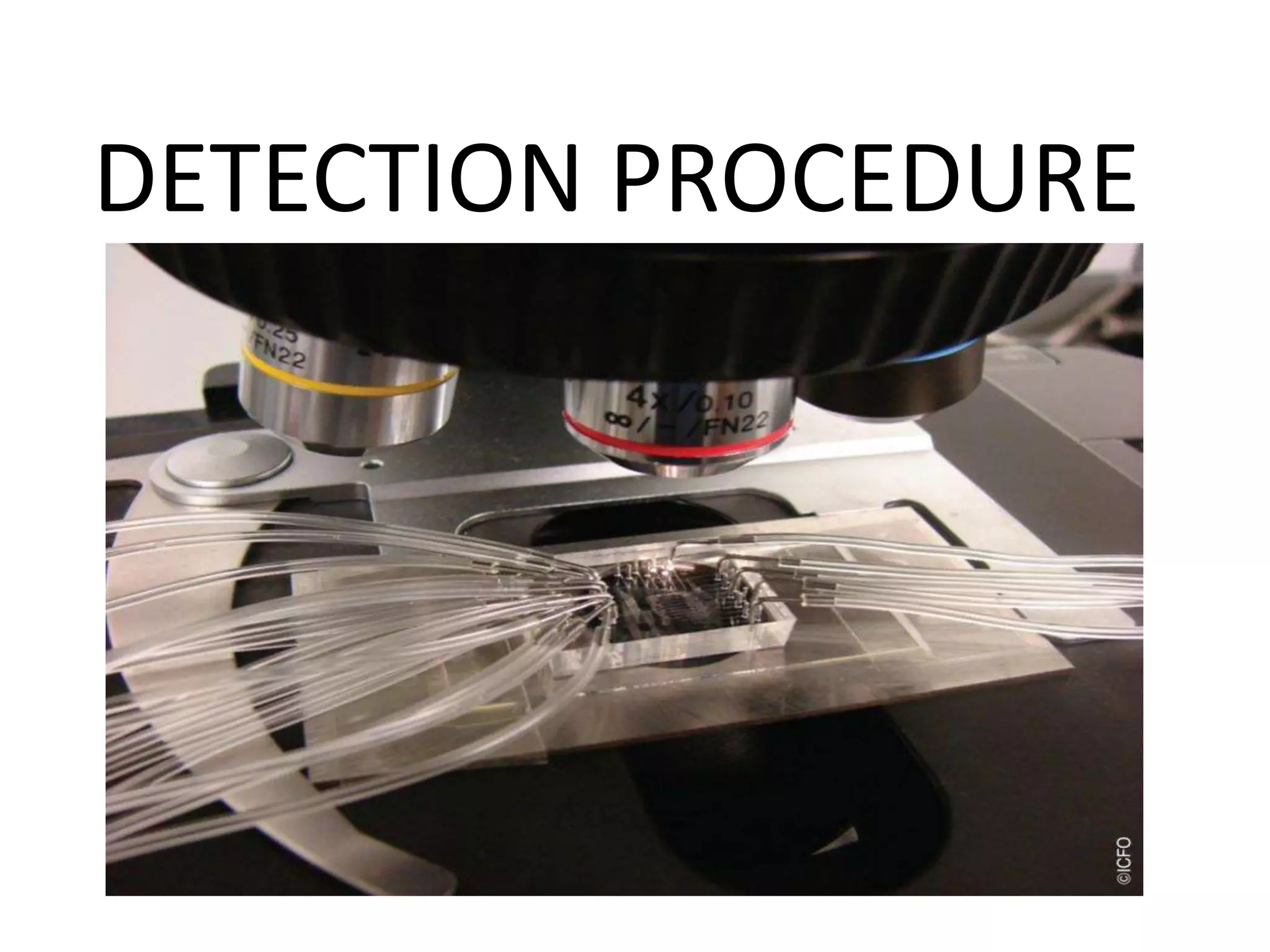
DETECTION PROCEDURE
Signature Biolipid and Biochemical Detection
Methods
• Cotaminants contain distinctive macromolecules
that aid in identification and detection.
• Cell wall component assays for
lipopolysaccharides, muramic acids and assays for
signature biolipids.
• Signature lipid biomarker analysis is based on the
use of techniques e.g., liquid extraction.
• Thin layer chromatography to separate and purify
and identify the microbial lipids.
Detection by Immunoassays
• Immunofluorescent detection by microscopy is a
specific way to detect microbes.
• Antibodies directed against antigens of the target
pathogen and labeled with a fluorochrome for
direct immunofluorescence.
• These fluorescent antibodies reacted with the
target microbe, then the microbe preparation is
washed to remove meted fluorescent antibody.
• Examined for the target microbe by ultraviolet
light microscopy.
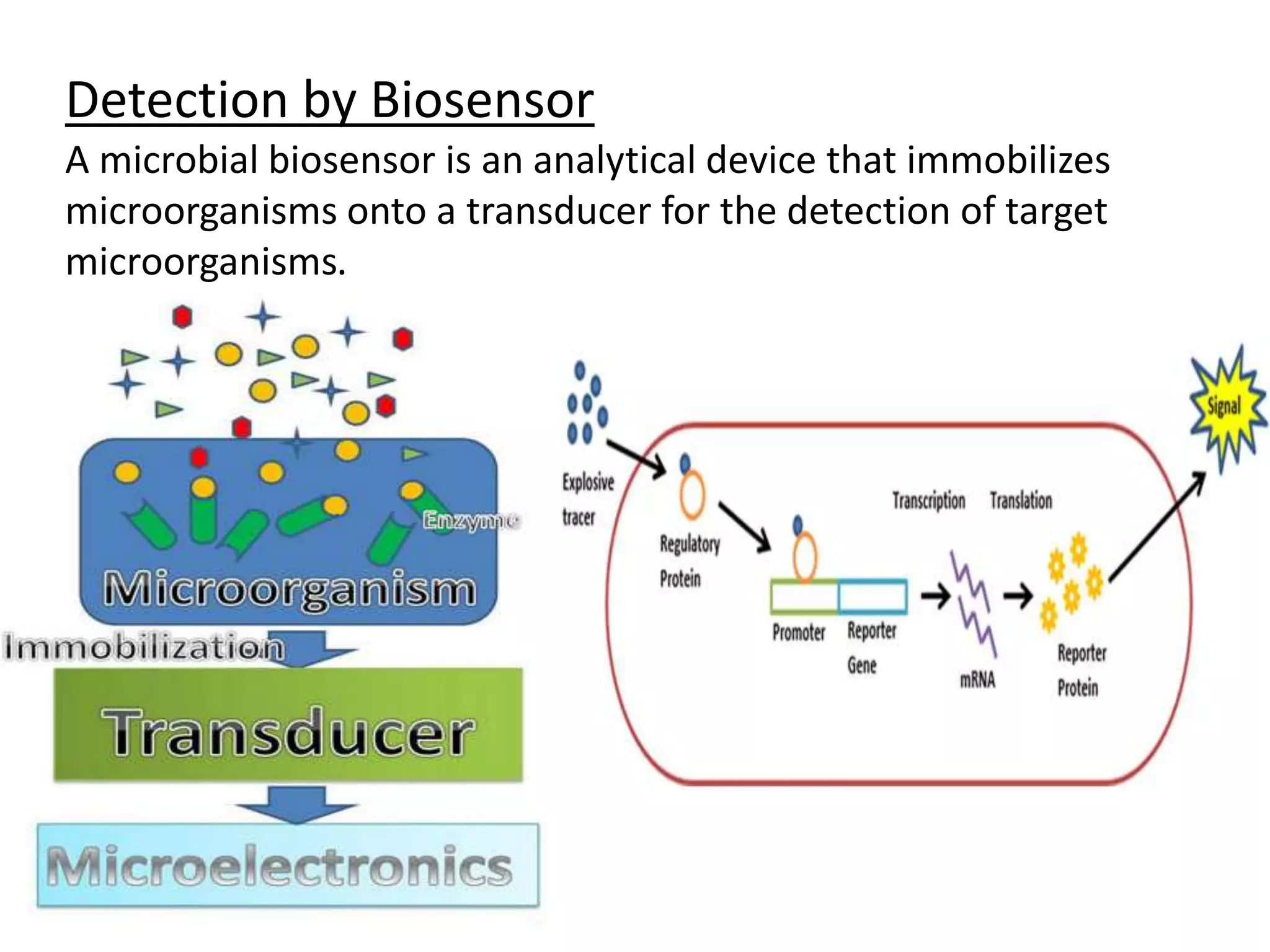
Detection by Biosensor
A microbial biosensor is an analytical device that immobilizes
microorganisms onto a transducer for the detection of target
microorganisms.
References
• 1) Abbaszadegan, M., P. W. Stewart, M. W. LeChevallier, and C. P. Gerba. 1998.
Application of PCR Technologies for Virus Detection in Groundwater. Final Report.
Denver, Colo.: American Water Works Association Research Foundation.
• 2)Anguish, L. J., and W. C. Ghiorse. 1997. Computer-assisted laser scanning and
video microscopy for analysis of Cryptosporidium parvum oocysts in soil,
sediment and feces. Applied Environmental Microbiology 63(2):724-733.
• 3)Arrowood, M. J., L.-T. Xie and M. R. Hurd. 1994. In vitro assays of maduramicin
activity against Cryptosporidium parvum. Journal Eukaryotic Microbiology 41:23S.
• 4)Borchardt, M. A., and S. K. Spencer. 1998. Concentration of waterborne
pathogens using a continuous separation channel centrifuge. In Proceedings of
the 1998 Water Quality Technology Conference, Denver, 1998.
• 5)Brock, T. D. 1983. Membrane Filtration: A User's Guide and Reference Manual.
Madison, Wis.: Science Tech, Inc.
• 6)S. P. Mohanty and E. Kougianos, “Biosensosrs: A Tutorial Review,” IEEE Potentials,
Vol. 25, No. 2, 2006, pp. 35-40. doi:10.1109/MP.2006.1649009 [Citation Time(s):1]
Microbial contamination and detection

Microbial contamination and detection

  • 1.
    Presentation on Types of microbial contamination & detectionof microbial contamination DH Sani GEB, SUST
  • 2.
    MICROBIAL CONTAMINATION  Accidentalintroduction of microbes, such as- • Bacteria • Yeast • Fungi • Prions • Protozoa etc.
  • 3.
    TYPES OF MICROBES BACTERIA Sizeof up to 5 μm. Some “Commensal” bacteria are also responsible. Most virulent type. eg, Meningococcus bacteria. VIRUS Size of 20-200 nm. They exist with and without envelopes and can cause serious infections. eg, HI virus. Meningococcus spp. HI virus
  • 4.
    PRIONS Infectious protein particles.Smallest pathogens Below 5 nm in size. Both prions and viruses are non living organisms. For reproduction, they depend on the metabolism of a host organism. Fungi, Yeasts and Protozoa Size ranges up to 200 μm in diameter are three further groups of infection sources. YEAST PROTOZOA FUNGI PRIONS
  • 5.
  • 6.
    Source of contaminants(Cont.) Air carrying dust.  Outer skin of the personnel.  Persons walking will liberate 5000 bacteria/min.  A single sneeze will produce upto 1 million bacteria.  Manufacturing process itself can generate contaminants.
  • 7.
    TYPES OF CONTAMINATION Microbialcontaminations are of two types: • Direct contamination: -Contamination by microbial components and poorly maintained heating, ventilation and air conditioning (HVAC) systems. • Cross contamination: -Cross-contamination is how microbes can spread. - Passing of microorganisms or other harmful substances indirectly from one sample to another through improper and unsterilized equipments. -some cells are cross-contaminated by cells of other species, such as, Detroit 6(CCL-3), HEp-2(CCL-23), Chang Liver(CCL-13).
  • 8.
    The detection ofmicrobial contaminants typically involves three main steps: • (1) Recovery and Concentration • (2) Purification and Separation • (3) Assay and Characterization Principles of detection
  • 9.
  • 10.
    Signature Biolipid andBiochemical Detection Methods • Cotaminants contain distinctive macromolecules that aid in identification and detection. • Cell wall component assays for lipopolysaccharides, muramic acids and assays for signature biolipids. • Signature lipid biomarker analysis is based on the use of techniques e.g., liquid extraction. • Thin layer chromatography to separate and purify and identify the microbial lipids.
  • 11.
    Detection by Immunoassays •Immunofluorescent detection by microscopy is a specific way to detect microbes. • Antibodies directed against antigens of the target pathogen and labeled with a fluorochrome for direct immunofluorescence. • These fluorescent antibodies reacted with the target microbe, then the microbe preparation is washed to remove meted fluorescent antibody. • Examined for the target microbe by ultraviolet light microscopy.
  • 12.
    Detection by Biosensor Amicrobial biosensor is an analytical device that immobilizes microorganisms onto a transducer for the detection of target microorganisms.
  • 13.
    References • 1) Abbaszadegan,M., P. W. Stewart, M. W. LeChevallier, and C. P. Gerba. 1998. Application of PCR Technologies for Virus Detection in Groundwater. Final Report. Denver, Colo.: American Water Works Association Research Foundation. • 2)Anguish, L. J., and W. C. Ghiorse. 1997. Computer-assisted laser scanning and video microscopy for analysis of Cryptosporidium parvum oocysts in soil, sediment and feces. Applied Environmental Microbiology 63(2):724-733. • 3)Arrowood, M. J., L.-T. Xie and M. R. Hurd. 1994. In vitro assays of maduramicin activity against Cryptosporidium parvum. Journal Eukaryotic Microbiology 41:23S. • 4)Borchardt, M. A., and S. K. Spencer. 1998. Concentration of waterborne pathogens using a continuous separation channel centrifuge. In Proceedings of the 1998 Water Quality Technology Conference, Denver, 1998. • 5)Brock, T. D. 1983. Membrane Filtration: A User's Guide and Reference Manual. Madison, Wis.: Science Tech, Inc. • 6)S. P. Mohanty and E. Kougianos, “Biosensosrs: A Tutorial Review,” IEEE Potentials, Vol. 25, No. 2, 2006, pp. 35-40. doi:10.1109/MP.2006.1649009 [Citation Time(s):1]

Editor's Notes

  • #4 Commensal bacteria are key regulators of digestion, commensal bacteria–derived products may regulate the development and function of the mammalian immune system. Some microbiota that colonize humans are commensal, meaning they co-exist without harming humans. Virulent-extremely infectious, Capable of causing disease by breaking down protective mechanisms of the host.`
  • #13  regulatory protein (gene-regulatory protein) Any protein that influences the regions of a DNA molecule that are transcribed by RNA polymerase during the process of transcription. Reporter genes include genes that code for fluorescent protein and enzymes that convert invisible substrates to luminescent or coloured products.