CLINICAL MICROBIOLOGY
PRACTICAL
CLINICAL MICROBIOLOGY
PRACTICAL I
SOME COMMON VIRUSES AND THE
DISEASES THEY CAUSE.
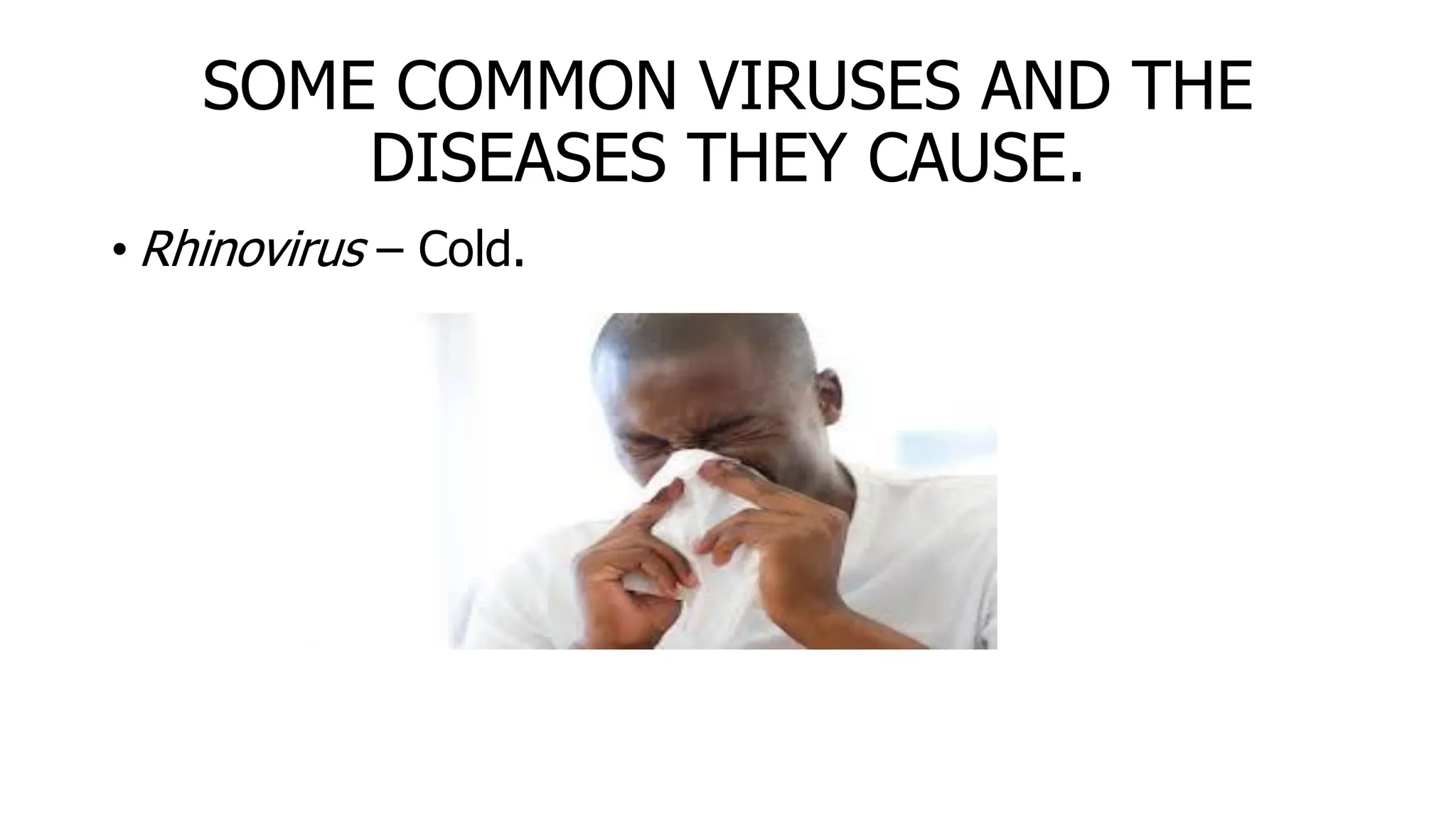
• Rhinovirus – Cold.
SOME COMMON VIRUSES AND THE
DISEASES THEY CAUSE.
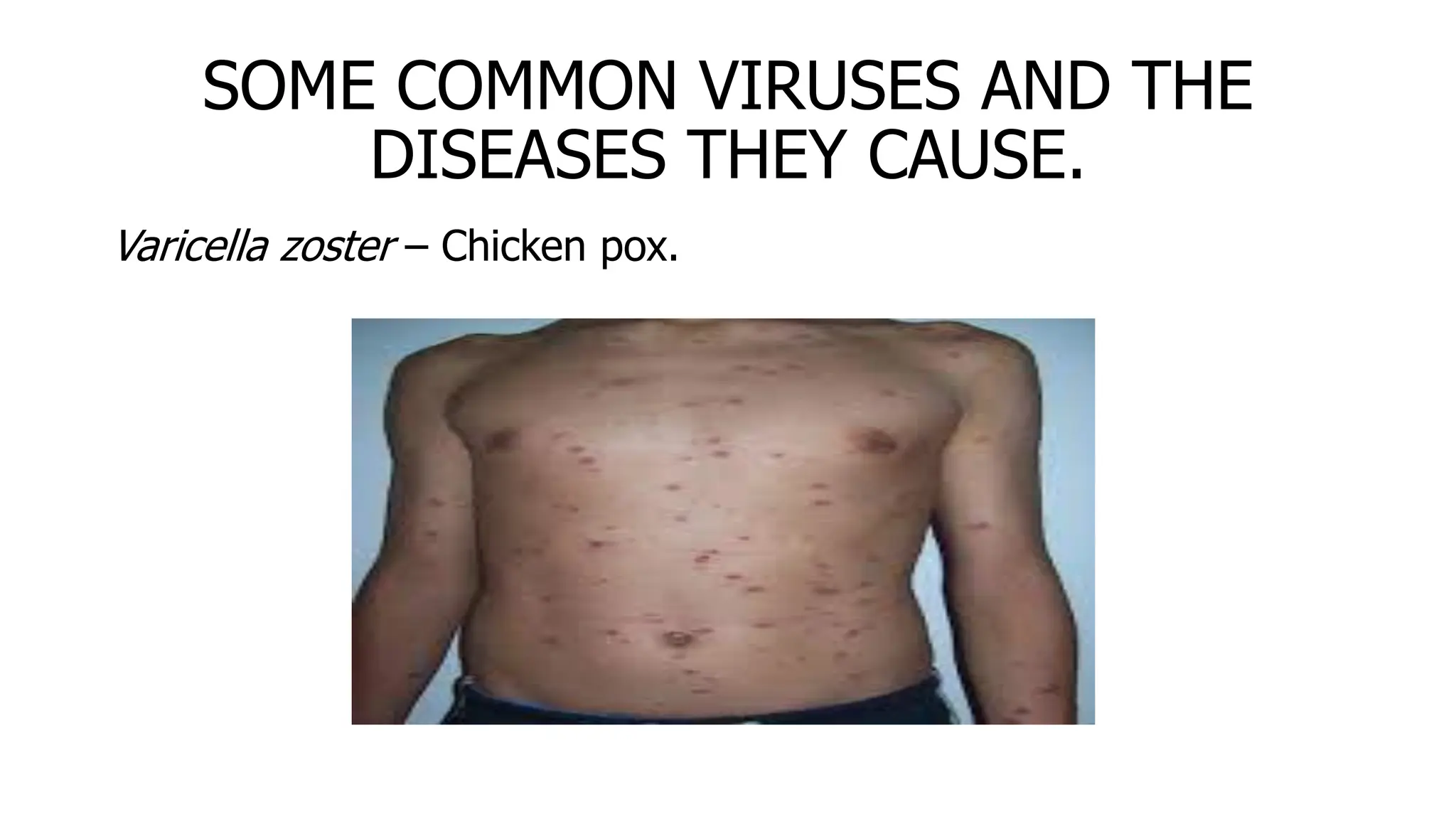
Varicella zoster – Chicken pox.
SOME COMMON VIRUSES AND THE
DISEASES THEY CAUSE.
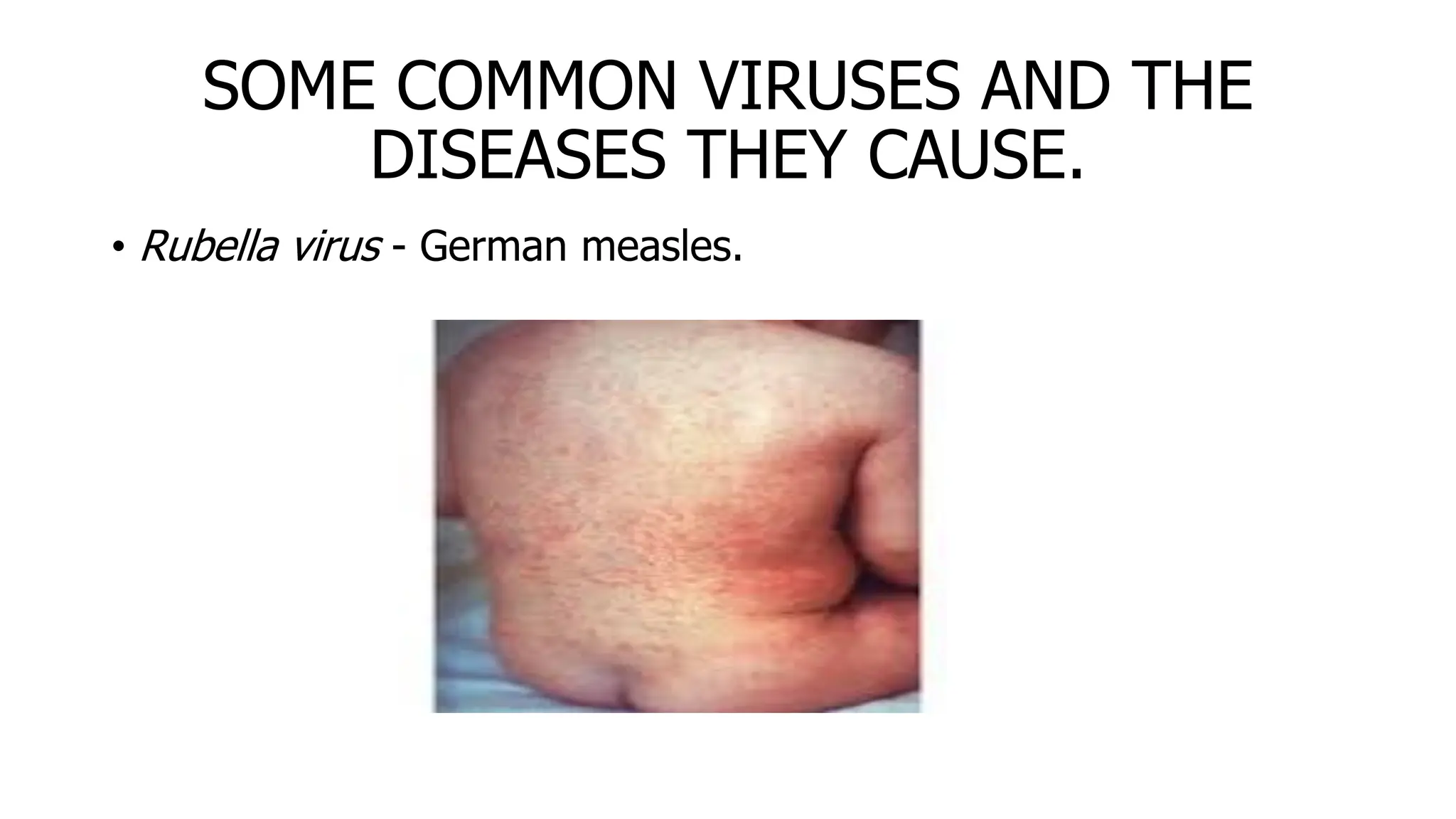
• Rubella virus - German measles.
SOME COMMON VIRUSES AND THE
DISEASES THEY CAUSE.
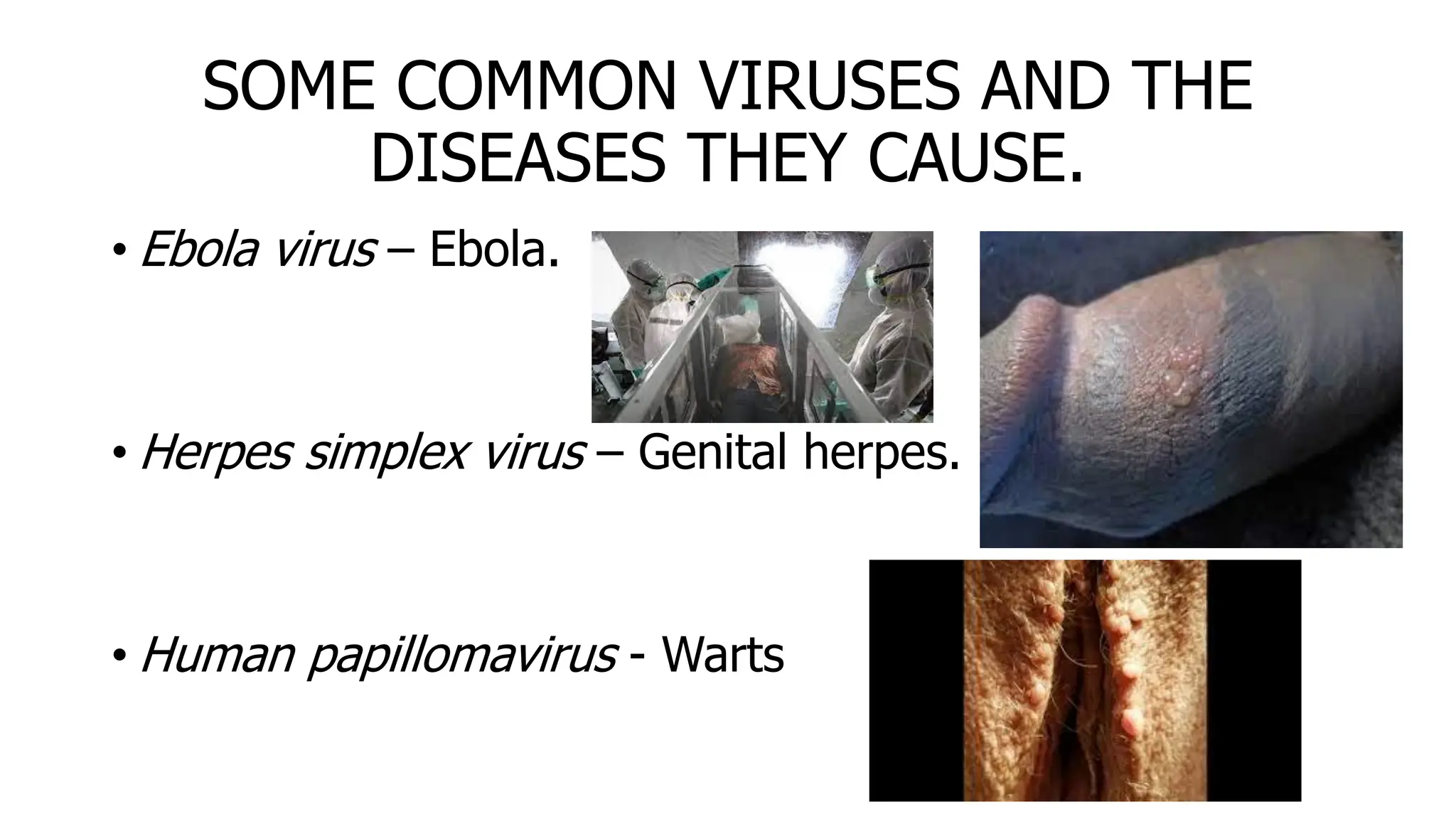
• Ebola virus – Ebola.
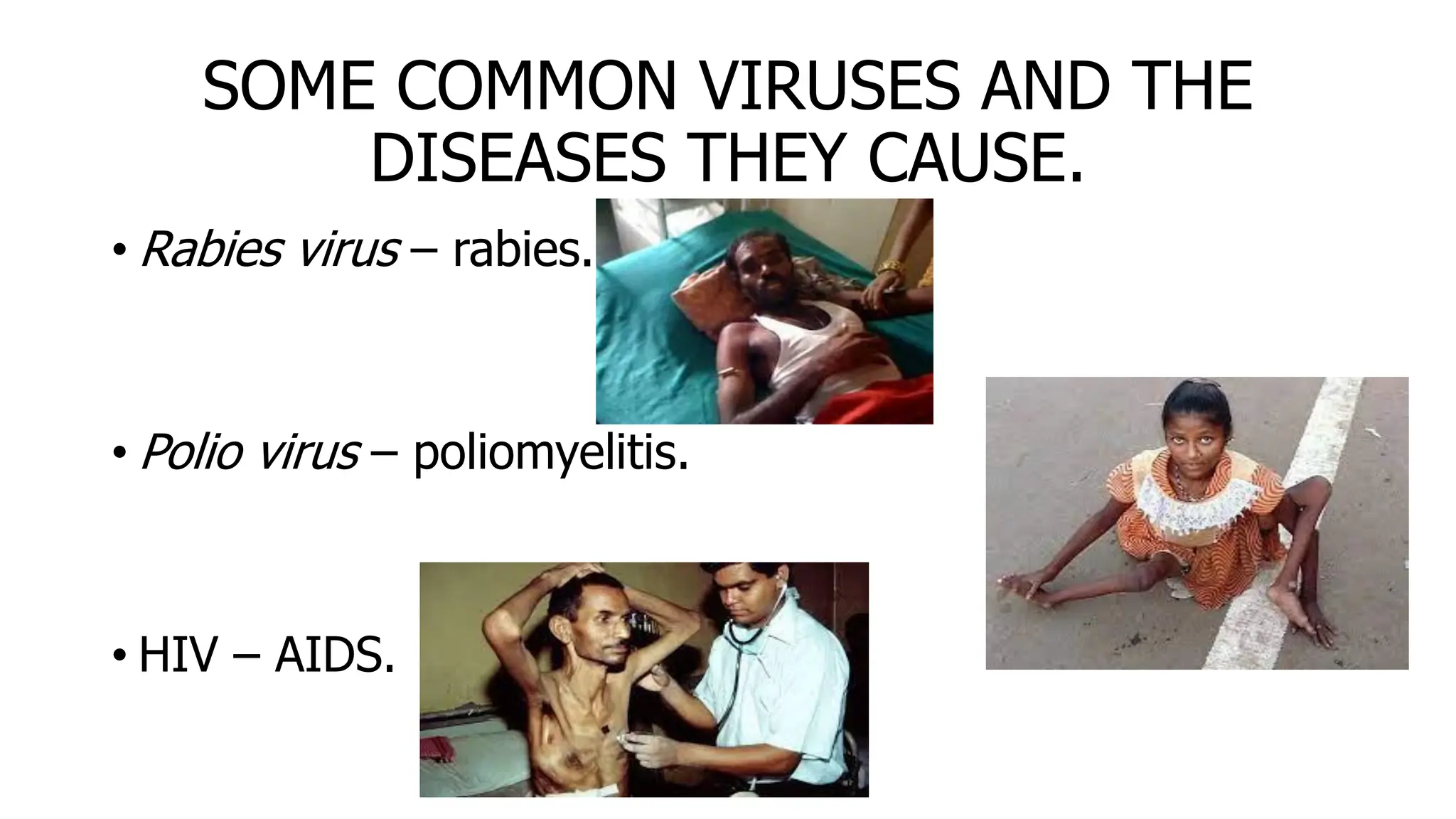
• Herpes simplex virus – Genital herpes.
• Human papillomavirus - Warts
SOME COMMON VIRUSES AND THE
DISEASES THEY CAUSE.
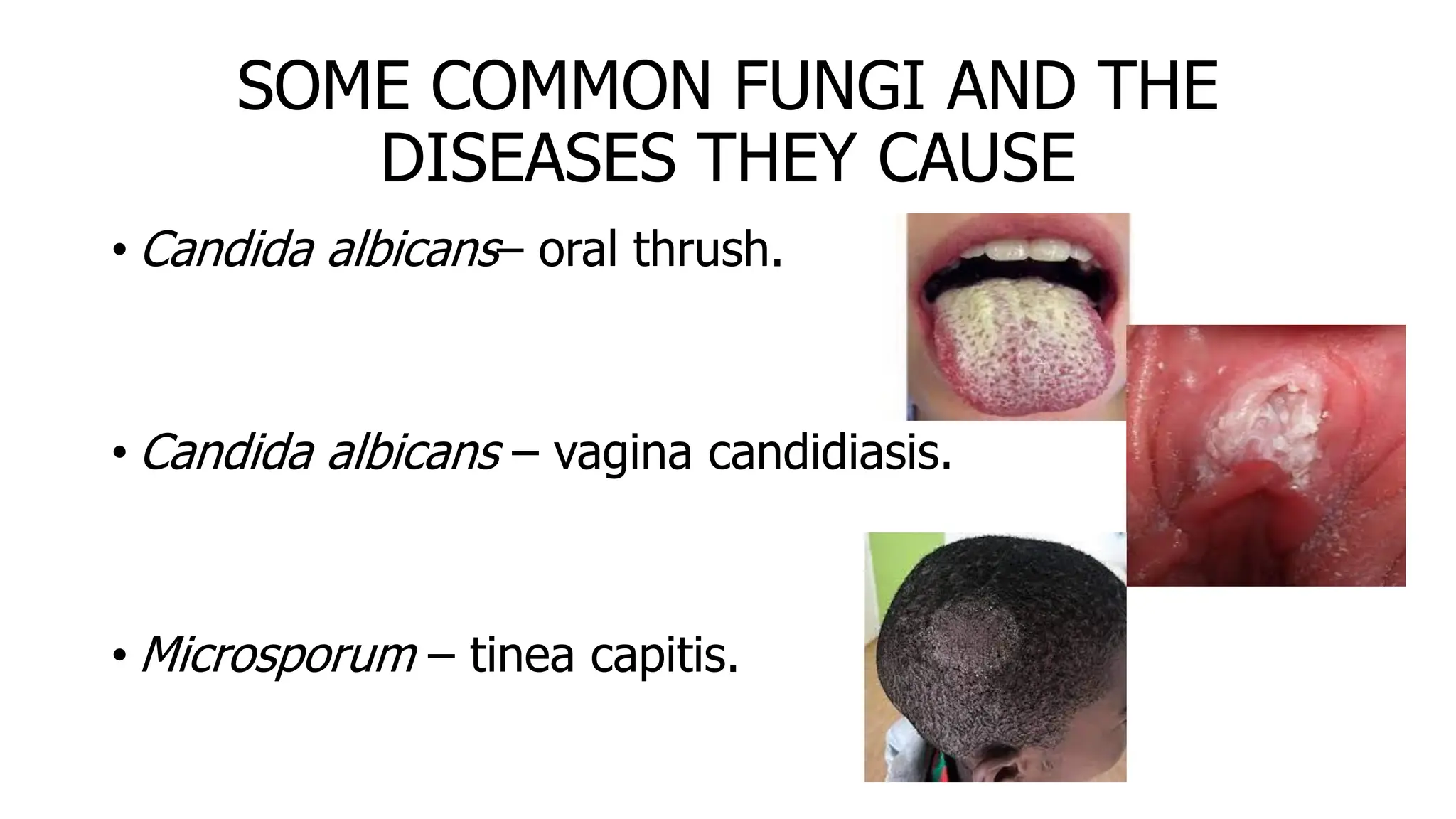
• Rabies virus – rabies.
• Polio virus – poliomyelitis.
• HIV – AIDS.
SOME COMMON FUNGI AND THE
DISEASES THEY CAUSE
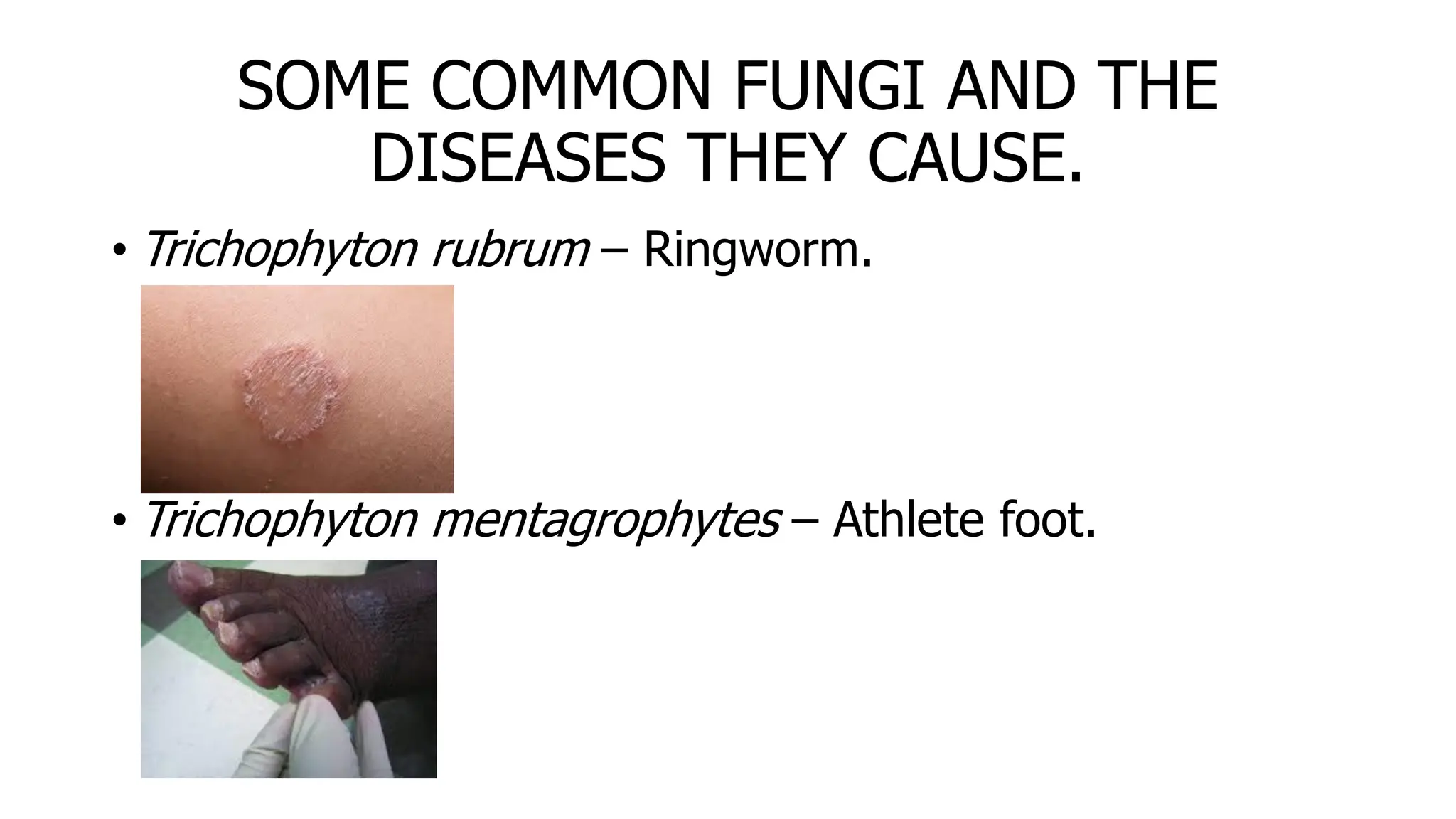
• Candida albicans– oral thrush.
• Candida albicans – vagina candidiasis.
• Microsporum – tinea capitis.
SOME COMMON FUNGI AND THE
DISEASES THEY CAUSE.
• Trichophyton rubrum – Ringworm.
• Trichophyton mentagrophytes – Athlete foot.
SOME COMMON PARASITES AND THE
DISEASES THEY CAUSE.
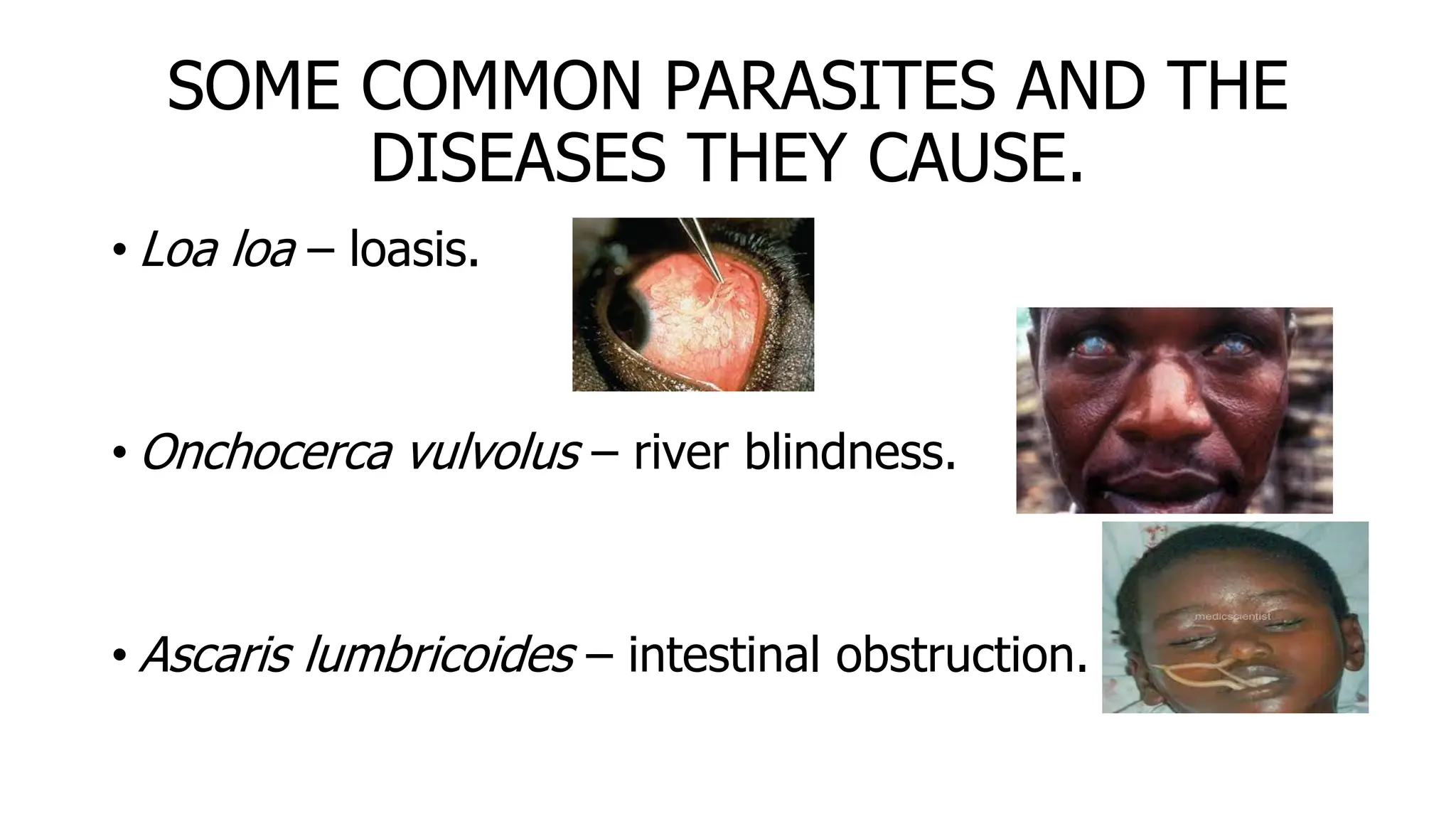
• Loa loa – loasis.
• Onchocerca vulvolus – river blindness.
• Ascaris lumbricoides – intestinal obstruction.
SOME COMMON PARASITES AND THE
DISEASES THEY CAUSE.
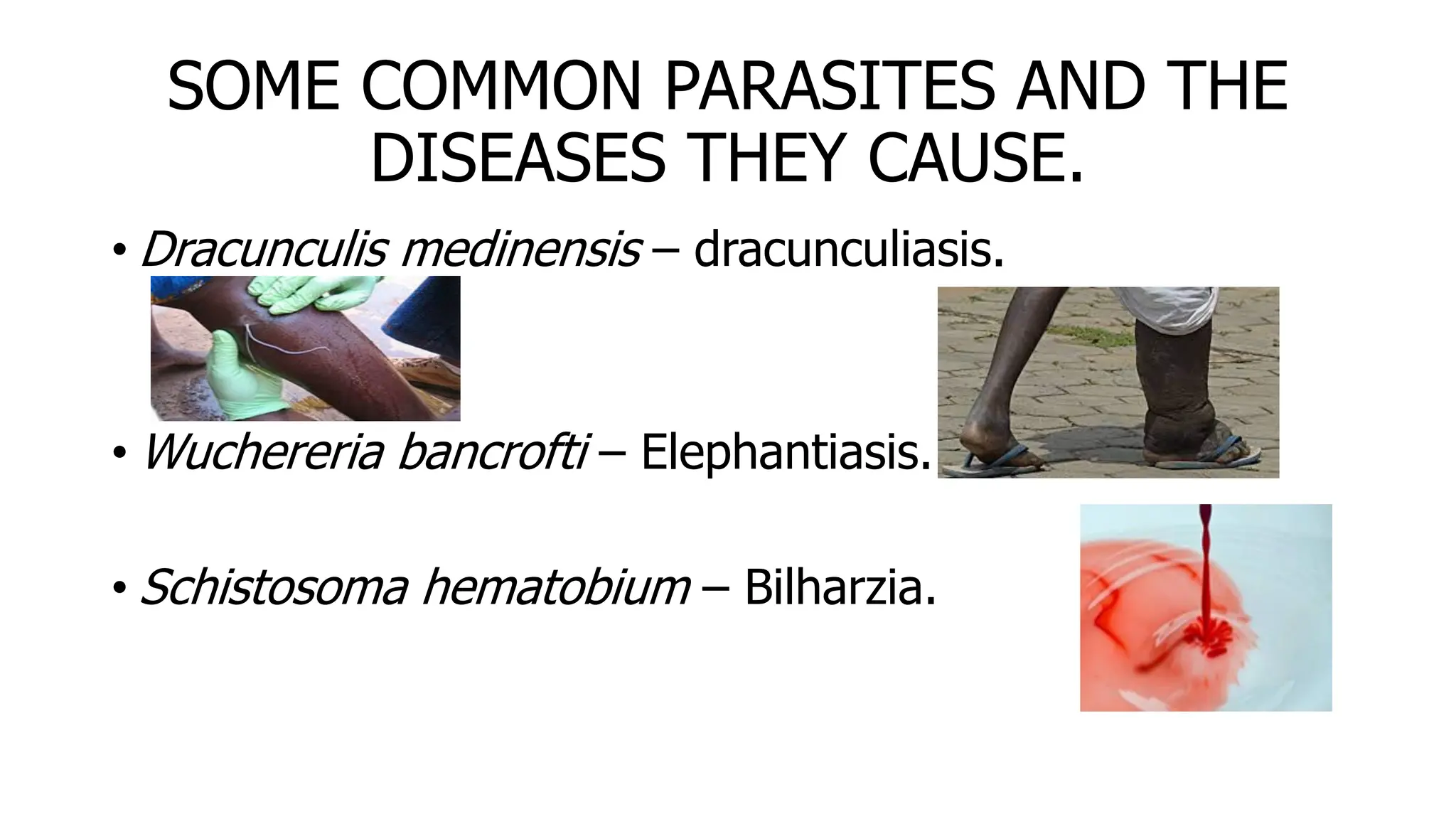
• Dracunculis medinensis – dracunculiasis.
• Wuchereria bancrofti – Elephantiasis.
• Schistosoma hematobium – Bilharzia.
SOME COMMON PARASITES AND THE
DISEASES THEY CAUSE.
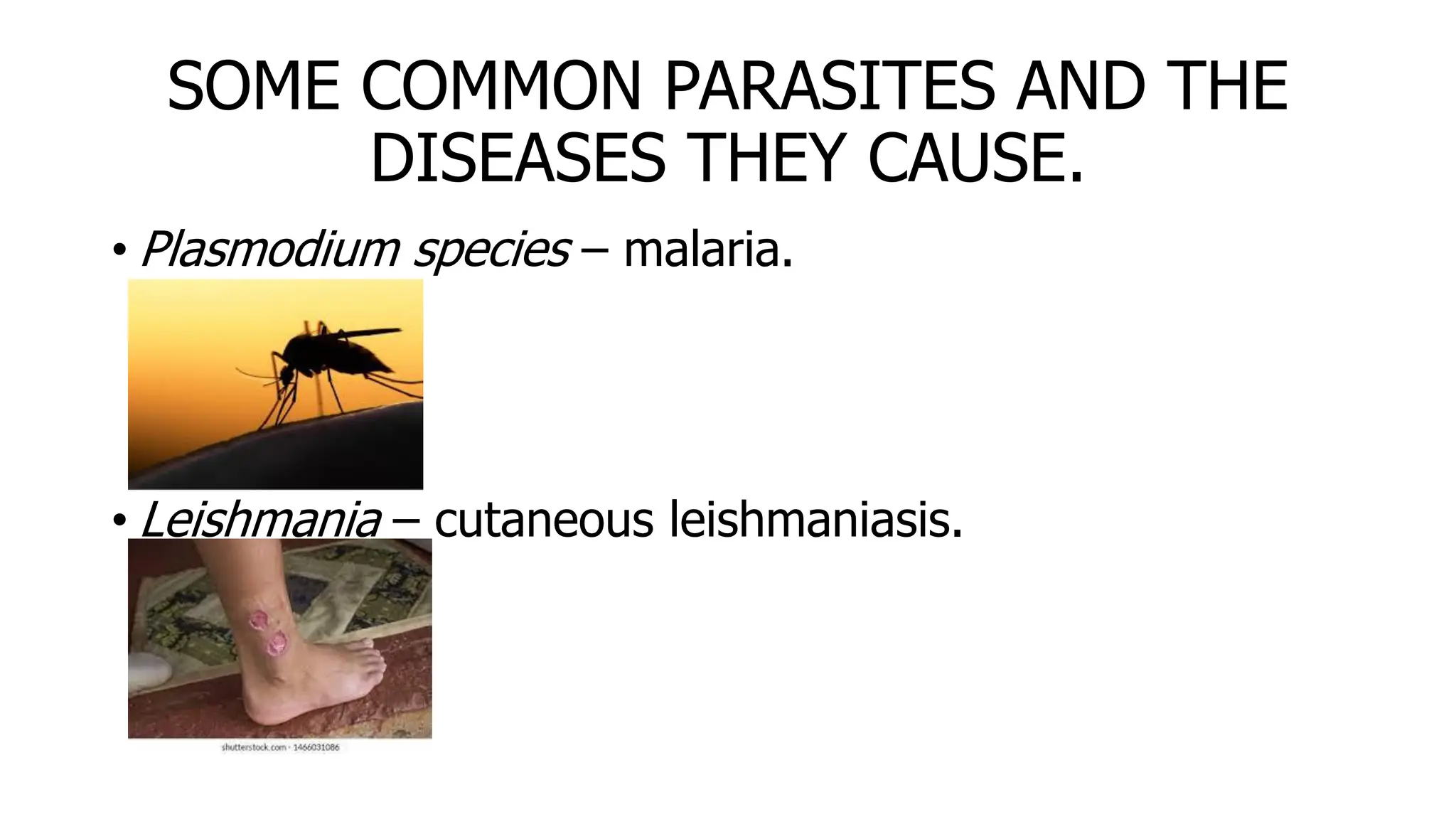
• Plasmodium species – malaria.
• Leishmania – cutaneous leishmaniasis.
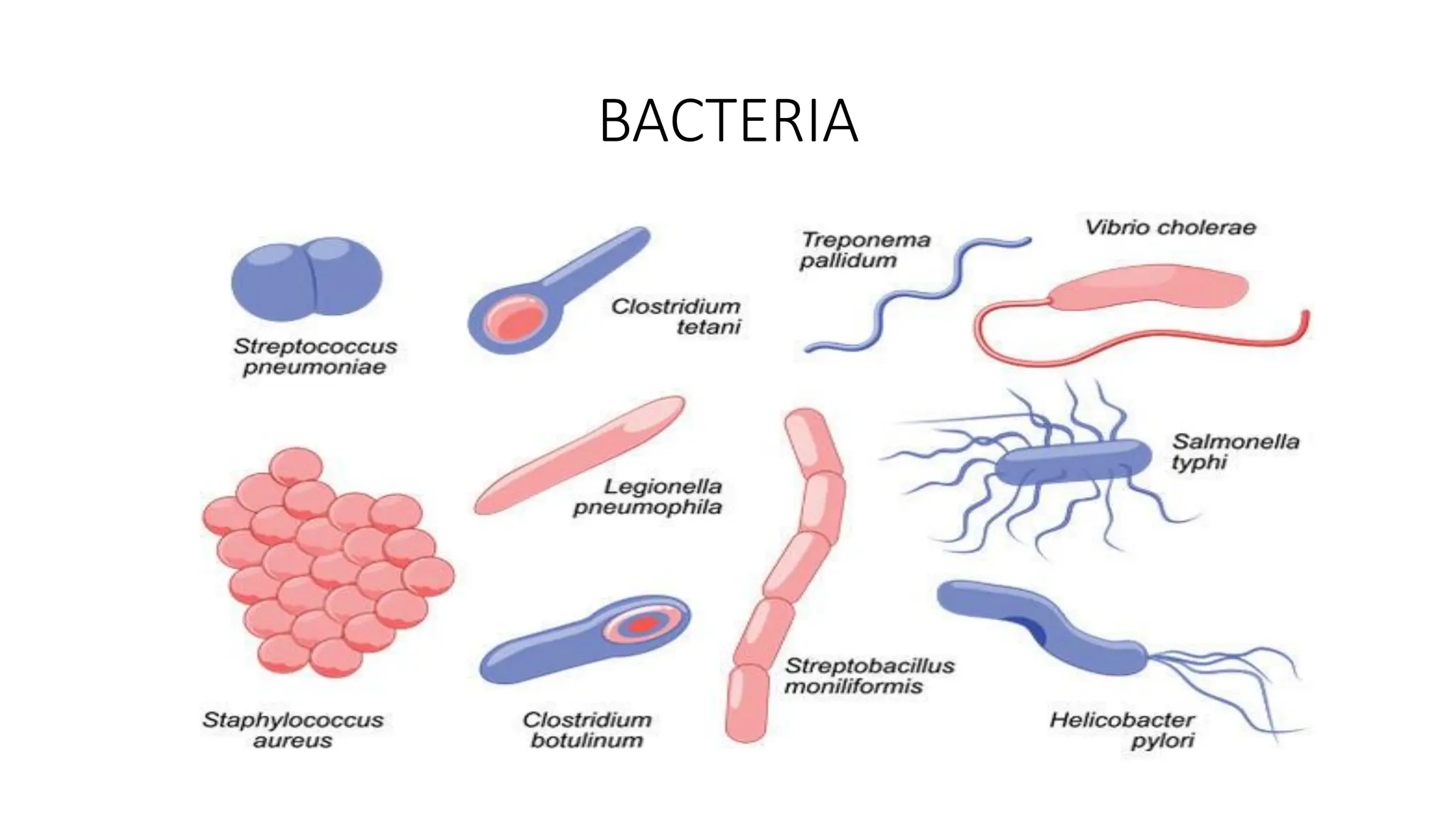
SOME COMMON BACTERIA AND THE
DISEASES THEY CAUSE.
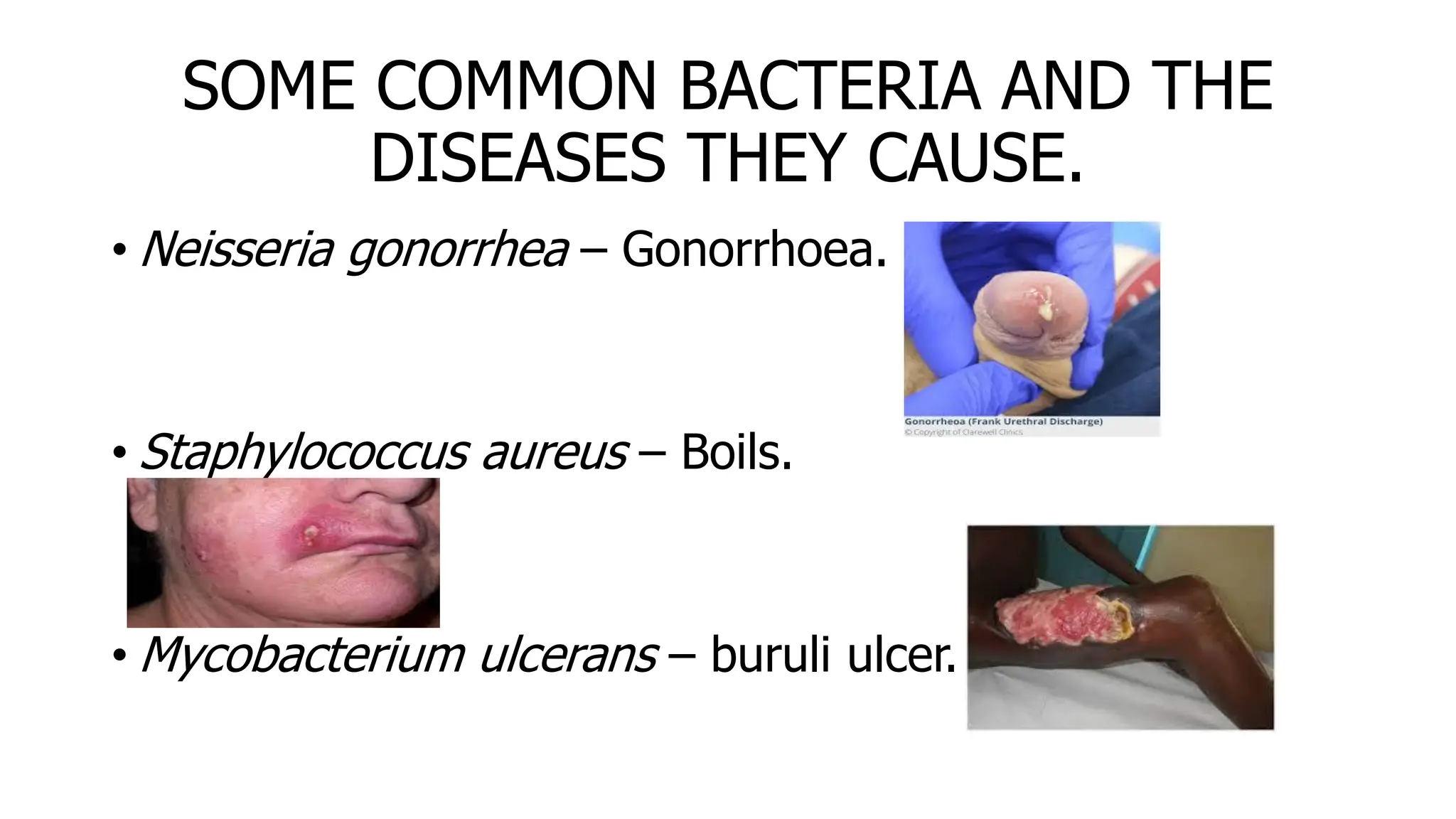
• Neisseria gonorrhea – Gonorrhoea.
• Staphylococcus aureus – Boils.
• Mycobacterium ulcerans – buruli ulcer.
SOME COMMON BACTERIA AND THE
DISEASES THEY CAUSE.
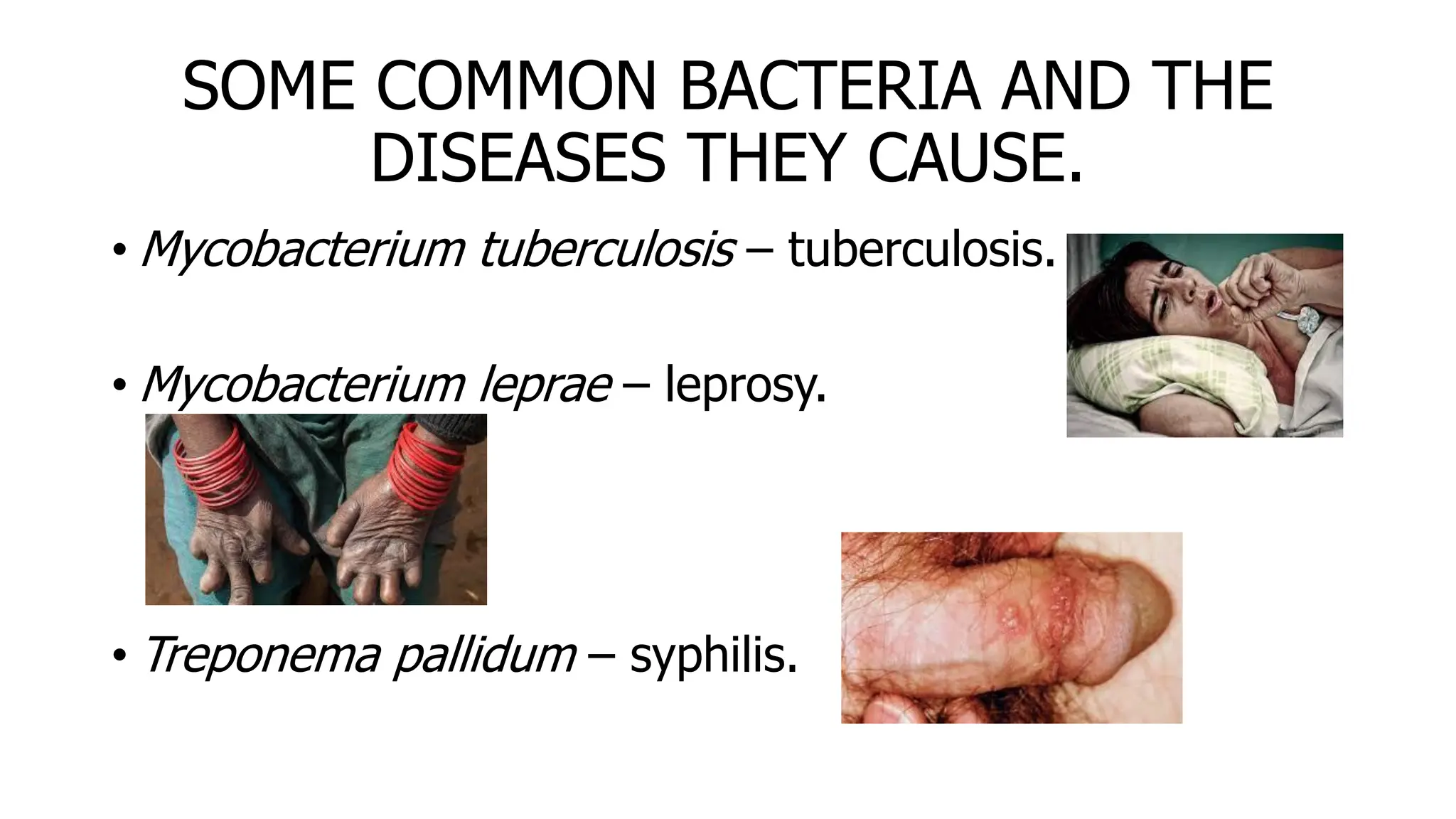
• Mycobacterium tuberculosis – tuberculosis.
• Mycobacterium leprae – leprosy.
• Treponema pallidum – syphilis.
SOME COMMON BACTERIA AND THE
DISEASES THEY CAUSE.
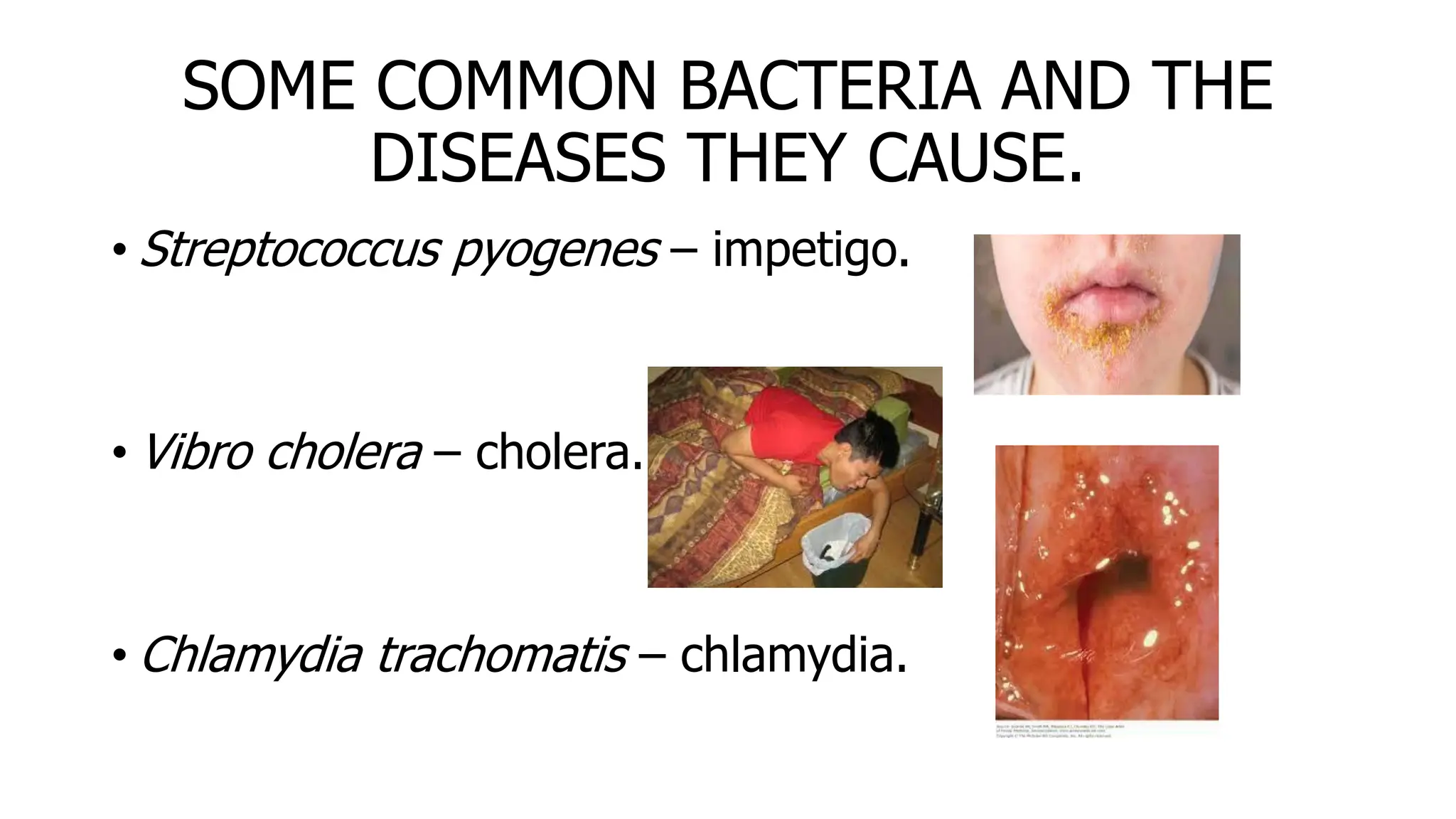
• Streptococcus pyogenes – impetigo.
• Vibro cholera – cholera.
• Chlamydia trachomatis – chlamydia.
Clinical Microbiology
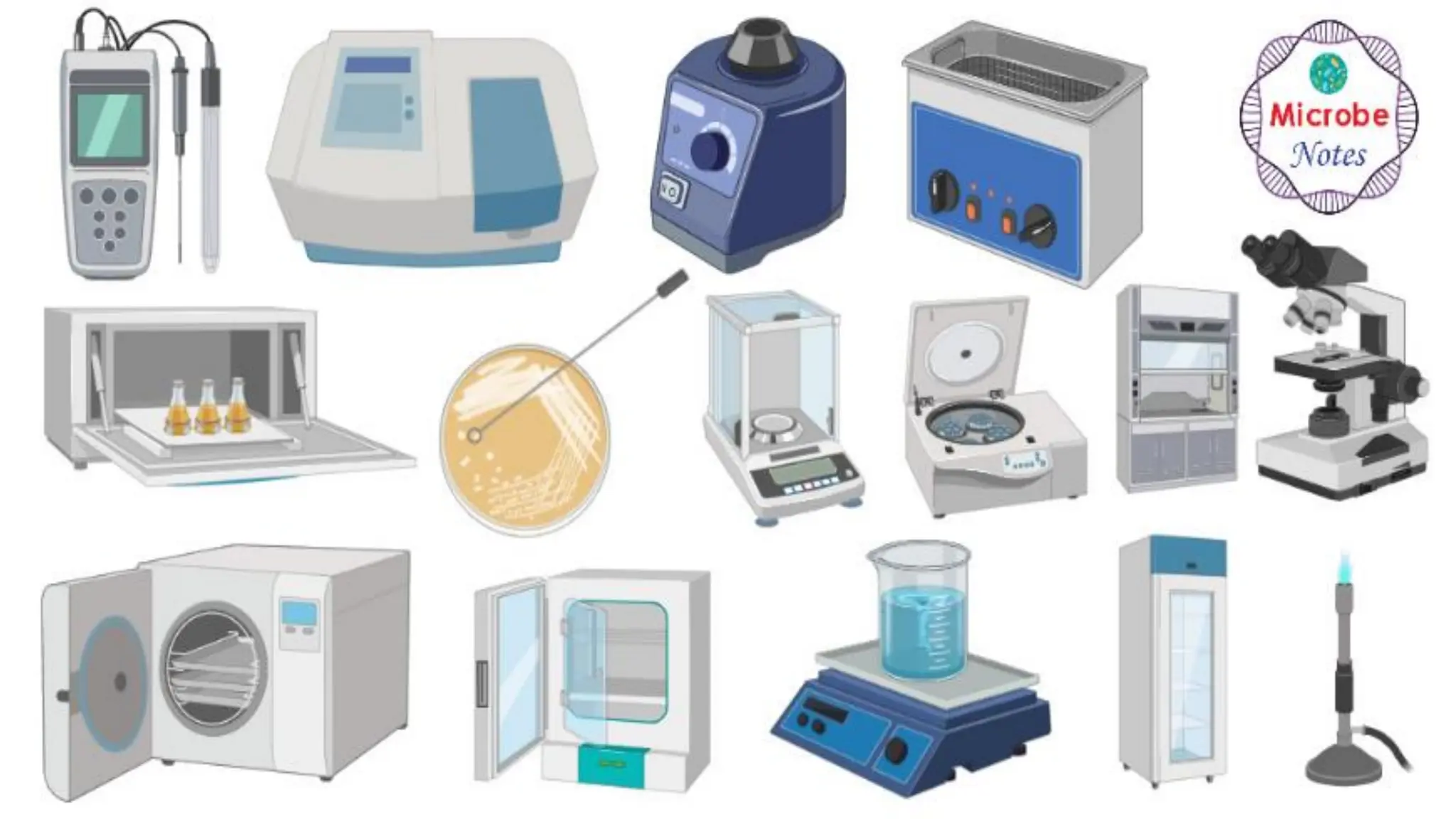
Tools and Equipment
DEPARTMENT OF CLINICAL MICROBIOLOGY
SCHOOL OF MEDICINE AND DENTISTRY
KNUST
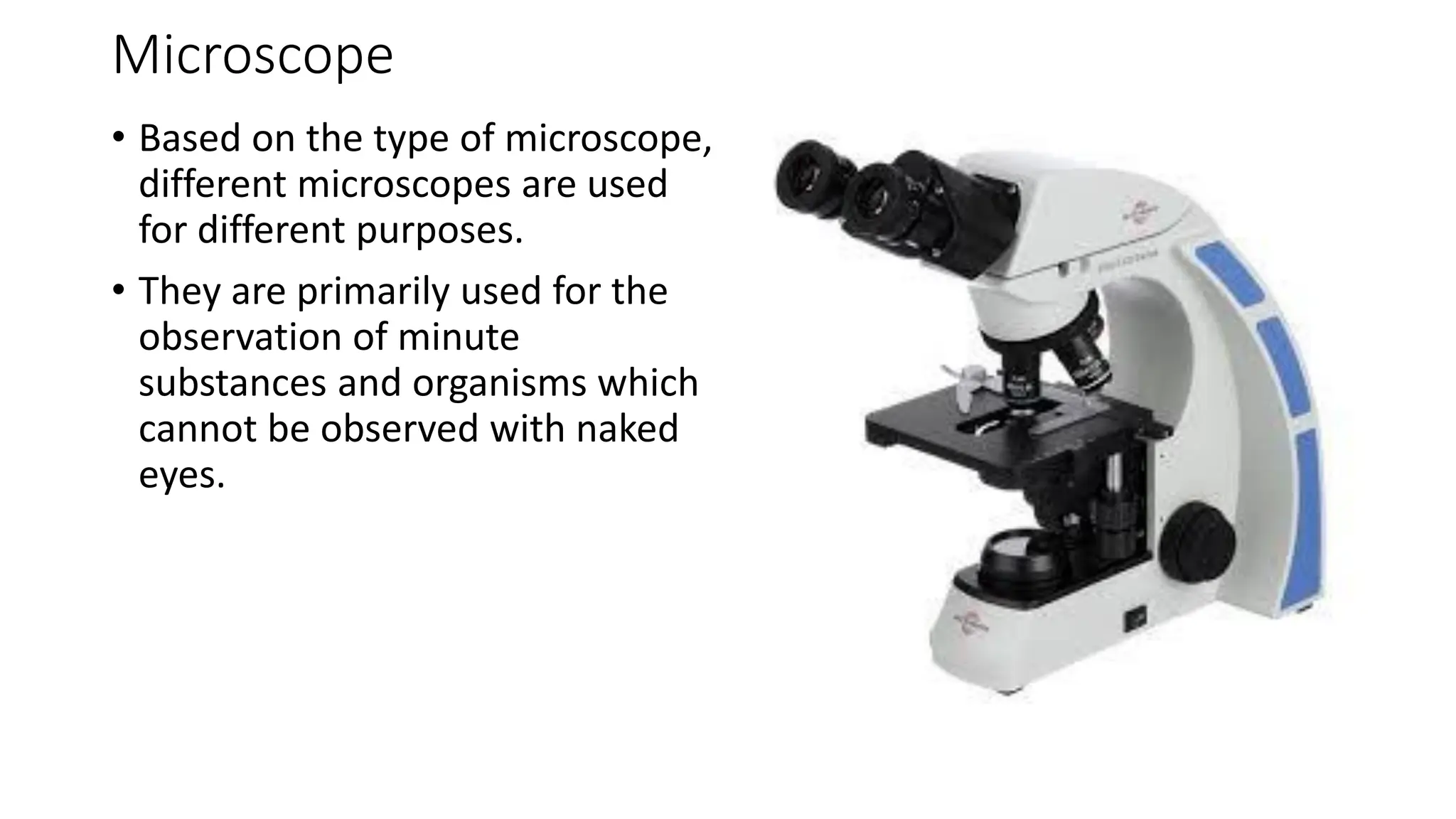
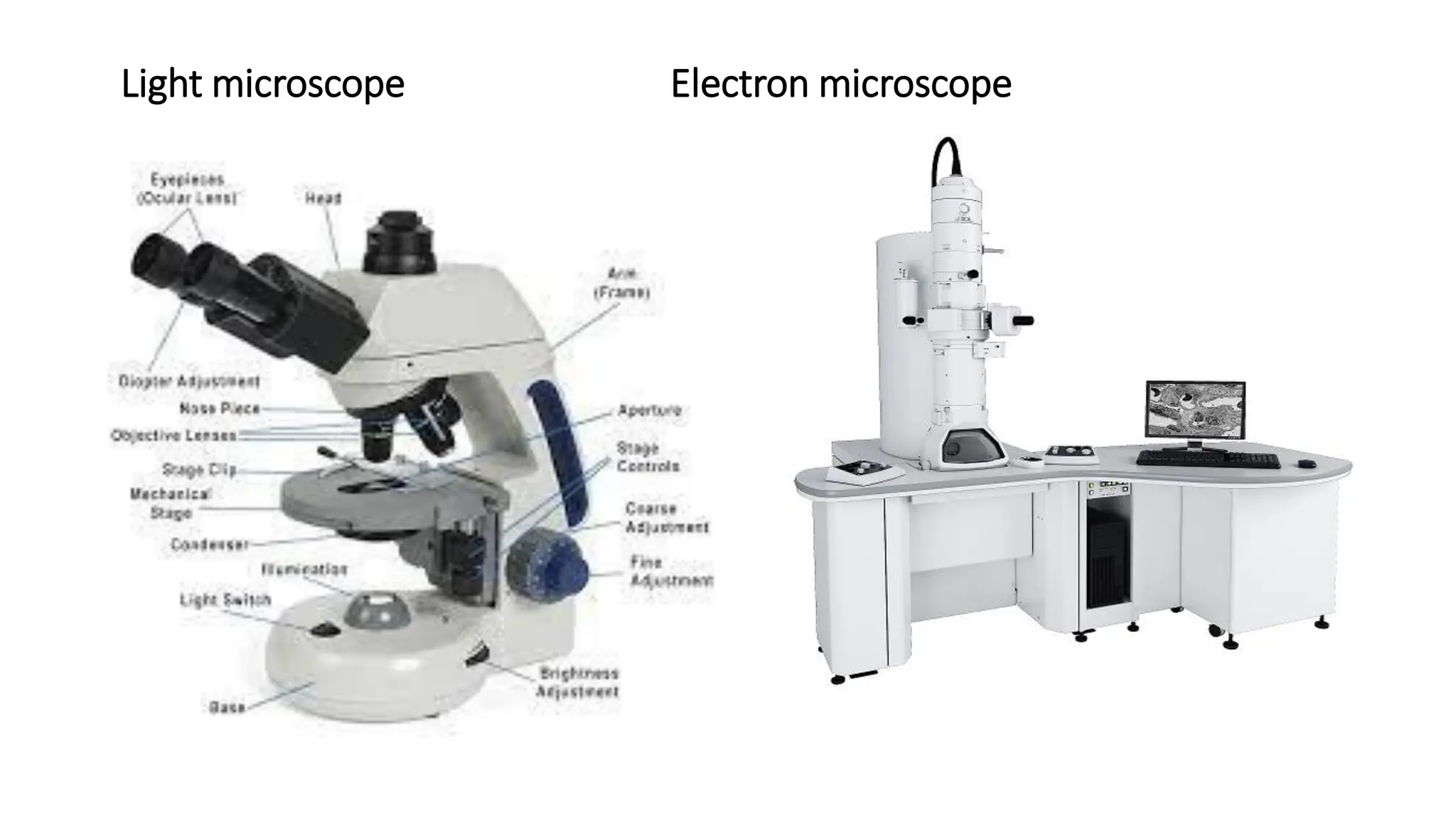
Microscope
• Based on the type of microscope,
different microscopes are used
for different purposes.
• They are primarily used for the
observation of minute
substances and organisms which
cannot be observed with naked
eyes.
Light microscope Electron microscope
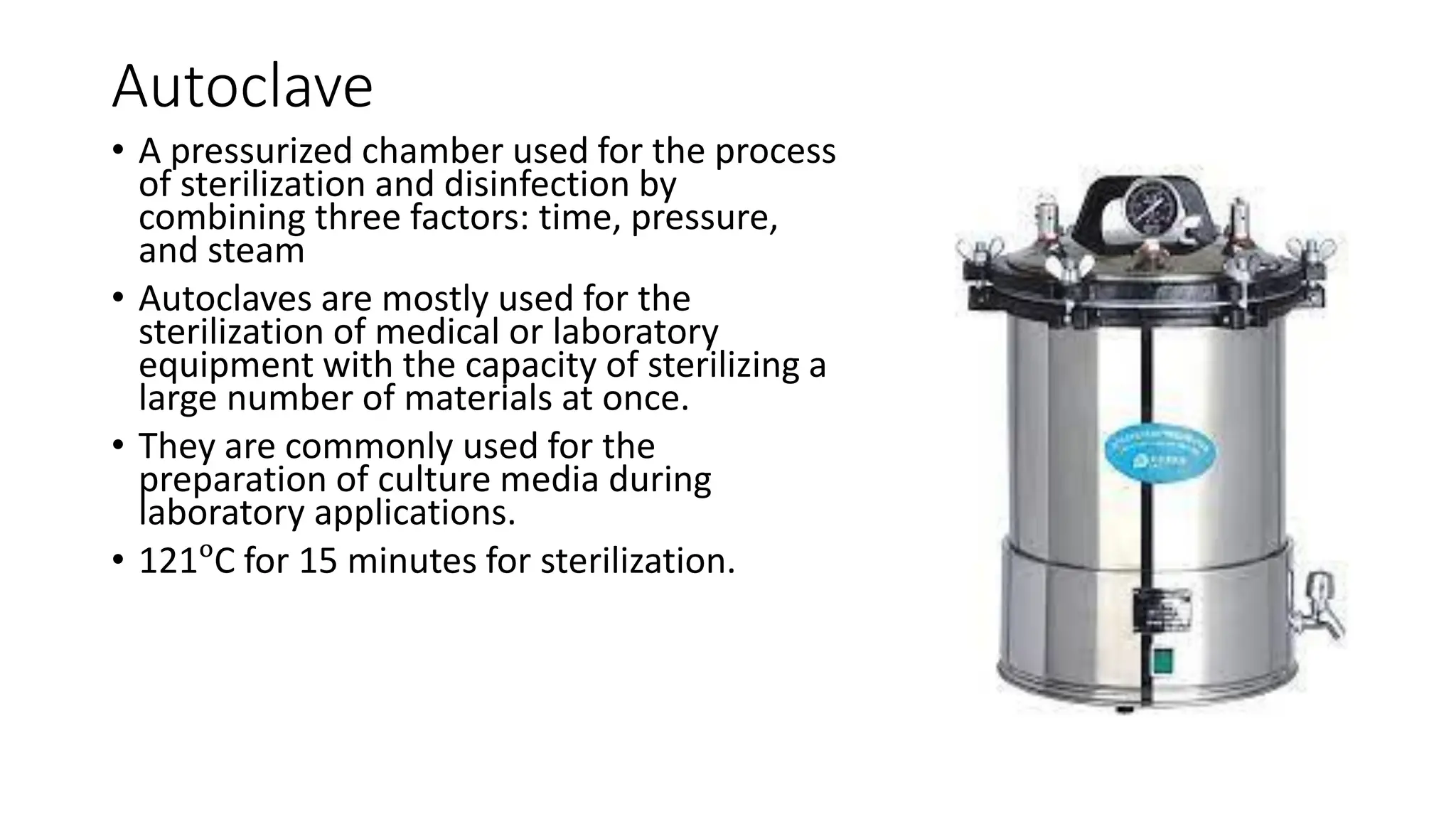
Autoclave
• A pressurized chamber used for the process
of sterilization and disinfection by
combining three factors: time, pressure,
and steam
• Autoclaves are mostly used for the
sterilization of medical or laboratory
equipment with the capacity of sterilizing a
large number of materials at once.
• They are commonly used for the
preparation of culture media during
laboratory applications.
• 121ᵒC for 15 minutes for sterilization.
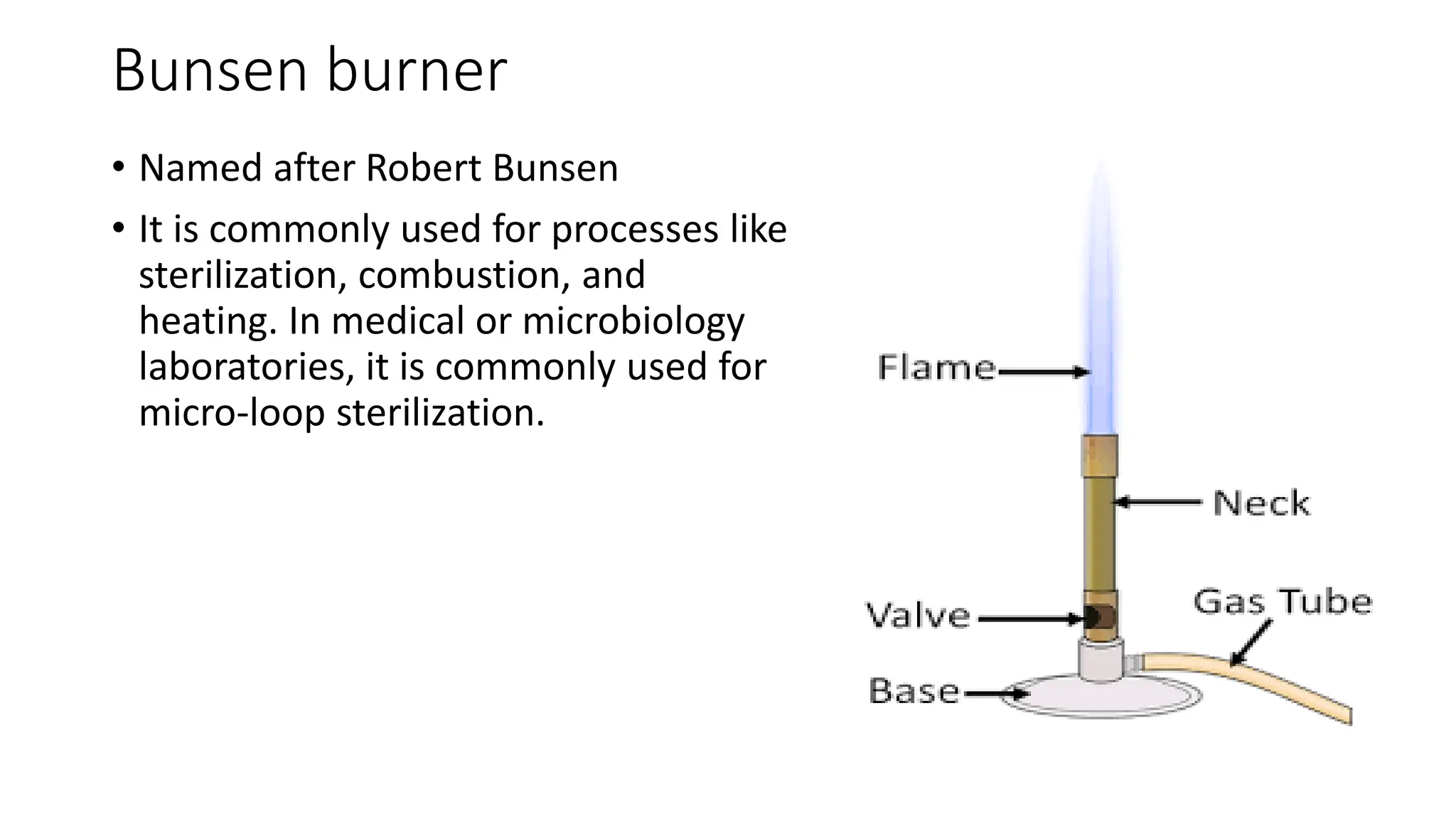
Bunsen burner
• Named after Robert Bunsen
• It is commonly used for processes like
sterilization, combustion, and
heating. In medical or microbiology
laboratories, it is commonly used for
micro-loop sterilization.
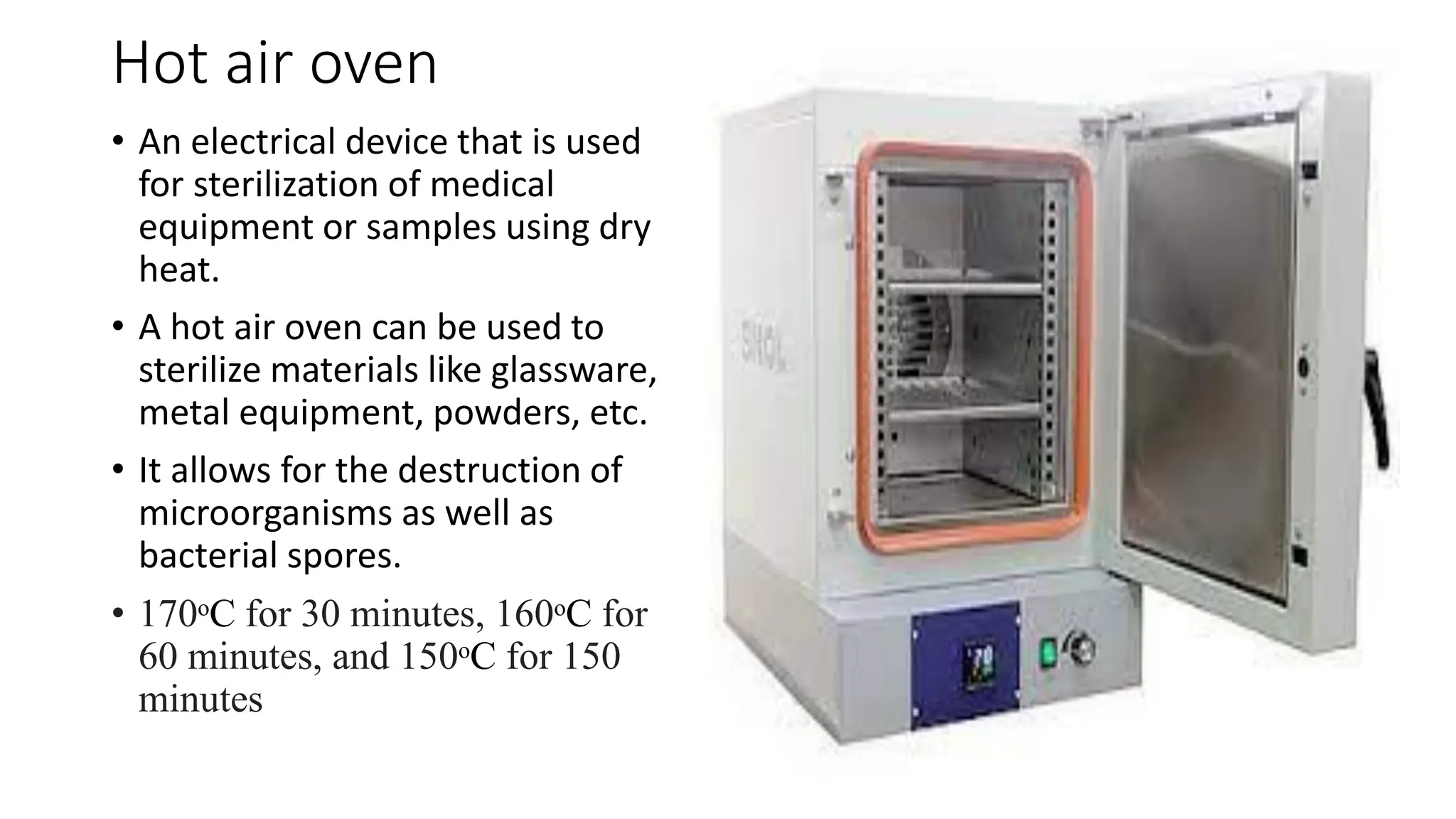
Hot air oven
• An electrical device that is used
for sterilization of medical
equipment or samples using dry
heat.
• A hot air oven can be used to
sterilize materials like glassware,
metal equipment, powders, etc.
• It allows for the destruction of
microorganisms as well as
bacterial spores.
• 170ᵒC for 30 minutes, 160ᵒC for
60 minutes, and 150ᵒC for 150
minutes
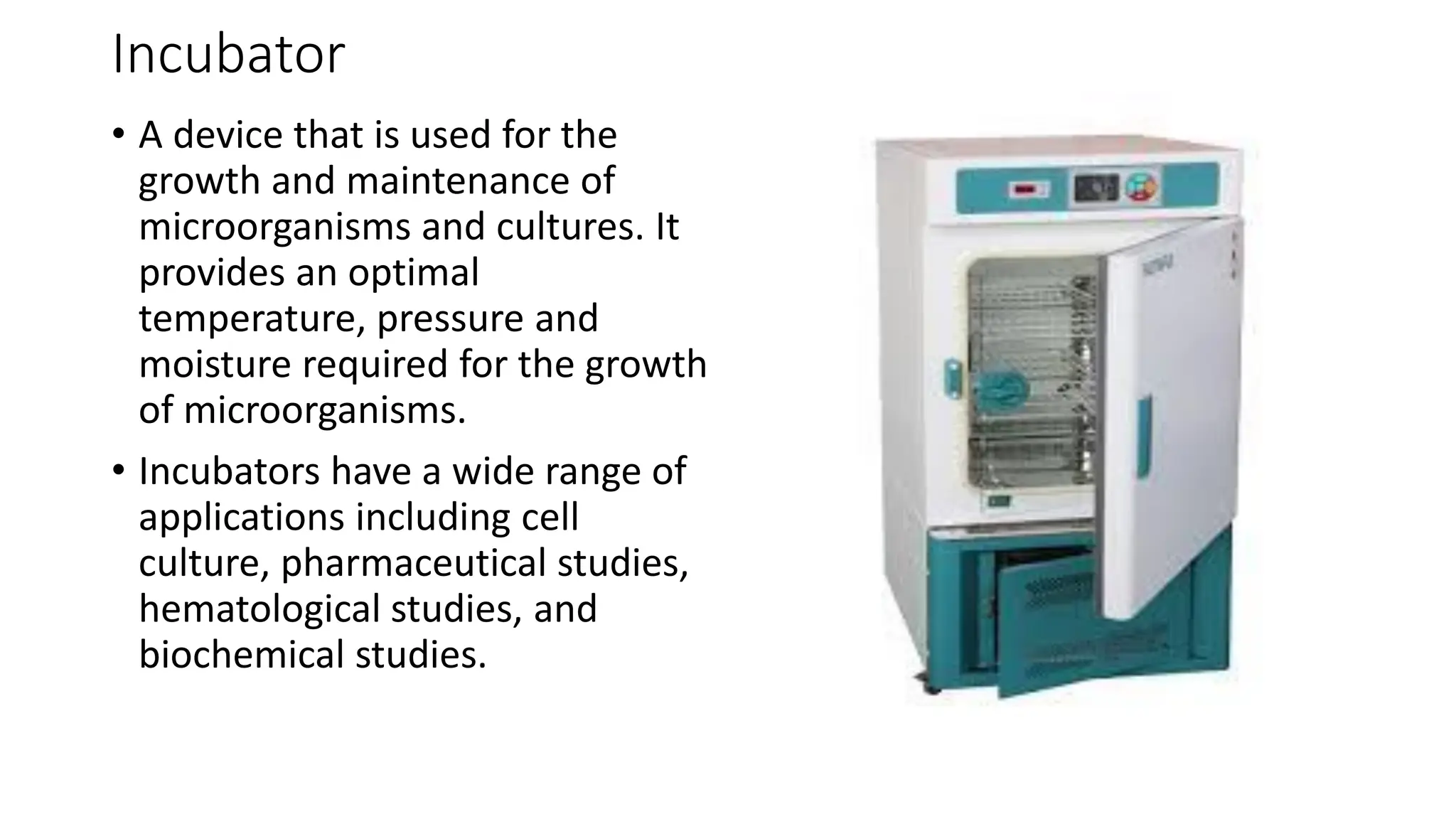
Incubator
• A device that is used for the
growth and maintenance of
microorganisms and cultures. It
provides an optimal
temperature, pressure and
moisture required for the growth
of microorganisms.
• Incubators have a wide range of
applications including cell
culture, pharmaceutical studies,
hematological studies, and
biochemical studies.
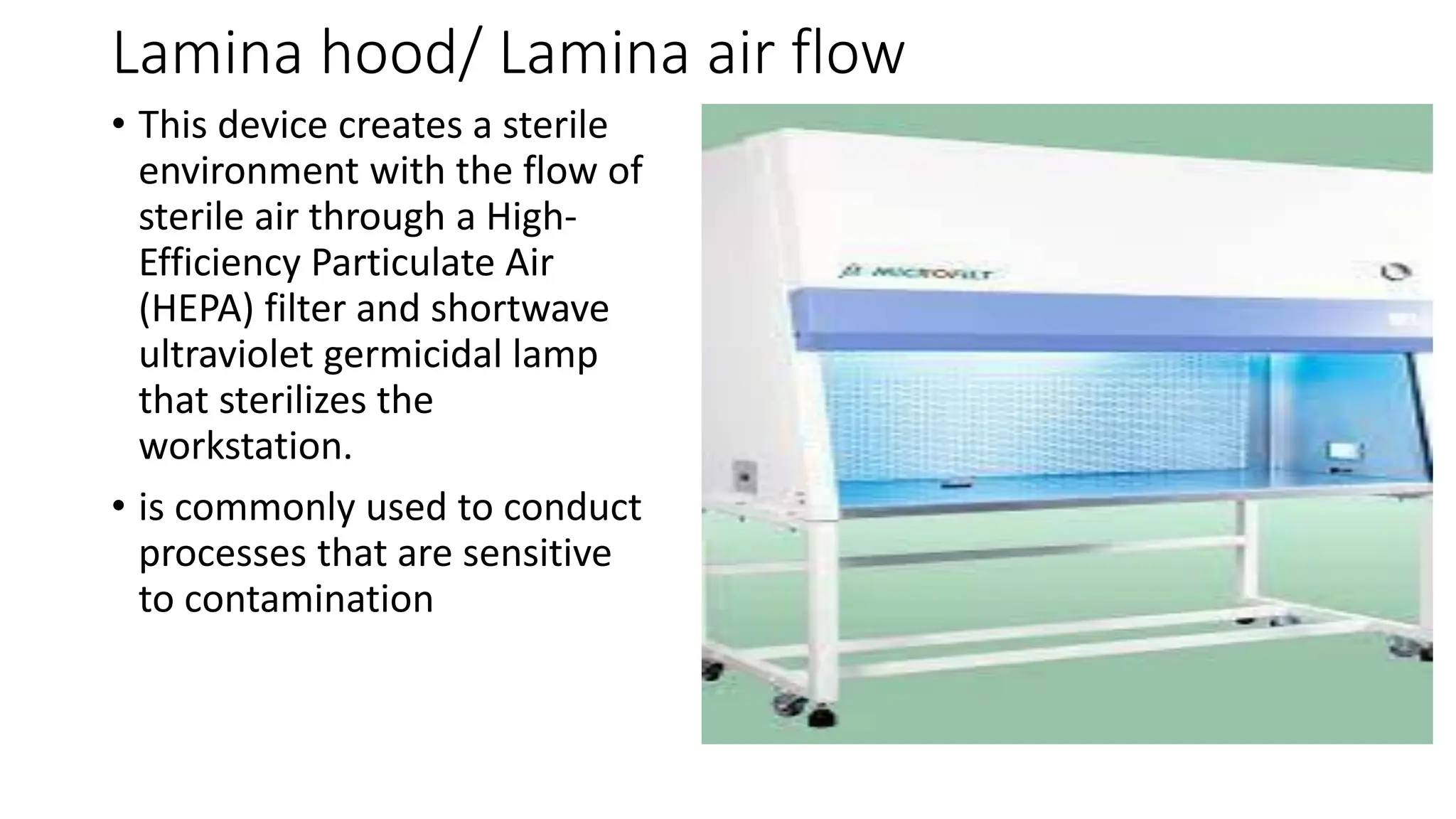
Lamina hood/ Lamina air flow
• This device creates a sterile
environment with the flow of
sterile air through a High-
Efficiency Particulate Air
(HEPA) filter and shortwave
ultraviolet germicidal lamp
that sterilizes the
workstation.
• is commonly used to conduct
processes that are sensitive
to contamination
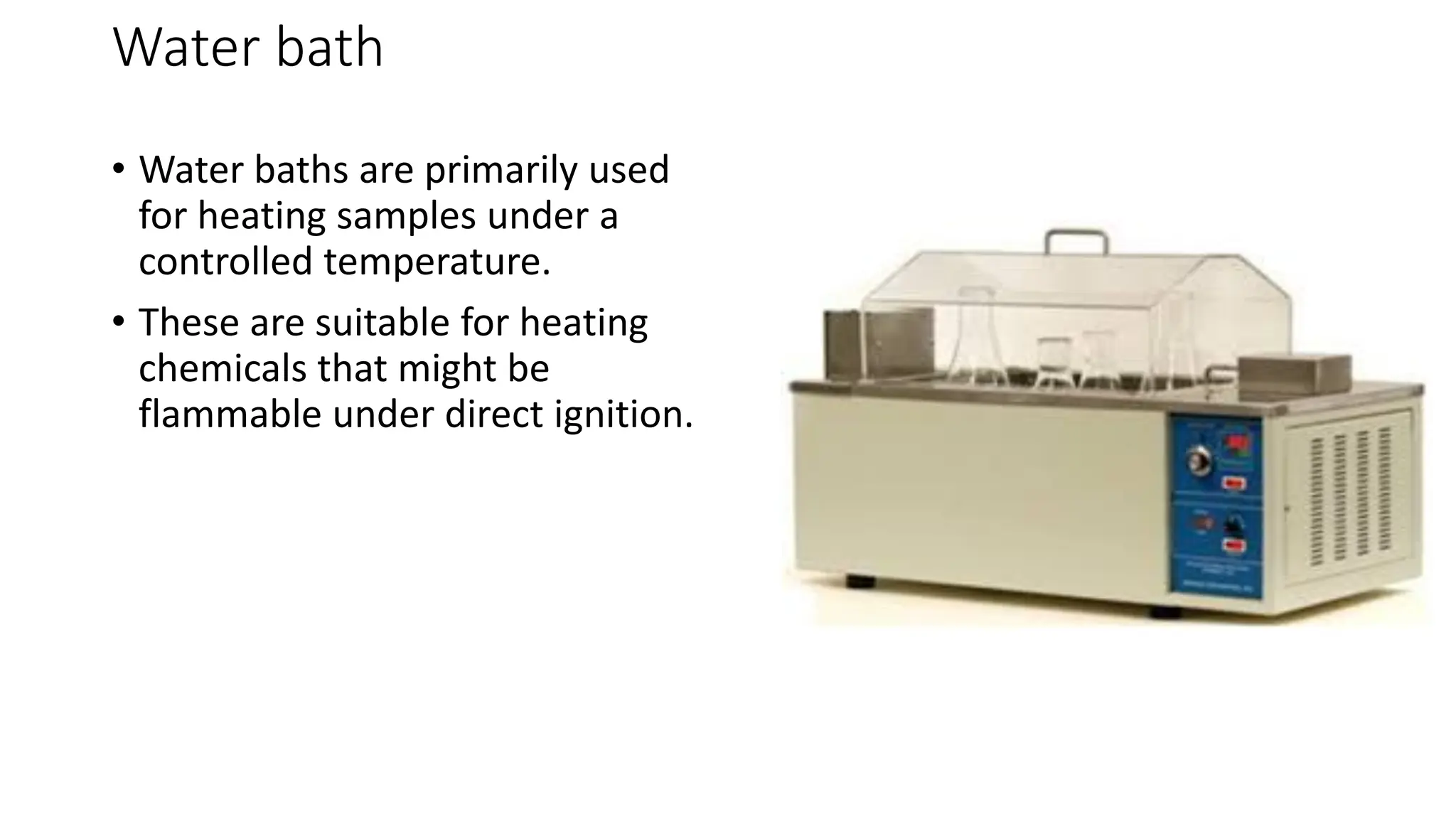
Water bath
• Water baths are primarily used
for heating samples under a
controlled temperature.
• These are suitable for heating
chemicals that might be
flammable under direct ignition.
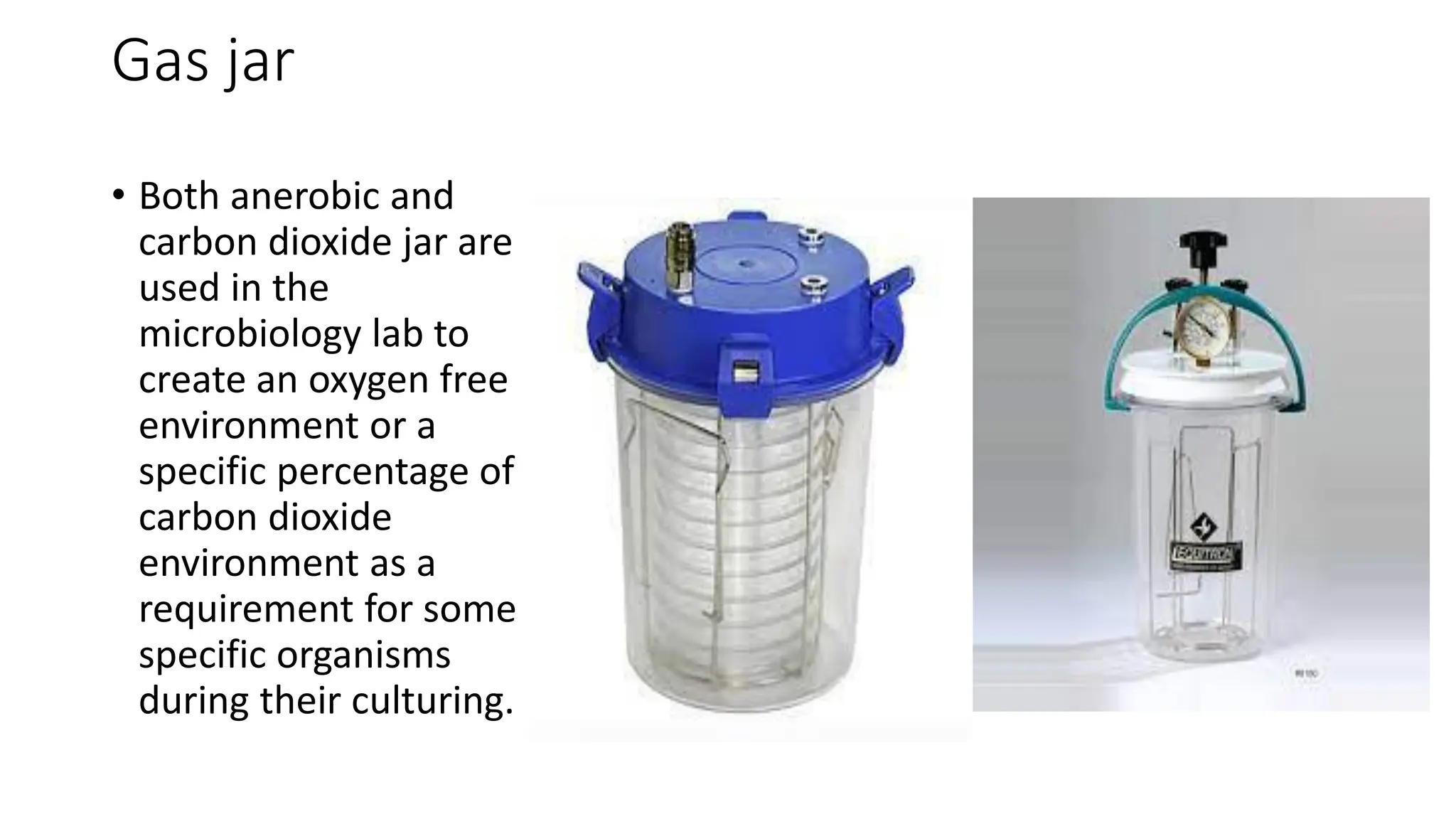
Gas jar
• Both anerobic and
carbon dioxide jar are
used in the
microbiology lab to
create an oxygen free
environment or a
specific percentage of
carbon dioxide
environment as a
requirement for some
specific organisms
during their culturing.
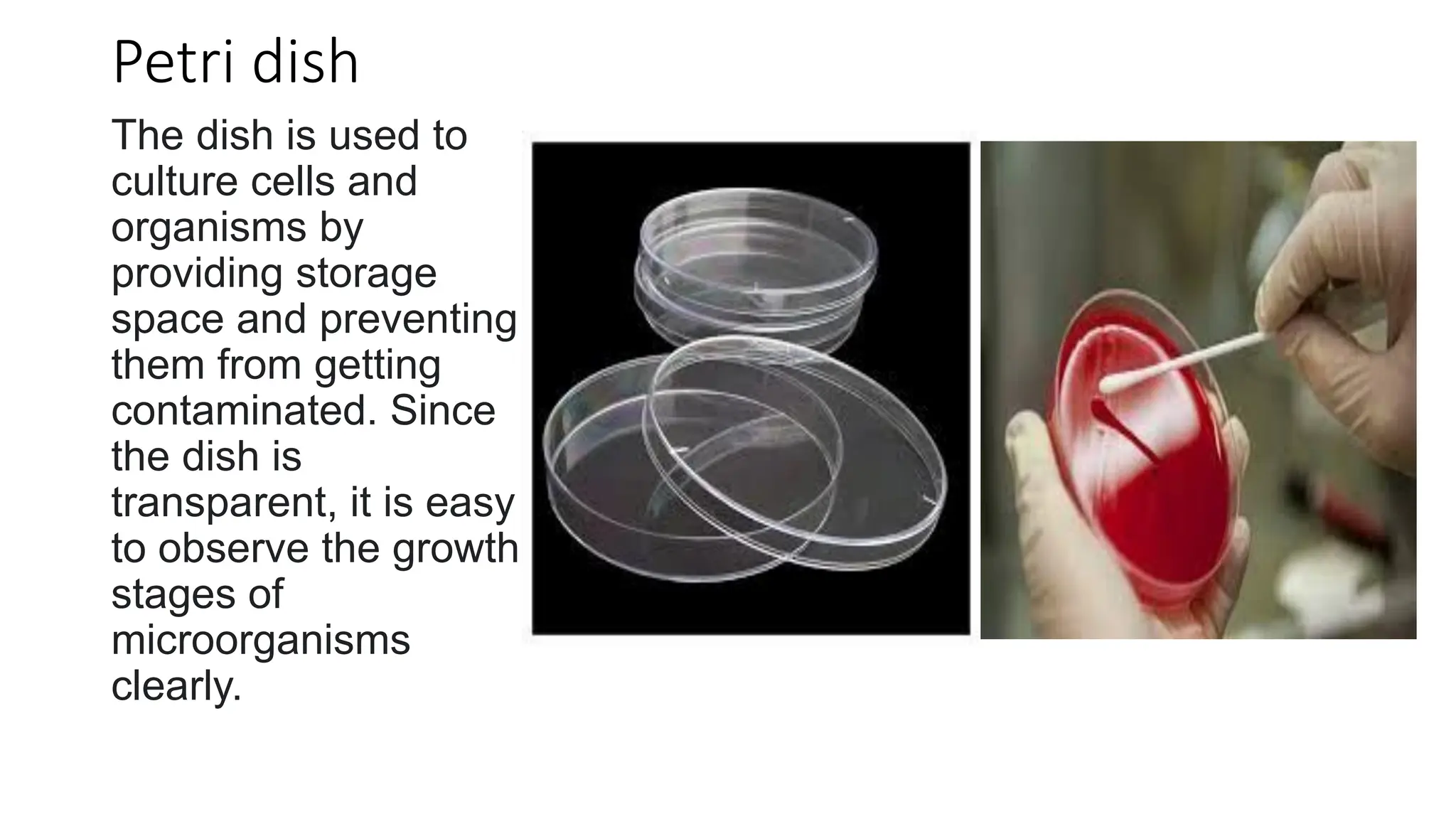
Petri dish
The dish is used to
culture cells and
organisms by
providing storage
space and preventing
them from getting
contaminated. Since
the dish is
transparent, it is easy
to observe the growth
stages of
microorganisms
clearly.
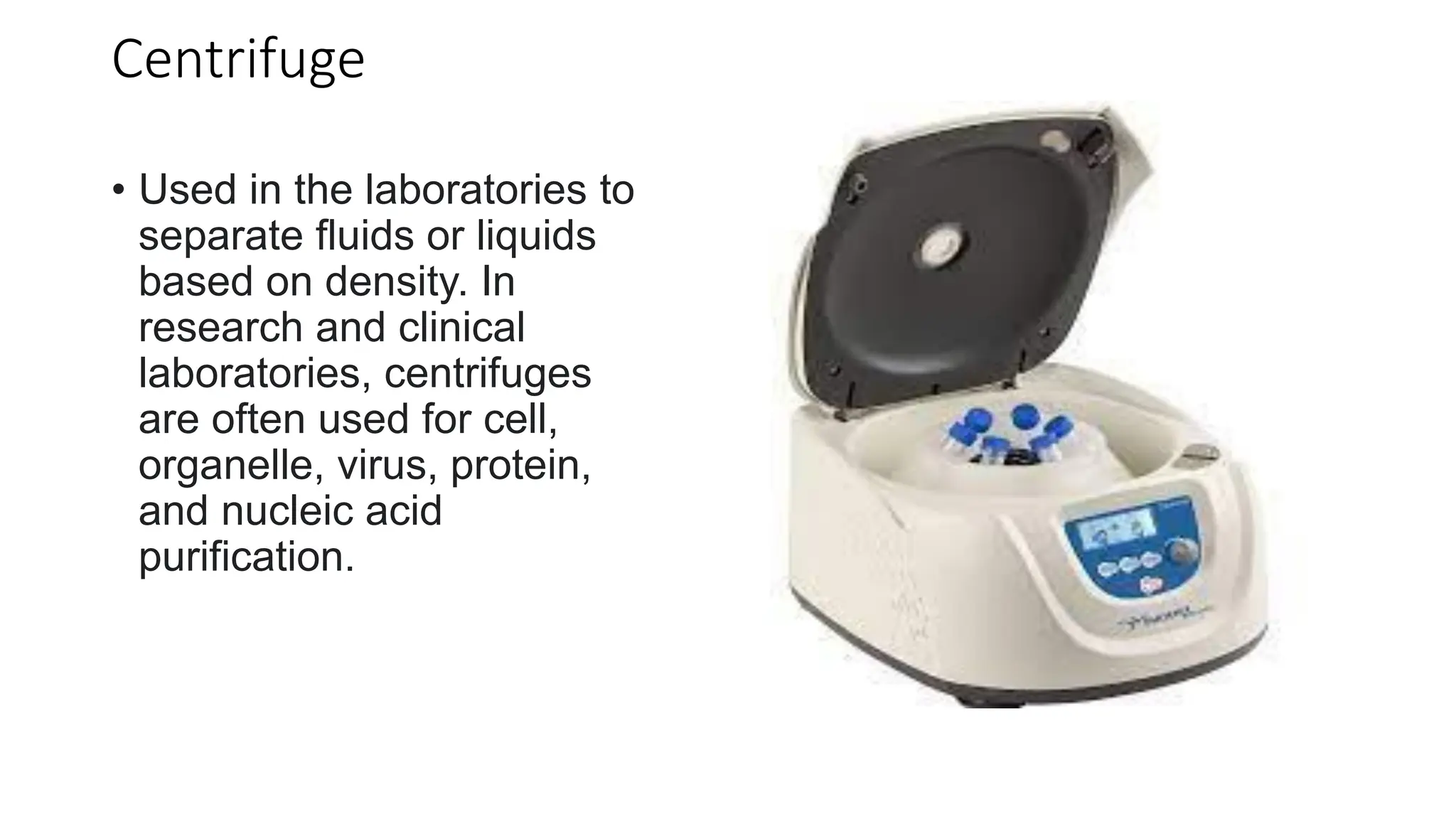
Centrifuge
• Used in the laboratories to
separate fluids or liquids
based on density. In
research and clinical
laboratories, centrifuges
are often used for cell,
organelle, virus, protein,
and nucleic acid
purification.
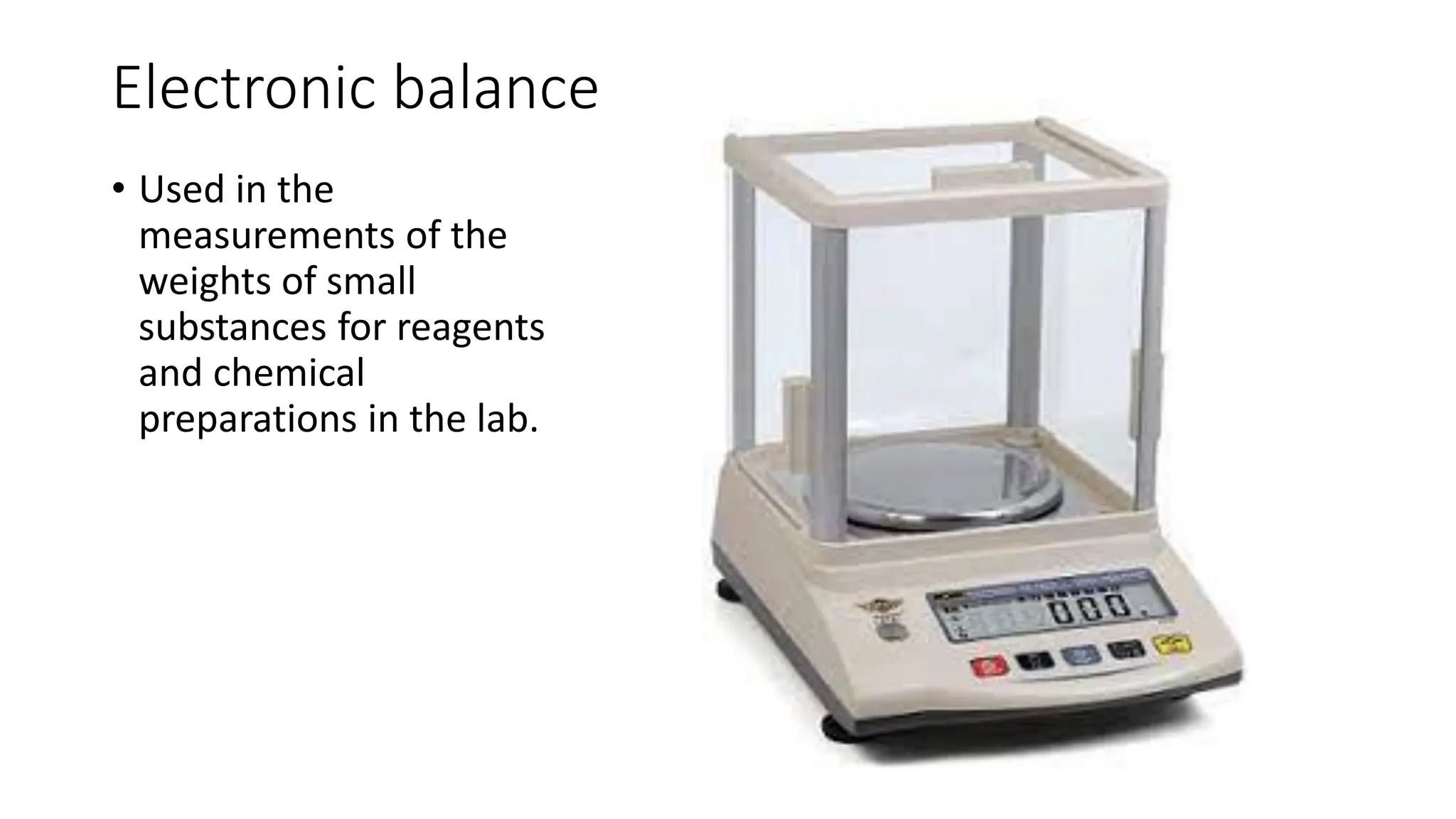
Electronic balance
• Used in the
measurements of the
weights of small
substances for reagents
and chemical
preparations in the lab.
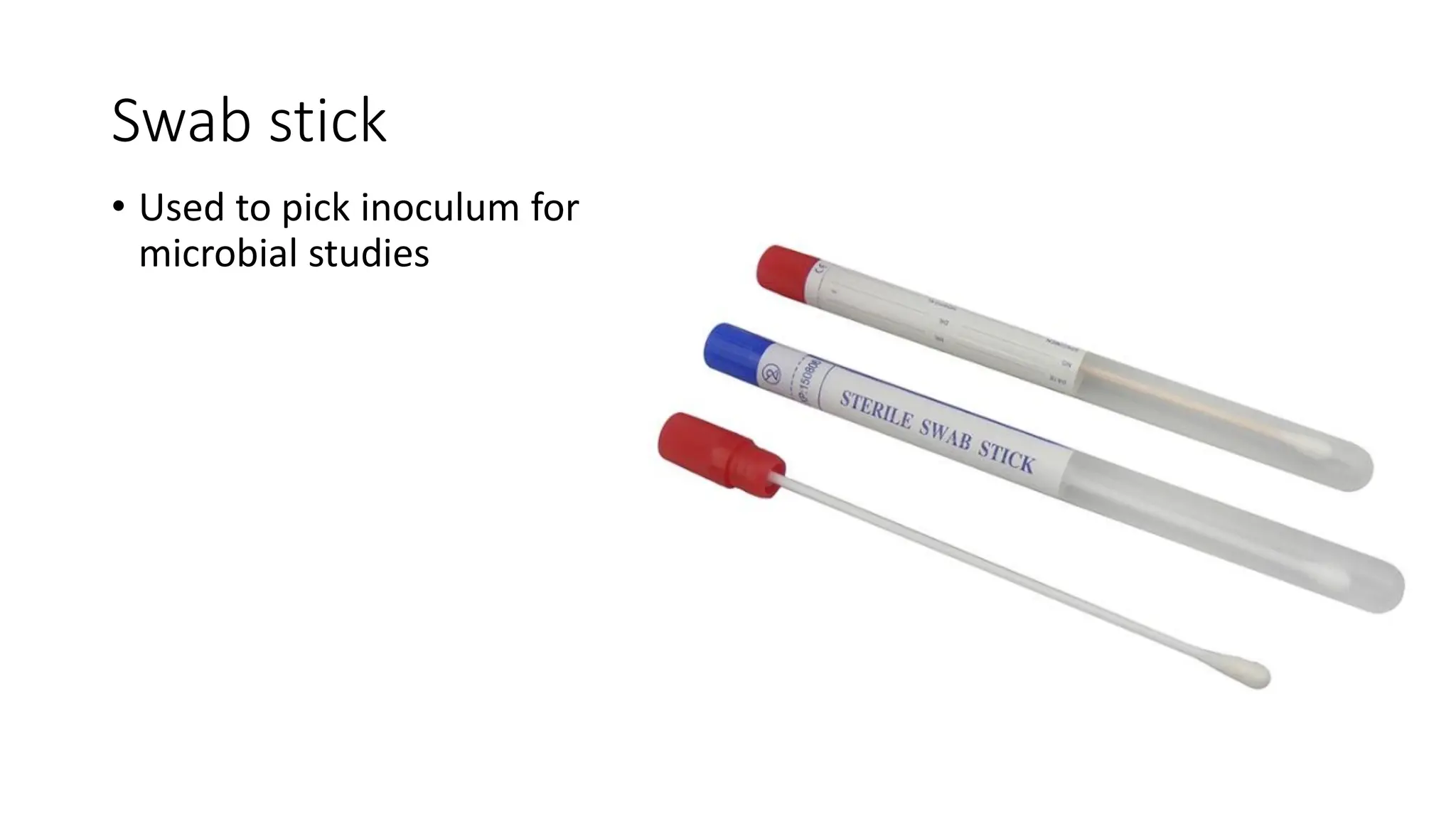
Swab stick
• Used to pick inoculum for
microbial studies
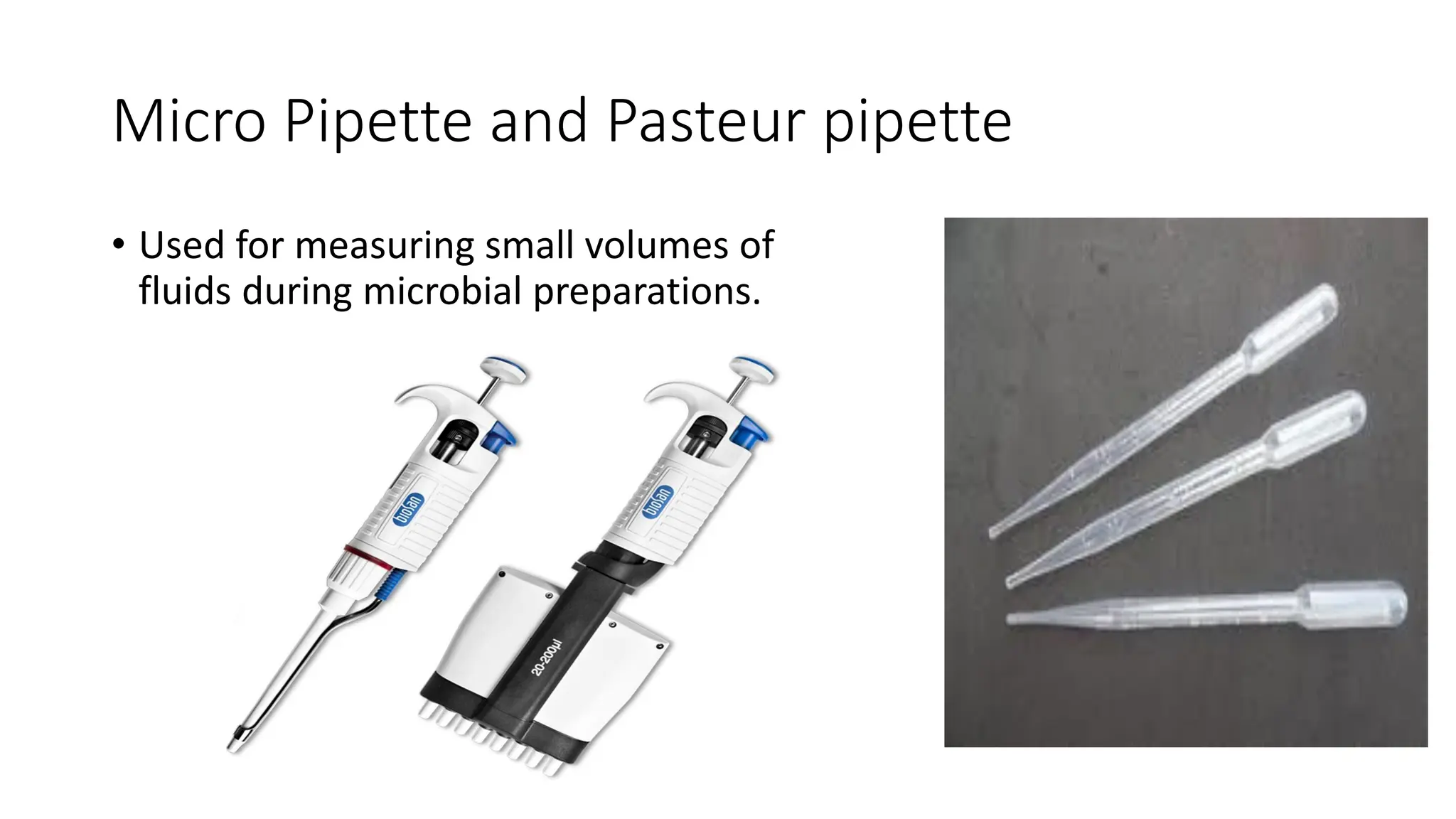
Micro Pipette and Pasteur pipette
• Used for measuring small volumes of
fluids during microbial preparations.
TYPES OF MEDIA
Objectives for today’s practical
• You should be able to:
✓Define a medium, know the various forms and types of media
✓Know the factors that affect the selection of a media
✓Know some examples of media and the bacteria that can be cultured
on
BASAL MEDIA
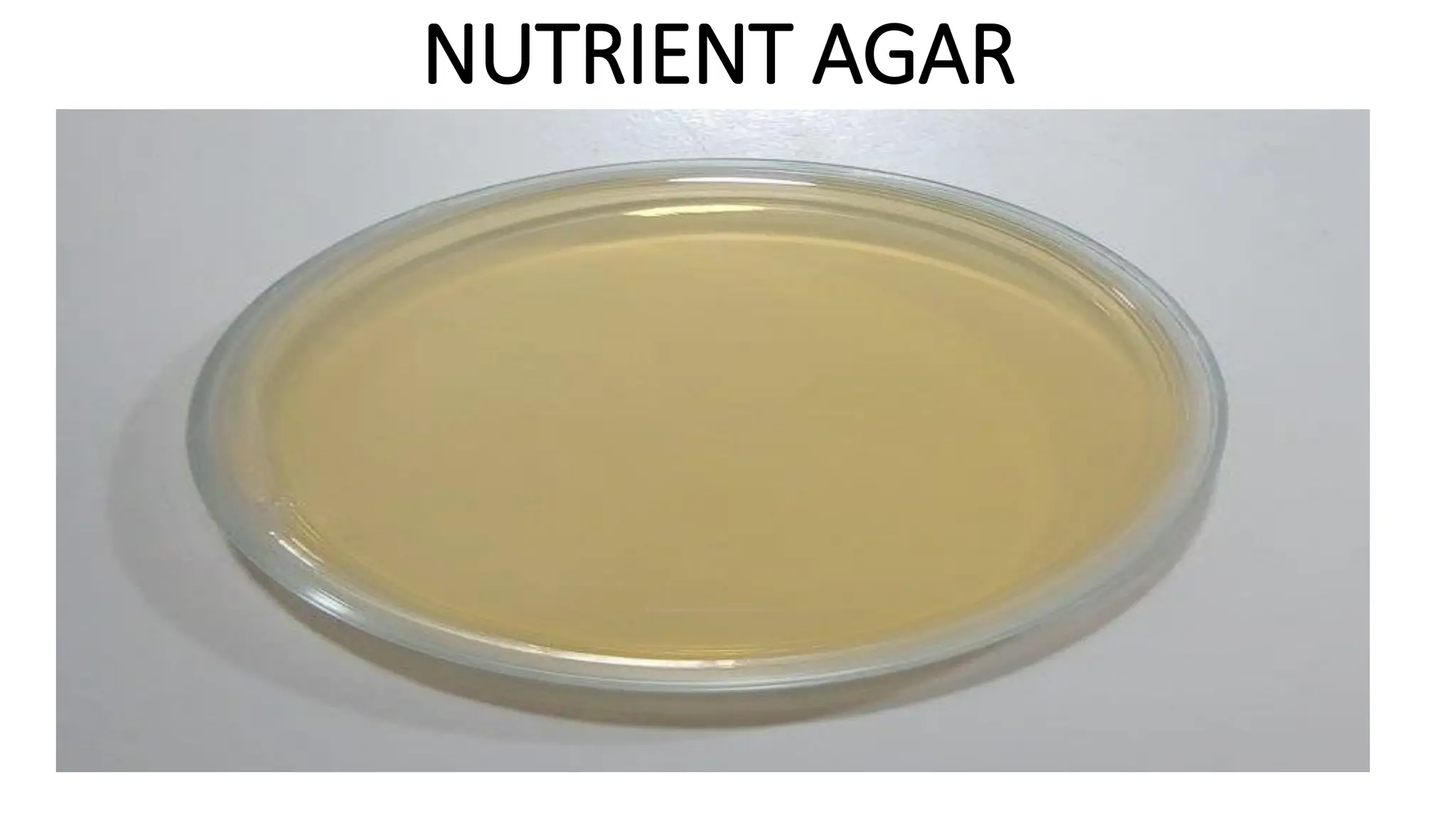
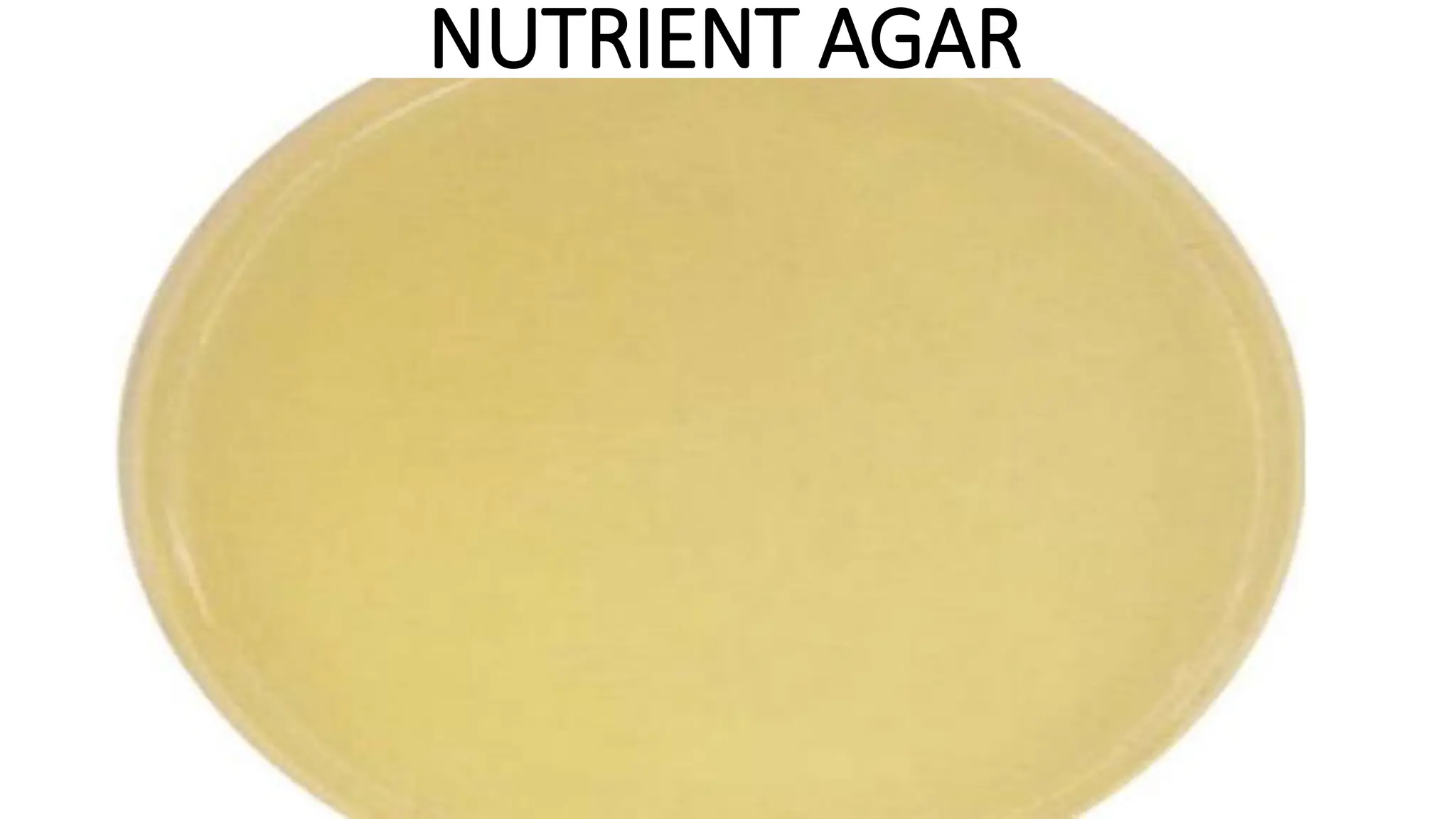
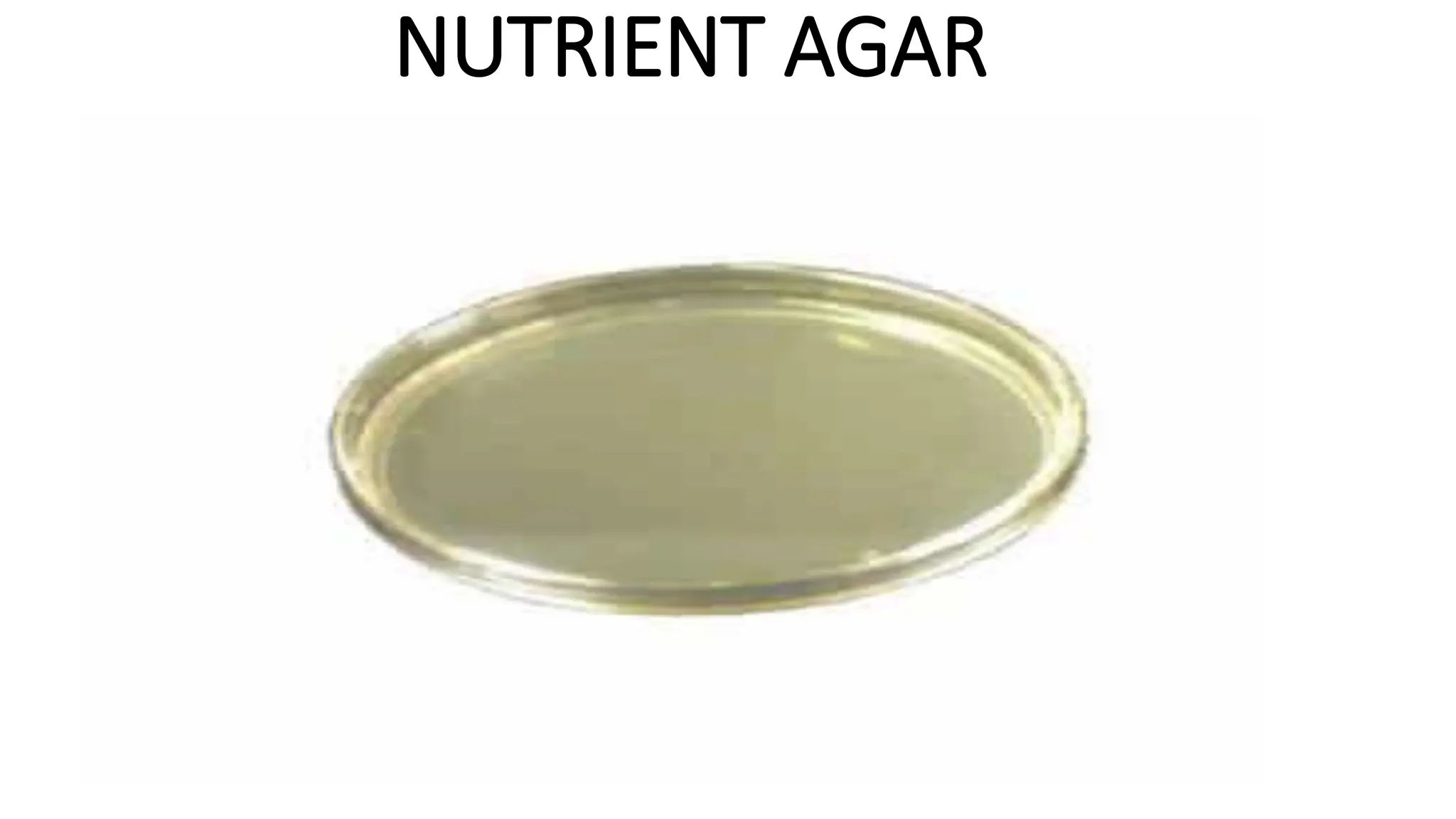
NUTRIENT AGAR
NUTRIENT AGAR
NUTRIENT AGAR
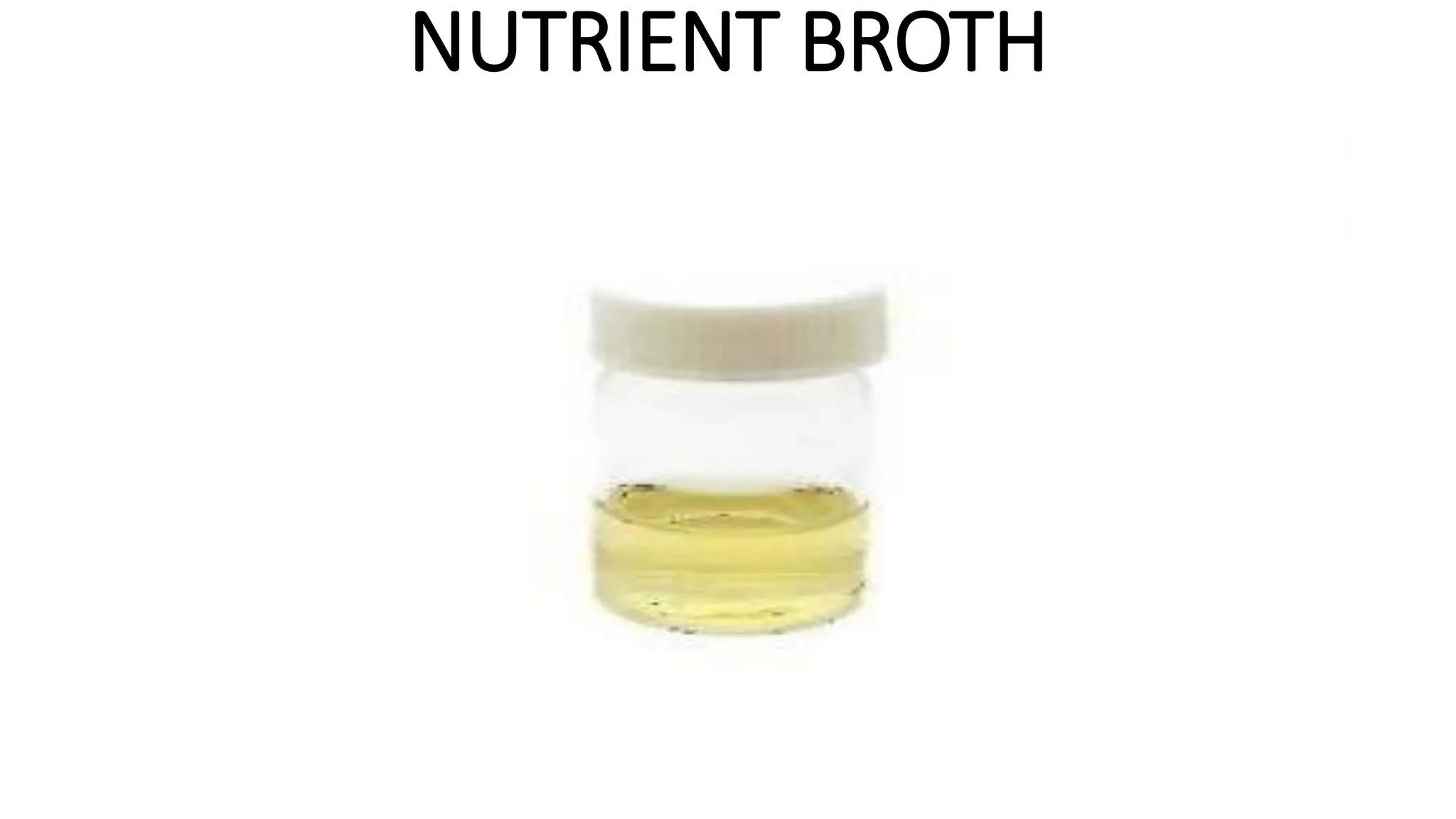
NUTRIENT BROTH
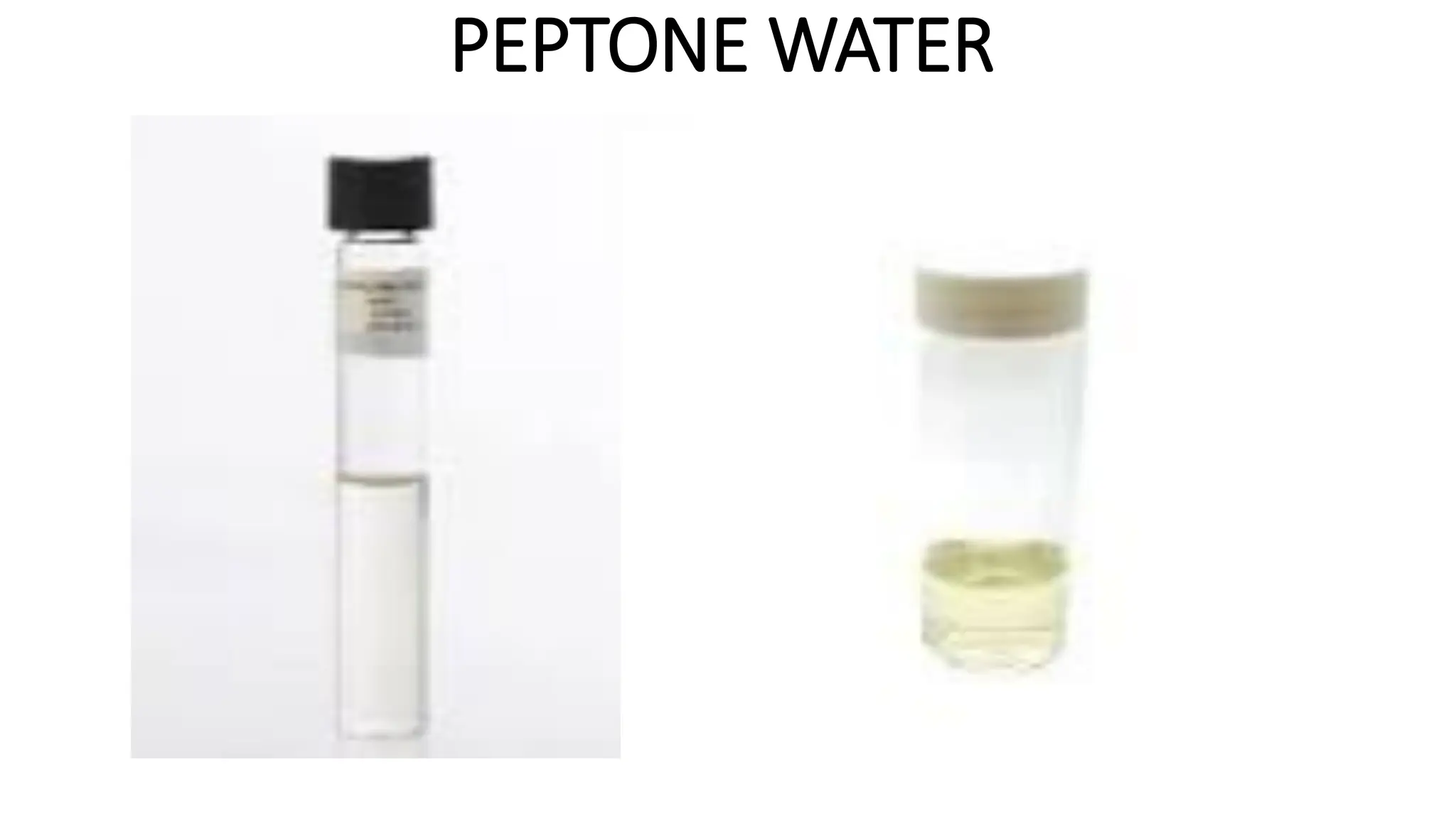
PEPTONE WATER
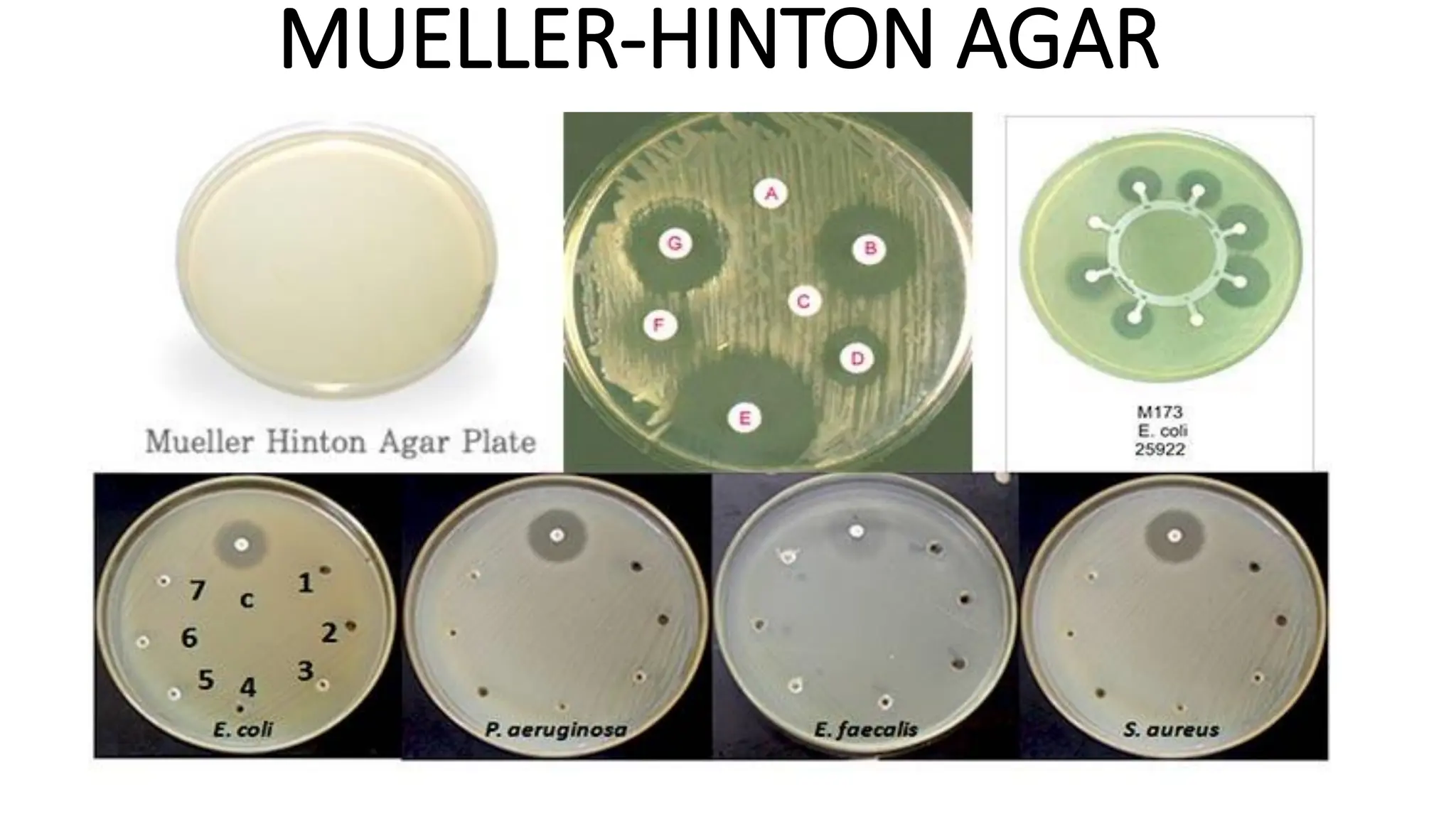
MUELLER-HINTON AGAR
ENRICHED MEDIA
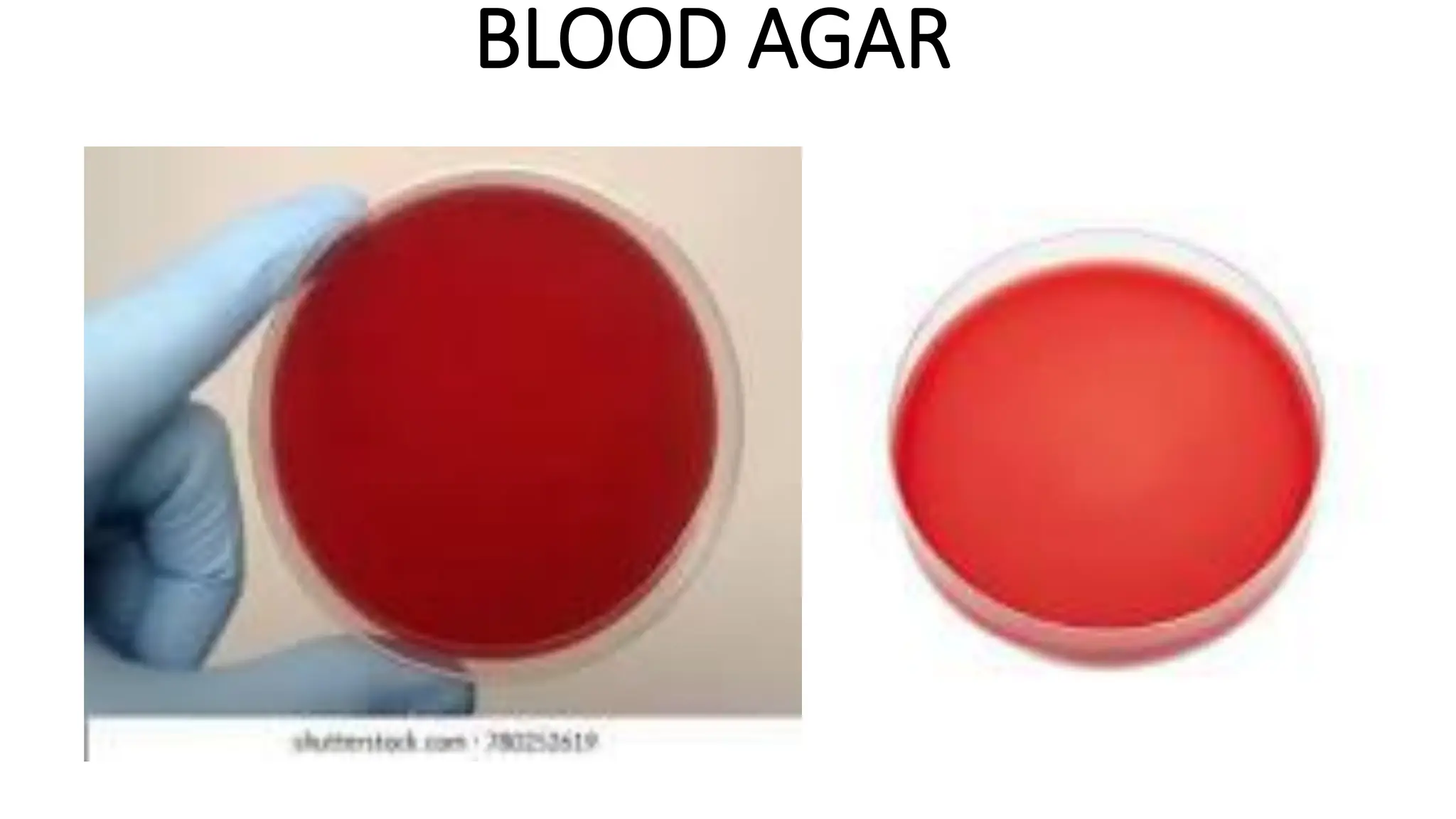
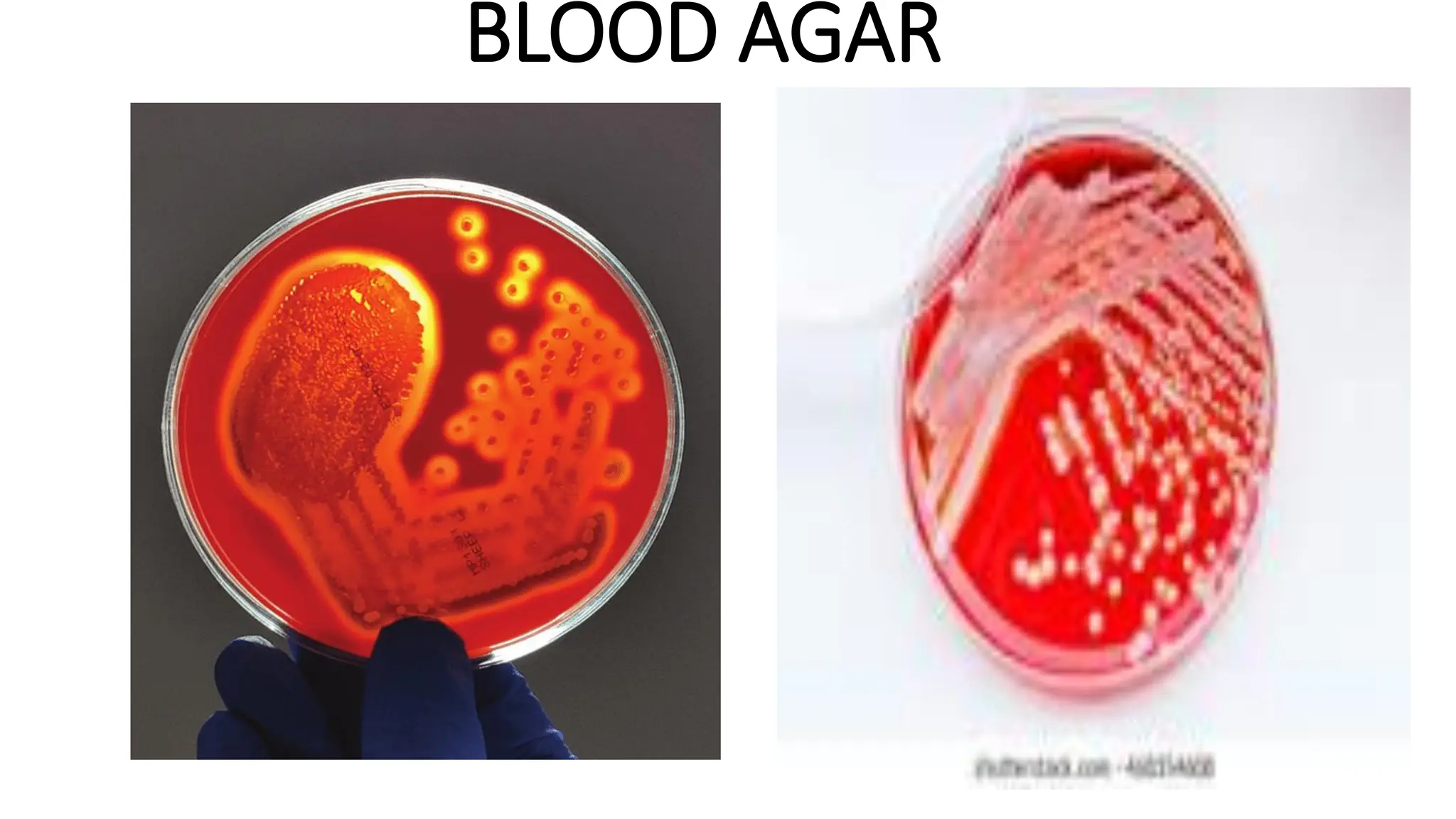
BLOOD AGAR
BLOOD AGAR
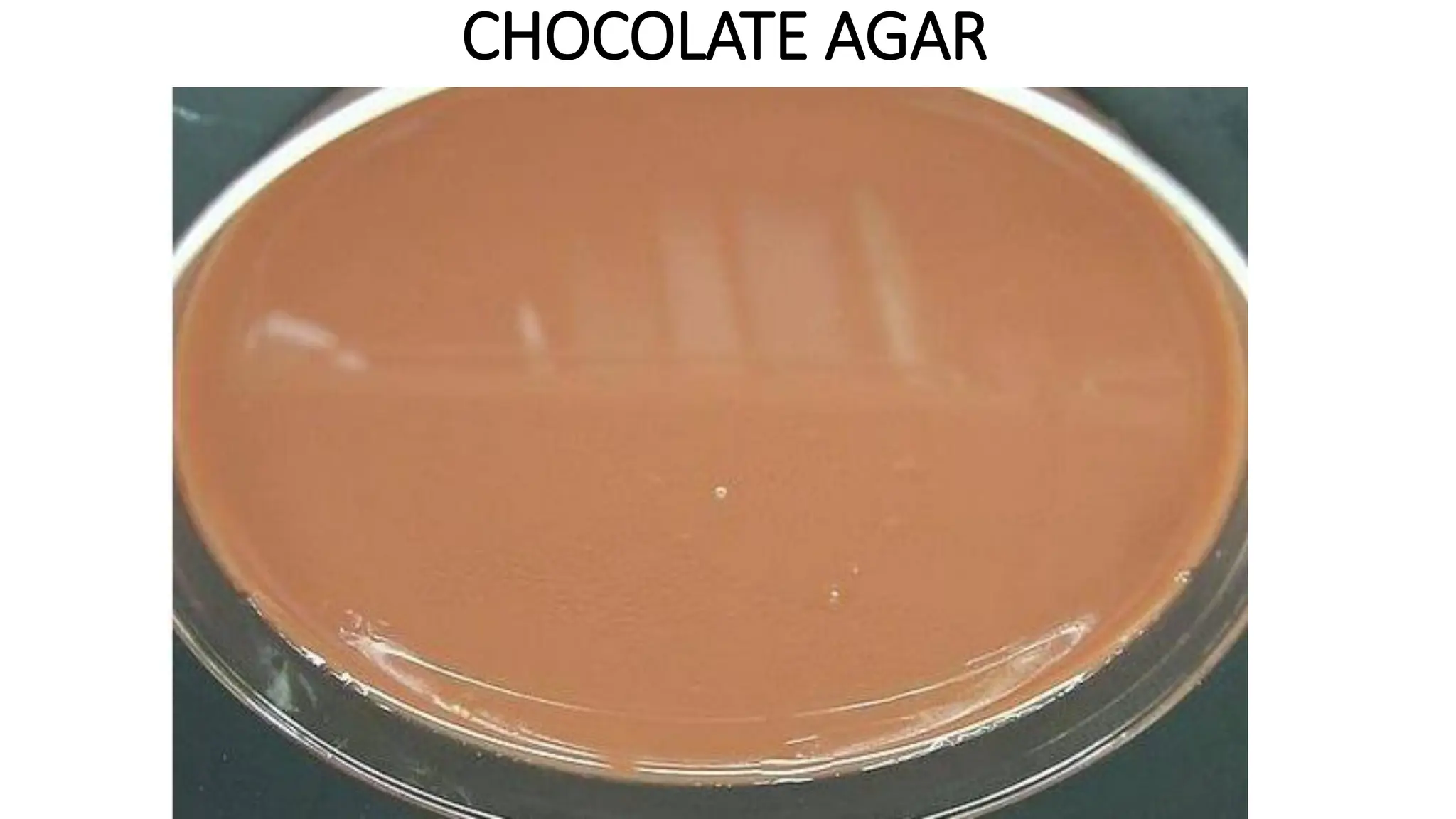
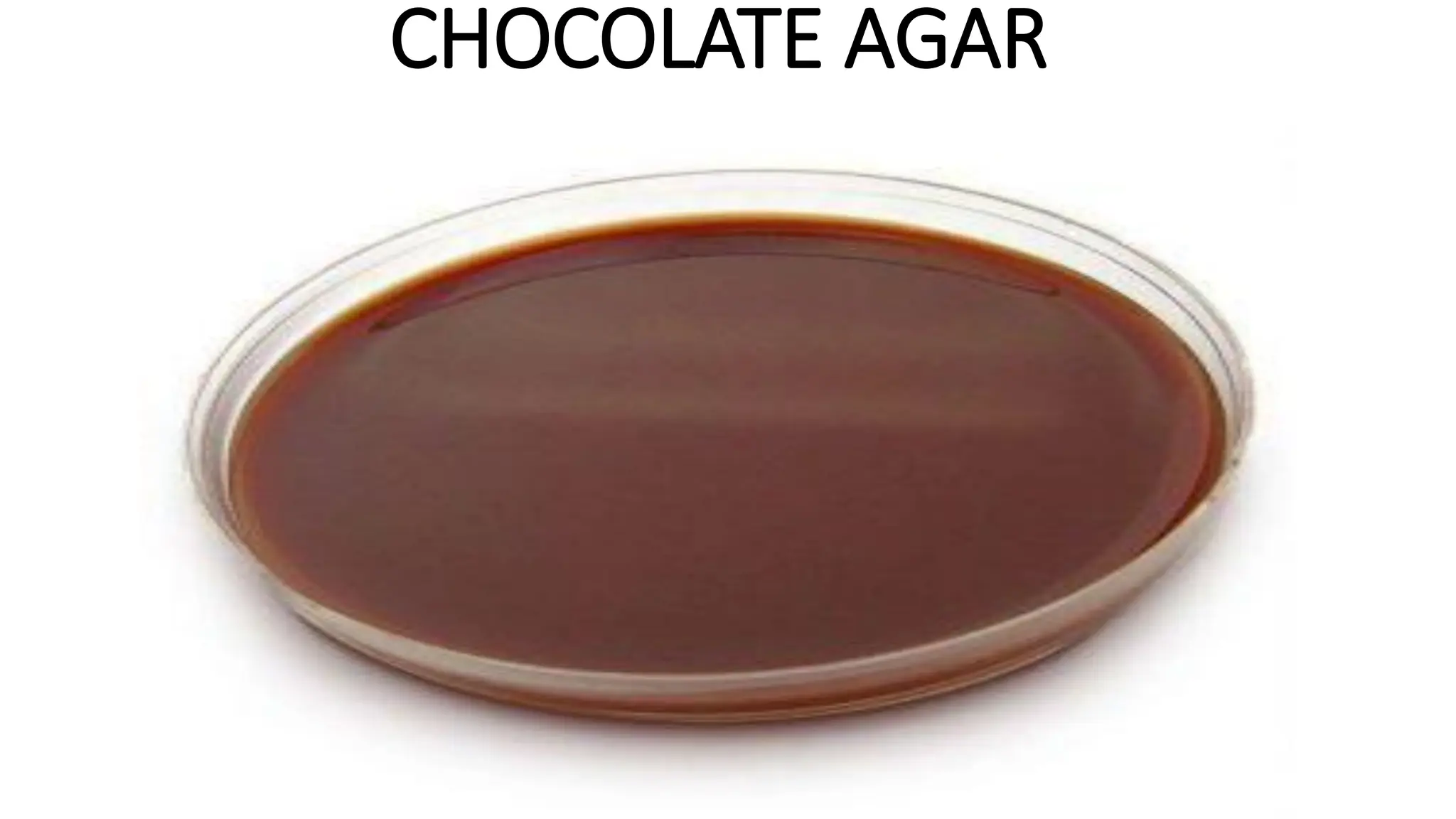
CHOCOLATE AGAR
CHOCOLATE AGAR
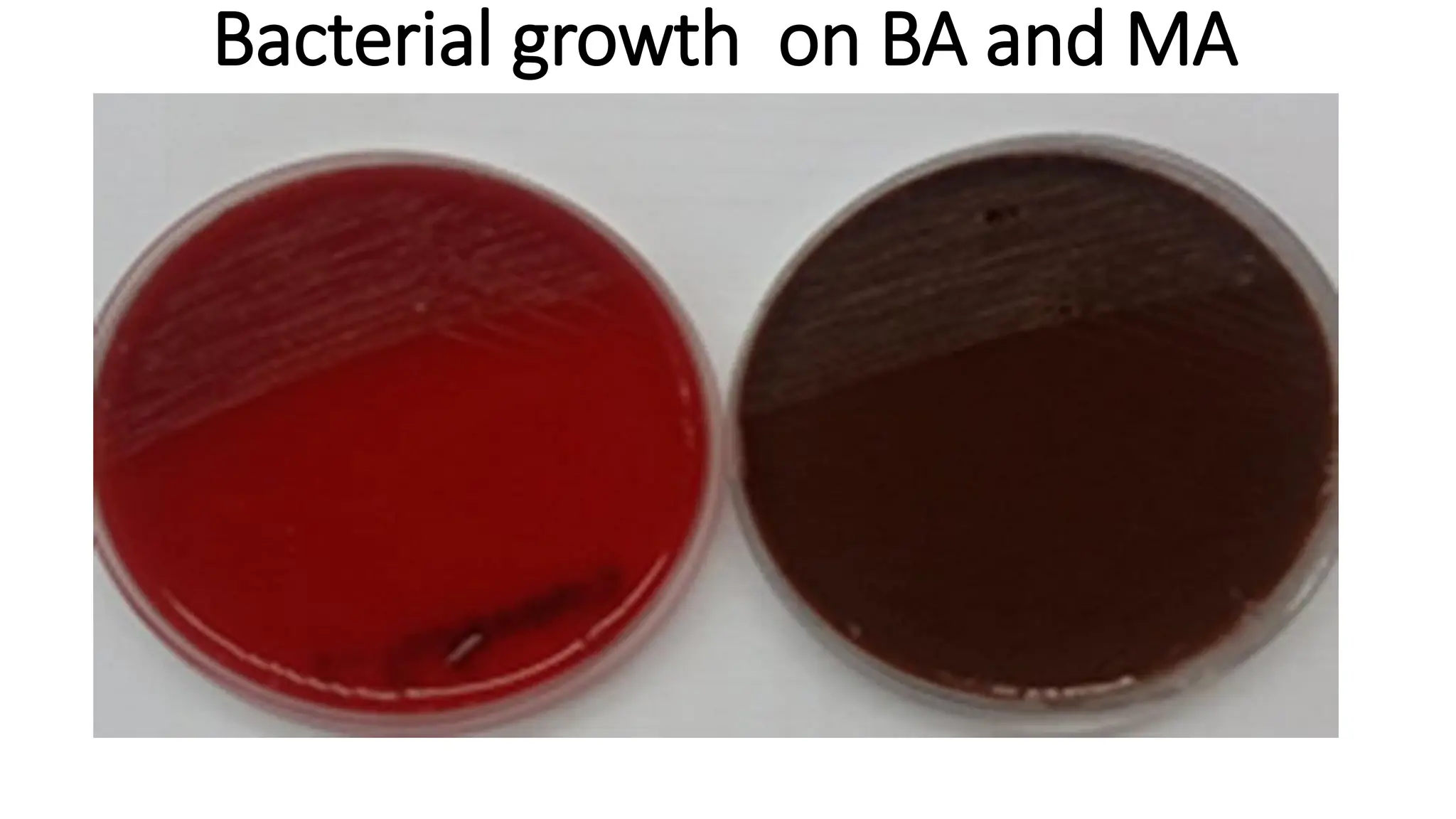
Bacterial growth on BA and MA
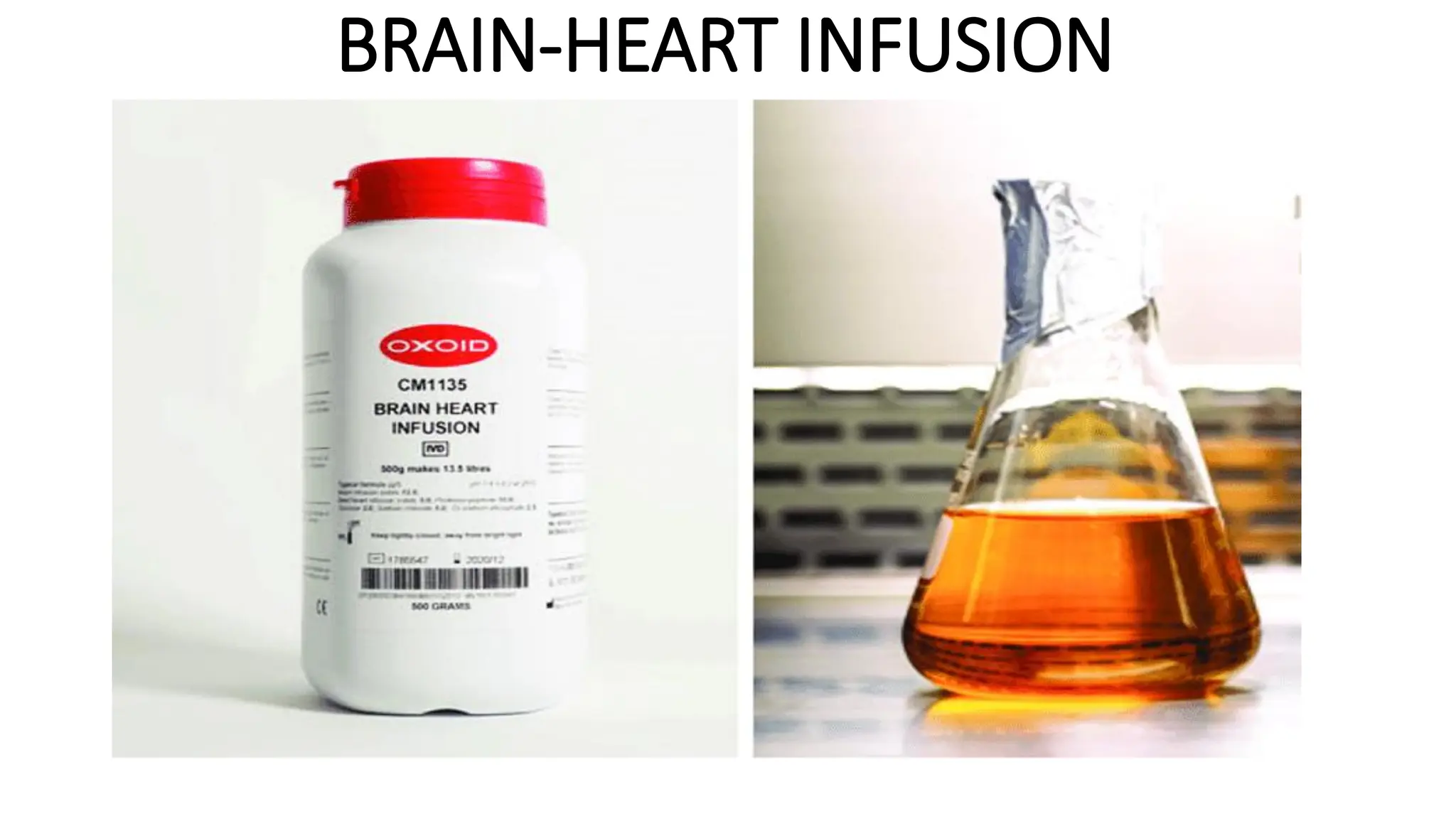
BRAIN-HEART INFUSION
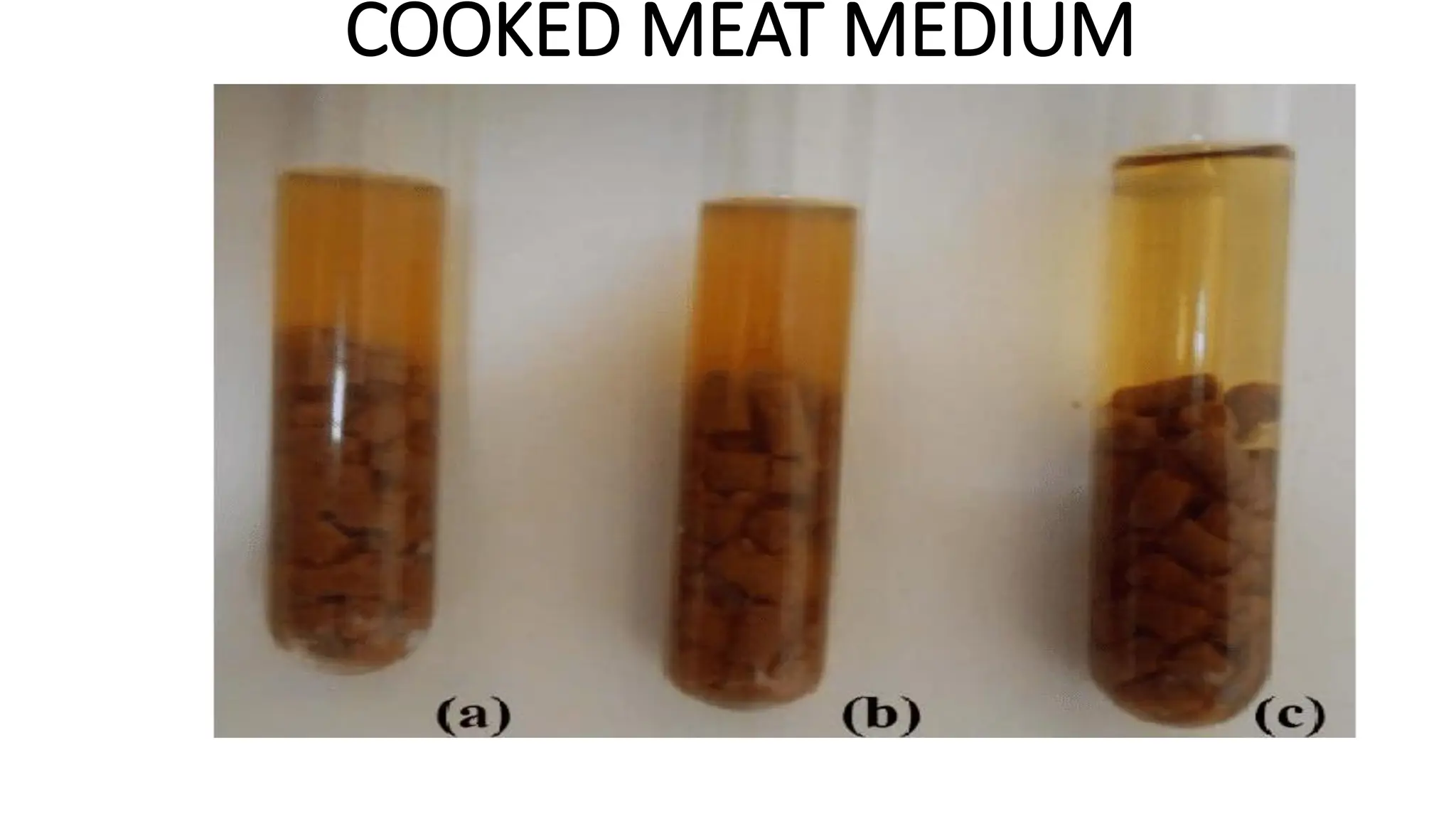
COOKED MEAT MEDIUM
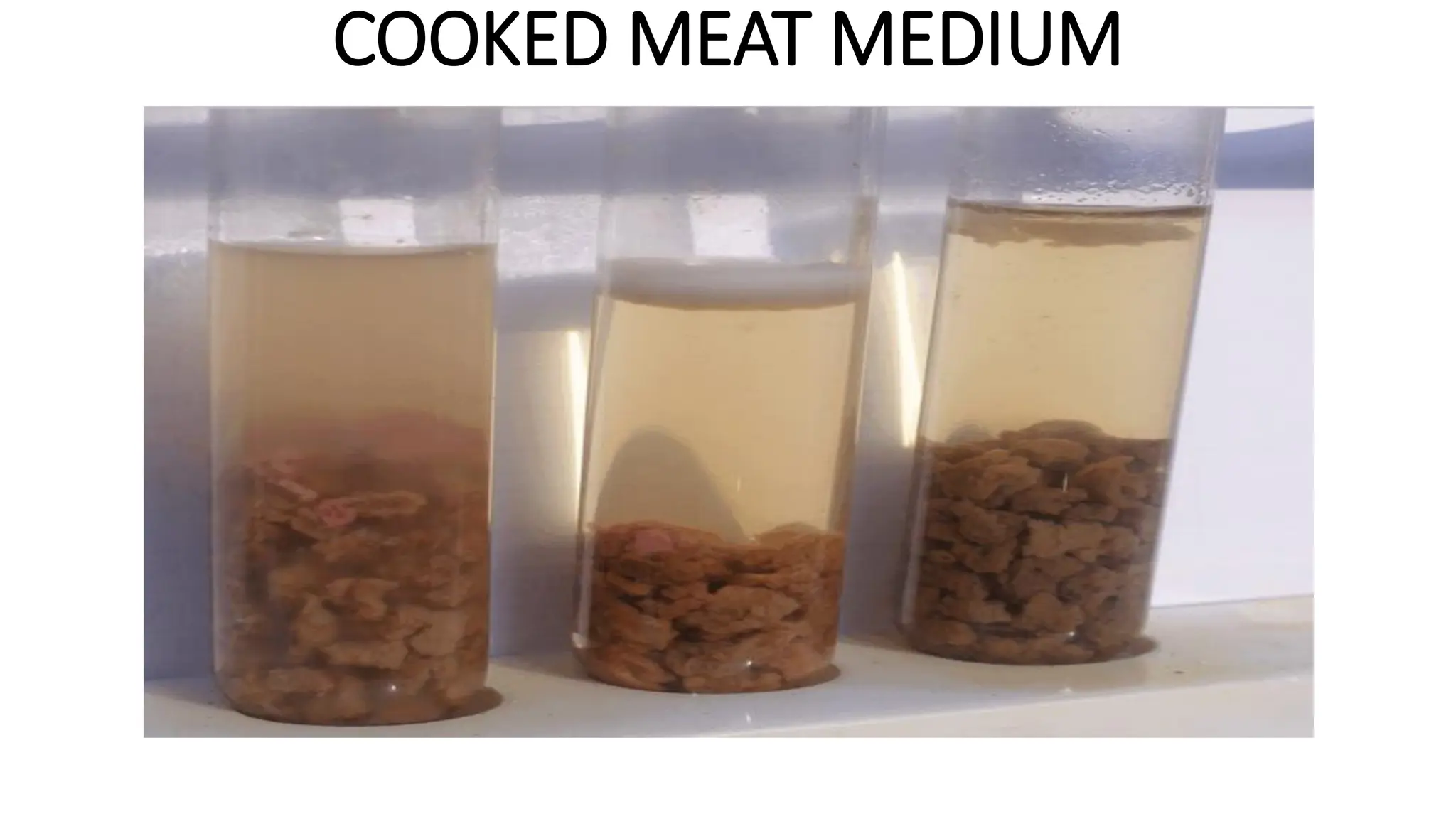
COOKED MEAT MEDIUM
SELECTIVE MEDIA
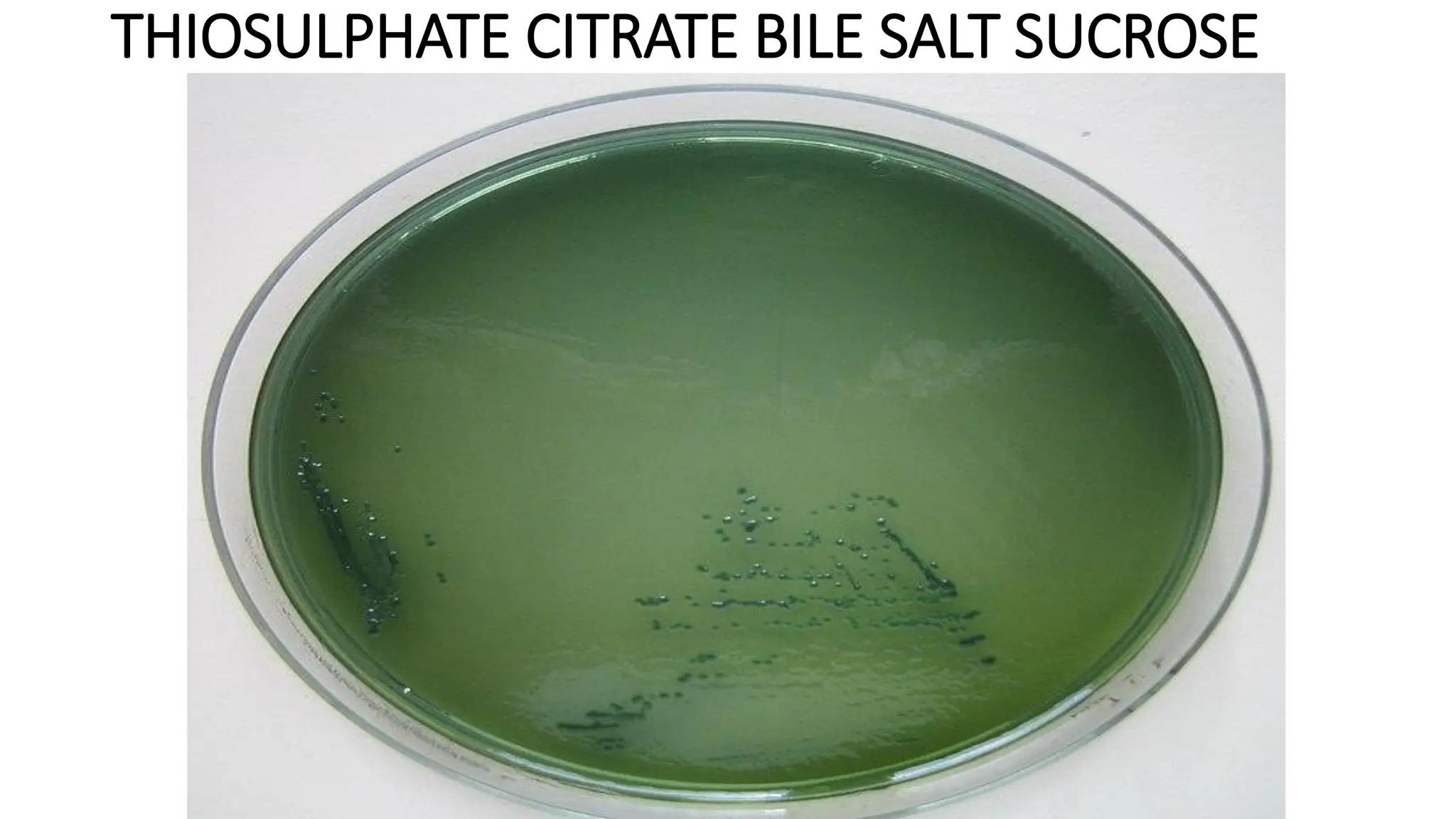
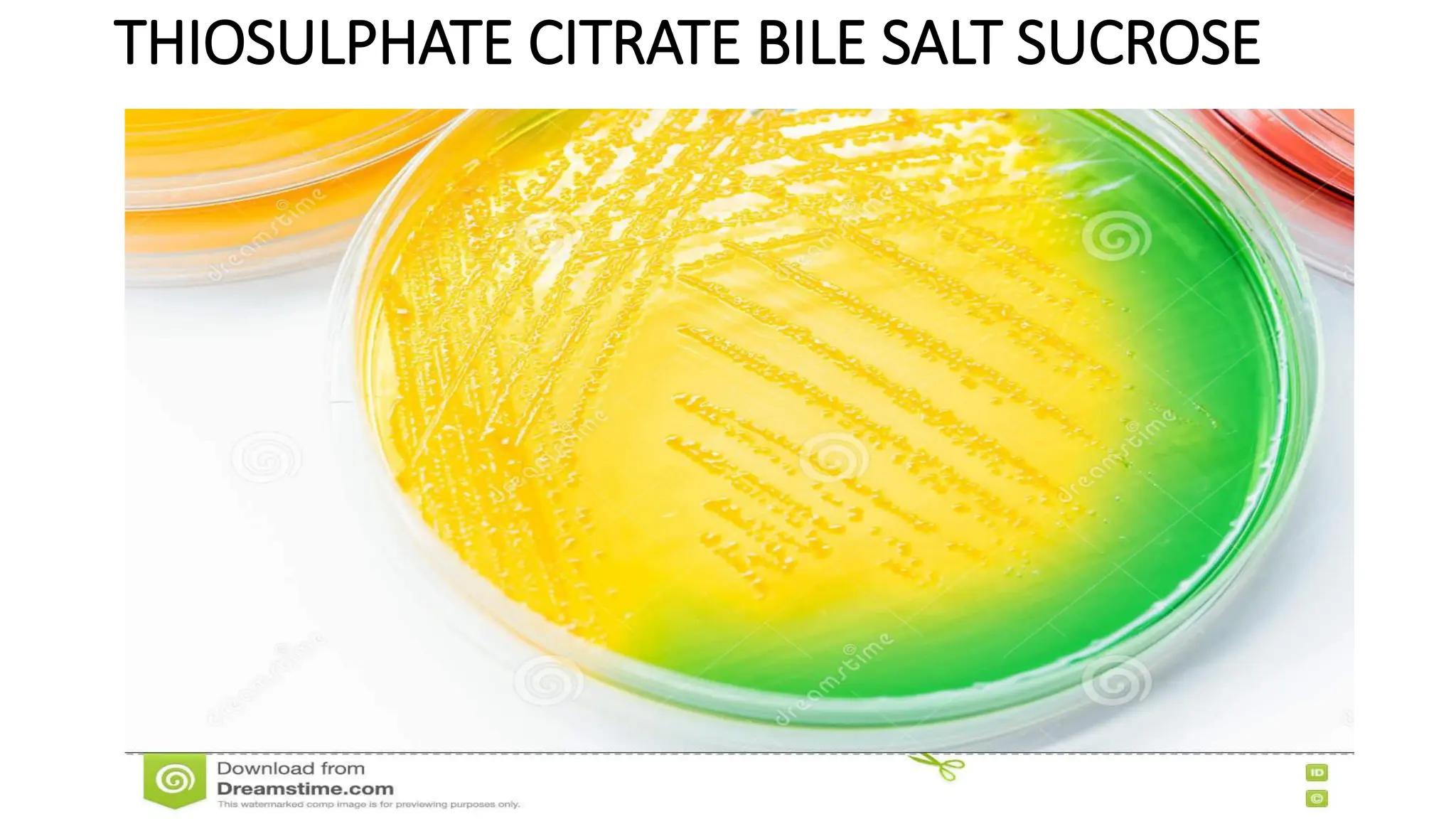
THIOSULPHATE CITRATE BILE SALT SUCROSE
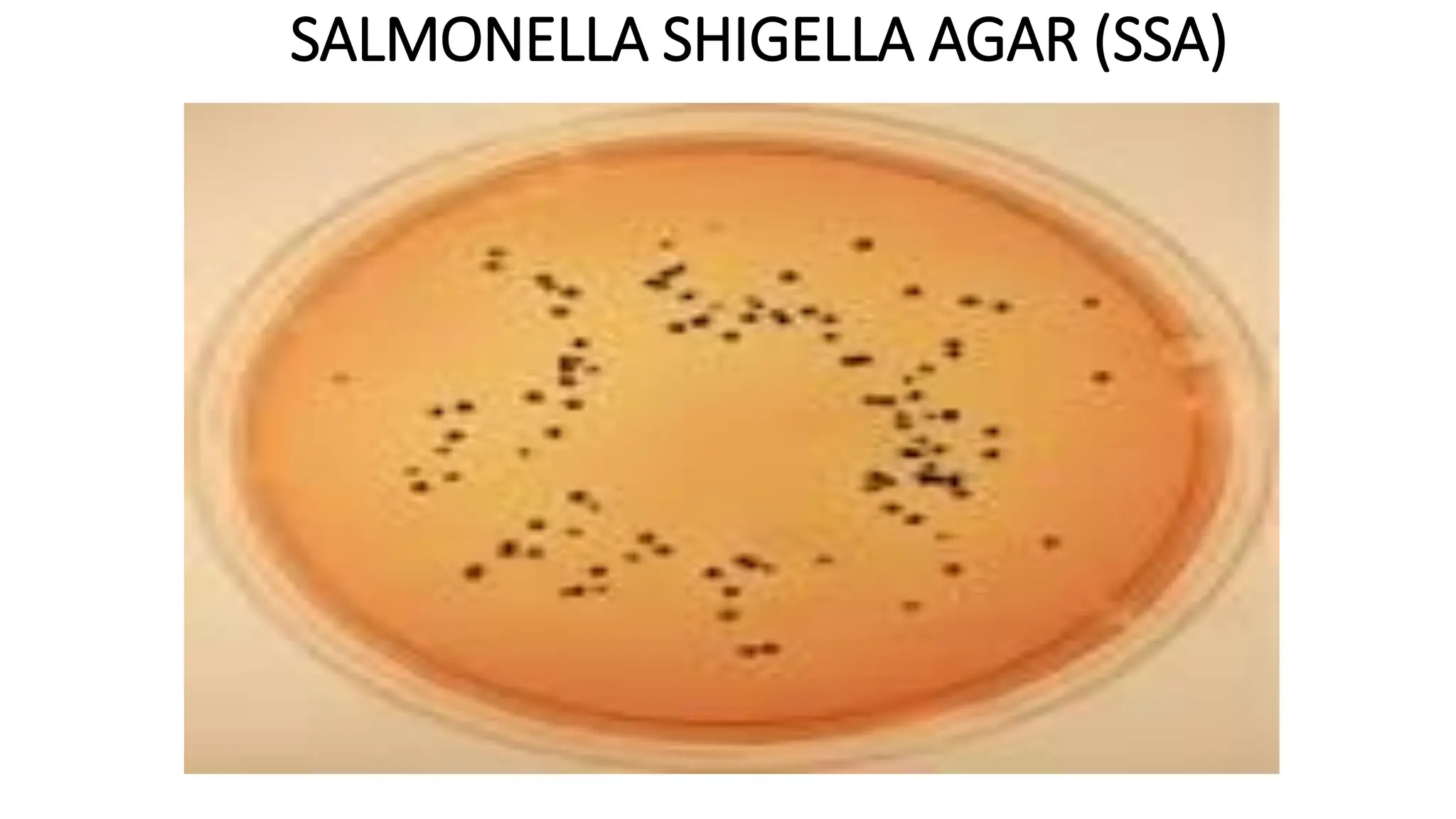
SALMONELLA SHIGELLA AGAR (SSA)
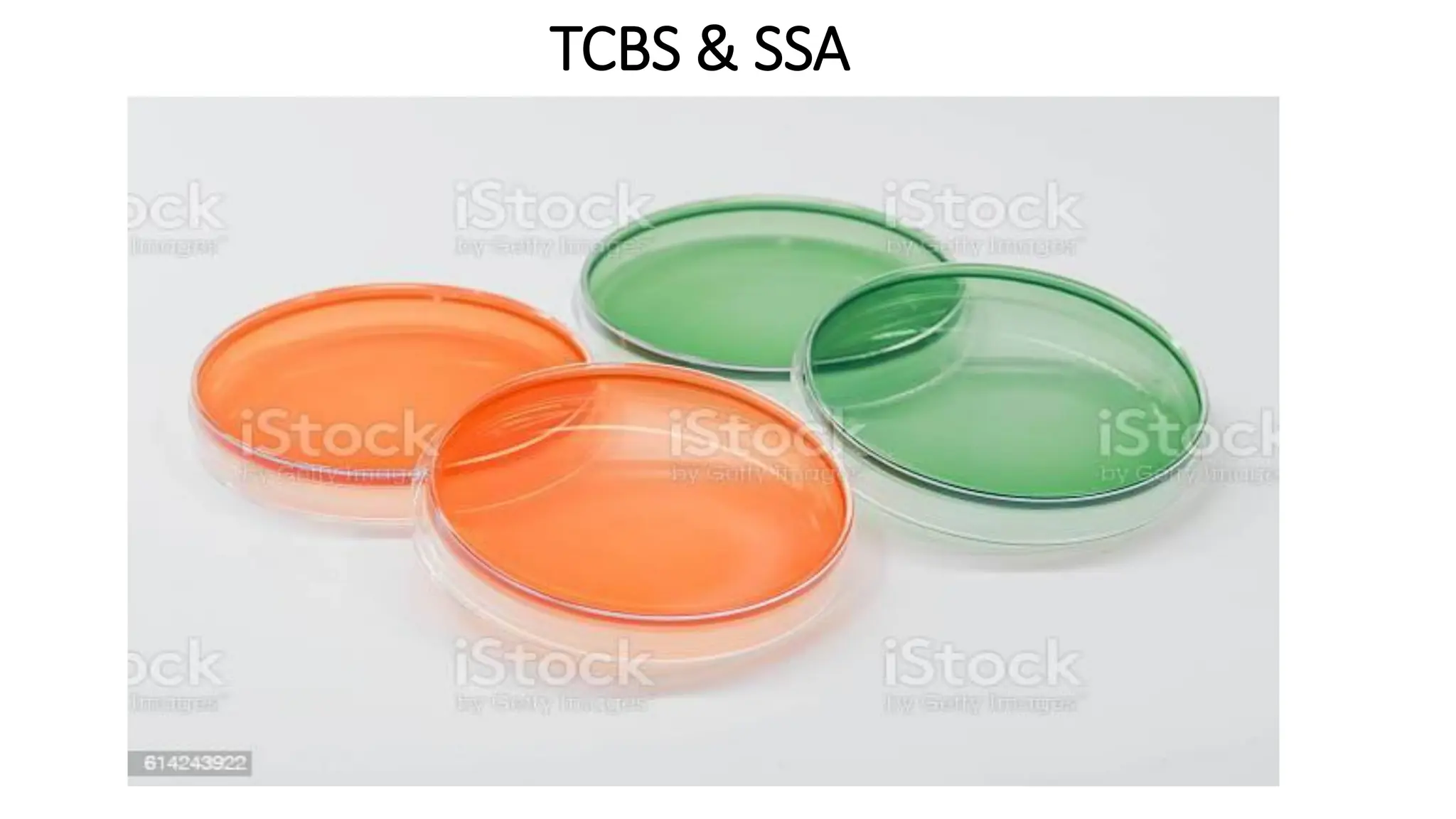
TCBS & SSA
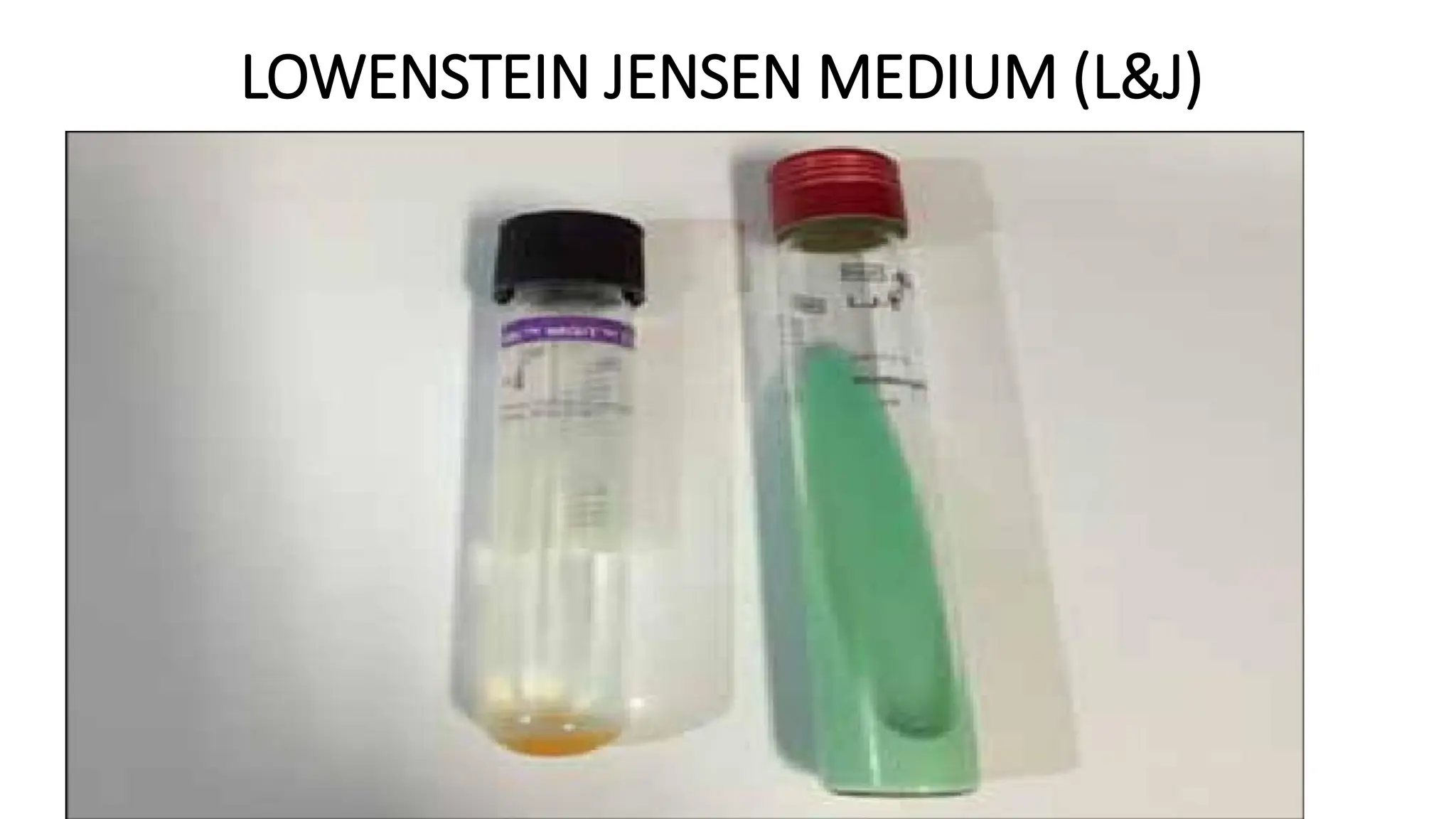
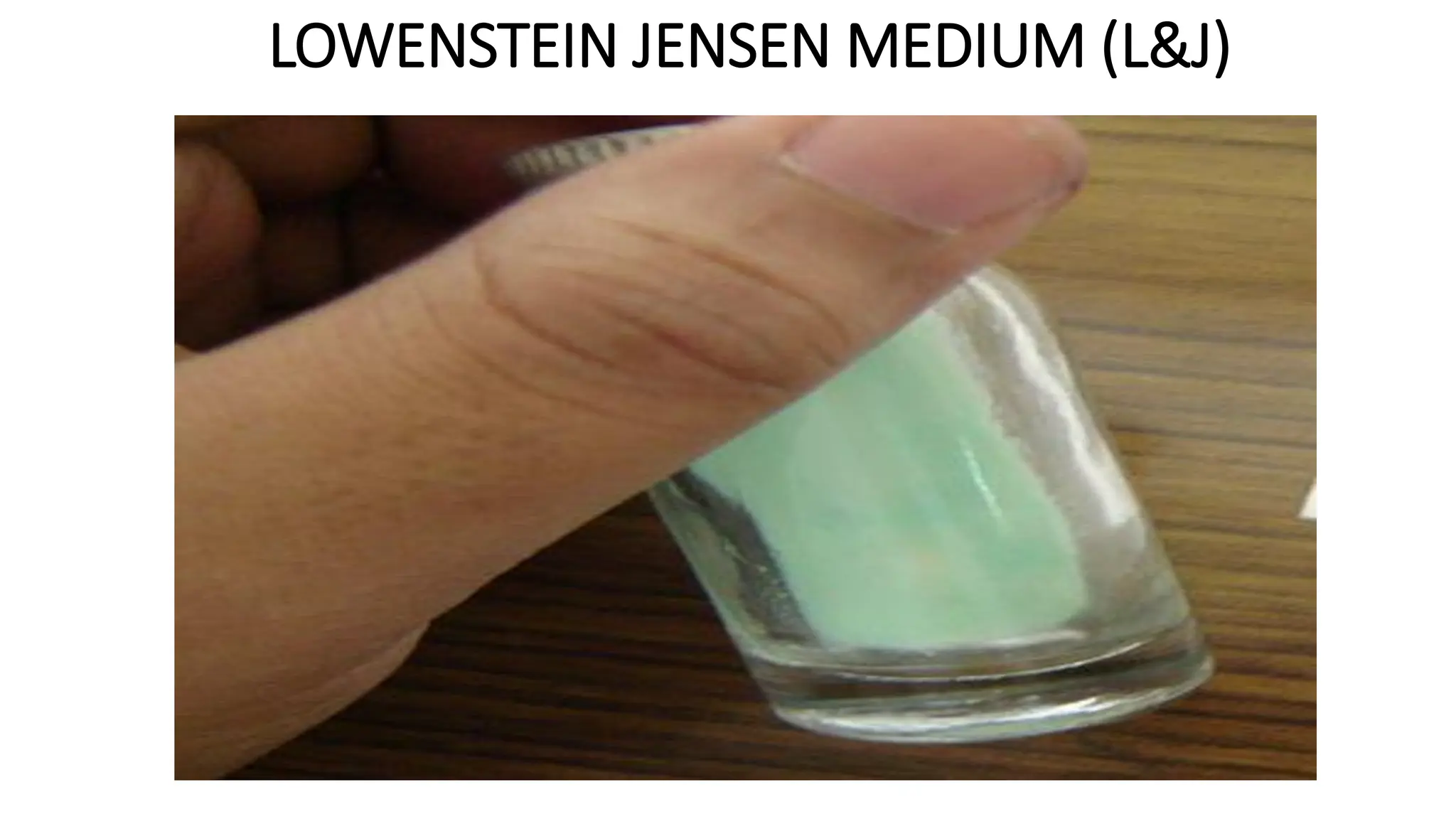
LOWENSTEIN JENSEN MEDIUM (L&J)
ENRICHMENT MEDIA
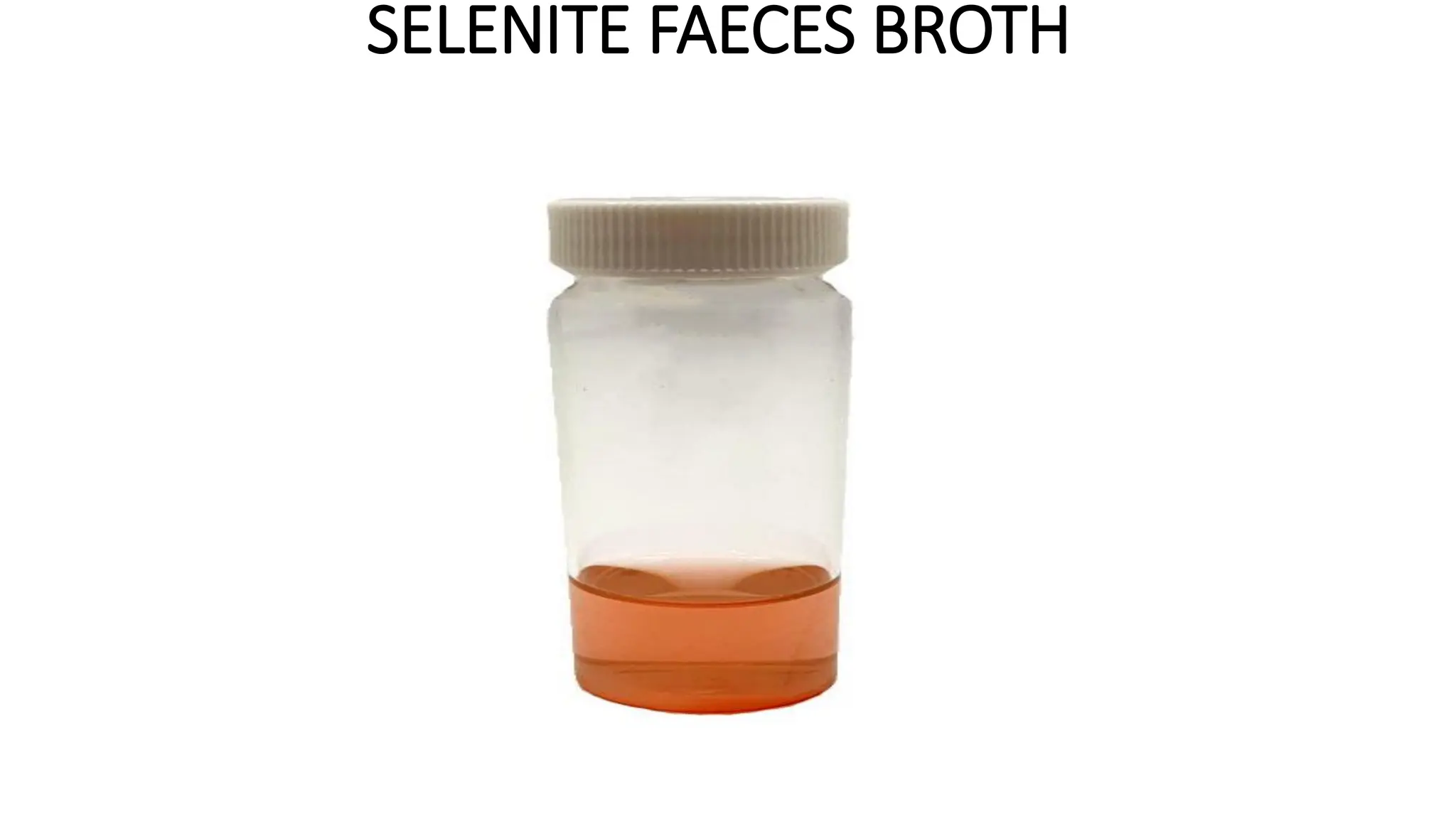
SELENITE FAECES BROTH
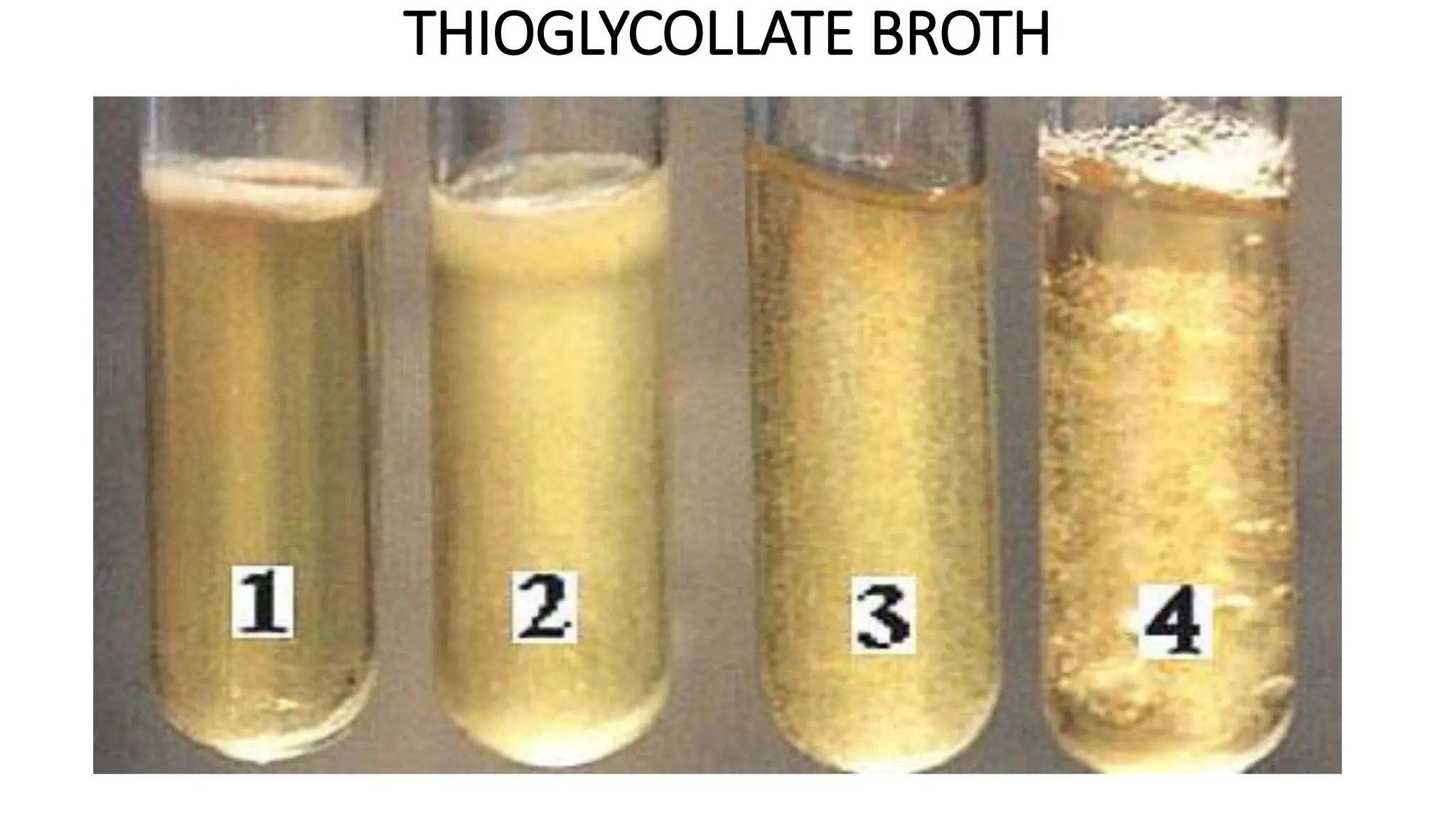
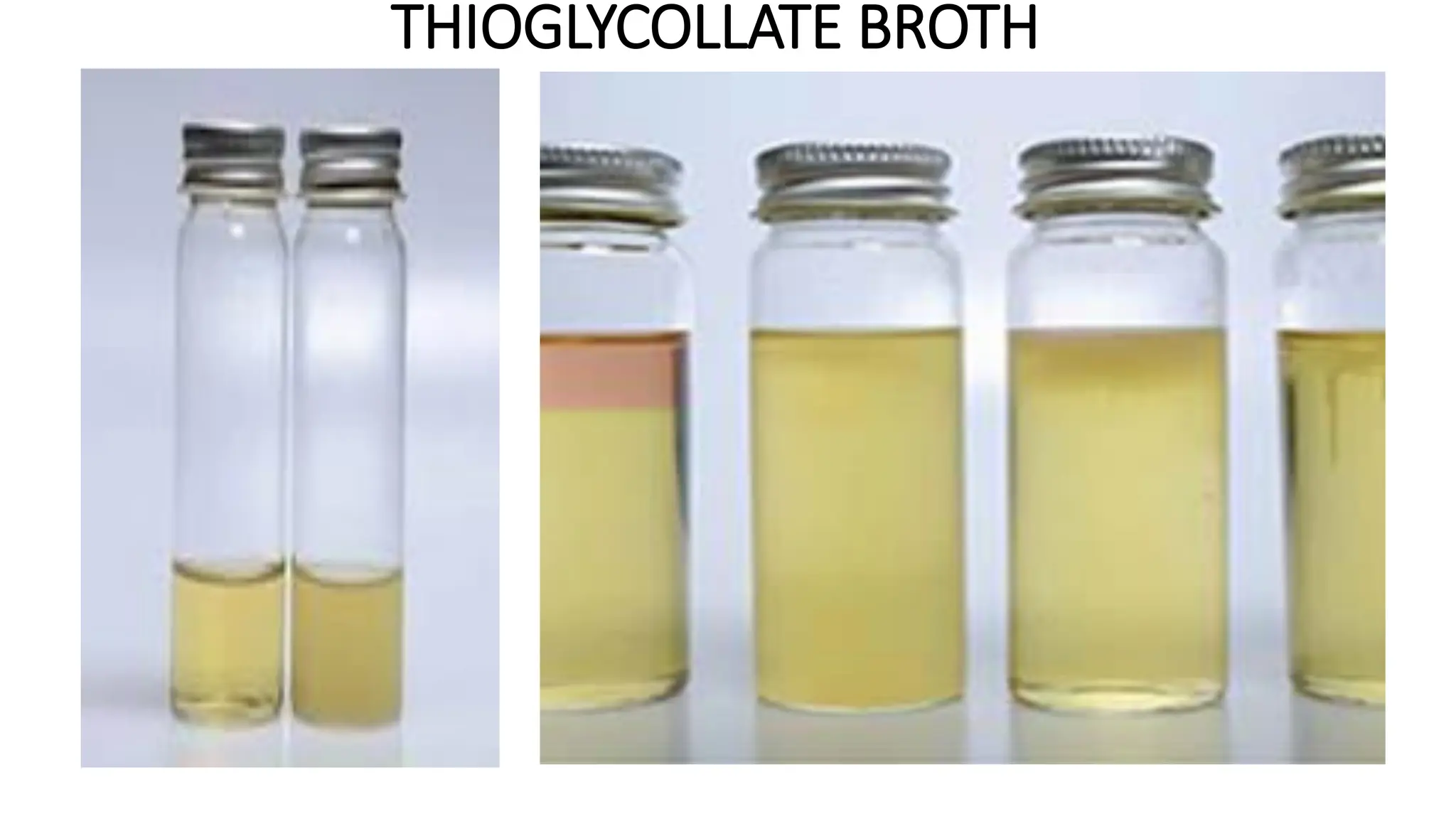
THIOGLYCOLLATE BROTH
ALKALINE PEPTONE WATER (pH= 8.6)
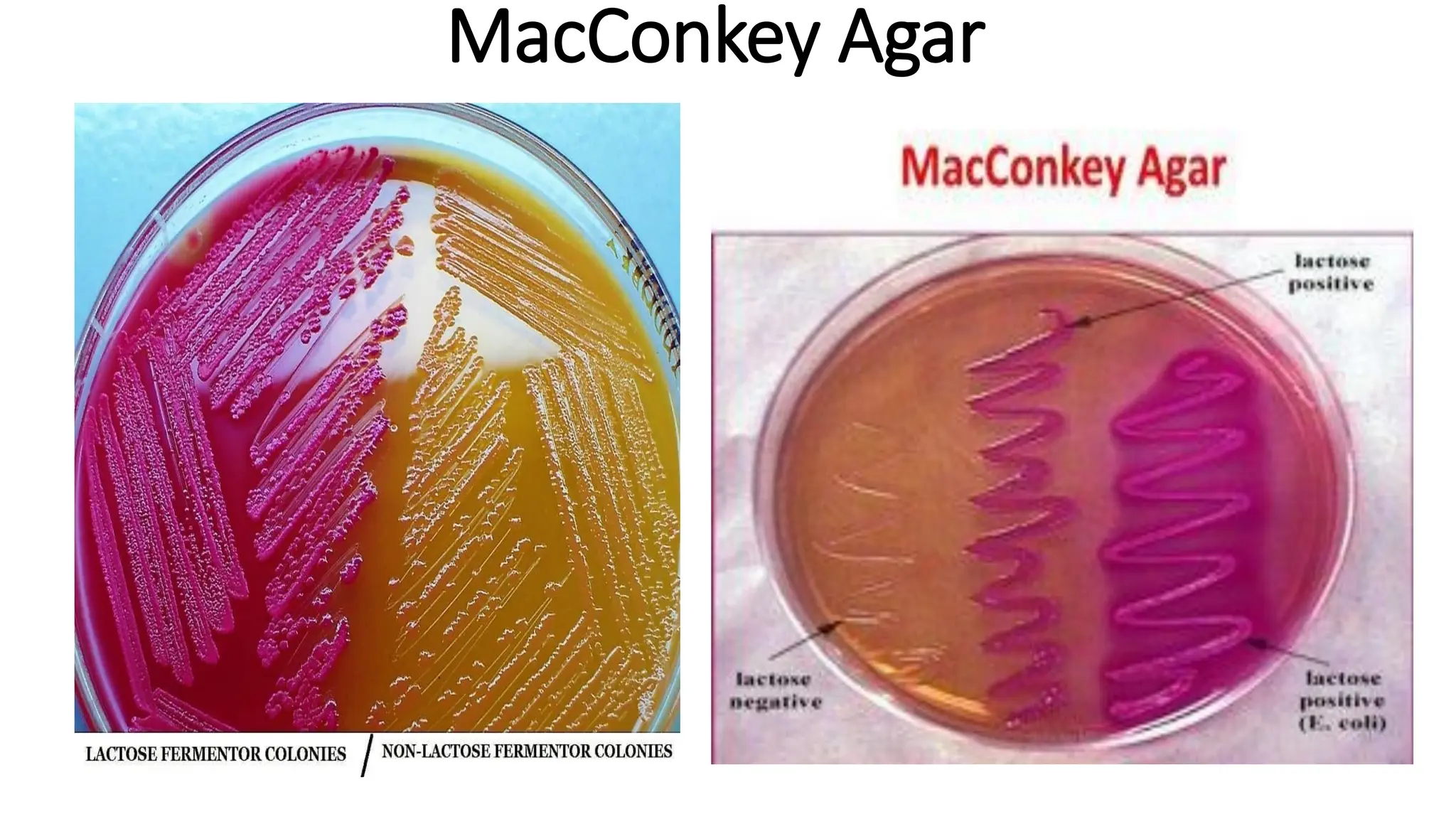
DIFFERENTIAL MEDIA
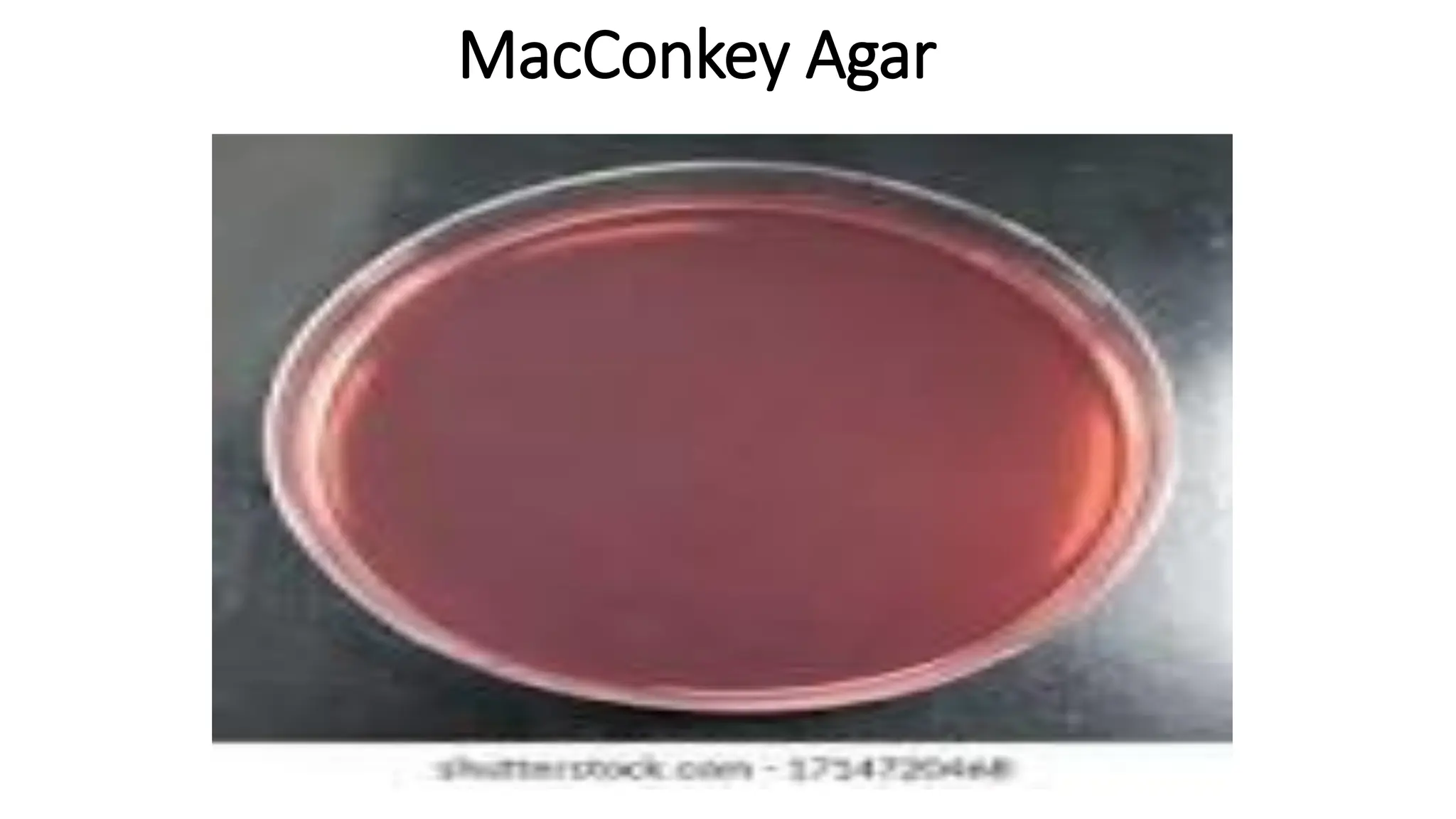
MacConkey Agar
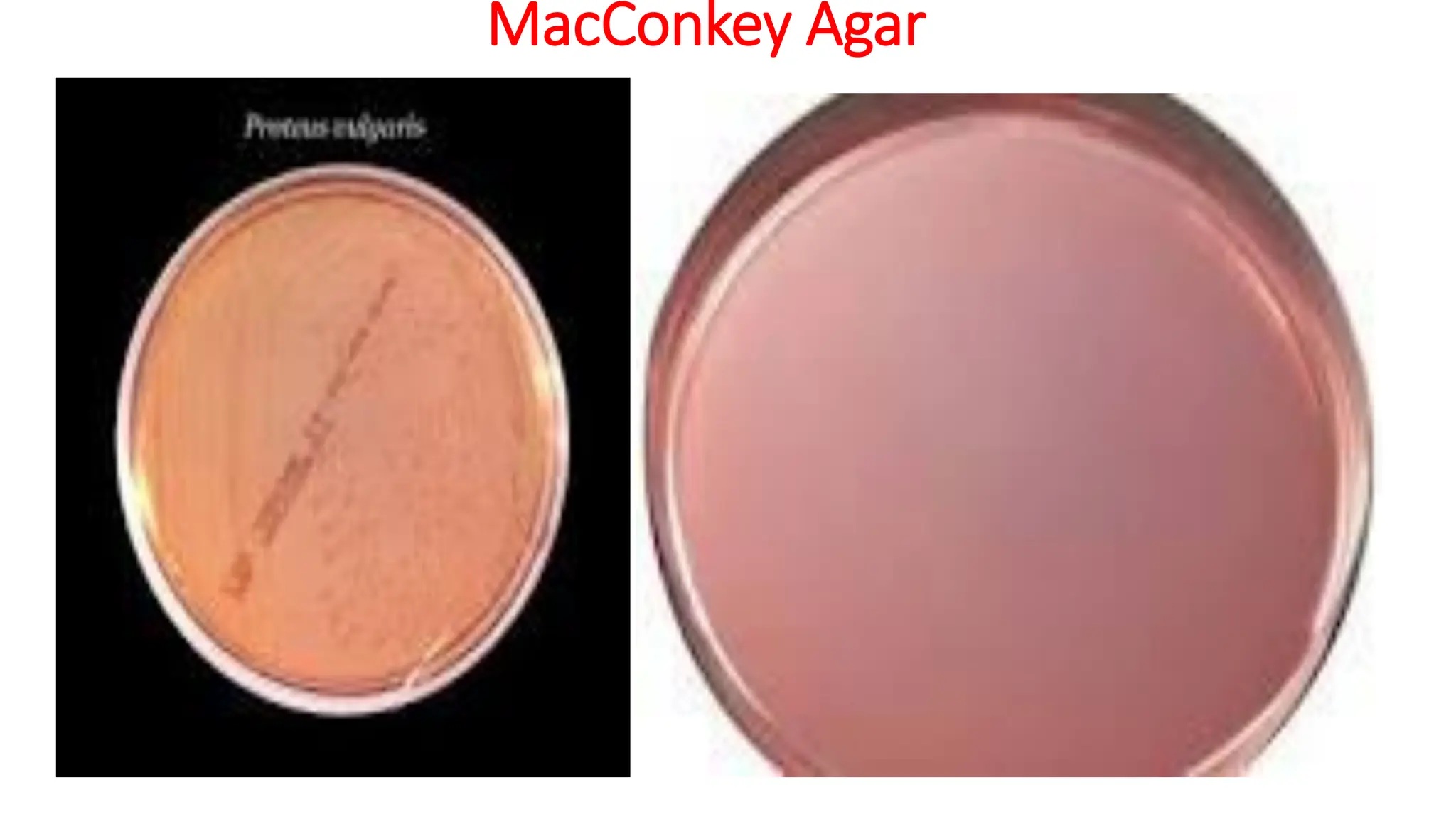
MacConkey Agar
MacConkey Agar
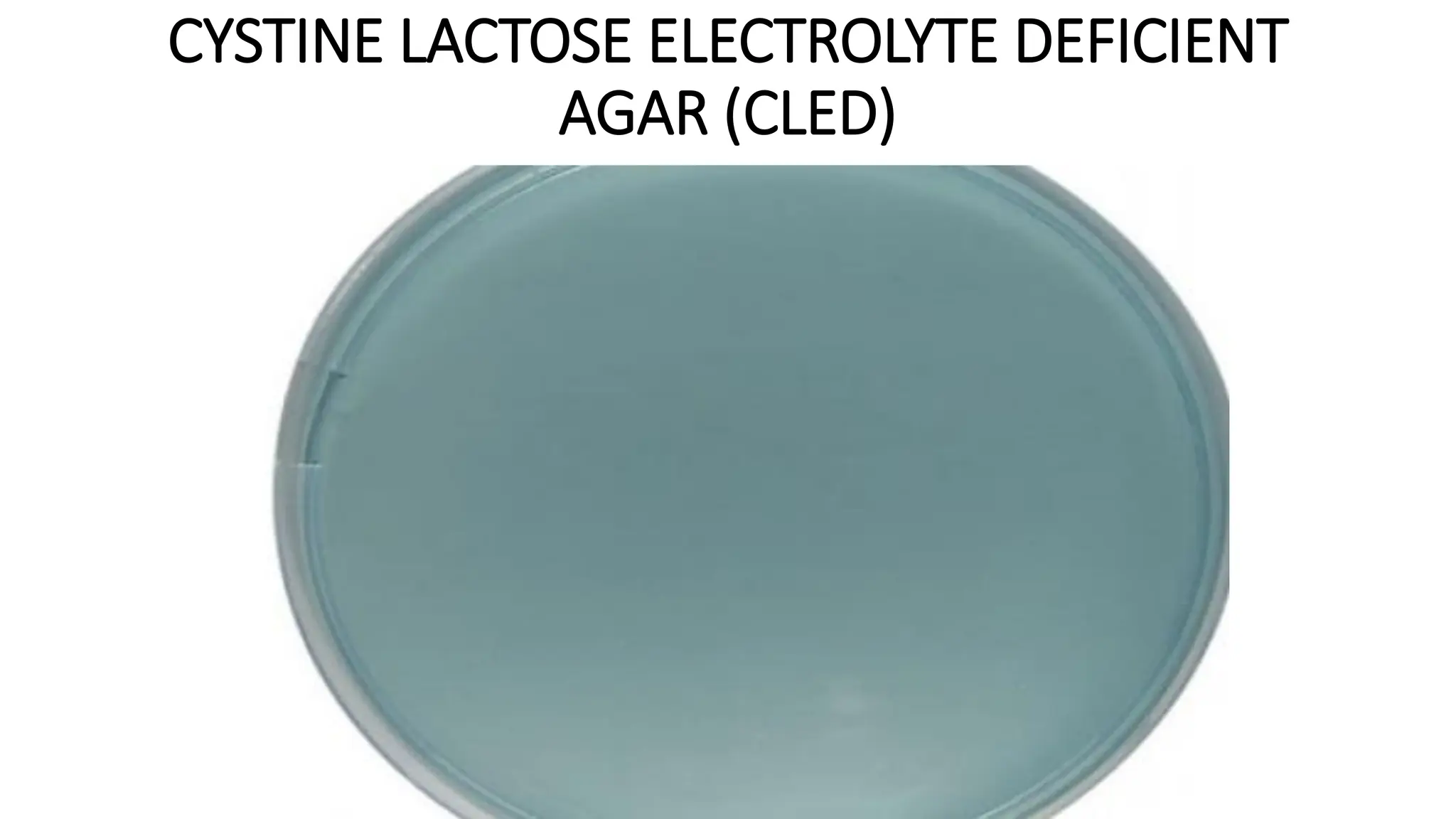
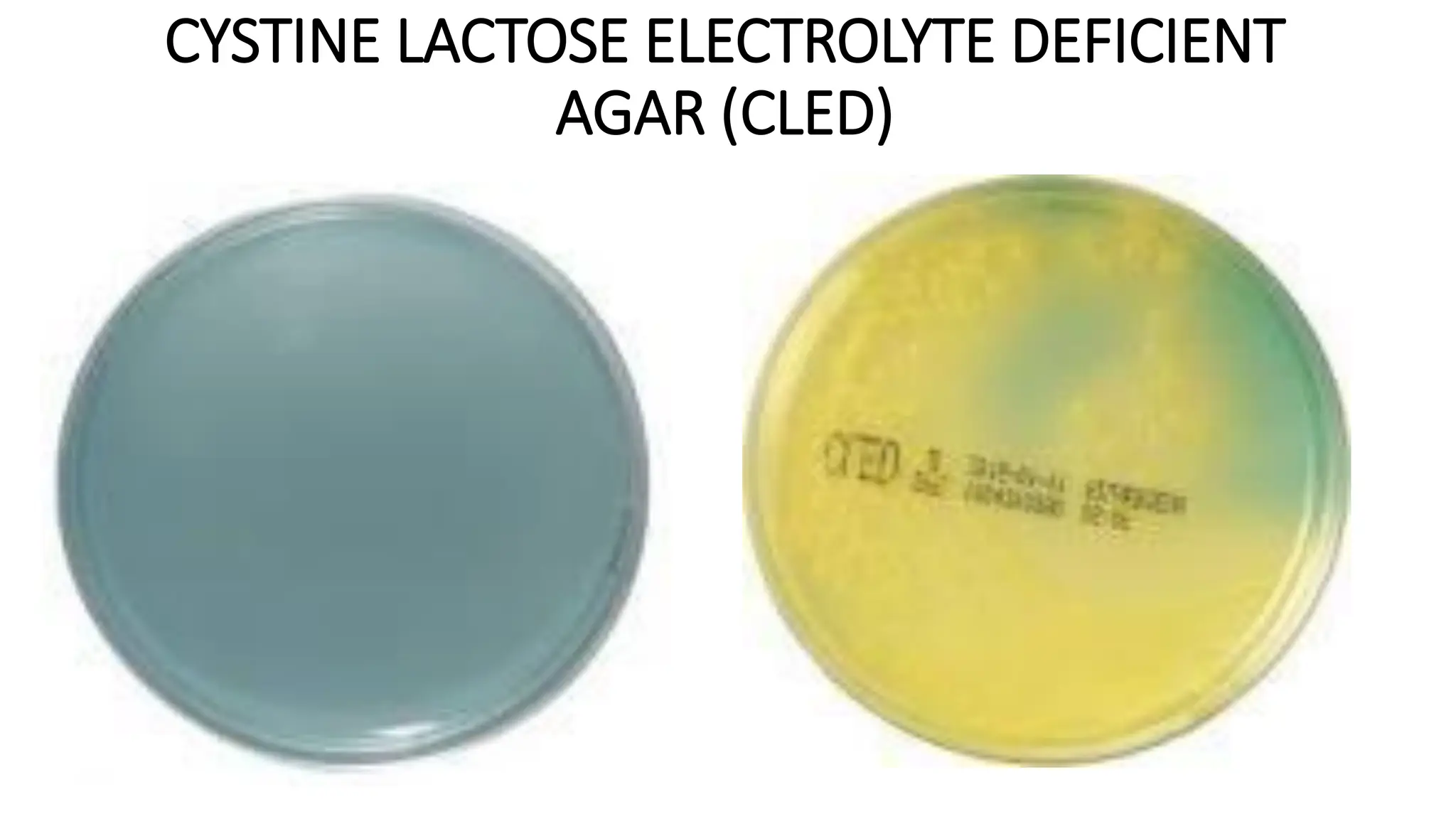
CYSTINE LACTOSE ELECTROLYTE DEFICIENT
AGAR (CLED)
CYSTINE LACTOSE ELECTROLYTE DEFICIENT
AGAR (CLED)
BIOCHEMICAL MEDIA
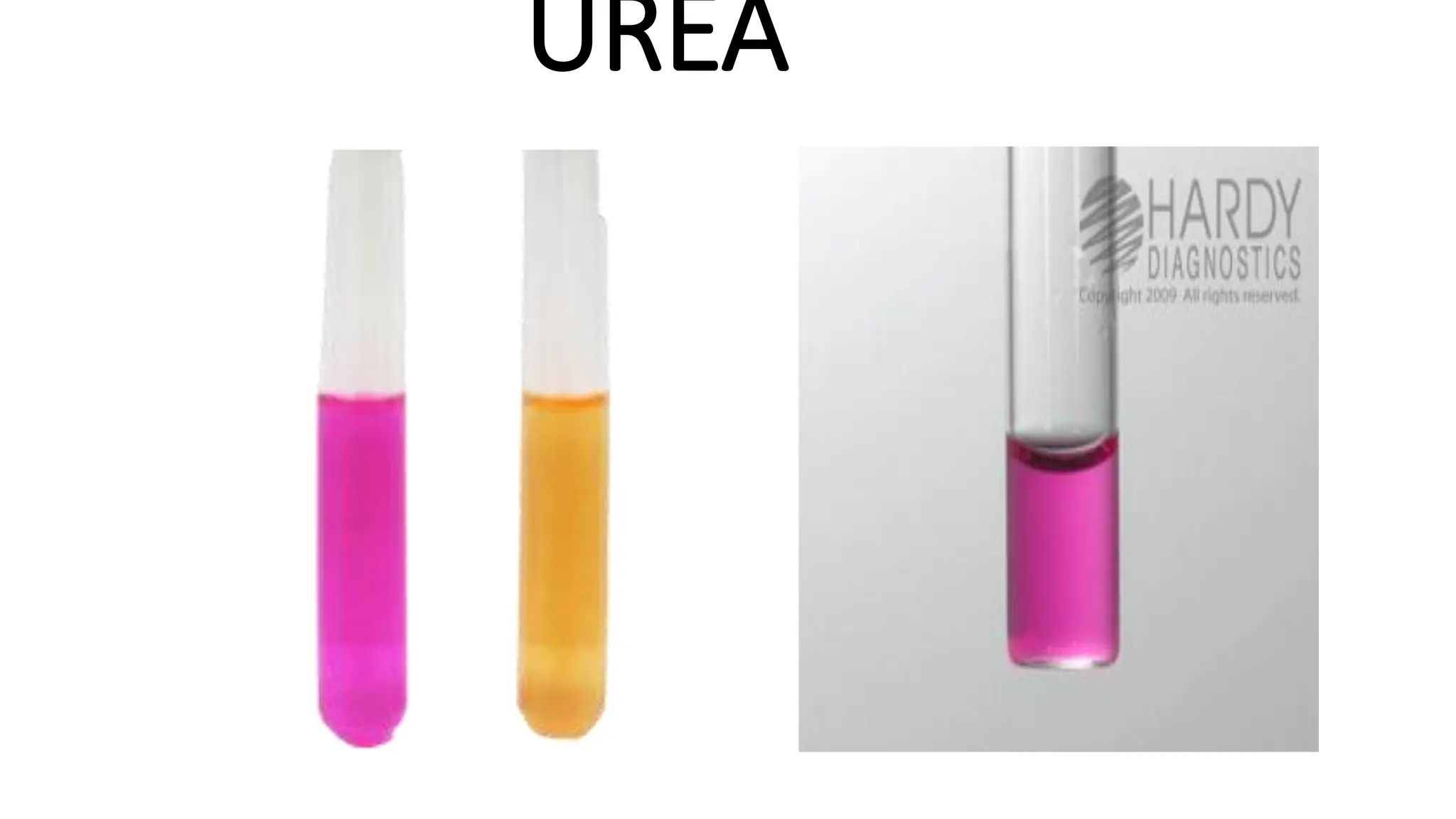
UREA
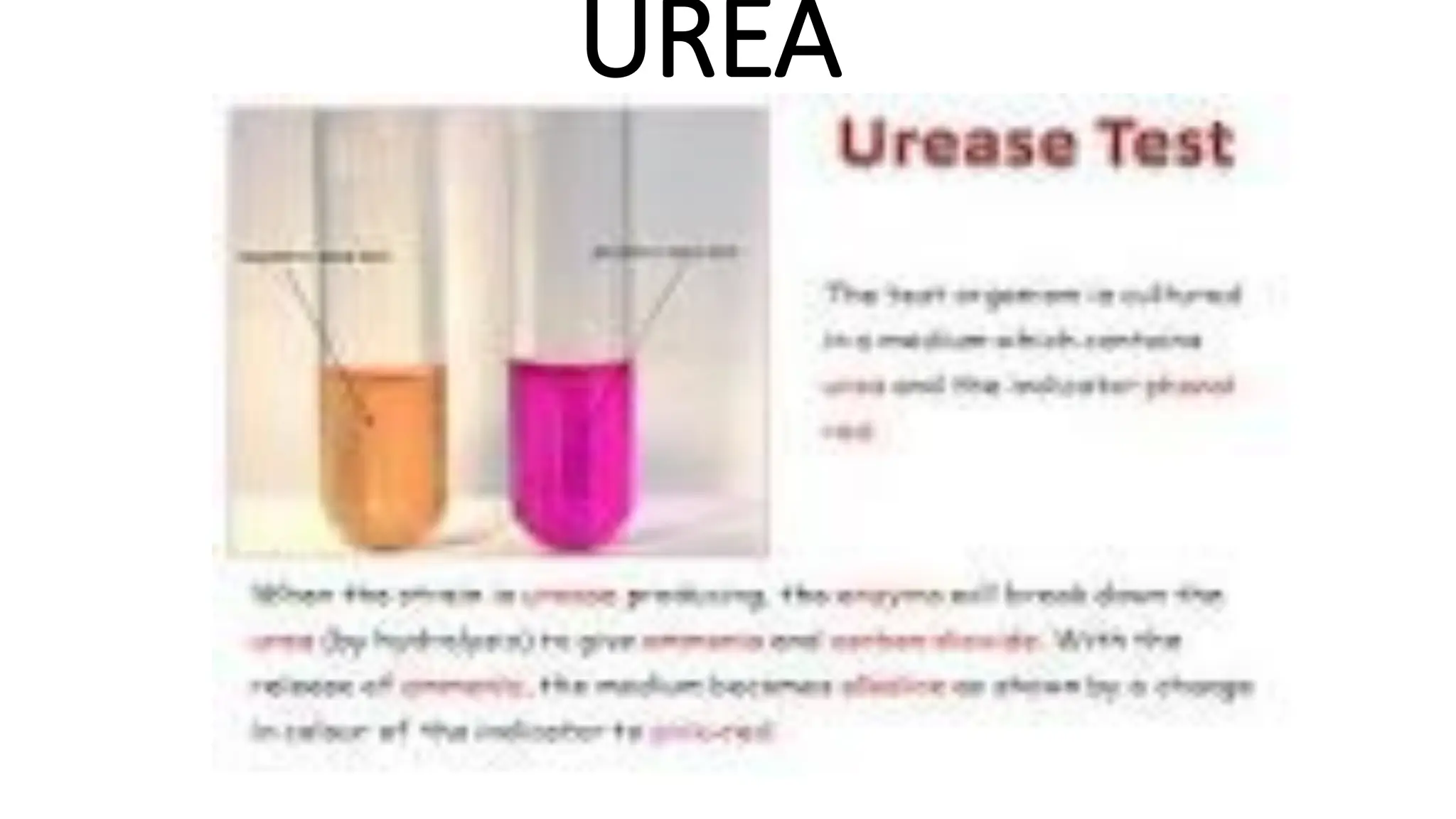
UREA
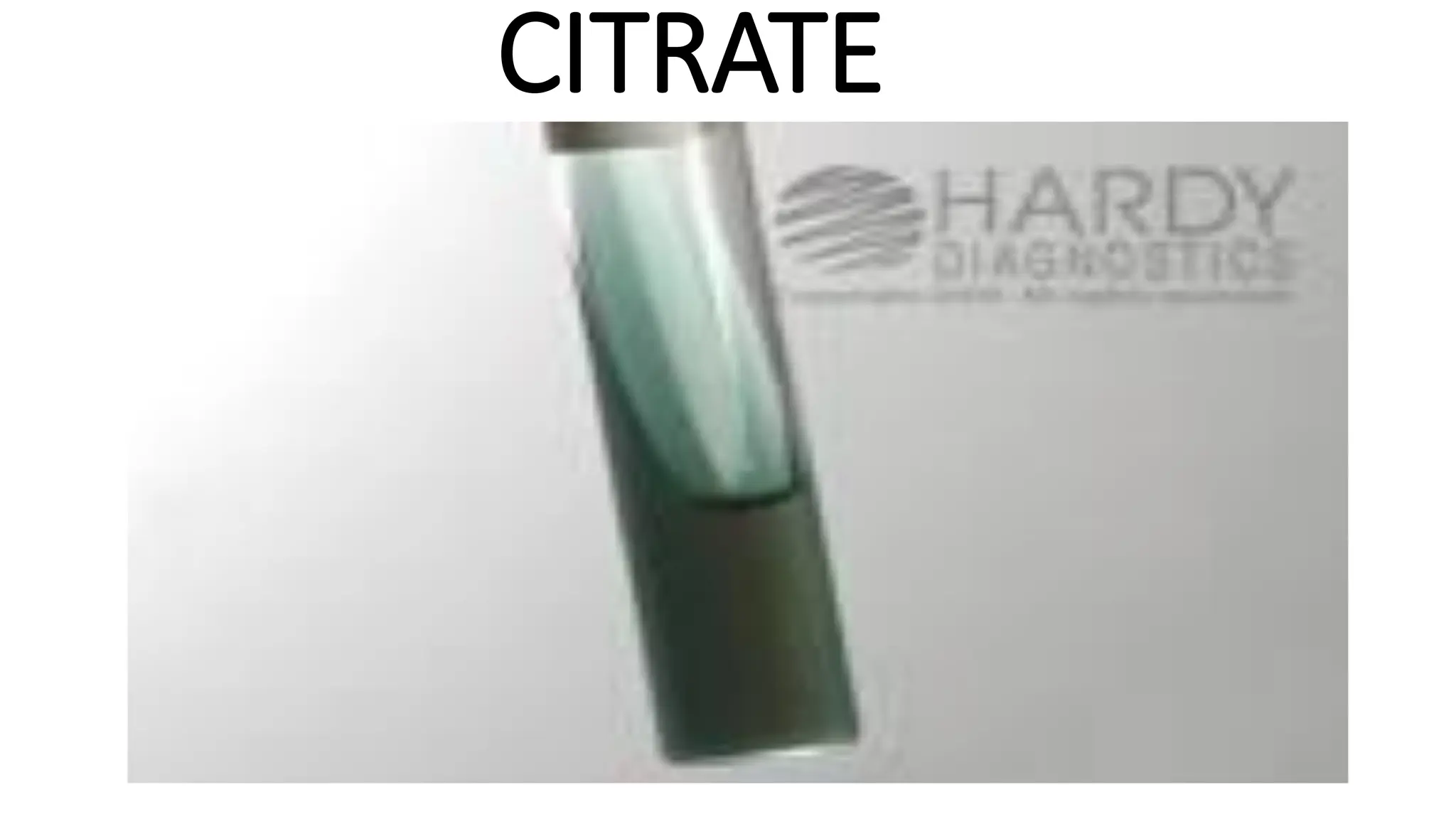
CITRATE
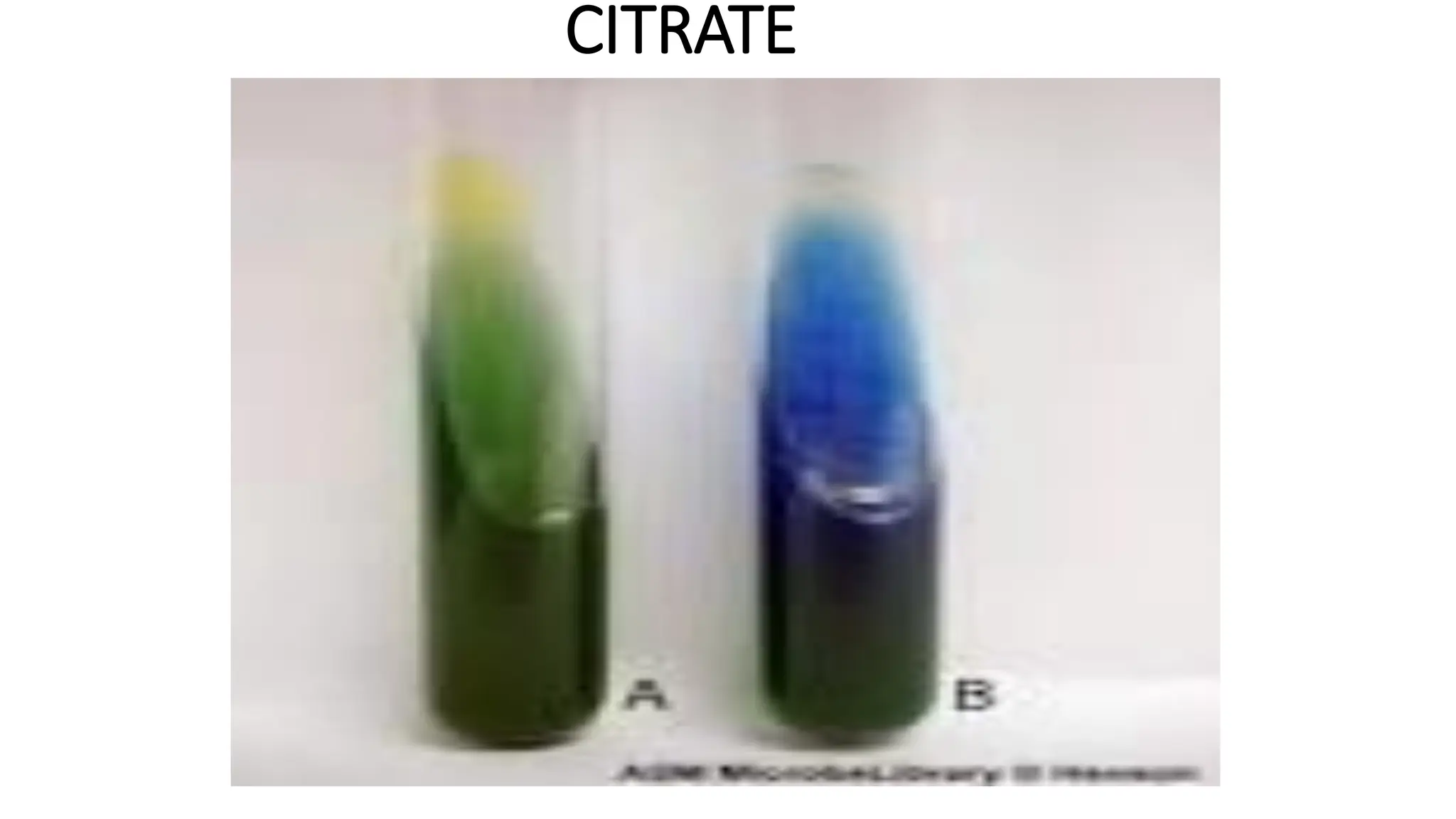
CITRATE
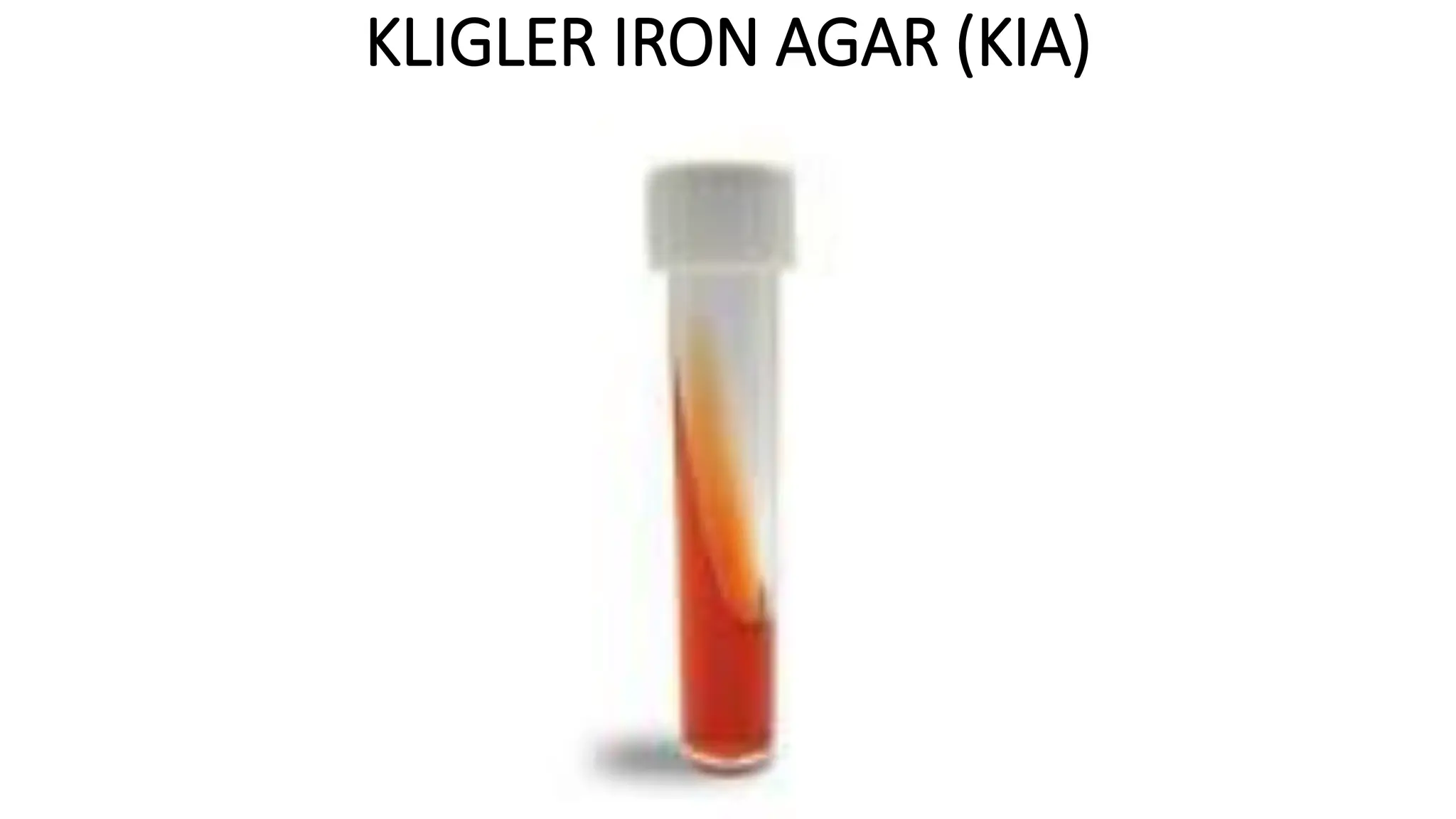
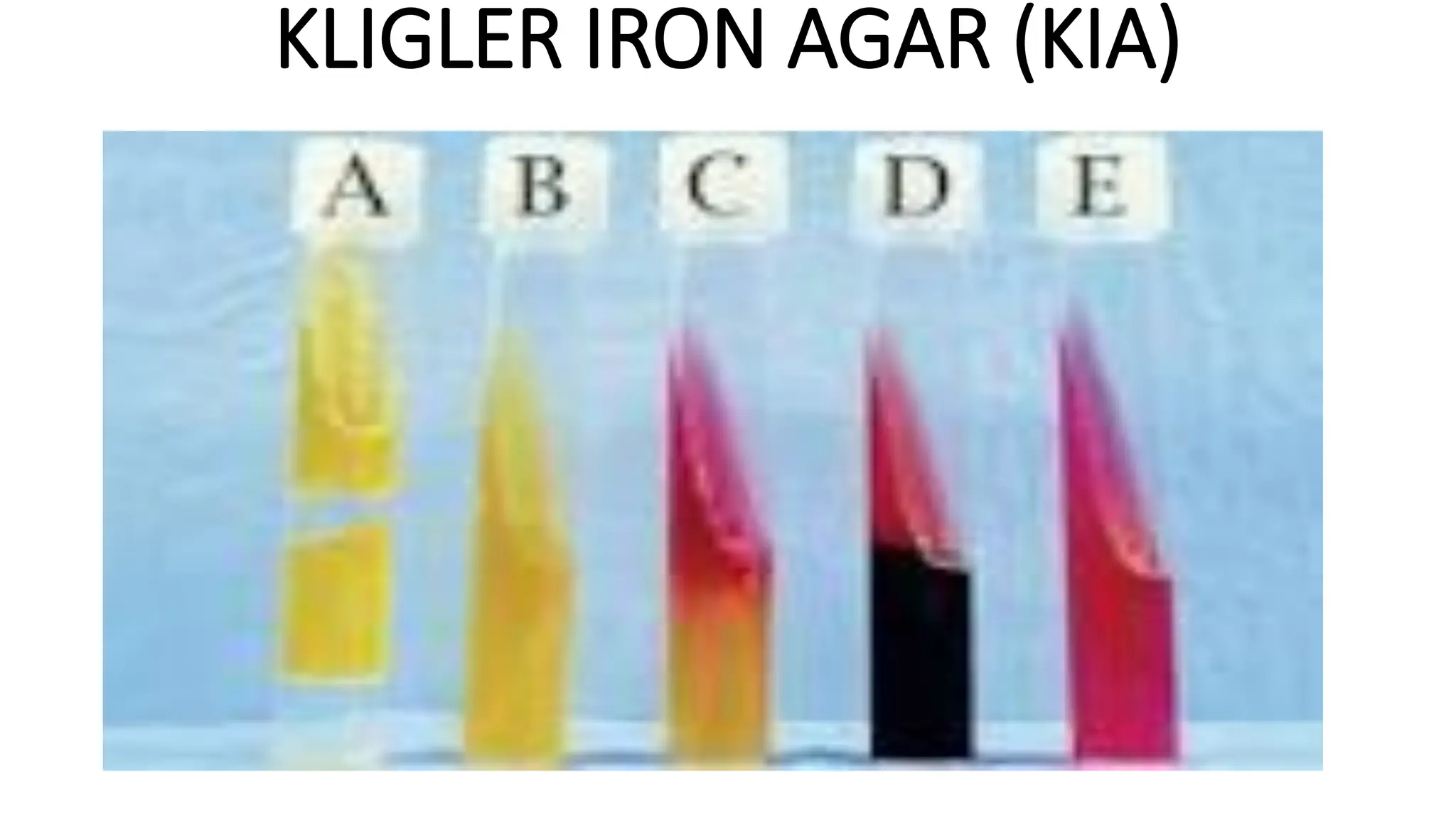
KLIGLER IRON AGAR (KIA)
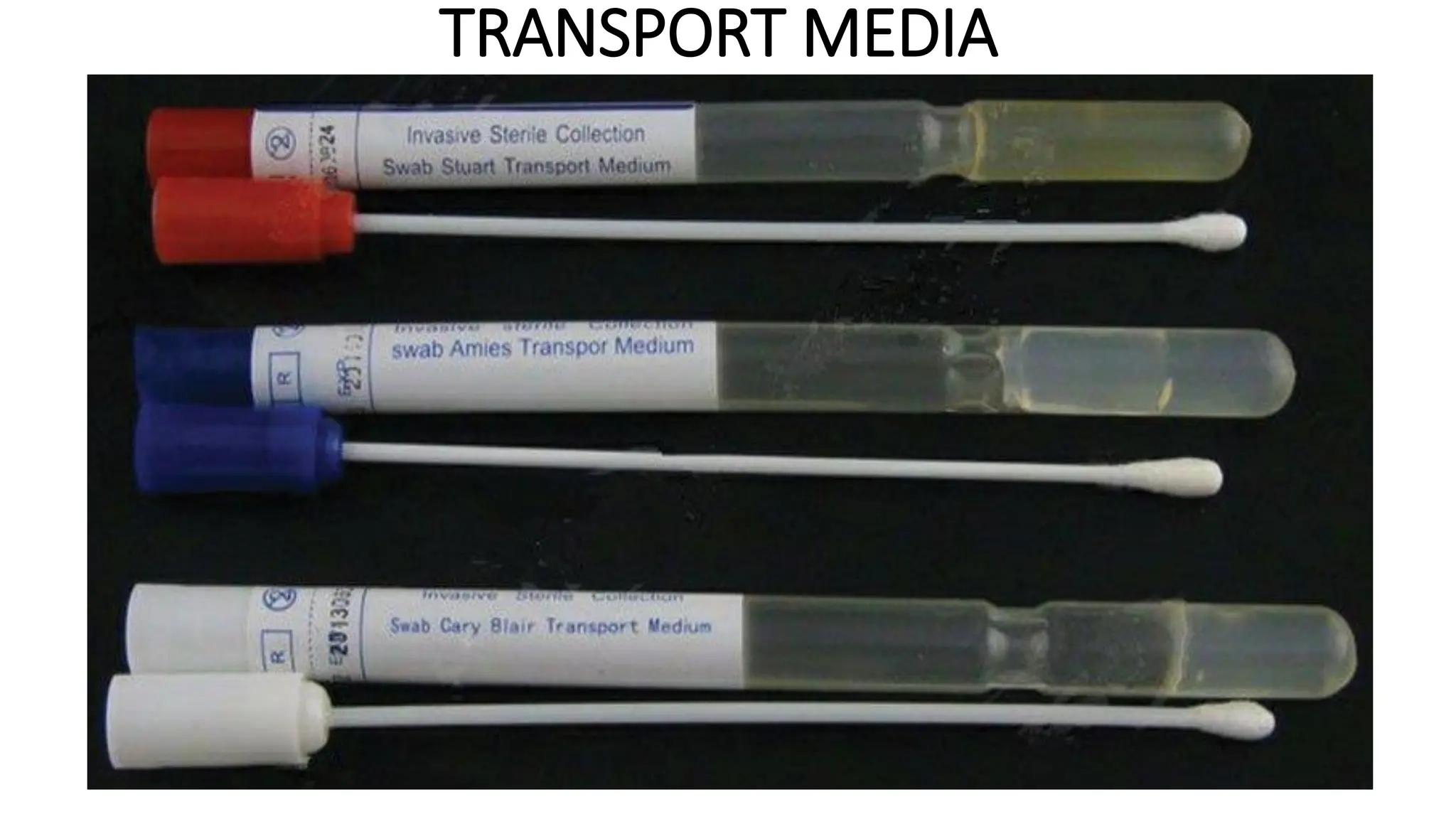
TRANSPORT MEDIA
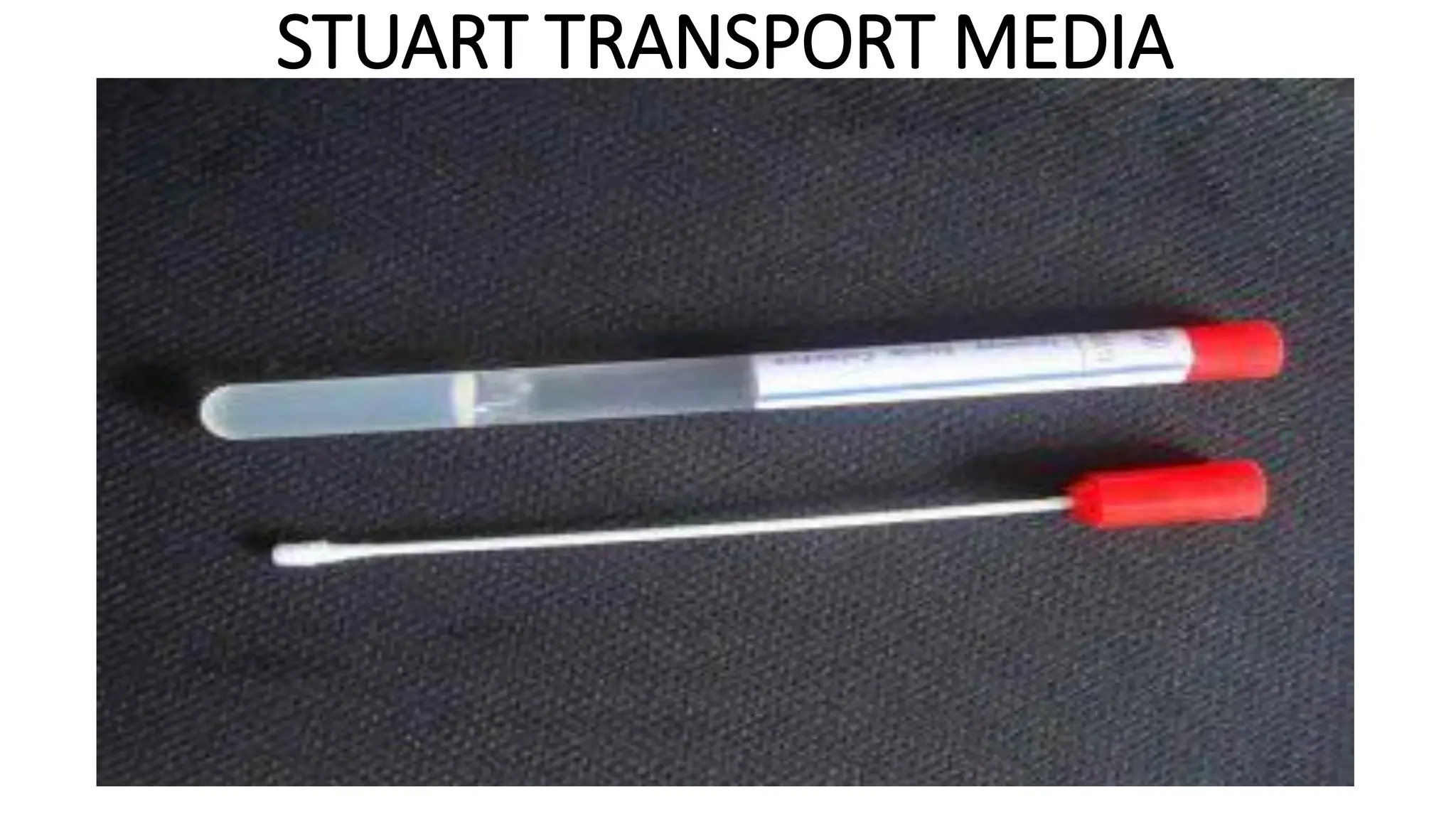
STUART TRANSPORT MEDIA
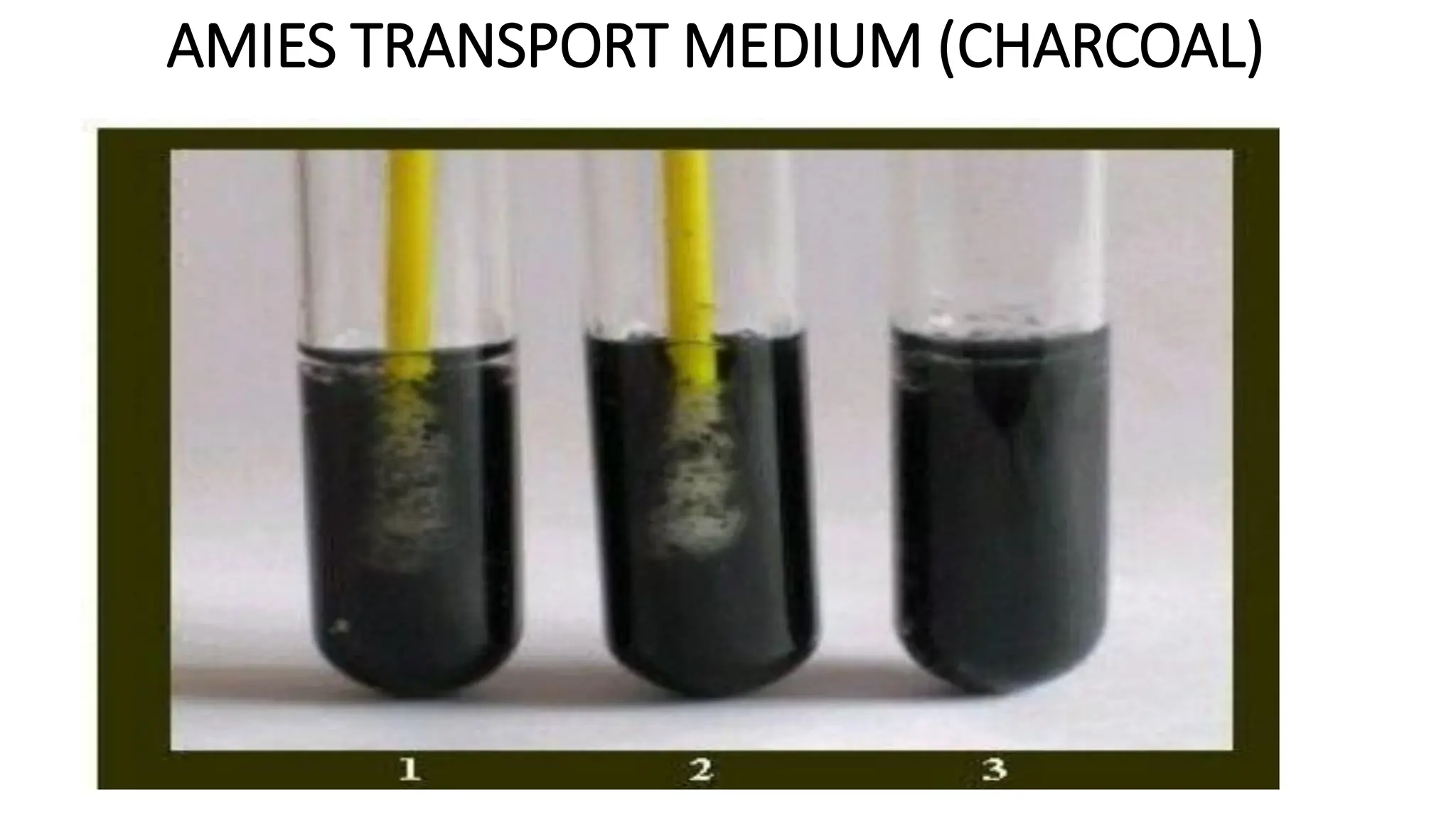
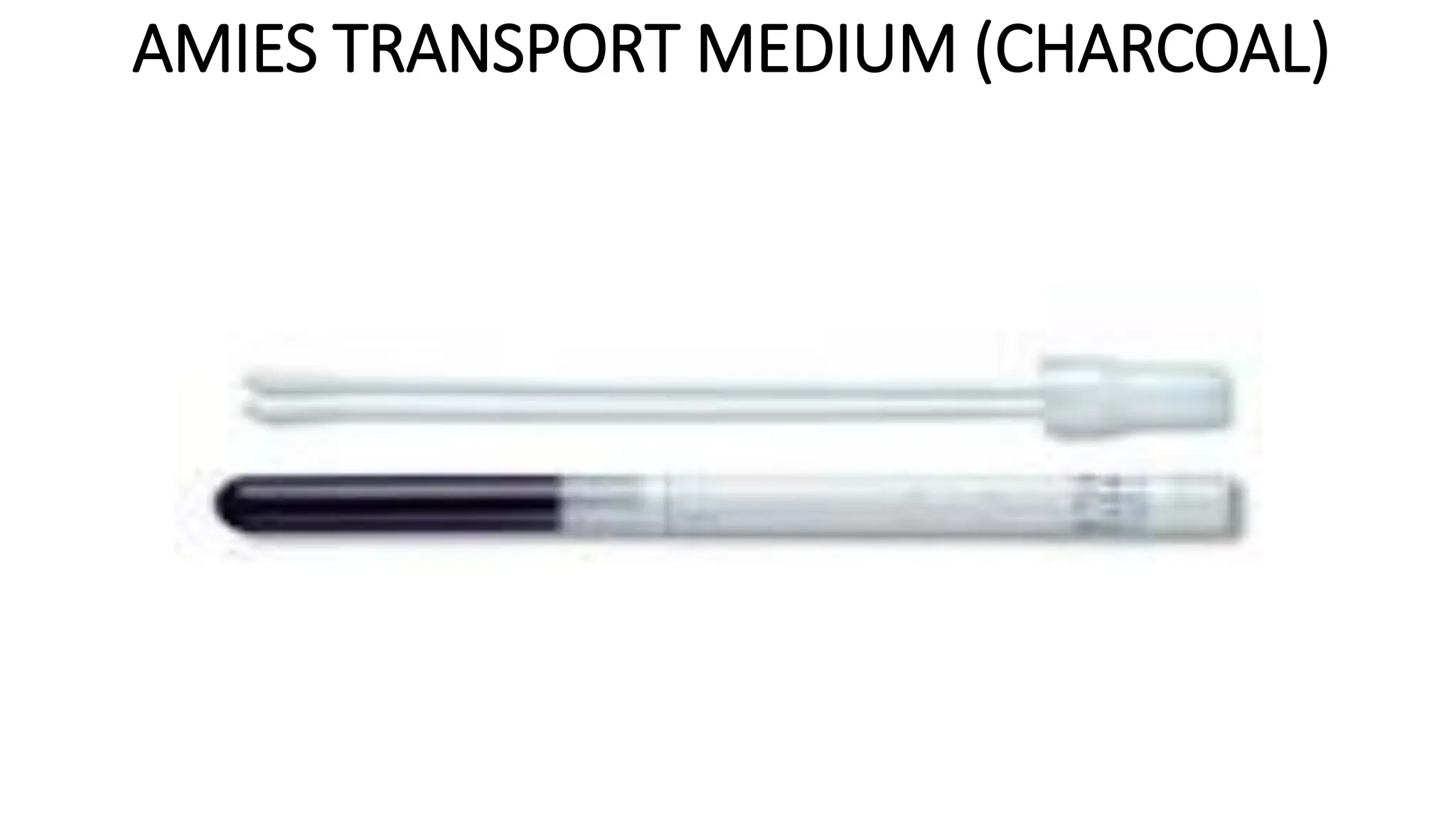
AMIES TRANSPORT MEDIUM (CHARCOAL)
TRANSPORT MEDIA
THANK YOU
PRACTICAL
II
Objective’s for this practical
You should be able to:
• Know the types of bacteria based on certain parameters
• Know the types of staining techniques
Types of bacteria and
Staining techniques
BACTERIA
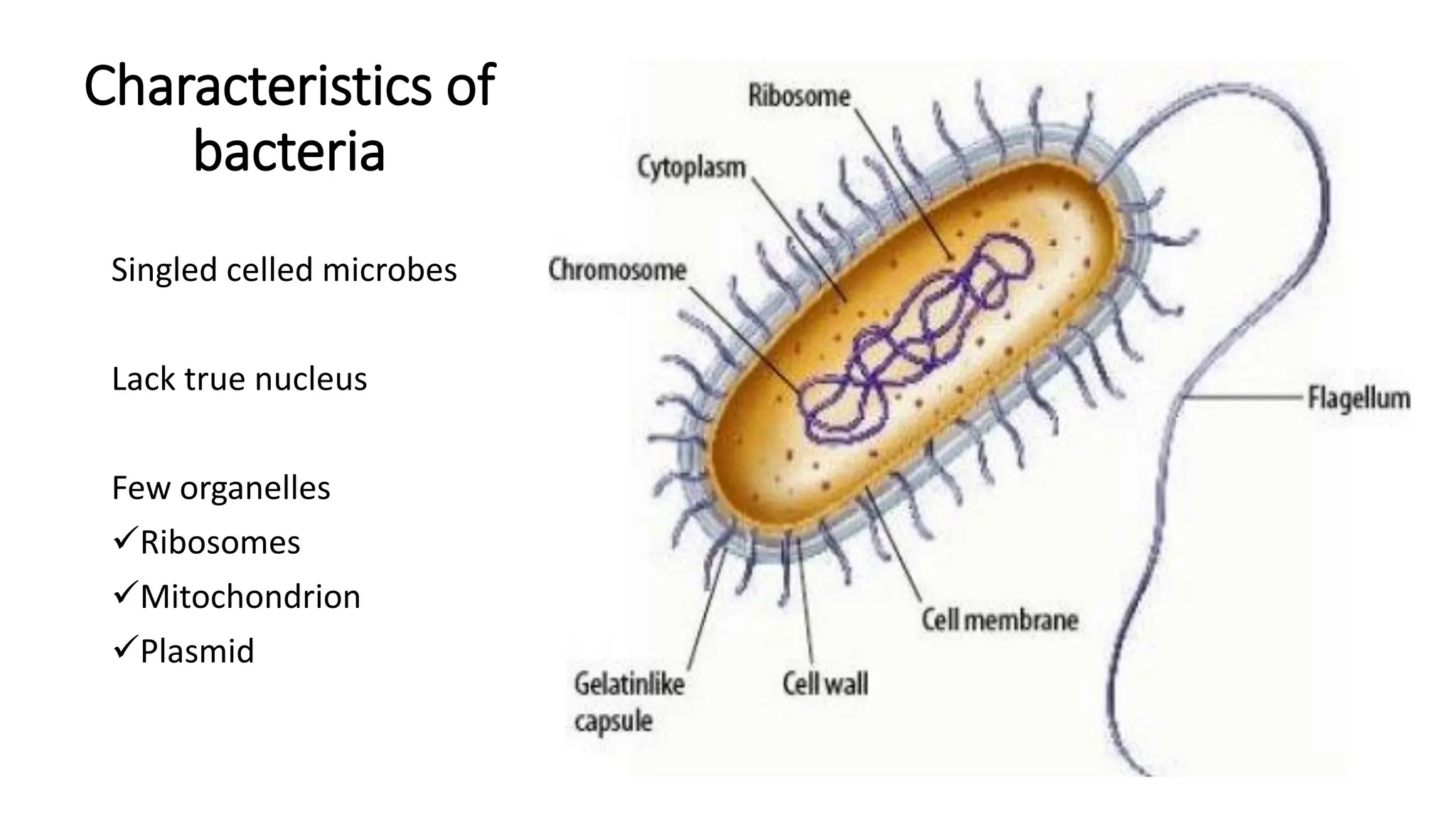
Characteristics of
bacteria
Singled celled microbes
Lack true nucleus
Few organelles
✓Ribosomes
✓Mitochondrion
✓Plasmid
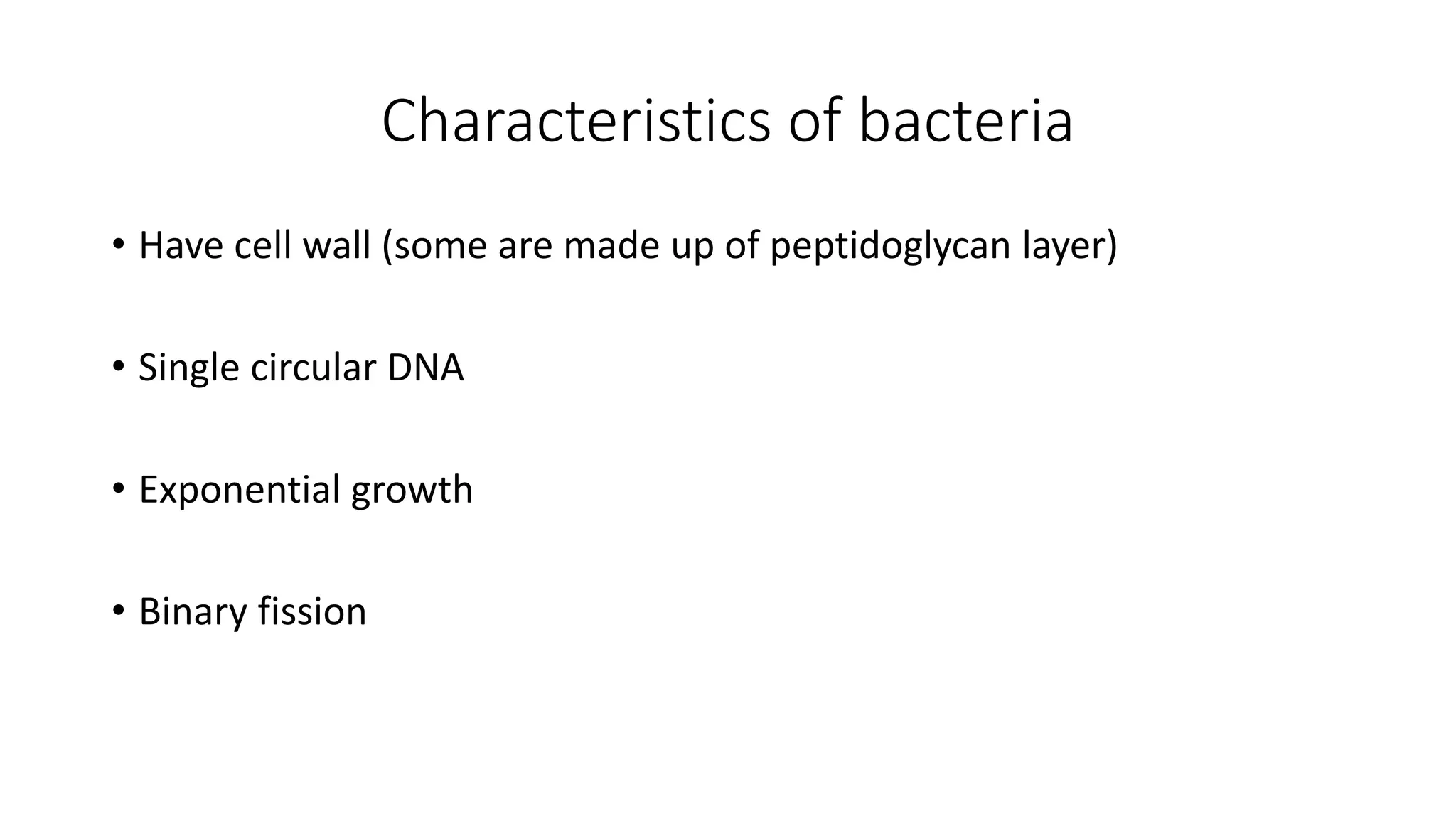
Characteristics of bacteria
• Have cell wall (some are made up of peptidoglycan layer)
• Single circular DNA
• Exponential growth
• Binary fission
Classification of bacteria
• Based on the gram reaction and shape
• Based on their oxygen level of concentration
• Based on temperature requirement
• Based on pH preference
oxygen level of concentration
• Obligate aerobes
• Obligate anaerobes
• Facultative anaerobes (facultative aerobes)
• Microaerophiles
• Capnophiles
• Aerotolerant
temperature requirement
• Psychrophiles
• Mesophiles
• Thermophiles
pH preference
• Acidophiles
• Basophiles (Alkaline)
• Neutrophiles
Bacteria
• Microscopic organism– observe under the microscope
✓Staining
➢To make the organism visible
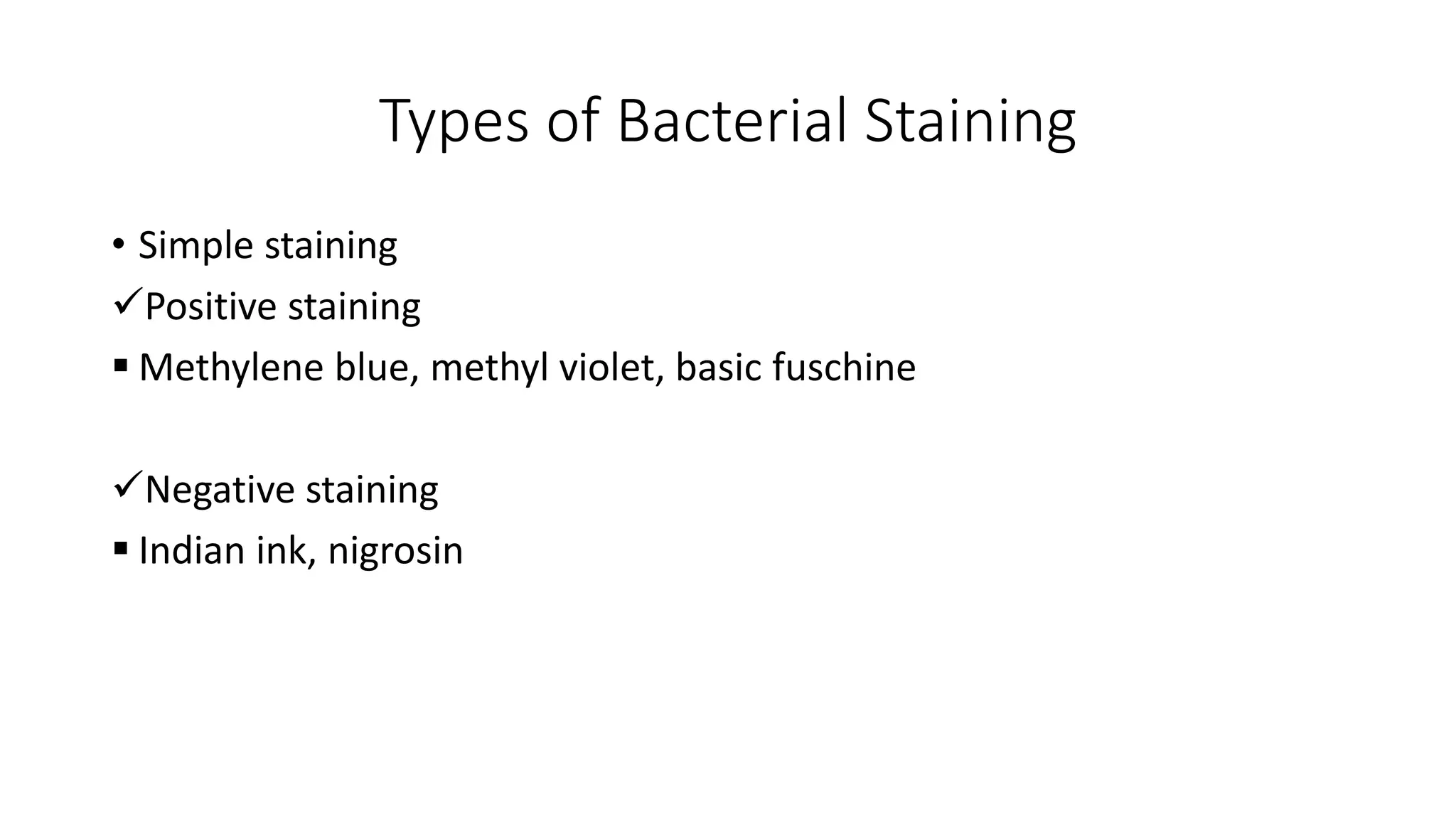
Types of Bacterial Staining
• Simple staining
✓Positive staining
▪ Methylene blue, methyl violet, basic fuschine
✓Negative staining
▪ Indian ink, nigrosin
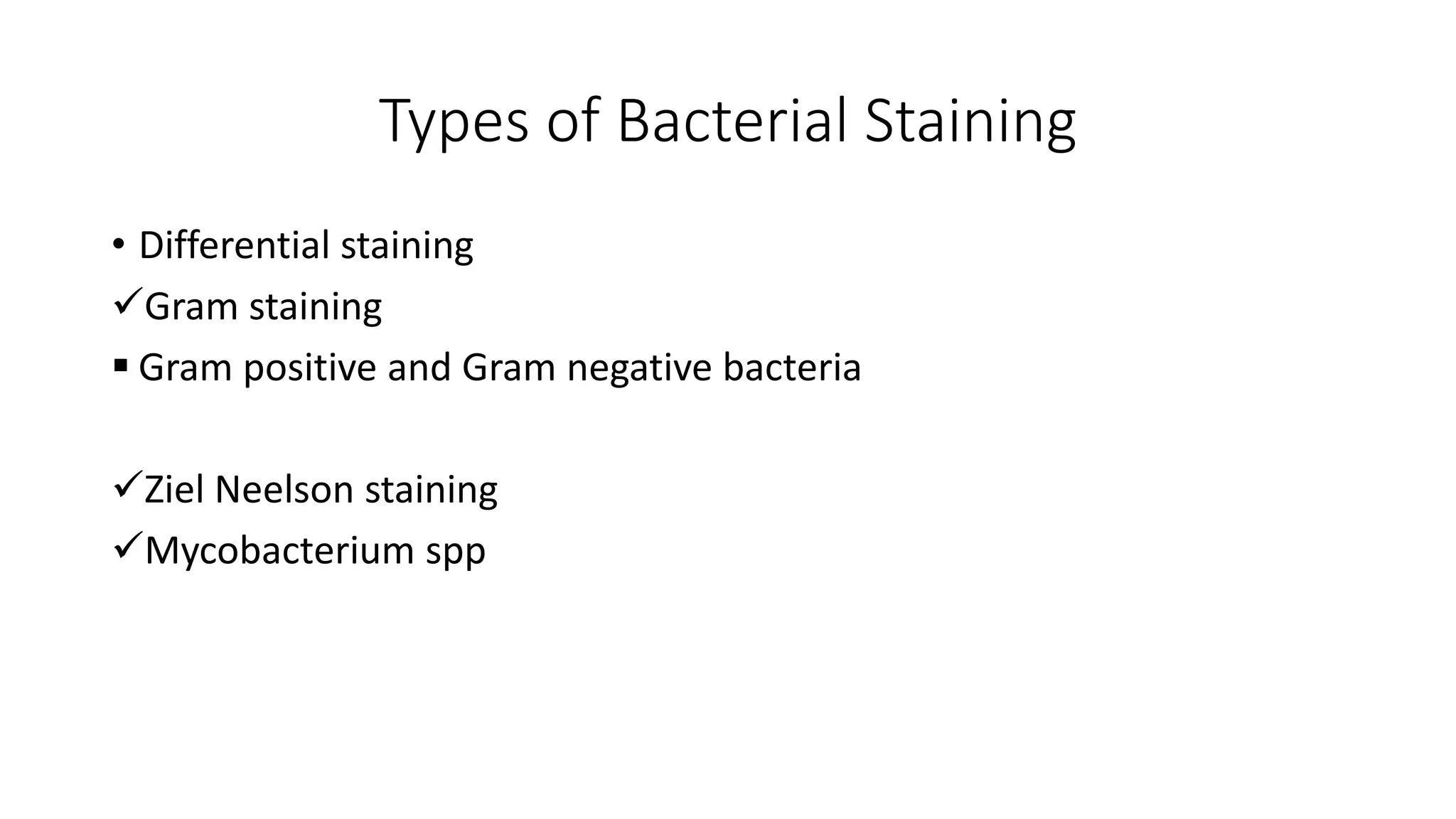
Types of Bacterial Staining
• Differential staining
✓Gram staining
▪ Gram positive and Gram negative bacteria
✓Ziel Neelson staining
✓Mycobacterium spp
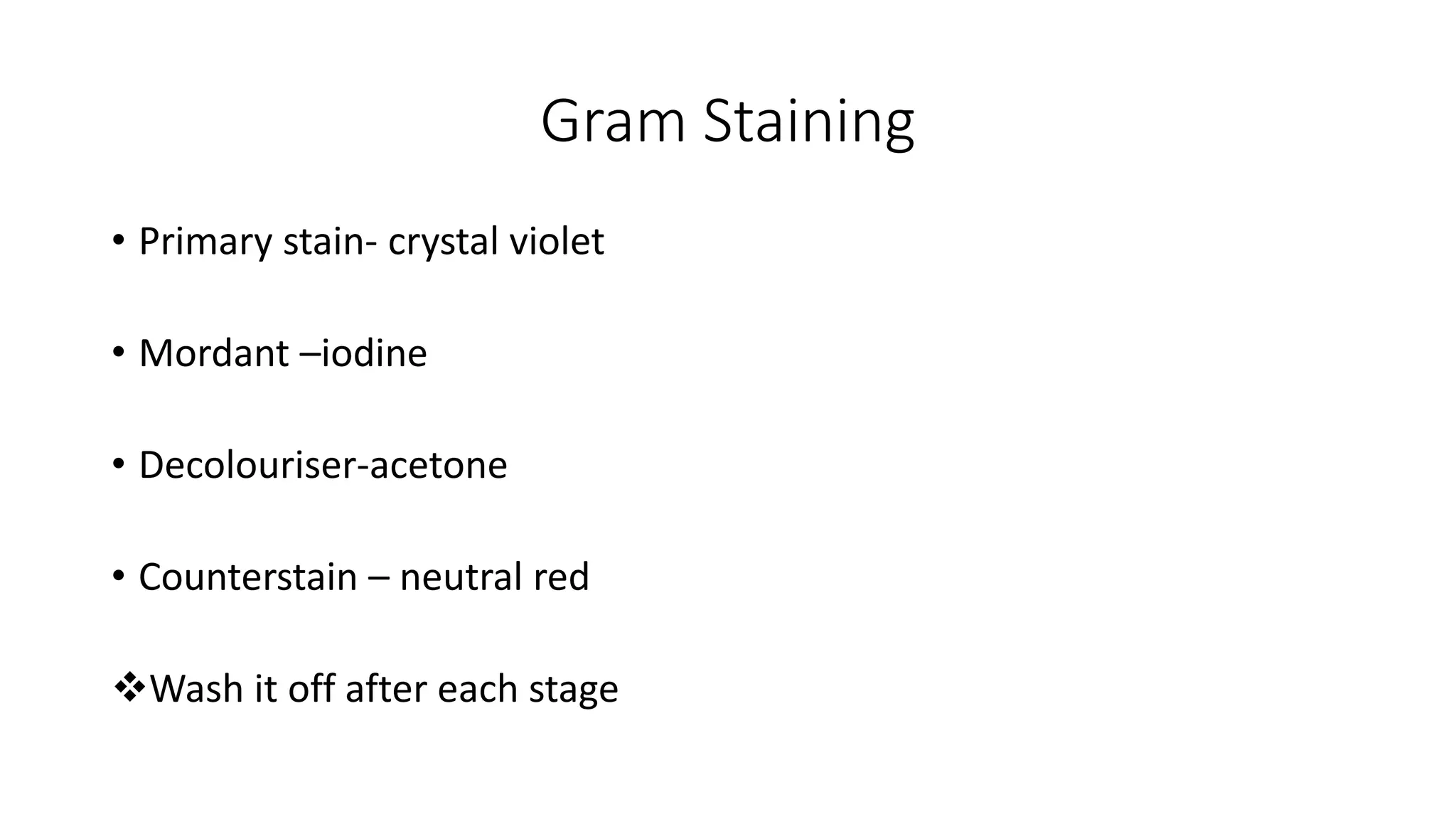
Gram Staining
• Primary stain- crystal violet
• Mordant –iodine
• Decolouriser-acetone
• Counterstain – neutral red
❖Wash it off after each stage
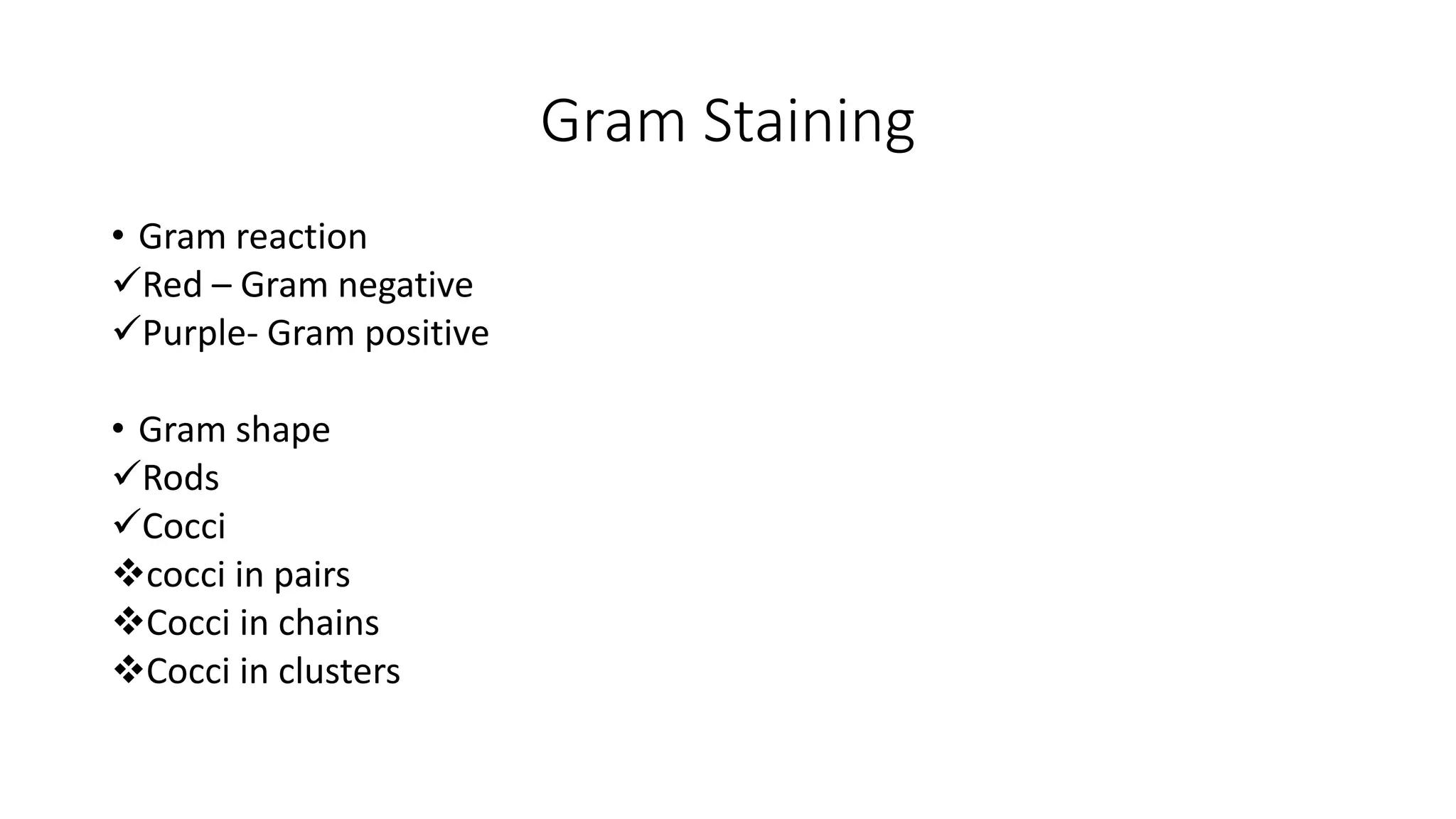
Gram Staining
• Gram reaction
✓Red – Gram negative
✓Purple- Gram positive
• Gram shape
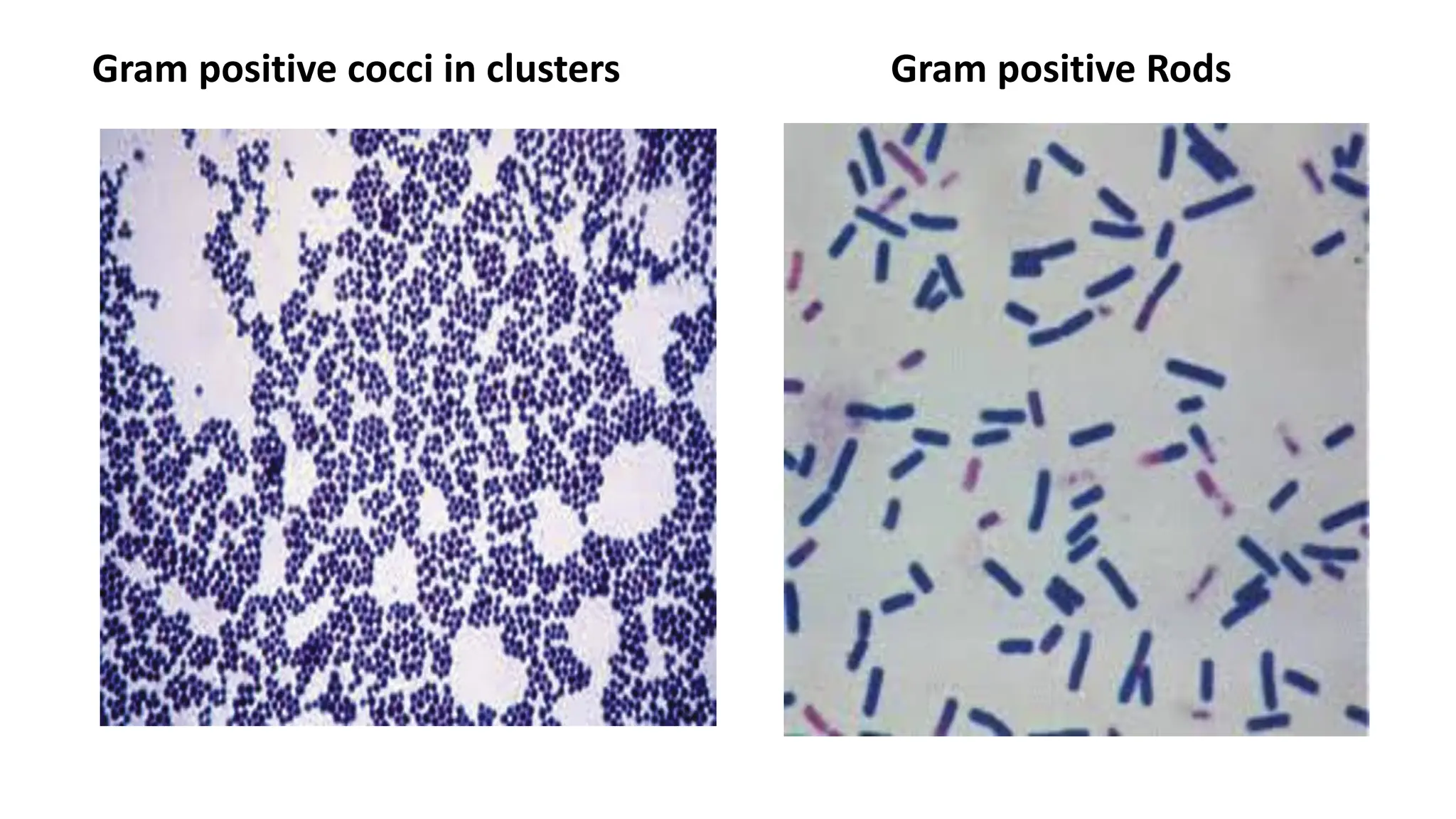
✓Rods
✓Cocci
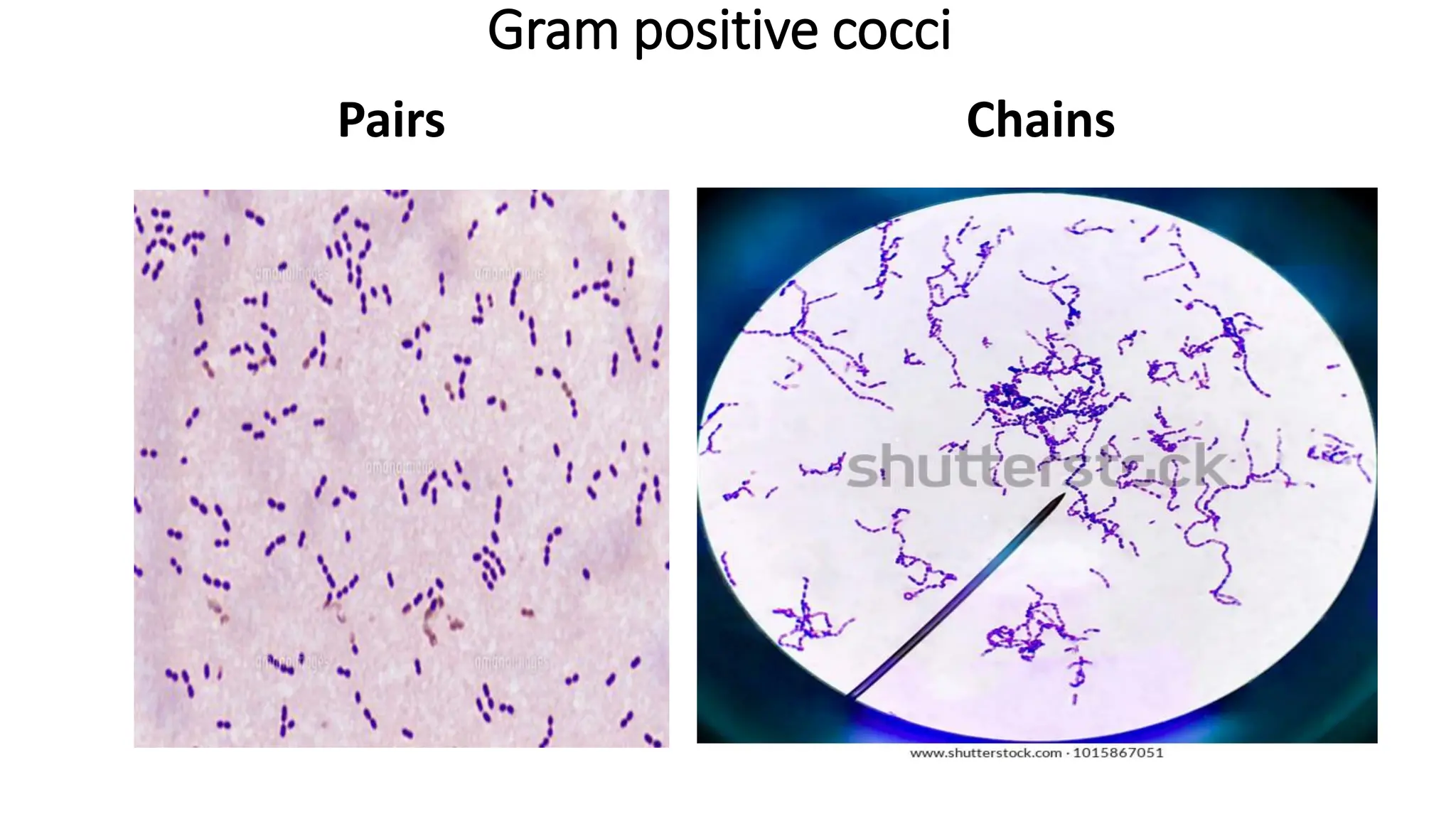
❖cocci in pairs
❖Cocci in chains
❖Cocci in clusters
Gram positive cocci
Pairs Chains
Gram positive cocci in clusters Gram positive Rods
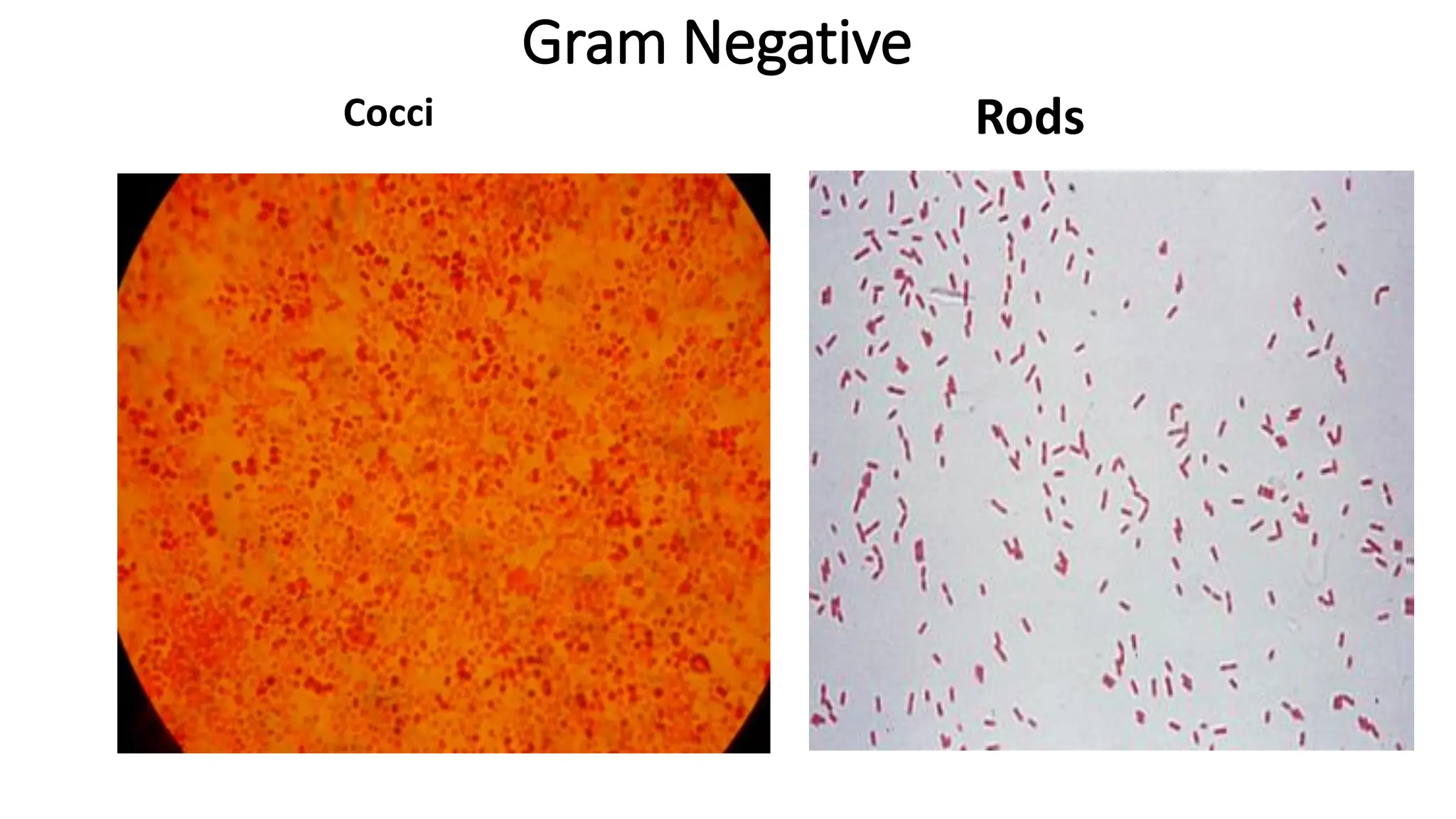
Gram Negative
Cocci Rods
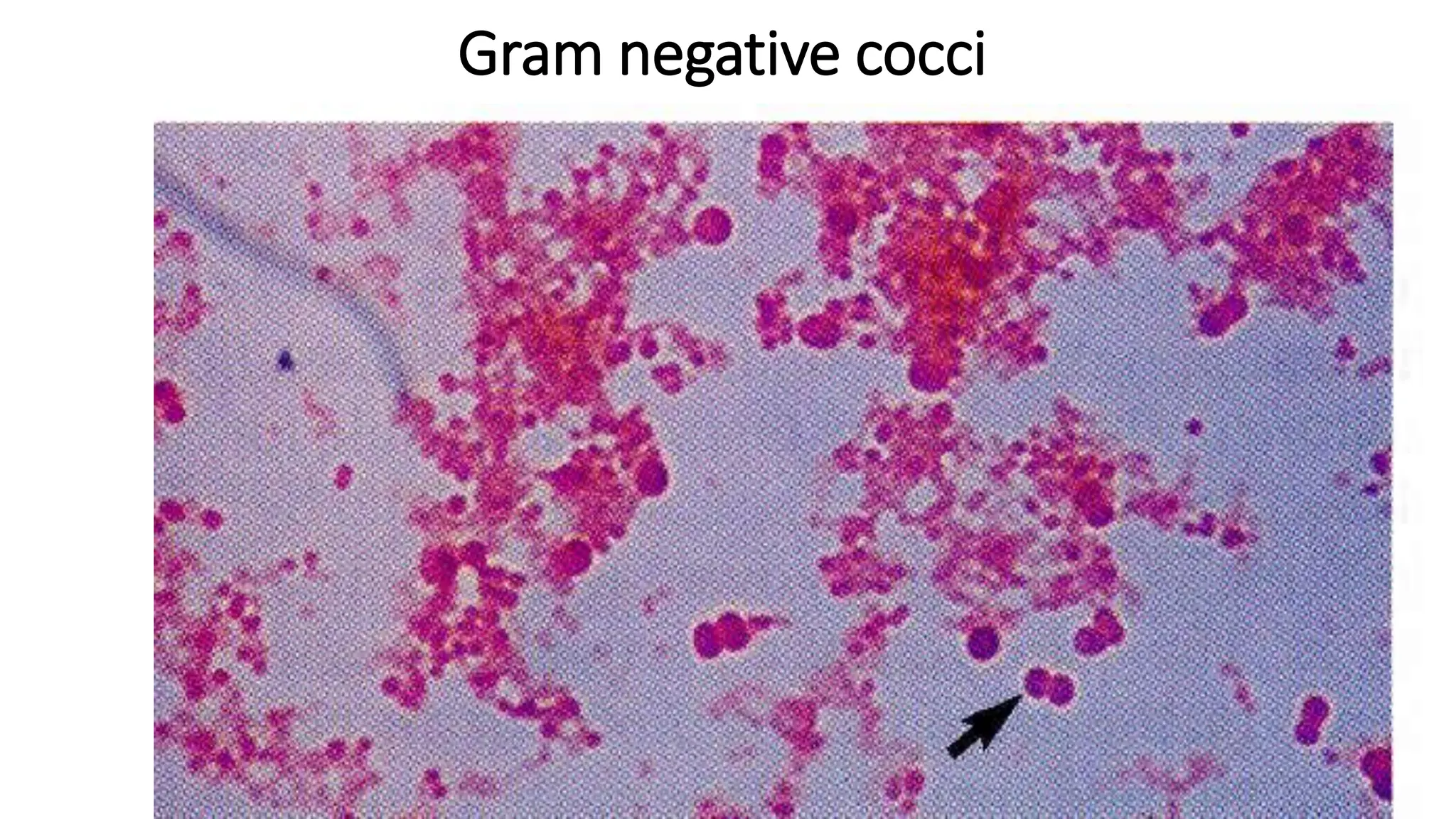
Gram negative cocci
STERILIZATION AND DISINFECTION
STERILIZATION
• Is the complete killing or removal of all living organisms from a particular location or
material including spores.
• Sterilis is latin word which means barren or inability to reproduce offspring.
• Materials that come into contact with tissues are sterilized under conditions that allow a
very wide margin of safety and the effectiveness of inactivation of microbes.
• Is an absolute process
STERILIZATION
• The availability of reliable methods of sterilization has made possible for the
major developments in surgery and intrusive medical techniques that have helped
to revolutionize medicine over the past century.
• The main aim of sterilization is to render the object safe for a procedure to be
undertaken.
• Sterilization is required for culture media, specimen containers, equipment like
surgical, medical and haematological instruments
METHODS OF STERILIZATION
• Physical methods of sterilization
✓Heat
✓Radiation
✓Filtration
• Sterilization by gas
• Sterilization by liquid
STERLIZATION BY HEAT
• Heat kills by denaturing proteins, damaging cell membrane and enzymatic
cleavage of DNA of microbes.
• Two main forms of heat are
✓Dry heat
✓Moist heat
• Materials sterilized under this method are heat resistant
STERILIZATION BY DRY HEAT
• Dry heat kills microbes by causing a destructive oxidation of essential cell
constituents including spores.
• Two forms of dry heat
✓Naked flame
The simplest method of sterilization is to expose the surface a contaminated material
to a naked flame. Bunsen burner is most often the source of naked flame.
Used to sterilized materials that are heat resistant such as inoculating loops, forceps,
spatulas, knife blades and needles
STERILIZATION BY DRY HEAT
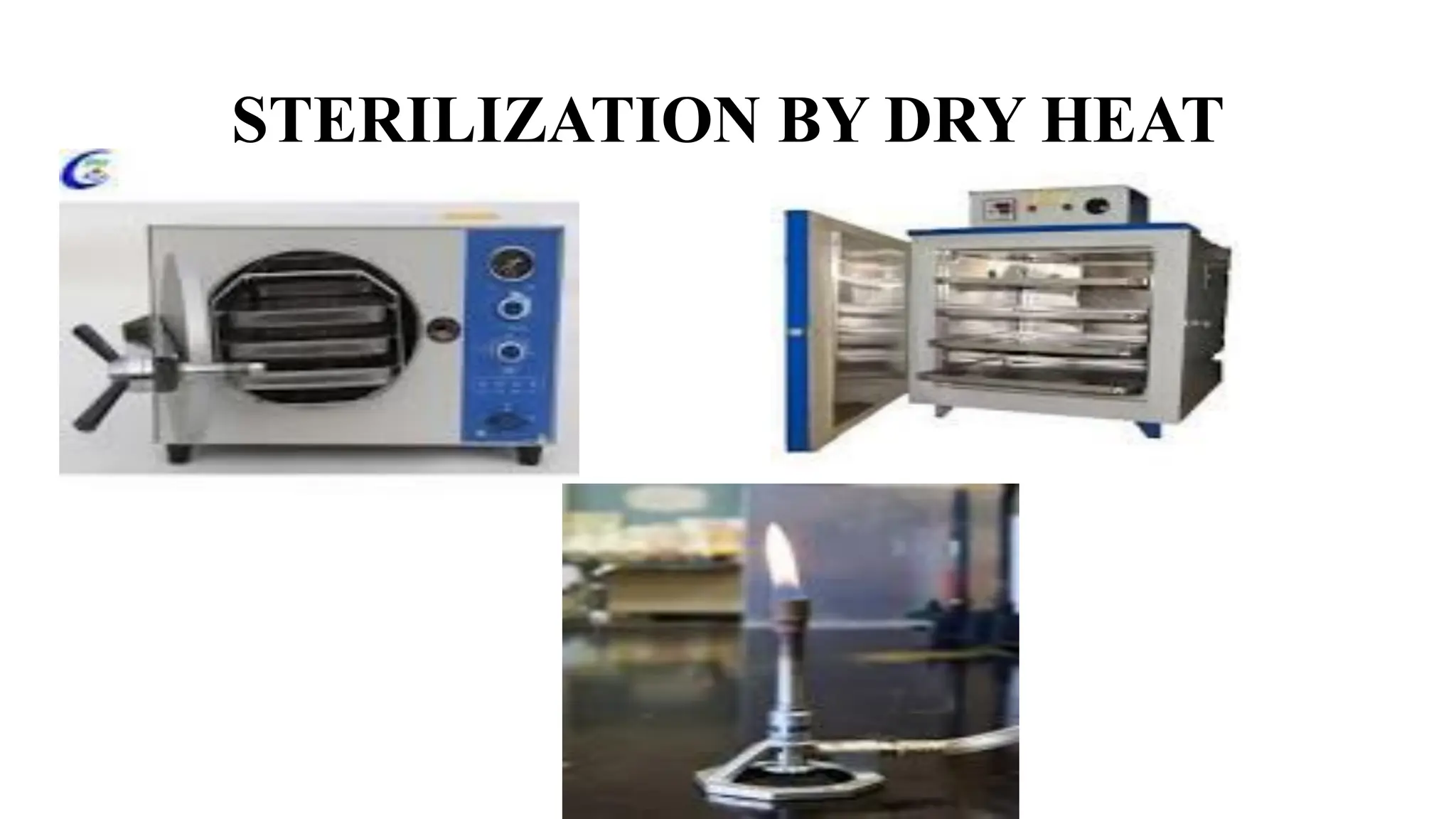
• Hot air oven
Destruction of microorganisms including spores occur after exposure to dry heat of
160◦c for 11 to 2 hours in sterilizing oven.
The oven has a thermostat to maintain the set temperature and a fan to circulate the
hot air evenly.
Hot air oven is used to sterilize dry glassware, forceps, scarpels, scissors, throat
swab and syringes (metallic).
Precaution: the oven must be loaded with spaces In them to allow free circulation of
air ( avoid overloading)
STERILIZATION BY DRY HEAT
STERILIZATION BY MOIST HEAT
• Moist heat in the form of water or steam is far more rapid and effectively in
sterilization than dry heat(because reactive water molecules denature protein
irreversibly).
• Autoclave, a sophisticated pressure cooker, is an instrument which ensures
sterility by killing all forms of microorganisms including spores.
• In its simplest form, it comprises a chamber in which the air is replaced with pure
saturated steam under pressure.
STERILIZATION BY MOIST HEAT
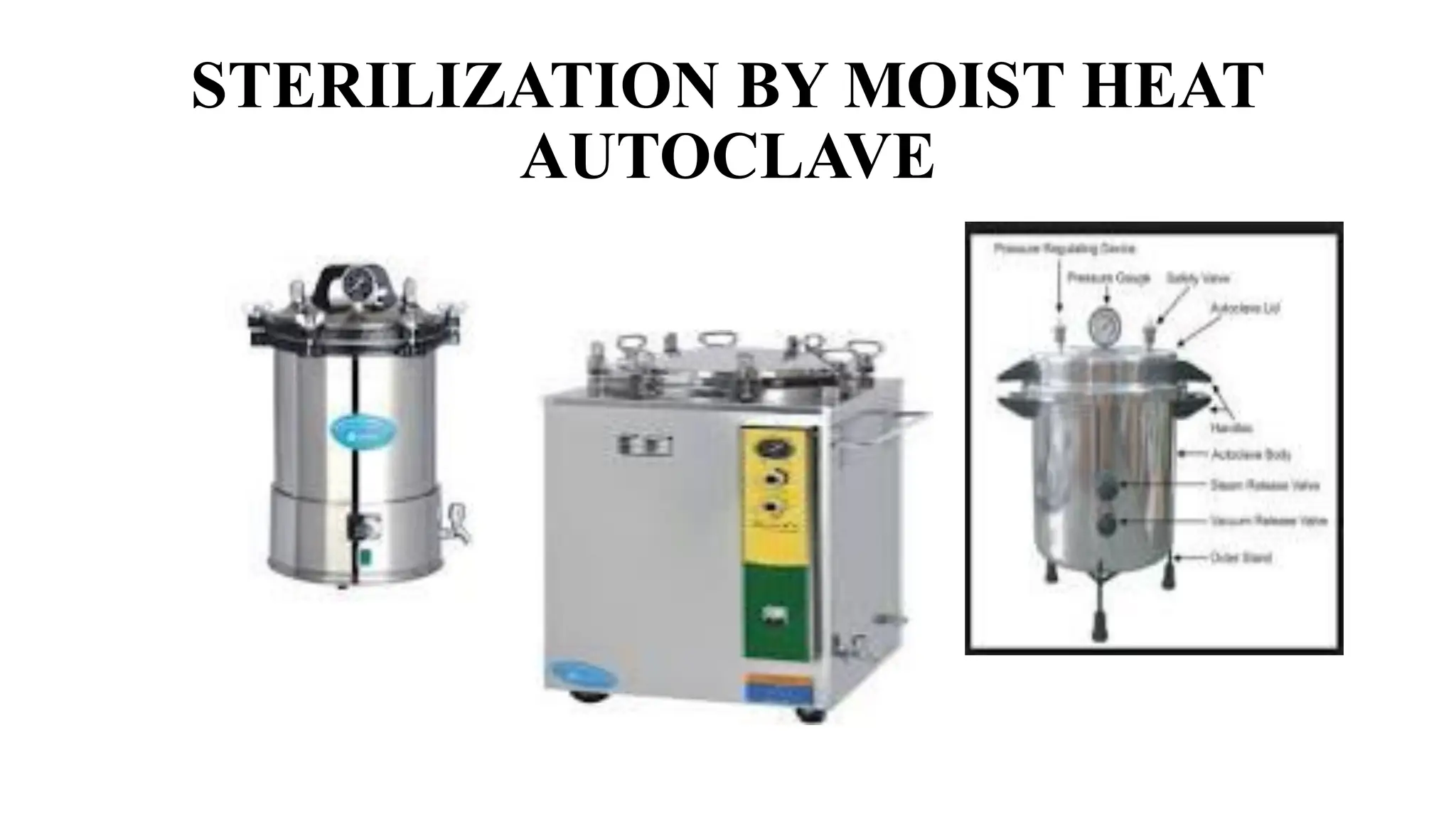
AUTOCLAVE
• Autoclave was invented by Charles Chamberland in 1884.
• Air is discharged to allow pressure to build up in the chamber. The pressure
generated increases the temperature of the steam.
• Autoclave is usually operated at 121◦ c which is achieved with a pressure of
15pounds per square inch for 15 minutes.
• Autoclave should be airtight and shouldn’t be overloaded to allow steam penetrate
all parts of the load.
• The latent heat moisture or steam has the ability to kill all vegetative cells
including the spores.
STERILIZATION BY MOIST HEAT
AUTOCLAVE
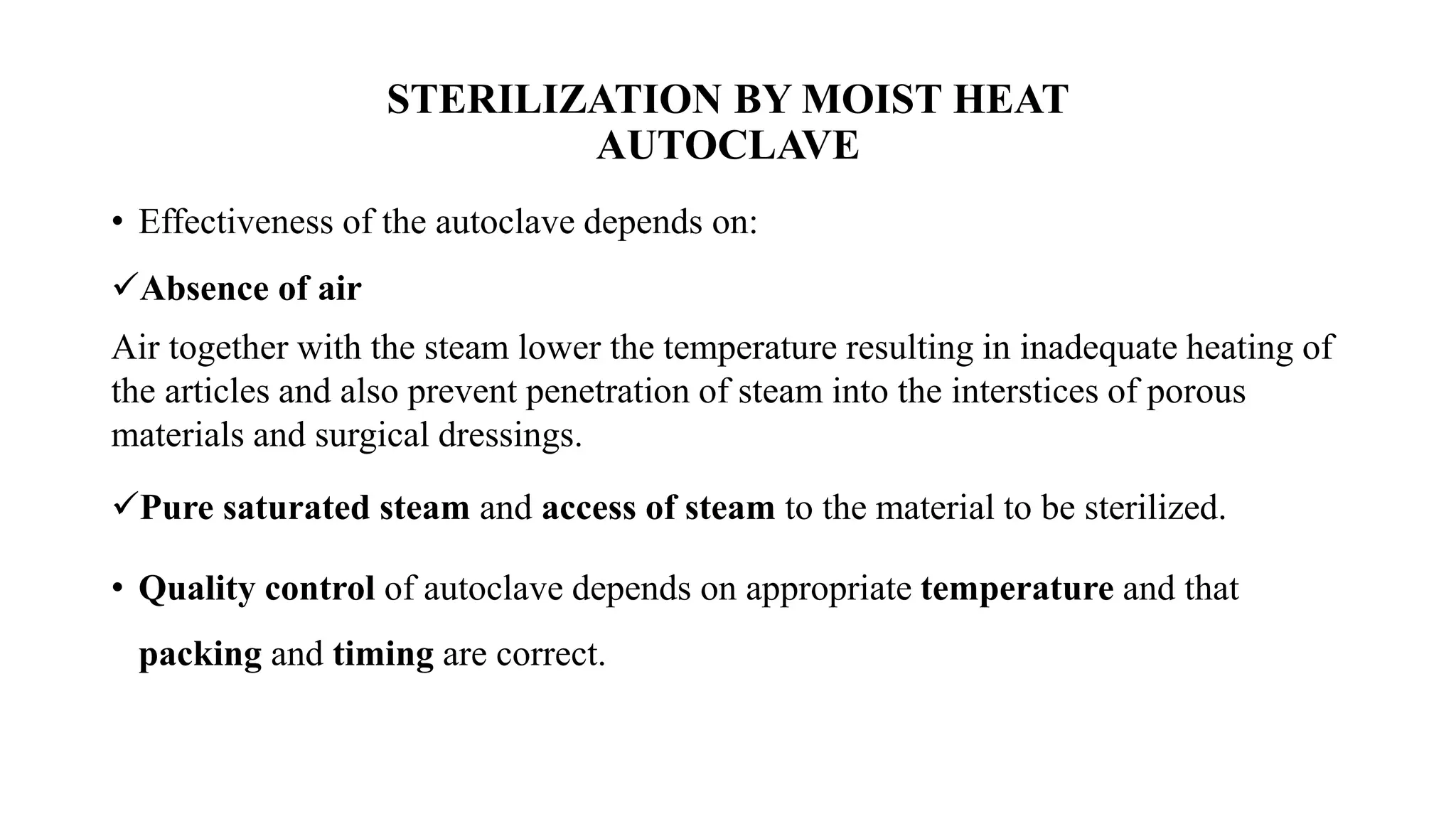
• Effectiveness of the autoclave depends on:
✓Absence of air
Air together with the steam lower the temperature resulting in inadequate heating of
the articles and also prevent penetration of steam into the interstices of porous
materials and surgical dressings.
✓Pure saturated steam and access of steam to the material to be sterilized.
• Quality control of autoclave depends on appropriate temperature and that
packing and timing are correct.
STERILIZATION BY MOIST HEAT
AUTOCLAVE
STERILIZATION BY MOIST HEAT
AUTOCLAVE
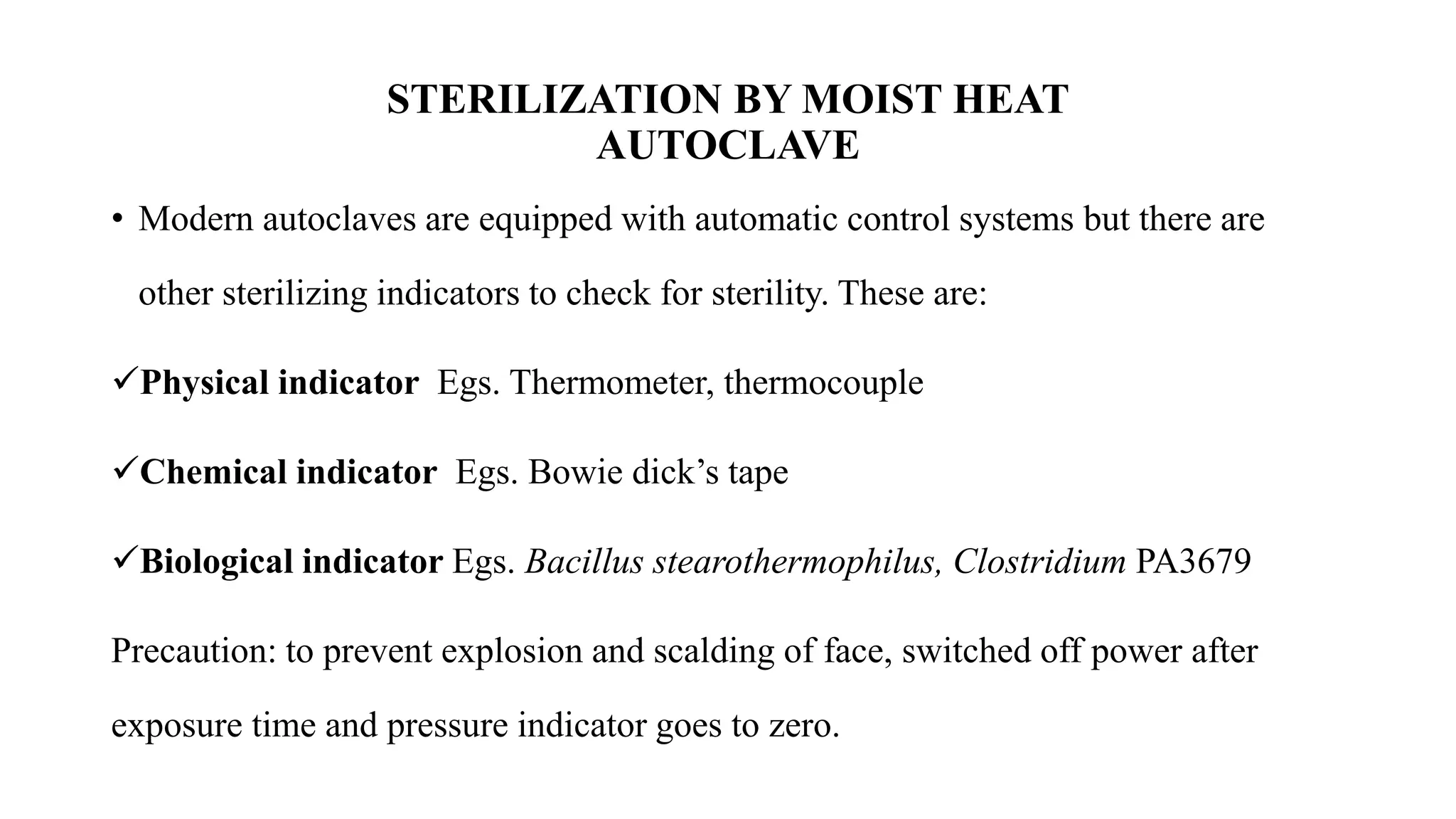
• Modern autoclaves are equipped with automatic control systems but there are
other sterilizing indicators to check for sterility. These are:
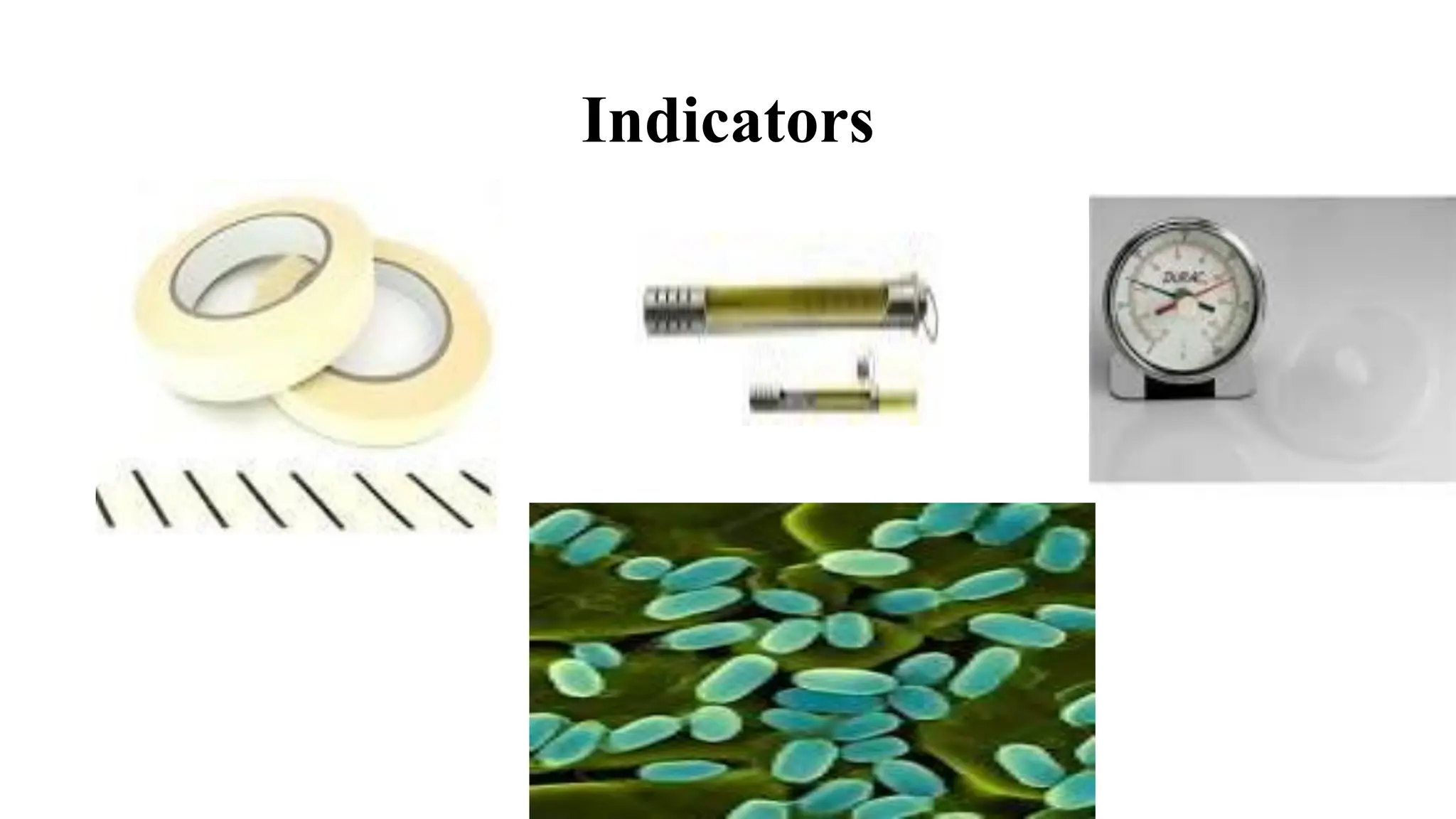
✓Physical indicator Egs. Thermometer, thermocouple
✓Chemical indicator Egs. Bowie dick’s tape
✓Biological indicator Egs. Bacillus stearothermophilus, Clostridium PA3679
Precaution: to prevent explosion and scalding of face, switched off power after
exposure time and pressure indicator goes to zero.
Indicators
STERILIZATION BY RADIATION
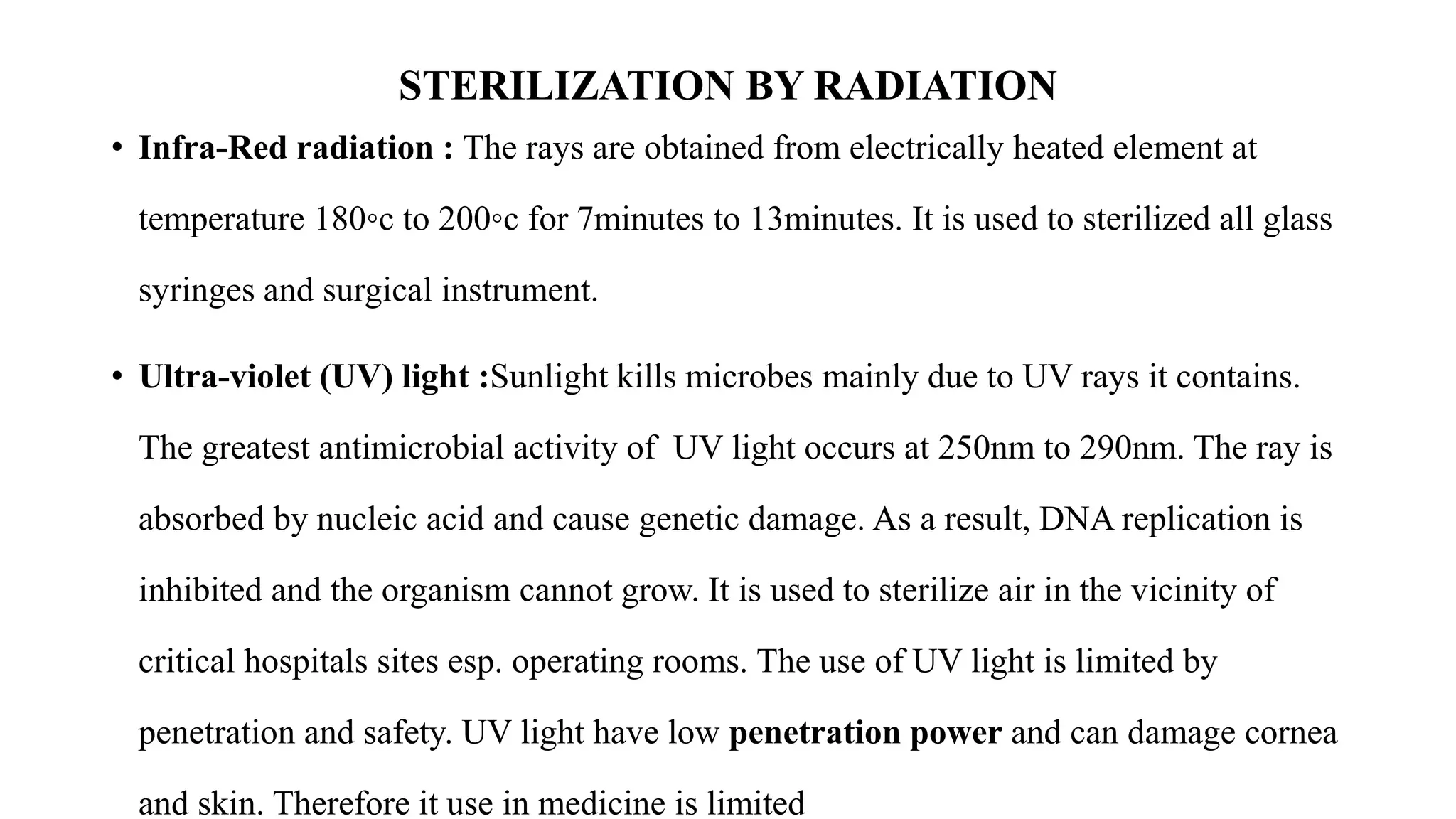
• Infra-Red radiation : The rays are obtained from electrically heated element at
temperature 180◦c to 200◦c for 7minutes to 13minutes. It is used to sterilized all glass
syringes and surgical instrument.
• Ultra-violet (UV) light :Sunlight kills microbes mainly due to UV rays it contains.
The greatest antimicrobial activity of UV light occurs at 250nm to 290nm. The ray is
absorbed by nucleic acid and cause genetic damage. As a result, DNA replication is
inhibited and the organism cannot grow. It is used to sterilize air in the vicinity of
critical hospitals sites esp. operating rooms. The use of UV light is limited by
penetration and safety. UV light have low penetration power and can damage cornea
and skin. Therefore it use in medicine is limited
STERILIZATION BY RADIATION
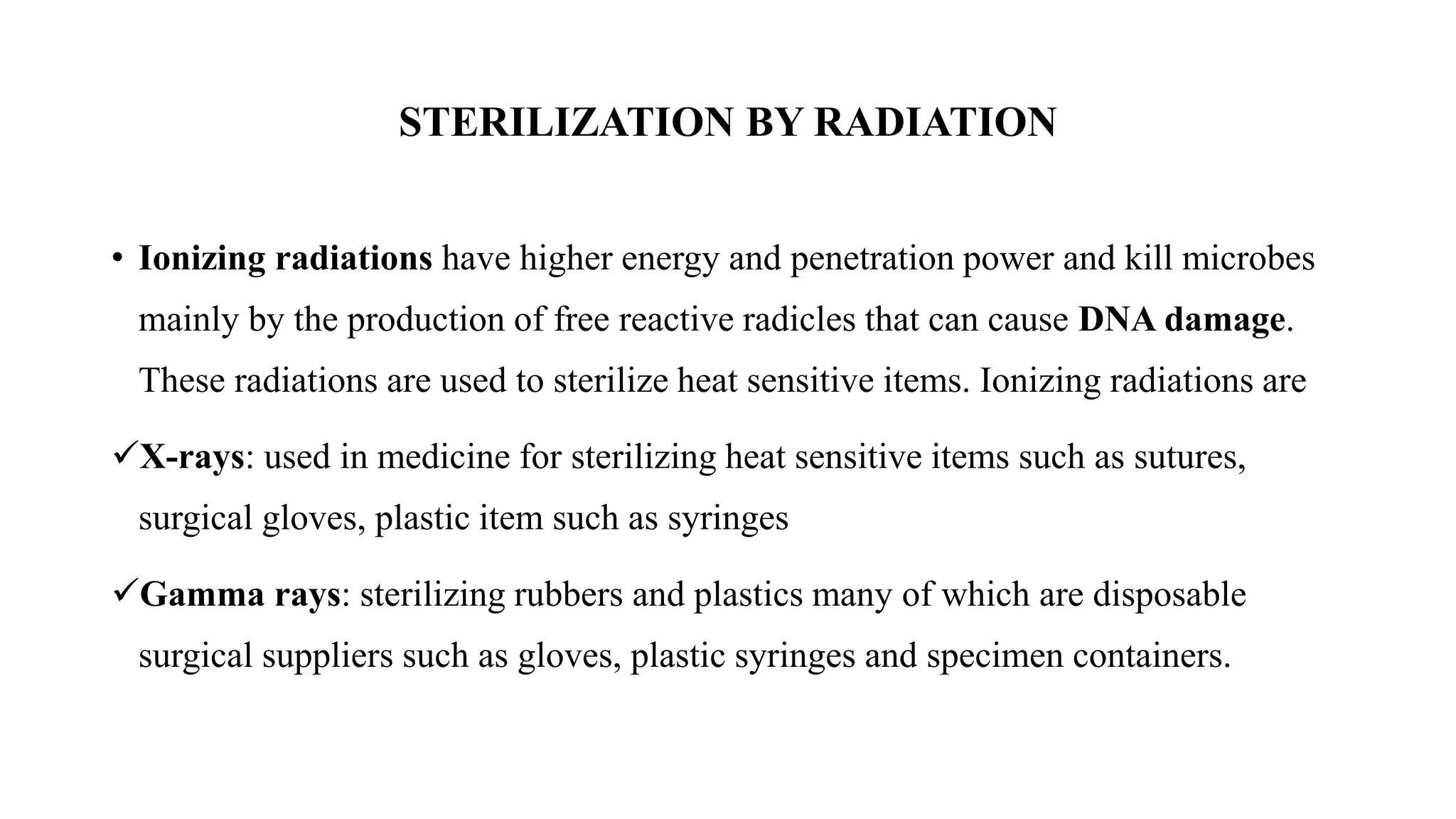
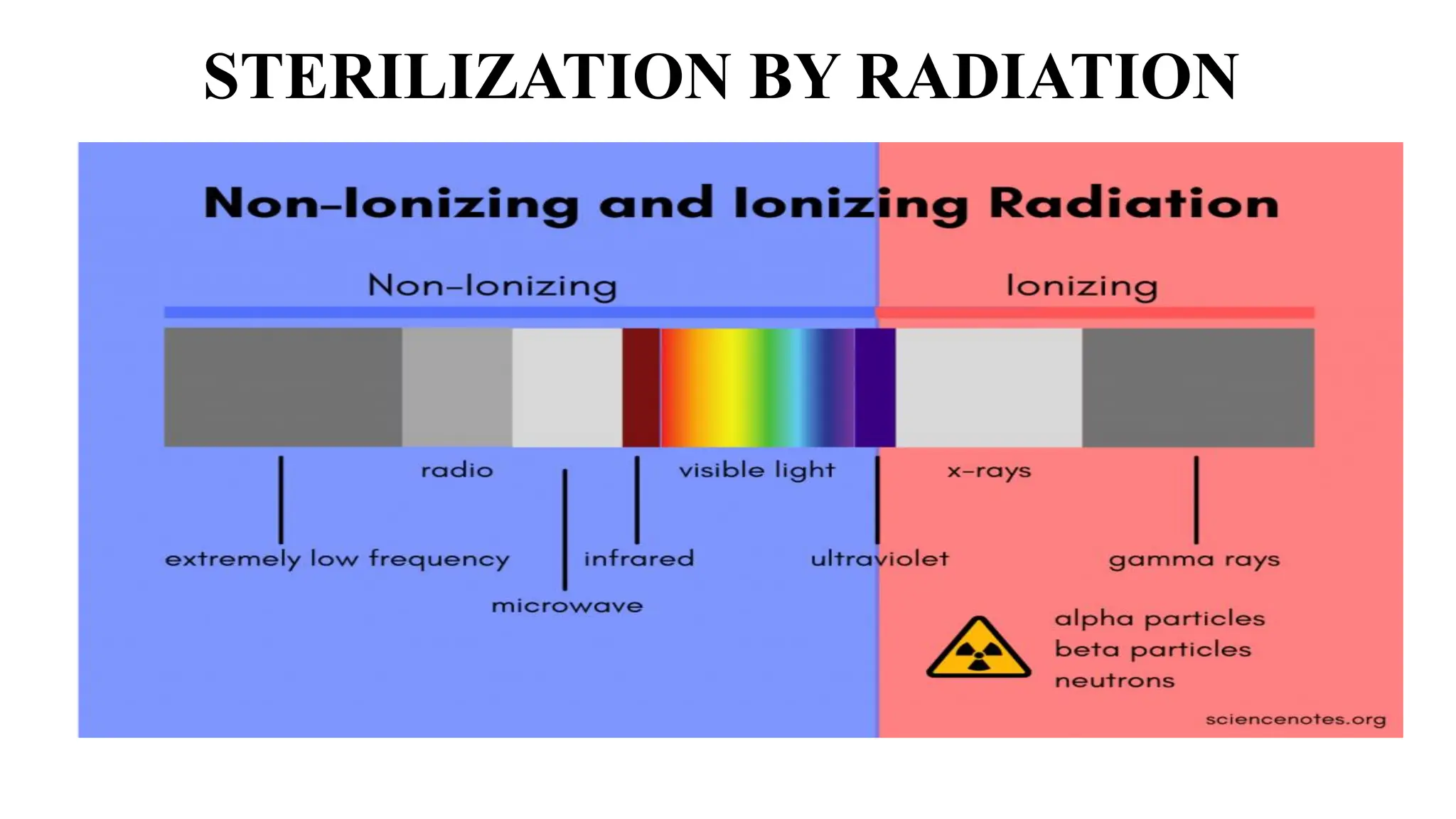
• Ionizing radiations have higher energy and penetration power and kill microbes
mainly by the production of free reactive radicles that can cause DNA damage.
These radiations are used to sterilize heat sensitive items. Ionizing radiations are
✓X-rays: used in medicine for sterilizing heat sensitive items such as sutures,
surgical gloves, plastic item such as syringes
✓Gamma rays: sterilizing rubbers and plastics many of which are disposable
surgical suppliers such as gloves, plastic syringes and specimen containers.
STERILIZATION BY RADIATION
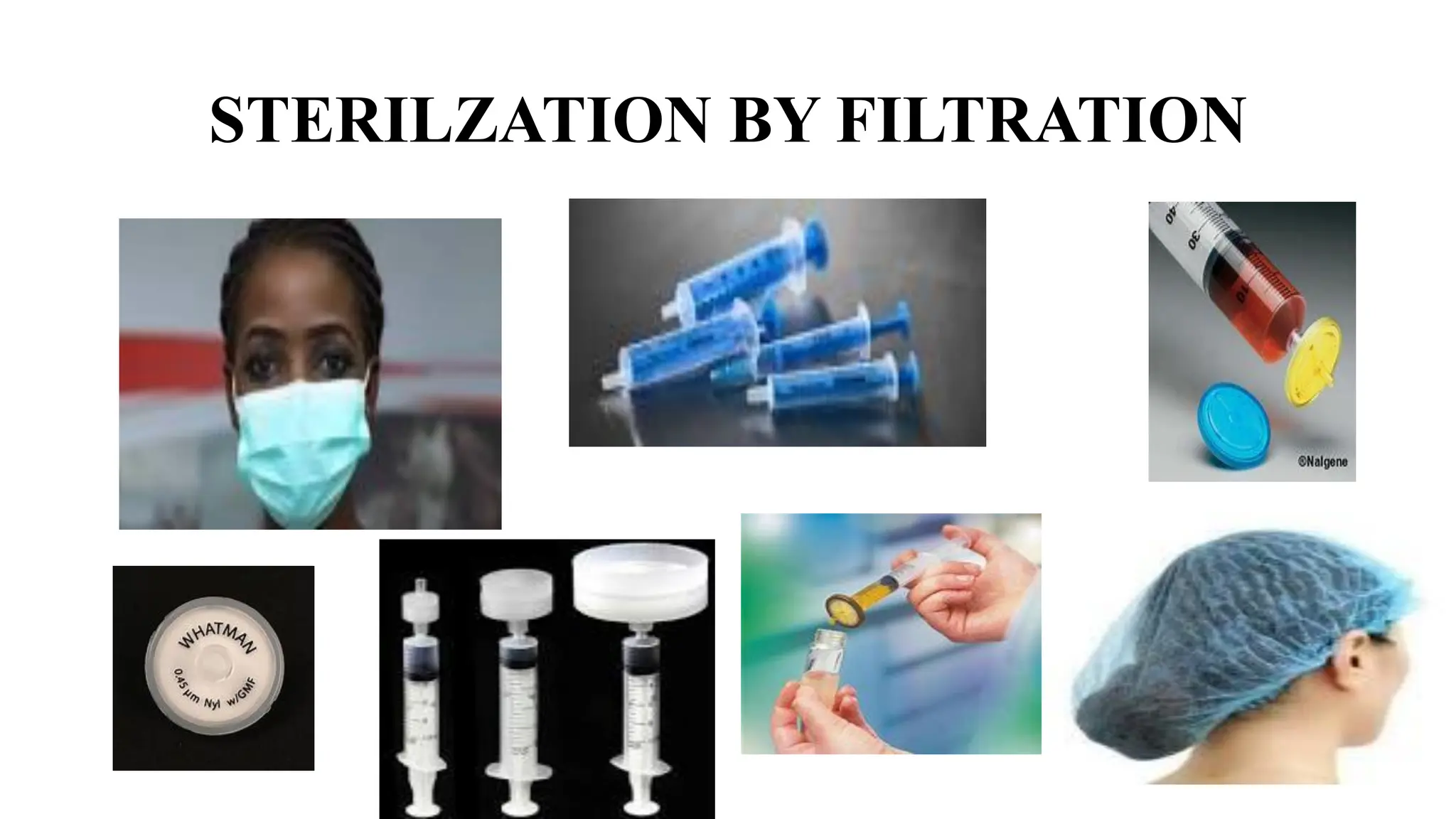
STERILZATION BY FILTRATION
• The preferred method of sterilizing certain solutions that are heat sensitive or heat
labile components such as serum, enzymes, proteins, immunoglobulins(antibiotics).
• Both live and dead microbes can be removed from liquid by pressure filtration.
• Special membrane filters usually cellulose membrane filters or nitrocellulose filters
of pore size 0.45um and 0.75um
• Filters work by physically or mechanically trapping particles larger than pore size and
by retaining smaller particles via electrostatic attraction of the particles to the filters.
• Head caps, nose masks and cotton plugs are used to sterilized the air in operating
STERILZATION BY FILTRATION
STERILZATION BY GASES
• A number of articles, particularly certain plastics and lensed instruments that are
damaged or destroyed by autoclaving can be sterilized by ethylene oxide.
• Ethylene oxide is an effective sterilizing agent for heat labile devices such as artificial
heart valves.
• Ethylene oxide sterilizer resembles autoclave and the loads are expose to 10%
ethylene oxide under controlled conditions of humidity.
• Exposure time is usually about 4 to 6 hours and must be followed by a prolonged
period of aeration to allow the gas to diffuse out of substances that have absorbed it.
• Formaldehyde gas is also used as sterilizing agent.
STERLIZATION BY LIQUID
• 0.26% peracetic acid
• The decontaminated item is first clean with disinfectant and then soaked in 0.26%
peracetic acid for 10 minutes.
• Later rinsed with water.
DISINFECTION
• Freeing an article from some or all its microorganisms which might cause
infection during its use.
• Disinfection is carried out when sterility is not necessary or sterilizing procedures
are impracticable.
• Simple procedures which ensure disinfections are cleansing, washing, ventilation
Main Types of Disinfection
• Cleaning
Good cleaning is the cheapest and most widely used method of disinfection. It is
necessary to reduce preliminary numbers of microbes, dirt, organic matter or grease that
might protect microbes. It must be followed by surface drying to reduce chances of
surviving microbes from multiplying in the moist environment.
• Heating (boiling at 100oc and below)
• Disinfection with chemical agents
These agents kill or inhibit many pathogenic microorganisms
CHEMICAL DISINFECTANTS
• Strong disinfectants
These are of high potency(concentration) and microbicidal
Suitable for application on non-living objects but generally too poisonous and irritants
on living tissues. Eg the use of peracetic acid for 5 minutes.
• Mild disinfectants(antiseptics)
Non-toxic for superficial application to living tissues, broken tissues, interior of wound
Microbicidal or microbistatic
REASONS FOR USING DISINFECTANTS
1. Decontaminate objects before disposal or reuse;
Faeces, urine, pus, sputum, potentially infective discharges are disposed off
Bed pans, dressings, clothing are dis-infected and washed for re-use.
2. To reduce microbial contamination in the environment.
Eg. Rooms vacated by TB and smallpox patients are disinfected with formaldehyde vapour
for 24 hours.
3. Disinfection of the skin of hands and operation sites
Hands washed with liquid soap or detergent containing 3% hexachlorophene.
COMMON LABORATORY DISINFECTANTS
• Alcohol – are protein denaturants that rapidly kill vegetative bacteria but not
spores when applied as aqueous solution in the range 70% to 95%
Solutions of 100% alcohol dehydrate organisms rapidly but failed to kill because
lethal process requires water molecules.
Examples are ethanol, isopropanol, methanol, methylated spirit
They are widely used as skin disinfectants before venipuncture, injection
COMMON LABORATORY DISINFECTANTS
• Phenols – one of the first effective disinfectants, employed by Joseph Lister in
1867 in his antiseptic surgical procedure.
• Potent protein denaturant and bactericidal agent.
• Phenol containing solutions kill wide range of vegetative bacterial cells and some
viruses(HIV)
• Examples are Lysol, sudol, hycolin, Izal
COMMON LABORATORY DISINFECTANTS
• Halogens
✓Iodine- an effective disinfectant that acts by oxidizing essential component of the
microbial cell
❖Tincture of iodine( iodine plus alcohol)- used to disinfect the skin pior to venipuncture
❖Iodophor (iodine plus surface active agents)- used to prepare the skin before sugery
✓Chlorine-releasing compounds- highly effective oxidizing agent. Egs are sodium
hypochlorite, milton
COMMON LABORATORY DISINFECTANTS
• Aldehydes
• Formalin and glutaraldehyde solutions are highly lethal to most microbes
• 4% formalin used as disinfectant
• 2% glutaraldehyde is use to disinfect fibre optic endoscopes
GASEOUS DISINFECTANTS
• Formaldehyde gas
• Ethylene oxide
OTHER DISINFECTION AGENTS
• Heavy metals – egs Hg, Cu, Ag, Zn,
(Arsenic use as germicide)
• Sonic vibrations
• Detergents (surface active agents)
• Low temperatures - 4◦ c, -20◦c, -70◦c
CENTRAL STERILE SUPPLY DEPARTMENT (CSSD)
• Serve a number of hospitals and supply majority of sterile articles
• Receive many used instruments and various items from each department that
require sterilization.
• Ensures reduction in cross infection risks
THEATRE STERILE SUPPLY UNITS
• Desirable in every hospital with busy operating theatre
• There is often rapid turnover on items required for surgery
Antimicrobial Susceptibility Profile
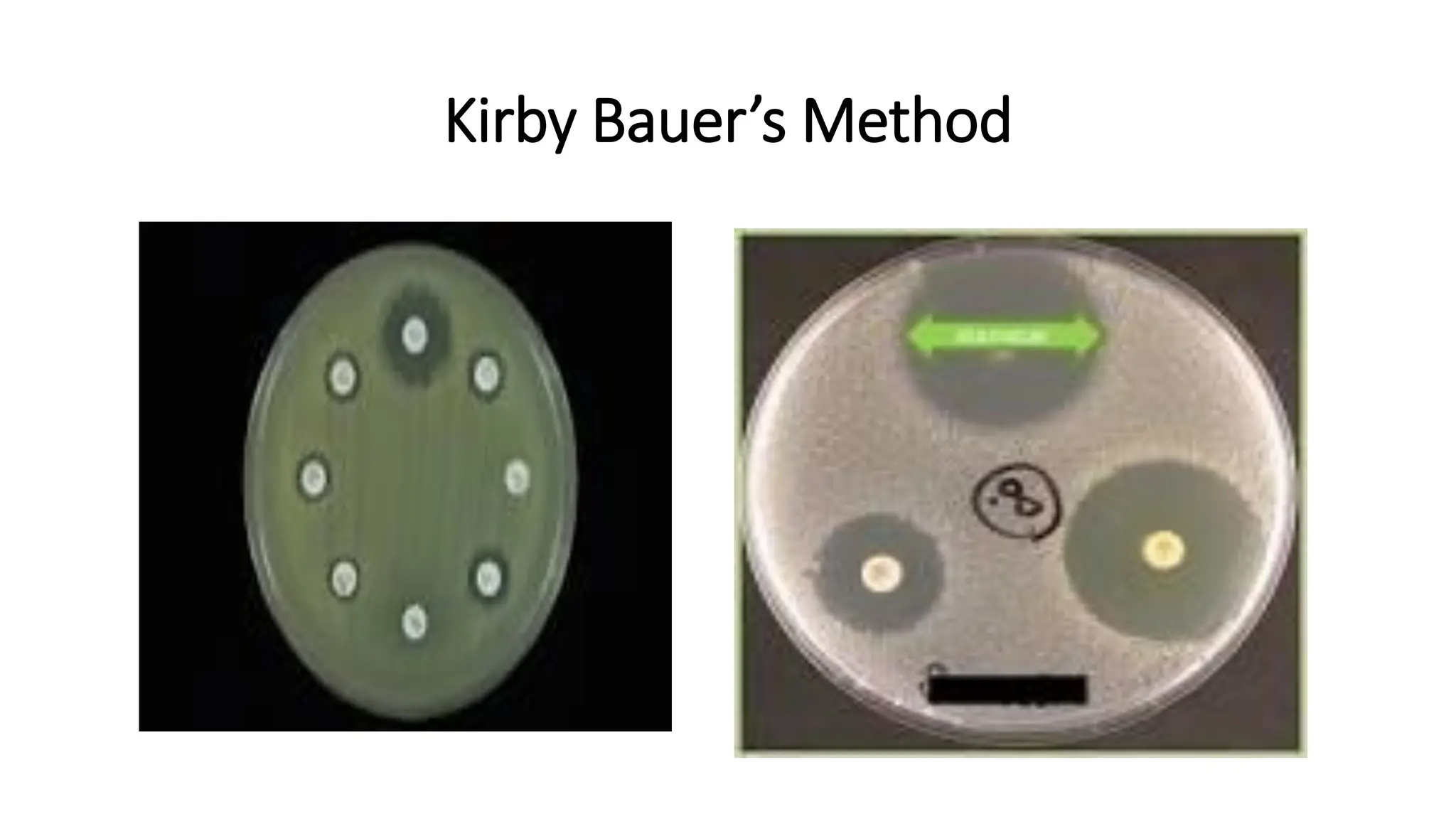
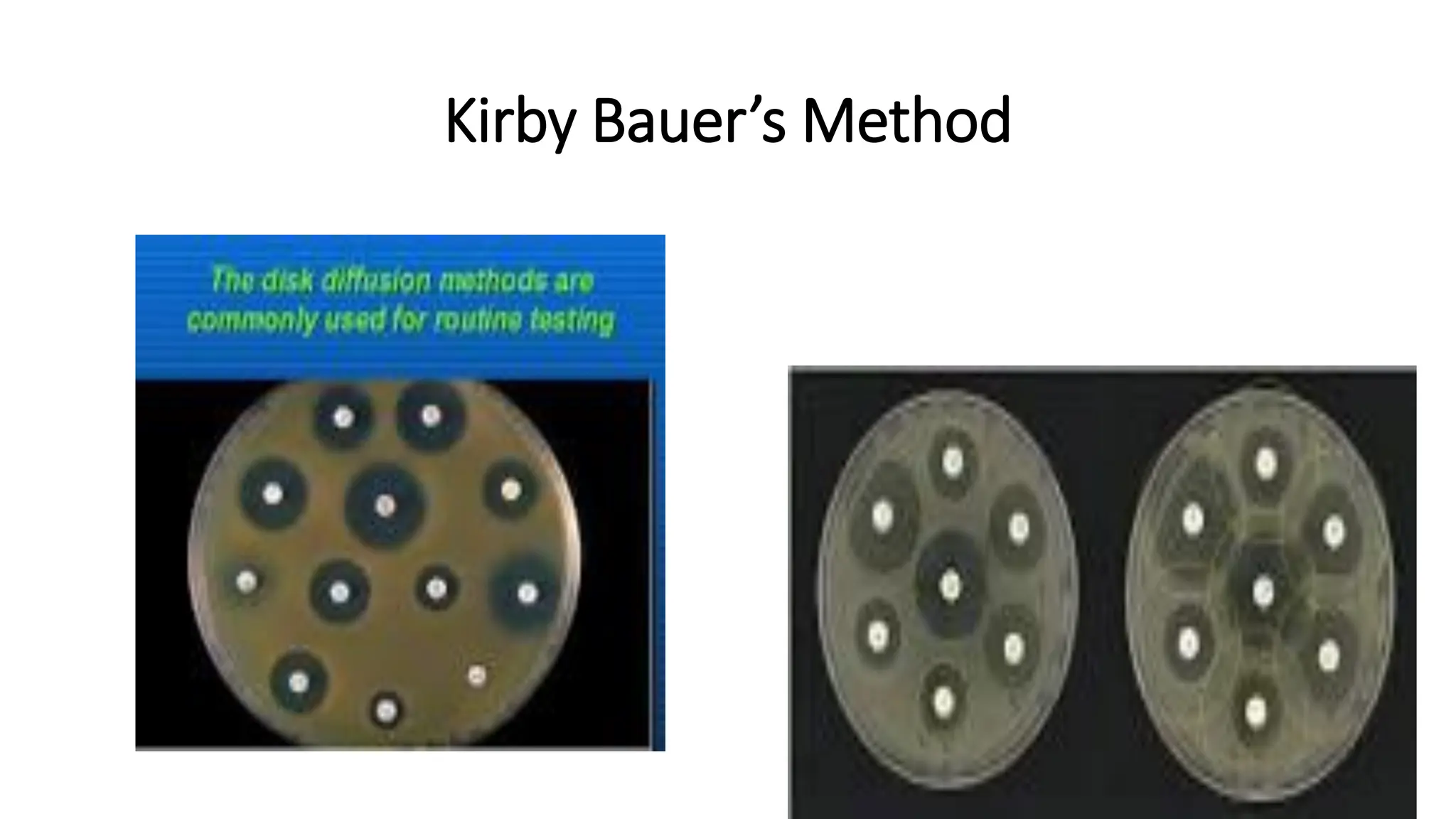
Kirby Bauer’s Method
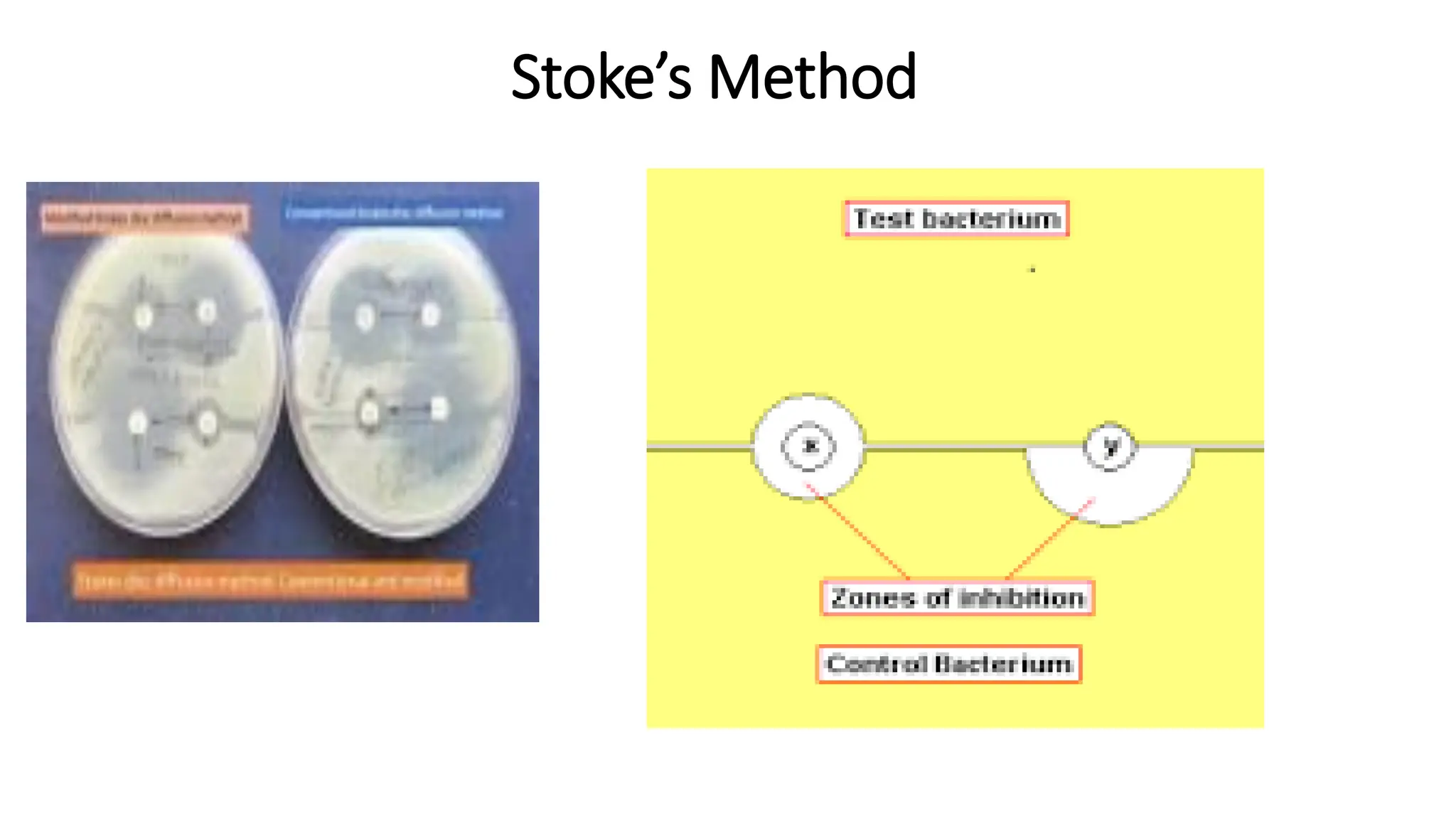
Stoke’s Method
THANK YOU

Practical_Tool, Media, Staining_Sterilisation_Disinfection_AST.pdf

  • 1.
  • 2.
  • 3.
    SOME COMMON VIRUSESAND THE DISEASES THEY CAUSE. • Rhinovirus – Cold.
  • 4.
    SOME COMMON VIRUSESAND THE DISEASES THEY CAUSE. Varicella zoster – Chicken pox.
  • 5.
    SOME COMMON VIRUSESAND THE DISEASES THEY CAUSE. • Rubella virus - German measles.
  • 6.
    SOME COMMON VIRUSESAND THE DISEASES THEY CAUSE. • Ebola virus – Ebola. • Herpes simplex virus – Genital herpes. • Human papillomavirus - Warts
  • 7.
    SOME COMMON VIRUSESAND THE DISEASES THEY CAUSE. • Rabies virus – rabies. • Polio virus – poliomyelitis. • HIV – AIDS.
  • 8.
    SOME COMMON FUNGIAND THE DISEASES THEY CAUSE • Candida albicans– oral thrush. • Candida albicans – vagina candidiasis. • Microsporum – tinea capitis.
  • 9.
    SOME COMMON FUNGIAND THE DISEASES THEY CAUSE. • Trichophyton rubrum – Ringworm. • Trichophyton mentagrophytes – Athlete foot.
  • 10.
    SOME COMMON PARASITESAND THE DISEASES THEY CAUSE. • Loa loa – loasis. • Onchocerca vulvolus – river blindness. • Ascaris lumbricoides – intestinal obstruction.
  • 11.
    SOME COMMON PARASITESAND THE DISEASES THEY CAUSE. • Dracunculis medinensis – dracunculiasis. • Wuchereria bancrofti – Elephantiasis. • Schistosoma hematobium – Bilharzia.
  • 12.
    SOME COMMON PARASITESAND THE DISEASES THEY CAUSE. • Plasmodium species – malaria. • Leishmania – cutaneous leishmaniasis.
  • 13.
    SOME COMMON BACTERIAAND THE DISEASES THEY CAUSE. • Neisseria gonorrhea – Gonorrhoea. • Staphylococcus aureus – Boils. • Mycobacterium ulcerans – buruli ulcer.
  • 14.
    SOME COMMON BACTERIAAND THE DISEASES THEY CAUSE. • Mycobacterium tuberculosis – tuberculosis. • Mycobacterium leprae – leprosy. • Treponema pallidum – syphilis.
  • 15.
    SOME COMMON BACTERIAAND THE DISEASES THEY CAUSE. • Streptococcus pyogenes – impetigo. • Vibro cholera – cholera. • Chlamydia trachomatis – chlamydia.
  • 16.
    Clinical Microbiology Tools andEquipment DEPARTMENT OF CLINICAL MICROBIOLOGY SCHOOL OF MEDICINE AND DENTISTRY KNUST
  • 17.
    Microscope • Based onthe type of microscope, different microscopes are used for different purposes. • They are primarily used for the observation of minute substances and organisms which cannot be observed with naked eyes.
  • 18.
  • 19.
    Autoclave • A pressurizedchamber used for the process of sterilization and disinfection by combining three factors: time, pressure, and steam • Autoclaves are mostly used for the sterilization of medical or laboratory equipment with the capacity of sterilizing a large number of materials at once. • They are commonly used for the preparation of culture media during laboratory applications. • 121ᵒC for 15 minutes for sterilization.
  • 20.
    Bunsen burner • Namedafter Robert Bunsen • It is commonly used for processes like sterilization, combustion, and heating. In medical or microbiology laboratories, it is commonly used for micro-loop sterilization.
  • 21.
    Hot air oven •An electrical device that is used for sterilization of medical equipment or samples using dry heat. • A hot air oven can be used to sterilize materials like glassware, metal equipment, powders, etc. • It allows for the destruction of microorganisms as well as bacterial spores. • 170ᵒC for 30 minutes, 160ᵒC for 60 minutes, and 150ᵒC for 150 minutes
  • 22.
    Incubator • A devicethat is used for the growth and maintenance of microorganisms and cultures. It provides an optimal temperature, pressure and moisture required for the growth of microorganisms. • Incubators have a wide range of applications including cell culture, pharmaceutical studies, hematological studies, and biochemical studies.
  • 23.
    Lamina hood/ Laminaair flow • This device creates a sterile environment with the flow of sterile air through a High- Efficiency Particulate Air (HEPA) filter and shortwave ultraviolet germicidal lamp that sterilizes the workstation. • is commonly used to conduct processes that are sensitive to contamination
  • 24.
    Water bath • Waterbaths are primarily used for heating samples under a controlled temperature. • These are suitable for heating chemicals that might be flammable under direct ignition.
  • 25.
    Gas jar • Bothanerobic and carbon dioxide jar are used in the microbiology lab to create an oxygen free environment or a specific percentage of carbon dioxide environment as a requirement for some specific organisms during their culturing.
  • 26.
    Petri dish The dishis used to culture cells and organisms by providing storage space and preventing them from getting contaminated. Since the dish is transparent, it is easy to observe the growth stages of microorganisms clearly.
  • 27.
    Centrifuge • Used inthe laboratories to separate fluids or liquids based on density. In research and clinical laboratories, centrifuges are often used for cell, organelle, virus, protein, and nucleic acid purification.
  • 28.
    Electronic balance • Usedin the measurements of the weights of small substances for reagents and chemical preparations in the lab.
  • 29.
    Swab stick • Usedto pick inoculum for microbial studies
  • 30.
    Micro Pipette andPasteur pipette • Used for measuring small volumes of fluids during microbial preparations.
  • 32.
  • 33.
    Objectives for today’spractical • You should be able to: ✓Define a medium, know the various forms and types of media ✓Know the factors that affect the selection of a media ✓Know some examples of media and the bacteria that can be cultured on
  • 34.
  • 35.
  • 36.
  • 37.
  • 38.
  • 39.
  • 40.
  • 41.
  • 42.
  • 43.
  • 44.
  • 45.
  • 46.
  • 47.
  • 48.
  • 49.
  • 50.
  • 51.
  • 52.
  • 53.
  • 54.
  • 55.
  • 56.
  • 57.
  • 58.
  • 59.
  • 60.
  • 61.
  • 62.
  • 63.
  • 64.
  • 65.
  • 66.
    CYSTINE LACTOSE ELECTROLYTEDEFICIENT AGAR (CLED)
  • 67.
    CYSTINE LACTOSE ELECTROLYTEDEFICIENT AGAR (CLED)
  • 68.
  • 69.
  • 70.
  • 71.
  • 72.
  • 73.
  • 74.
  • 75.
  • 76.
  • 77.
  • 78.
  • 79.
  • 80.
  • 81.
  • 82.
    Objective’s for thispractical You should be able to: • Know the types of bacteria based on certain parameters • Know the types of staining techniques
  • 83.
    Types of bacteriaand Staining techniques
  • 84.
  • 85.
    Characteristics of bacteria Singled celledmicrobes Lack true nucleus Few organelles ✓Ribosomes ✓Mitochondrion ✓Plasmid
  • 86.
    Characteristics of bacteria •Have cell wall (some are made up of peptidoglycan layer) • Single circular DNA • Exponential growth • Binary fission
  • 87.
    Classification of bacteria •Based on the gram reaction and shape • Based on their oxygen level of concentration • Based on temperature requirement • Based on pH preference
  • 88.
    oxygen level ofconcentration • Obligate aerobes • Obligate anaerobes • Facultative anaerobes (facultative aerobes) • Microaerophiles • Capnophiles • Aerotolerant
  • 89.
  • 90.
    pH preference • Acidophiles •Basophiles (Alkaline) • Neutrophiles
  • 91.
    Bacteria • Microscopic organism–observe under the microscope ✓Staining ➢To make the organism visible
  • 92.
    Types of BacterialStaining • Simple staining ✓Positive staining ▪ Methylene blue, methyl violet, basic fuschine ✓Negative staining ▪ Indian ink, nigrosin
  • 93.
    Types of BacterialStaining • Differential staining ✓Gram staining ▪ Gram positive and Gram negative bacteria ✓Ziel Neelson staining ✓Mycobacterium spp
  • 94.
    Gram Staining • Primarystain- crystal violet • Mordant –iodine • Decolouriser-acetone • Counterstain – neutral red ❖Wash it off after each stage
  • 95.
    Gram Staining • Gramreaction ✓Red – Gram negative ✓Purple- Gram positive • Gram shape ✓Rods ✓Cocci ❖cocci in pairs ❖Cocci in chains ❖Cocci in clusters
  • 96.
  • 97.
    Gram positive cocciin clusters Gram positive Rods
  • 98.
  • 99.
  • 100.
  • 101.
    STERILIZATION • Is thecomplete killing or removal of all living organisms from a particular location or material including spores. • Sterilis is latin word which means barren or inability to reproduce offspring. • Materials that come into contact with tissues are sterilized under conditions that allow a very wide margin of safety and the effectiveness of inactivation of microbes. • Is an absolute process
  • 102.
    STERILIZATION • The availabilityof reliable methods of sterilization has made possible for the major developments in surgery and intrusive medical techniques that have helped to revolutionize medicine over the past century. • The main aim of sterilization is to render the object safe for a procedure to be undertaken. • Sterilization is required for culture media, specimen containers, equipment like surgical, medical and haematological instruments
  • 103.
    METHODS OF STERILIZATION •Physical methods of sterilization ✓Heat ✓Radiation ✓Filtration • Sterilization by gas • Sterilization by liquid
  • 104.
    STERLIZATION BY HEAT •Heat kills by denaturing proteins, damaging cell membrane and enzymatic cleavage of DNA of microbes. • Two main forms of heat are ✓Dry heat ✓Moist heat • Materials sterilized under this method are heat resistant
  • 105.
    STERILIZATION BY DRYHEAT • Dry heat kills microbes by causing a destructive oxidation of essential cell constituents including spores. • Two forms of dry heat ✓Naked flame The simplest method of sterilization is to expose the surface a contaminated material to a naked flame. Bunsen burner is most often the source of naked flame. Used to sterilized materials that are heat resistant such as inoculating loops, forceps, spatulas, knife blades and needles
  • 106.
    STERILIZATION BY DRYHEAT • Hot air oven Destruction of microorganisms including spores occur after exposure to dry heat of 160◦c for 11 to 2 hours in sterilizing oven. The oven has a thermostat to maintain the set temperature and a fan to circulate the hot air evenly. Hot air oven is used to sterilize dry glassware, forceps, scarpels, scissors, throat swab and syringes (metallic). Precaution: the oven must be loaded with spaces In them to allow free circulation of air ( avoid overloading)
  • 107.
  • 108.
    STERILIZATION BY MOISTHEAT • Moist heat in the form of water or steam is far more rapid and effectively in sterilization than dry heat(because reactive water molecules denature protein irreversibly). • Autoclave, a sophisticated pressure cooker, is an instrument which ensures sterility by killing all forms of microorganisms including spores. • In its simplest form, it comprises a chamber in which the air is replaced with pure saturated steam under pressure.
  • 109.
    STERILIZATION BY MOISTHEAT AUTOCLAVE • Autoclave was invented by Charles Chamberland in 1884. • Air is discharged to allow pressure to build up in the chamber. The pressure generated increases the temperature of the steam. • Autoclave is usually operated at 121◦ c which is achieved with a pressure of 15pounds per square inch for 15 minutes. • Autoclave should be airtight and shouldn’t be overloaded to allow steam penetrate all parts of the load. • The latent heat moisture or steam has the ability to kill all vegetative cells including the spores.
  • 110.
    STERILIZATION BY MOISTHEAT AUTOCLAVE • Effectiveness of the autoclave depends on: ✓Absence of air Air together with the steam lower the temperature resulting in inadequate heating of the articles and also prevent penetration of steam into the interstices of porous materials and surgical dressings. ✓Pure saturated steam and access of steam to the material to be sterilized. • Quality control of autoclave depends on appropriate temperature and that packing and timing are correct.
  • 111.
    STERILIZATION BY MOISTHEAT AUTOCLAVE
  • 112.
    STERILIZATION BY MOISTHEAT AUTOCLAVE • Modern autoclaves are equipped with automatic control systems but there are other sterilizing indicators to check for sterility. These are: ✓Physical indicator Egs. Thermometer, thermocouple ✓Chemical indicator Egs. Bowie dick’s tape ✓Biological indicator Egs. Bacillus stearothermophilus, Clostridium PA3679 Precaution: to prevent explosion and scalding of face, switched off power after exposure time and pressure indicator goes to zero.
  • 113.
  • 115.
    STERILIZATION BY RADIATION •Infra-Red radiation : The rays are obtained from electrically heated element at temperature 180◦c to 200◦c for 7minutes to 13minutes. It is used to sterilized all glass syringes and surgical instrument. • Ultra-violet (UV) light :Sunlight kills microbes mainly due to UV rays it contains. The greatest antimicrobial activity of UV light occurs at 250nm to 290nm. The ray is absorbed by nucleic acid and cause genetic damage. As a result, DNA replication is inhibited and the organism cannot grow. It is used to sterilize air in the vicinity of critical hospitals sites esp. operating rooms. The use of UV light is limited by penetration and safety. UV light have low penetration power and can damage cornea and skin. Therefore it use in medicine is limited
  • 116.
    STERILIZATION BY RADIATION •Ionizing radiations have higher energy and penetration power and kill microbes mainly by the production of free reactive radicles that can cause DNA damage. These radiations are used to sterilize heat sensitive items. Ionizing radiations are ✓X-rays: used in medicine for sterilizing heat sensitive items such as sutures, surgical gloves, plastic item such as syringes ✓Gamma rays: sterilizing rubbers and plastics many of which are disposable surgical suppliers such as gloves, plastic syringes and specimen containers.
  • 117.
  • 118.
  • 119.
    STERILZATION BY FILTRATION •The preferred method of sterilizing certain solutions that are heat sensitive or heat labile components such as serum, enzymes, proteins, immunoglobulins(antibiotics). • Both live and dead microbes can be removed from liquid by pressure filtration. • Special membrane filters usually cellulose membrane filters or nitrocellulose filters of pore size 0.45um and 0.75um • Filters work by physically or mechanically trapping particles larger than pore size and by retaining smaller particles via electrostatic attraction of the particles to the filters. • Head caps, nose masks and cotton plugs are used to sterilized the air in operating
  • 120.
  • 121.
    STERILZATION BY GASES •A number of articles, particularly certain plastics and lensed instruments that are damaged or destroyed by autoclaving can be sterilized by ethylene oxide. • Ethylene oxide is an effective sterilizing agent for heat labile devices such as artificial heart valves. • Ethylene oxide sterilizer resembles autoclave and the loads are expose to 10% ethylene oxide under controlled conditions of humidity. • Exposure time is usually about 4 to 6 hours and must be followed by a prolonged period of aeration to allow the gas to diffuse out of substances that have absorbed it. • Formaldehyde gas is also used as sterilizing agent.
  • 122.
    STERLIZATION BY LIQUID •0.26% peracetic acid • The decontaminated item is first clean with disinfectant and then soaked in 0.26% peracetic acid for 10 minutes. • Later rinsed with water.
  • 123.
    DISINFECTION • Freeing anarticle from some or all its microorganisms which might cause infection during its use. • Disinfection is carried out when sterility is not necessary or sterilizing procedures are impracticable. • Simple procedures which ensure disinfections are cleansing, washing, ventilation
  • 124.
    Main Types ofDisinfection • Cleaning Good cleaning is the cheapest and most widely used method of disinfection. It is necessary to reduce preliminary numbers of microbes, dirt, organic matter or grease that might protect microbes. It must be followed by surface drying to reduce chances of surviving microbes from multiplying in the moist environment. • Heating (boiling at 100oc and below) • Disinfection with chemical agents These agents kill or inhibit many pathogenic microorganisms
  • 125.
    CHEMICAL DISINFECTANTS • Strongdisinfectants These are of high potency(concentration) and microbicidal Suitable for application on non-living objects but generally too poisonous and irritants on living tissues. Eg the use of peracetic acid for 5 minutes. • Mild disinfectants(antiseptics) Non-toxic for superficial application to living tissues, broken tissues, interior of wound Microbicidal or microbistatic
  • 126.
    REASONS FOR USINGDISINFECTANTS 1. Decontaminate objects before disposal or reuse; Faeces, urine, pus, sputum, potentially infective discharges are disposed off Bed pans, dressings, clothing are dis-infected and washed for re-use. 2. To reduce microbial contamination in the environment. Eg. Rooms vacated by TB and smallpox patients are disinfected with formaldehyde vapour for 24 hours. 3. Disinfection of the skin of hands and operation sites Hands washed with liquid soap or detergent containing 3% hexachlorophene.
  • 127.
    COMMON LABORATORY DISINFECTANTS •Alcohol – are protein denaturants that rapidly kill vegetative bacteria but not spores when applied as aqueous solution in the range 70% to 95% Solutions of 100% alcohol dehydrate organisms rapidly but failed to kill because lethal process requires water molecules. Examples are ethanol, isopropanol, methanol, methylated spirit They are widely used as skin disinfectants before venipuncture, injection
  • 128.
    COMMON LABORATORY DISINFECTANTS •Phenols – one of the first effective disinfectants, employed by Joseph Lister in 1867 in his antiseptic surgical procedure. • Potent protein denaturant and bactericidal agent. • Phenol containing solutions kill wide range of vegetative bacterial cells and some viruses(HIV) • Examples are Lysol, sudol, hycolin, Izal
  • 129.
    COMMON LABORATORY DISINFECTANTS •Halogens ✓Iodine- an effective disinfectant that acts by oxidizing essential component of the microbial cell ❖Tincture of iodine( iodine plus alcohol)- used to disinfect the skin pior to venipuncture ❖Iodophor (iodine plus surface active agents)- used to prepare the skin before sugery ✓Chlorine-releasing compounds- highly effective oxidizing agent. Egs are sodium hypochlorite, milton
  • 130.
    COMMON LABORATORY DISINFECTANTS •Aldehydes • Formalin and glutaraldehyde solutions are highly lethal to most microbes • 4% formalin used as disinfectant • 2% glutaraldehyde is use to disinfect fibre optic endoscopes
  • 131.
  • 132.
    OTHER DISINFECTION AGENTS •Heavy metals – egs Hg, Cu, Ag, Zn, (Arsenic use as germicide) • Sonic vibrations • Detergents (surface active agents) • Low temperatures - 4◦ c, -20◦c, -70◦c
  • 133.
    CENTRAL STERILE SUPPLYDEPARTMENT (CSSD) • Serve a number of hospitals and supply majority of sterile articles • Receive many used instruments and various items from each department that require sterilization. • Ensures reduction in cross infection risks
  • 134.
    THEATRE STERILE SUPPLYUNITS • Desirable in every hospital with busy operating theatre • There is often rapid turnover on items required for surgery
  • 135.
  • 136.
  • 137.
  • 138.
  • 139.
  • 140.