AN INTRODUCTION TO SAFE
PRACTICE
What do we mean by the terms ‘Safe
Practice’ and ‘Health and Safety’?
Safe practice
refers to how we
look after and
take responsibility
for our own
behaviour, body
and actions and
that of the people
we are working
with.

Health and Safety is
the legal term for
policies, which are
there to ensure the
establishment and
individual recognise
potential hazards and
risks and put in place
measures to prevent
harm occurring.
Your Safe Practice pack will help you to
recognise the need for being aware of
safe practice and the health and safety
issues, which concern you as dancers.
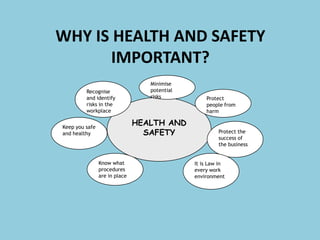
WHY IS HEALTH AND SAFETY
IMPORTANT?
Recognise
and identify
risks in the
workplace

Minimise
potential
risks

HEALTH AND
SAFETY

Keep you safe
and healthy

Know what
procedures
are in place

Protect
people from
harm

Protect the
success of
the business
It is Law in
every work
environment
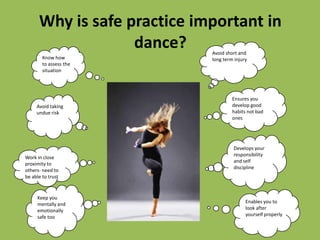
Why is safe practice important in
dance?
Know how
to assess the
situation

Avoid taking
undue risk

Work in close
proximity to
others- need to
be able to trust

Keep you
mentally and
emotionally
safe too

Avoid short and
long term injury

Ensures you
develop good
habits not bad
ones

Develops your
responsibility
and self
discipline

Enables you to
look after
yourself properly
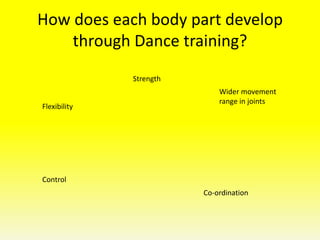
How does each body part develop
through Dance training?
Strength
Flexibility

Wider movement
range in joints

Control
Co-ordination
Warm Up
http://www.youtube.com/watch?v=R7CqWO1vj0M

A warm up is the act of preparing for an athletic event or workout
by exercising or practicing for a short time beforehand.

Warming up appropriately and adequately allows the body to adjust from a
state of rest to that of exercise and, if carried out successfully, improves
performance and significantly reduces the chances of injury

The objective of the warm-up is to raise total body temperature and
muscle temperature to prepare the entire body for vigorous activity.
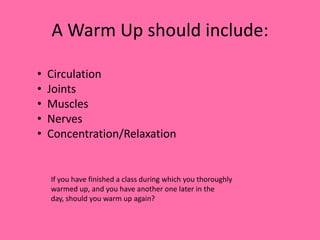
A Warm Up should include:
•
•
•
•
•

Circulation
Joints
Muscles
Nerves
Concentration/Relaxation

If you have finished a class during which you thoroughly
warmed up, and you have another one later in the
day, should you warm up again?
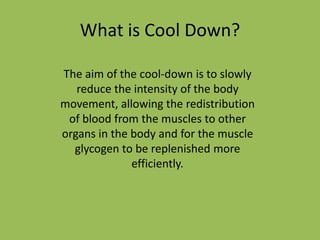
What is Cool Down?
The aim of the cool-down is to slowly
reduce the intensity of the body
movement, allowing the redistribution
of blood from the muscles to other
organs in the body and for the muscle
glycogen to be replenished more
efficiently.
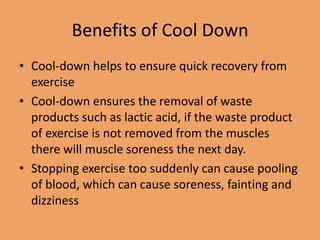
Benefits of Cool Down
• Cool-down helps to ensure quick recovery from
exercise
• Cool-down ensures the removal of waste
products such as lactic acid, if the waste product
of exercise is not removed from the muscles
there will muscle soreness the next day.
• Stopping exercise too suddenly can cause pooling
of blood, which can cause soreness, fainting and
dizziness
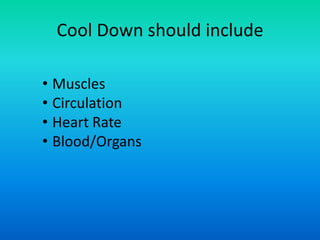
Cool Down should include
• Muscles
• Circulation
• Heart Rate
• Blood/Organs
Quick Quiz!!

An introduction to safe practice

  • 1.
    AN INTRODUCTION TOSAFE PRACTICE
  • 2.
    What do wemean by the terms ‘Safe Practice’ and ‘Health and Safety’? Safe practice refers to how we look after and take responsibility for our own behaviour, body and actions and that of the people we are working with. Health and Safety is the legal term for policies, which are there to ensure the establishment and individual recognise potential hazards and risks and put in place measures to prevent harm occurring.
  • 3.
    Your Safe Practicepack will help you to recognise the need for being aware of safe practice and the health and safety issues, which concern you as dancers.
  • 4.
    WHY IS HEALTHAND SAFETY IMPORTANT? Recognise and identify risks in the workplace Minimise potential risks HEALTH AND SAFETY Keep you safe and healthy Know what procedures are in place Protect people from harm Protect the success of the business It is Law in every work environment
  • 5.
    Why is safepractice important in dance? Know how to assess the situation Avoid taking undue risk Work in close proximity to others- need to be able to trust Keep you mentally and emotionally safe too Avoid short and long term injury Ensures you develop good habits not bad ones Develops your responsibility and self discipline Enables you to look after yourself properly
  • 6.
    How does eachbody part develop through Dance training? Strength Flexibility Wider movement range in joints Control Co-ordination
  • 7.
    Warm Up http://www.youtube.com/watch?v=R7CqWO1vj0M A warmup is the act of preparing for an athletic event or workout by exercising or practicing for a short time beforehand. Warming up appropriately and adequately allows the body to adjust from a state of rest to that of exercise and, if carried out successfully, improves performance and significantly reduces the chances of injury The objective of the warm-up is to raise total body temperature and muscle temperature to prepare the entire body for vigorous activity.
  • 8.
    A Warm Upshould include: • • • • • Circulation Joints Muscles Nerves Concentration/Relaxation If you have finished a class during which you thoroughly warmed up, and you have another one later in the day, should you warm up again?
  • 9.
    What is CoolDown? The aim of the cool-down is to slowly reduce the intensity of the body movement, allowing the redistribution of blood from the muscles to other organs in the body and for the muscle glycogen to be replenished more efficiently.
  • 10.
    Benefits of CoolDown • Cool-down helps to ensure quick recovery from exercise • Cool-down ensures the removal of waste products such as lactic acid, if the waste product of exercise is not removed from the muscles there will muscle soreness the next day. • Stopping exercise too suddenly can cause pooling of blood, which can cause soreness, fainting and dizziness
  • 11.
    Cool Down shouldinclude • Muscles • Circulation • Heart Rate • Blood/Organs
  • 12.