Warm Up & Cool Down
Instructions
• Please take notes on the following information
• Record your notes on loose leaf paper
• Come to class prepared, with your own written
notes
• Be prepared to use your notes for class activities
and discussions
What is a Warm Up?
• Different movements/exercises involved
• Mimic movements you will be performing in
your activity.
• Recommended to do before you begin activity
• Dynamic Movements
Dynamic Movement Examples
• Jogging
• Arm Circles (forward/backward)
• High knees
• Butt kicks
• Grapevine
• Side shuffle
• Skipping with high knees
• Open the gate
• Floor sweeps
• Most any movement that prepares muscles
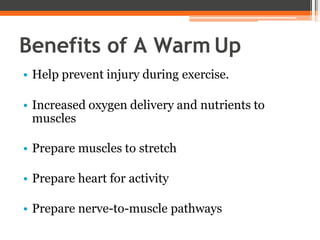
Benefits of A Warm Up
• Help prevent injury during exercise.
• Increased oxygen delivery and nutrients to
muscles
• Prepare muscles to stretch
• Prepare heart for activity
• Prepare nerve-to-muscle pathways
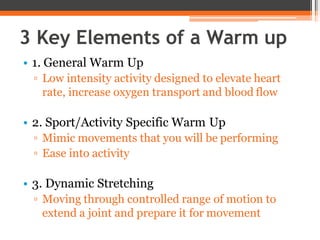
3 Key Elements of a Warm up
• 1. General Warm Up
▫ Low intensity activity designed to elevate heart
rate, increase oxygen transport and blood flow
• 2. Sport/Activity Specific Warm Up
▫ Mimic movements that you will be performing
▫ Ease into activity
• 3. Dynamic Stretching
▫ Moving through controlled range of motion to
extend a joint and prepare it for movement
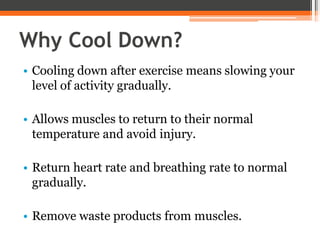
Why Cool Down?
• Cooling down after exercise means slowing your
level of activity gradually.
• Allows muscles to return to their normal
temperature and avoid injury.
• Return heart rate and breathing rate to normal
gradually.
• Remove waste products from muscles.
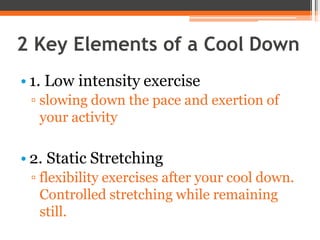
2 Key Elements of a Cool Down
• 1. Low intensity exercise
▫ slowing down the pace and exertion of
your activity
• 2. Static Stretching
▫ flexibility exercises after your cool down.
Controlled stretching while remaining
still.

Lecture 6.pptx about warm up and it's types

  • 1.
    Warm Up &Cool Down
  • 2.
    Instructions • Please takenotes on the following information • Record your notes on loose leaf paper • Come to class prepared, with your own written notes • Be prepared to use your notes for class activities and discussions
  • 3.
    What is aWarm Up? • Different movements/exercises involved • Mimic movements you will be performing in your activity. • Recommended to do before you begin activity • Dynamic Movements
  • 4.
    Dynamic Movement Examples •Jogging • Arm Circles (forward/backward) • High knees • Butt kicks • Grapevine • Side shuffle • Skipping with high knees • Open the gate • Floor sweeps • Most any movement that prepares muscles
  • 5.
    Benefits of AWarm Up • Help prevent injury during exercise. • Increased oxygen delivery and nutrients to muscles • Prepare muscles to stretch • Prepare heart for activity • Prepare nerve-to-muscle pathways
  • 6.
    3 Key Elementsof a Warm up • 1. General Warm Up ▫ Low intensity activity designed to elevate heart rate, increase oxygen transport and blood flow • 2. Sport/Activity Specific Warm Up ▫ Mimic movements that you will be performing ▫ Ease into activity • 3. Dynamic Stretching ▫ Moving through controlled range of motion to extend a joint and prepare it for movement
  • 7.
    Why Cool Down? •Cooling down after exercise means slowing your level of activity gradually. • Allows muscles to return to their normal temperature and avoid injury. • Return heart rate and breathing rate to normal gradually. • Remove waste products from muscles.
  • 8.
    2 Key Elementsof a Cool Down • 1. Low intensity exercise ▫ slowing down the pace and exertion of your activity • 2. Static Stretching ▫ flexibility exercises after your cool down. Controlled stretching while remaining still.