10 STEPS
to Creating a
Corporate Phishing
Awareness Program
Phishing awareness programs help
enterprises protect themselves
from phishing scams and breaches.
It’s a highly effective way of
educating employees and helping
them spot phishing attacks.
The ins and outs of
such a program depend
very much on the
company, but here’s a
basic outline of a typical
program to give you an
idea of what’s involved.
Write a phishing e-mail
that is realistic, current,
and relevant and
isn’t psychologically
damaging to your staff
Run that e-mail
through the appropriate
departments (such as
HR and legal) to get
approval, which will
likely involve edits
and new iterations
Ensure your lists are
updated—adding new
hires and removing
those who have left
the company
Prepare a proper
educational landing page
for people who click
on the phish
Load the system you
will use with the e-mail
lists, phishing e-mail,
and landing pages
Schedule and test the
sending of the e-mail
Ensure the e-mail is sent
without any problems
Collect all data, which
might include number
of clicks, number of
people who report the
phish, and so on
26
15 8
Report on the data,
giving information
in regard to positive
or negative trends
26
15 8
Repeat the process
each month or quarter
As you can see, this is not a part-time
job. Maybe you can hire someone to
help you run this program internally or
you might have someone on staff that
is perfect for the job. But if you don’t
have the staff, skill, or desire
to run a phishing program
internally then a consultant
will be able to run it for you.
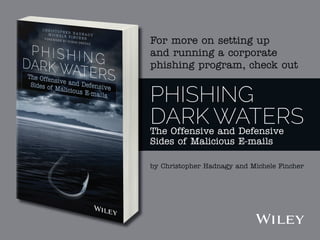
For more on setting up
and running a corporate
phishing program, check out
PHISHING
DARK WATERSThe Offensive and Defensive
Sides of Malicious E-mails
by Christopher Hadnagy and Michele Fincher

10 Steps to Creating a Corporate Phishing Awareness Program

  • 1.
    10 STEPS to Creatinga Corporate Phishing Awareness Program
  • 2.
    Phishing awareness programshelp enterprises protect themselves from phishing scams and breaches. It’s a highly effective way of educating employees and helping them spot phishing attacks.
  • 3.
    The ins andouts of such a program depend very much on the company, but here’s a basic outline of a typical program to give you an idea of what’s involved.
  • 4.
    Write a phishinge-mail that is realistic, current, and relevant and isn’t psychologically damaging to your staff
  • 5.
    Run that e-mail throughthe appropriate departments (such as HR and legal) to get approval, which will likely involve edits and new iterations
  • 6.
    Ensure your listsare updated—adding new hires and removing those who have left the company
  • 7.
    Prepare a proper educationallanding page for people who click on the phish
  • 8.
    Load the systemyou will use with the e-mail lists, phishing e-mail, and landing pages
  • 9.
    Schedule and testthe sending of the e-mail
  • 10.
    Ensure the e-mailis sent without any problems
  • 11.
    Collect all data,which might include number of clicks, number of people who report the phish, and so on 26 15 8
  • 12.
    Report on thedata, giving information in regard to positive or negative trends 26 15 8
  • 13.
    Repeat the process eachmonth or quarter
  • 14.
    As you cansee, this is not a part-time job. Maybe you can hire someone to help you run this program internally or you might have someone on staff that is perfect for the job. But if you don’t have the staff, skill, or desire to run a phishing program internally then a consultant will be able to run it for you.
  • 15.
    For more onsetting up and running a corporate phishing program, check out PHISHING DARK WATERSThe Offensive and Defensive Sides of Malicious E-mails by Christopher Hadnagy and Michele Fincher