INDUSTRY LEARNING OBJECTIVES: To be able to classify different types of industry To name products of different types of industry.
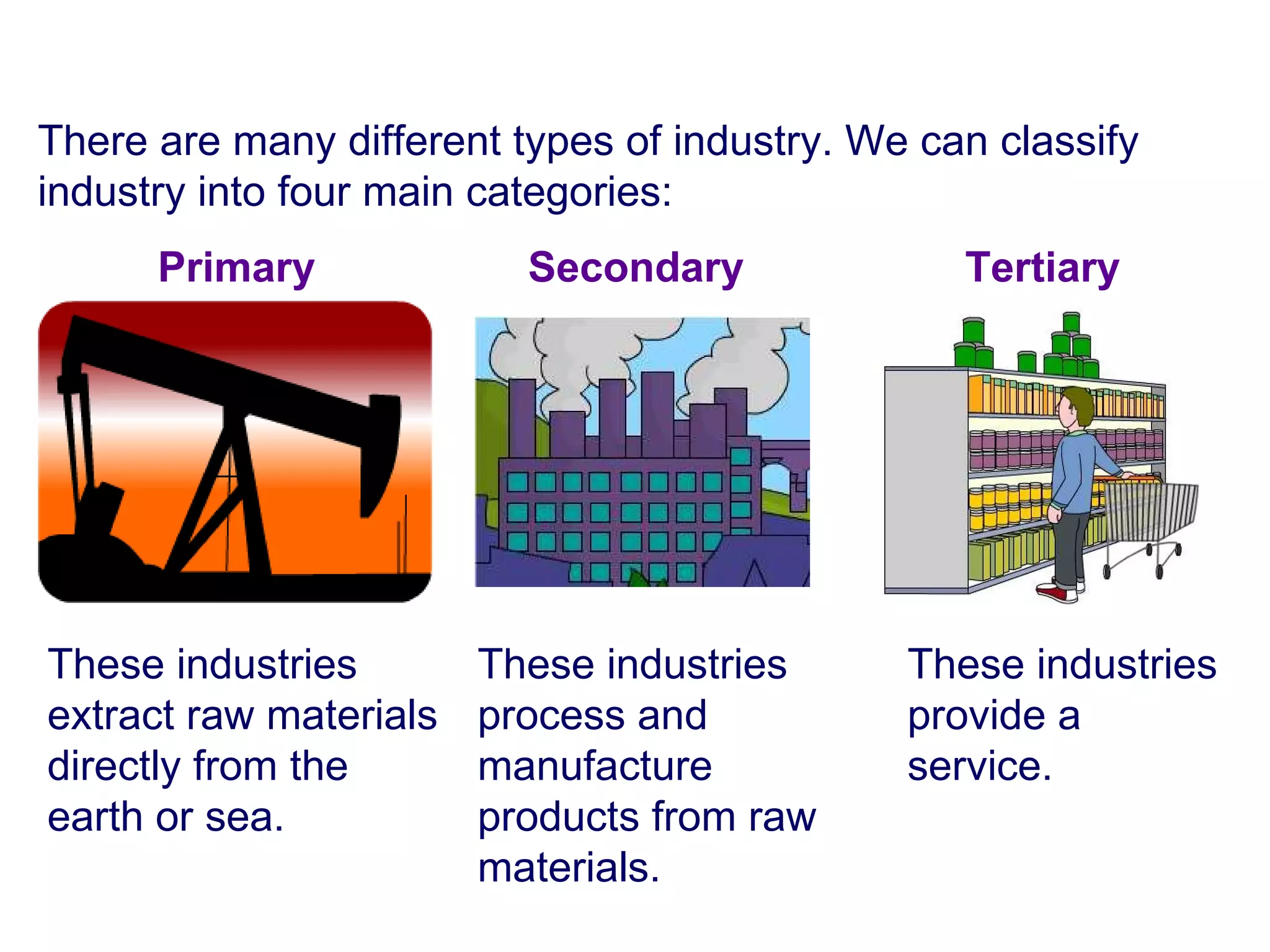
There are many different types of industry. We can classify industry into four main categories:  Secondary These industries provide a service. These industries extract raw materials directly from the earth or sea. These industries process and  manufacture products from raw materials. Primary Tertiary
What is a quaternary industry? There are also  quaternary  industries.  These industries incorporate a high degree of research and technology in their processes and employ highly qualified people.  Biotechnology and computer programming are examples of quaternary industries.
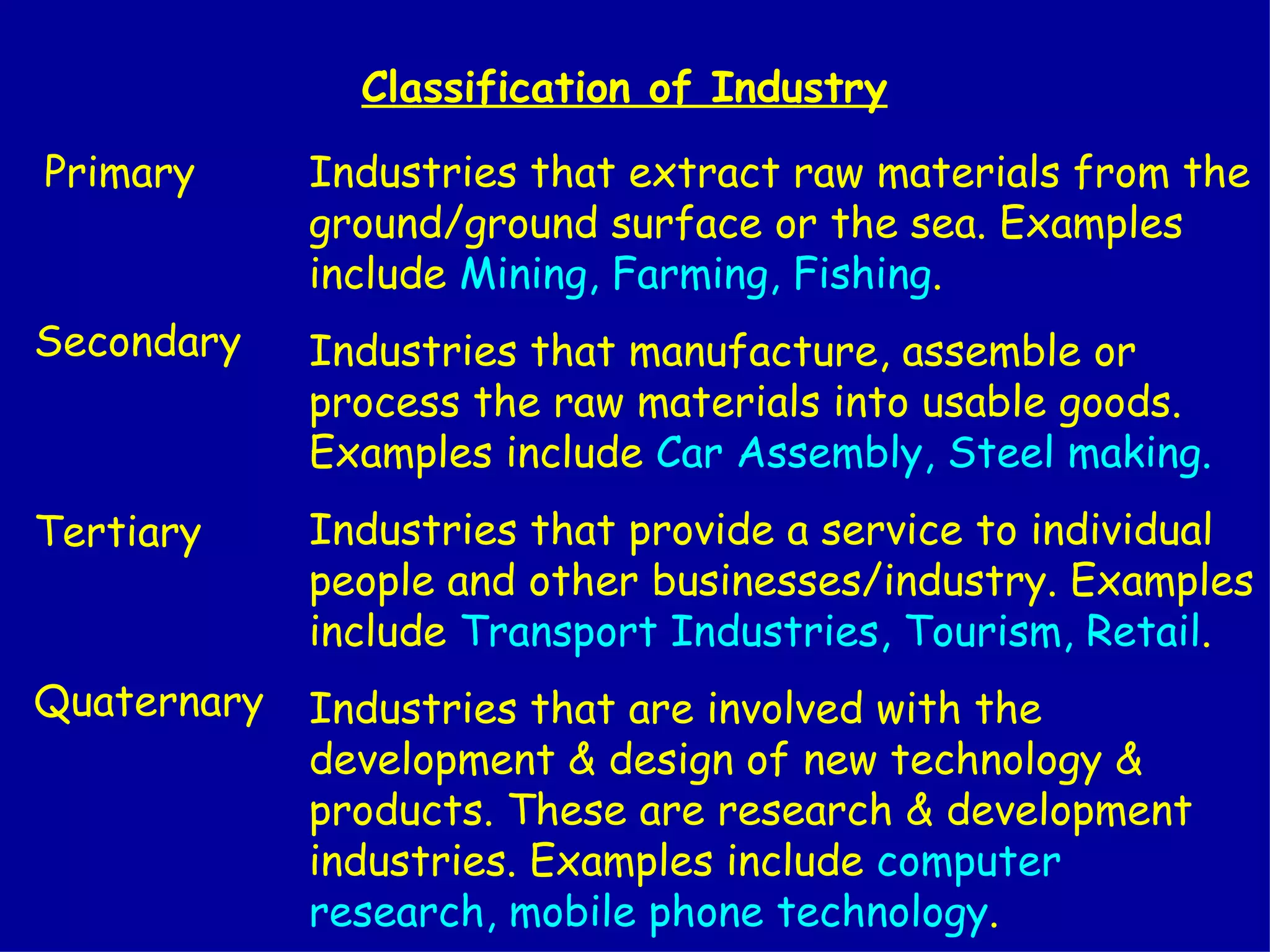
Classification of Industry Primary  Industries that extract raw materials from the ground/ground surface or the sea. Examples include  Mining, Farming, Fishing . Industries that manufacture, assemble or process the raw materials into usable goods. Examples include  Car Assembly, Steel making. Industries that provide a service to individual people and other businesses/industry. Examples include  Transport Industries, Tourism, Retail . Industries that are involved with the development & design of new technology & products. These are research & development industries. Examples include  computer research, mobile phone technology . Secondary Tertiary Quaternary
‘ ODD ONE OUT’ Granite Limestone Coal Bricks Steel Coal Mining Ship-building Textiles HMV Armani Exchange Everton F.C. What is/are every variable an example of?
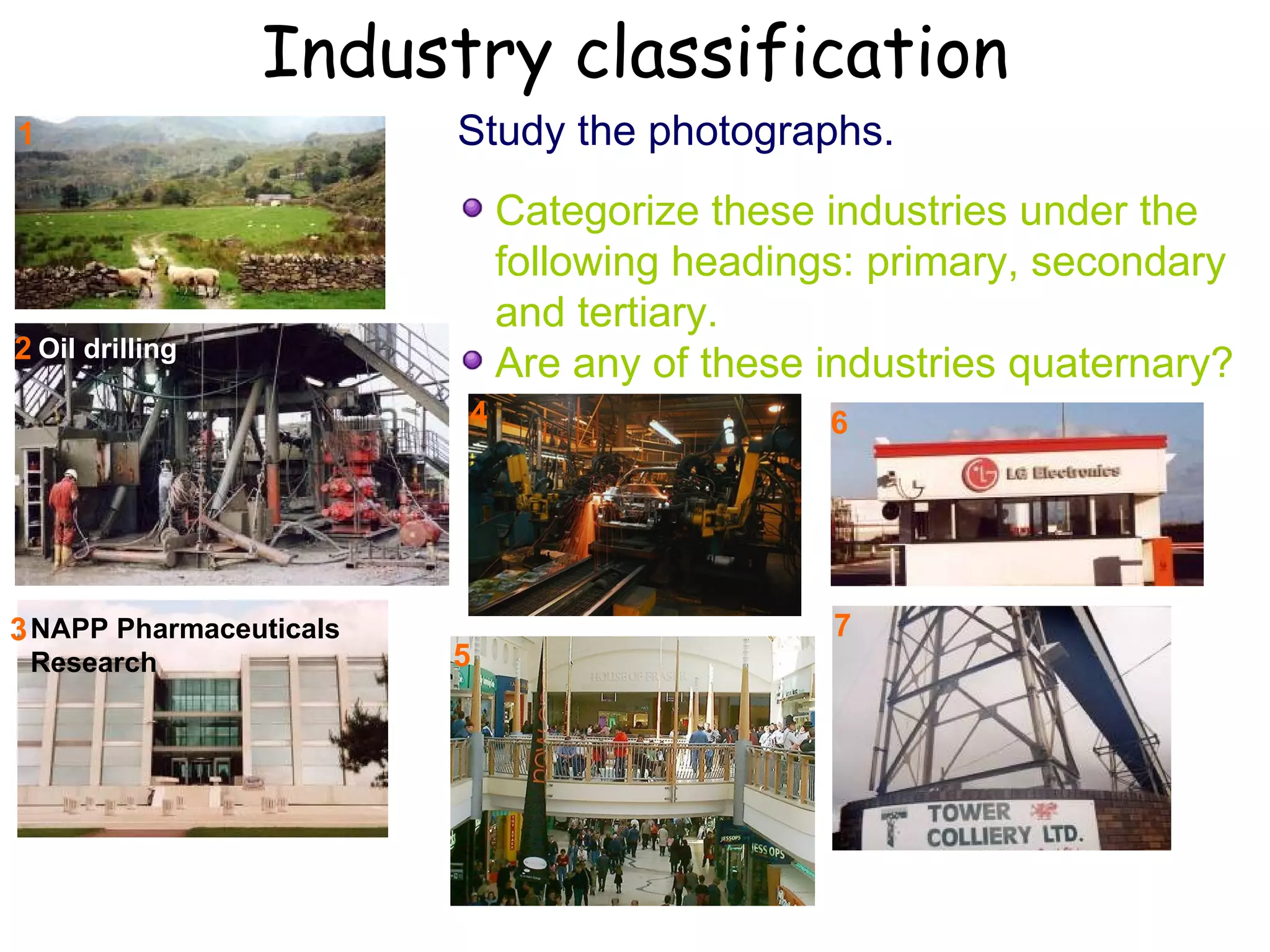
Industry classification Categorize these industries under the following headings: primary, secondary and tertiary.  Are any of these industries quaternary? Study the photographs. 1 3 5 4 7 6 2 Oil drilling NAPP Pharmaceuticals Research
Industry & Employment The percentage of people employed in each industrial sector is called the EMPLOYMENT STRUCTURE. The employment structure differs between countries and throughout time. Sometimes Employment structures  are used as an indicator of the level of development of a country.
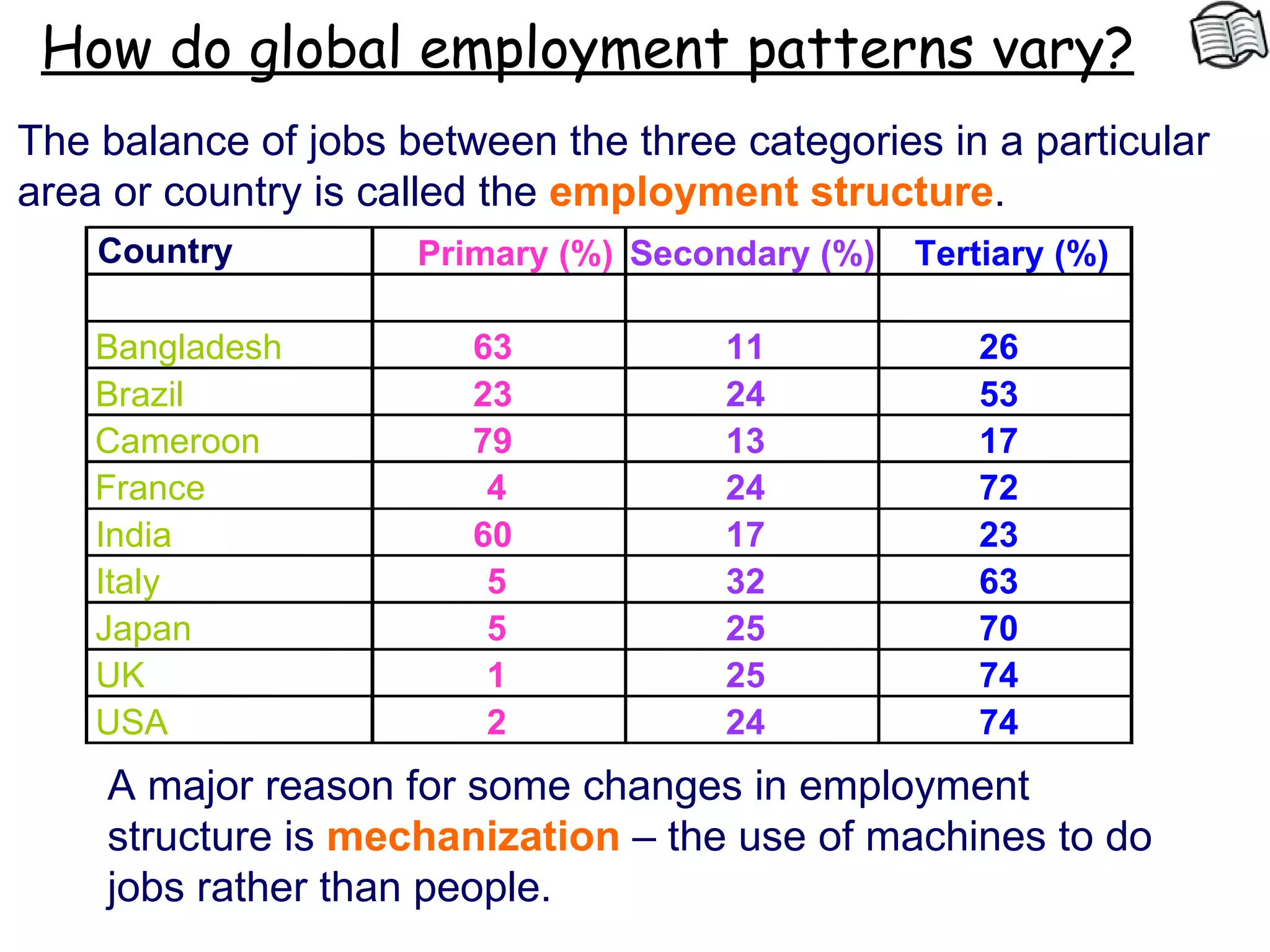
How do global employment patterns vary? The balance of jobs between the three categories in a particular area or country is called the  employment structure . A major reason for some changes in employment structure is  mechanization  – the use of machines to do jobs rather than people.  Primary (%) Secondary (%) Tertiary (%) Bangladesh 63 11 26 Brazil 23 24 53 Cameroon 79 13 17 France 4 24 72 India 60 17 23 Italy 5 32 63 Japan 5 25 70 UK 1 25 74 USA 2 24 74 Country
THE INDUSTRIAL SYSTEM LEARNING OBJECTIVES: To recognise the industrial system is made up of inputs, processes and outputs. To realise inputs and outputs dictate profit and loss.
 
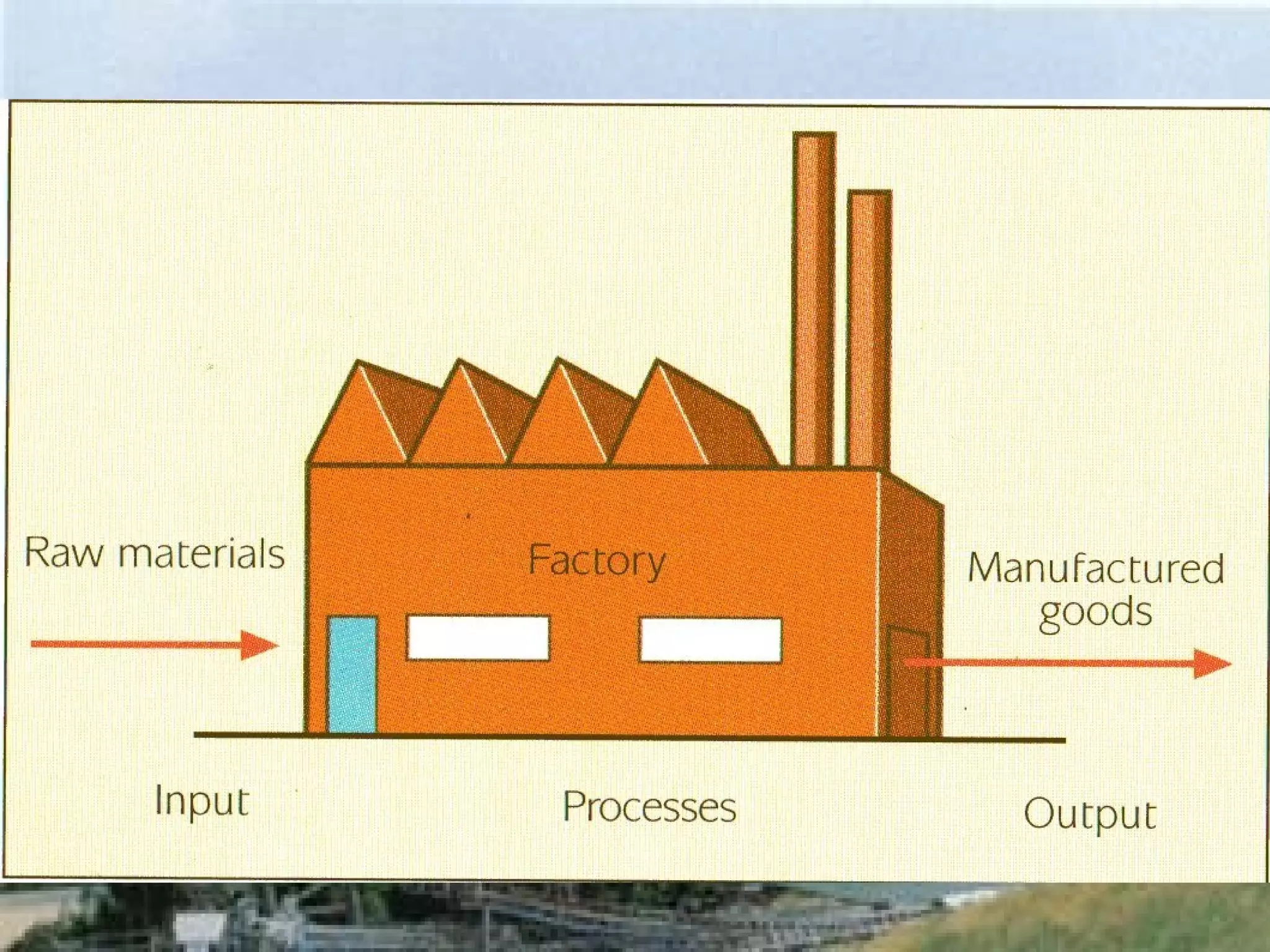
INPUTS Raw materials Energy (electricity) Labour (skilled/unskilled) Land Transport Communication links Capital (inc. Government grants)
PROCESSES Manufacturing People Machines OUTPUTS Goods Waste
 
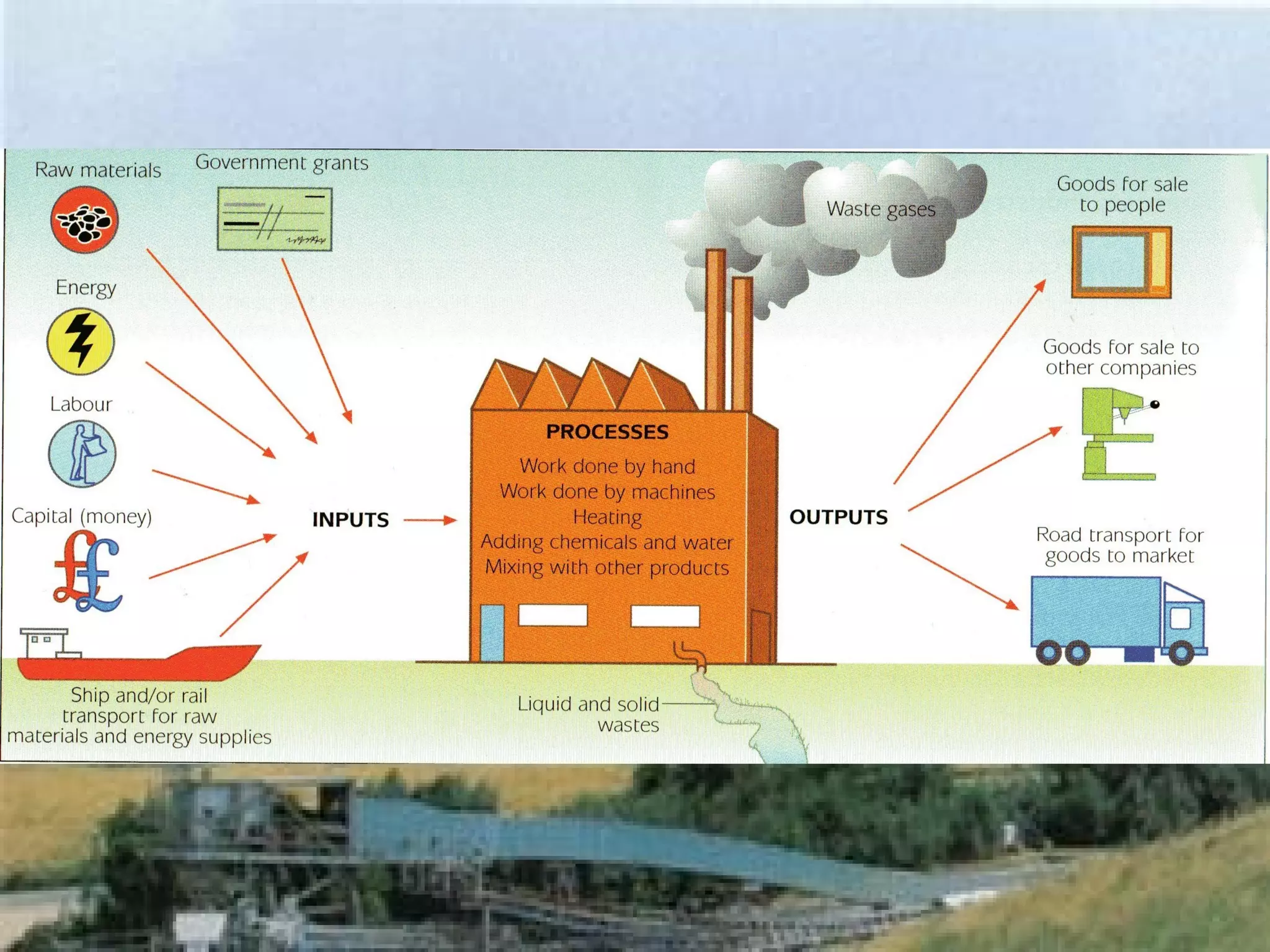
EXAMPLE OF AN INDUSTRIAL SYSTEM
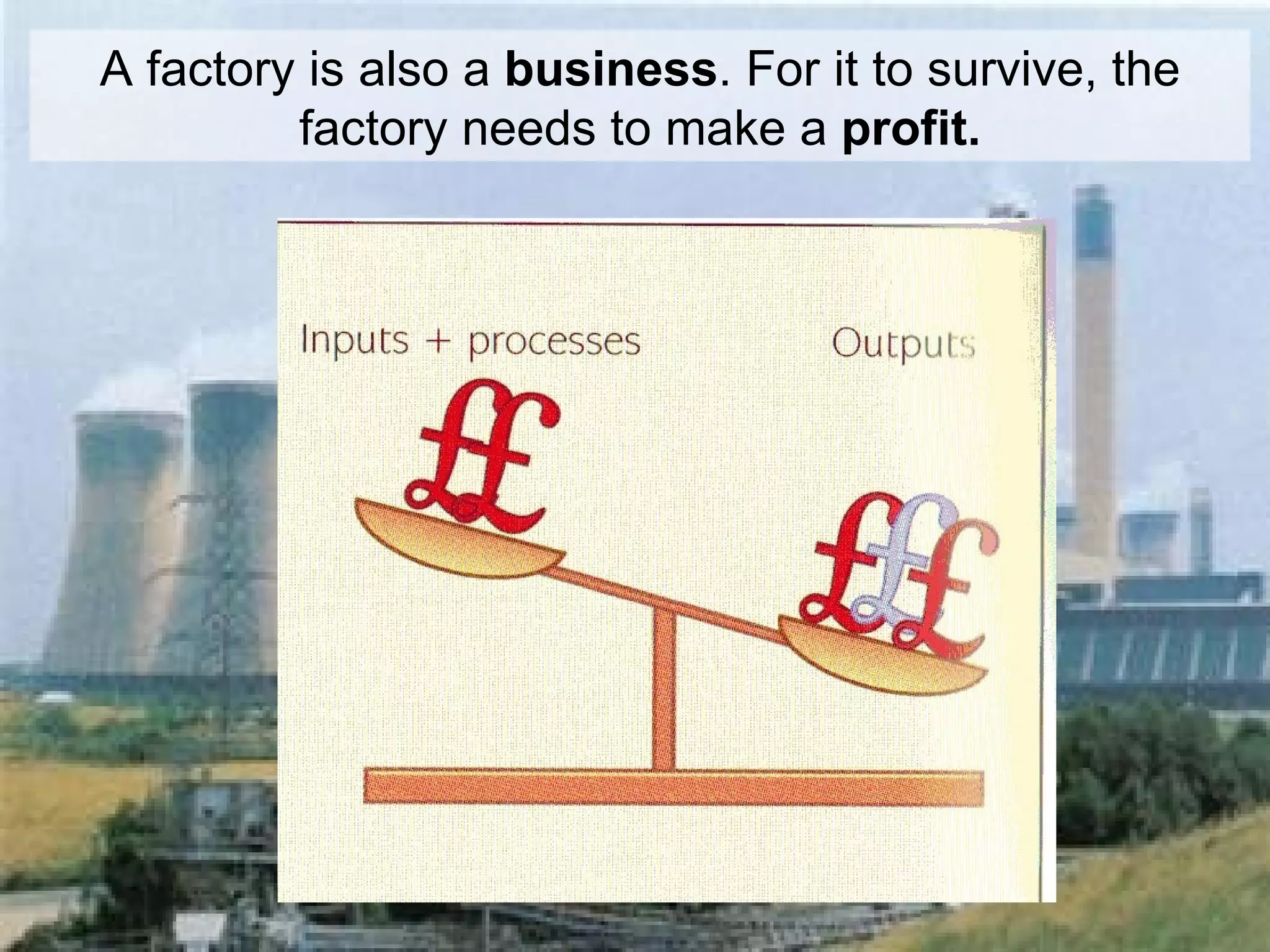
A factory is also a  business . For it to survive, the factory needs to make a  profit.

Industry Classification & Systems

  • 1.
    INDUSTRY LEARNING OBJECTIVES:To be able to classify different types of industry To name products of different types of industry.
  • 2.
    There are manydifferent types of industry. We can classify industry into four main categories: Secondary These industries provide a service. These industries extract raw materials directly from the earth or sea. These industries process and manufacture products from raw materials. Primary Tertiary
  • 3.
    What is aquaternary industry? There are also quaternary industries. These industries incorporate a high degree of research and technology in their processes and employ highly qualified people. Biotechnology and computer programming are examples of quaternary industries.
  • 4.
    Classification of IndustryPrimary Industries that extract raw materials from the ground/ground surface or the sea. Examples include Mining, Farming, Fishing . Industries that manufacture, assemble or process the raw materials into usable goods. Examples include Car Assembly, Steel making. Industries that provide a service to individual people and other businesses/industry. Examples include Transport Industries, Tourism, Retail . Industries that are involved with the development & design of new technology & products. These are research & development industries. Examples include computer research, mobile phone technology . Secondary Tertiary Quaternary
  • 5.
    ‘ ODD ONEOUT’ Granite Limestone Coal Bricks Steel Coal Mining Ship-building Textiles HMV Armani Exchange Everton F.C. What is/are every variable an example of?
  • 6.
    Industry classification Categorizethese industries under the following headings: primary, secondary and tertiary. Are any of these industries quaternary? Study the photographs. 1 3 5 4 7 6 2 Oil drilling NAPP Pharmaceuticals Research
  • 7.
    Industry & EmploymentThe percentage of people employed in each industrial sector is called the EMPLOYMENT STRUCTURE. The employment structure differs between countries and throughout time. Sometimes Employment structures are used as an indicator of the level of development of a country.
  • 8.
    How do globalemployment patterns vary? The balance of jobs between the three categories in a particular area or country is called the employment structure . A major reason for some changes in employment structure is mechanization – the use of machines to do jobs rather than people. Primary (%) Secondary (%) Tertiary (%) Bangladesh 63 11 26 Brazil 23 24 53 Cameroon 79 13 17 France 4 24 72 India 60 17 23 Italy 5 32 63 Japan 5 25 70 UK 1 25 74 USA 2 24 74 Country
  • 9.
    THE INDUSTRIAL SYSTEMLEARNING OBJECTIVES: To recognise the industrial system is made up of inputs, processes and outputs. To realise inputs and outputs dictate profit and loss.
  • 10.
  • 11.
    INPUTS Raw materialsEnergy (electricity) Labour (skilled/unskilled) Land Transport Communication links Capital (inc. Government grants)
  • 12.
    PROCESSES Manufacturing PeopleMachines OUTPUTS Goods Waste
  • 13.
  • 14.
    EXAMPLE OF ANINDUSTRIAL SYSTEM
  • 15.
    A factory isalso a business . For it to survive, the factory needs to make a profit.