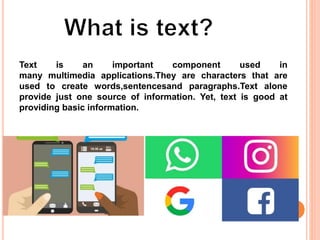
Text is an important component used in
many multimedia applications.They are characters that are
used to create words,sentencesand paragraphs.Text alone
provide just one source of information. Yet, text is good at
providing basic information.
A typeface is a family of graphic characters that
usually includes many type
sizes and styles. A font is a collection of characters of
a single size and style
belonging to a particular typeface family. Typical font
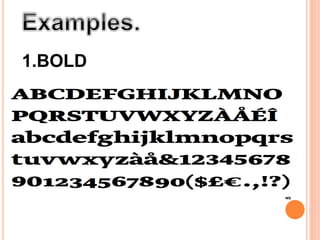
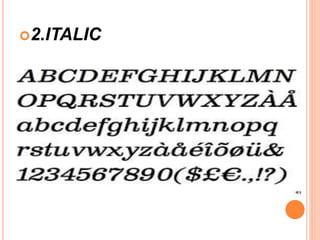
styles are boldface
and italic. Your computer software may add other
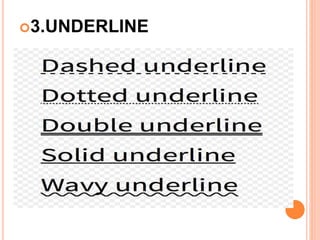
style attributes, such as
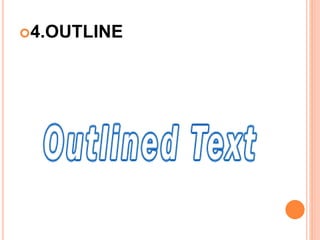
underlining and outlining of characters.
1.BOLD
2.ITALIC
3.UNDERLINE
4.OUTLINE
Cases
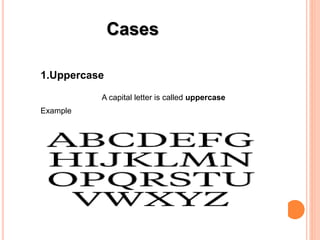
1.Uppercase
A capital letter is called uppercase
Example
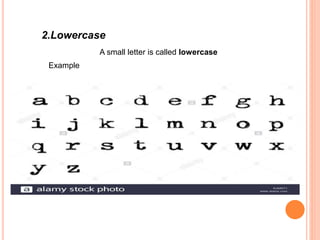
2.Lowercase
A small letter is called lowercase
Example
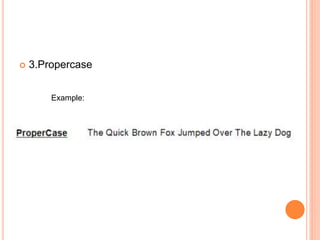
 3.Propercase
Example:
TYPES OF TEXT
A text is a piece of writing that you read or create.
There are three type of text .
 Expository texts.
 Narrative texts.
 Argumentative texts.
The type of texts depend on their purpose, structure
and language features.
EXPOSITORY TEXTS
It is intended to identify and characterise
experience, facts ,situations and actions in either
abstract or real element .
Expository texts are meant to explain ,inform
or describe and they are the most frequently use
to write structures.
NARRATIVE TEXTS
A Narrative text entertains , instructs or inform
readers by telling a story.
Narrative texts deal with imaginary or real world.
Narrative can be fictional and non fictional.
Fictional(fairy tales, myths , novels, science fiction,
horror or adventure stories, fable, legends, etc).
Non fictional (articles, newspaper, historical
writings).
ARGUMENTATIVE TEXTS
Argumentative texts aim is to change the
readers beliefs.
They often contain negative qualities or
characteristics of something/ someone, or try to
persuade their readers that an object, product ,
idea is in some way better than other.
TEXTS APPLY GUIDELINES
Be concise
Use appropriate fonts
Make it readable
Consider type style and colour
Use restraint and be consistent
Text consist of two structure.
Linear
Non linear
TEXTS STRUCTURE
LINEAR
A single way to progress through the text, starting at
the beginning and reading to the end.
Non linear
Non linear
not arranged in a straight line.
not sequential or straightforward.
TEXT STRUCTURE
The texts elements used in multimedia are:
 Manus for navigation.
 Interactive buttons.
 Fields for reading.
 HTML documents.
 Symbols and icons.
USING TEXT ELEMENTS IN MULTIMEDIA
Hypermedia. ... Hypermedia, an extension of the
term hypertext, is a nonlinear medium of information
that includes graphics, audio, video, plain text and
hyperlinks. This designation contrasts with the broader
term multimedia, which may include non-interactive
linear presentations as well as hypermedia
What is hypermedia and hyper text?
Hypertext is text which is not constrained to
be linear. Hypertext is text which contains links
to other texts. The term was coined by Ted
Nelson around 1965
Example of hypertext
Example of hypermedia
HyperMedia is a term used
for hypertext which is not constrained to be
text: it can include graphics, video and sound
text in multimedia

text in multimedia

  • 4.
    Text is animportant component used in many multimedia applications.They are characters that are used to create words,sentencesand paragraphs.Text alone provide just one source of information. Yet, text is good at providing basic information.
  • 6.
    A typeface isa family of graphic characters that usually includes many type sizes and styles. A font is a collection of characters of a single size and style belonging to a particular typeface family. Typical font styles are boldface and italic. Your computer software may add other style attributes, such as underlining and outlining of characters.
  • 7.
  • 8.
  • 9.
  • 10.
  • 11.
    Cases 1.Uppercase A capital letteris called uppercase Example
  • 12.
    2.Lowercase A small letteris called lowercase Example
  • 13.
  • 14.
    TYPES OF TEXT Atext is a piece of writing that you read or create. There are three type of text .  Expository texts.  Narrative texts.  Argumentative texts. The type of texts depend on their purpose, structure and language features.
  • 15.
    EXPOSITORY TEXTS It isintended to identify and characterise experience, facts ,situations and actions in either abstract or real element . Expository texts are meant to explain ,inform or describe and they are the most frequently use to write structures.
  • 16.
    NARRATIVE TEXTS A Narrativetext entertains , instructs or inform readers by telling a story. Narrative texts deal with imaginary or real world. Narrative can be fictional and non fictional. Fictional(fairy tales, myths , novels, science fiction, horror or adventure stories, fable, legends, etc). Non fictional (articles, newspaper, historical writings).
  • 17.
    ARGUMENTATIVE TEXTS Argumentative textsaim is to change the readers beliefs. They often contain negative qualities or characteristics of something/ someone, or try to persuade their readers that an object, product , idea is in some way better than other.
  • 18.
    TEXTS APPLY GUIDELINES Beconcise Use appropriate fonts Make it readable Consider type style and colour Use restraint and be consistent
  • 19.
    Text consist oftwo structure. Linear Non linear TEXTS STRUCTURE
  • 20.
    LINEAR A single wayto progress through the text, starting at the beginning and reading to the end. Non linear Non linear not arranged in a straight line. not sequential or straightforward. TEXT STRUCTURE
  • 21.
    The texts elementsused in multimedia are:  Manus for navigation.  Interactive buttons.  Fields for reading.  HTML documents.  Symbols and icons. USING TEXT ELEMENTS IN MULTIMEDIA
  • 22.
    Hypermedia. ... Hypermedia,an extension of the term hypertext, is a nonlinear medium of information that includes graphics, audio, video, plain text and hyperlinks. This designation contrasts with the broader term multimedia, which may include non-interactive linear presentations as well as hypermedia What is hypermedia and hyper text?
  • 23.
    Hypertext is textwhich is not constrained to be linear. Hypertext is text which contains links to other texts. The term was coined by Ted Nelson around 1965 Example of hypertext Example of hypermedia HyperMedia is a term used for hypertext which is not constrained to be text: it can include graphics, video and sound