Waqas Mohyuddin
Roll number 1307014-089
M.Sc Zoology 4th semester
Presentation on raceway culture
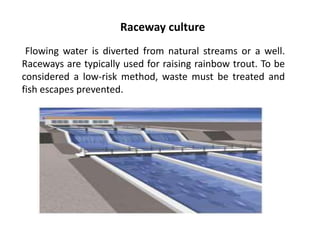
Raceway culture
Flowing water is diverted from natural streams or a well.
Raceways are typically used for raising rainbow trout. To be
considered a low-risk method, waste must be treated and
fish escapes prevented.
Advantages of raceways
• higher stocking densities
• improved water quality
• reduced manpower
• ease of feeding
• ease of grading
• ease of harvest
• precise disease treatments
• collection of fish wastes
Types of Raceways
• Concrete
• Stone
• Earth
• Fiberglass
• Polyester resin
Raceway Structures
• Structure should be like that where…..
• Water should be move easily
• Must be attached with
• Stream
• River
• Canal
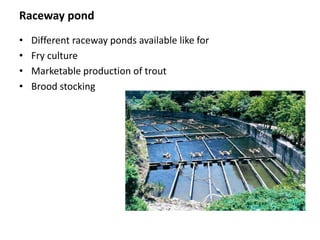
Raceway pond
• Different raceway ponds available like for
• Fry culture
• Marketable production of trout
• Brood stocking
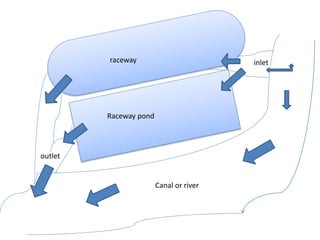
raceway
Raceway pond
Canal or river
inlet
outlet
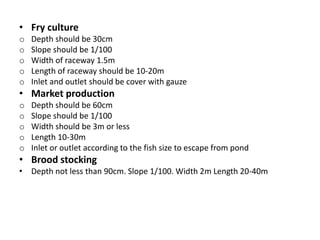
• Fry culture
o Depth should be 30cm
o Slope should be 1/100
o Width of raceway 1.5m
o Length of raceway should be 10-20m
o Inlet and outlet should be cover with gauze
• Market production
o Depth should be 60cm
o Slope should be 1/100
o Width should be 3m or less
o Length 10-30m
o Inlet or outlet according to the fish size to escape from pond
• Brood stocking
• Depth not less than 90cm. Slope 1/100. Width 2m Length 20-40m
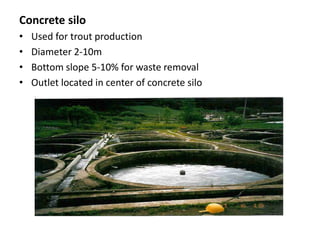
Concrete silo
• Used for trout production
• Diameter 2-10m
• Bottom slope 5-10% for waste removal
• Outlet located in center of concrete silo
Requirement of system
• Water supply
• Aerations
• Removal of solid waste matters
• Productivity
• Waste water treatment
Water supply
• Jet nozzle
o Provide force
o Water movement
o Above surface of water
o Or below to water
o Not at bottom because they uplift waste
Aerations
• Aeration compulsory for dissolved oxygen
• Different mechanism used like
o Pumps
o Agitators
o Blower
Removal of solid waste
• Waste accumulation spoil water quality waste removed by
o Sucking machine
o Increase water flow
o Water velocities over 7-8cm/sec are found to be effective for
the waste removal
o Lowered water level down to 30 cm in depth makes the
removal more effective
Productivity
• Productivity of fish is strongly related with exchanging rate of
the culture water
• Rainbow trout, it amounts 1㎏/year under water flowing rate
of 1ℓ/min.
• Productivity increases up to 5kg/year under same water
flowing rate in case that best management is offered.
References
• Buttner, J.et al. (2008). "Freshwater Aquaculture Species for
the Northeast“. Northeaster Regional Aquaculture Center
(NRAC), University of Maryland, Publication No. 102-2008.
Accessed 29.9.2011.
• Raceway Culture for Freshwater Species". Korea – U.S.
Aquaculture. Accessed 29.9.2011.

Raceway aquaculture

  • 1.
    Waqas Mohyuddin Roll number1307014-089 M.Sc Zoology 4th semester Presentation on raceway culture
  • 2.
    Raceway culture Flowing wateris diverted from natural streams or a well. Raceways are typically used for raising rainbow trout. To be considered a low-risk method, waste must be treated and fish escapes prevented.
  • 3.
    Advantages of raceways •higher stocking densities • improved water quality • reduced manpower • ease of feeding • ease of grading • ease of harvest • precise disease treatments • collection of fish wastes
  • 4.
    Types of Raceways •Concrete • Stone • Earth • Fiberglass • Polyester resin Raceway Structures • Structure should be like that where….. • Water should be move easily • Must be attached with • Stream • River • Canal
  • 5.
    Raceway pond • Differentraceway ponds available like for • Fry culture • Marketable production of trout • Brood stocking
  • 6.
  • 7.
    • Fry culture oDepth should be 30cm o Slope should be 1/100 o Width of raceway 1.5m o Length of raceway should be 10-20m o Inlet and outlet should be cover with gauze • Market production o Depth should be 60cm o Slope should be 1/100 o Width should be 3m or less o Length 10-30m o Inlet or outlet according to the fish size to escape from pond • Brood stocking • Depth not less than 90cm. Slope 1/100. Width 2m Length 20-40m
  • 8.
    Concrete silo • Usedfor trout production • Diameter 2-10m • Bottom slope 5-10% for waste removal • Outlet located in center of concrete silo
  • 9.
    Requirement of system •Water supply • Aerations • Removal of solid waste matters • Productivity • Waste water treatment Water supply • Jet nozzle o Provide force o Water movement o Above surface of water o Or below to water o Not at bottom because they uplift waste
  • 10.
    Aerations • Aeration compulsoryfor dissolved oxygen • Different mechanism used like o Pumps o Agitators o Blower Removal of solid waste • Waste accumulation spoil water quality waste removed by o Sucking machine o Increase water flow o Water velocities over 7-8cm/sec are found to be effective for the waste removal o Lowered water level down to 30 cm in depth makes the removal more effective
  • 11.
    Productivity • Productivity offish is strongly related with exchanging rate of the culture water • Rainbow trout, it amounts 1㎏/year under water flowing rate of 1ℓ/min. • Productivity increases up to 5kg/year under same water flowing rate in case that best management is offered. References • Buttner, J.et al. (2008). "Freshwater Aquaculture Species for the Northeast“. Northeaster Regional Aquaculture Center (NRAC), University of Maryland, Publication No. 102-2008. Accessed 29.9.2011. • Raceway Culture for Freshwater Species". Korea – U.S. Aquaculture. Accessed 29.9.2011.