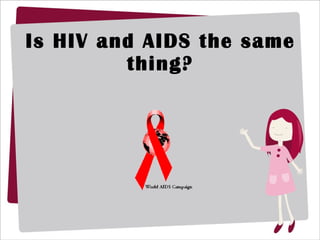
Is HIV and AIDS the same thing?
HIV “ Human Immunodeficiency Syndrome” A specific type of virus (a retrovirus) HIV invades the helper T cells to replicate itself. No Cure
AIDS Acquired Immunodeficiency Syndrome HIV is the virus that causes AIDS Disease limits the body’s ability to fight infection A person with AIDS has a very weak immune system No Cure
Four Stages of HIV
Stage 1 - Primary Short, flu-like illness - occurs one to six weeks after infection no symptoms at all Infected person can infect other people
Stage 2 - Asymptomatic Lasts for an average of ten years  This stage is free from symptoms There may be swollen glands The level of HIV in the blood drops to very low levels  HIV antibodies are detectable in the blood
Stage 3 - Symptomatic The symptoms are mild The immune system deteriorates  emergence of opportunistic infections and cancers
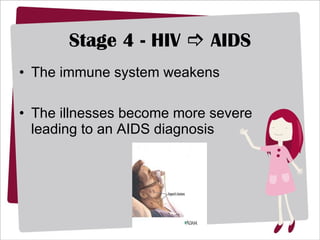
Stage 4 - HIV    AIDS The immune system weakens The illnesses become more severe leading to an AIDS diagnosis
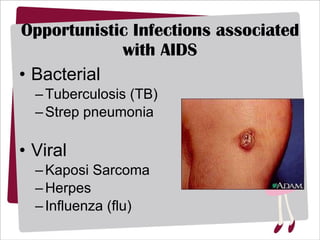
Opportunistic Infections associated with AIDS Bacterial Tuberculosis (TB) Strep pneumonia Viral Kaposi Sarcoma Herpes Influenza (flu)
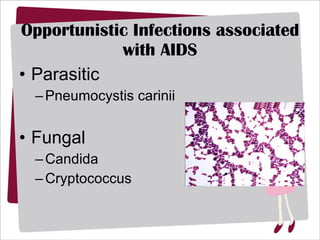
Opportunistic Infections associated with AIDS Parasitic Pneumocystis carinii Fungal Candida Cryptococcus
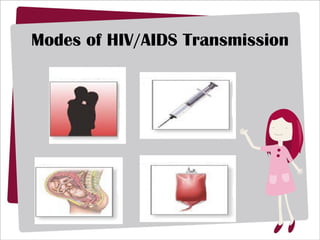
Modes of HIV/AIDS Transmission
Through Bodily Fluids Blood products Semen Vaginal fluids Breast Milk
Through IV Drug Use Sharing Needles Without sterilization Increases the chances of contracting HIV
Through Sex Intercourse (penile penetration into the vagina) Oral Anal Digital Sex
Before Birth During Birth Postpartum After the birth Mother-to-Baby
Testing Options for HIV
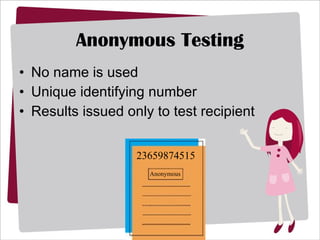
Anonymous Testing No name is used Unique identifying number Results issued only to test recipient 23659874515 Anonymous
Confidential Testing Person’s name is recorded along with HIV results Name and positive results are reported to the State Department and the Centers for Disease Control and Prevention Results issued only to test recipient
Treatment Options
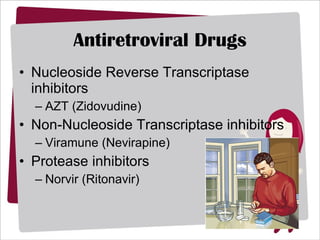
Antiretroviral Drugs Nucleoside Reverse Transcriptase inhibitors AZT (Zidovudine) Non-Nucleoside Transcriptase inhibitors Viramune (Nevirapine) Protease inhibitors Norvir (Ritonavir)
Opportunistic Infection Treatment Issued in an event where antiretroviral drugs are not available
Four ways to protect yourself? Abstinence Monogamous Relationship Protected Sex Sterile needles
Abstinence It is the only 100 % effective method of not acquiring HIV/AIDS.  Refraining from sexual contact: oral, anal, or vaginal. Refraining from intravenous drug use
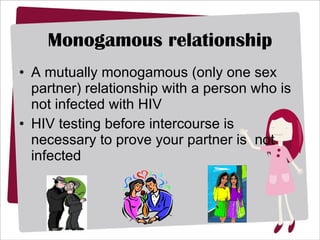
Monogamous relationship A mutually monogamous (only one sex partner) relationship with a person who is not infected with HIV  HIV testing before intercourse is necessary to prove your partner is  not infected


Hiv

  • 1.
  • 2.
    Is HIV andAIDS the same thing?
  • 3.
    HIV “ HumanImmunodeficiency Syndrome” A specific type of virus (a retrovirus) HIV invades the helper T cells to replicate itself. No Cure
  • 4.
    AIDS Acquired ImmunodeficiencySyndrome HIV is the virus that causes AIDS Disease limits the body’s ability to fight infection A person with AIDS has a very weak immune system No Cure
  • 5.
  • 6.
    Stage 1 -Primary Short, flu-like illness - occurs one to six weeks after infection no symptoms at all Infected person can infect other people
  • 7.
    Stage 2 -Asymptomatic Lasts for an average of ten years This stage is free from symptoms There may be swollen glands The level of HIV in the blood drops to very low levels HIV antibodies are detectable in the blood
  • 8.
    Stage 3 -Symptomatic The symptoms are mild The immune system deteriorates emergence of opportunistic infections and cancers
  • 9.
    Stage 4 -HIV  AIDS The immune system weakens The illnesses become more severe leading to an AIDS diagnosis
  • 10.
    Opportunistic Infections associatedwith AIDS Bacterial Tuberculosis (TB) Strep pneumonia Viral Kaposi Sarcoma Herpes Influenza (flu)
  • 11.
    Opportunistic Infections associatedwith AIDS Parasitic Pneumocystis carinii Fungal Candida Cryptococcus
  • 12.
    Modes of HIV/AIDSTransmission
  • 13.
    Through Bodily FluidsBlood products Semen Vaginal fluids Breast Milk
  • 14.
    Through IV DrugUse Sharing Needles Without sterilization Increases the chances of contracting HIV
  • 15.
    Through Sex Intercourse(penile penetration into the vagina) Oral Anal Digital Sex
  • 16.
    Before Birth DuringBirth Postpartum After the birth Mother-to-Baby
  • 17.
  • 18.
    Anonymous Testing Noname is used Unique identifying number Results issued only to test recipient 23659874515 Anonymous
  • 19.
    Confidential Testing Person’sname is recorded along with HIV results Name and positive results are reported to the State Department and the Centers for Disease Control and Prevention Results issued only to test recipient
  • 20.
  • 21.
    Antiretroviral Drugs NucleosideReverse Transcriptase inhibitors AZT (Zidovudine) Non-Nucleoside Transcriptase inhibitors Viramune (Nevirapine) Protease inhibitors Norvir (Ritonavir)
  • 22.
    Opportunistic Infection TreatmentIssued in an event where antiretroviral drugs are not available
  • 23.
    Four ways toprotect yourself? Abstinence Monogamous Relationship Protected Sex Sterile needles
  • 24.
    Abstinence It isthe only 100 % effective method of not acquiring HIV/AIDS. Refraining from sexual contact: oral, anal, or vaginal. Refraining from intravenous drug use
  • 25.
    Monogamous relationship Amutually monogamous (only one sex partner) relationship with a person who is not infected with HIV HIV testing before intercourse is necessary to prove your partner is not infected
  • 26.
  • 27.
  • 28.
  • 29.
  • 30.