Quick Guide 
AIDS 
HIV 
Awareness
Introduction
Quick overview of the basic facts of HIV 
Target Audience - group leaders, 
community members, health 
practitioners, and aid workers 
without specialized health 
training 
Find out 
who is at risk 
the ways to prevent it 
Topics - description, transmission, stages, symptoms, diagnosis, treatment 
prevention, resources and test locations
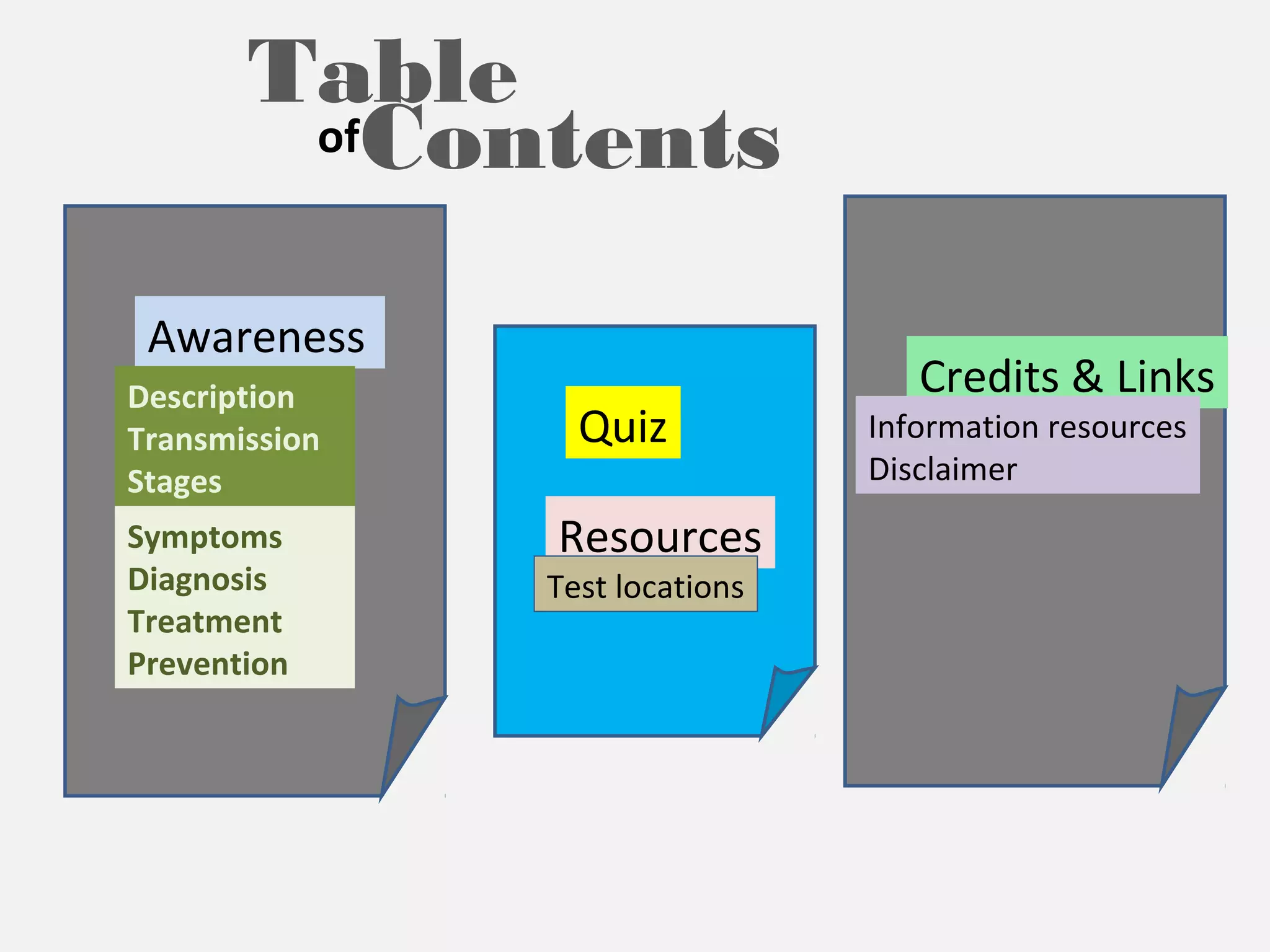
Table 
ofContents 
Awareness 
Credits & Links Description 
Transmission 
Stages 
Quiz 
Resources 
Test locations 
Information resources 
Disclaimer 
Symptoms 
Diagnosis 
Treatment 
Prevention
Awareness
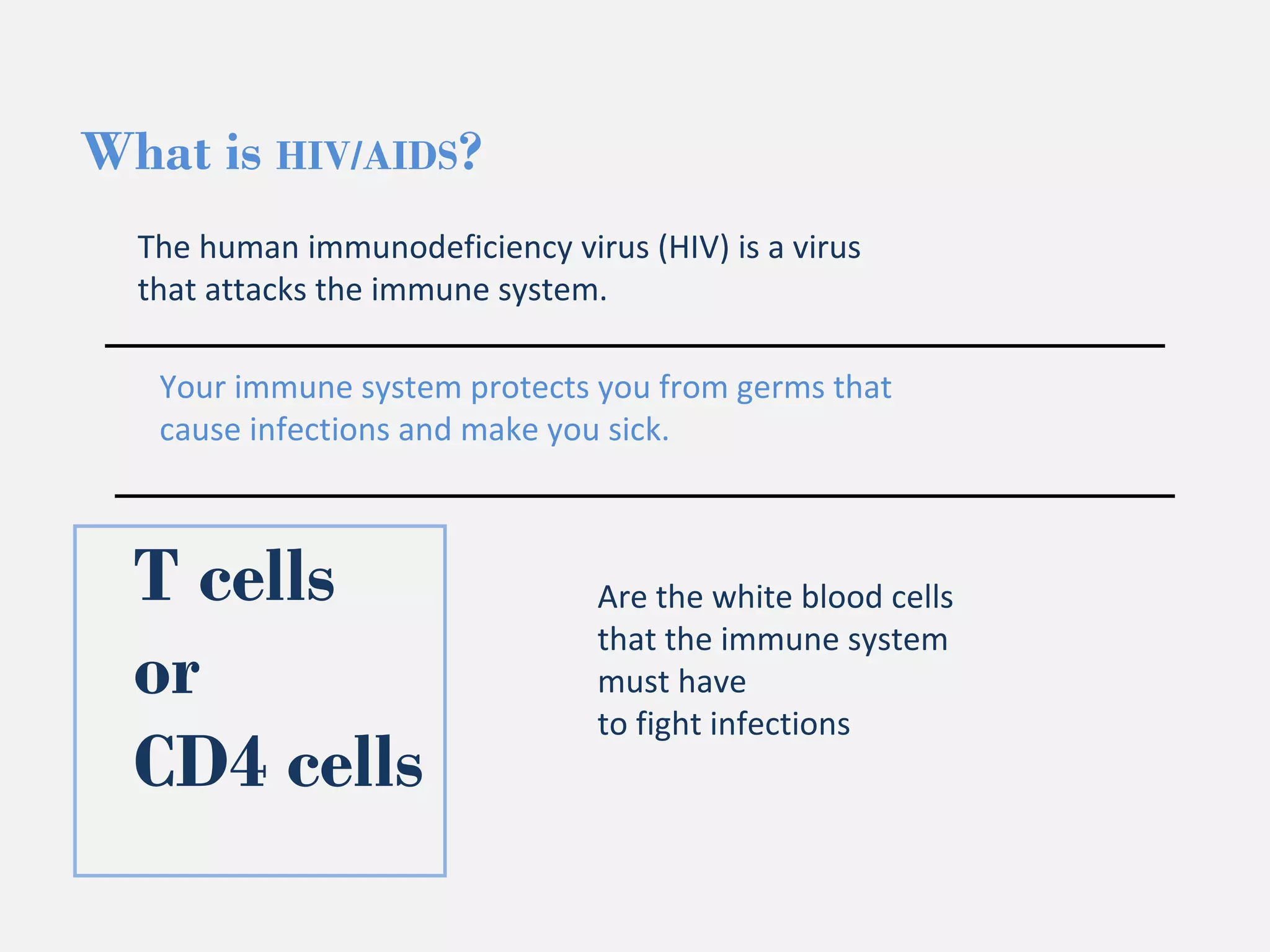
What is HIV/AIDS? 
The human immunodeficiency virus (HIV) is a virus 
that attacks the immune system. 
Your immune system protects you from germs that 
cause infections and make you sick. 
Are the white blood cells 
that the immune system 
must have 
to fight infections 
T cells 
or 
CD4 cells
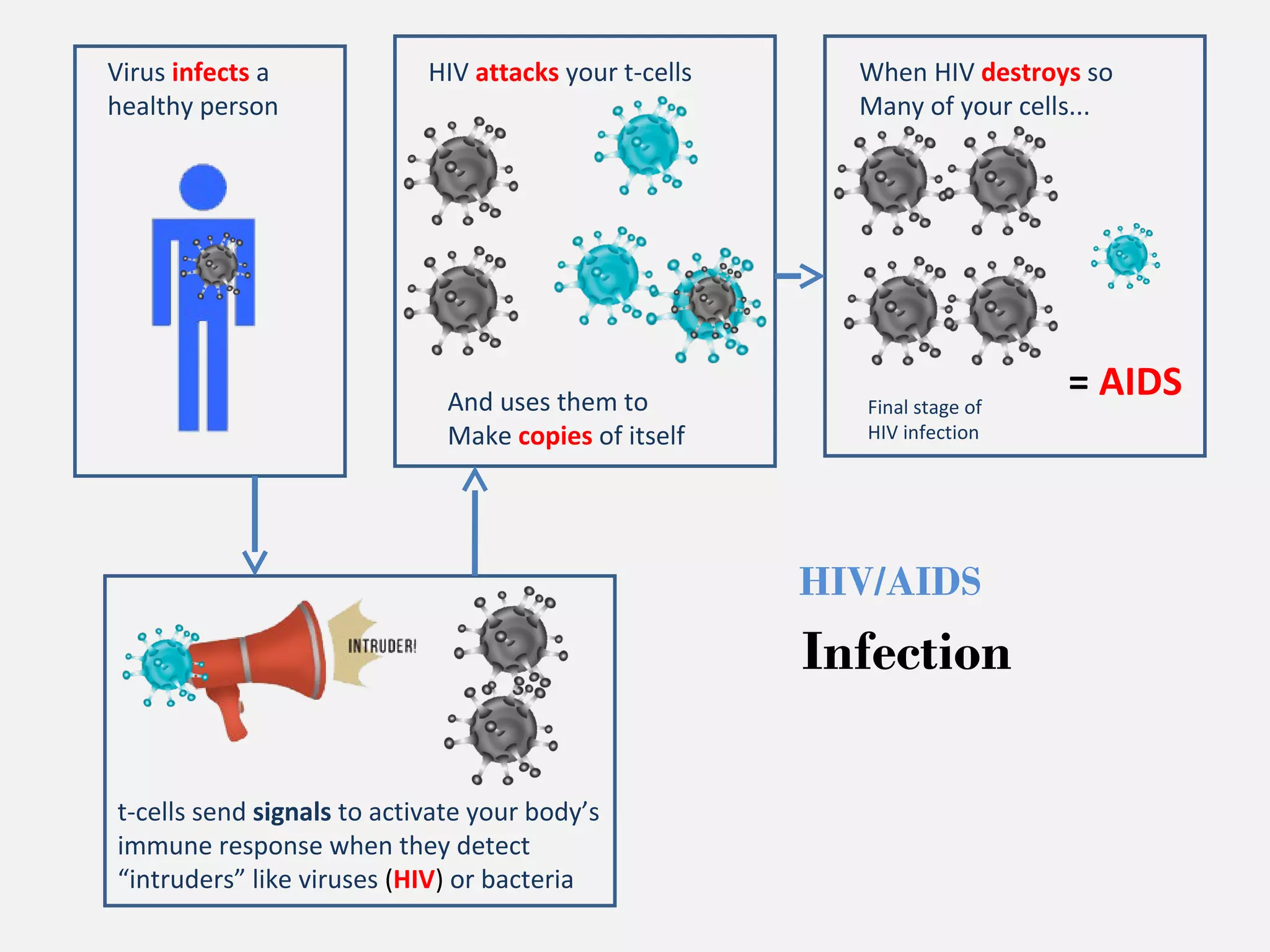
HIV attacks your t-cells 
And uses them to 
Make copies of itself 
When HIV destroys so 
Many of your cells... 
= AIDS 
Virus infects a 
healthy person 
t-cells send signals to activate your body’s 
immune response when they detect 
“intruders” like viruses (HIV) or bacteria 
Final stage of 
HIV infection 
HIV/AIDS 
Infection
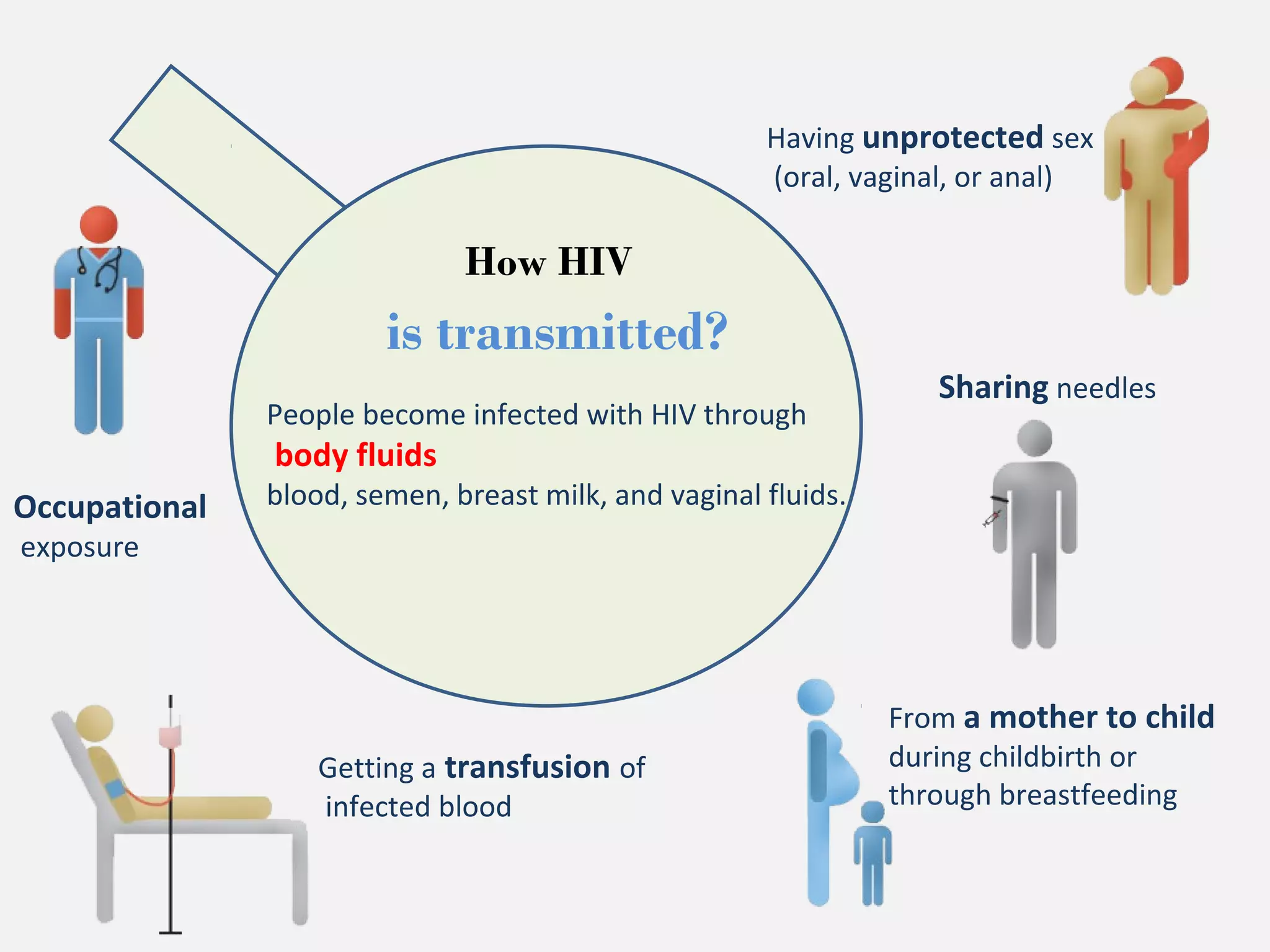
How HIV 
is transmitted? 
Having unprotected sex 
(oral, vaginal, or anal) 
People become infected with HIV through 
body fluids 
blood, semen, breast milk, and vaginal fluids. 
Sharing needles 
From a mother to child 
during childbirth or 
through breastfeeding 
Getting a transfusion of 
infected blood 
Occupational 
exposure
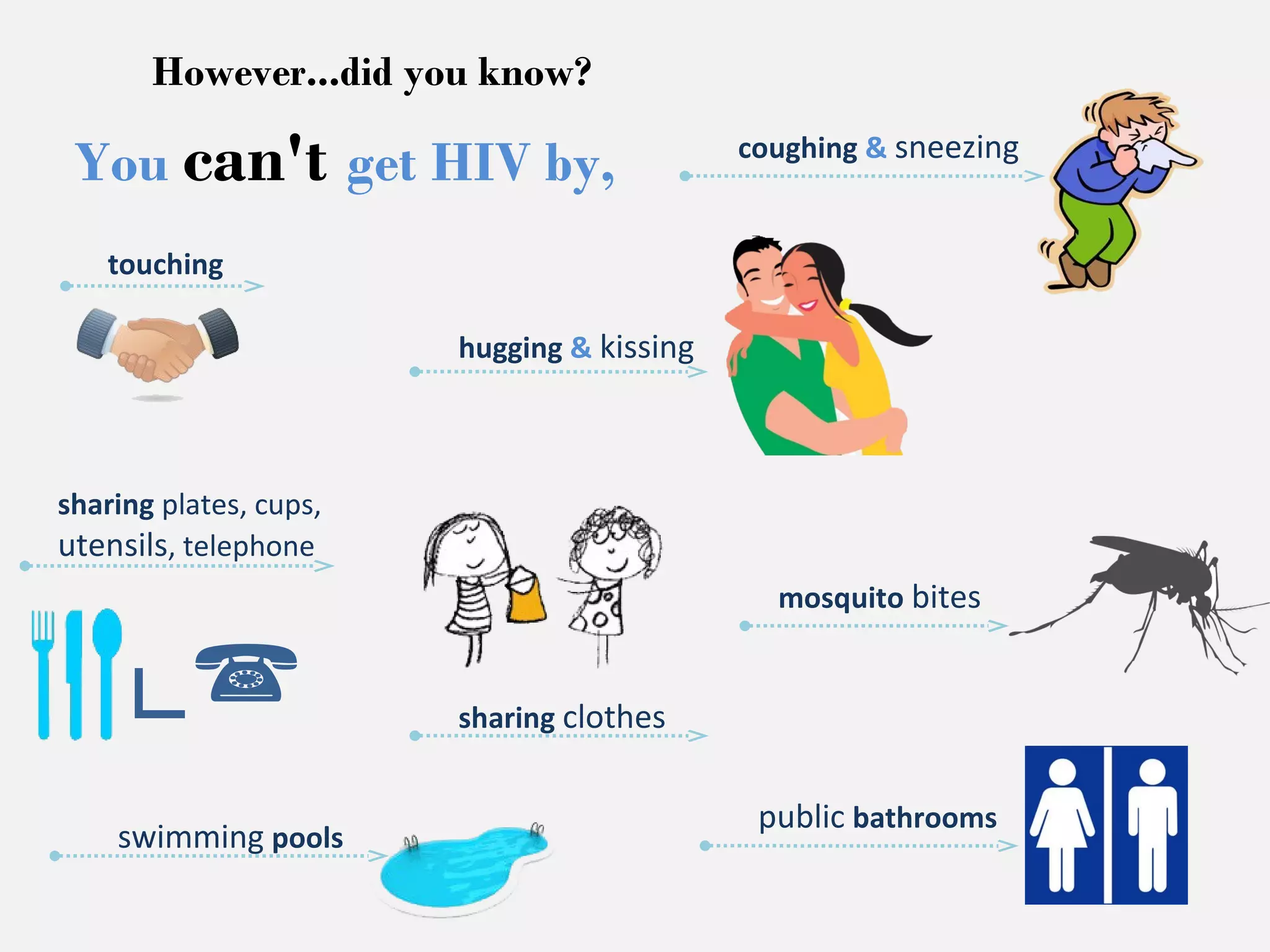
However...did you know? 
You can't get HIV by, 
touching 
hugging & kissing 
sharing plates, cups, 
utensils, telephone 
coughing & sneezing 
mosquito bites 
sharing clothes 
∟ 
public bathrooms swimming pools
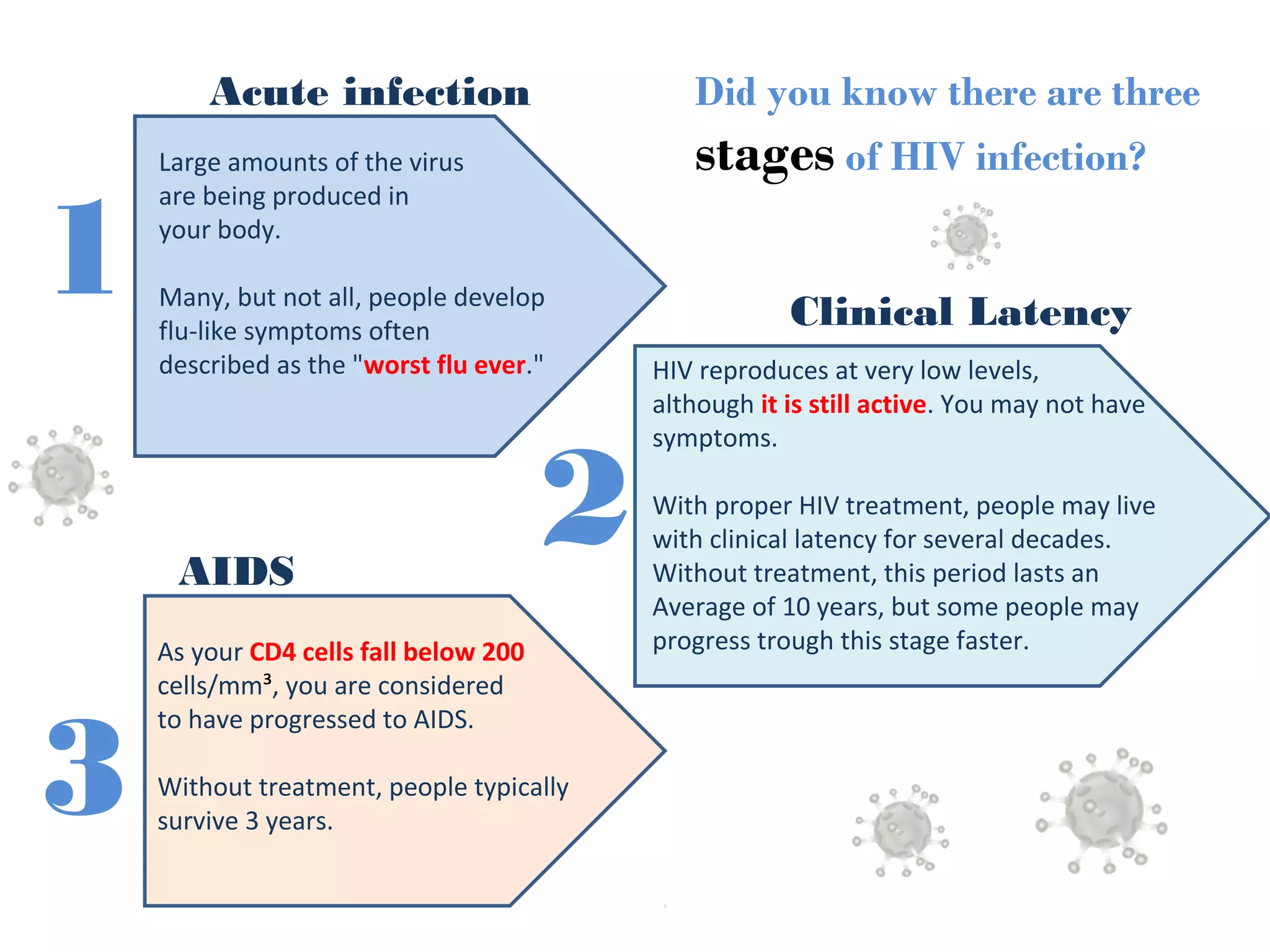
1 
Many, but not all, people develop 
flu-like symptoms often 
described as the "worst flu ever." HIV reproduces at very low levels, 
2 
3 
Did you know there are three 
stages of HIV infection? 
Acute infection 
Clinical Latency 
Large amounts of the virus 
are being produced in 
your body. 
AIDS 
although it is still active. You may not have 
symptoms. 
With proper HIV treatment, people may live 
with clinical latency for several decades. 
Without treatment, this period lasts an 
Average of 10 years, but some people may 
progress trough As your CD4 cells fall below 200 this stage faster. 
cells/mm³, you are considered 
to have progressed to AIDS. 
Without treatment, people typically 
survive 3 years.
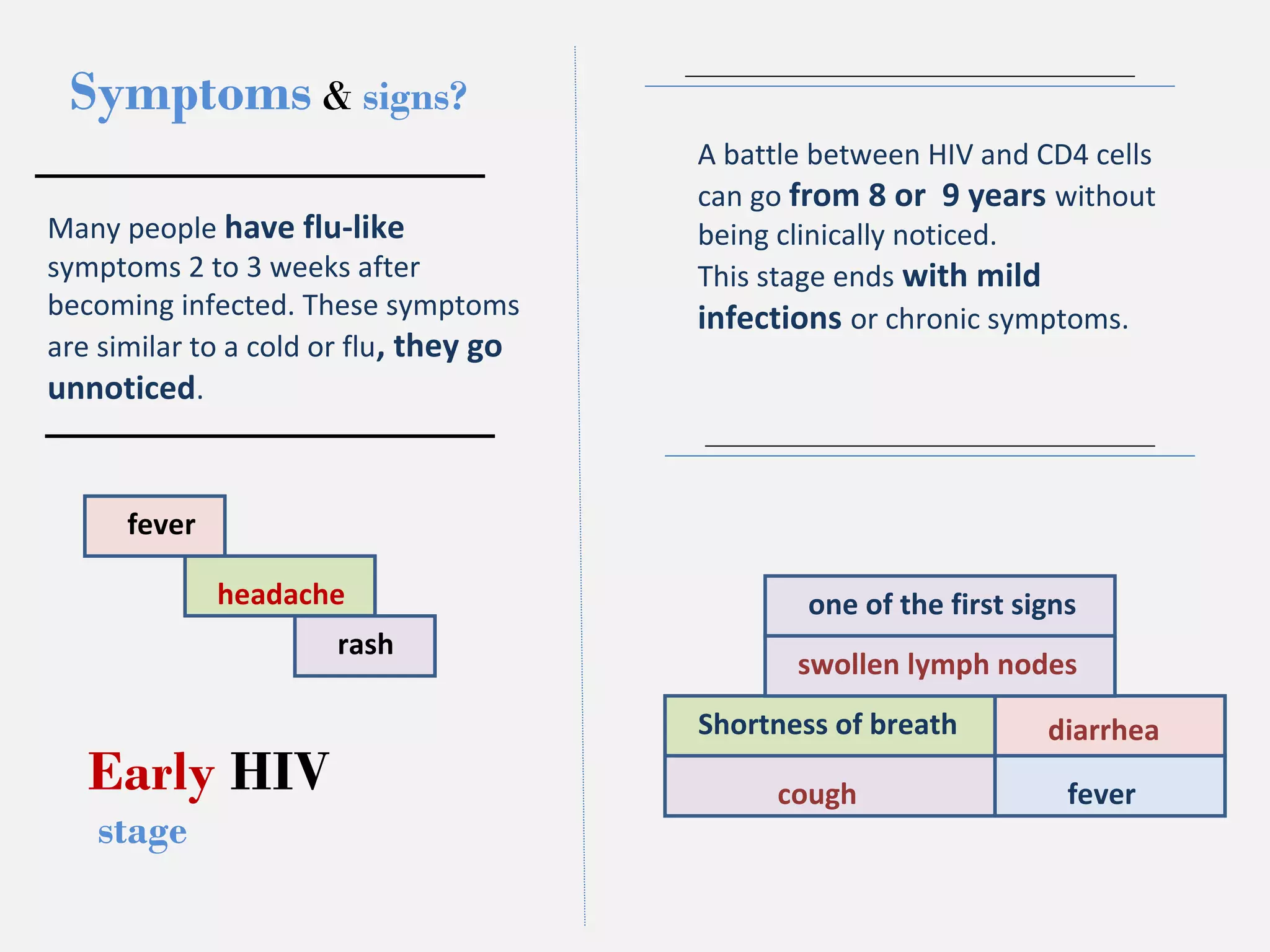
Many people have flu-like 
symptoms 2 to 3 weeks after 
becoming infected. These symptoms 
are similar to a cold or flu, they go 
unnoticed. 
Early HIV 
stage 
A battle between HIV and CD4 cells 
can go from 8 or 9 years without 
being clinically noticed. 
This stage ends with mild 
infections or chronic symptoms. 
Symptoms & signs? 
fever 
headache 
rash 
one of the first signs 
swollen lymph nodes 
diarrhea 
Shortness of breath 
cough fever
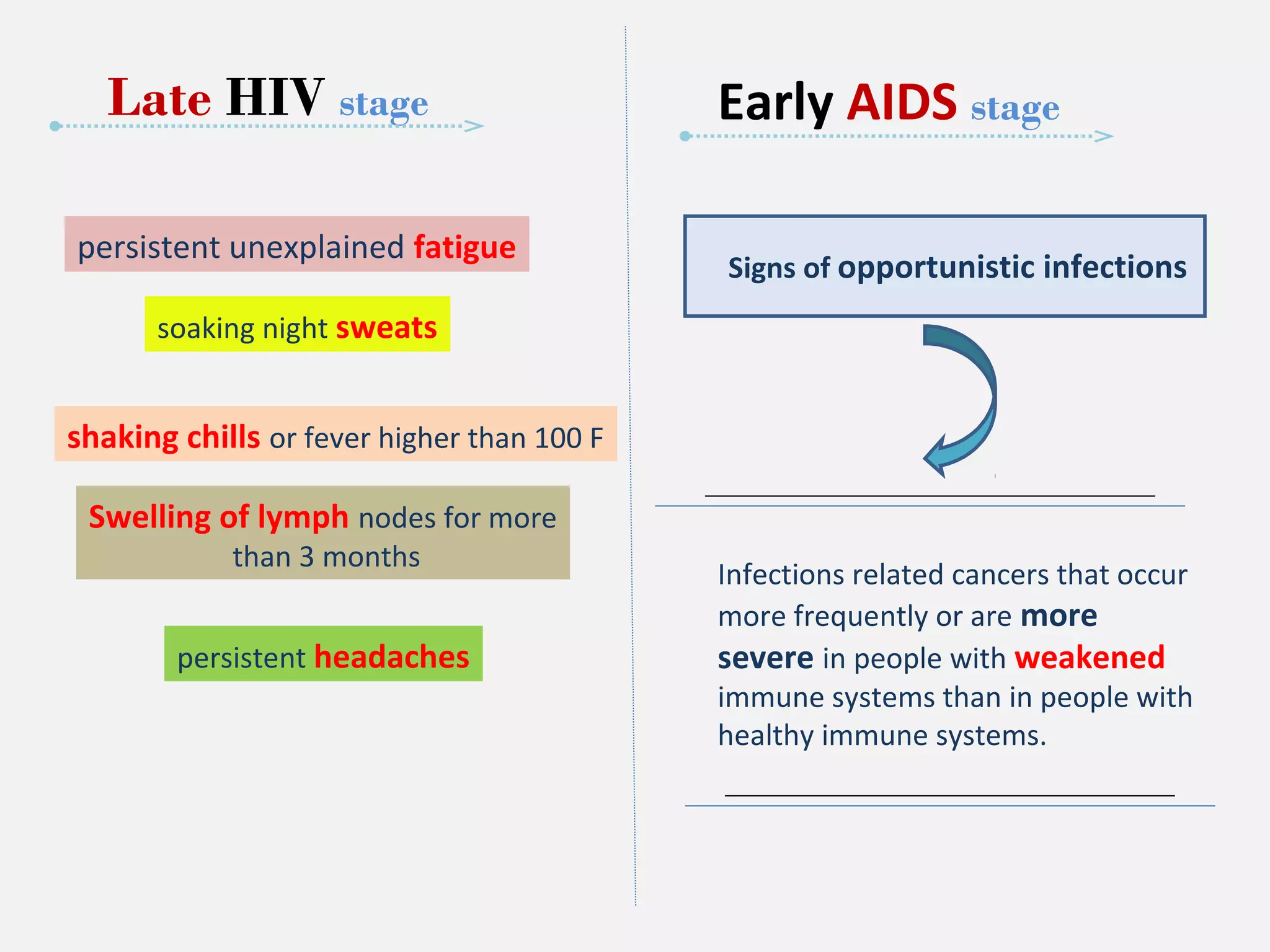
Late HIV stage 
Infections related cancers that occur 
more frequently or are more 
severe in people with weakened 
immune systems than in people with 
healthy immune systems. 
persistent unexplained fatigue 
soaking night sweats 
shaking chills or fever higher than 100 F 
Swelling of lymph nodes for more 
than 3 months 
persistent headaches 
Early AIDS stage 
Signs of opportunistic infections
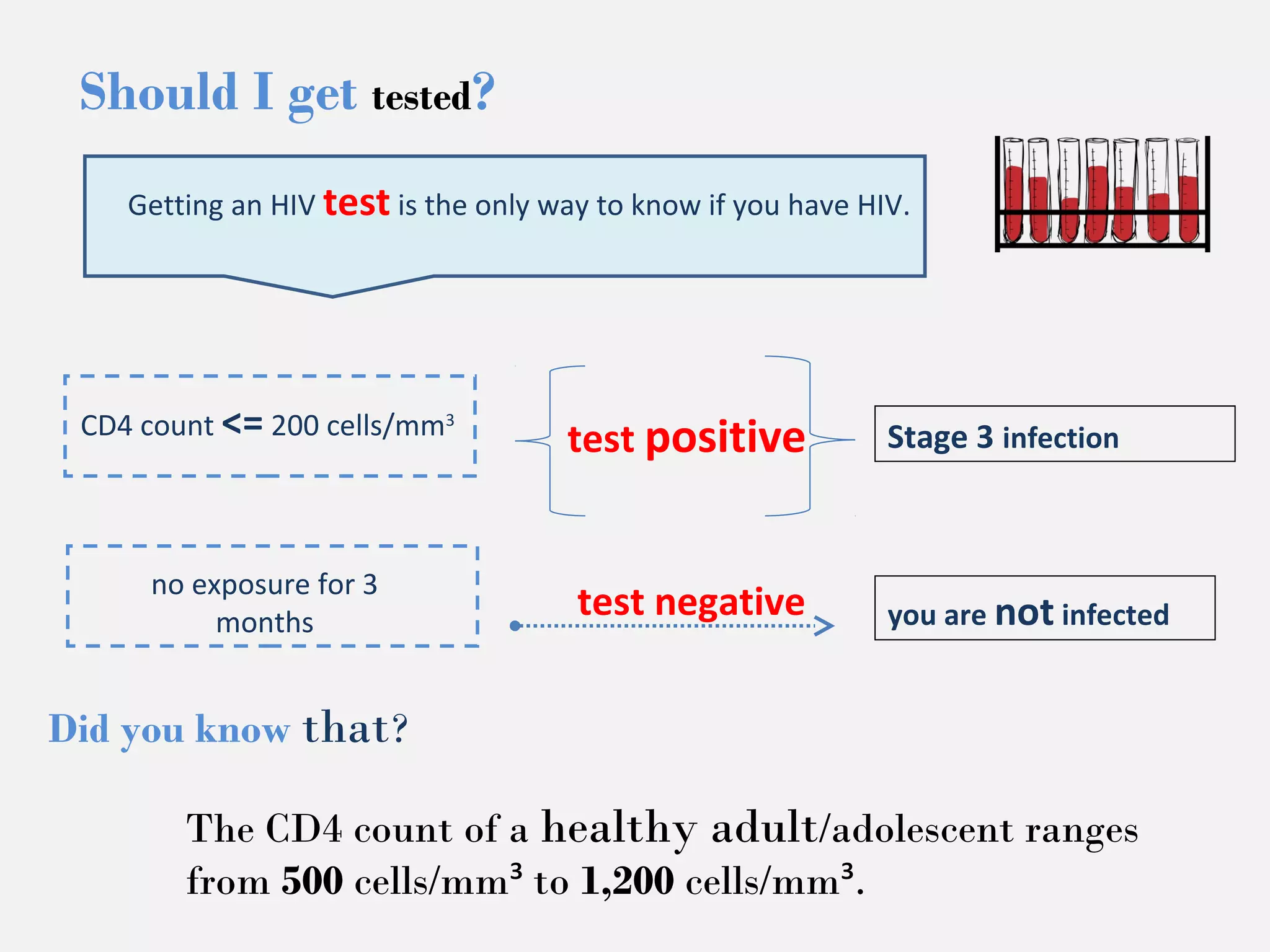
Should I get tested? 
Getting an HIV test is the only way to know if you have HIV. 
test positive Stage 3 infection 
test negative 
you are not infected 
CD4 count <= 200 cells/mm3 
no exposure for 3 
months 
Did you know that? 
The CD4 count of a healthy adult/adolescent ranges 
from 500 cells/mm³ to 1,200 cells/mm³.
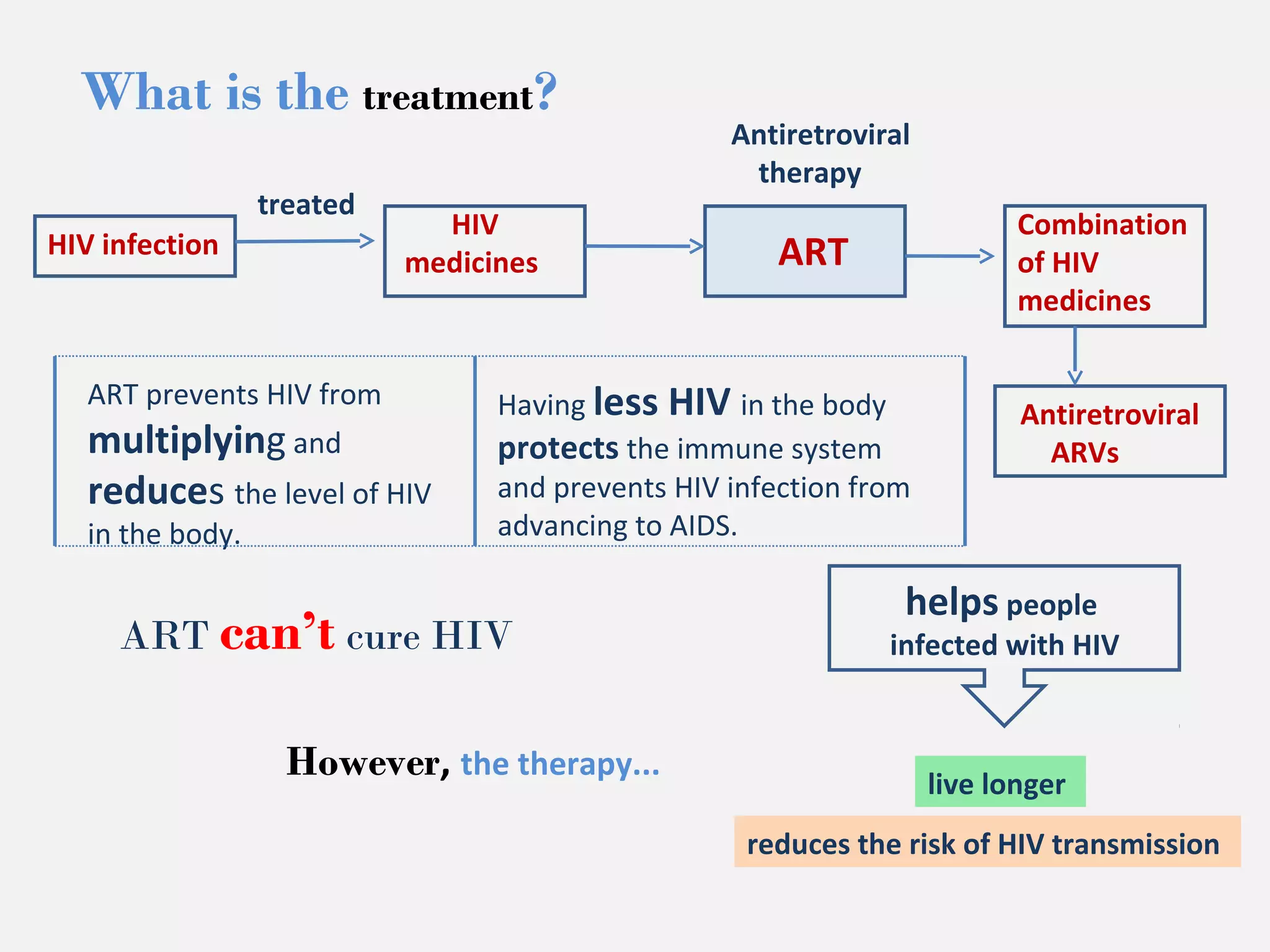
What is the treatment? 
HIV infection 
treated 
Antiretroviral 
therapy 
ART 
HIV 
medicines 
Combination 
of HIV 
medicines 
Antiretroviral 
ARVs 
Having less HIV in the body 
protects the immune system 
and prevents HIV infection from 
advancing to AIDS. 
ART prevents HIV from 
multiplying and 
reduces the level of HIV 
in the body. 
ART can’t cure HIV 
However, the therapy... 
helps people 
infected with HIV 
live longer 
reduces the risk of HIV transmission
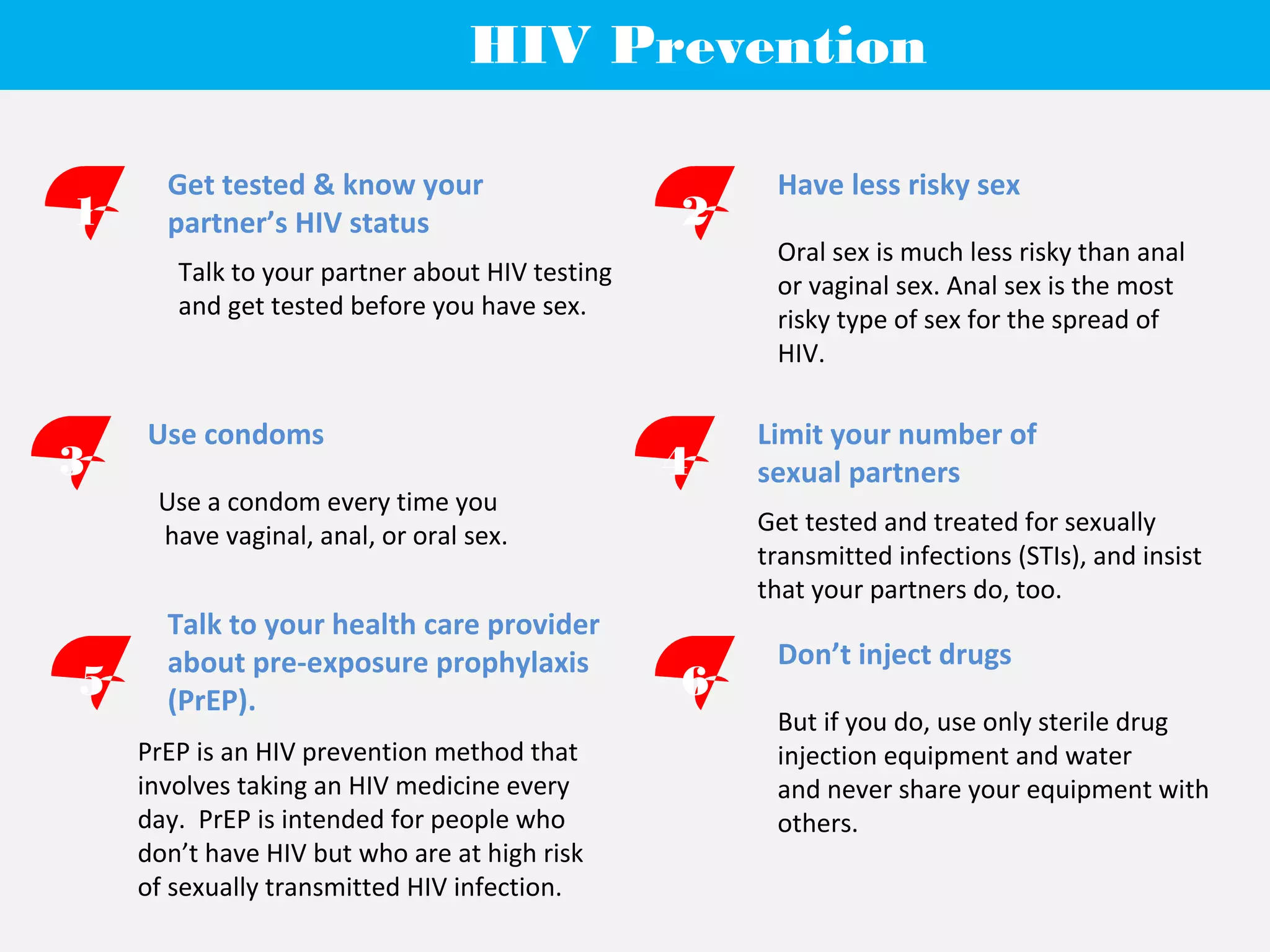
HIV Prevention 
Get tested & know your 
1 partner’s HIV status 
Talk to your partner about HIV testing 
and get tested before you have sex. 
Have less risky sex 
2 
Oral sex is much less risky than anal 
or vaginal sex. Anal sex is the most 
risky type of sex for the spread of 
HIV. 
Use condoms 
3 
Use a condom every time you 
have vaginal, anal, or oral sex. 
Limit your number of 
4 sexual partners 
Get tested and treated for sexually 
transmitted infections (STIs), and insist 
that your partners do, too. 
Talk to your health care provider 
about pre-exposure prophylaxis 
5 (PrEP). 
PrEP is an HIV prevention method that 
involves taking an HIV medicine every 
day. PrEP is intended for people who 
don’t have HIV but who are at high risk 
of sexually transmitted HIV infection. 
Don’t inject drugs 
6 
But if you do, use only sterile drug 
injection equipment and water 
and never share your equipment with 
others.
Quiz
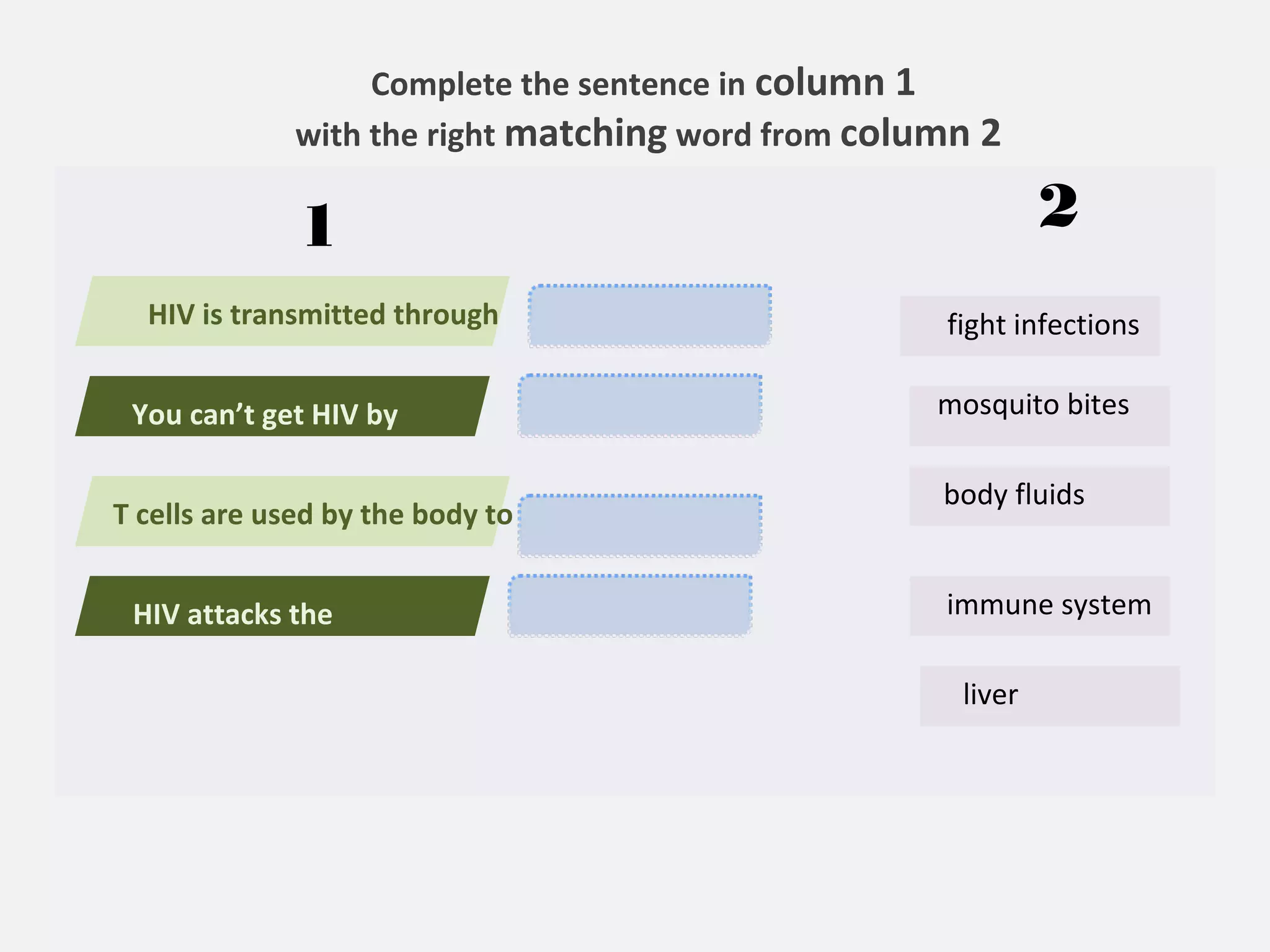
HIV is transmitted through 
fight infections 
mosquito bites 
body fluids 
1 
immune system 
Complete the sentence in column 1 
with the right matching word from column 2 
You can’t get HIV by 
T cells are used by the body to 
HIV attacks the 
liver 
2
Resources
For test locations visit 
Canada- Ontario 
Ontario Ministry of Health and Long-Term care 
CRICH (Center for Research on Inner City Health) 
US 
AIDS .gov 
CDC (Centers for Disease Control and Prevention) 
Watch this 3 minute 
video to learn more 
about HIV Rapid Testing 
in Hamilton, Ontario 
the following websites 
RAPID 
HIV 
TESTING
What are the ways you are 
protecting yourself from 
the HIV virus? 
Li v e a l ong heal t hy l i f e 
A free HIV world 
Take action 
And what about others ... 
” 
Credits & 
Links
Information 
CDC 
AIDS.gov 
Webmd 
Kaletra 
AIDSInfo 
Resources 
Disclaimer 
This quick overview is not a 
substitute for professional 
medical advice. Should you have 
any questions about any topic in 
this course, please consult your 
health professional.
Produced by 
G 
gabyXpression.

AIDS/HIV Quick Guide

  • 1.
    Quick Guide AIDS HIV Awareness
  • 2.
  • 3.
    Quick overview ofthe basic facts of HIV Target Audience - group leaders, community members, health practitioners, and aid workers without specialized health training Find out who is at risk the ways to prevent it Topics - description, transmission, stages, symptoms, diagnosis, treatment prevention, resources and test locations
  • 4.
    Table ofContents Awareness Credits & Links Description Transmission Stages Quiz Resources Test locations Information resources Disclaimer Symptoms Diagnosis Treatment Prevention
  • 5.
  • 6.
    What is HIV/AIDS? The human immunodeficiency virus (HIV) is a virus that attacks the immune system. Your immune system protects you from germs that cause infections and make you sick. Are the white blood cells that the immune system must have to fight infections T cells or CD4 cells
  • 7.
    HIV attacks yourt-cells And uses them to Make copies of itself When HIV destroys so Many of your cells... = AIDS Virus infects a healthy person t-cells send signals to activate your body’s immune response when they detect “intruders” like viruses (HIV) or bacteria Final stage of HIV infection HIV/AIDS Infection
  • 8.
    How HIV istransmitted? Having unprotected sex (oral, vaginal, or anal) People become infected with HIV through body fluids blood, semen, breast milk, and vaginal fluids. Sharing needles From a mother to child during childbirth or through breastfeeding Getting a transfusion of infected blood Occupational exposure
  • 9.
    However...did you know? You can't get HIV by, touching hugging & kissing sharing plates, cups, utensils, telephone coughing & sneezing mosquito bites sharing clothes ∟ public bathrooms swimming pools
  • 10.
    1 Many, butnot all, people develop flu-like symptoms often described as the "worst flu ever." HIV reproduces at very low levels, 2 3 Did you know there are three stages of HIV infection? Acute infection Clinical Latency Large amounts of the virus are being produced in your body. AIDS although it is still active. You may not have symptoms. With proper HIV treatment, people may live with clinical latency for several decades. Without treatment, this period lasts an Average of 10 years, but some people may progress trough As your CD4 cells fall below 200 this stage faster. cells/mm³, you are considered to have progressed to AIDS. Without treatment, people typically survive 3 years.
  • 11.
    Many people haveflu-like symptoms 2 to 3 weeks after becoming infected. These symptoms are similar to a cold or flu, they go unnoticed. Early HIV stage A battle between HIV and CD4 cells can go from 8 or 9 years without being clinically noticed. This stage ends with mild infections or chronic symptoms. Symptoms & signs? fever headache rash one of the first signs swollen lymph nodes diarrhea Shortness of breath cough fever
  • 12.
    Late HIV stage Infections related cancers that occur more frequently or are more severe in people with weakened immune systems than in people with healthy immune systems. persistent unexplained fatigue soaking night sweats shaking chills or fever higher than 100 F Swelling of lymph nodes for more than 3 months persistent headaches Early AIDS stage Signs of opportunistic infections
  • 13.
    Should I gettested? Getting an HIV test is the only way to know if you have HIV. test positive Stage 3 infection test negative you are not infected CD4 count <= 200 cells/mm3 no exposure for 3 months Did you know that? The CD4 count of a healthy adult/adolescent ranges from 500 cells/mm³ to 1,200 cells/mm³.
  • 14.
    What is thetreatment? HIV infection treated Antiretroviral therapy ART HIV medicines Combination of HIV medicines Antiretroviral ARVs Having less HIV in the body protects the immune system and prevents HIV infection from advancing to AIDS. ART prevents HIV from multiplying and reduces the level of HIV in the body. ART can’t cure HIV However, the therapy... helps people infected with HIV live longer reduces the risk of HIV transmission
  • 15.
    HIV Prevention Gettested & know your 1 partner’s HIV status Talk to your partner about HIV testing and get tested before you have sex. Have less risky sex 2 Oral sex is much less risky than anal or vaginal sex. Anal sex is the most risky type of sex for the spread of HIV. Use condoms 3 Use a condom every time you have vaginal, anal, or oral sex. Limit your number of 4 sexual partners Get tested and treated for sexually transmitted infections (STIs), and insist that your partners do, too. Talk to your health care provider about pre-exposure prophylaxis 5 (PrEP). PrEP is an HIV prevention method that involves taking an HIV medicine every day. PrEP is intended for people who don’t have HIV but who are at high risk of sexually transmitted HIV infection. Don’t inject drugs 6 But if you do, use only sterile drug injection equipment and water and never share your equipment with others.
  • 16.
  • 17.
    HIV is transmittedthrough fight infections mosquito bites body fluids 1 immune system Complete the sentence in column 1 with the right matching word from column 2 You can’t get HIV by T cells are used by the body to HIV attacks the liver 2
  • 18.
  • 19.
    For test locationsvisit Canada- Ontario Ontario Ministry of Health and Long-Term care CRICH (Center for Research on Inner City Health) US AIDS .gov CDC (Centers for Disease Control and Prevention) Watch this 3 minute video to learn more about HIV Rapid Testing in Hamilton, Ontario the following websites RAPID HIV TESTING
  • 20.
    What are theways you are protecting yourself from the HIV virus? Li v e a l ong heal t hy l i f e A free HIV world Take action And what about others ... ” 
  • 21.
  • 22.
    Information CDC AIDS.gov Webmd Kaletra AIDSInfo Resources Disclaimer This quick overview is not a substitute for professional medical advice. Should you have any questions about any topic in this course, please consult your health professional.
  • 23.
    Produced by G gabyXpression.