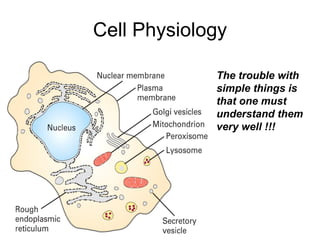
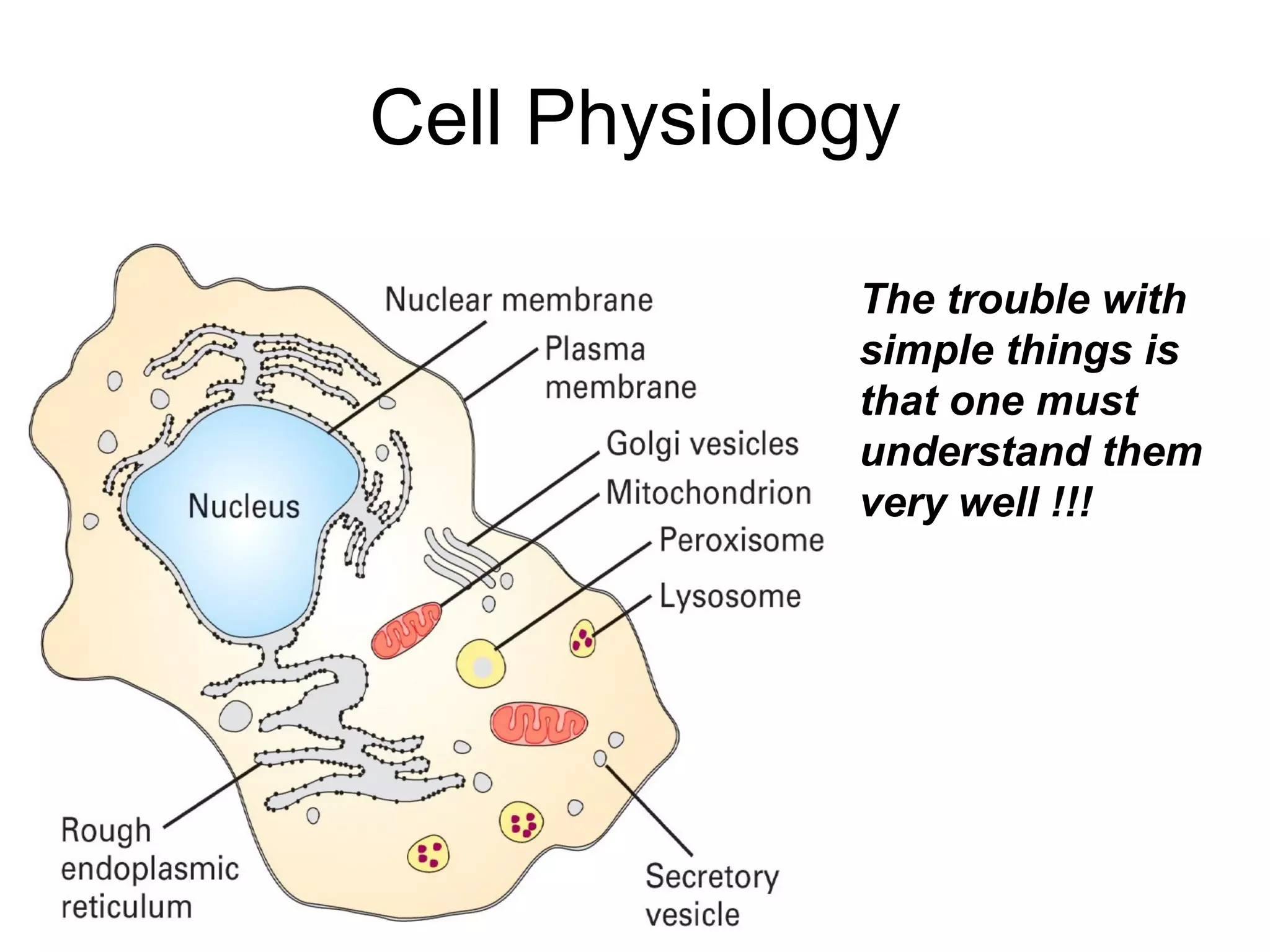
Cell Physiology The trouble with simple things is that one must understand them very well !!!
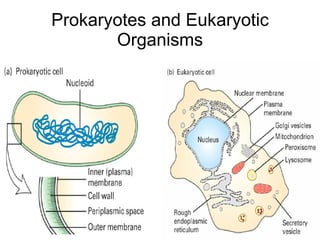
Prokaryotes and Eukaryotic Organisms
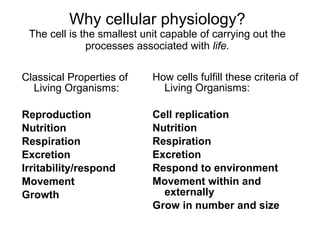
Why cellular physiology? The cell is the smallest unit capable of carrying out the processes associated with  life. Classical Properties of Living Organisms: Reproduction  Nutrition  Respiration Excretion Irritability/respond Movement Growth How cells fulfill these criteria of Living Organisms: Cell replication Nutrition  Respiration  Excretion Respond to environment Movement within and externally Grow in number and size
Organization of the cell Plasma membrane  encompasses the functional cell unit Membranes segregate most other individual components of the cell Nucleus Organelles Cytoplasm -   suspension of fluid with various cellular elements
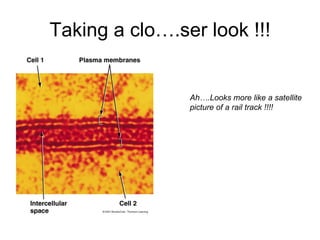
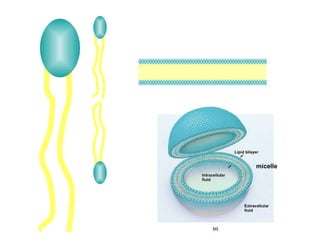
Taking a clo….ser look !!! Ah….Looks more like a satellite picture of a rail track !!!!
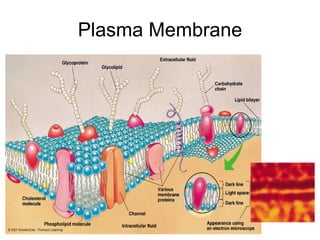
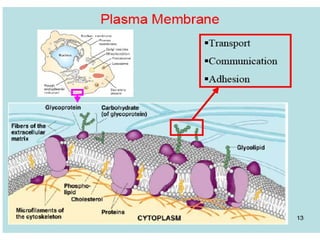
Plasma Membrane
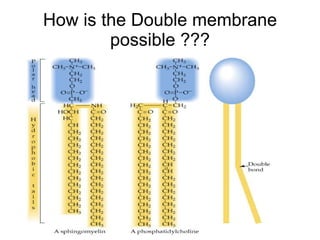
How is the Double membrane possible ???
Phospholipids are  amphipathic !!! Phospholipids are polar, having  hydrophobic "tails"   made of lipids, and  hydrophilc "head"  groups Phosphatidylcholine: head is choline (lecithins) Phosphatidylethanolamine: head is ethanolamine Phosphatidylinositol:  …………………… well…you get the idea The hydrophobic "tail" is composed of varying phospholipids, a fatty acid esterified to glycerol or (serine [sphingomyelin]) Because of this polar nature, and water being outside and inside the cell, phospholipids self-assemble in aqueous solutions to form bilayers.
micelle
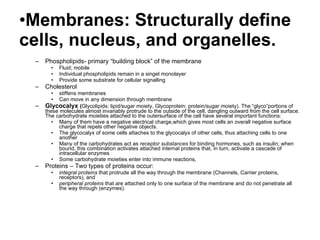
Phospholipids- primary “building block” of the membrane Fluid; mobile Individual phospholipids remain in a singel monolayer Provide some substrate for cellular signalling Cholesterol  stiffens membranes Can move in any dimension through membrane Glycocalyx  ( Glycolipids: lipid/sugar moiety, Glycoprotein: protein/sugar moiety). The “glyco”portions of these molecules almost invariably protrude to the outside of the cell, dangling outward from the cell surface. The carbohydrate moieties attached to the outersurface of the cell have several important functions: Many of them have a negative electrical charge,which gives most cells an overall negative surface charge that repels other negative objects.  The glycocalyx of some cells attaches to the glycocalyx of other cells, thus attaching cells to one another Many of the carbohydrates act as  receptor substances  for binding hormones, such as insulin; when bound, this combination activates attached internal proteins that, in turn, activate a cascade of intracellular enzymes Some carbohydrate moieties enter into immune reactions, Proteins – Two types of proteins occur:  integral proteins  that protrude all the way through the membrane (Channels, Carrier proteins, receptors), and  peripheral proteins  that are attached only to one surface of the membrane and do not penetrate all the way through (enzymes). Membranes: Structurally define cells, nucleus, and organelles.
 
Cell Organelles Most organelles of the cell are covered by membranes composed primarily of lipids and proteins. These membranes include the  cell membrane,  nuclear membrane, membrane of the endoplasmic reticulum,  and  Membranes of the mitochondria, lysosomes,  and  Golgi apparatus.
Cytoplasm Cytoskeleton  +  Cytosol  =  Cytoplasm Cytosol  - The clear fluid portion of the cytoplasm in which the particles are dispersed is called  Cytosol this contains mainly dissolved proteins, electrolytes, and glucose.
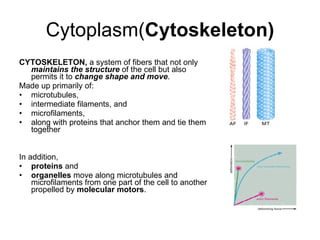
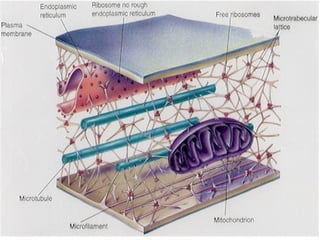
Cytoplasm( Cytoskeleton ) CYTOSKELETON,  a system of fibers that not only  maintains the structure  of the cell but also permits it to  change shape and move .  M ade up primarily of : microtubules,  intermediate filaments, and  microfilaments,  along with proteins that anchor them and tie them together In addition,  proteins  and  organelles  move along microtubules and microfilaments from one part of the cell to another propelled by  molecular motors .
 
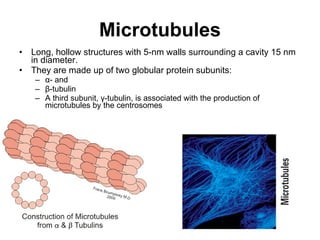
Microtubules L ong, hollow structures with 5-nm walls surrounding a cavity 15 nm in diameter.  They are made up of two globular protein subunits:  α - and  β -tubulin A third subunit,  γ -tubulin, is associated with the production of microtubules by the centrosomes
Functions:  They provide the  tracks  along with several different molecular motors for transport vesicles, organelles such as secretory granules, and mitochondria from one part of the cell to another. They also form the spindle, which moves the chromosomes in mitosis. Microtubules can transport in both directions. Applied Physiology:  Microtubule assembly is prevented by colchicine and vinblastine. The anticancer drug  paclitaxel (Taxol)  binds to microtubules and makes them so stable that organelles cannot move. Mitotic spindles cannot form, and the cells die .
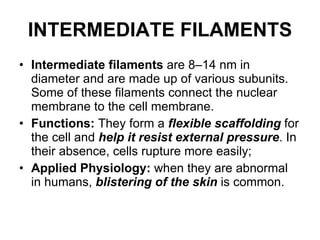
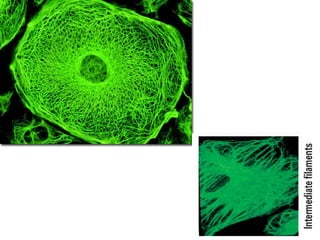
INTERMEDIATE FILAMENTS Intermediate filaments  are 8–14 nm in diameter and are made up of various subunits. Some of these filaments connect the nuclear membrane to the cell membrane.  Functions:  They form a  flexible scaffolding  for the cell and  help it resist external pressure . In their absence, cells rupture more easily;  Applied Physiology:  when they are abnormal in humans,  blistering of the skin  is common.
 
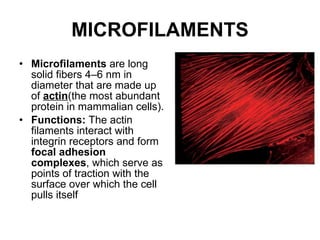
MICROFILAMENTS Microfilaments   are long solid fibers 4–6 nm in diameter that are made up of  actin (the  most abundant protein in mammalian cells ) .  Functions:  The actin filaments interact with integrin receptors and form  focal adhesion complexes , which serve as points of traction with the surface over which the cell pulls itself
Mitochondria Over a billion years ago,  aerobic bacteria were engulfed by eukaryotic cells and evolved into  mitochondria ,  providing the eukaryotic cells with the ability to form the energy-rich compound ATP by  oxidative phosphenylation.   Hundreds to thousands  of mitochondria are in each eukaryotic cell ,  depending   on the amount of energy required by the cell. Mitochondria are  self-replicative , which means that   one mitochondrion can form a second one, a third one,   and so on, whenever there is a need in the cell for   increased amounts of ATP
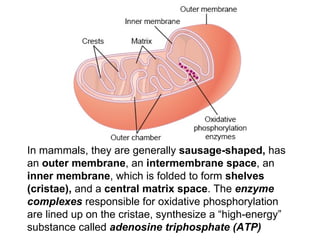
In mammals, they are generally  sausage-shaped ,  has an  outer membrane , an  intermembrane space , an  inner membrane , which is folded to form  shelves (cristae),  and a  central matrix space . The  enzyme complexes  responsible for oxidative phosphorylation are lined up on the cristae , synthesize a “high-energy” substance called  adenosine triphosphate (ATP)
Mitochondrial Genome T he mitochondria have  their own genome   (c onsistent with their origin from aerobic bacteria ) .  There is  much less DNA  in the mitochondrial genome than in the nuclear genome M itochondrial DNA is  responsible for certain key components of the pathway for oxidative phosphorylation  and 99% of the proteins in the mitochondria are the products of nuclear genes H uman mitochondrial DNA is a  double-stranded circular molecule   Sperms contribute few, if any, mitochondria to the zygote, so the mitochondria come almost entirely from the ovum and their inheritance is almost  exclusively maternal .  Mitochondria have no effective DNA repair system, and the mutation rate for mitochondrial DNA is over 10 times the rate for nuclear DNA. A large number of relatively rare diseases have now been traced to mutations in mitochondrial DNA.
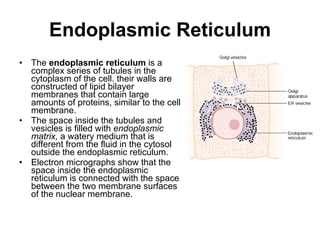
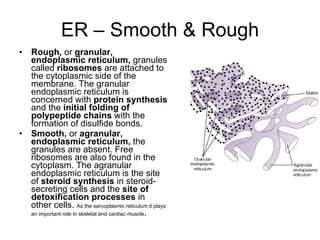
Endoplasmic Reticulum The  endoplasmic reticulum  is a complex series of tubules in the cytoplasm of the cell .   their walls are constructed of lipid bilayer membranes that contain large amounts of proteins, similar to the cell membrane.  The space inside the tubules and vesicles is filled with  endoplasmic matrix,  a watery medium that is different from the fluid in the cytosol outside the endoplasmic reticulum. Electron micrographs show that the space inside the endoplasmic reticulum is connected with the space between the two membrane surfaces of the nuclear membrane.
ER – Smooth & Rough R ough,  or  granular, endoplasmic reticulum,  granules called  ribosomes  are attached to the cytoplasmic side of the membrane .  The granular endoplasmic reticulum is concerned with  protein synthesis  and the  initial folding of polypeptide chains  with the formation of disulfide bonds.  S mooth,  or  agranular, endoplasmic reticulum,  the granules are absent. Free ribosomes are also found in the cytoplasm. The agranular endoplasmic reticulum is the site of  steroid synthesis  in steroid-secreting cells and the  site of detoxification processes  in other cells.  As the sarcoplasmic reticulum it plays an important role in skeletal and cardiac muscle .
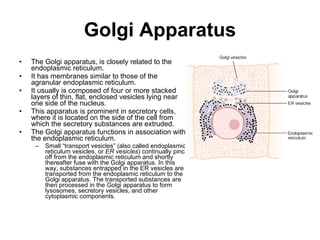
Golgi Apparatus The Golgi apparatus, is closely related to the endoplasmic reticulum.  It has membranes similar to those of the agranular endoplasmic reticulum.  It usually is composed of four or more stacked layers of thin, flat, enclosed vesicles lying near one side of the nucleus.  This apparatus is prominent in secretory cells, where it is located on the side of the cell from which the secretory substances are extruded.  The Golgi apparatus functions in association with the endoplasmic reticulum.  Small “transport vesicles” (also called endoplasmic reticulum vesicles, or  ER vesicles ) continually pinch off from the endoplasmic reticulum and shortly thereafter fuse with the Golgi apparatus. In this way, substances entrapped in the ER vesicles are transported from the endoplasmic reticulum to the Golgi apparatus. The transported substances are then processed in the Golgi apparatus to form lysosomes, secretory vesicles, and other cytoplasmic components.
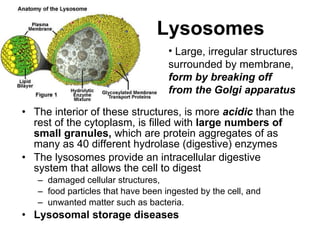
Lysosomes The interior of these structures, is more  acidic  than the rest of the cytoplasm,  is filled with  large numbers of small granules,  which are protein aggregates of as many as 40 different hydrolase (digestive) enzymes The lysosomes provide an intracellular digestive system that allows the cell to digest  damaged cellular structures,  food particles that have been ingested by the cell, and  unwanted matter such as bacteria. L ysosomal storage diseases L arge, irregular structures surrounded by membrane ,  form by breaking off from the Golgi   apparatus
Peroxisomes Peroxisomes are similar physically to lysosomes, but they are different in  two important ways First, they are believed to be formed by self-replication (or perhaps by budding off from the smooth endoplasmic reticulum) rather than from the Golgi apparatus.  Second, they contain oxidases rather than hydrolases.  Several of the oxidases are capable of combining oxygen with hydrogen ions derived from different intracellular chemicals to form hydrogen peroxide (H2O2).  Hydrogen peroxide is a highly oxidizing substance and is used in association with  catalase,  another oxidase enzyme present in large quantities in peroxisomes, to oxidize many substances that might otherwise be poisonous to the cell.  For instance, about half the alcohol a person drinks is detoxified by the peroxisomes of the liver cells in this manner.
Nucleus & Related Structures N ucleus is made up in large part of the  chromosomes, Except in germ cells, the chromosomes occur in pairs, one originally from each parent  Each chromosome is made up of a giant molecule of  deoxyribonucleic acid (DNA).   The DNA strand is about 2 m long, but it can fit in the nucleus because at intervals it is wrapped around a core of histone proteins to form a  nucleosome ( about 25 million ) . The whole complex of DNA and proteins is called  chromatin.   The nucleus of most cells contains a  nucleolus .  The nucleolus,   unlike most other organelles discussed here, does not   have a limiting membrane. Instead, it is simply   an accumulation   of large amounts of  ribonucleic acid (RNA)   and proteins of the   types found in ribosomes
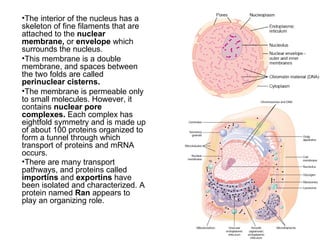
The interior of the nucleus has a skeleton of fine filaments that are attached to the  nuclear membrane,  or  envelope  which surrounds the nucleus.  This membrane is a double membrane, and spaces between the two folds are called  perinuclear cisterns.   The membrane is permeable only to small molecules. However, it contains  nuclear pore complexes.  Each complex has eightfold symmetry and is made up of about 100 proteins organized to form a tunnel through which transport of proteins and mRNA occurs.  There are many transport pathways, and proteins called  importins  and  exportins  have been isolated and characterized. A protein named  Ran  appears to play an organizing role.
Cell Replication During cell division, the coiling around histones is loosened, probably by acetylation of the histones, and pairs of chromosomes become visible, but between cell divisions only clumps of chromatin can be discerned in the nucleus.  The ultimate units of heredity are the  genes  on the chromosomes (see below). Each gene is a portion of the DNA molecule. During normal cell division by  mitosis,  the chromosomes duplicate themselves and then divide in such a way that each daughter cell receives a full complement  (diploid number)  of chromosomes.  During their final maturation, germ cells undergo a division in which half the chromosomes (the  haploid number ) go to each daughter cell  . This reduction division  (meiosis)  is actually a two-stage process .   When a sperm and ovum unite, the resultant cell  (zygote)  has a full diploid complement of chromosomes, one-half from the female parent and one-half from the male. The chromosomes undergo recombination, which mixes maternal and paternal genes.

Cell physiology

  • 1.
    Cell Physiology Thetrouble with simple things is that one must understand them very well !!!
  • 2.
  • 3.
    Why cellular physiology?The cell is the smallest unit capable of carrying out the processes associated with life. Classical Properties of Living Organisms: Reproduction Nutrition Respiration Excretion Irritability/respond Movement Growth How cells fulfill these criteria of Living Organisms: Cell replication Nutrition Respiration Excretion Respond to environment Movement within and externally Grow in number and size
  • 4.
    Organization of thecell Plasma membrane encompasses the functional cell unit Membranes segregate most other individual components of the cell Nucleus Organelles Cytoplasm - suspension of fluid with various cellular elements
  • 5.
    Taking a clo….serlook !!! Ah….Looks more like a satellite picture of a rail track !!!!
  • 6.
  • 7.
    How is theDouble membrane possible ???
  • 8.
    Phospholipids are amphipathic !!! Phospholipids are polar, having hydrophobic "tails" made of lipids, and hydrophilc "head" groups Phosphatidylcholine: head is choline (lecithins) Phosphatidylethanolamine: head is ethanolamine Phosphatidylinositol: …………………… well…you get the idea The hydrophobic "tail" is composed of varying phospholipids, a fatty acid esterified to glycerol or (serine [sphingomyelin]) Because of this polar nature, and water being outside and inside the cell, phospholipids self-assemble in aqueous solutions to form bilayers.
  • 9.
  • 10.
    Phospholipids- primary “buildingblock” of the membrane Fluid; mobile Individual phospholipids remain in a singel monolayer Provide some substrate for cellular signalling Cholesterol stiffens membranes Can move in any dimension through membrane Glycocalyx ( Glycolipids: lipid/sugar moiety, Glycoprotein: protein/sugar moiety). The “glyco”portions of these molecules almost invariably protrude to the outside of the cell, dangling outward from the cell surface. The carbohydrate moieties attached to the outersurface of the cell have several important functions: Many of them have a negative electrical charge,which gives most cells an overall negative surface charge that repels other negative objects. The glycocalyx of some cells attaches to the glycocalyx of other cells, thus attaching cells to one another Many of the carbohydrates act as receptor substances for binding hormones, such as insulin; when bound, this combination activates attached internal proteins that, in turn, activate a cascade of intracellular enzymes Some carbohydrate moieties enter into immune reactions, Proteins – Two types of proteins occur: integral proteins that protrude all the way through the membrane (Channels, Carrier proteins, receptors), and peripheral proteins that are attached only to one surface of the membrane and do not penetrate all the way through (enzymes). Membranes: Structurally define cells, nucleus, and organelles.
  • 11.
  • 12.
    Cell Organelles Mostorganelles of the cell are covered by membranes composed primarily of lipids and proteins. These membranes include the cell membrane, nuclear membrane, membrane of the endoplasmic reticulum, and Membranes of the mitochondria, lysosomes, and Golgi apparatus.
  • 13.
    Cytoplasm Cytoskeleton + Cytosol = Cytoplasm Cytosol - The clear fluid portion of the cytoplasm in which the particles are dispersed is called Cytosol this contains mainly dissolved proteins, electrolytes, and glucose.
  • 14.
    Cytoplasm( Cytoskeleton )CYTOSKELETON, a system of fibers that not only maintains the structure of the cell but also permits it to change shape and move . M ade up primarily of : microtubules, intermediate filaments, and microfilaments, along with proteins that anchor them and tie them together In addition, proteins and organelles move along microtubules and microfilaments from one part of the cell to another propelled by molecular motors .
  • 15.
  • 16.
    Microtubules L ong,hollow structures with 5-nm walls surrounding a cavity 15 nm in diameter. They are made up of two globular protein subunits: α - and β -tubulin A third subunit, γ -tubulin, is associated with the production of microtubules by the centrosomes
  • 17.
    Functions: Theyprovide the tracks along with several different molecular motors for transport vesicles, organelles such as secretory granules, and mitochondria from one part of the cell to another. They also form the spindle, which moves the chromosomes in mitosis. Microtubules can transport in both directions. Applied Physiology: Microtubule assembly is prevented by colchicine and vinblastine. The anticancer drug paclitaxel (Taxol) binds to microtubules and makes them so stable that organelles cannot move. Mitotic spindles cannot form, and the cells die .
  • 18.
    INTERMEDIATE FILAMENTS Intermediatefilaments are 8–14 nm in diameter and are made up of various subunits. Some of these filaments connect the nuclear membrane to the cell membrane. Functions: They form a flexible scaffolding for the cell and help it resist external pressure . In their absence, cells rupture more easily; Applied Physiology: when they are abnormal in humans, blistering of the skin is common.
  • 19.
  • 20.
    MICROFILAMENTS Microfilaments are long solid fibers 4–6 nm in diameter that are made up of actin (the most abundant protein in mammalian cells ) . Functions: The actin filaments interact with integrin receptors and form focal adhesion complexes , which serve as points of traction with the surface over which the cell pulls itself
  • 21.
    Mitochondria Over abillion years ago, aerobic bacteria were engulfed by eukaryotic cells and evolved into mitochondria , providing the eukaryotic cells with the ability to form the energy-rich compound ATP by oxidative phosphenylation. Hundreds to thousands of mitochondria are in each eukaryotic cell , depending on the amount of energy required by the cell. Mitochondria are self-replicative , which means that one mitochondrion can form a second one, a third one, and so on, whenever there is a need in the cell for increased amounts of ATP
  • 22.
    In mammals, theyare generally sausage-shaped , has an outer membrane , an intermembrane space , an inner membrane , which is folded to form shelves (cristae), and a central matrix space . The enzyme complexes responsible for oxidative phosphorylation are lined up on the cristae , synthesize a “high-energy” substance called adenosine triphosphate (ATP)
  • 23.
    Mitochondrial Genome The mitochondria have their own genome (c onsistent with their origin from aerobic bacteria ) . There is much less DNA in the mitochondrial genome than in the nuclear genome M itochondrial DNA is responsible for certain key components of the pathway for oxidative phosphorylation and 99% of the proteins in the mitochondria are the products of nuclear genes H uman mitochondrial DNA is a double-stranded circular molecule Sperms contribute few, if any, mitochondria to the zygote, so the mitochondria come almost entirely from the ovum and their inheritance is almost exclusively maternal . Mitochondria have no effective DNA repair system, and the mutation rate for mitochondrial DNA is over 10 times the rate for nuclear DNA. A large number of relatively rare diseases have now been traced to mutations in mitochondrial DNA.
  • 24.
    Endoplasmic Reticulum The endoplasmic reticulum is a complex series of tubules in the cytoplasm of the cell . their walls are constructed of lipid bilayer membranes that contain large amounts of proteins, similar to the cell membrane. The space inside the tubules and vesicles is filled with endoplasmic matrix, a watery medium that is different from the fluid in the cytosol outside the endoplasmic reticulum. Electron micrographs show that the space inside the endoplasmic reticulum is connected with the space between the two membrane surfaces of the nuclear membrane.
  • 25.
    ER – Smooth& Rough R ough, or granular, endoplasmic reticulum, granules called ribosomes are attached to the cytoplasmic side of the membrane . The granular endoplasmic reticulum is concerned with protein synthesis and the initial folding of polypeptide chains with the formation of disulfide bonds. S mooth, or agranular, endoplasmic reticulum, the granules are absent. Free ribosomes are also found in the cytoplasm. The agranular endoplasmic reticulum is the site of steroid synthesis in steroid-secreting cells and the site of detoxification processes in other cells. As the sarcoplasmic reticulum it plays an important role in skeletal and cardiac muscle .
  • 26.
    Golgi Apparatus TheGolgi apparatus, is closely related to the endoplasmic reticulum. It has membranes similar to those of the agranular endoplasmic reticulum. It usually is composed of four or more stacked layers of thin, flat, enclosed vesicles lying near one side of the nucleus. This apparatus is prominent in secretory cells, where it is located on the side of the cell from which the secretory substances are extruded. The Golgi apparatus functions in association with the endoplasmic reticulum. Small “transport vesicles” (also called endoplasmic reticulum vesicles, or ER vesicles ) continually pinch off from the endoplasmic reticulum and shortly thereafter fuse with the Golgi apparatus. In this way, substances entrapped in the ER vesicles are transported from the endoplasmic reticulum to the Golgi apparatus. The transported substances are then processed in the Golgi apparatus to form lysosomes, secretory vesicles, and other cytoplasmic components.
  • 27.
    Lysosomes The interiorof these structures, is more acidic than the rest of the cytoplasm, is filled with large numbers of small granules, which are protein aggregates of as many as 40 different hydrolase (digestive) enzymes The lysosomes provide an intracellular digestive system that allows the cell to digest damaged cellular structures, food particles that have been ingested by the cell, and unwanted matter such as bacteria. L ysosomal storage diseases L arge, irregular structures surrounded by membrane , form by breaking off from the Golgi apparatus
  • 28.
    Peroxisomes Peroxisomes aresimilar physically to lysosomes, but they are different in two important ways First, they are believed to be formed by self-replication (or perhaps by budding off from the smooth endoplasmic reticulum) rather than from the Golgi apparatus. Second, they contain oxidases rather than hydrolases. Several of the oxidases are capable of combining oxygen with hydrogen ions derived from different intracellular chemicals to form hydrogen peroxide (H2O2). Hydrogen peroxide is a highly oxidizing substance and is used in association with catalase, another oxidase enzyme present in large quantities in peroxisomes, to oxidize many substances that might otherwise be poisonous to the cell. For instance, about half the alcohol a person drinks is detoxified by the peroxisomes of the liver cells in this manner.
  • 29.
    Nucleus & RelatedStructures N ucleus is made up in large part of the chromosomes, Except in germ cells, the chromosomes occur in pairs, one originally from each parent Each chromosome is made up of a giant molecule of deoxyribonucleic acid (DNA). The DNA strand is about 2 m long, but it can fit in the nucleus because at intervals it is wrapped around a core of histone proteins to form a nucleosome ( about 25 million ) . The whole complex of DNA and proteins is called chromatin. The nucleus of most cells contains a nucleolus . The nucleolus, unlike most other organelles discussed here, does not have a limiting membrane. Instead, it is simply an accumulation of large amounts of ribonucleic acid (RNA) and proteins of the types found in ribosomes
  • 30.
    The interior ofthe nucleus has a skeleton of fine filaments that are attached to the nuclear membrane, or envelope which surrounds the nucleus. This membrane is a double membrane, and spaces between the two folds are called perinuclear cisterns. The membrane is permeable only to small molecules. However, it contains nuclear pore complexes. Each complex has eightfold symmetry and is made up of about 100 proteins organized to form a tunnel through which transport of proteins and mRNA occurs. There are many transport pathways, and proteins called importins and exportins have been isolated and characterized. A protein named Ran appears to play an organizing role.
  • 31.
    Cell Replication Duringcell division, the coiling around histones is loosened, probably by acetylation of the histones, and pairs of chromosomes become visible, but between cell divisions only clumps of chromatin can be discerned in the nucleus. The ultimate units of heredity are the genes on the chromosomes (see below). Each gene is a portion of the DNA molecule. During normal cell division by mitosis, the chromosomes duplicate themselves and then divide in such a way that each daughter cell receives a full complement (diploid number) of chromosomes. During their final maturation, germ cells undergo a division in which half the chromosomes (the haploid number ) go to each daughter cell . This reduction division (meiosis) is actually a two-stage process . When a sperm and ovum unite, the resultant cell (zygote) has a full diploid complement of chromosomes, one-half from the female parent and one-half from the male. The chromosomes undergo recombination, which mixes maternal and paternal genes.