Downloaded 3,153 times
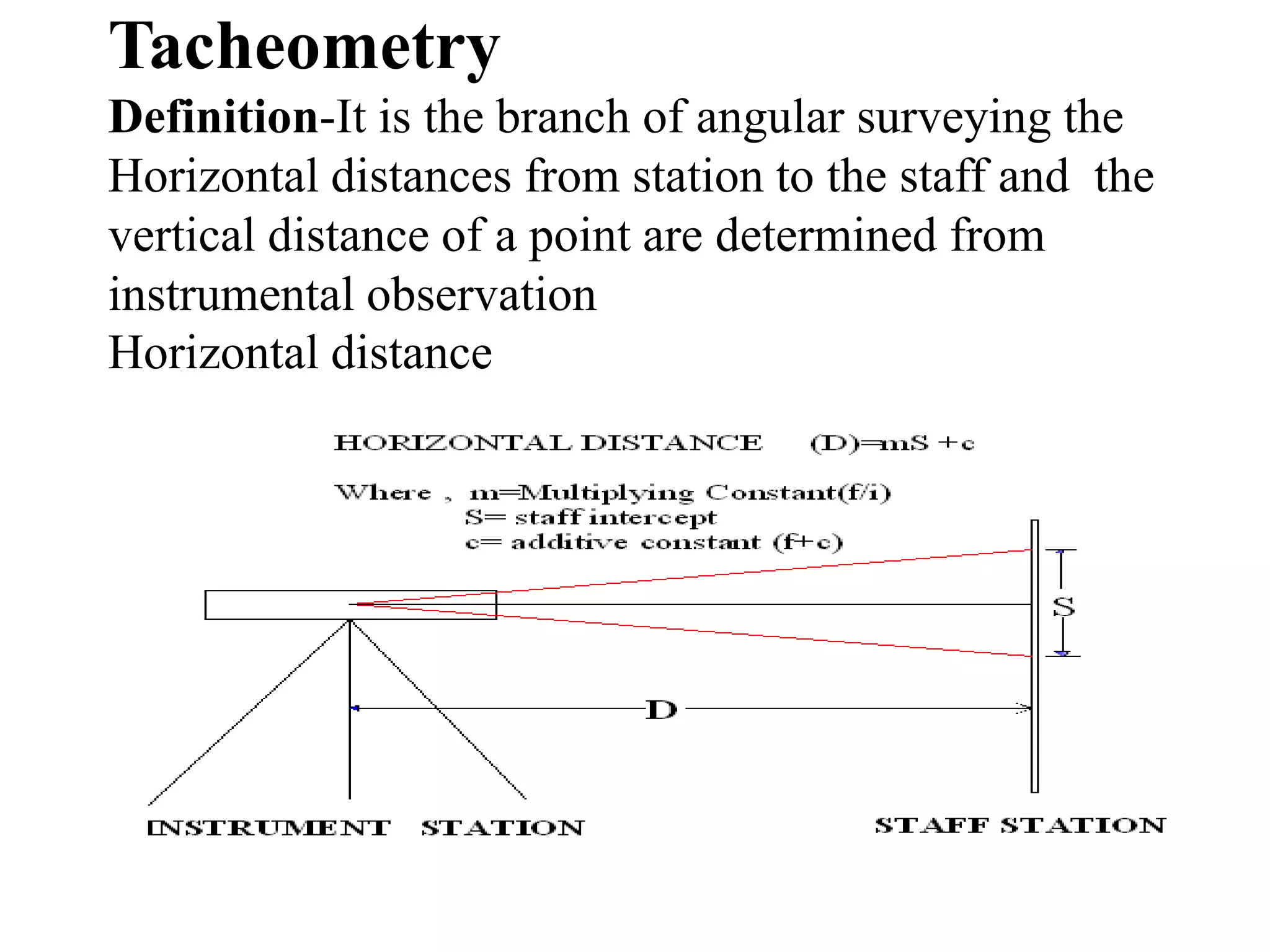
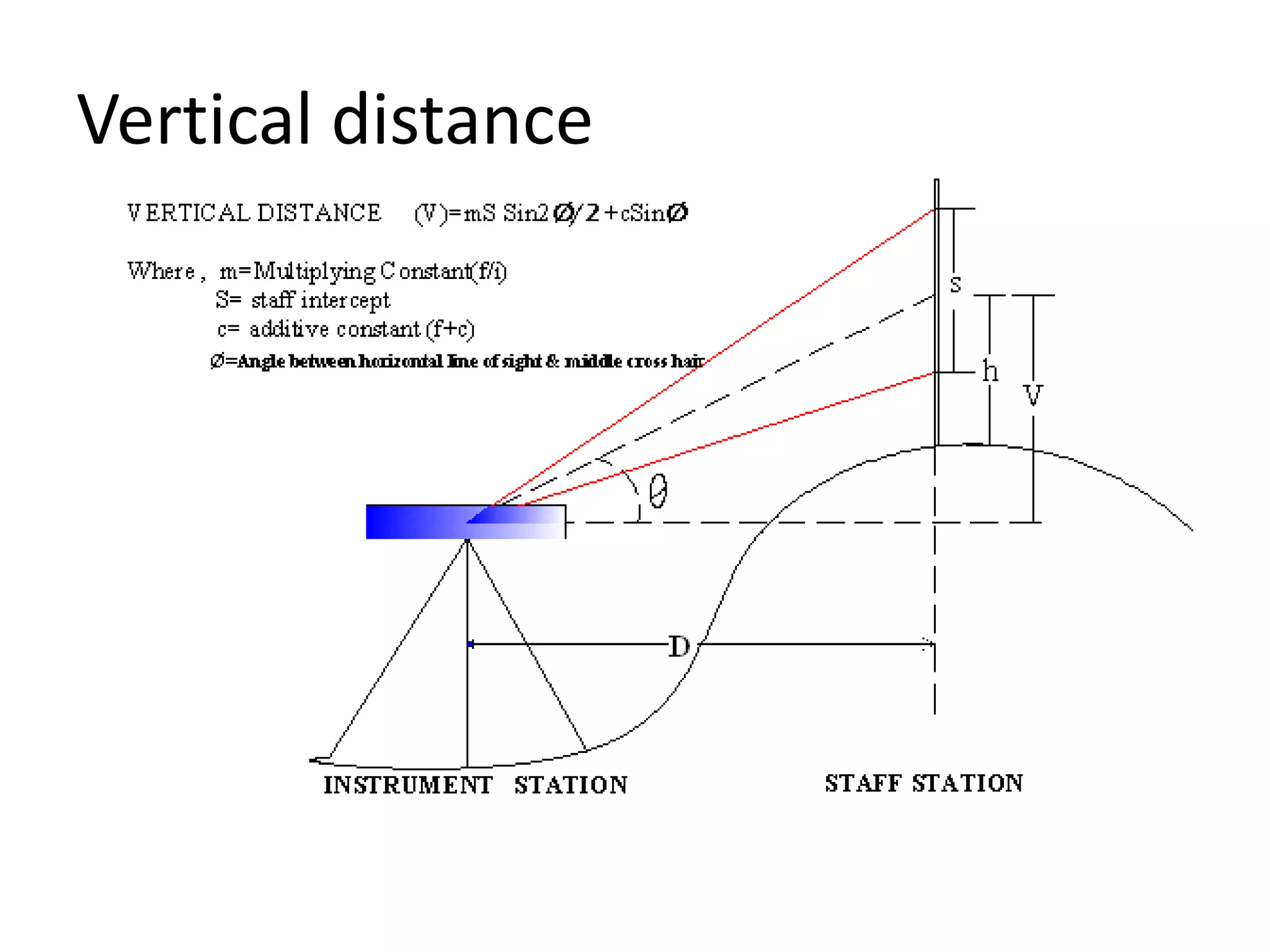
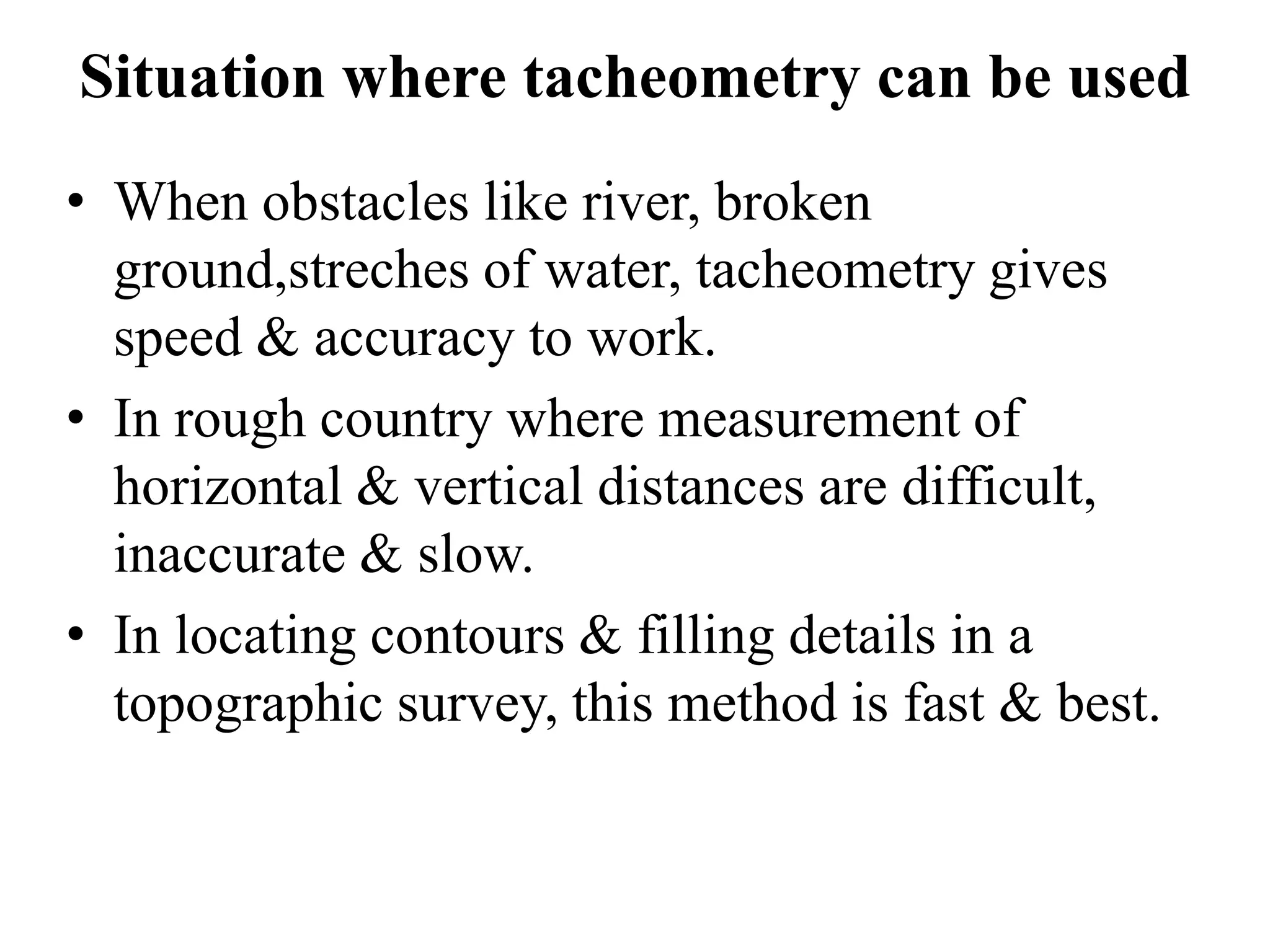
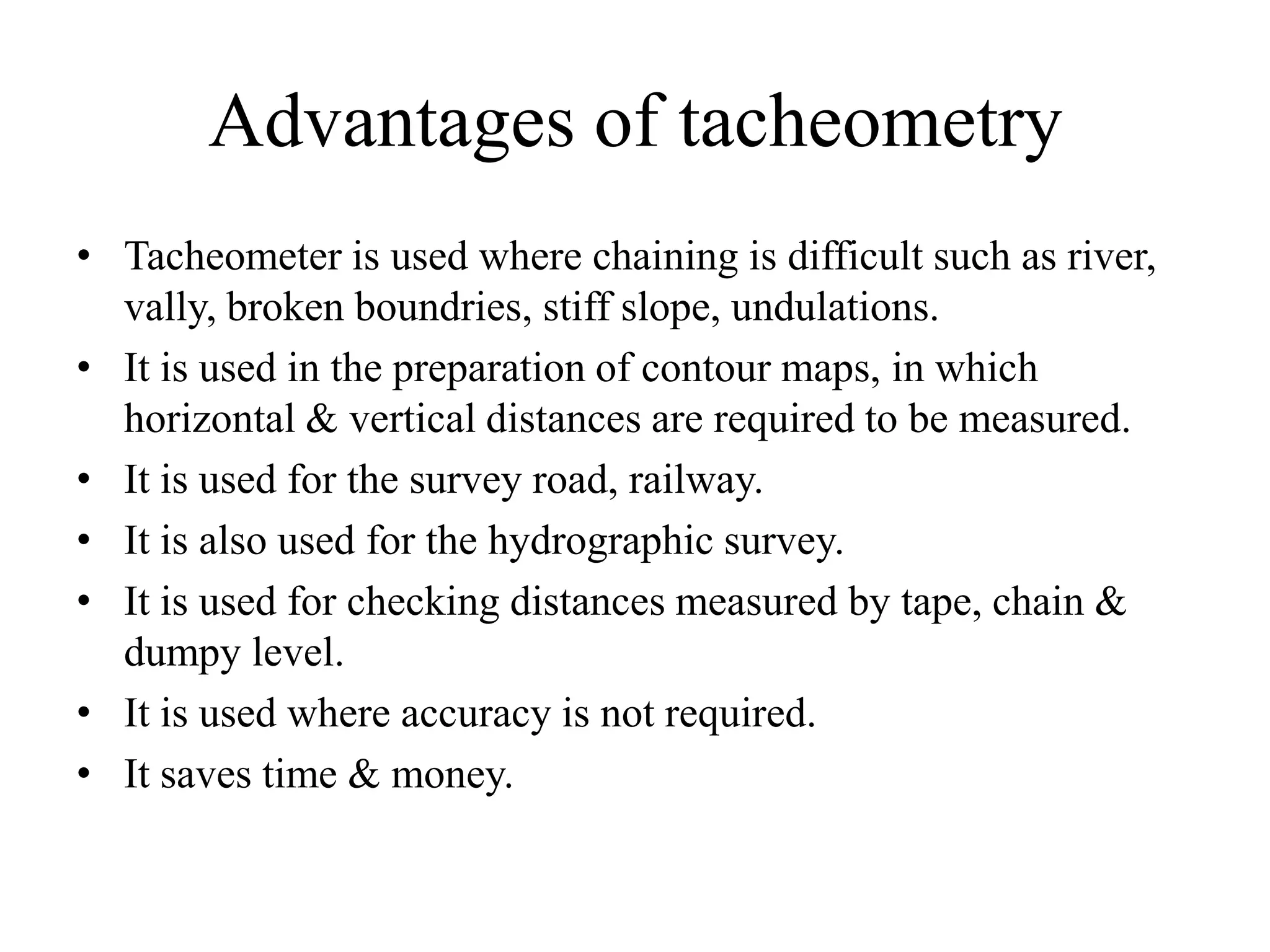
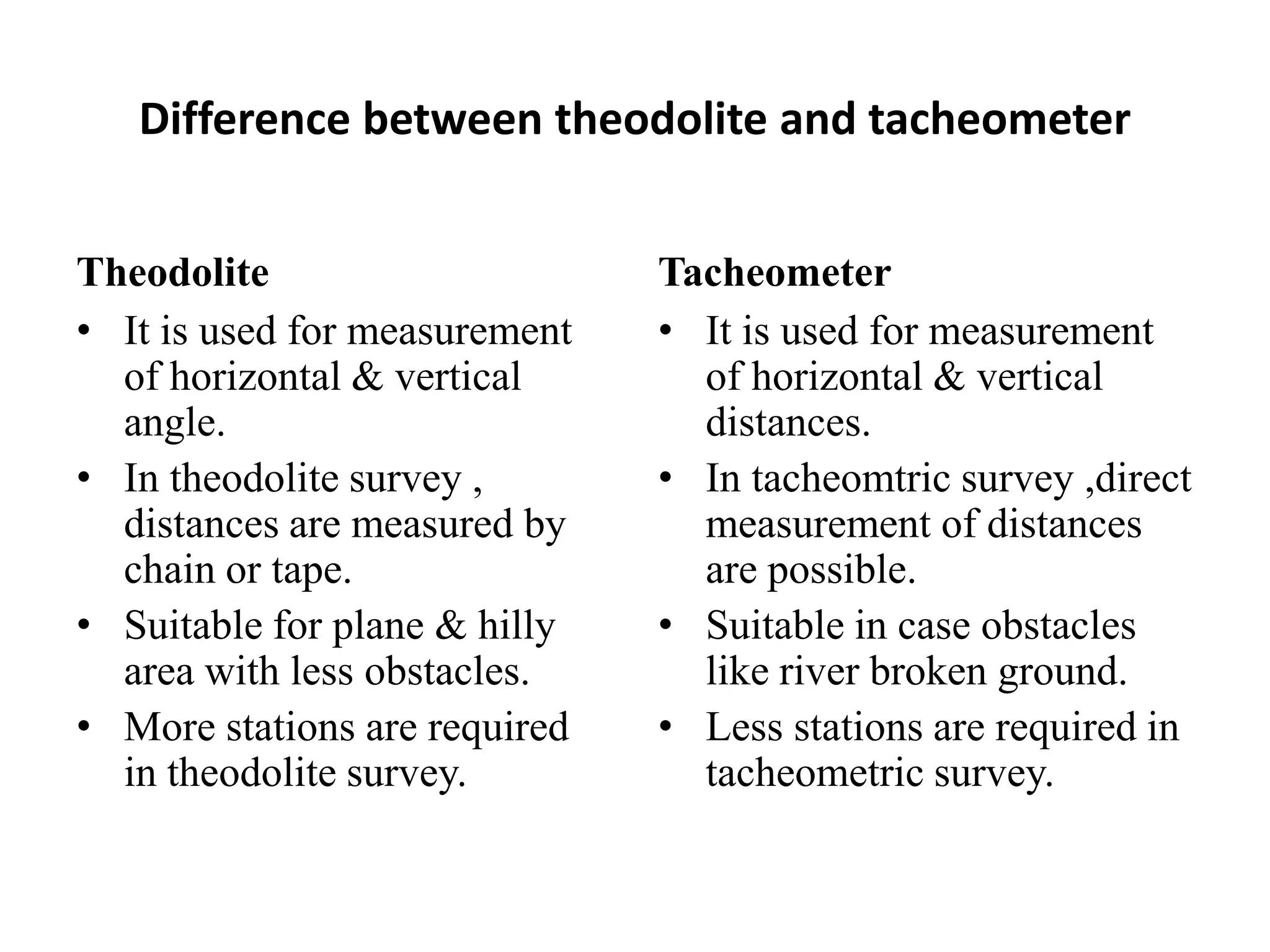
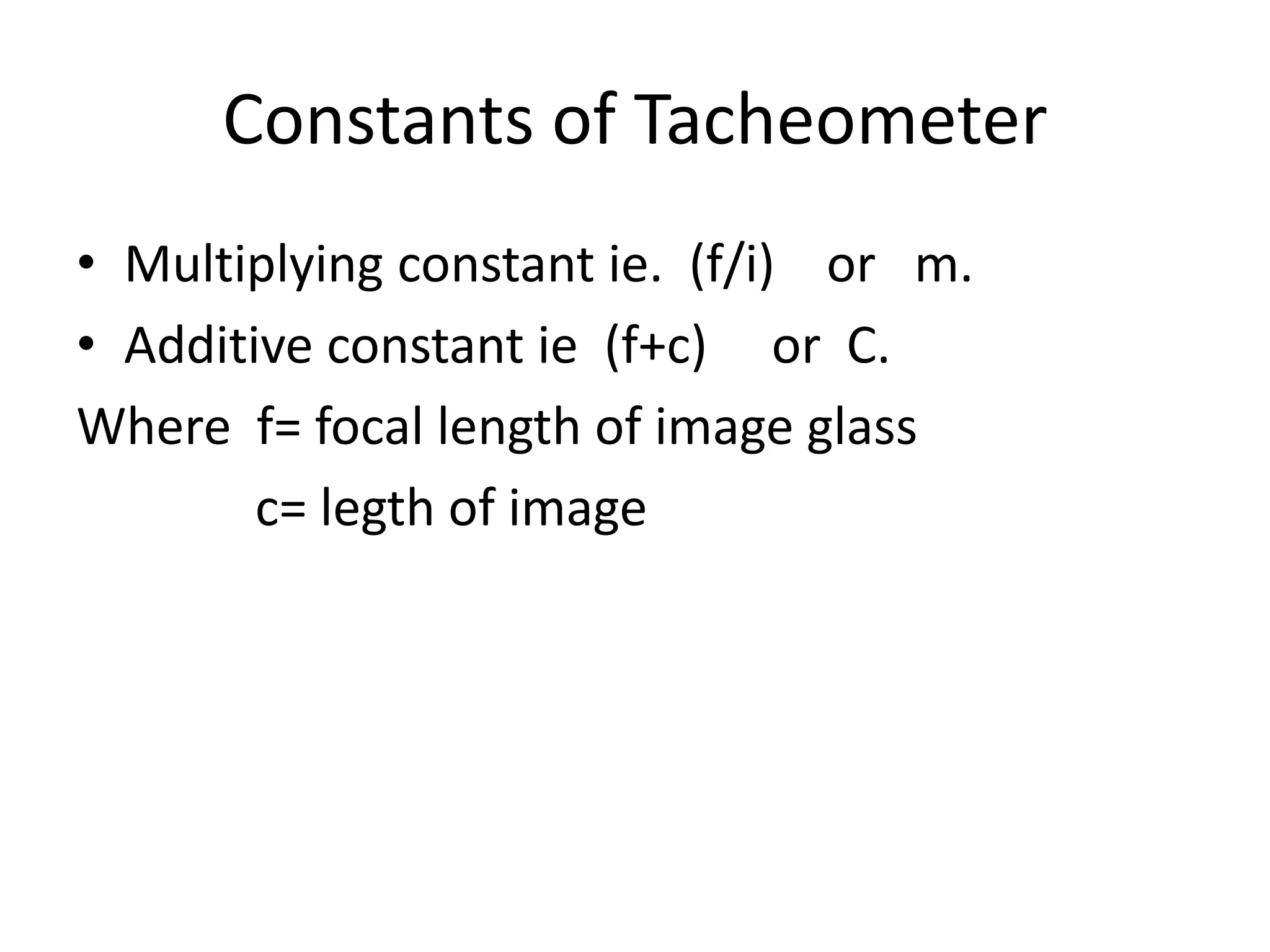
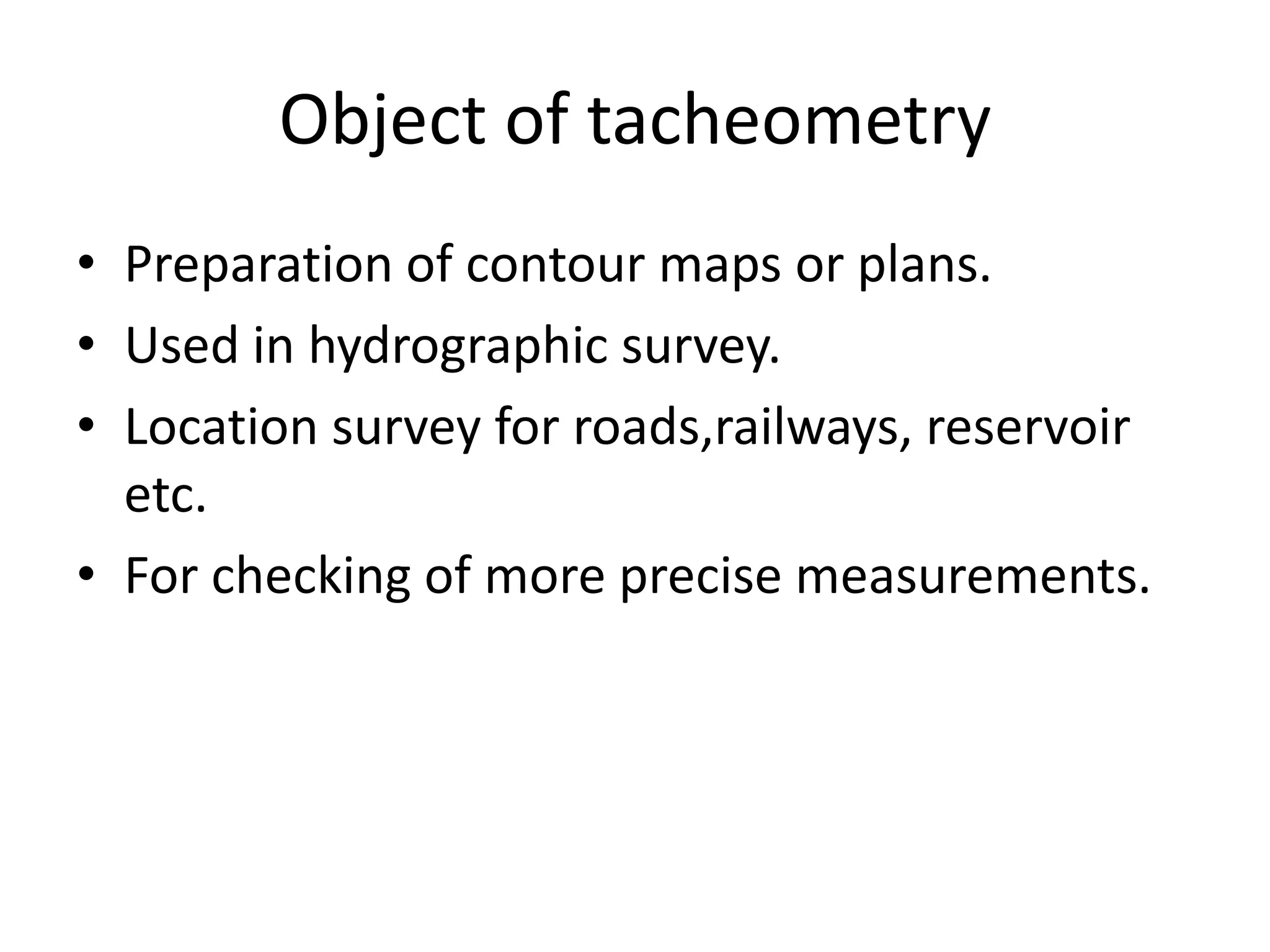
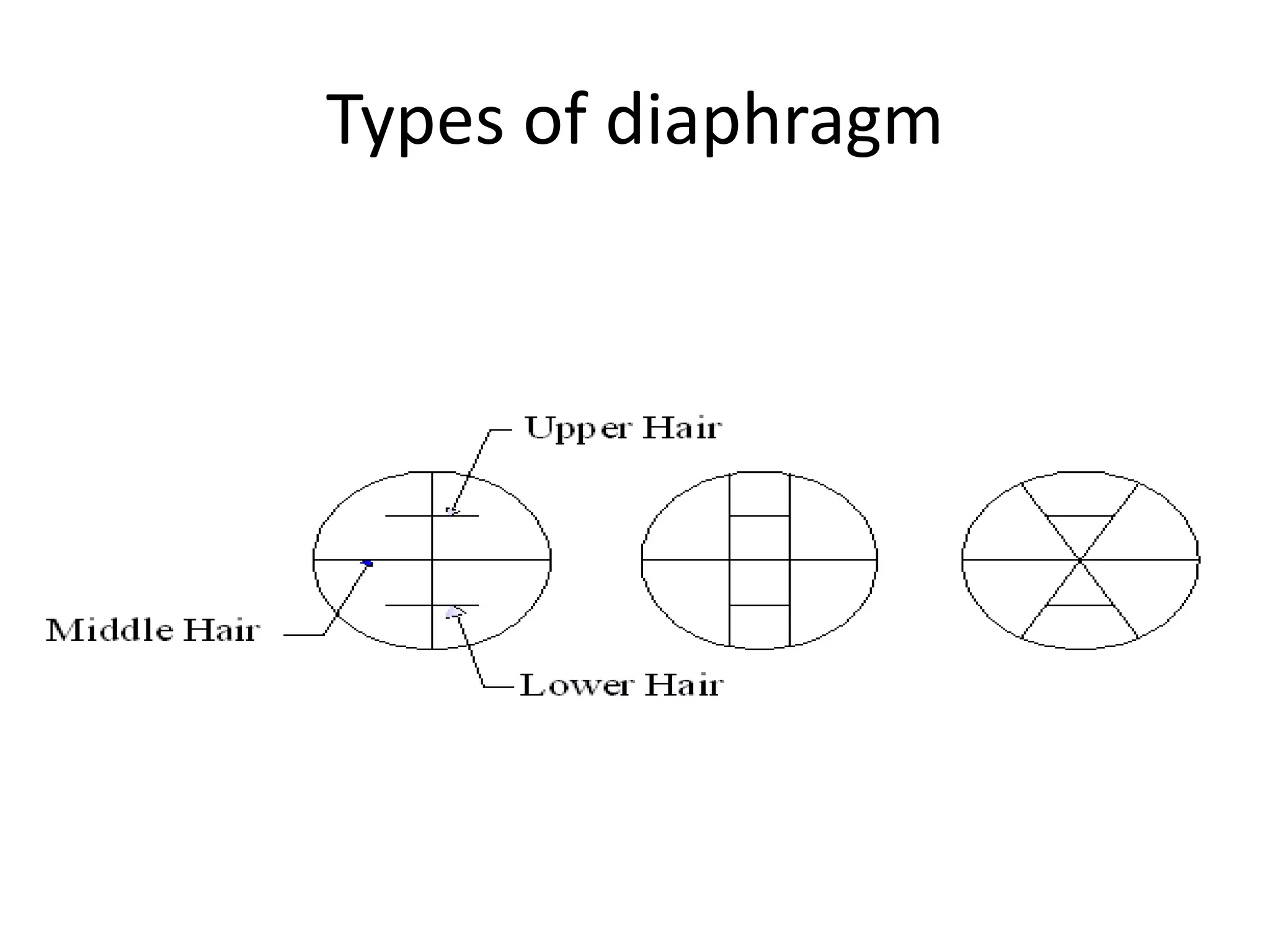
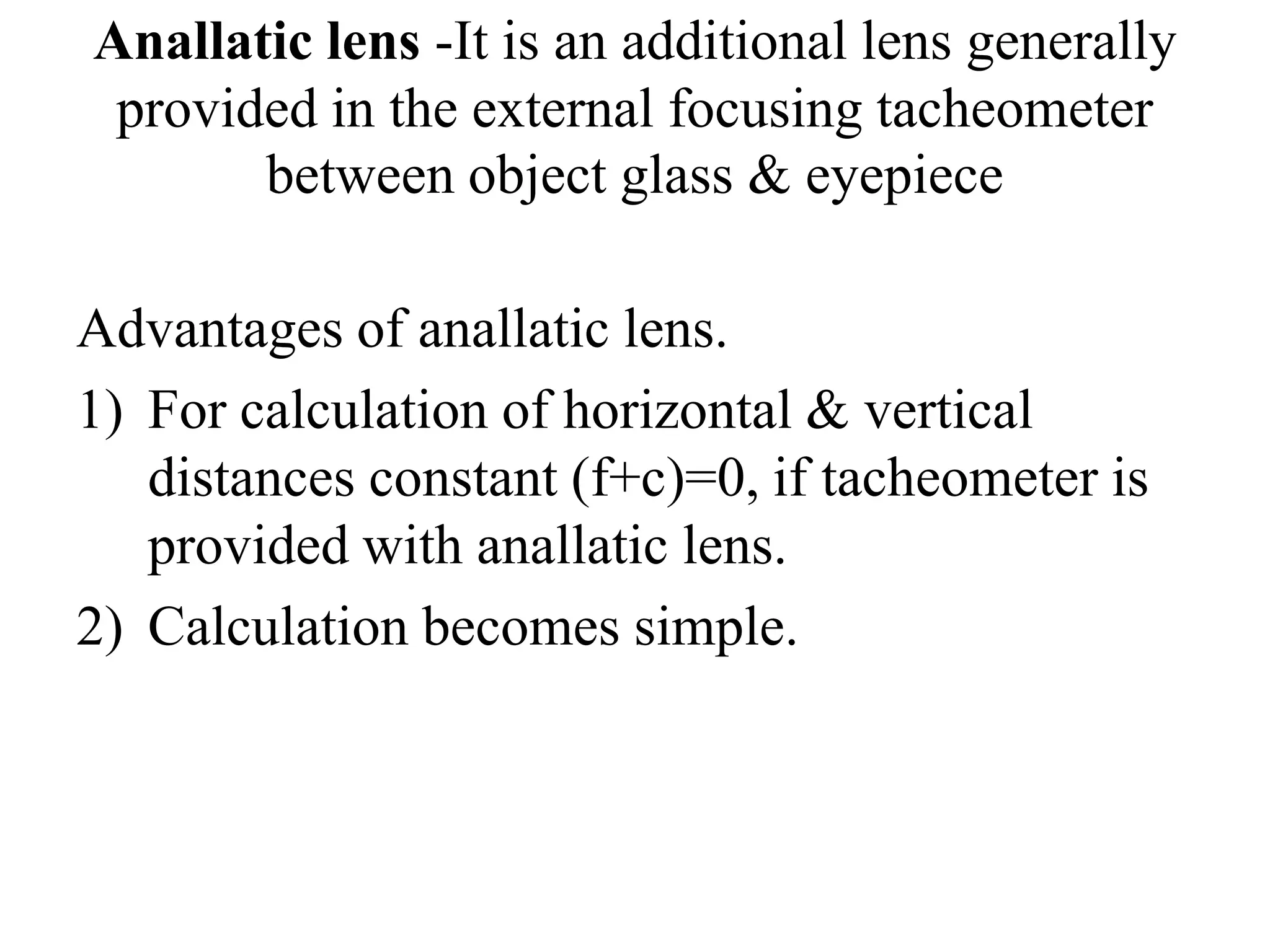
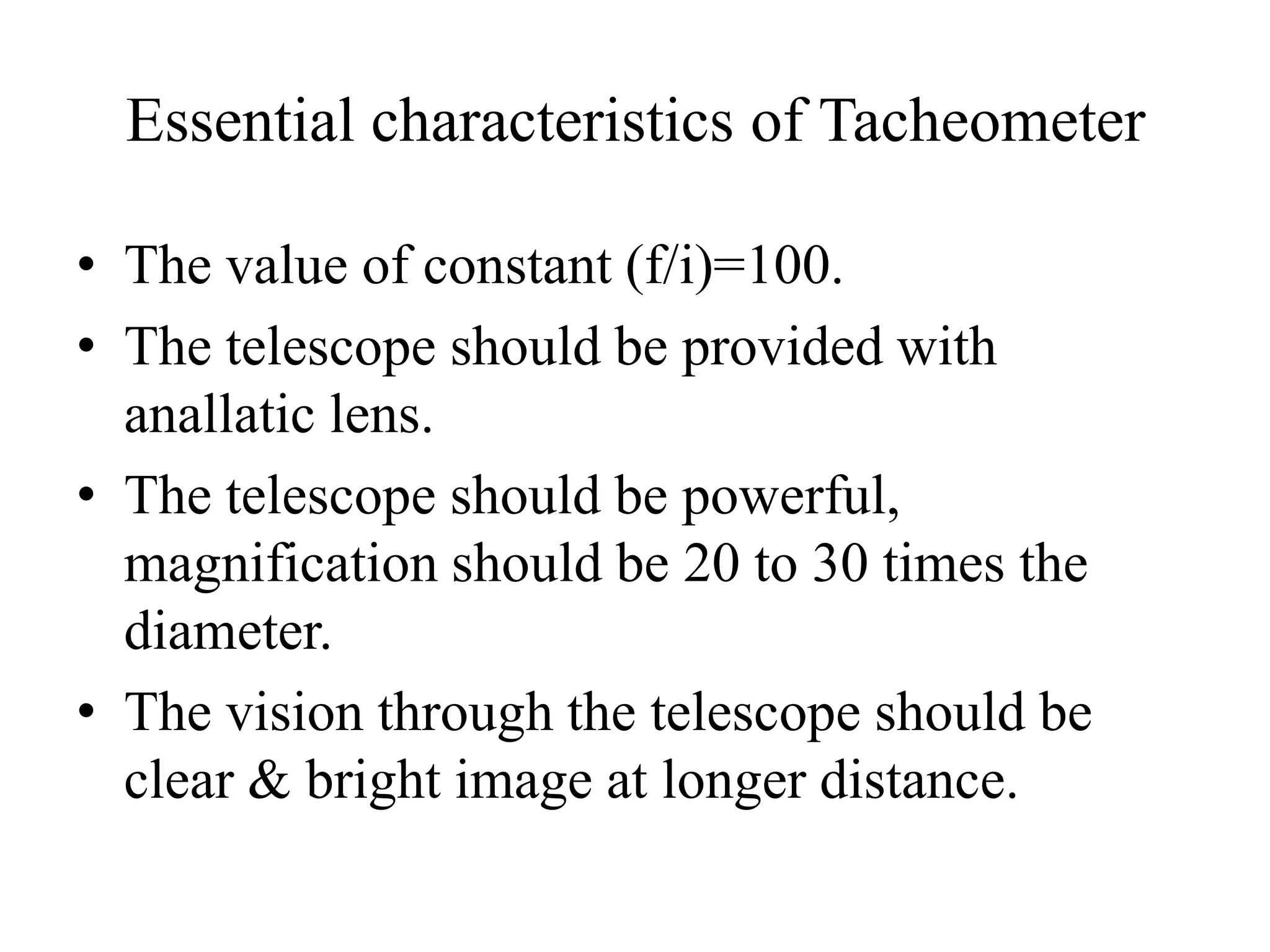
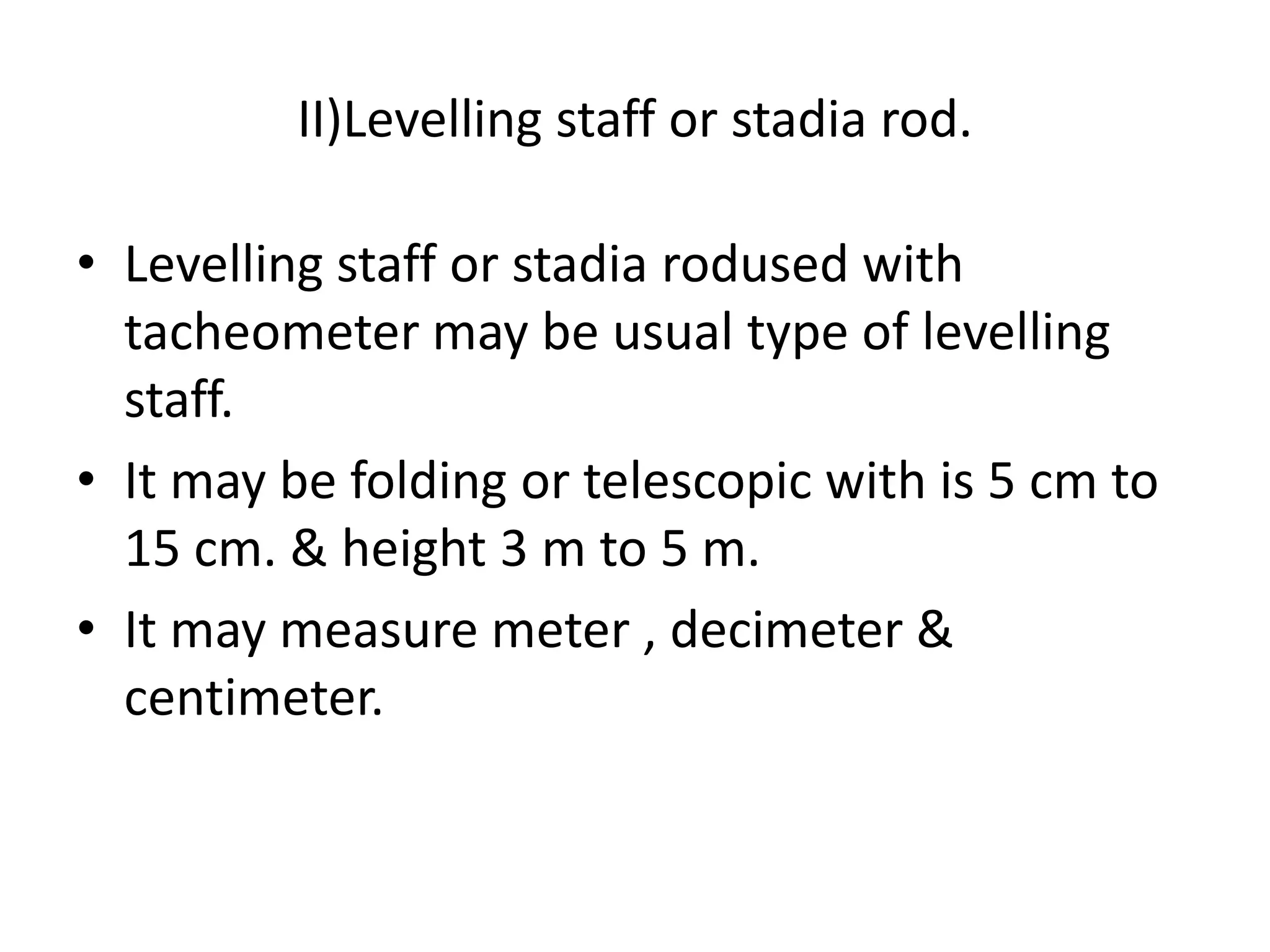
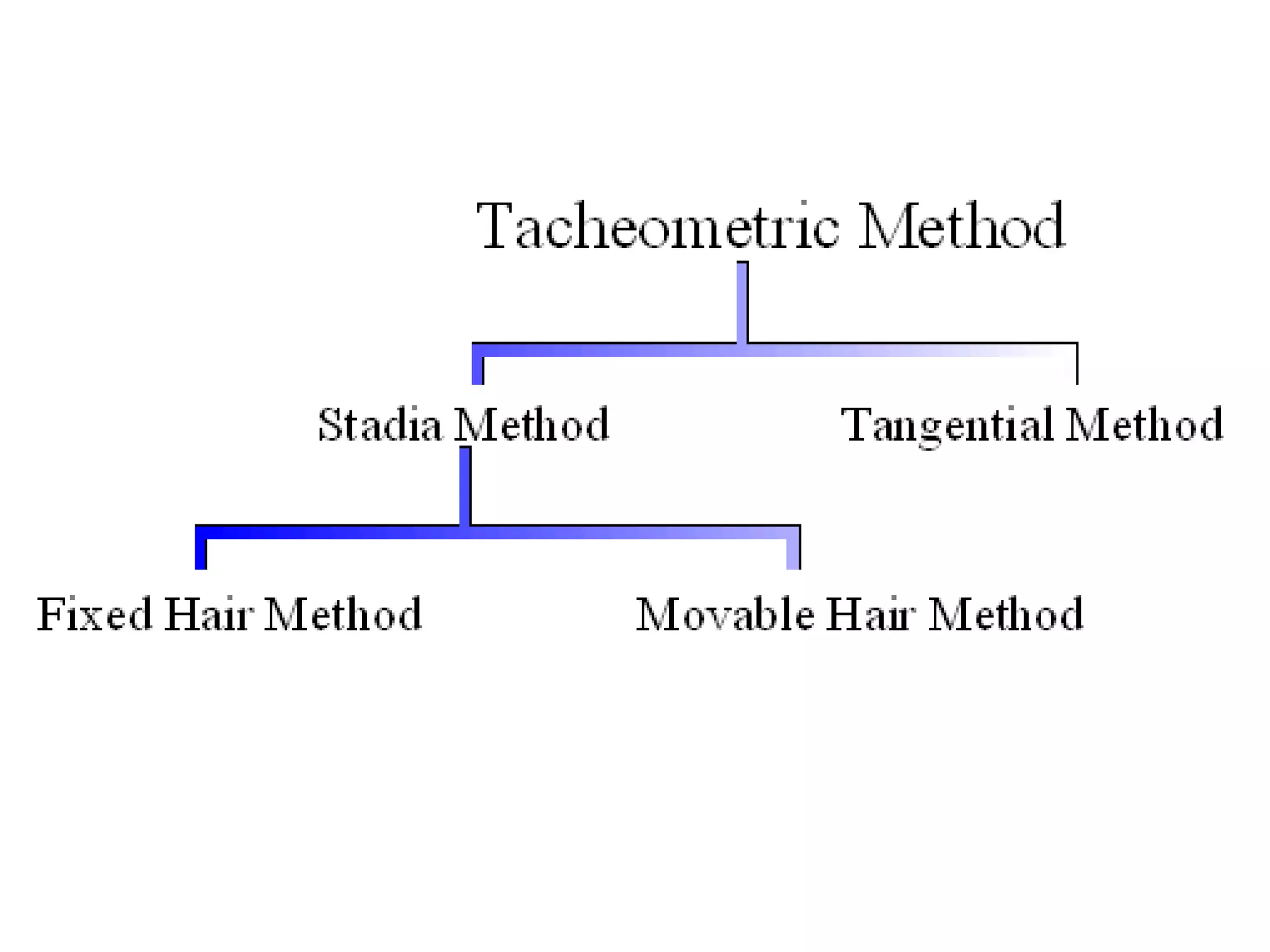
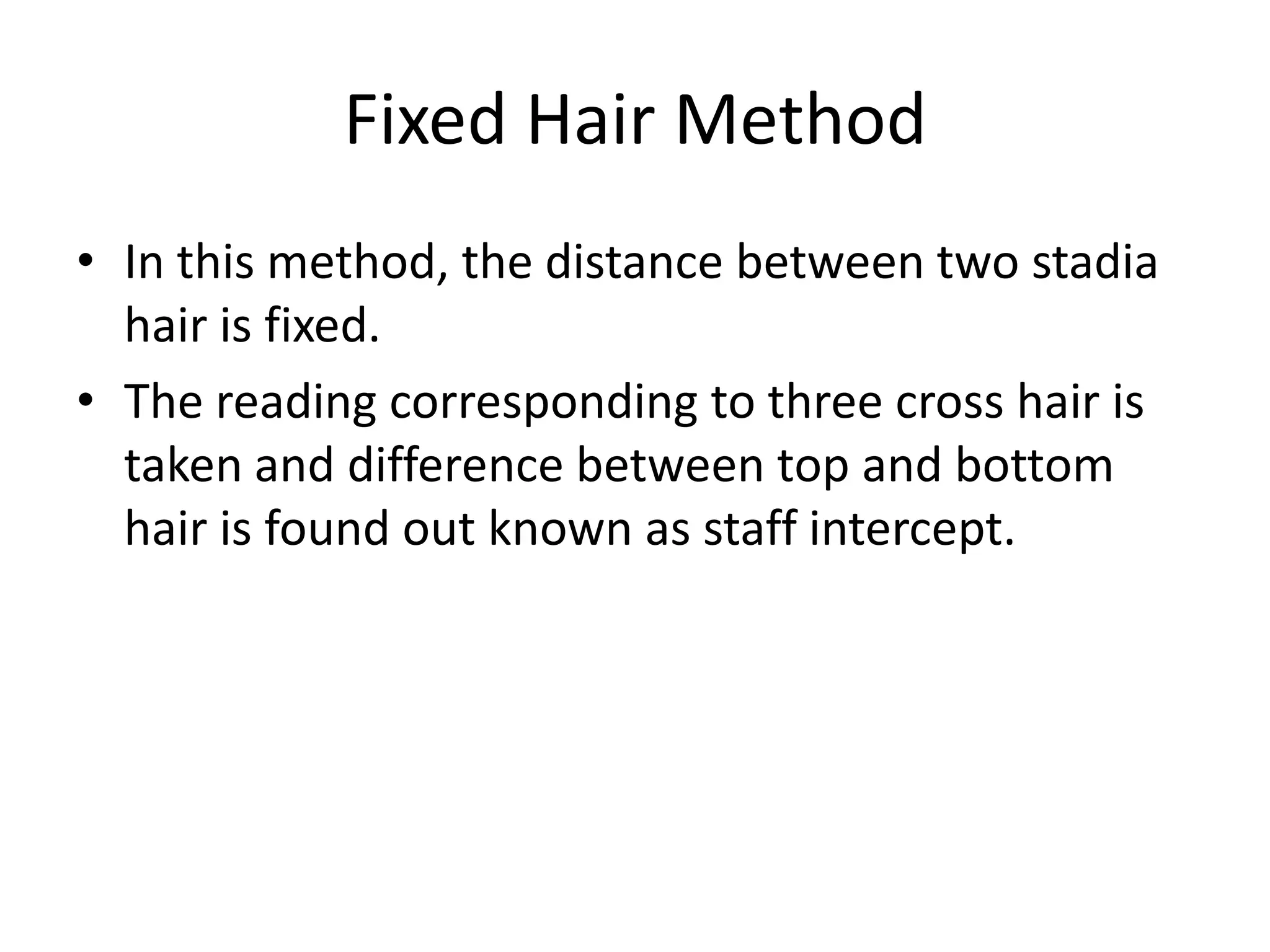
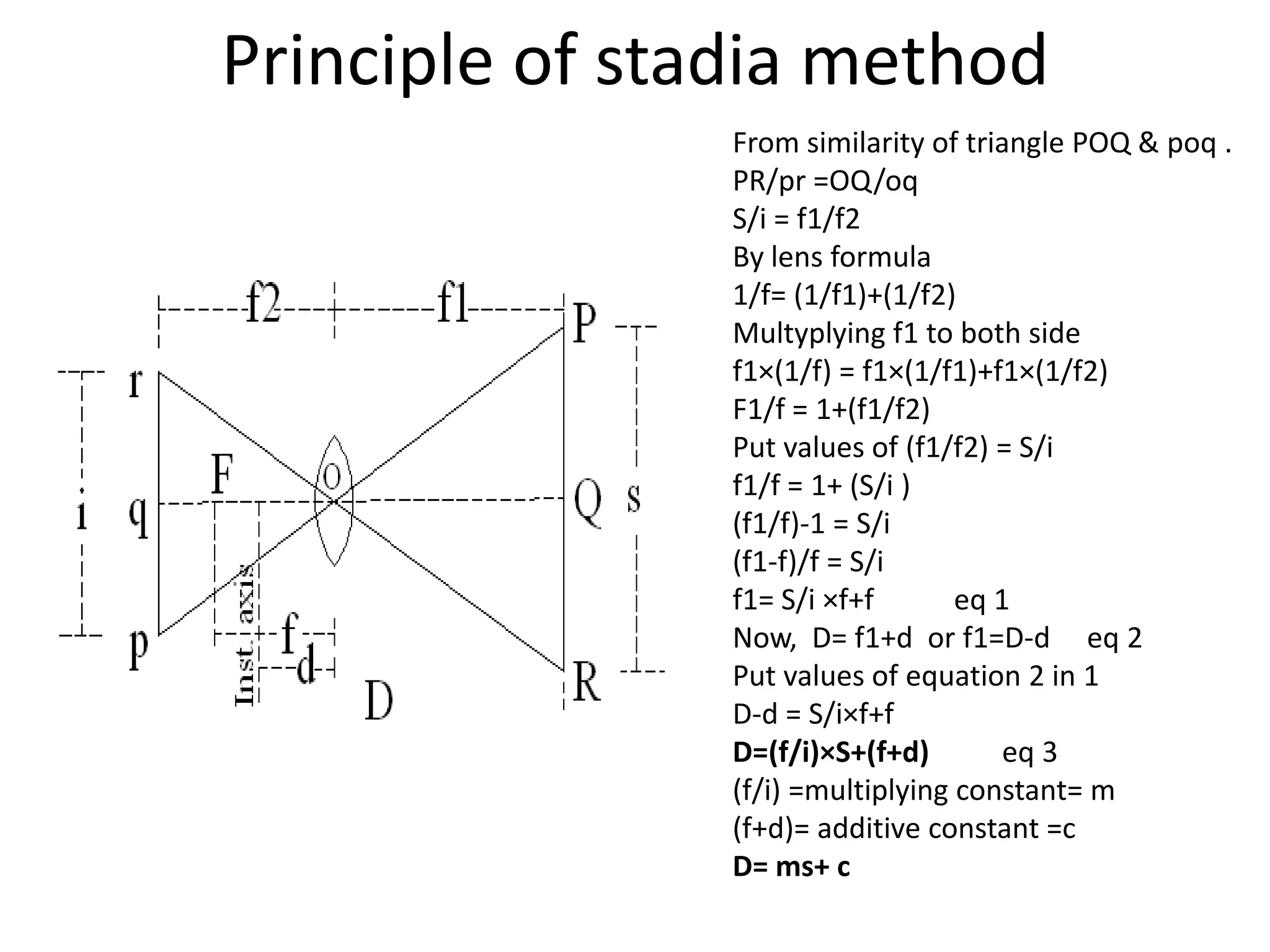
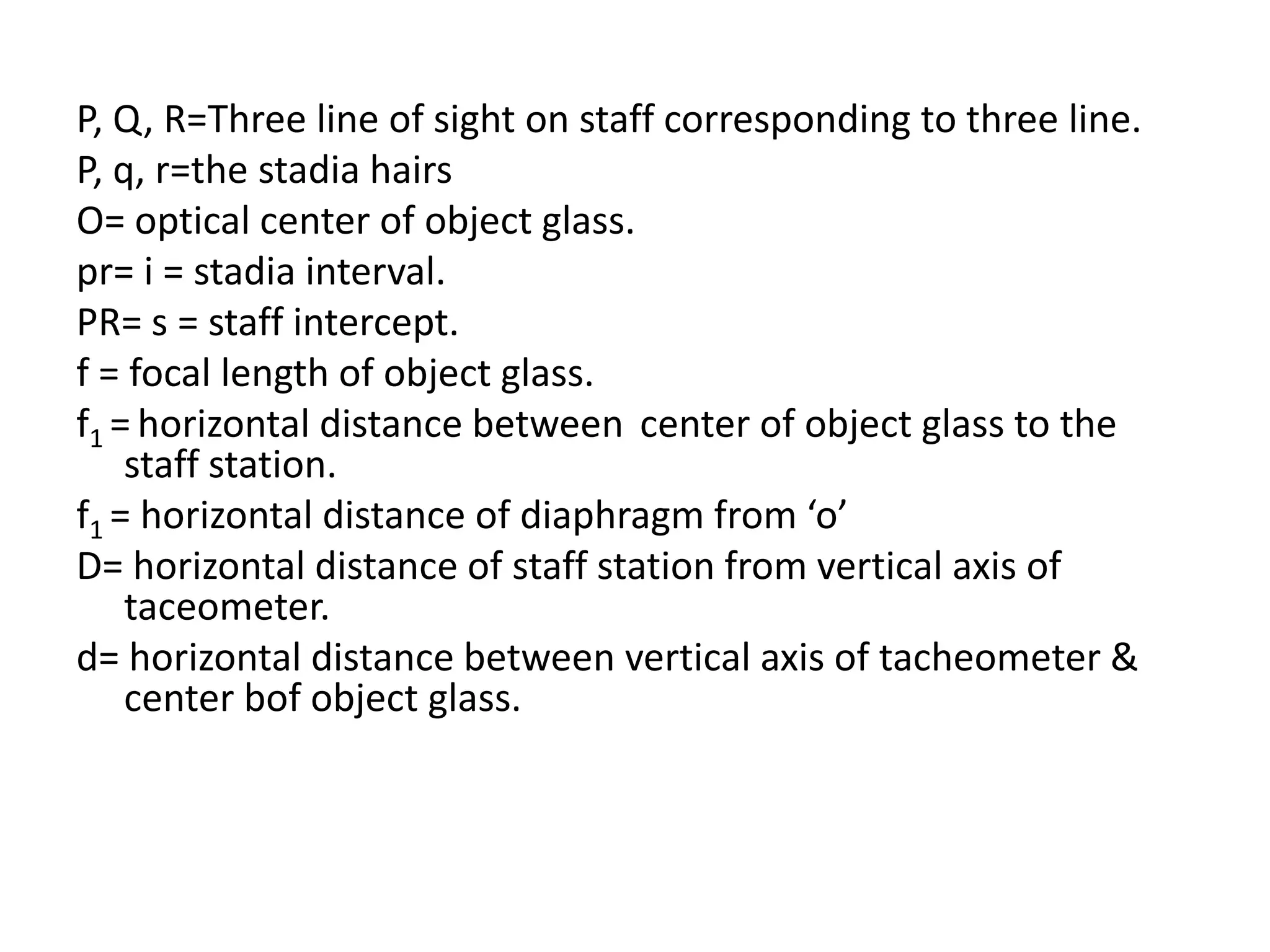
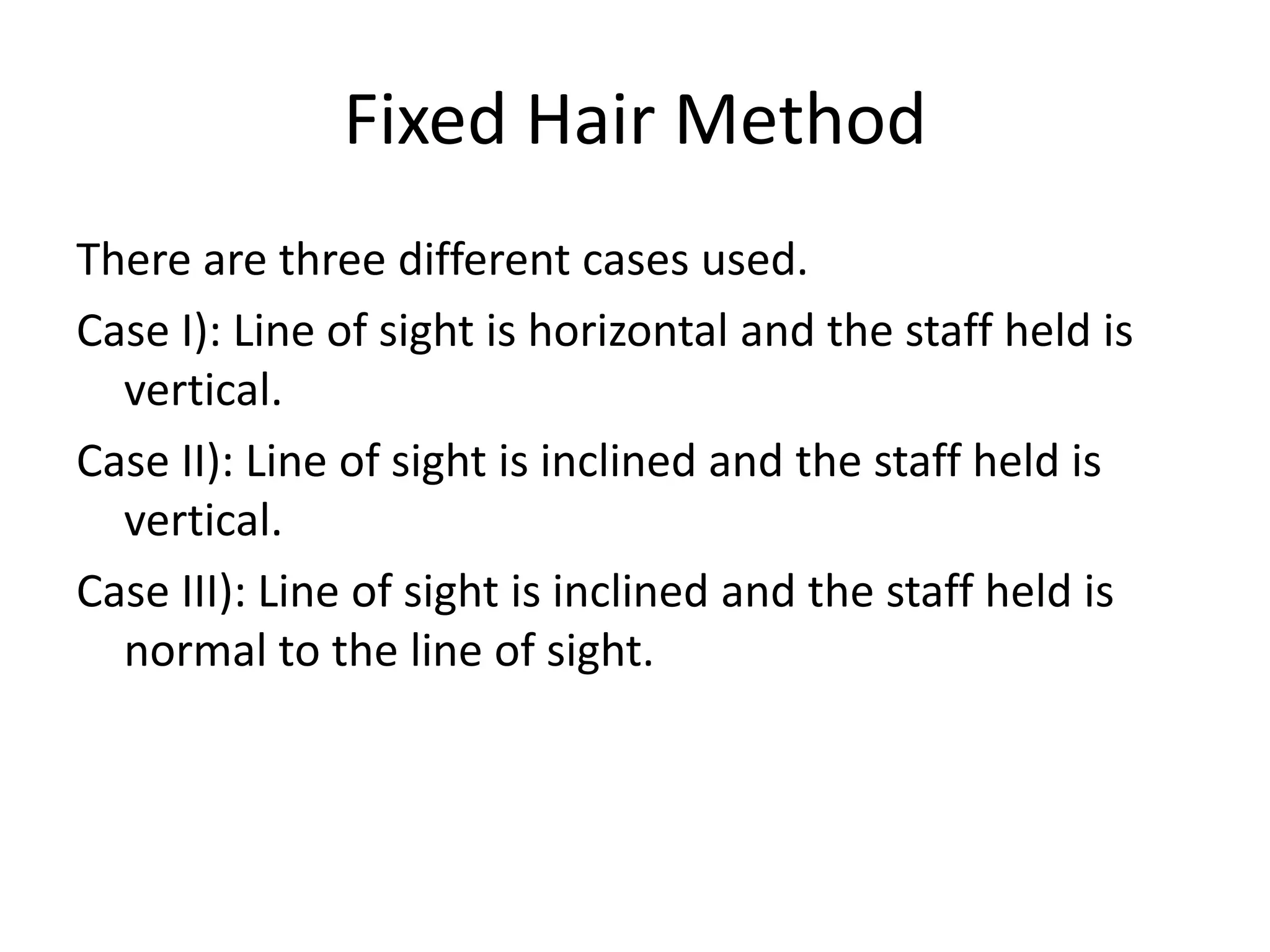
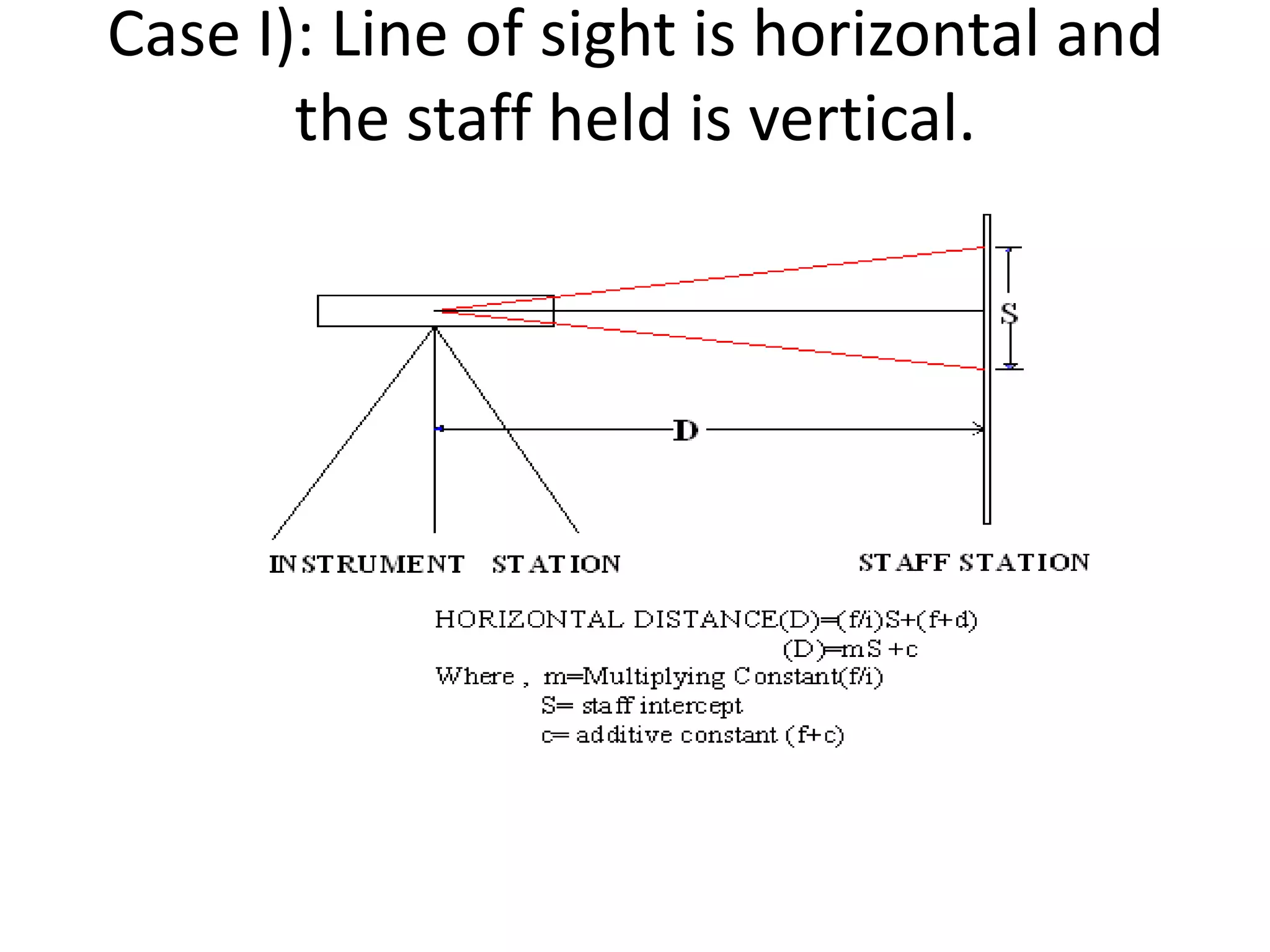
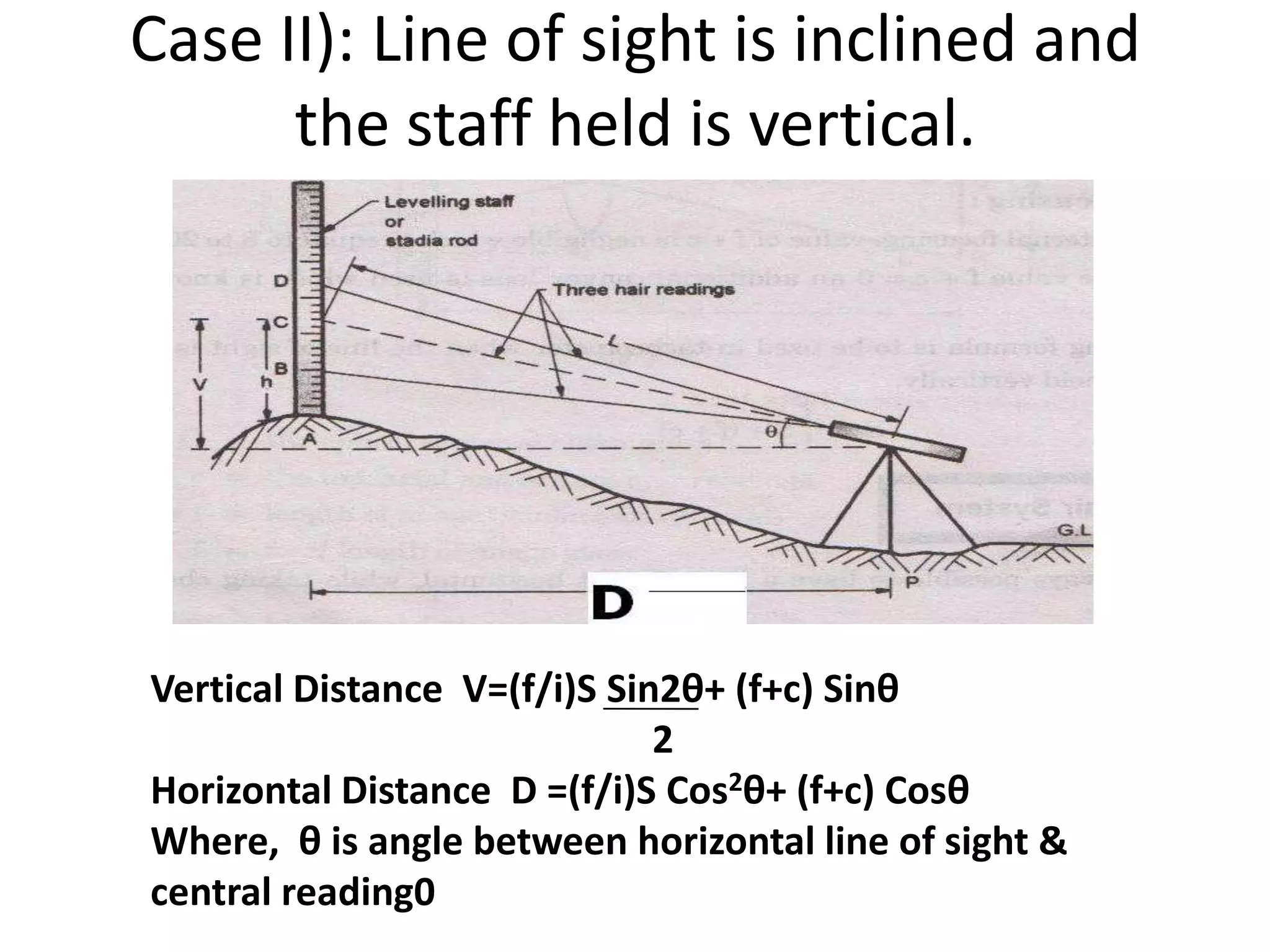

This document provides information about tacheometry, which is a method of surveying that determines horizontal and vertical distances from instrumental observations. It discusses how tacheometry can be used when obstacles make traditional surveying difficult. The key aspects covered include: - Defining tacheometry and the measurements it provides - When tacheometry is advantageous over other surveying methods - The instruments used, including tacheometers and levelling rods - How horizontal and vertical distances are calculated using constants - The different types of tacheometer diaphragms and telescopes - The fixed hair method for taking readings


![3314493 [Autosaved].ppts survey methods@](https://cdn.slidesharecdn.com/ss_thumbnails/3314493autosaved-250203063339-98d1f88d-thumbnail.jpg?width=640&height=640&fit=bounds)


