Skinner - Operant Conditioning
Presentation
On
By-
Adesh Kumar Verma
Ph.D., Scholar
Roll No.P-1639
Outline of Presentation
Introduction
Genesis of operant conditioning
Concept of operant conditioning
Types of operant
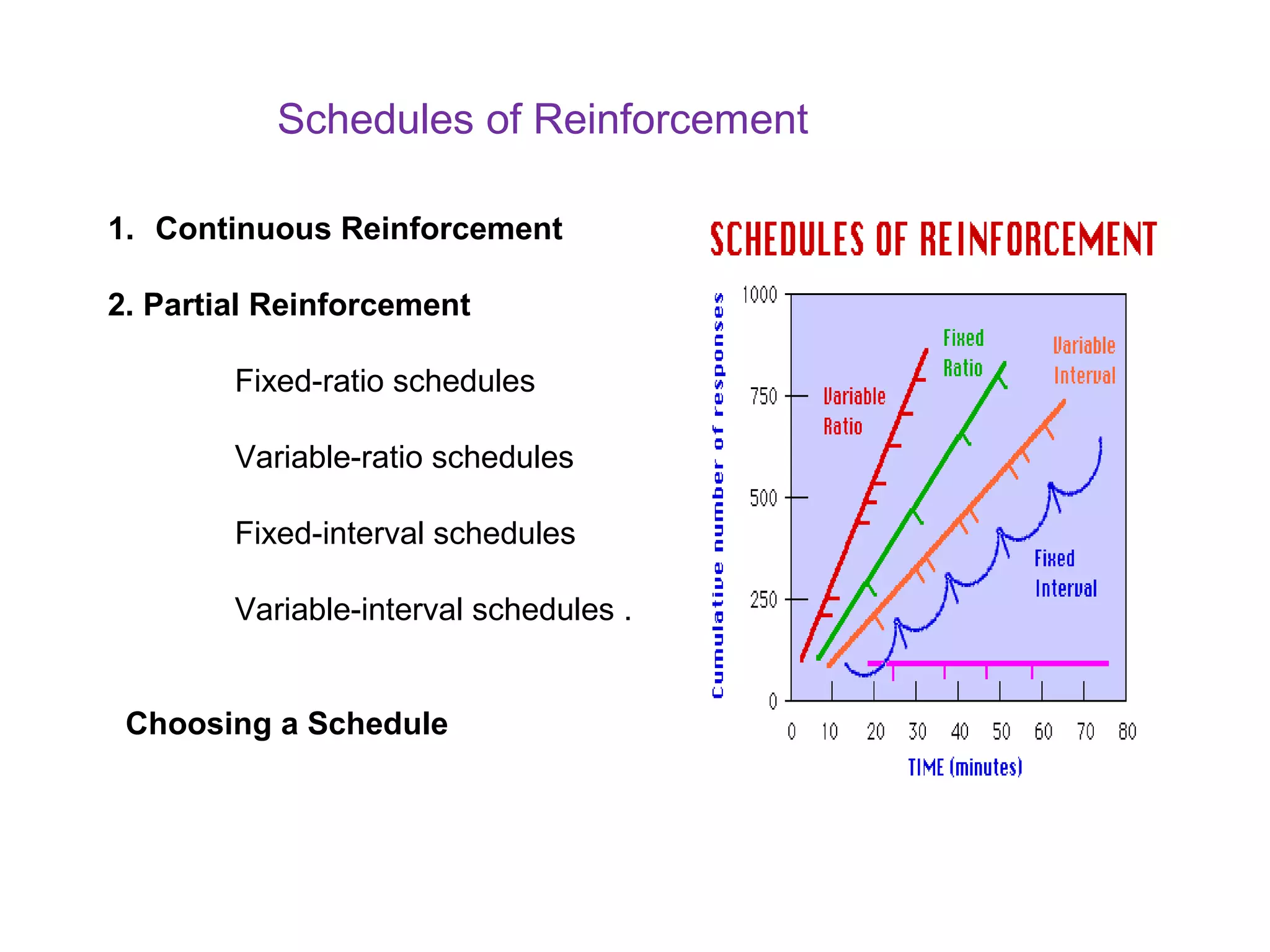
Schedules of Reinforcement
Shaping
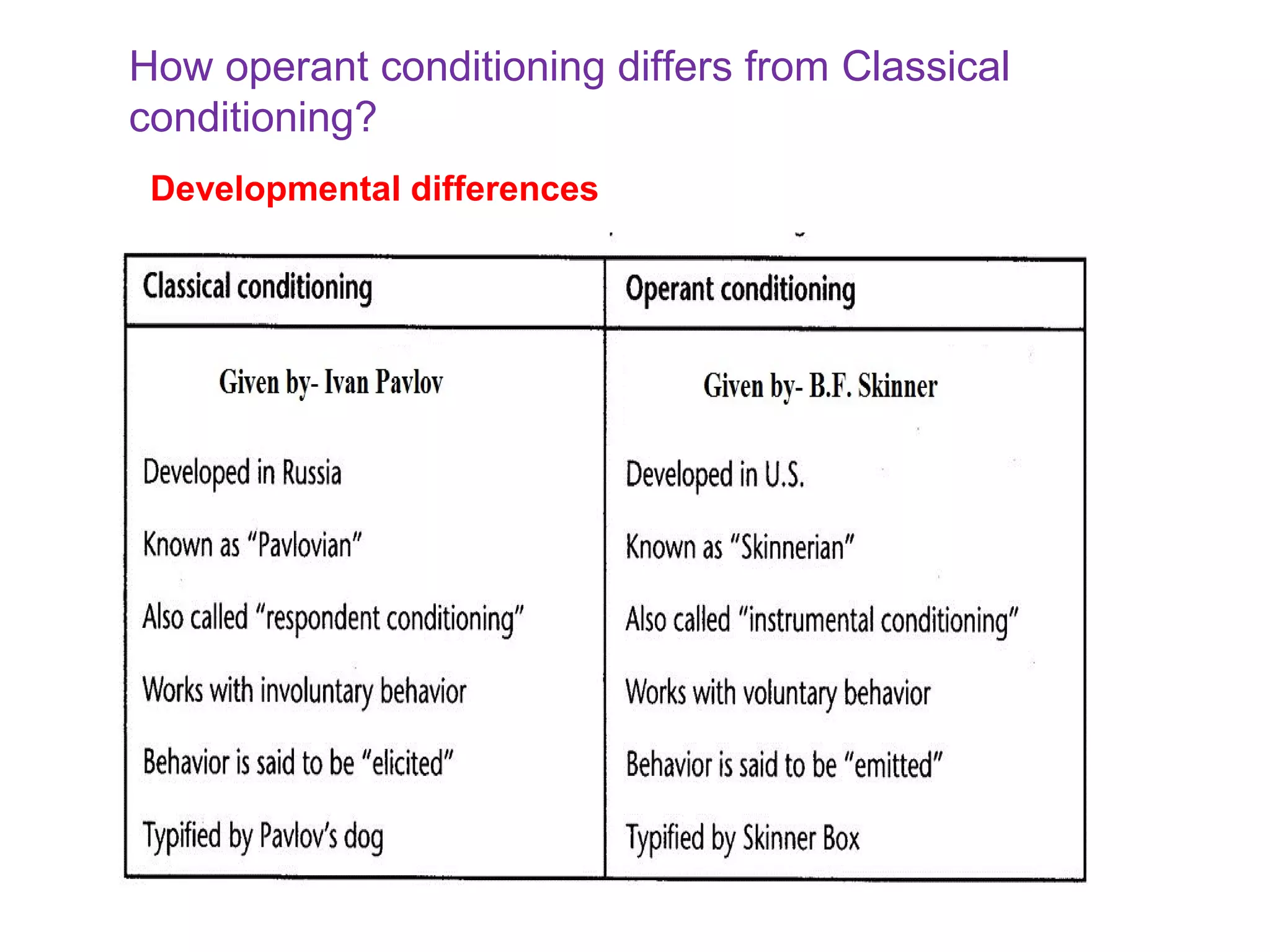
How operant conditioning differs from Classical
conditioning?
Summary
Introduction
Behaviorism
Conditioning
Types of conditioning
Classical conditioning
Operant conditioning
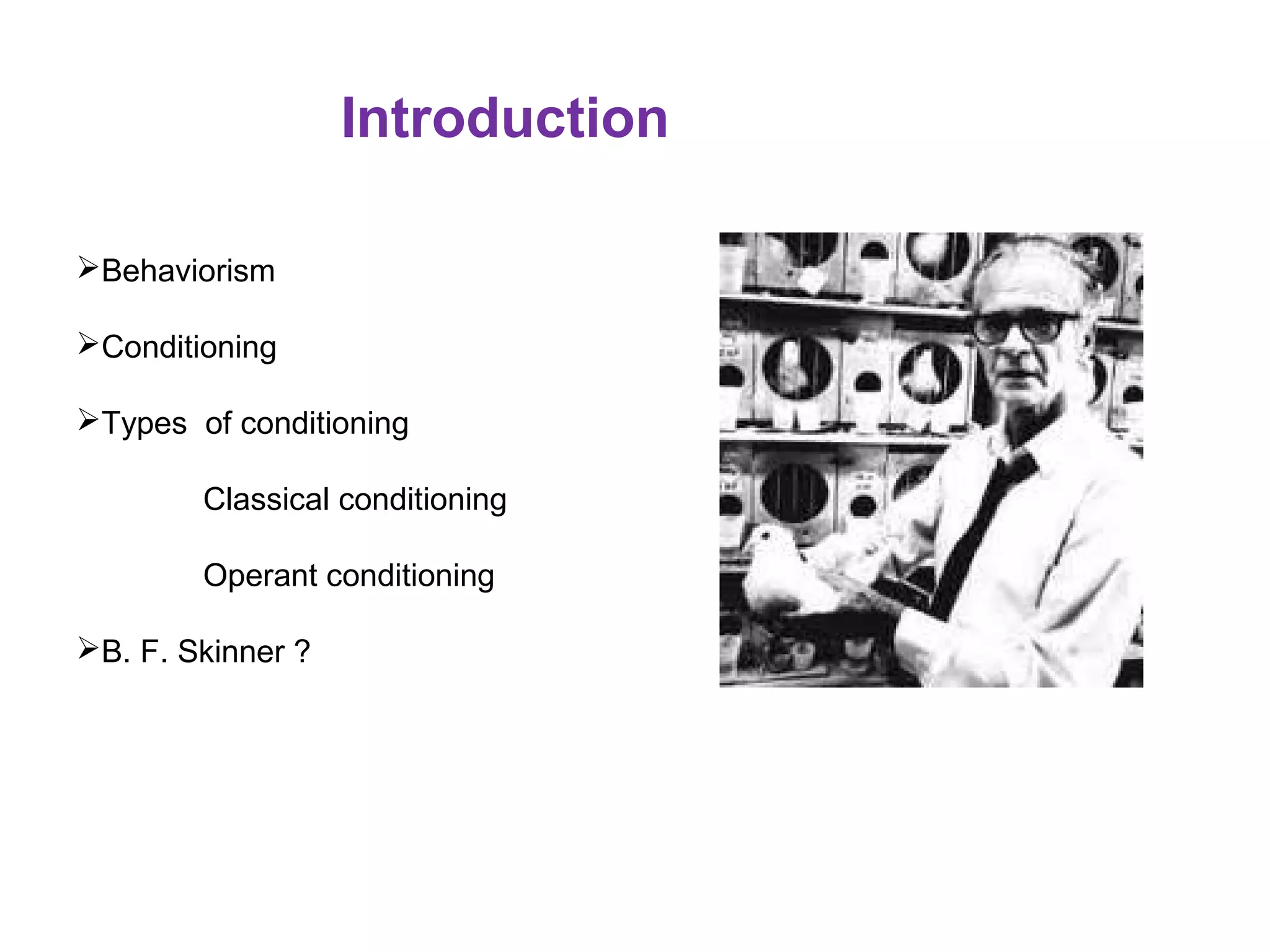
B. F. Skinner ?
Genesis of operant conditioning
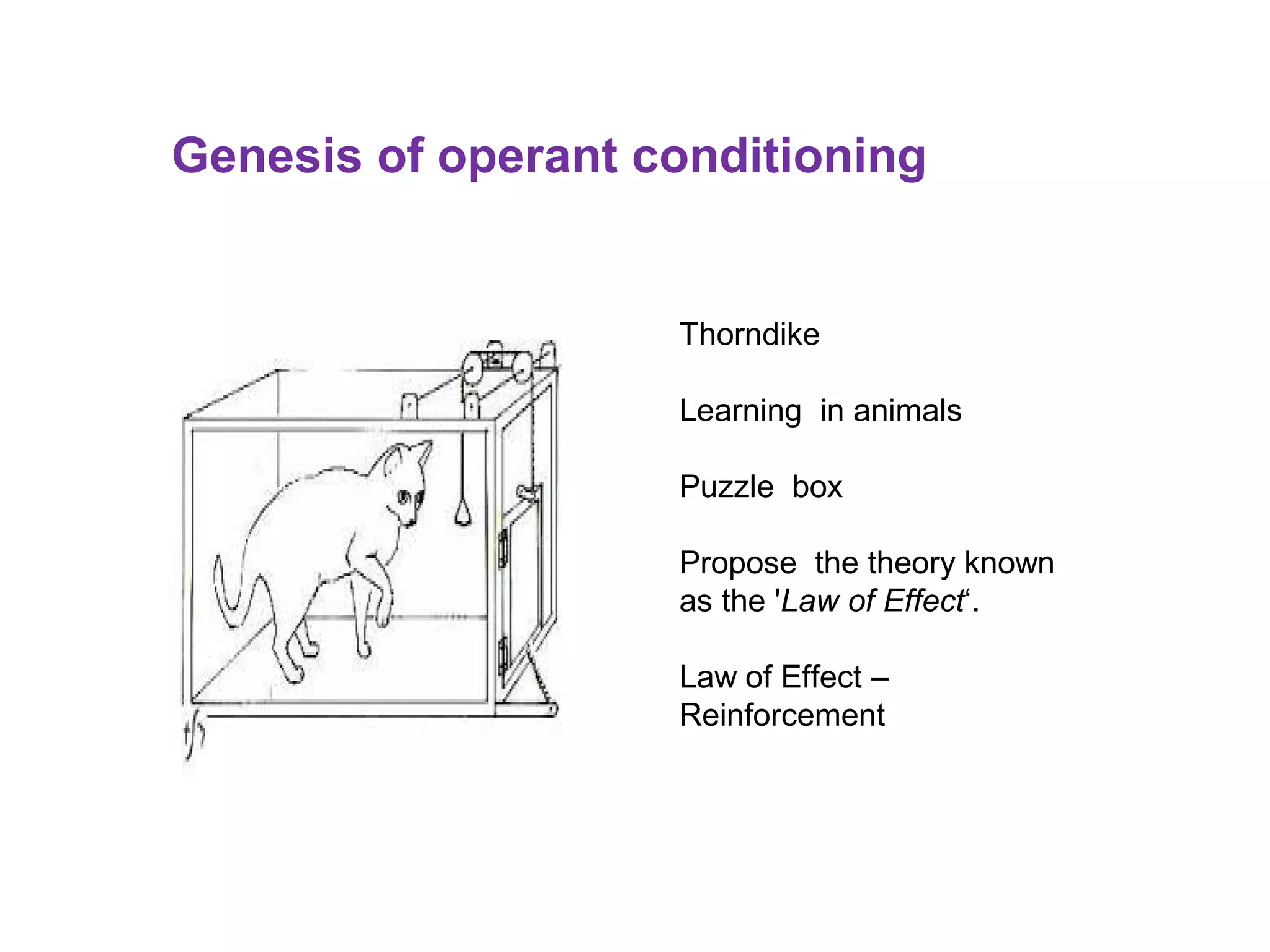
Thorndike
Learning in animals
Puzzle box
Propose the theory known
as the 'Law of Effect‘.
Law of Effect –
Reinforcement
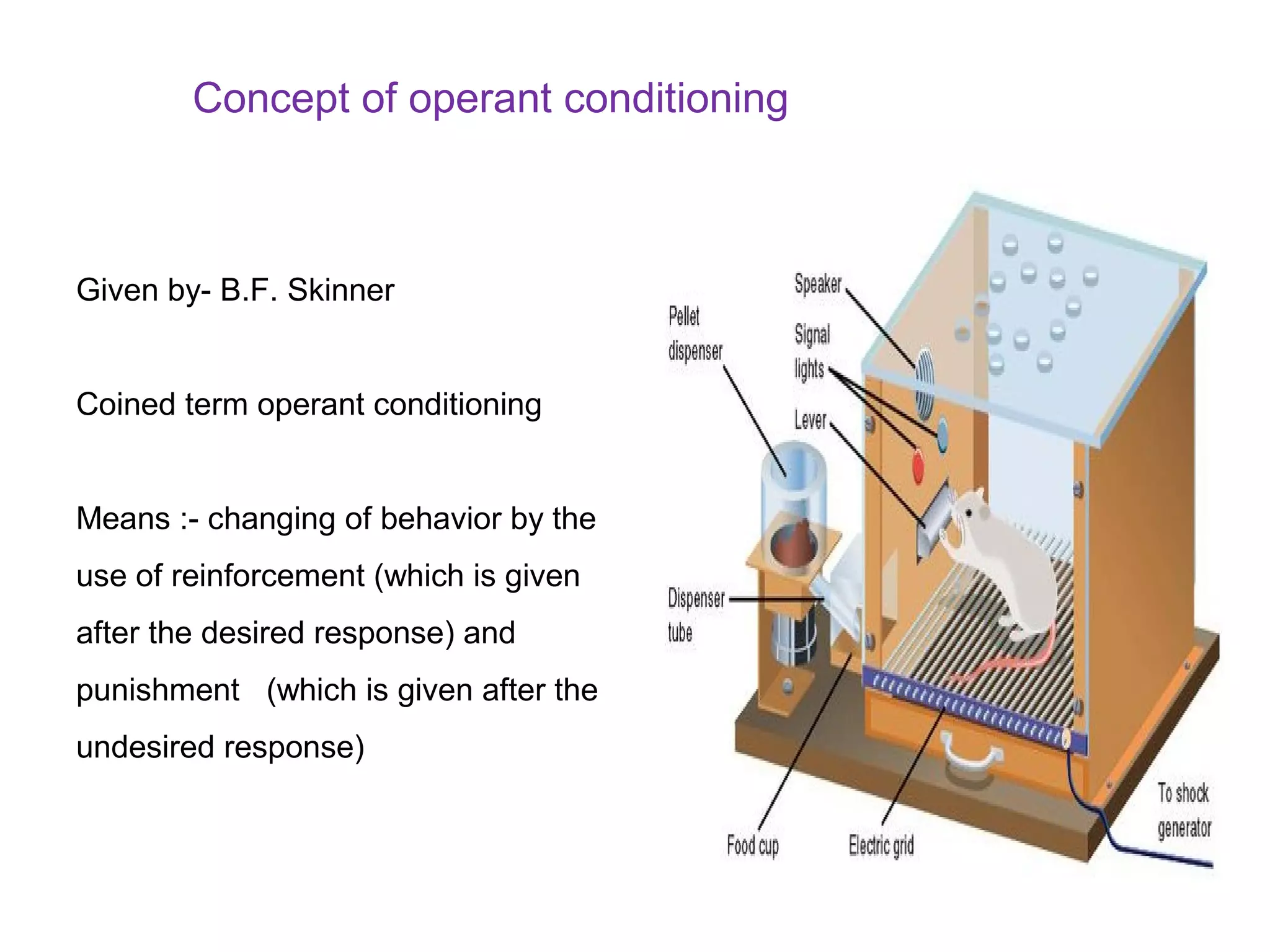
Concept of operant conditioning
Given by- B.F. Skinner
Coined term operant conditioning
Means :- changing of behavior by the
use of reinforcement (which is given
after the desired response) and
punishment (which is given after the
undesired response)
Types of operant
Skinner identified three types of responses or operant that can follow behavior
Neutral operants: responses from the environment that neither increase
nor decrease the probability of a behavior being repeated.
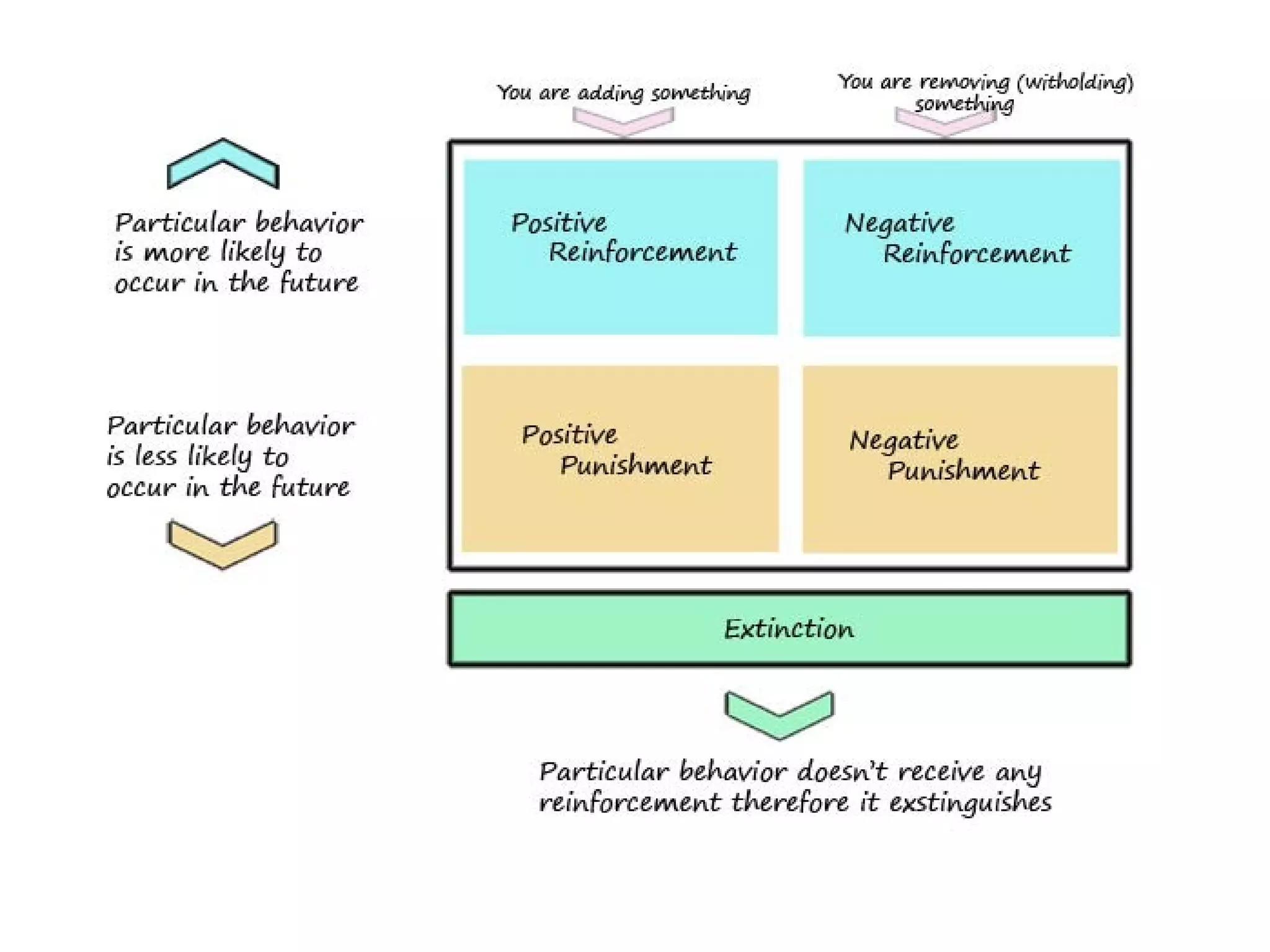
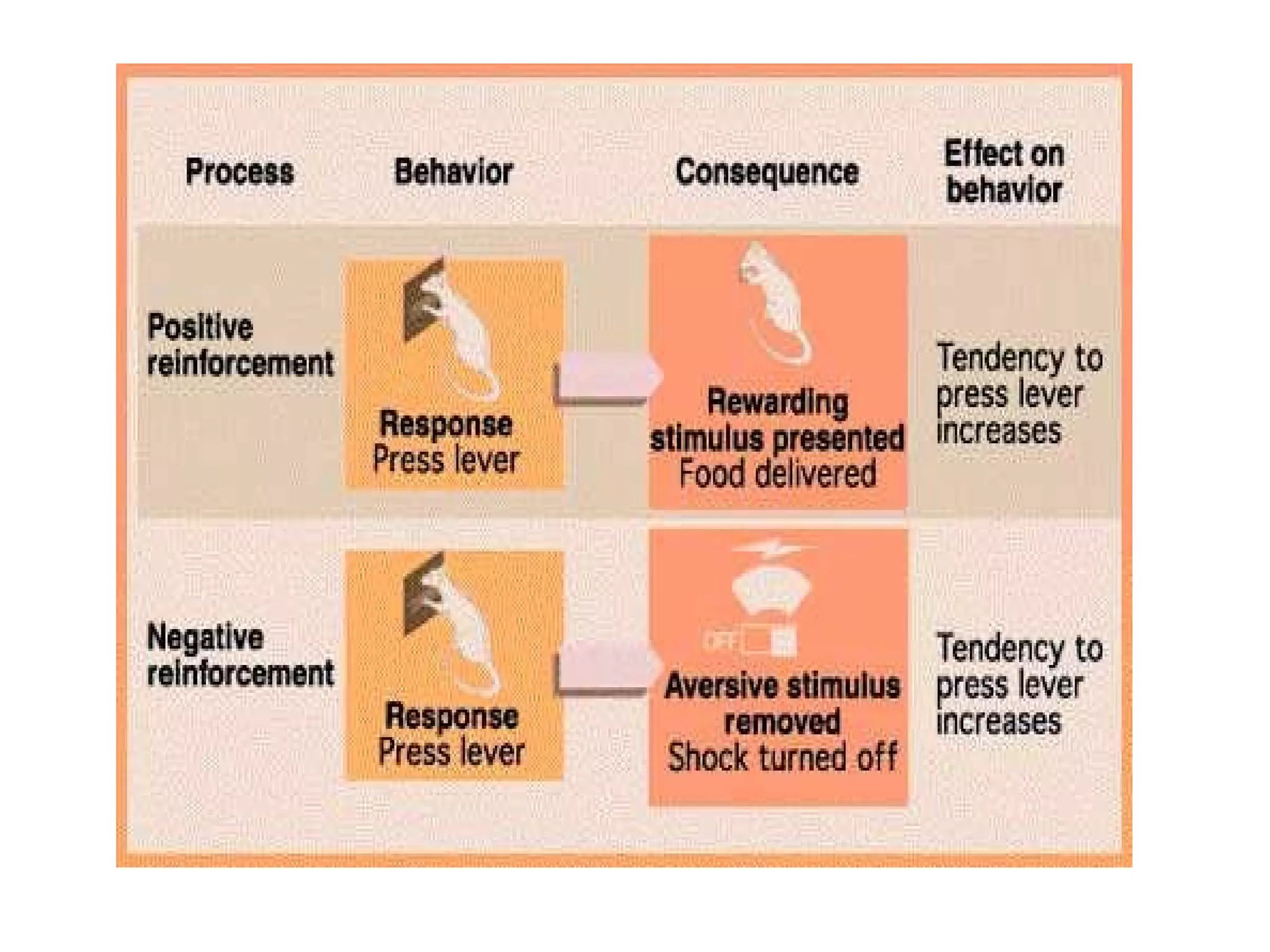
Reinforcers: Responses from the environment that increase the probability
of a behavior being repeated. Reinforcers can be either positive or negative.
Punishers: Response from the environment that decrease the likelihood of
a behavior being repeated. Punishment weakens behavior.
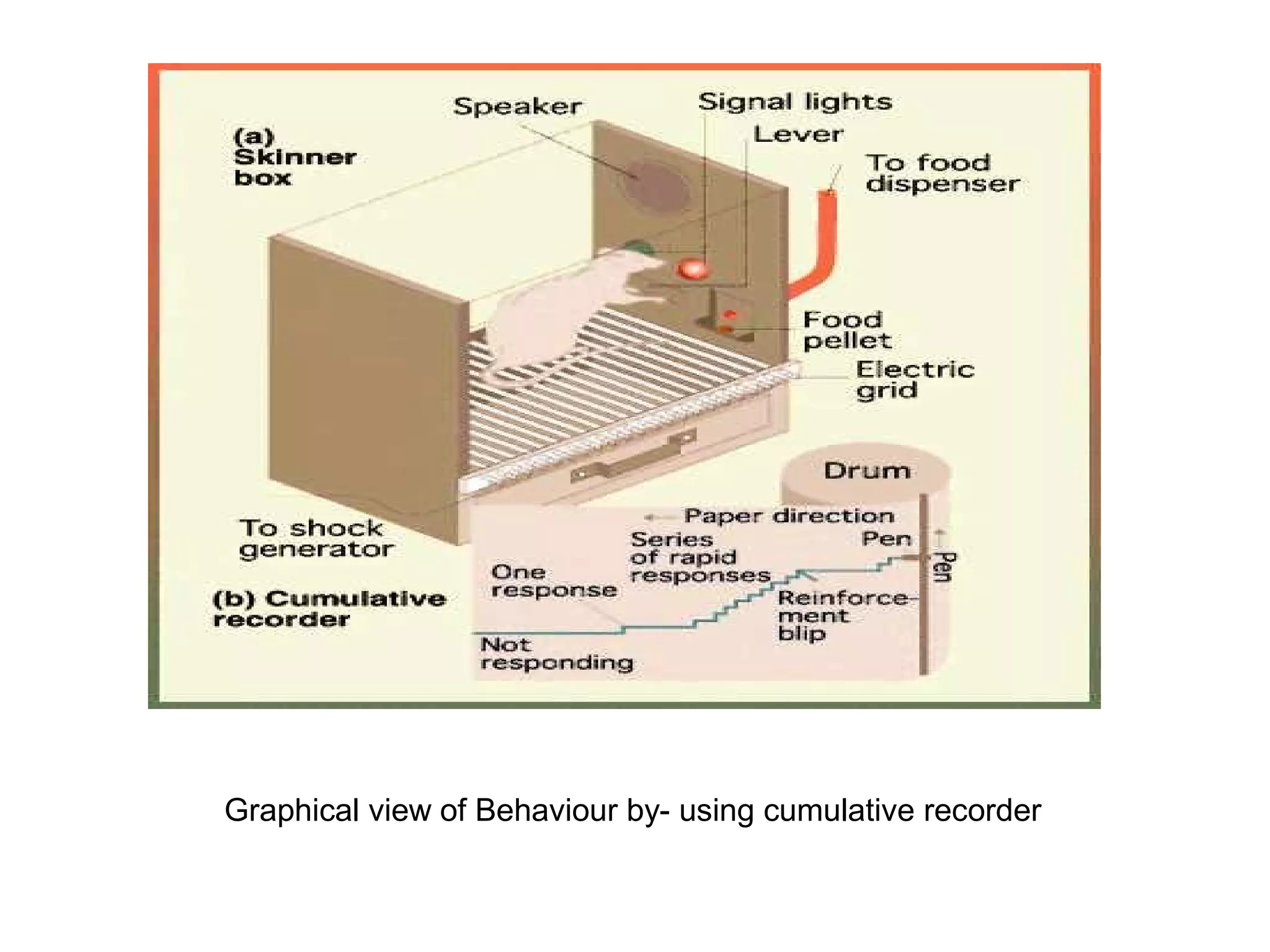
Graphical view of Behaviour by- using cumulative recorder
Schedules of Reinforcement
1. Continuous Reinforcement
2. Partial Reinforcement
Fixed-ratio schedules
Variable-ratio schedules
Fixed-interval schedules
Variable-interval schedules .
Choosing a Schedule
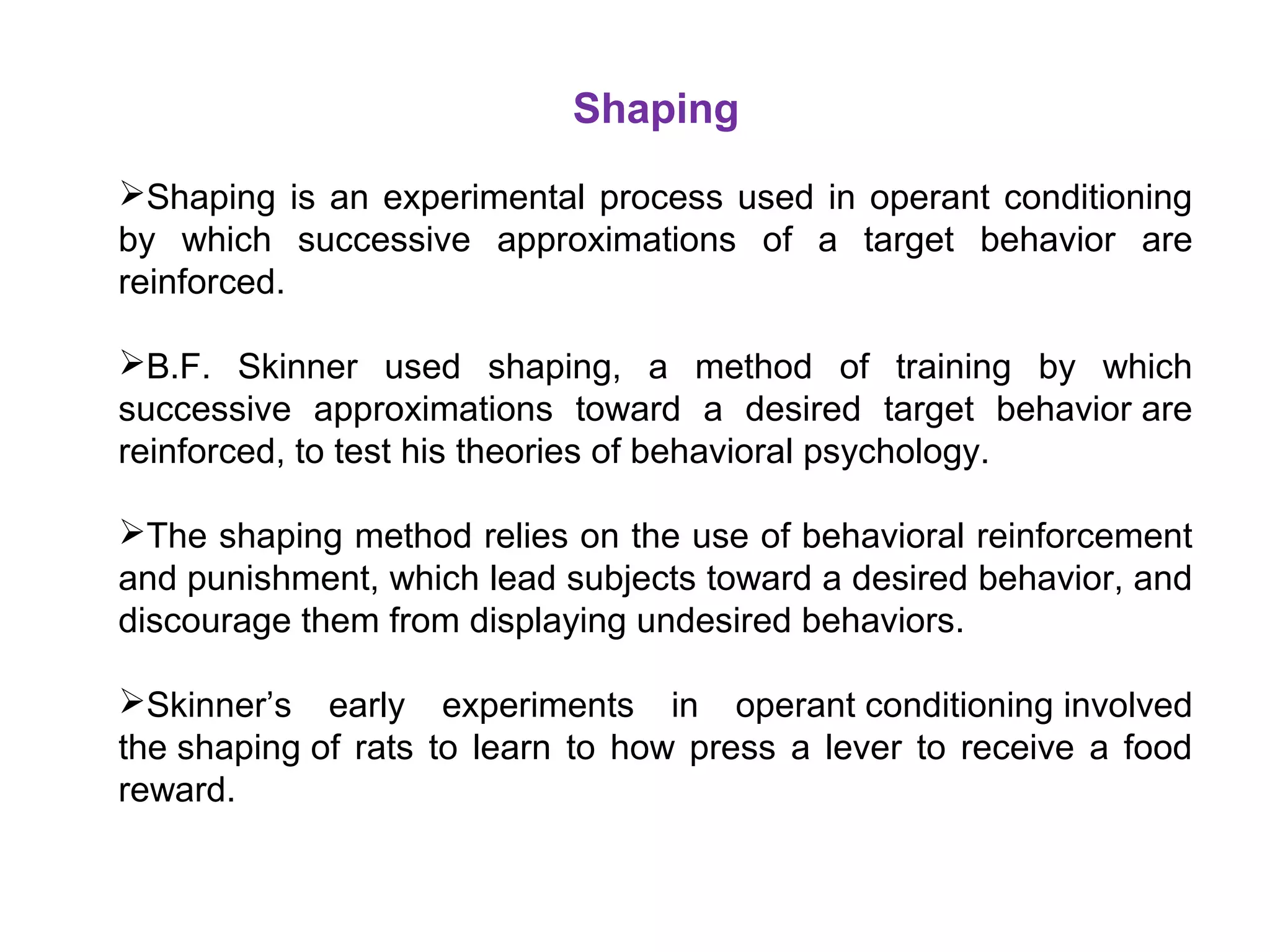
Shaping
Shaping is an experimental process used in operant conditioning
by which successive approximations of a target behavior are
reinforced.
B.F. Skinner used shaping, a method of training by which
successive approximations toward a desired target behavior are
reinforced, to test his theories of behavioral psychology.
The shaping method relies on the use of behavioral reinforcement
and punishment, which lead subjects toward a desired behavior, and
discourage them from displaying undesired behaviors.
Skinner’s early experiments in operant conditioning involved
the shaping of rats to learn to how press a lever to receive a food
reward.
How operant conditioning differs from Classical
conditioning?
Developmental differences
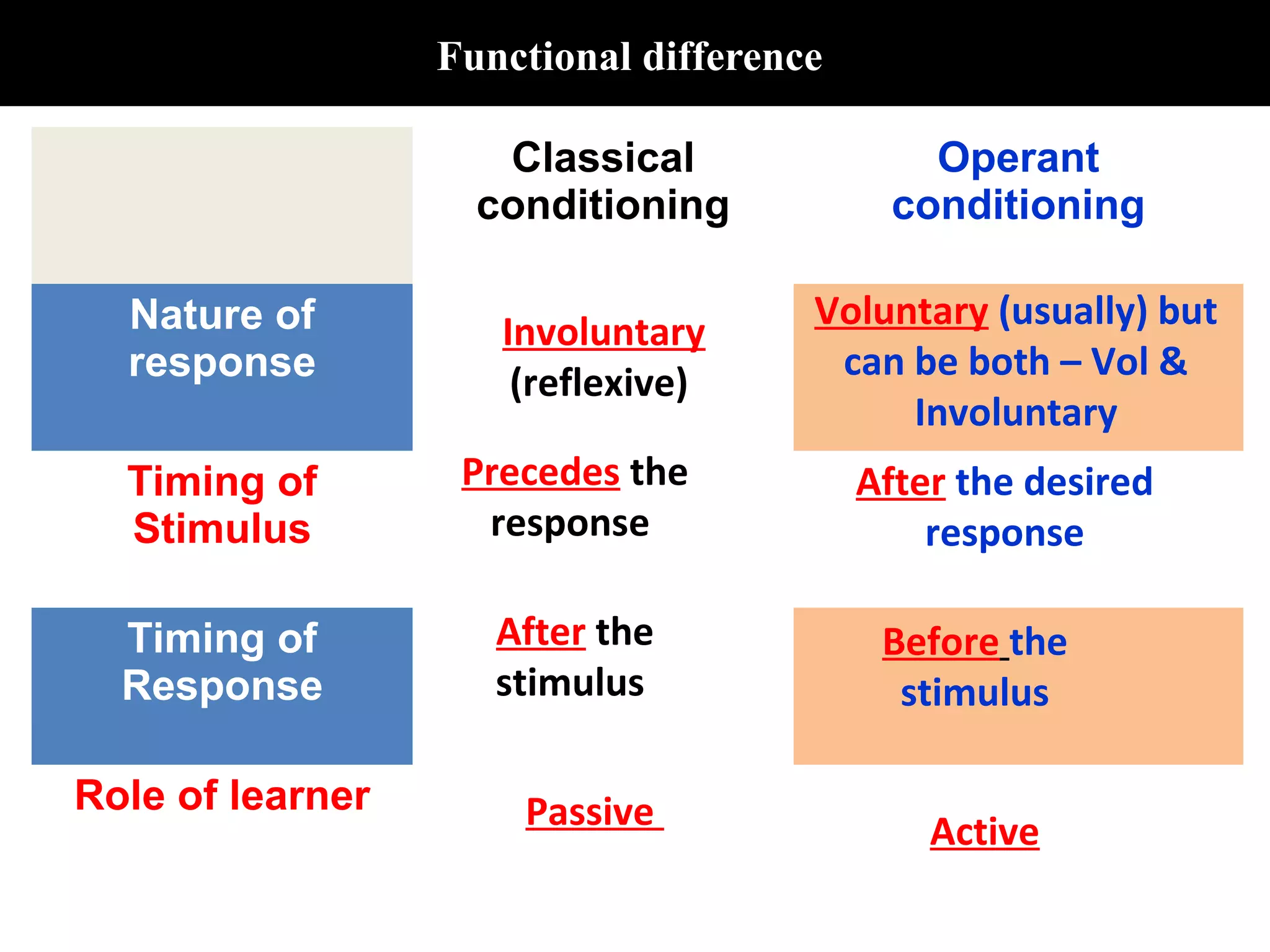
Functional difference
Classical
conditioning
Operant
conditioning
Nature of
response
Timing of
Stimulus
Timing of
Response
Role of learner
Voluntary (usually) but
can be both – Vol &
Involuntary
After the desired
response
ActivePassive
Precedes the
response
Involuntary
(reflexive)
After the
stimulus
Before the
stimulus
Operant Conditioning Summary
Psychology should be seen as a science, to be studied in a scientific
manner.
Deals with observable behavior.
The major influence on human behavior is learning from our environment.
Skinner proposed that the way humans learn behavior is much the same
as the way the rats learned to press a lever.
There is little difference between the learning that takes place in humans
and that in other animals.
Skinner operant conditioning

Skinner operant conditioning

  • 1.
    Skinner - OperantConditioning Presentation On By- Adesh Kumar Verma Ph.D., Scholar Roll No.P-1639
  • 2.
    Outline of Presentation Introduction Genesisof operant conditioning Concept of operant conditioning Types of operant Schedules of Reinforcement Shaping How operant conditioning differs from Classical conditioning? Summary
  • 3.
    Introduction Behaviorism Conditioning Types of conditioning Classicalconditioning Operant conditioning B. F. Skinner ?
  • 4.
    Genesis of operantconditioning Thorndike Learning in animals Puzzle box Propose the theory known as the 'Law of Effect‘. Law of Effect – Reinforcement
  • 5.
    Concept of operantconditioning Given by- B.F. Skinner Coined term operant conditioning Means :- changing of behavior by the use of reinforcement (which is given after the desired response) and punishment (which is given after the undesired response)
  • 6.
    Types of operant Skinneridentified three types of responses or operant that can follow behavior Neutral operants: responses from the environment that neither increase nor decrease the probability of a behavior being repeated. Reinforcers: Responses from the environment that increase the probability of a behavior being repeated. Reinforcers can be either positive or negative. Punishers: Response from the environment that decrease the likelihood of a behavior being repeated. Punishment weakens behavior.
  • 9.
    Graphical view ofBehaviour by- using cumulative recorder
  • 10.
    Schedules of Reinforcement 1.Continuous Reinforcement 2. Partial Reinforcement Fixed-ratio schedules Variable-ratio schedules Fixed-interval schedules Variable-interval schedules . Choosing a Schedule
  • 11.
    Shaping Shaping is anexperimental process used in operant conditioning by which successive approximations of a target behavior are reinforced. B.F. Skinner used shaping, a method of training by which successive approximations toward a desired target behavior are reinforced, to test his theories of behavioral psychology. The shaping method relies on the use of behavioral reinforcement and punishment, which lead subjects toward a desired behavior, and discourage them from displaying undesired behaviors. Skinner’s early experiments in operant conditioning involved the shaping of rats to learn to how press a lever to receive a food reward.
  • 12.
    How operant conditioningdiffers from Classical conditioning? Developmental differences
  • 13.
    Functional difference Classical conditioning Operant conditioning Nature of response Timingof Stimulus Timing of Response Role of learner Voluntary (usually) but can be both – Vol & Involuntary After the desired response ActivePassive Precedes the response Involuntary (reflexive) After the stimulus Before the stimulus
  • 14.
    Operant Conditioning Summary Psychologyshould be seen as a science, to be studied in a scientific manner. Deals with observable behavior. The major influence on human behavior is learning from our environment. Skinner proposed that the way humans learn behavior is much the same as the way the rats learned to press a lever. There is little difference between the learning that takes place in humans and that in other animals.