INTRODUCTION TO
   GENETICS
            By:
   Samantha Rose Bernardo
   Vanessa Celine Gabaldon
         AAPD2F
What is Genetics?
 It is the science that deals with the study of heredity
  and variation.
 GENETICS came from the word gen, genetikos
  meaning generative and genesis meaning
  beginning.

HEREDITY: transmission of traits from parent to
        offspring.
VARIATION: similarities and differences
Scientists Who Contributed in
           Genetics
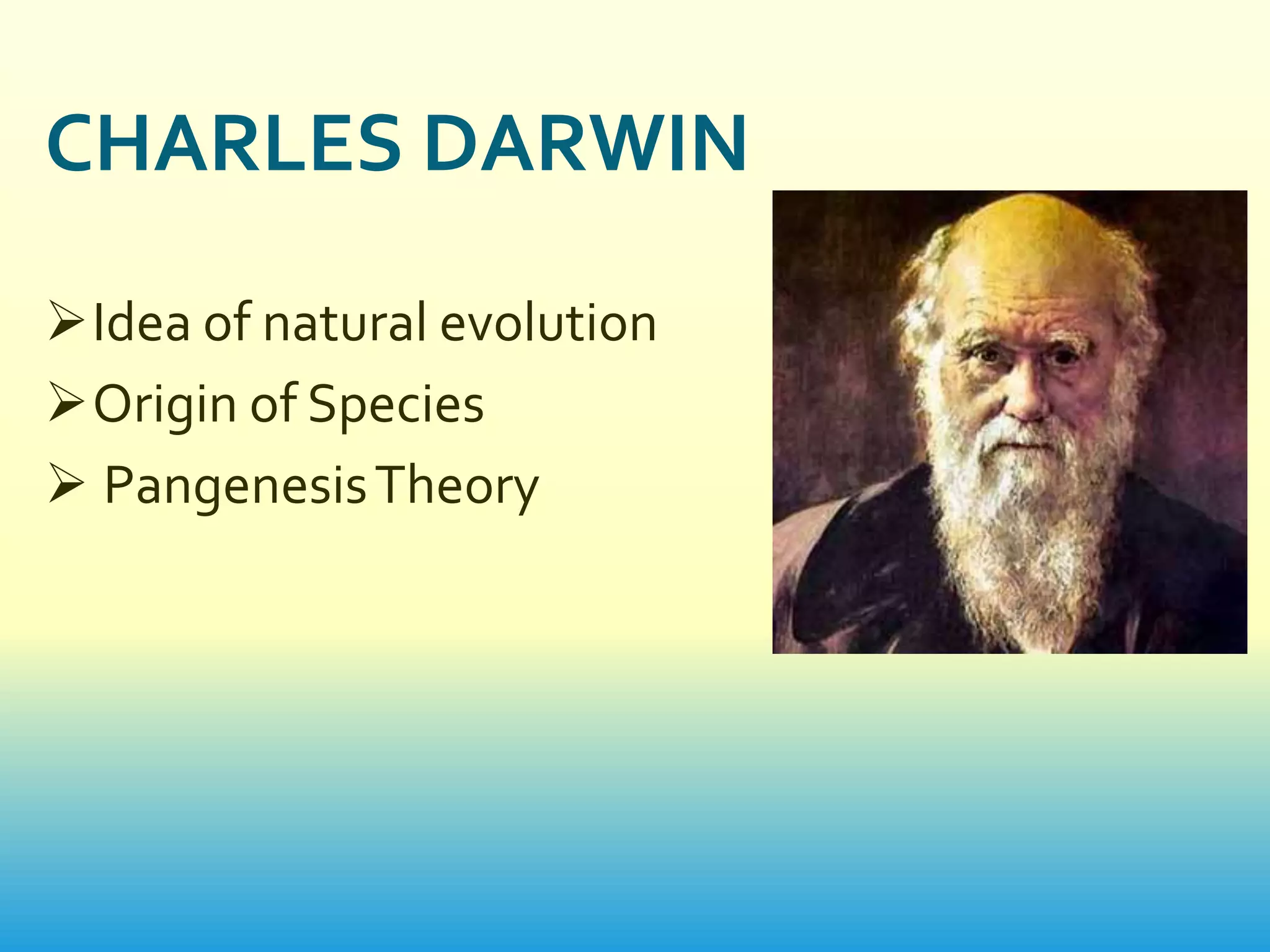
CHARLES DARWIN

Idea of natural evolution
Origin of Species
 Pangenesis Theory
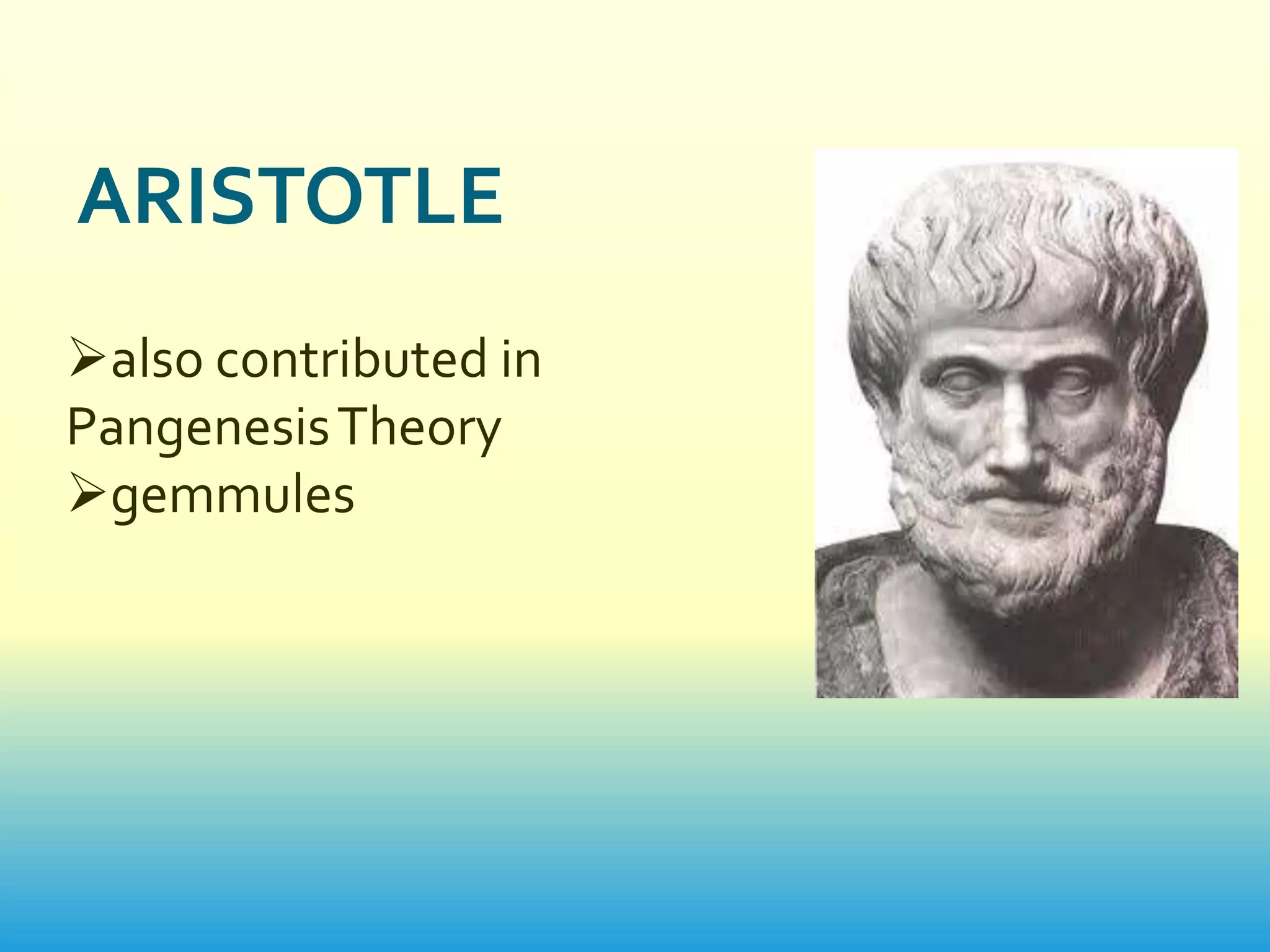
ARISTOTLE
also contributed in
Pangenesis Theory
gemmules
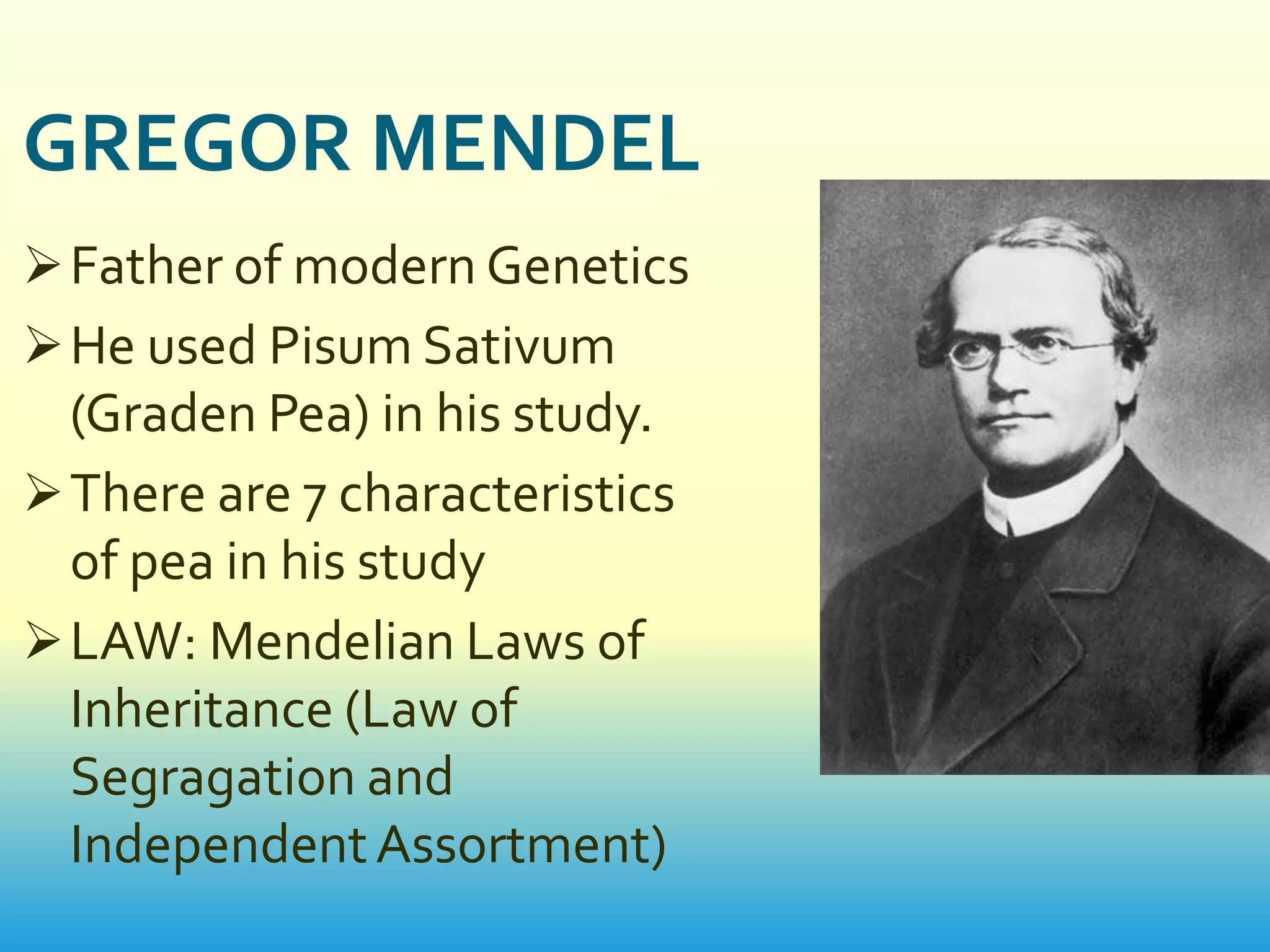
GREGOR MENDEL
 Father of modern Genetics
 He used Pisum Sativum
  (Graden Pea) in his study.
 There are 7 characteristics
  of pea in his study
 LAW: Mendelian Laws of
  Inheritance (Law of
  Segragation and
  Independent Assortment)
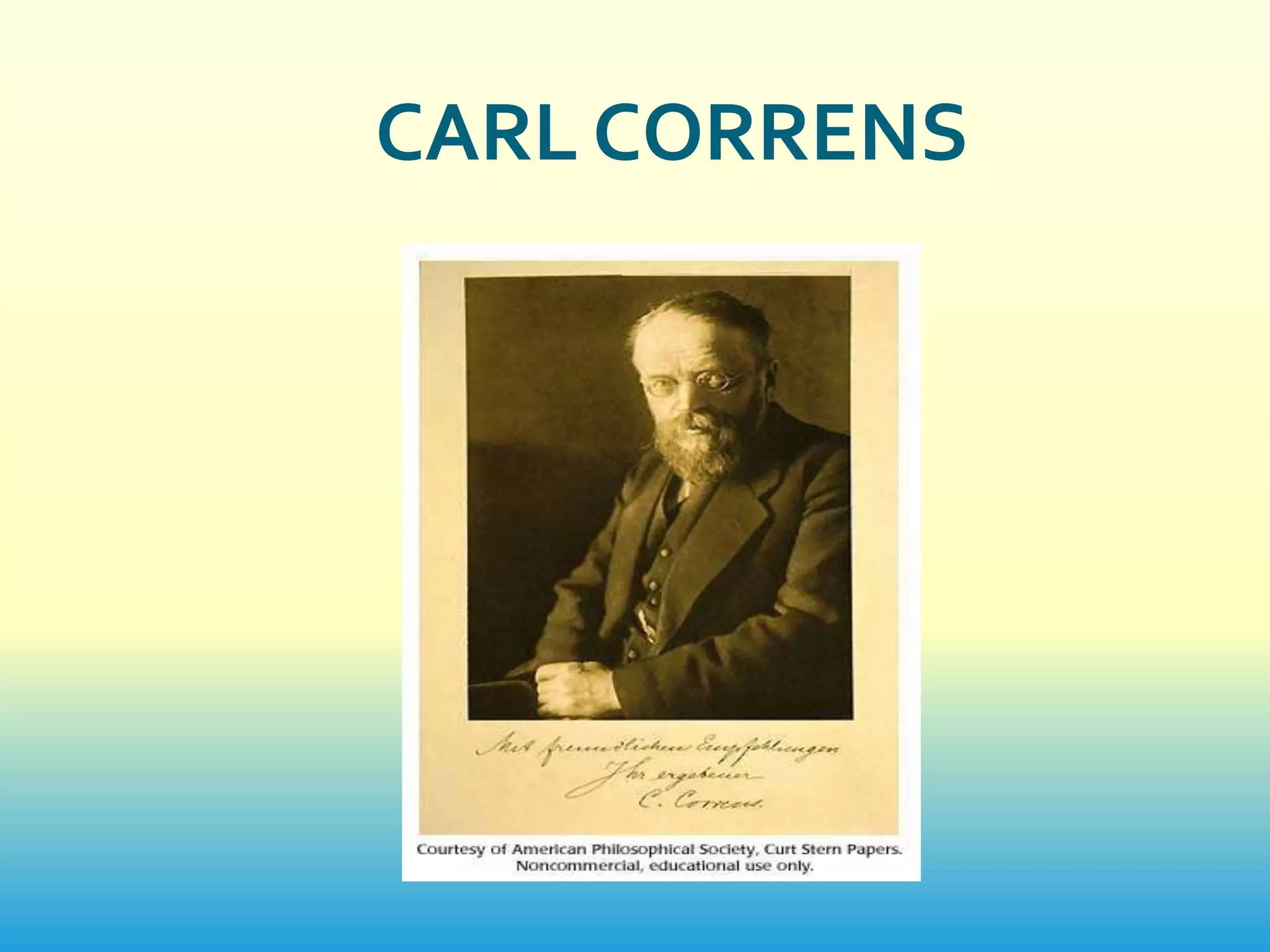
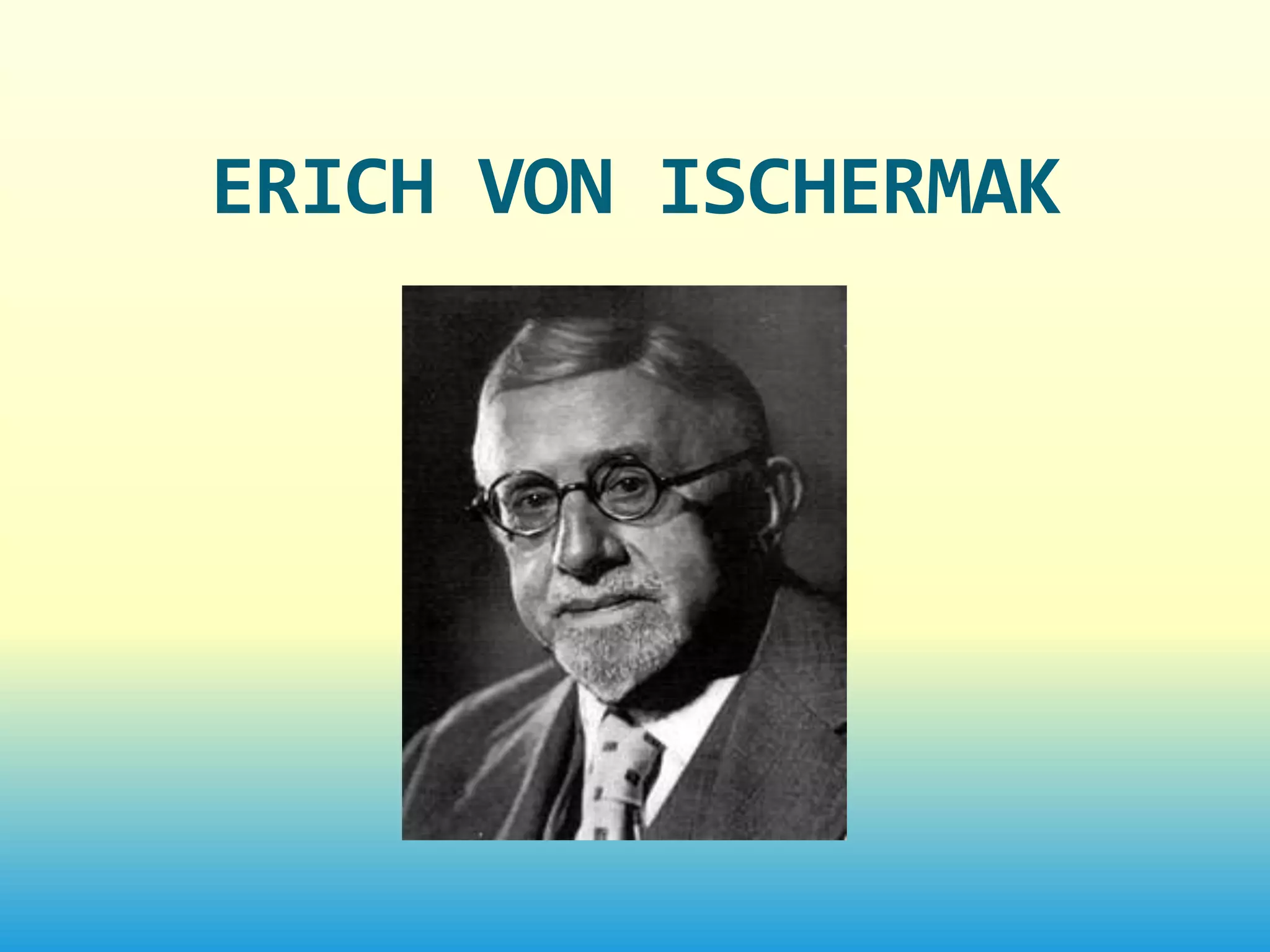
WHO DUPLICATED THE WORK
      OF MENDEL
         (1900)
CARL CORRENS
HUGO DE VRIES
ERICH VON ISCHERMAK
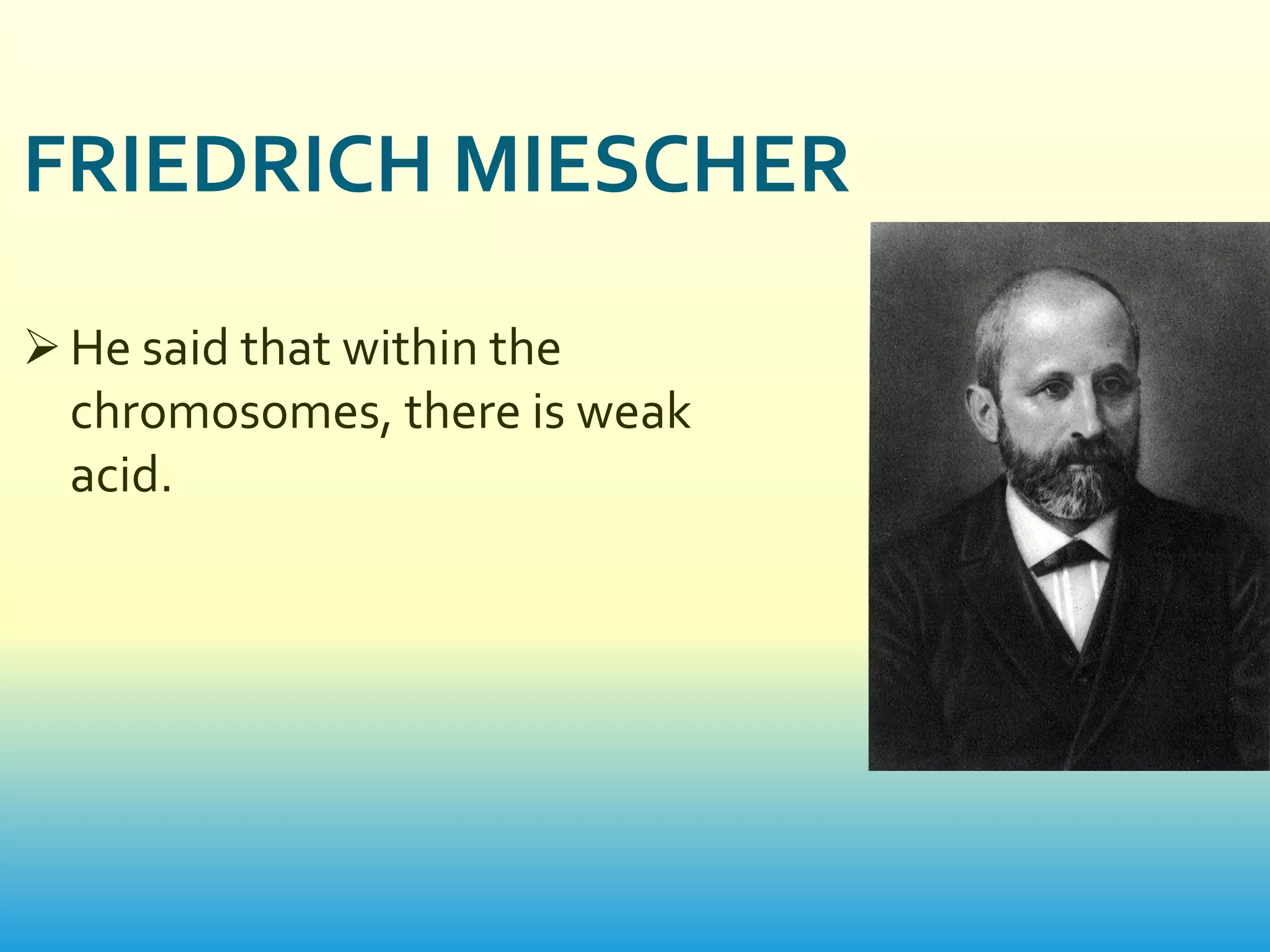
FRIEDRICH MIESCHER

 He said that within the
  chromosomes, there is weak
  acid.
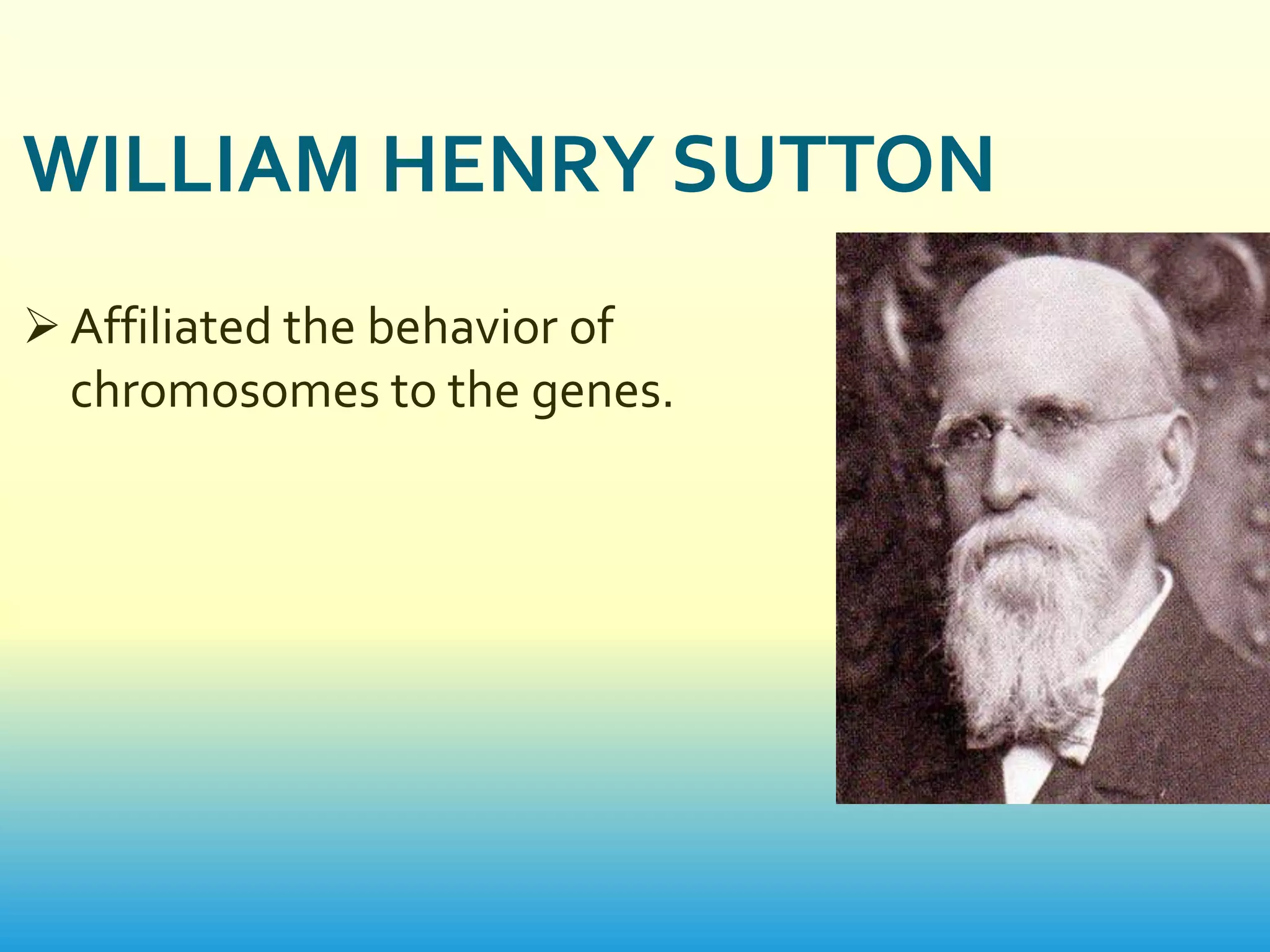
WILLIAM HENRY SUTTON
 Affiliated the behavior of
  chromosomes to the genes.
SCIENTISTS WHO
CONFIRMED DNA
OSWALD AVERY
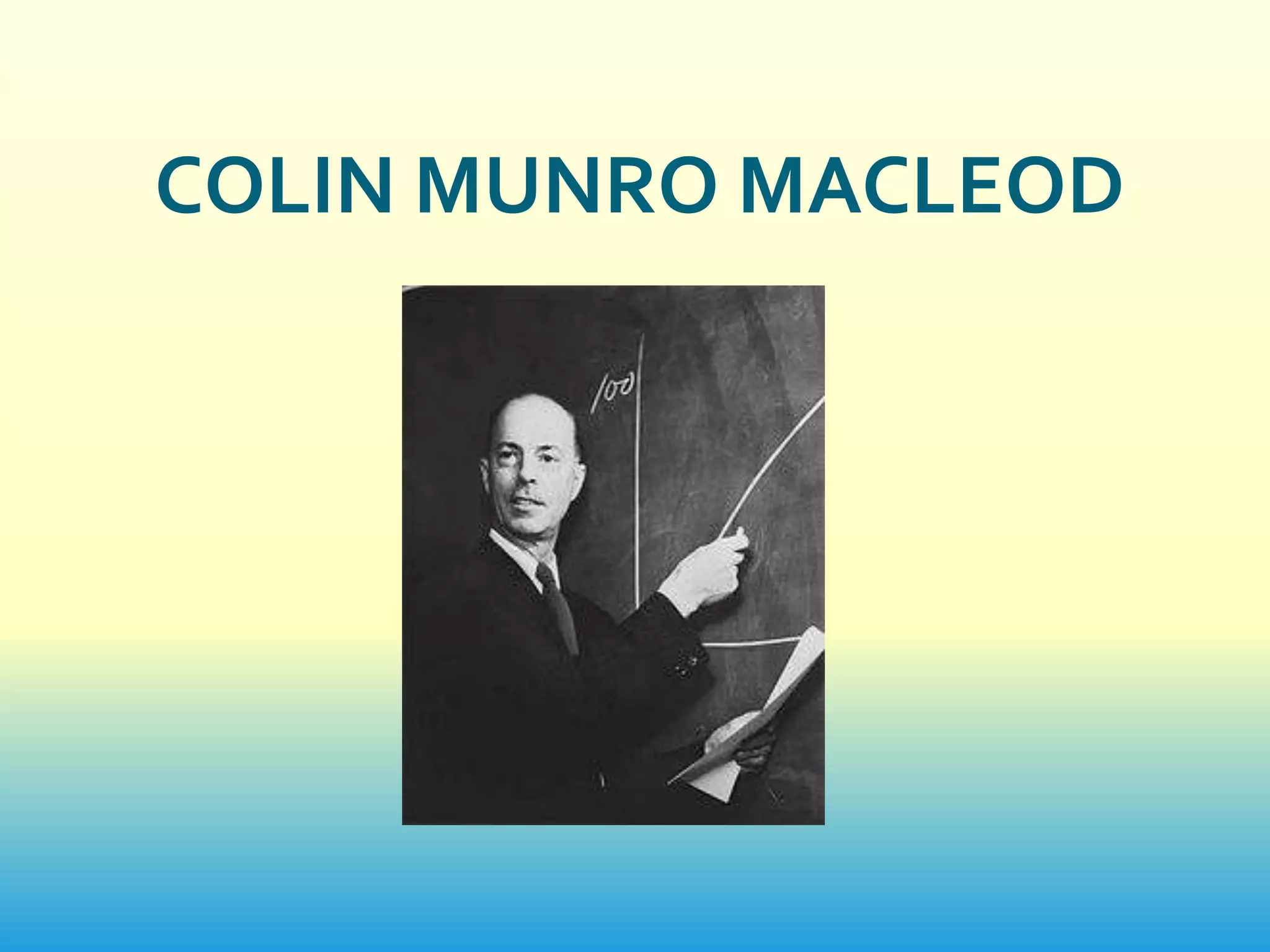
COLIN MUNRO MACLEOD
MACLYN McCARTY
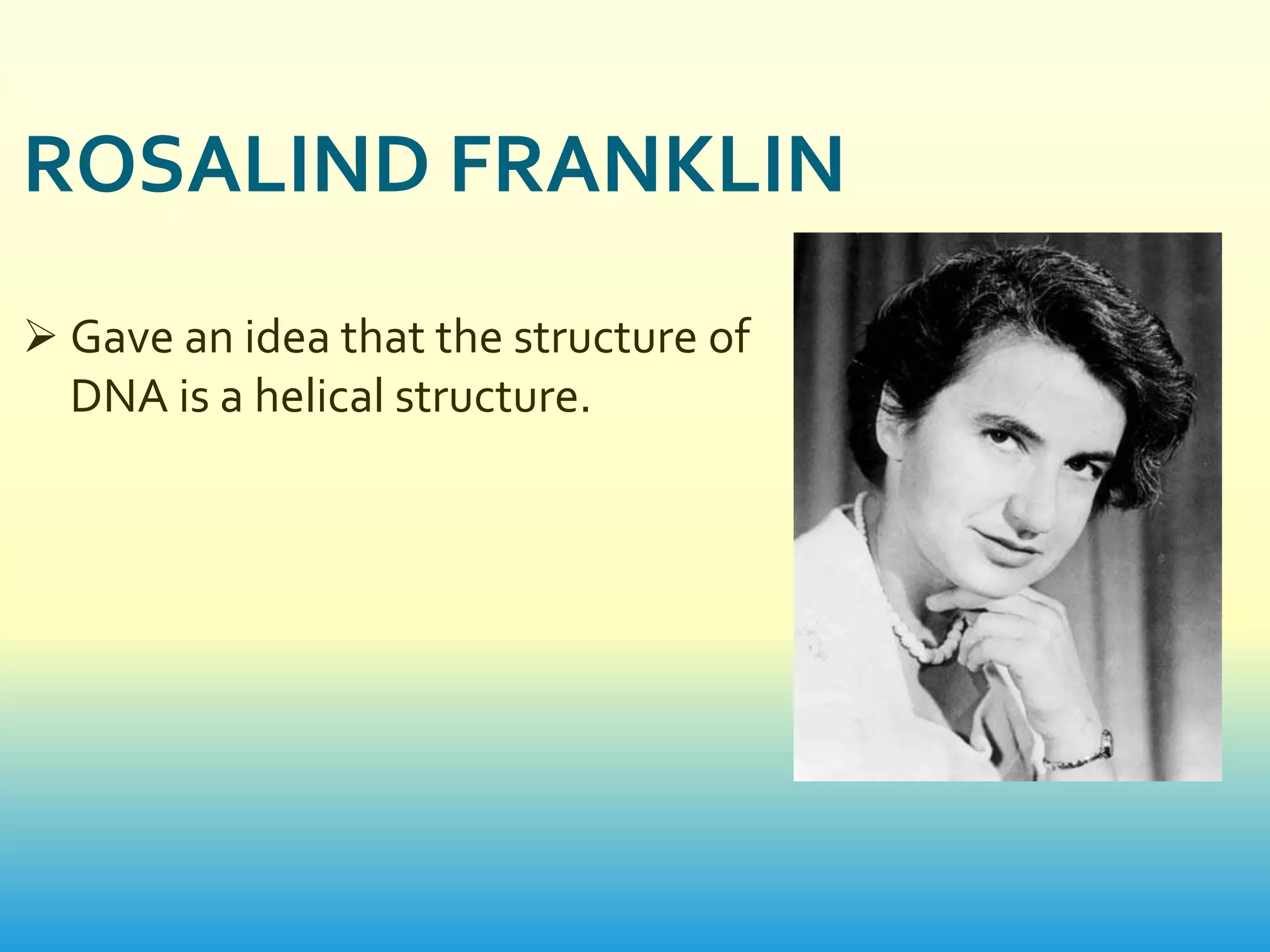
ROSALIND FRANKLIN
 Gave an idea that the structure of
  DNA is a helical structure.
SCOPE AND BRANCHES
CYTOGENETICS
 Science that deals with the physical basic of heredity
                          (cell)


        MOLECULAR GENETICS
              Chemical basis of heredity
     Newest and most advanced field of Genetics
BRANCHES OF MOLECULAR
      GENETICS

               GENOMICS
         Study of genes of an organism


              PROTEONICS
 study of proteins coming from DNA replication.
CLASSICAL GENETICS
   Study of analysis of offspring to mating (parents to
                         offspring)


           POPULATION GENETICS
 Deals with the transmission of trait with a large group
          of individual through a passage of time.


           BEHAVIORAL GENETICS
           Study of behavior of an organism.
BEHAVIORAL GENETICS
 Study of behavior of an organism.
METHODS OF GENETIC STUDY
1. Pedigree Analysis
 Transmission of trait through the use of
   pedigree.
 Pictorial representation

2. Karyotyping
 Detect chromosomal abnormality
 karyogram/ karyotype (pictorial representation
   of chromosomes)
3. Planned Experimental Breeding
 Dominant trait- can be seen and manifested
  trait.
 Recessive- hidden trait
 Homozygous- two identical alleles
 Heterozygous- two unidentical alleles

4. Twin Study
 Study of twins
Kinds of Twins:
Praternal- Dizygotic twin
Identical- Monozygotic twin
Concordance twin(praternal)- possess a trait
  or do not or both
Disconcordance(identical)- if one possesses
  the other is not.


5. Statistical Analysis
 Make use of several data
 Use for population data
2 Kinds of Hypothesis
Null
   Negative guess

Alternative
    Positive guess
GENETIC ENGINEERING

Key factor for biotechnology
Come up with a desirable trait
Manipulating a certain trait
APPLICATION OF GENETICS
1. Field of Medicine
2. Agriculture/Food Production/Industry
3. Legal Application
4. Genetic Counseling
5. Genetic Code
The End

Introduction to Genetics