1 
Drug Metabolism 
Presenter :- Dr Swaroop H S 
Moderator:- Dr Ananya Chakraborty 
Dr Swaroop HS copyighted
2 
Outline 
• Introduction 
• History 
• Phases of Metabolism 
• Phase I Metabolism 
• Cytochrome P family 
• Phase II Metabolism 
• First Pass Metabolism 
• Ante drug 
• Microsomal Enzyme Induction 
• Role of Metabolism in Drug Discovery 
Dr Swaroop HS copyighted
3 
Introduction 
• Biotransformation: Chemical alteration of 
the drug in body that converts nonpolar or 
lipid soluble compounds to polar or lipid 
insoluble compounds 
• Consequences of biotransformation 
• Active drug  Inactive metabolite : Pentobarbitone, 
Morphine, Chloramphenicol 
• Active drug  Active metabolite: Phenacetin 
• Inactive drug  active metabolite: Levodopa 
Dr Swaroop HS copyighted
4 
Prodrugs 
• Inactive drug is converted to active metabolite 
• Coined by Albert in 1958 
• Advantages: 
• Increased absorption 
• Elimination of an unpleasant taste 
• Decreased toxicity 
• Decreased metabolic inactivation 
• Increased chemical stability 
• Prolonged or shortened action 
Dr Swaroop HS copyighted
5 
History 
• Welsh biochemist 
• Metabolism of 
sulfonamides, benzene, 
aniline, acetanilide, 
phenacetin, thalidomide 
and stilbesterol 
• Metabolism of TNT 
(Trinitrotoluene) with 
regard to toxicity in 
munitions (1942) 
Richard TecwynWilliams 
1909 - 1979 
Dr Swaroop HS copyighted
6 
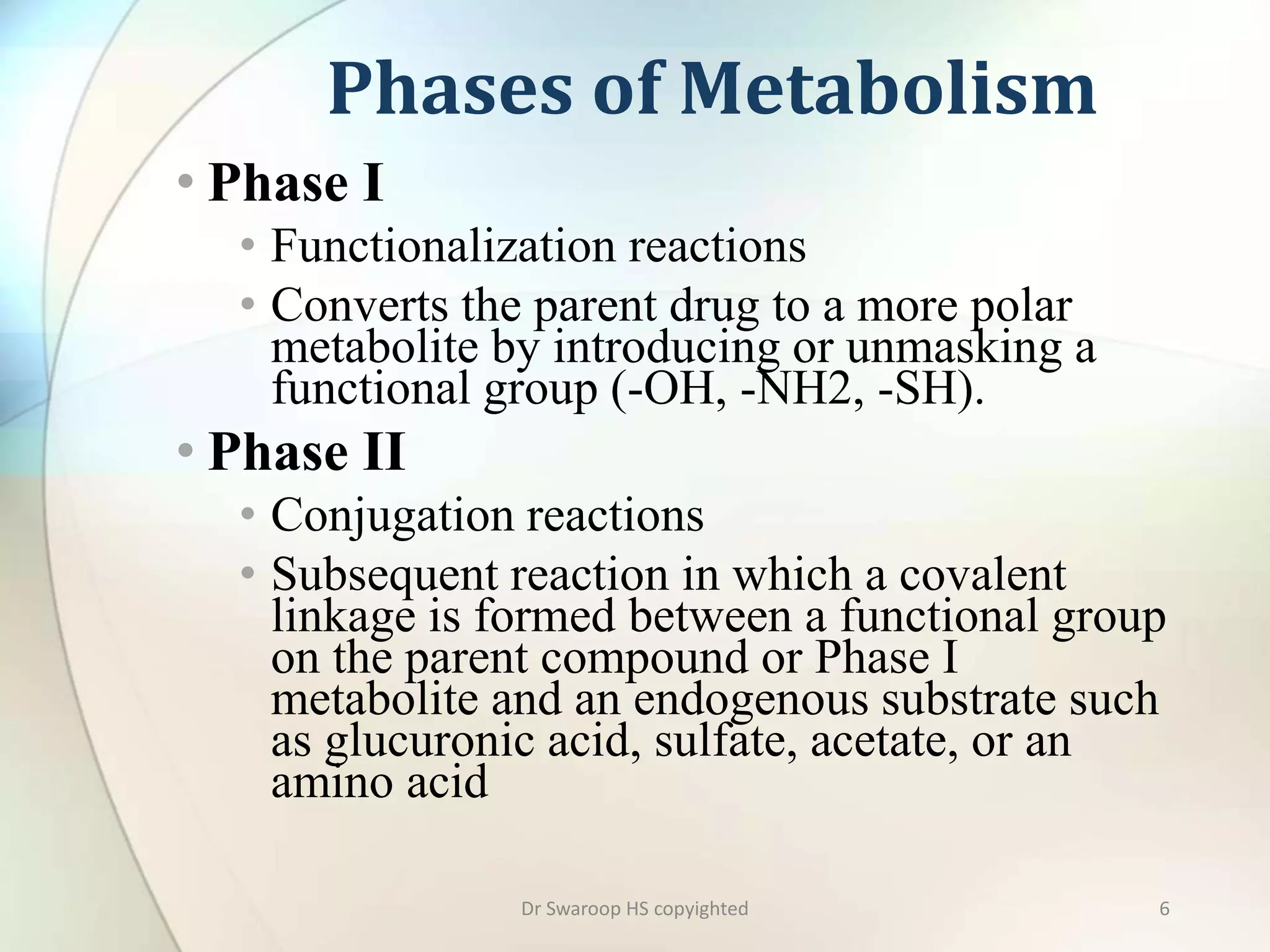
Phases of Metabolism 
• Phase I 
• Functionalization reactions 
• Converts the parent drug to a more polar 
metabolite by introducing or unmasking a 
functional group (-OH, -NH2, -SH). 
• Phase II 
• Conjugation reactions 
• Subsequent reaction in which a covalent 
linkage is formed between a functional group 
on the parent compound or Phase I 
metabolite and an endogenous substrate such 
as glucuronic acid, sulfate, acetate, or an 
amino acid 
Dr Swaroop HS copyighted
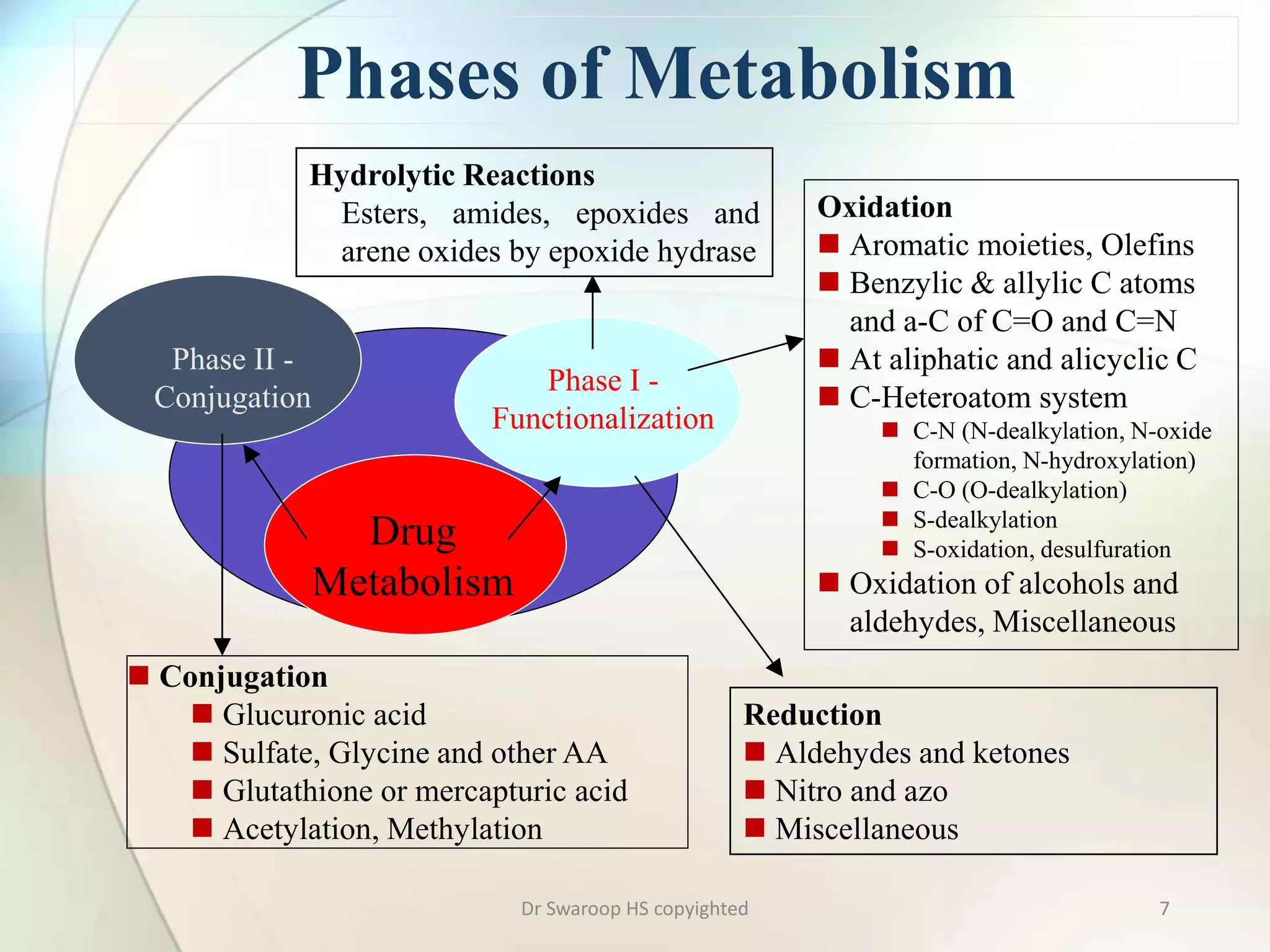
Phases of Metabolism 
Hydrolytic Reactions 
 Esters, amides, epoxides and 
 Conjugation 
arene oxides by epoxide hydrase 
 Glucuronic acid 
 Sulfate, Glycine and other AA 
 Glutathione or mercapturic acid 
 Acetylation, Methylation 
Oxidation 
 Aromatic moieties, Olefins 
 Benzylic & allylic C atoms 
and a-C of C=O and C=N 
 At aliphatic and alicyclic C 
 C-Heteroatom system 
 C-N (N-dealkylation, N-oxide 
formation, N-hydroxylation) 
 C-O (O-dealkylation) 
 S-dealkylation 
 S-oxidation, desulfuration 
 Oxidation of alcohols and 
aldehydes, Miscellaneous 
Reduction 
 Aldehydes and ketones 
 Nitro and azo 
 Miscellaneous 
Phase II - 
Conjugation 
Phase I - 
Functionalization 
Drug 
Metabolism 
Dr Swaroop HS copyighted 7
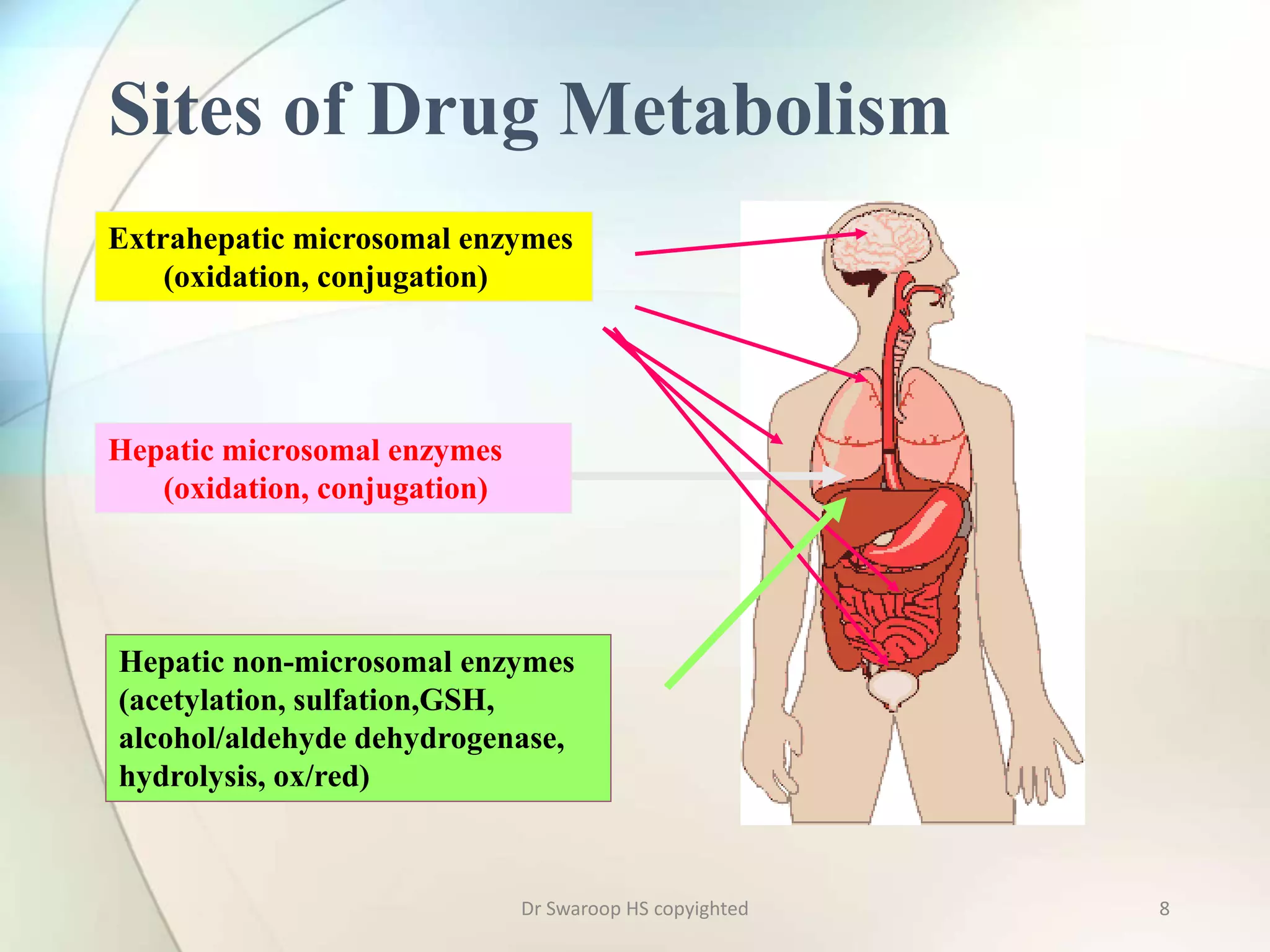
Sites of Drug Metabolism 
Extrahepatic microsomal enzymes 
(oxidation, conjugation) 
Hepatic microsomal enzymes 
(oxidation, conjugation) 
Hepatic non-microsomal enzymes 
(acetylation, sulfation,GSH, 
alcohol/aldehyde dehydrogenase, 
hydrolysis, ox/red) 
Dr Swaroop HS copyighted 8
9 
Phase I / Non Synthetic Reactions 
Oxidation 
• Addition of oxygen/ negatively charged radical 
or removal of hydrogen/ positvely charged 
radical. 
• Reactions are carried out by group of mono-oxygenases 
in the liver. 
• Fianl step: Involves cytochrome P-450 
haemoprotein, NADPH, cytochrome P-450 
reductase and O2 
Dr Swaroop HS copyighted
• Monooxygenase enzyme family 
• Major catalyst: Drug and endogenous 
compound oxidations in liver, kidney, G.I. tract, 
skin and lungs 
• Oxidative reactions require: CYP heme protein, 
the reductase, NADPH, phosphatidylcholine and 
molecular oxygen 
• Location: smooth endoplasmic reticulum in 
close association with NADPH-CYP reductase 
in 10/1 ratio 
• The reductase serves as the electron source for 
the oxidative reaction cycle 
10 
Cytochrome P450 enzymes 
Dr Swaroop HS copyighted
NADP+ 
CO 
hu 
CO 
CYP-Fe+2 
Drug 
O2 
e-e- 
H2O 
2H+ 
Drug 
CYP 
R-Ase 
NADPH 
Drug OH 
CYP Fe+3 
PC Drug 
CYP Fe+2 
Drug 
O2 
CYP Fe+2 
Drug 
CYP Fe+3 
OH 
Drug 
11 
Electron flow in Cytochromes 
Dr Swaroop HS copyighted
• Multiple CYP gene families have been identified in 
humans, and the categoriezed based on protein 
sequence homology 
• Most of the drug metabolizing enzymes are in CYP 
1, 2, & 3 families . 
• Frequently, two or more enzymes can catalyze the 
same type of oxidation, indicating redundant and 
broad substrate specificity. 
• CYP3A4 is very common to the metabolism of 
many drugs; its presence in the GI tract is 
responsible for poor oral availabilty of many drugs 
12 
Cytochrome P family 
Dr Swaroop HS copyighted
Cytochrome families Continued…. 
13 
• Families: CYP plus arabic numeral (>40% 
homology of amino acid sequence, eg. CYP1) 
• Subfamily: 40-55% homology of amino acid 
sequence; eg. CYP1A 
• Subfamily: Additional arabic numeral when more 
than 1 subfamily has been identified; eg. CYP1A2 
• Italics: Indicate gene (CYP1A2); regular font for 
enzyme 
Dr Swaroop HS copyighted
14 
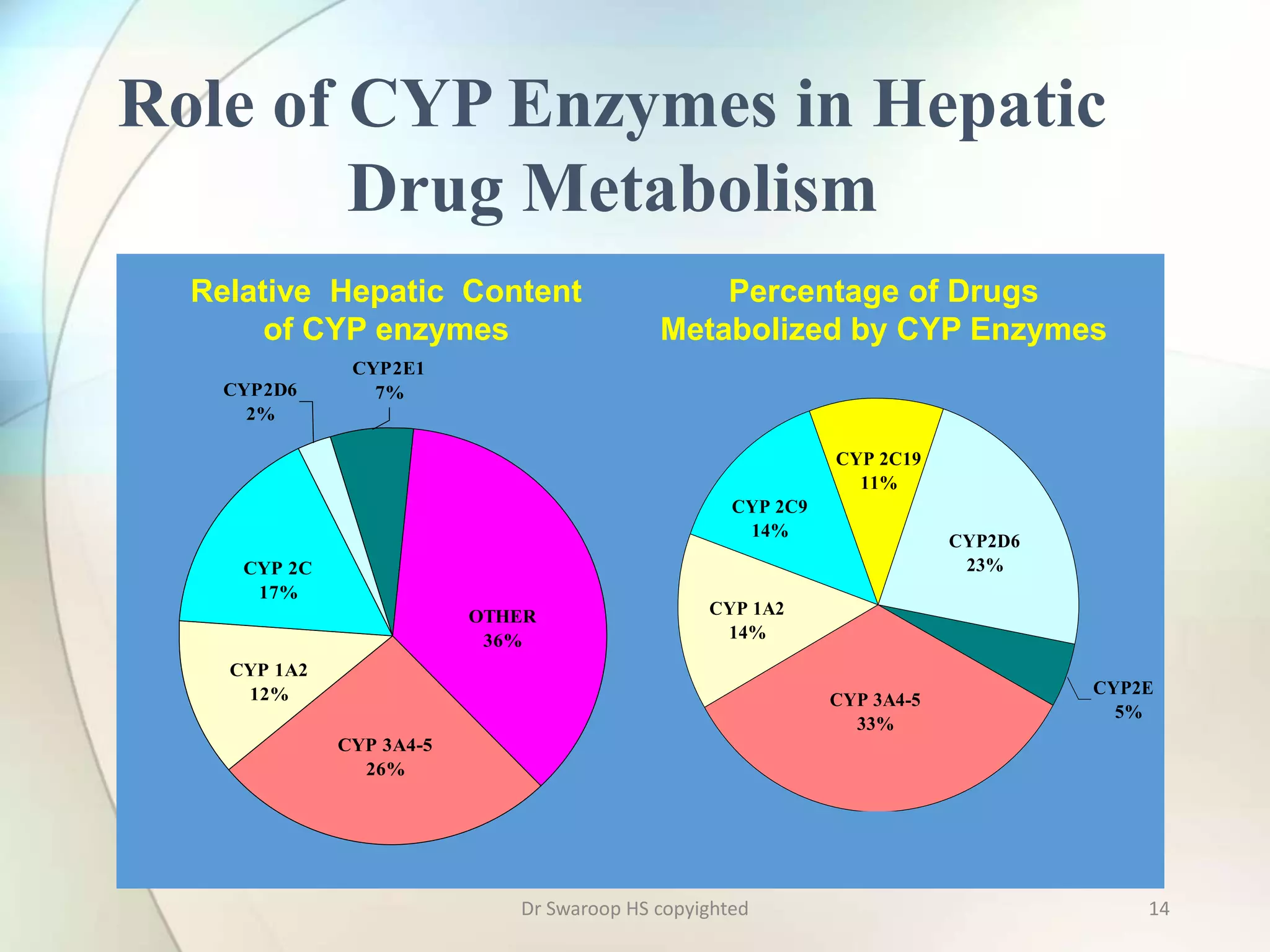
Role of CYP Enzymes in Hepatic 
Drug Metabolism 
OTHER 
36% 
CYP2D6 
2% 
CYP2E1 
7% 
CYP 2C 
17% 
CYP 1A2 
12% 
CYP 3A4-5 
26% 
CYP 2C9 
14% 
CYP 1A2 
14% 
CYP 2C19 
11% 
CYP2D6 
23% 
CYP2E1 
5% 
CYP 3A4-5 
33% 
Relative Hepatic Content 
of CYP enzymes 
Percentage of Drugs 
Metabolized by CYP Enzymes 
Dr Swaroop HS copyighted
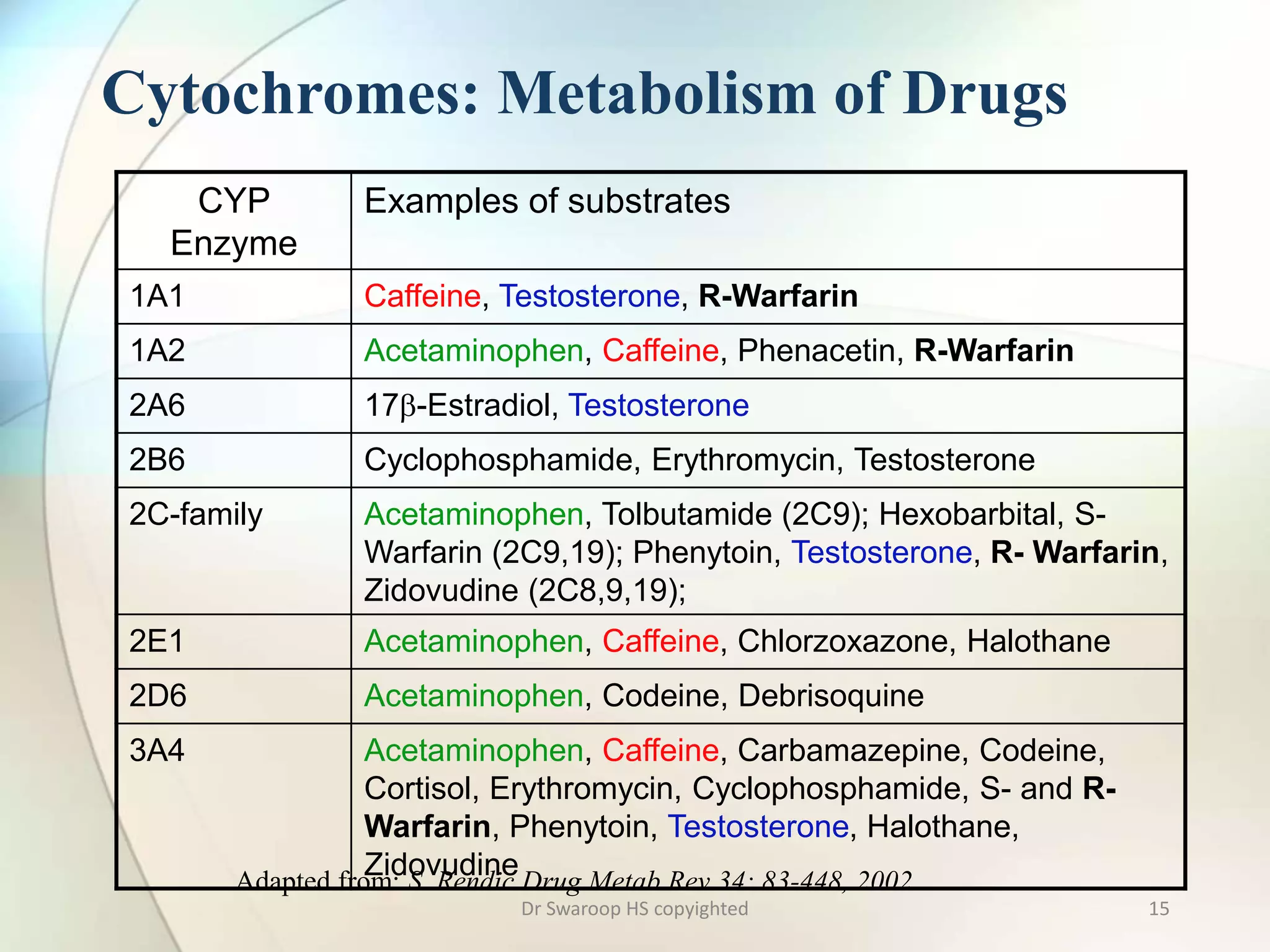
Cytochromes: Metabolism of Drugs 
CYP 
Enzyme 
Examples of substrates 
1A1 Caffeine, Testosterone, R-Warfarin 
1A2 Acetaminophen, Caffeine, Phenacetin, R-Warfarin 
2A6 17-Estradiol, Testosterone 
2B6 Cyclophosphamide, Erythromycin, Testosterone 
2C-family Acetaminophen, Tolbutamide (2C9); Hexobarbital, S-Warfarin 
(2C9,19); Phenytoin, Testosterone, R- Warfarin, 
Zidovudine (2C8,9,19); 
2E1 Acetaminophen, Caffeine, Chlorzoxazone, Halothane 
2D6 Acetaminophen, Codeine, Debrisoquine 
3A4 Acetaminophen, Caffeine, Carbamazepine, Codeine, 
Cortisol, Erythromycin, Cyclophosphamide, S- and R-Warfarin, 
Phenytoin, Testosterone, Halothane, 
Zidovudine 
15 
Adapted from: S. Rendic Drug Metab Rev 34: 83-448, 2002 
Dr Swaroop HS copyighted
Non-CYP Drug Oxidations 
• Monoamine Oxidase (MAO), Diamine Oxidase (DAO) 
16 
• MAO (mitochondrial) oxidatively deaminates endogenous 
substrates including neurotransmitters 
• Dopamine, serotonin, norepinephrine, epinephrine 
• Alcohol & Aldehyde Dehydrogenase 
• Non-specific enzymes found in soluble fraction of liver 
• Ethanol metabolism 
• Flavin Monooxygenases 
• Require molecular oxygen, NADPH, flavin adenosine dinucleotide 
(FAD) 
Dr Swaroop HS copyighted
17 
Reduction 
• Converse of oxidation 
• Drugs primarily reduced are chloralhydrate, 
chloramphenicol, halothane. 
Dr Swaroop HS copyighted
18 
Hydrolysis 
• Cleavage of drug molecule by taking up a 
molecule of water. 
• Sites: Liver, intestines, plasma and other tissues 
• Examples: Choline esters, Procaine, Isoniazid, 
pethidine, oxytocin. 
Dr Swaroop HS copyighted
Cyclization and Decyclization 
19 
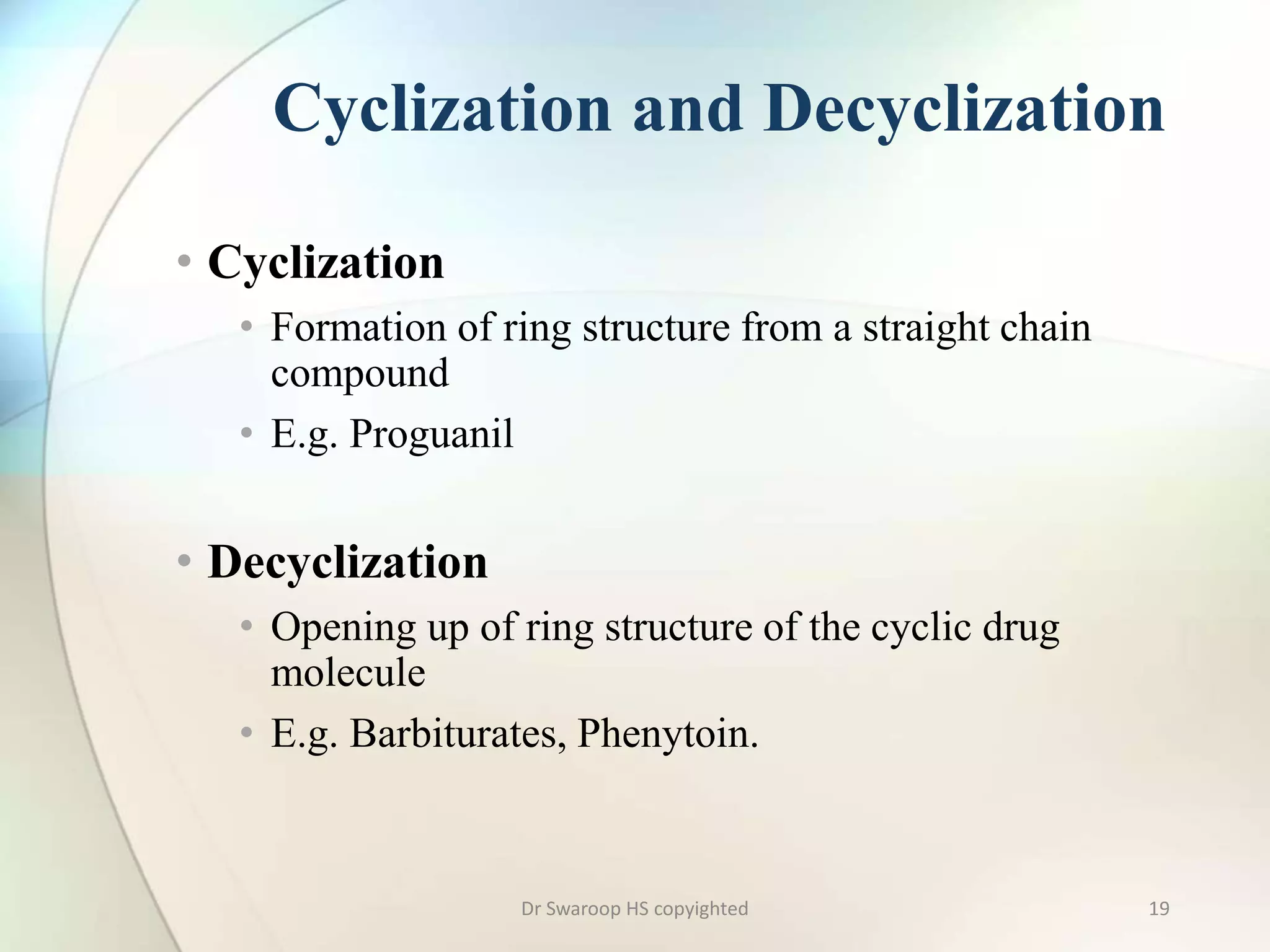
• Cyclization 
• Formation of ring structure from a straight chain 
compound 
• E.g. Proguanil 
• Decyclization 
• Opening up of ring structure of the cyclic drug 
molecule 
• E.g. Barbiturates, Phenytoin. 
Dr Swaroop HS copyighted
20 
Phase II/ Synthetic reactions 
• Conjugation of the drug or its phase I 
metabolite with an endogenous substrate 
to form a polar highly ionized organic 
acid 
• Types of phase II reactions 
• Glcuronide conjugation 
• Acetylation, Methylation 
• Sulfate conjugation, Glycine conjugation 
• Glutathione conjugation 
• Ribonucleoside/ nucleotide synthesis 
Dr Swaroop HS copyighted
• Conjugation to α-d-glucuronic acid 
• Quantitatively the most important phase II 
pathway for drugs and endogenous compounds 
• Products are often excreted in the bile 
• Requires enzyme UDP-glucuronosyltransferase 
(UGT) 
• Compounds with a hydroxyl or carboxylic acid 
group are easily conjugated with glucuronic acid 
which is derived from glucose 
21 
Glucuronide Conjugation 
Dr Swaroop HS copyighted
Glucuronide Conjugation Continued.. 
• Enterohepatic recycling may occur due to 
gut glucuronidases 
• Drug glucuronides excreted in bile can be 
hydrolysed by bacteria in gut and 
reabsorbed and undergoes same fate. 
• This recycling of the drug prolongs its 
action e.g.Phenolpthalein, Oral 
contraceptives 
22 
• Examples: Chloramphenicol, aspirin, 
phenacetin, morphine, metronidazole 
Dr Swaroop HS copyighted
23 
Acetylation 
• Common reaction for aromatic amines and 
sulfonamides 
• Requires co-factor acetyl-CoA 
• Responsible enzyme is N-acetyltransferase 
• Important in sulfonamide metabolism because 
acetyl-sulfonamides are less soluble than the parent 
compound and may cause renal toxicity due to 
precipitation in the kidney 
• E.g. Sulfonamides, isoniazid, Hydralazine. 
Dr Swaroop HS copyighted
24 
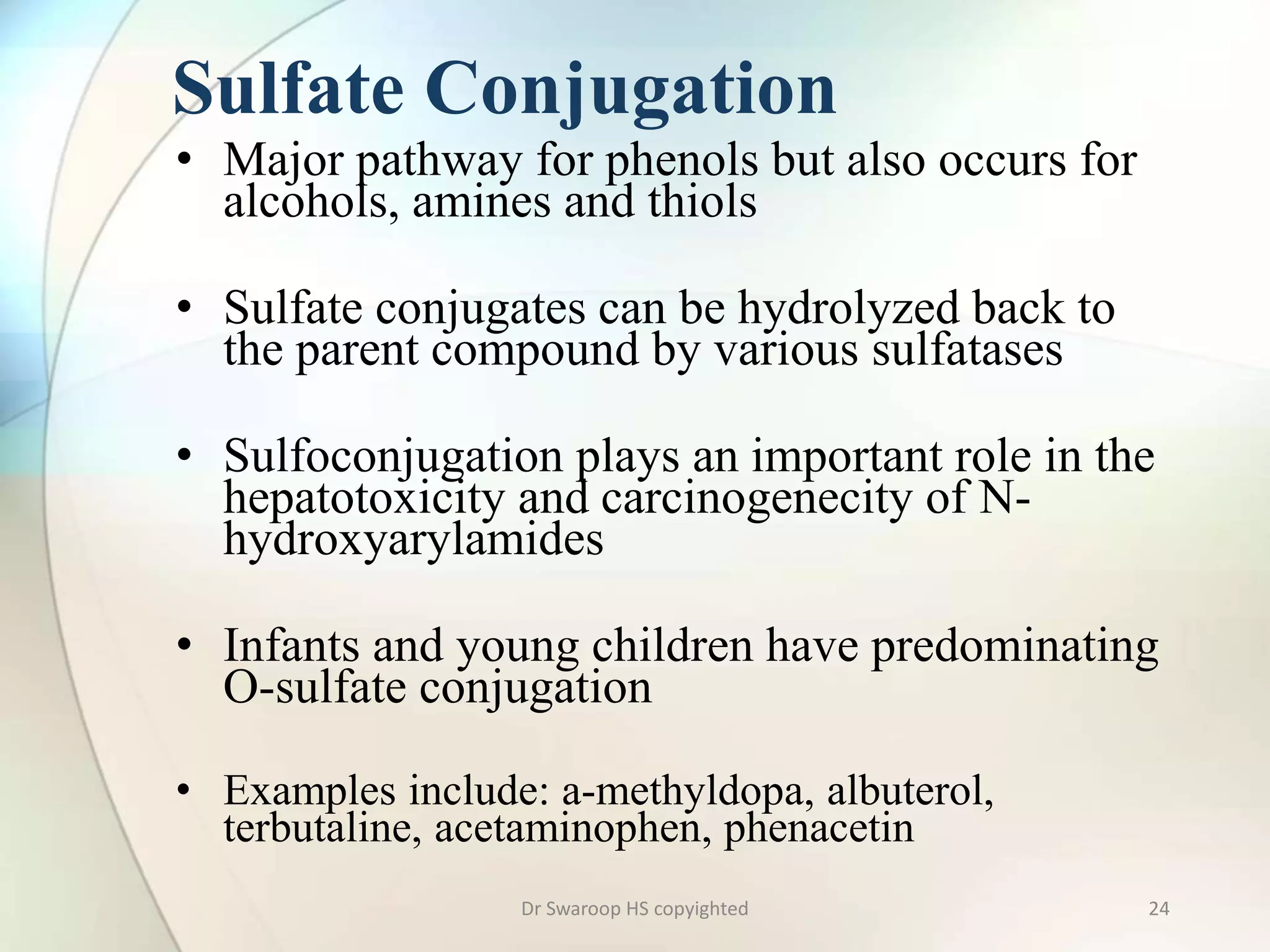
Sulfate Conjugation 
• Major pathway for phenols but also occurs for 
alcohols, amines and thiols 
• Sulfate conjugates can be hydrolyzed back to 
the parent compound by various sulfatases 
• Sulfoconjugation plays an important role in the 
hepatotoxicity and carcinogenecity of N-hydroxyarylamides 
• Infants and young children have predominating 
O-sulfate conjugation 
• Examples include: a-methyldopa, albuterol, 
terbutaline, acetaminophen, phenacetin 
Dr Swaroop HS copyighted
25 
Amino Acid Conjugation: 
• ATP-dependent acid: CoA ligase forms active CoA-amino 
acid conjugates which then react with drugs by 
N-Acetylation: 
– Usual amino acids involved are: 
• Glycine. Glutamine, Ornithine, Arginine 
Glutathione Conjugation: 
• Glutathione is a protective factor for removal of 
potentially toxic compounds 
• Conjugated compounds can subsequently be attacked 
by g-glutamyltranspeptidase and a peptidase to yield 
the cysteine conjugate => product can be further 
acetylated to N-acetylcysteine conjugate 
E.g. Paracetamol 
Dr Swaroop HS copyighted
26 
Hofmann elimination 
Inactivation of the drug in the body fluids by 
spontaneous molecular re arrangement without the 
agency of any enzyme 
e.g. Atracurium. 
Dr Swaroop HS copyighted
• Metabolism of a drug during its passage from the 
site of absorption into the systemic circulation. 
• Extent of first pass metabolism differs in different 
drugs 
Extent of first pass metabolism of important drugs 
27 
First pass Metabolism 
Low Intermediate High – not 
given orally 
High oral dose 
Phenobarbitone Aspirin Isoprenaline propranolol 
Phenylbutazone Quinidine Lignocaine Alprenolol 
Tolbutamide Desipramine Hydrocortisone Verapamil 
Pindolol Nortriptyline Testosterone Salbutamol 
Dr Swaroop HS copyighted
• Oral dose is considerably higher then sublingual 
or parenteral dose 
• Marked individual variation in the oral dose due 
to differences in the extent of first pass 
metabolism 
• Oral bioavailability is apparently increased in 
patients with severe liver disease 
• Oral bioavailability of a drug is increased if 
another drug competing with it. 
E.G. Chloropromazine and Propranolol 
28 
Attributes of drugs with high 
first pass metabolism 
Dr Swaroop HS copyighted
29 
Ante Drug 
I stopped taking medicine 
as I prefer original disease 
to side effects 
!! 
Because, 
Vioxx’ll treat pain 
but who’ll treat 
vioxx 
?? 
Dr Swaroop HS copyighted
What is Antedrug? 
An active synthetic drug which is inactivated by a metabolic 
30 
process upon entry into the systemic circulation. 
Therefore, a true antedrug acts only locally. 
True Antedrug 
Partial Antedrug 
Inactive Metabolite 
Less active metabolite 
Lee HJ and Soliman MRI (1982). Science, 215, 989. 
Dr Swaroop HS copyighted
Advantages of Antedrug 
• Localization of the drug effects 
• Elimination of toxic metabolites, increasing 
31 
the therapeutic index 
• Avoidance of pharmacologically active 
metabolites that can lead to long-term effects 
• Elimination of drug interactions resulting 
from metabolite inhibition of enzymes 
• Simplification of PK problems caused by 
multiple active species 
Dr Swaroop HS copyighted
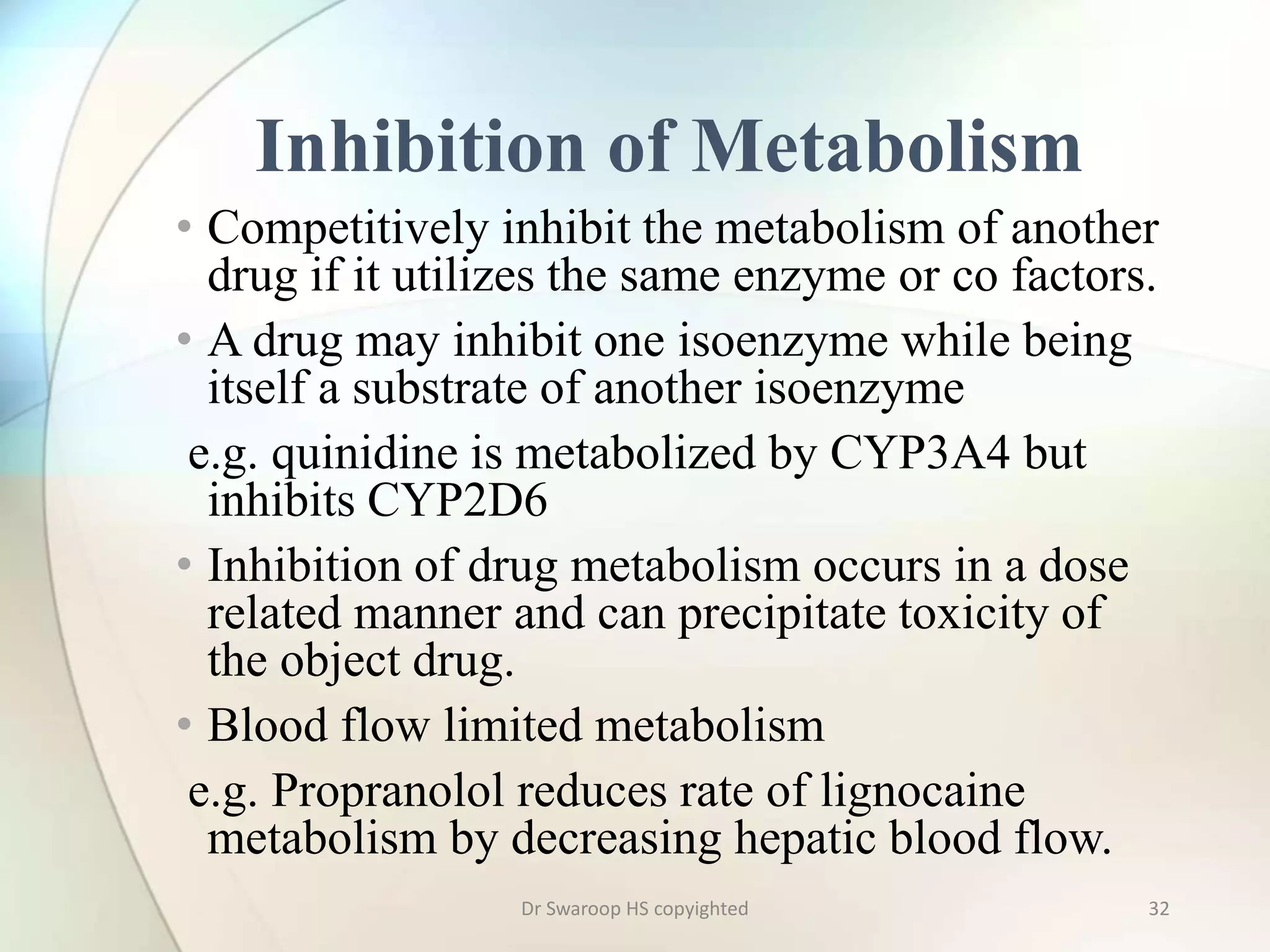
• Competitively inhibit the metabolism of another 
drug if it utilizes the same enzyme or co factors. 
• A drug may inhibit one isoenzyme while being 
itself a substrate of another isoenzyme 
e.g. quinidine is metabolized by CYP3A4 but 
inhibits CYP2D6 
• Inhibition of drug metabolism occurs in a dose 
related manner and can precipitate toxicity of 
the object drug. 
• Blood flow limited metabolism 
e.g. Propranolol reduces rate of lignocaine 
metabolism by decreasing hepatic blood flow. 
32 
Inhibition of Metabolism 
Dr Swaroop HS copyighted
Microsomal Enzyme Induction 
33 
oCertain drugs, insecticides and carcinogens 
increase the synthesis of microsomal enzyme 
protein. 
oDifferent inducers are relatively selective for 
certain cytochrome P-450 enzyme families e.g. 
• Phenobarbitone , rifampin, glucorticoids induce 
CYP3A isoenzymes 
• Isoniazid and chronic alochol consumption induce 
CYP2E1 
oInduction takes 4-14 days to reach its peak and is 
maintained till the inducing agent is present. 
Dr Swaroop HS copyighted
34 
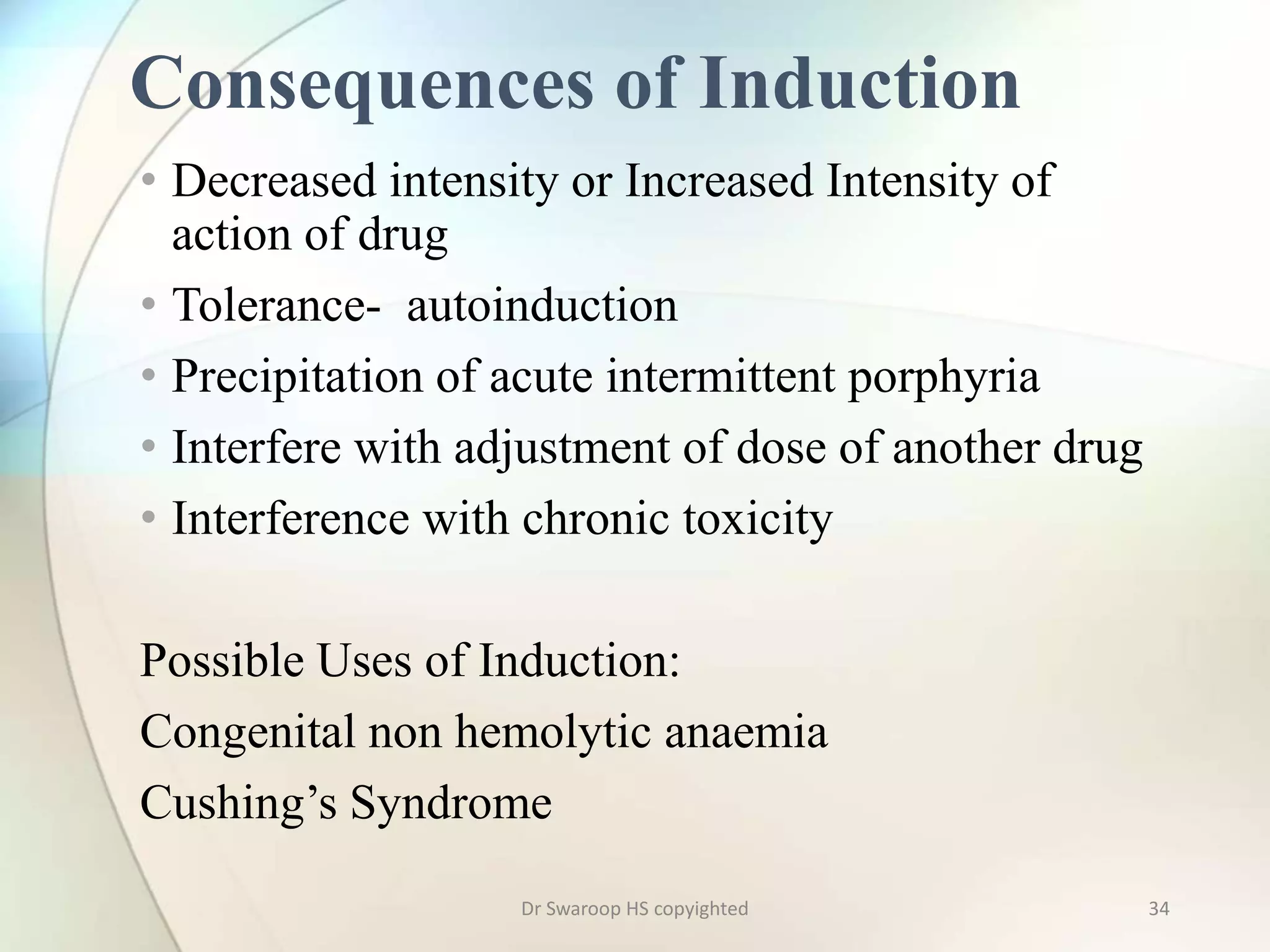
Consequences of Induction 
• Decreased intensity or Increased Intensity of 
action of drug 
• Tolerance- autoinduction 
• Precipitation of acute intermittent porphyria 
• Interfere with adjustment of dose of another drug 
• Interference with chronic toxicity 
Possible Uses of Induction: 
Congenital non hemolytic anaemia 
Cushing’s Syndrome 
Dr Swaroop HS copyighted
Role of Metabolism in pediatric and 
elderly 
• New born has low g.f.r and tubular transport is 
immature, so the t1/2 of the drug like streptomycin 
and penicillin is prolonged 
• Hepatic drug metabolising system is inadequate in 
new borns e.g. chloramphenicol can produce gray 
baby syndrome 
• In elderly the renal function progressively declines 
• Reduction of hepatic microsomal activity and liver 
blood flow 
• Incidence of adverse drug reactions is much higher in 
elderly 
35 
Dr Swaroop HS copyighted
Role of Metabolism in Drug discovery 
36 
• In drug development it is important to have an 
information on the enzymes responsible for the 
metabolism of the candidate drug 
• Invitro Studies can give information about 
• Metabolite stability 
• Metabolite profile 
• Metabolite Identification 
• CYP induction/Inhibition 
• Drug/Drug interaction studies 
• CYP isoform identification 
Dr Swaroop HS copyighted
• Goodman and Gilman, Pharmacological basis of 
Therapeutics, 12th edition, Laurence L Bruton 
• Essential of Medical Pharmacology, K D Tripathi, 5th 
Edition, JP publishers, New Delhi. 
• Wilson and Gisvold’s Textbook of Organic Medicinal 
and Pharmaceutical Chemistry 11th ed. Lippincott, 
Williams & Wilkins ed 
• Drug metabolism by S.P. Markey, NIH, accessed on 
internet on 02-03-2013 from 
www.cc.nih.gov/.../ppt/drug_metabolism_2006- 
2007.ppt 
• Drug metabolism and pharmacokinetics in drug 
discovery: a primer for bioanalytic study: chandrani 
gunaratna, current separations, 19:1, 2000 
37 
References 
Dr Swaroop HS copyighted
38 
Thank You 
Dr Swaroop HS copyighted

Drug metabolism

  • 1.
    1 Drug Metabolism Presenter :- Dr Swaroop H S Moderator:- Dr Ananya Chakraborty Dr Swaroop HS copyighted
  • 2.
    2 Outline •Introduction • History • Phases of Metabolism • Phase I Metabolism • Cytochrome P family • Phase II Metabolism • First Pass Metabolism • Ante drug • Microsomal Enzyme Induction • Role of Metabolism in Drug Discovery Dr Swaroop HS copyighted
  • 3.
    3 Introduction •Biotransformation: Chemical alteration of the drug in body that converts nonpolar or lipid soluble compounds to polar or lipid insoluble compounds • Consequences of biotransformation • Active drug  Inactive metabolite : Pentobarbitone, Morphine, Chloramphenicol • Active drug  Active metabolite: Phenacetin • Inactive drug  active metabolite: Levodopa Dr Swaroop HS copyighted
  • 4.
    4 Prodrugs •Inactive drug is converted to active metabolite • Coined by Albert in 1958 • Advantages: • Increased absorption • Elimination of an unpleasant taste • Decreased toxicity • Decreased metabolic inactivation • Increased chemical stability • Prolonged or shortened action Dr Swaroop HS copyighted
  • 5.
    5 History •Welsh biochemist • Metabolism of sulfonamides, benzene, aniline, acetanilide, phenacetin, thalidomide and stilbesterol • Metabolism of TNT (Trinitrotoluene) with regard to toxicity in munitions (1942) Richard TecwynWilliams 1909 - 1979 Dr Swaroop HS copyighted
  • 6.
    6 Phases ofMetabolism • Phase I • Functionalization reactions • Converts the parent drug to a more polar metabolite by introducing or unmasking a functional group (-OH, -NH2, -SH). • Phase II • Conjugation reactions • Subsequent reaction in which a covalent linkage is formed between a functional group on the parent compound or Phase I metabolite and an endogenous substrate such as glucuronic acid, sulfate, acetate, or an amino acid Dr Swaroop HS copyighted
  • 7.
    Phases of Metabolism Hydrolytic Reactions  Esters, amides, epoxides and  Conjugation arene oxides by epoxide hydrase  Glucuronic acid  Sulfate, Glycine and other AA  Glutathione or mercapturic acid  Acetylation, Methylation Oxidation  Aromatic moieties, Olefins  Benzylic & allylic C atoms and a-C of C=O and C=N  At aliphatic and alicyclic C  C-Heteroatom system  C-N (N-dealkylation, N-oxide formation, N-hydroxylation)  C-O (O-dealkylation)  S-dealkylation  S-oxidation, desulfuration  Oxidation of alcohols and aldehydes, Miscellaneous Reduction  Aldehydes and ketones  Nitro and azo  Miscellaneous Phase II - Conjugation Phase I - Functionalization Drug Metabolism Dr Swaroop HS copyighted 7
  • 8.
    Sites of DrugMetabolism Extrahepatic microsomal enzymes (oxidation, conjugation) Hepatic microsomal enzymes (oxidation, conjugation) Hepatic non-microsomal enzymes (acetylation, sulfation,GSH, alcohol/aldehyde dehydrogenase, hydrolysis, ox/red) Dr Swaroop HS copyighted 8
  • 9.
    9 Phase I/ Non Synthetic Reactions Oxidation • Addition of oxygen/ negatively charged radical or removal of hydrogen/ positvely charged radical. • Reactions are carried out by group of mono-oxygenases in the liver. • Fianl step: Involves cytochrome P-450 haemoprotein, NADPH, cytochrome P-450 reductase and O2 Dr Swaroop HS copyighted
  • 10.
    • Monooxygenase enzymefamily • Major catalyst: Drug and endogenous compound oxidations in liver, kidney, G.I. tract, skin and lungs • Oxidative reactions require: CYP heme protein, the reductase, NADPH, phosphatidylcholine and molecular oxygen • Location: smooth endoplasmic reticulum in close association with NADPH-CYP reductase in 10/1 ratio • The reductase serves as the electron source for the oxidative reaction cycle 10 Cytochrome P450 enzymes Dr Swaroop HS copyighted
  • 11.
    NADP+ CO hu CO CYP-Fe+2 Drug O2 e-e- H2O 2H+ Drug CYP R-Ase NADPH Drug OH CYP Fe+3 PC Drug CYP Fe+2 Drug O2 CYP Fe+2 Drug CYP Fe+3 OH Drug 11 Electron flow in Cytochromes Dr Swaroop HS copyighted
  • 12.
    • Multiple CYPgene families have been identified in humans, and the categoriezed based on protein sequence homology • Most of the drug metabolizing enzymes are in CYP 1, 2, & 3 families . • Frequently, two or more enzymes can catalyze the same type of oxidation, indicating redundant and broad substrate specificity. • CYP3A4 is very common to the metabolism of many drugs; its presence in the GI tract is responsible for poor oral availabilty of many drugs 12 Cytochrome P family Dr Swaroop HS copyighted
  • 13.
    Cytochrome families Continued…. 13 • Families: CYP plus arabic numeral (>40% homology of amino acid sequence, eg. CYP1) • Subfamily: 40-55% homology of amino acid sequence; eg. CYP1A • Subfamily: Additional arabic numeral when more than 1 subfamily has been identified; eg. CYP1A2 • Italics: Indicate gene (CYP1A2); regular font for enzyme Dr Swaroop HS copyighted
  • 14.
    14 Role ofCYP Enzymes in Hepatic Drug Metabolism OTHER 36% CYP2D6 2% CYP2E1 7% CYP 2C 17% CYP 1A2 12% CYP 3A4-5 26% CYP 2C9 14% CYP 1A2 14% CYP 2C19 11% CYP2D6 23% CYP2E1 5% CYP 3A4-5 33% Relative Hepatic Content of CYP enzymes Percentage of Drugs Metabolized by CYP Enzymes Dr Swaroop HS copyighted
  • 15.
    Cytochromes: Metabolism ofDrugs CYP Enzyme Examples of substrates 1A1 Caffeine, Testosterone, R-Warfarin 1A2 Acetaminophen, Caffeine, Phenacetin, R-Warfarin 2A6 17-Estradiol, Testosterone 2B6 Cyclophosphamide, Erythromycin, Testosterone 2C-family Acetaminophen, Tolbutamide (2C9); Hexobarbital, S-Warfarin (2C9,19); Phenytoin, Testosterone, R- Warfarin, Zidovudine (2C8,9,19); 2E1 Acetaminophen, Caffeine, Chlorzoxazone, Halothane 2D6 Acetaminophen, Codeine, Debrisoquine 3A4 Acetaminophen, Caffeine, Carbamazepine, Codeine, Cortisol, Erythromycin, Cyclophosphamide, S- and R-Warfarin, Phenytoin, Testosterone, Halothane, Zidovudine 15 Adapted from: S. Rendic Drug Metab Rev 34: 83-448, 2002 Dr Swaroop HS copyighted
  • 16.
    Non-CYP Drug Oxidations • Monoamine Oxidase (MAO), Diamine Oxidase (DAO) 16 • MAO (mitochondrial) oxidatively deaminates endogenous substrates including neurotransmitters • Dopamine, serotonin, norepinephrine, epinephrine • Alcohol & Aldehyde Dehydrogenase • Non-specific enzymes found in soluble fraction of liver • Ethanol metabolism • Flavin Monooxygenases • Require molecular oxygen, NADPH, flavin adenosine dinucleotide (FAD) Dr Swaroop HS copyighted
  • 17.
    17 Reduction •Converse of oxidation • Drugs primarily reduced are chloralhydrate, chloramphenicol, halothane. Dr Swaroop HS copyighted
  • 18.
    18 Hydrolysis •Cleavage of drug molecule by taking up a molecule of water. • Sites: Liver, intestines, plasma and other tissues • Examples: Choline esters, Procaine, Isoniazid, pethidine, oxytocin. Dr Swaroop HS copyighted
  • 19.
    Cyclization and Decyclization 19 • Cyclization • Formation of ring structure from a straight chain compound • E.g. Proguanil • Decyclization • Opening up of ring structure of the cyclic drug molecule • E.g. Barbiturates, Phenytoin. Dr Swaroop HS copyighted
  • 20.
    20 Phase II/Synthetic reactions • Conjugation of the drug or its phase I metabolite with an endogenous substrate to form a polar highly ionized organic acid • Types of phase II reactions • Glcuronide conjugation • Acetylation, Methylation • Sulfate conjugation, Glycine conjugation • Glutathione conjugation • Ribonucleoside/ nucleotide synthesis Dr Swaroop HS copyighted
  • 21.
    • Conjugation toα-d-glucuronic acid • Quantitatively the most important phase II pathway for drugs and endogenous compounds • Products are often excreted in the bile • Requires enzyme UDP-glucuronosyltransferase (UGT) • Compounds with a hydroxyl or carboxylic acid group are easily conjugated with glucuronic acid which is derived from glucose 21 Glucuronide Conjugation Dr Swaroop HS copyighted
  • 22.
    Glucuronide Conjugation Continued.. • Enterohepatic recycling may occur due to gut glucuronidases • Drug glucuronides excreted in bile can be hydrolysed by bacteria in gut and reabsorbed and undergoes same fate. • This recycling of the drug prolongs its action e.g.Phenolpthalein, Oral contraceptives 22 • Examples: Chloramphenicol, aspirin, phenacetin, morphine, metronidazole Dr Swaroop HS copyighted
  • 23.
    23 Acetylation •Common reaction for aromatic amines and sulfonamides • Requires co-factor acetyl-CoA • Responsible enzyme is N-acetyltransferase • Important in sulfonamide metabolism because acetyl-sulfonamides are less soluble than the parent compound and may cause renal toxicity due to precipitation in the kidney • E.g. Sulfonamides, isoniazid, Hydralazine. Dr Swaroop HS copyighted
  • 24.
    24 Sulfate Conjugation • Major pathway for phenols but also occurs for alcohols, amines and thiols • Sulfate conjugates can be hydrolyzed back to the parent compound by various sulfatases • Sulfoconjugation plays an important role in the hepatotoxicity and carcinogenecity of N-hydroxyarylamides • Infants and young children have predominating O-sulfate conjugation • Examples include: a-methyldopa, albuterol, terbutaline, acetaminophen, phenacetin Dr Swaroop HS copyighted
  • 25.
    25 Amino AcidConjugation: • ATP-dependent acid: CoA ligase forms active CoA-amino acid conjugates which then react with drugs by N-Acetylation: – Usual amino acids involved are: • Glycine. Glutamine, Ornithine, Arginine Glutathione Conjugation: • Glutathione is a protective factor for removal of potentially toxic compounds • Conjugated compounds can subsequently be attacked by g-glutamyltranspeptidase and a peptidase to yield the cysteine conjugate => product can be further acetylated to N-acetylcysteine conjugate E.g. Paracetamol Dr Swaroop HS copyighted
  • 26.
    26 Hofmann elimination Inactivation of the drug in the body fluids by spontaneous molecular re arrangement without the agency of any enzyme e.g. Atracurium. Dr Swaroop HS copyighted
  • 27.
    • Metabolism ofa drug during its passage from the site of absorption into the systemic circulation. • Extent of first pass metabolism differs in different drugs Extent of first pass metabolism of important drugs 27 First pass Metabolism Low Intermediate High – not given orally High oral dose Phenobarbitone Aspirin Isoprenaline propranolol Phenylbutazone Quinidine Lignocaine Alprenolol Tolbutamide Desipramine Hydrocortisone Verapamil Pindolol Nortriptyline Testosterone Salbutamol Dr Swaroop HS copyighted
  • 28.
    • Oral doseis considerably higher then sublingual or parenteral dose • Marked individual variation in the oral dose due to differences in the extent of first pass metabolism • Oral bioavailability is apparently increased in patients with severe liver disease • Oral bioavailability of a drug is increased if another drug competing with it. E.G. Chloropromazine and Propranolol 28 Attributes of drugs with high first pass metabolism Dr Swaroop HS copyighted
  • 29.
    29 Ante Drug I stopped taking medicine as I prefer original disease to side effects !! Because, Vioxx’ll treat pain but who’ll treat vioxx ?? Dr Swaroop HS copyighted
  • 30.
    What is Antedrug? An active synthetic drug which is inactivated by a metabolic 30 process upon entry into the systemic circulation. Therefore, a true antedrug acts only locally. True Antedrug Partial Antedrug Inactive Metabolite Less active metabolite Lee HJ and Soliman MRI (1982). Science, 215, 989. Dr Swaroop HS copyighted
  • 31.
    Advantages of Antedrug • Localization of the drug effects • Elimination of toxic metabolites, increasing 31 the therapeutic index • Avoidance of pharmacologically active metabolites that can lead to long-term effects • Elimination of drug interactions resulting from metabolite inhibition of enzymes • Simplification of PK problems caused by multiple active species Dr Swaroop HS copyighted
  • 32.
    • Competitively inhibitthe metabolism of another drug if it utilizes the same enzyme or co factors. • A drug may inhibit one isoenzyme while being itself a substrate of another isoenzyme e.g. quinidine is metabolized by CYP3A4 but inhibits CYP2D6 • Inhibition of drug metabolism occurs in a dose related manner and can precipitate toxicity of the object drug. • Blood flow limited metabolism e.g. Propranolol reduces rate of lignocaine metabolism by decreasing hepatic blood flow. 32 Inhibition of Metabolism Dr Swaroop HS copyighted
  • 33.
    Microsomal Enzyme Induction 33 oCertain drugs, insecticides and carcinogens increase the synthesis of microsomal enzyme protein. oDifferent inducers are relatively selective for certain cytochrome P-450 enzyme families e.g. • Phenobarbitone , rifampin, glucorticoids induce CYP3A isoenzymes • Isoniazid and chronic alochol consumption induce CYP2E1 oInduction takes 4-14 days to reach its peak and is maintained till the inducing agent is present. Dr Swaroop HS copyighted
  • 34.
    34 Consequences ofInduction • Decreased intensity or Increased Intensity of action of drug • Tolerance- autoinduction • Precipitation of acute intermittent porphyria • Interfere with adjustment of dose of another drug • Interference with chronic toxicity Possible Uses of Induction: Congenital non hemolytic anaemia Cushing’s Syndrome Dr Swaroop HS copyighted
  • 35.
    Role of Metabolismin pediatric and elderly • New born has low g.f.r and tubular transport is immature, so the t1/2 of the drug like streptomycin and penicillin is prolonged • Hepatic drug metabolising system is inadequate in new borns e.g. chloramphenicol can produce gray baby syndrome • In elderly the renal function progressively declines • Reduction of hepatic microsomal activity and liver blood flow • Incidence of adverse drug reactions is much higher in elderly 35 Dr Swaroop HS copyighted
  • 36.
    Role of Metabolismin Drug discovery 36 • In drug development it is important to have an information on the enzymes responsible for the metabolism of the candidate drug • Invitro Studies can give information about • Metabolite stability • Metabolite profile • Metabolite Identification • CYP induction/Inhibition • Drug/Drug interaction studies • CYP isoform identification Dr Swaroop HS copyighted
  • 37.
    • Goodman andGilman, Pharmacological basis of Therapeutics, 12th edition, Laurence L Bruton • Essential of Medical Pharmacology, K D Tripathi, 5th Edition, JP publishers, New Delhi. • Wilson and Gisvold’s Textbook of Organic Medicinal and Pharmaceutical Chemistry 11th ed. Lippincott, Williams & Wilkins ed • Drug metabolism by S.P. Markey, NIH, accessed on internet on 02-03-2013 from www.cc.nih.gov/.../ppt/drug_metabolism_2006- 2007.ppt • Drug metabolism and pharmacokinetics in drug discovery: a primer for bioanalytic study: chandrani gunaratna, current separations, 19:1, 2000 37 References Dr Swaroop HS copyighted
  • 38.
    38 Thank You Dr Swaroop HS copyighted