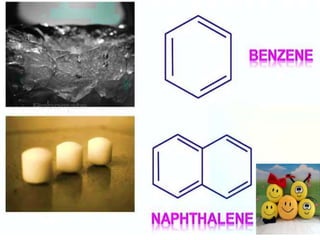
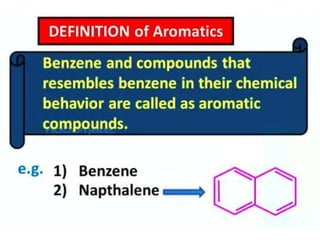
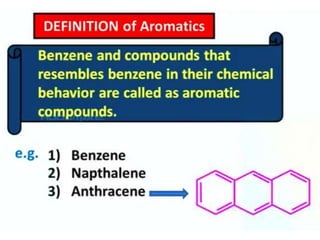
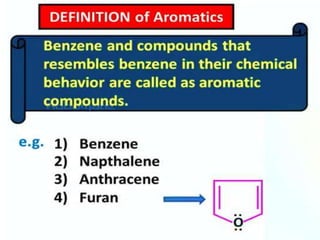
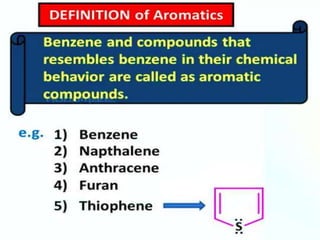





Aromatic compound
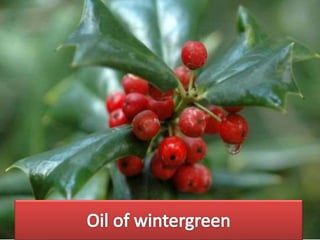
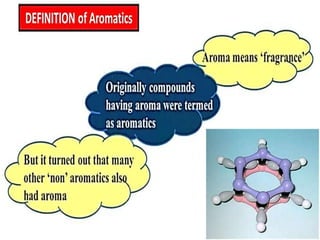
• pleasant fragrance smell(Greek-aroma).
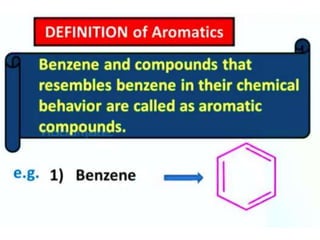
• Benzene and there compound is one such
important aromatic compound.
• Not all aromatic compound have pleasant
smell. Eg. Anthracene.
• Not all pleasant compound is benzene. Eg.
Methyl acetate, chloroform, ethyl acetate.
• We cant detect Aromatic compound with
there smell.
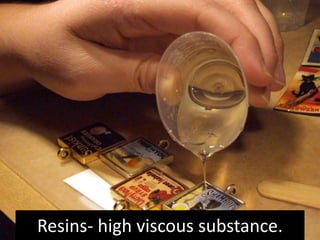
Resins- high viscous substance.
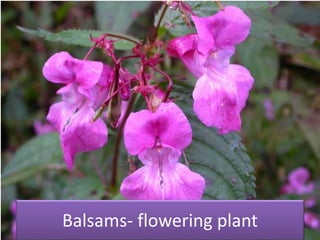
Balsams- flowering plant
Benzene doesn’t have pleasant smell?
Aromatic compound
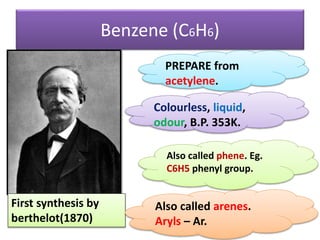
Benzene (C6H6)
First synthesis by
berthelot(1870)
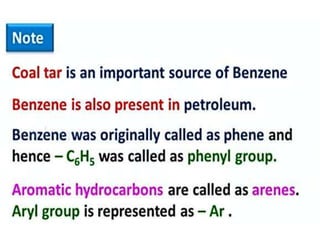
Also called arenes.
Aryls – Ar.
Also called phene. Eg.
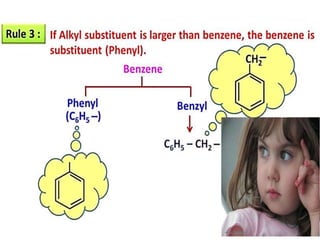
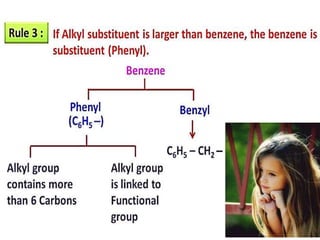
C6H5 phenyl group.
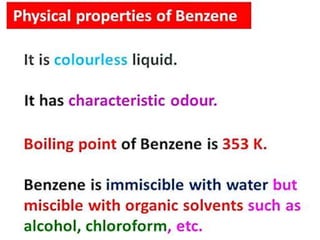
Colourless, liquid,
odour, B.P. 353K.
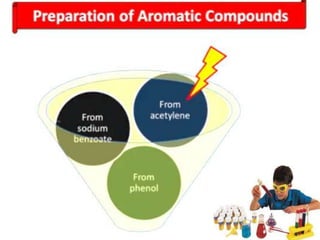
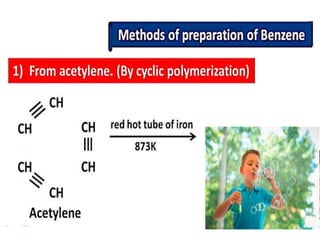
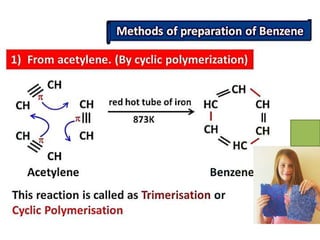
PREPARE from
acetylene.
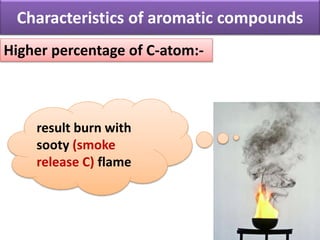
Characteristics of aromatic compounds
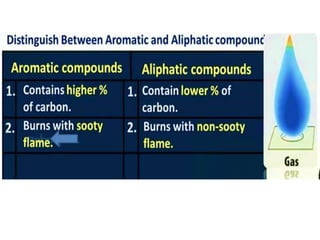
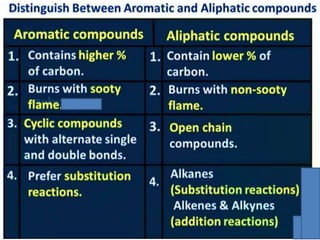
result burn with
sooty (smoke
release C) flame
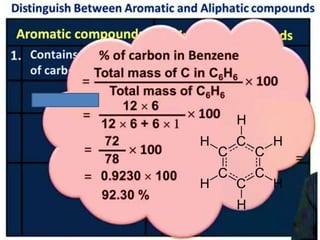
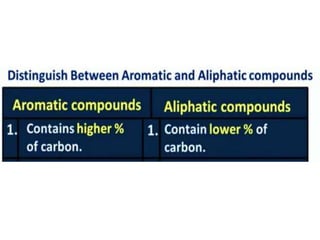
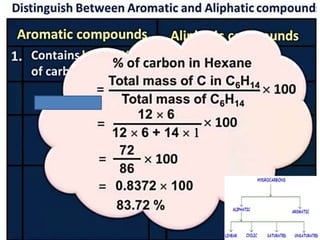
Higher percentage of C-atom:-
Characteristics of aromatic compounds
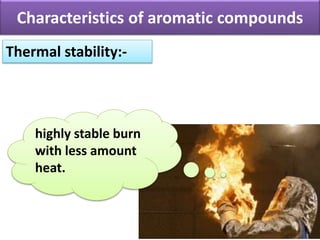
Thermal stability:-
highly stable burn
with less amount
heat.
Characteristics of aromatic compounds
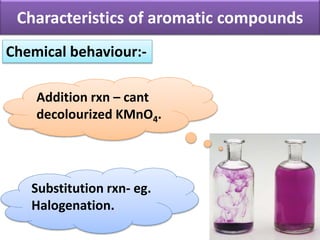
Chemical behaviour:-
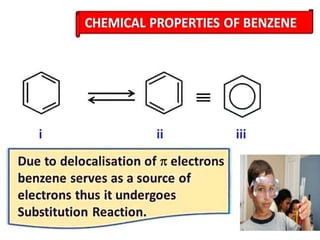
Substitution rxn- eg.
Halogenation.
Addition rxn – cant
decolourized KMnO4.
Structure formula and electronic
structure
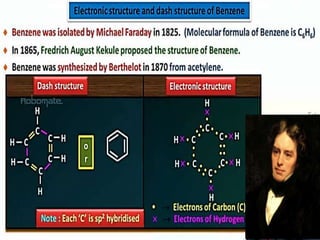
• Micheal faraday 1825 – benzene (C6H6).
• unsaturated. Not like alkene and alkyne.
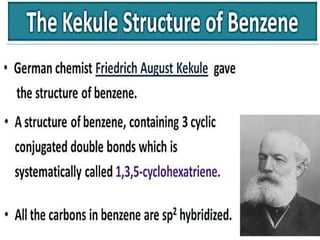
• Cyclic structure 6C-atom alternate double
bond and 1 H-atom attached to each H-atom.
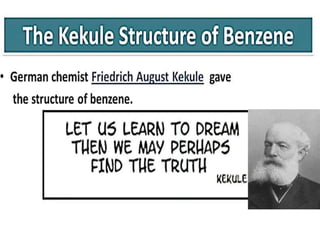
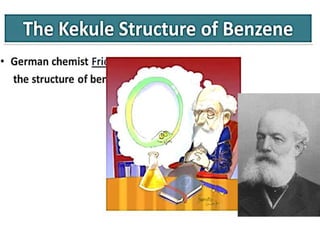
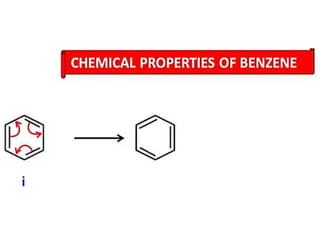
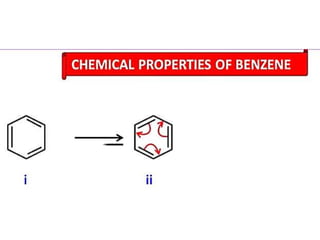
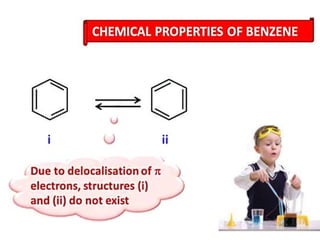
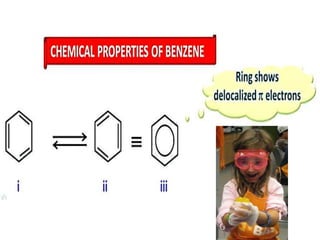
• Kekule suggested the concept of oscillating
nature of double in benzene.
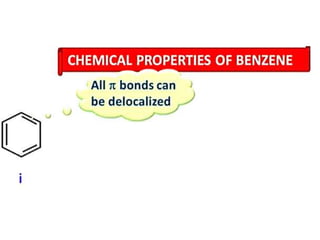
• All C-atom sp2 hybridized.
Sooty flame.
Release C black.
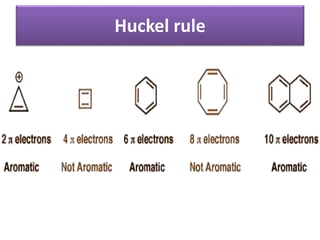
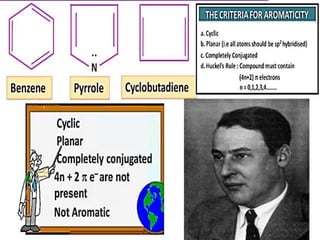
Huckel rule
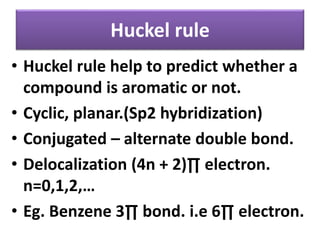
• Huckel rule help to predict whether a
compound is aromatic or not.
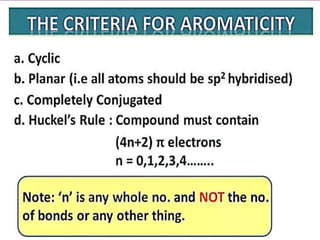
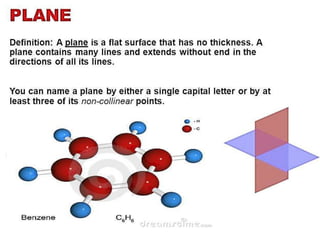
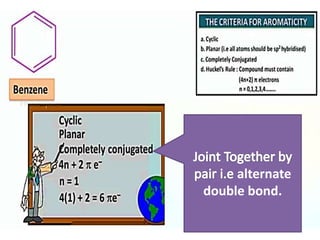
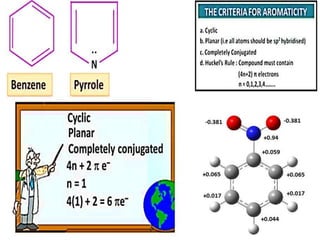
• Cyclic, planar.(Sp2 hybridization)
• Conjugated – alternate double bond.
• Delocalization (4n + 2)∏ electron.
n=0,1,2,…
• Eg. Benzene 3∏ bond. i.e 6∏ electron.
Huckel rule
alternate
double bond.
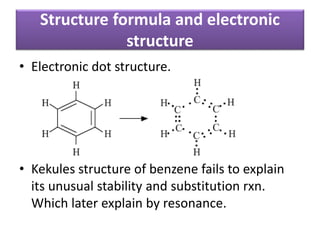
• Electronic dot structure.
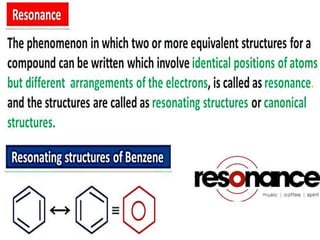
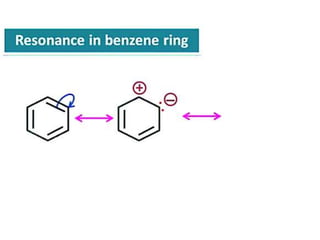
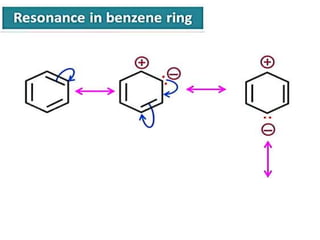
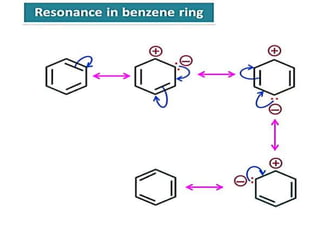
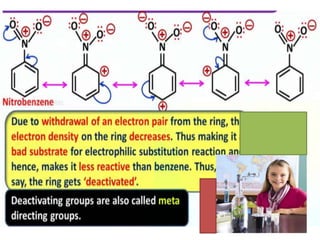
• Kekules structure of benzene fails to explain
its unusual stability and substitution rxn.
Which later explain by resonance.
Structure formula and electronic
structure
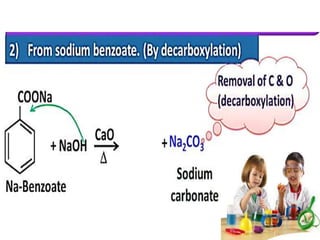
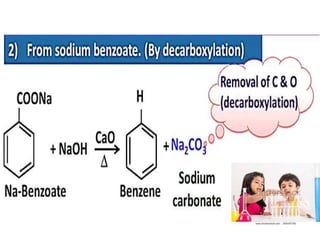
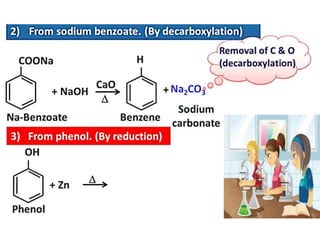
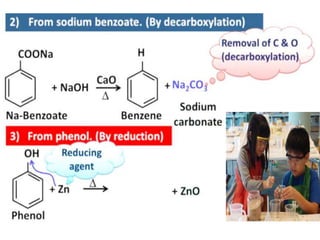
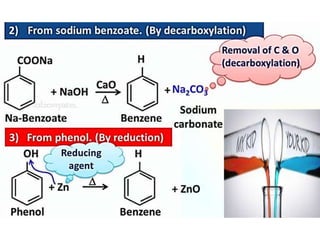
Preparation
Many compound obtain from natural
resources like
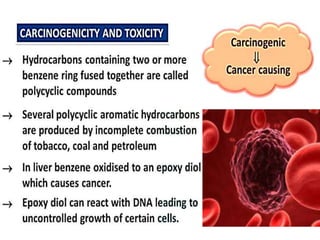
Carcinogenicity and Toxicity
• Carcinogenicity- cancer causing and toxic.
• Polycyclic – hydrocarbon contain 2 benzene
ring fuse together.
• Several polycyclic produce incomplete
combustion of Tabacoo, coal and petroleum.
• In liver, benzene Is oxidized to an
epoxide(cyclic ether).
• benzopyrene converted into epoxydiol. These
substance are carcinogenic and can react
with DNA which stop certain growth of cell.
Chemical properties
Chemical properties
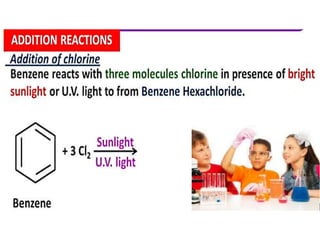
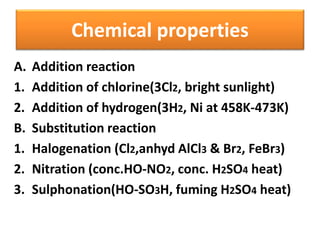
A. Addition reaction
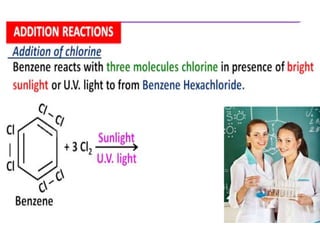
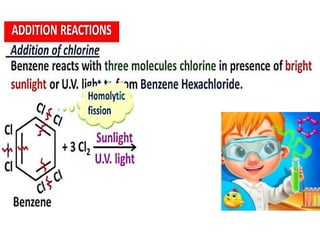
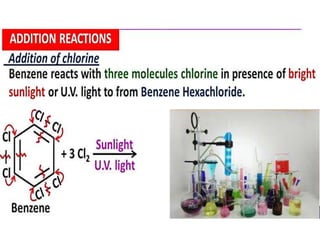
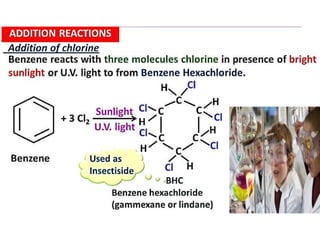
1. Addition of chlorine(3Cl2, bright sunlight)
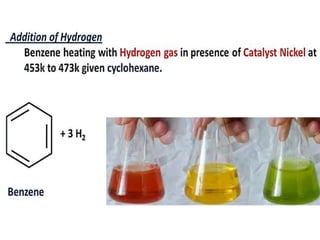
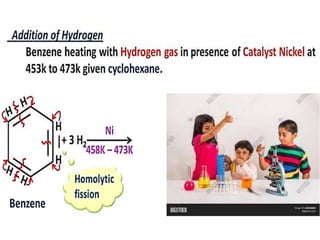
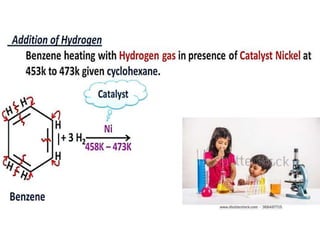
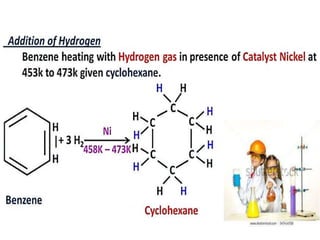
2. Addition of hydrogen(3H2, Ni at 458K-473K)
B. Substitution reaction
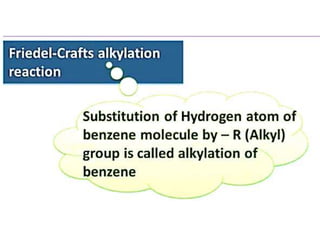
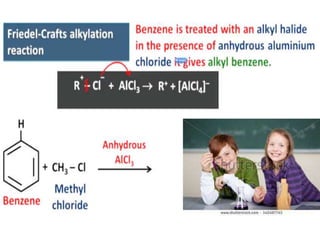
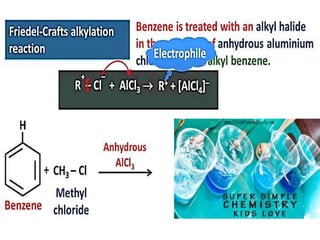
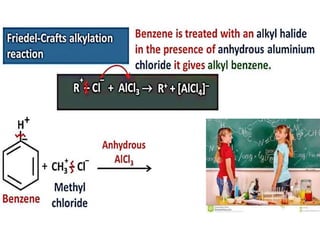
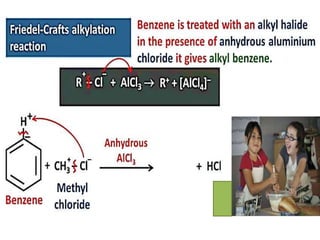
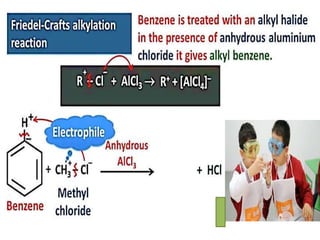
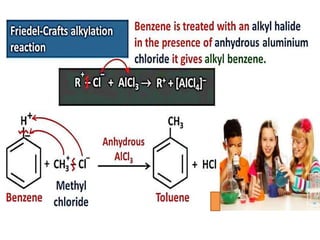
1. Halogenation (Cl2,anhyd AlCl3 & Br2, FeBr3)
2. Nitration (conc.HO-NO2, conc. H2SO4 heat)
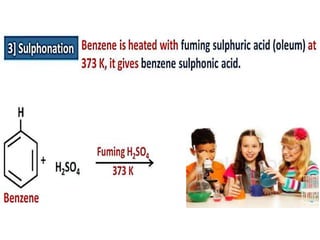
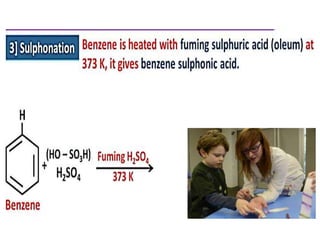
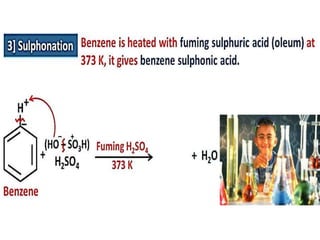
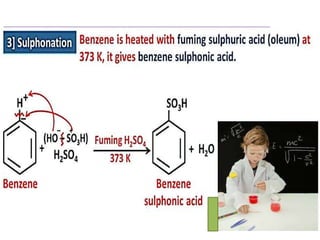
3. Sulphonation(HO-SO3H, fuming H2SO4 heat)
Aromatic compound 2017

Aromatic compound 2017

  • 1.
    Aromatic compound • pleasantfragrance smell(Greek-aroma). • Benzene and there compound is one such important aromatic compound. • Not all aromatic compound have pleasant smell. Eg. Anthracene. • Not all pleasant compound is benzene. Eg. Methyl acetate, chloroform, ethyl acetate. • We cant detect Aromatic compound with there smell.
  • 2.
  • 3.
  • 5.
    Benzene doesn’t havepleasant smell? Aromatic compound
  • 6.
    Benzene (C6H6) First synthesisby berthelot(1870) Also called arenes. Aryls – Ar. Also called phene. Eg. C6H5 phenyl group. Colourless, liquid, odour, B.P. 353K. PREPARE from acetylene.
  • 7.
    Characteristics of aromaticcompounds result burn with sooty (smoke release C) flame Higher percentage of C-atom:-
  • 8.
    Characteristics of aromaticcompounds Thermal stability:- highly stable burn with less amount heat.
  • 9.
    Characteristics of aromaticcompounds Chemical behaviour:- Substitution rxn- eg. Halogenation. Addition rxn – cant decolourized KMnO4.
  • 10.
    Structure formula andelectronic structure • Micheal faraday 1825 – benzene (C6H6). • unsaturated. Not like alkene and alkyne. • Cyclic structure 6C-atom alternate double bond and 1 H-atom attached to each H-atom. • Kekule suggested the concept of oscillating nature of double in benzene. • All C-atom sp2 hybridized.
  • 30.
  • 32.
    Huckel rule • Huckelrule help to predict whether a compound is aromatic or not. • Cyclic, planar.(Sp2 hybridization) • Conjugated – alternate double bond. • Delocalization (4n + 2)∏ electron. n=0,1,2,… • Eg. Benzene 3∏ bond. i.e 6∏ electron.
  • 33.
  • 35.
  • 41.
    • Electronic dotstructure. • Kekules structure of benzene fails to explain its unusual stability and substitution rxn. Which later explain by resonance. Structure formula and electronic structure
  • 110.
  • 173.
    Many compound obtainfrom natural resources like
  • 175.
    Carcinogenicity and Toxicity •Carcinogenicity- cancer causing and toxic. • Polycyclic – hydrocarbon contain 2 benzene ring fuse together. • Several polycyclic produce incomplete combustion of Tabacoo, coal and petroleum. • In liver, benzene Is oxidized to an epoxide(cyclic ether). • benzopyrene converted into epoxydiol. These substance are carcinogenic and can react with DNA which stop certain growth of cell.
  • 176.
  • 177.
    Chemical properties A. Additionreaction 1. Addition of chlorine(3Cl2, bright sunlight) 2. Addition of hydrogen(3H2, Ni at 458K-473K) B. Substitution reaction 1. Halogenation (Cl2,anhyd AlCl3 & Br2, FeBr3) 2. Nitration (conc.HO-NO2, conc. H2SO4 heat) 3. Sulphonation(HO-SO3H, fuming H2SO4 heat)