GROUP MEMBERS
Name                Roll no.
Chetan Khale        8
Bhupendra Attarde   9
Saad shaikh         13
Melvin Shaji        23
Rahul Dwivedi       48
Arvind Gaud         60
DID YOU KNOW ?

 Samsung Started Business by selling Vegetables & Noodles.

 Founder of Samsung “BYUNG-CHULL LEE” Also started
  making cars but due to crisis, he was forced to sell Car
  Company.

 Samsung also sells laptop Panels to other leading companies
  viz. DELL, LENOVO, HP, HCL.

 The combination of names “Galaxy” and "Android" is
  intended to represent our smartphone.
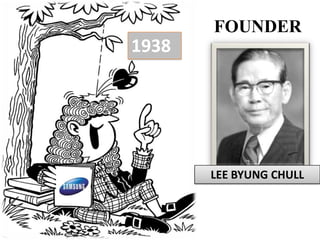
FOUNDER
1938


       LEE BYUNG CHULL
The Samsung Group was founded in 1938 by Lee Byung-chul (1910-1987).
It was incorporated in 1951 as Samsung Corporation. The meaning of the Korean
word Samsung is "Tri-Star" or "three stars".
Samsung Electronics was founded in 1969 in “Seoul” city South Korea as Samsung
Electric Industries originally manufacturing electronic appliances such as
TVs, calculators, refrigerators, air conditioners and washers.


CORE VALUES:-
In everything we do, we strive to help people live better lives.
1938-1958                 1959-1979                1980-1992
                                                   Group Logo


          1980-1992
                                      Since 1993
       Electronics Logo
HISTORY OF THE COMPANY


 Unlike other electronic companies Samsung origins were not involving electronics
  but other products.

 Founded In The Year 1938 By Byung-Chull Lee.

 In 1958, Samsung Started To Expand Their Business.

 In 1969, Samsung Electronics was established.

 In 1987, Byung-Chull Lee Passed Away.

 Samsung Expanded Globally in The 1990’s.

 In 1993 Samsung developed the 'lightest' mobile phone of its era, The SCH-800.

 Started Developing Smart Phones & Phones Combined With MP3 In The End Of 20th
  Century.
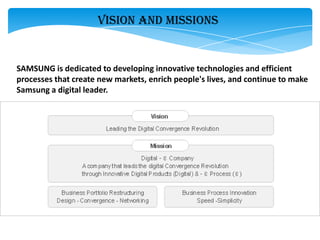
VISION AND MISSIONS


SAMSUNG is dedicated to developing innovative technologies and efficient
processes that create new markets, enrich people's lives, and continue to make
Samsung a digital leader.
SWOT ANALYSIS.

 STRENGTH

  New product Concepts To Roll Out in Five Months.
  Catching The pulse Of The Consumer offering Goods Design &
   Understanding Emotions.
  Heavy Investment In Technology Product/ Design And Human
   Resource.
  Focus on Innovative products For Their High End Market.

 WEAKNESS

    Lack in product differentiation
    Different models at different price point
    Low focus on large market ,instead of niche member
    Lesser known and bit less stable operating system.[BADA OS]
    A bit plasticky finish to the mobiles irrespective to the segment.
 OPPORTUNITIES
  Distinguish its Service From Competitors.
  Offer product variation.
  Demand for Cell Phones Driven by the Service providers Or
   Carriers.
  Tie Up With service providers.
  Innovation.


 THREATS
    Competition.
    Economic slowdown.
    Lower cost competitors or imports.
    Price wars.
    Product Substitutions.
STRATEGIES OF SAMSUNG


 Product Innovation.

 Pricing.

 Distribution.

 Advertisement & sales Promotion.

 Design Strategy.
LCD TV
      Flat Television


                                        Introduction       Growth   Maturity
Introduction        Growth   Maturity               Decline
                                                                                        14
4 POINTS OF MARKETING


Product.


Place.


Price.


Promotion.
SEGMENTATION


 Division Of Market Into Different Groups of Customers.

 Purpose Of Market Segmentation.

 Designed To Meet Specific Needs of Different Groups Of Customers.

 The Best Way To Provide Selected Offerings to Selected people Most time.

 DEMOGRAPHIC SEGMENTATIONS.
  1) Age.
  2) Promotions According To The Particular Area.
TAKE AWAY MESSAGE


 Samsung is the leading eco-friendly company.

 Affordable to every individual in the world.

 With simplicity and restructuring design.

 Maintian a good network Worldwide.

 Innovation at its best.

 Provide Better quality service post purchase.

 Empowering Lifestyle, Empowering Future.
Samsung

Samsung

  • 3.
    GROUP MEMBERS Name Roll no. Chetan Khale 8 Bhupendra Attarde 9 Saad shaikh 13 Melvin Shaji 23 Rahul Dwivedi 48 Arvind Gaud 60
  • 4.
    DID YOU KNOW?  Samsung Started Business by selling Vegetables & Noodles.  Founder of Samsung “BYUNG-CHULL LEE” Also started making cars but due to crisis, he was forced to sell Car Company.  Samsung also sells laptop Panels to other leading companies viz. DELL, LENOVO, HP, HCL.  The combination of names “Galaxy” and "Android" is intended to represent our smartphone.
  • 5.
    FOUNDER 1938 LEE BYUNG CHULL
  • 6.
    The Samsung Groupwas founded in 1938 by Lee Byung-chul (1910-1987). It was incorporated in 1951 as Samsung Corporation. The meaning of the Korean word Samsung is "Tri-Star" or "three stars". Samsung Electronics was founded in 1969 in “Seoul” city South Korea as Samsung Electric Industries originally manufacturing electronic appliances such as TVs, calculators, refrigerators, air conditioners and washers. CORE VALUES:- In everything we do, we strive to help people live better lives.
  • 7.
    1938-1958 1959-1979 1980-1992 Group Logo 1980-1992 Since 1993 Electronics Logo
  • 8.
    HISTORY OF THECOMPANY  Unlike other electronic companies Samsung origins were not involving electronics but other products.  Founded In The Year 1938 By Byung-Chull Lee.  In 1958, Samsung Started To Expand Their Business.  In 1969, Samsung Electronics was established.  In 1987, Byung-Chull Lee Passed Away.  Samsung Expanded Globally in The 1990’s.  In 1993 Samsung developed the 'lightest' mobile phone of its era, The SCH-800.  Started Developing Smart Phones & Phones Combined With MP3 In The End Of 20th Century.
  • 9.
    VISION AND MISSIONS SAMSUNGis dedicated to developing innovative technologies and efficient processes that create new markets, enrich people's lives, and continue to make Samsung a digital leader.
  • 11.
    SWOT ANALYSIS.  STRENGTH  New product Concepts To Roll Out in Five Months.  Catching The pulse Of The Consumer offering Goods Design & Understanding Emotions.  Heavy Investment In Technology Product/ Design And Human Resource.  Focus on Innovative products For Their High End Market.  WEAKNESS  Lack in product differentiation  Different models at different price point  Low focus on large market ,instead of niche member  Lesser known and bit less stable operating system.[BADA OS]  A bit plasticky finish to the mobiles irrespective to the segment.
  • 12.
     OPPORTUNITIES Distinguish its Service From Competitors.  Offer product variation.  Demand for Cell Phones Driven by the Service providers Or Carriers.  Tie Up With service providers.  Innovation.  THREATS  Competition.  Economic slowdown.  Lower cost competitors or imports.  Price wars.  Product Substitutions.
  • 13.
    STRATEGIES OF SAMSUNG Product Innovation.  Pricing.  Distribution.  Advertisement & sales Promotion.  Design Strategy.
  • 14.
    LCD TV Flat Television Introduction Growth Maturity Introduction Growth Maturity Decline 14
  • 16.
    4 POINTS OFMARKETING Product. Place. Price. Promotion.
  • 17.
    SEGMENTATION  Division OfMarket Into Different Groups of Customers.  Purpose Of Market Segmentation.  Designed To Meet Specific Needs of Different Groups Of Customers.  The Best Way To Provide Selected Offerings to Selected people Most time.  DEMOGRAPHIC SEGMENTATIONS. 1) Age. 2) Promotions According To The Particular Area.
  • 18.
    TAKE AWAY MESSAGE Samsung is the leading eco-friendly company.  Affordable to every individual in the world.  With simplicity and restructuring design.  Maintian a good network Worldwide.  Innovation at its best.  Provide Better quality service post purchase.  Empowering Lifestyle, Empowering Future.