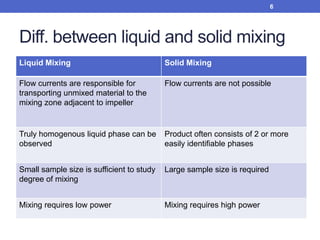
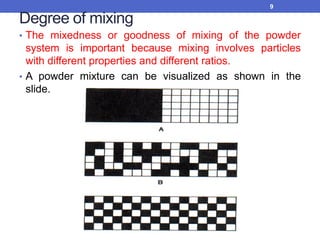
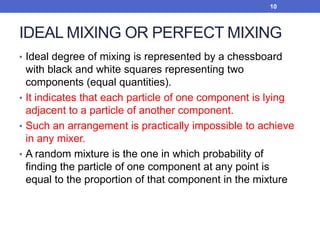
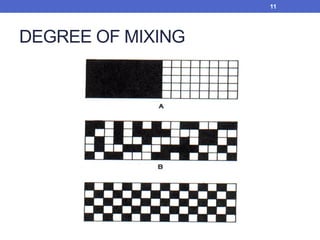
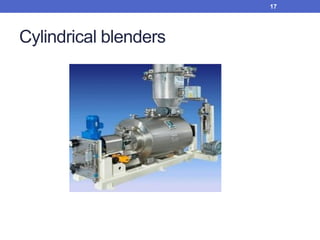
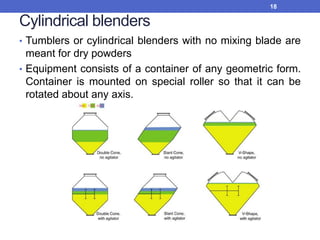
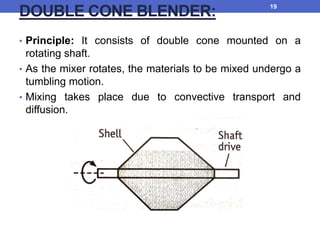
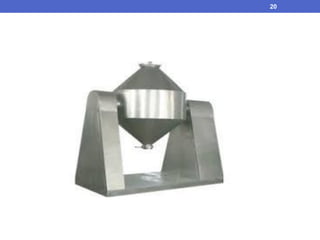
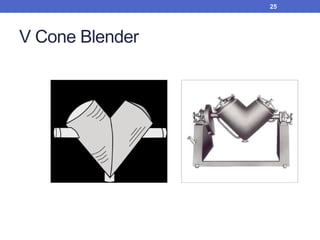
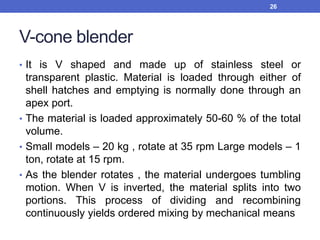
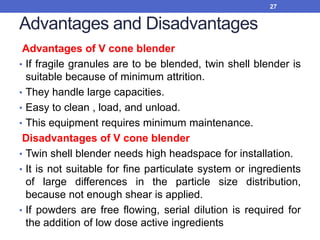
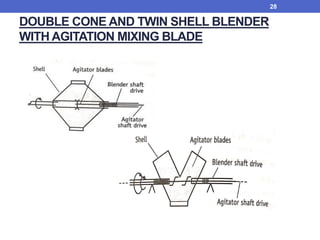
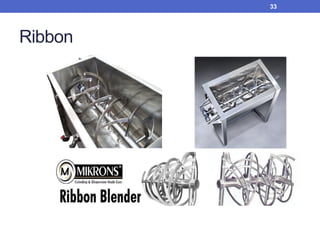
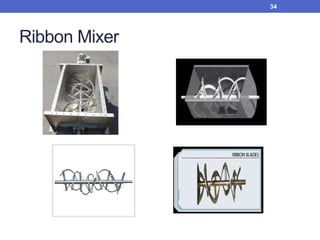
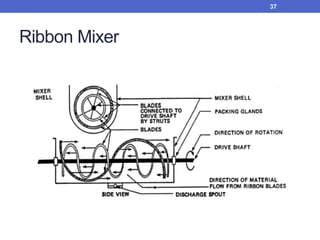
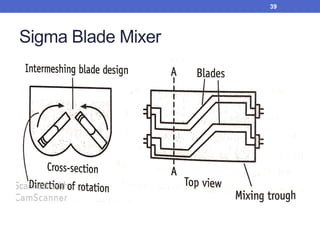
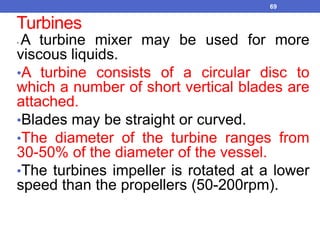
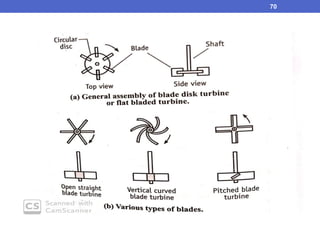
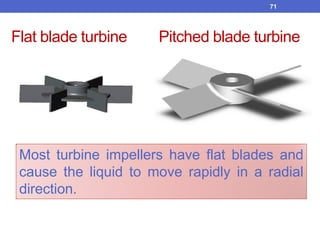
This document discusses different types of mixers and mixing processes. It defines mixing as a unit operation that results in randomization of particles within a system. There are three types of mixtures - positive, negative, and neutral - based on how their components mix and separate. Mixing is commonly used in pharmaceutical formulations to prepare powders, liquids, semi-solids and other dosage forms. Factors like particle size and shape, moisture levels, and material properties influence mixing effectiveness. Common mixers include double cone blenders, V-cone blenders, and those with added agitation blades. Each has merits like handling capacity but also limitations depending on material flow properties.

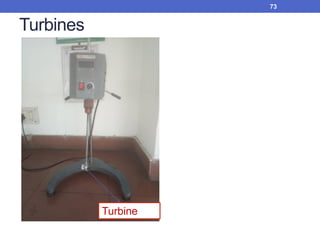
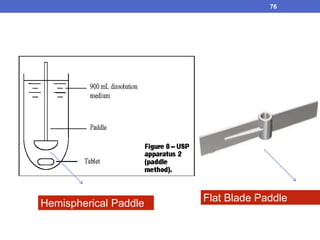



![[Power Point] Mixing - Pharmaceutical Engineering](https://cdn.slidesharecdn.com/ss_thumbnails/forslideshare-151107043333-lva1-app6892-thumbnail.jpg?width=640&height=640&fit=bounds)


