APPROACH TO PATIENT WITH
CHEST PAIN & ACUTE
CORONARY SYNDROME
            Presented by: Siti Nur Hamizah
INTRODUCTION
 Any pain, pressure, squeezing, choking, numbness or
  any other discomfort in the chest, neck, or upper
  abdomen, and is often associated with pain in the jaw,
  head, or arms.
 Because of common/overlapping neural pathways,
  many conditions, both cardiac and extra-cardiac can
  result in chest pain.
 Cardiac pain is mediated through upper 5 thoracic
  ganglia and spinal roots, but ramifications from
  adjoining spinal roots always exist.
 Therefore pain in the chest may originate from any
  structure in thorax and upper abdomen innervated
  through lower cervical to D6/D7 spinal roots
EVALUATION OF CHEST PAIN:
 Try to find the nature & cause of chest pain through CLINICAL
  HISTORY.
 A) Acute/short lived/ongoing
 B) Recurrent & episodic
 C) Persistent
 Details on pain:
    Site of pain, localized/diffuse, with radiation if any
    Intensity & character of pain
    Precipitating & relieving factors
    Any relationship with meals &posture &
    Any effect of local pressure, or variation with breathing, coughing &
      movements of cervical spine &shoulder joints.
IN GENERAL:
 Chest pain/discomfort is unlikely to be due to coronary
  artery disease if:
    Localized to region under left nipple/in skin/soft
     tissue
    Localized to small area (<2-3 cm), anginal pain tend
     to be diffuse.
    If chronic & persistent/ recurring and
     momentarychest pain is sharp, pricking, or
     stabbing
    Or varies with posture/breathing and coughing
    Present for several hours but not accompanied by
     appropriate ECG changes.
DIFFERENTIAL DIAGNOSIS
Cardiac                      Non-Cardiac
Coronary artery disease      GIT disorder:
MI                           a)Esophageal disorder like esophagitis or
                             esophageal motility disorders
Pericarditis                 b) Peptic ulcer
myocarditis                  c)Biliary disease
Pulmonary embolism           d)Pancreatitis

Less common causes:          Musculoskeletal disorder:
                             Costochondritis, rib #,
Aortic dissection            Radiculopathy
Aneurysm of thoracic aorta   Psychogenic chest pain
Severe aortic stenosis
                             Lungs/ pleura:
                             Bronchospasm
                             pulmonary infarct
                             Pneumonia
                             Pneumothorax
                             pulmonary embolism
                             tuberculosis.

                             Neurological:
                             Prolapse intervertebral disc
                             Herpes zoster
                             Thoracic outlet syndrome
ACUTE CORONARY SYNDROME
 Encompasses all acute phase of Coronary Heart Disease >
  Unstable angina + NSTEMI + STEMI which usually present with
  acute chest pain at rest or on minimal exertion
 Pathogenesis:
CLINICAL FEATURES

• Symptoms: prolonged cardiac pain-chest, throat, arms,
  epigastrium or back. Anxiety, fear of impending
  death,nausea and vomiting, breathlessness, collapse,
  syncope.
• Signs: pallor, sweating, tachycardia-(sympathetic
  activation) vomiting, tachycardia-(vagal activation),
  hypotension, oliguria, cold peripheries, narrow pulse
  pressure, raised JVP, third heart sound, quiet first
  heart sound, diffuse apical impulse, lung crepitations,
  fever, complication signs->mitral regurgitation,
  pericarditis.
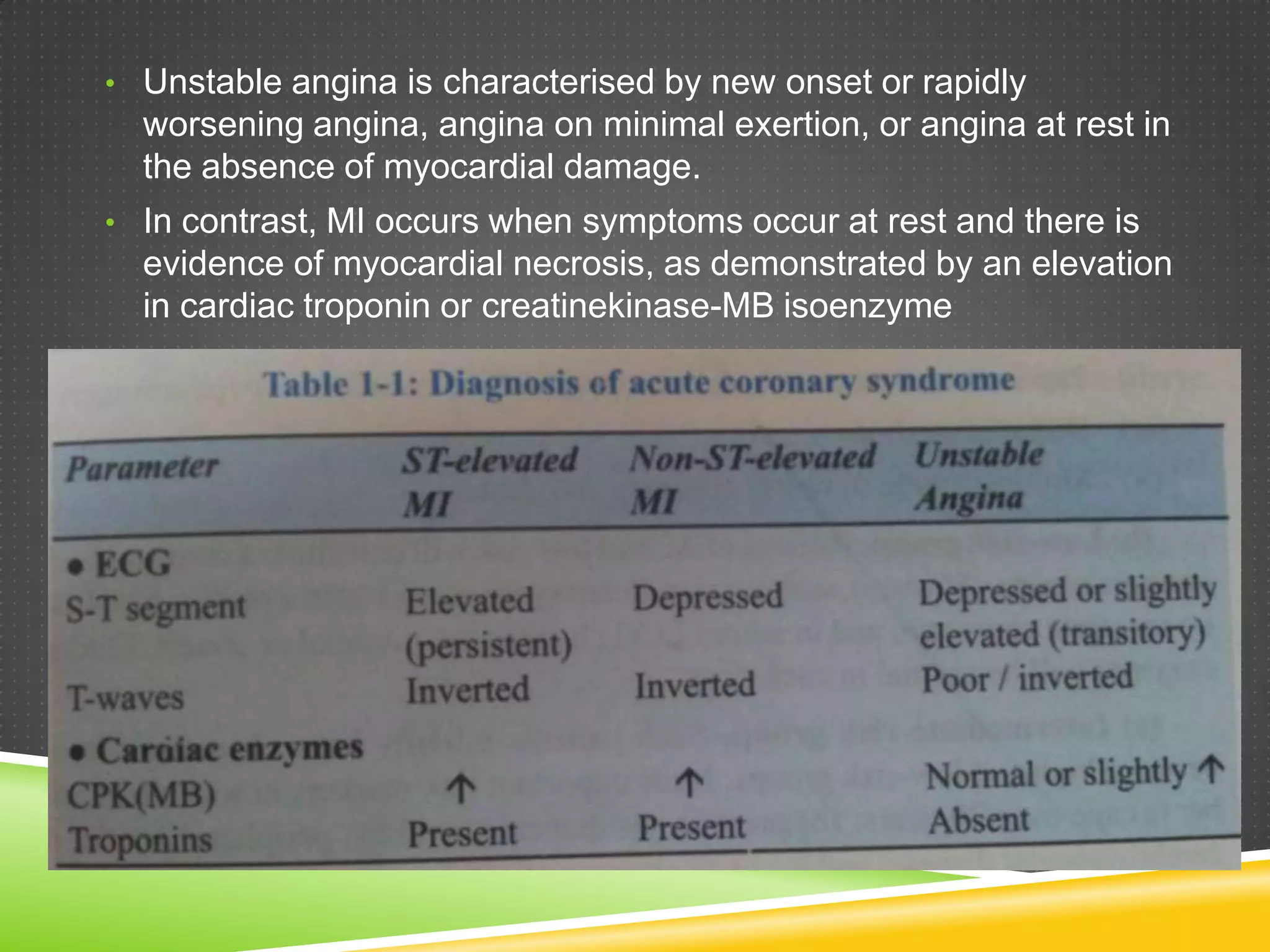
• Unstable angina is characterised by new onset or rapidly
  worsening angina, angina on minimal exertion, or angina at rest in
  the absence of myocardial damage.
• In contrast, MI occurs when symptoms occur at rest and there is
  evidence of myocardial necrosis, as demonstrated by an elevation
  in cardiac troponin or creatinekinase-MB isoenzyme
INVESTIGATION

ECG
Plasma cardiac markers-> CK-MB, cardiac
 troponins T and I (4-6 hours, remains elevated
 for up to 2 weeks).
Other blood tests: leucocytosis, elevated ESR
 and CRP
Chest x-ray
Echocardiography
IMMEDIATE MANAGEMENT: THE FIRST
12 HOURS
• Analgesia-to lower adrenergic drive-> reduce vascular resistance,
  BP, infarct size, susceptibility to ventricular arrythmias.
• Antiplatelet therapy- 300mg aspirin daily+ clopidogrel(600mg-
  150mg-75mg)
• Anticoagulants- unfractionated heparin, fractionated heparin or a
  pentasaccharide.
• Antianginal therapy- sublingual glyceryltrinitrate (300-500mcg), IV
  nitrates, IV beta-blockers.
• Reperfusion therapy: primary percutaneous coronary
  intervention(PCI), thrombolysis.
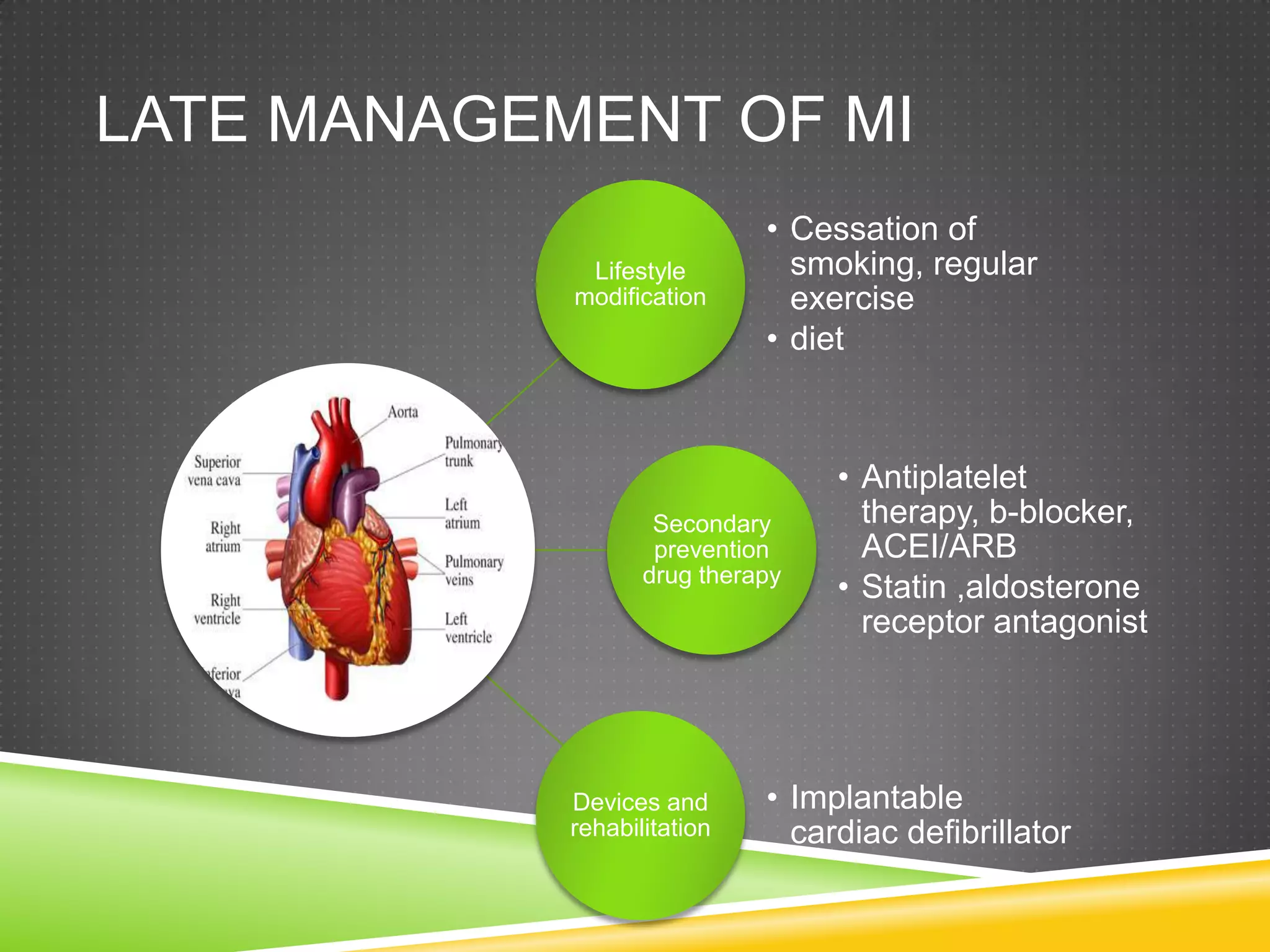
LATE MANAGEMENT OF MI
                             • Cessation of
             Lifestyle         smoking, regular
            modification       exercise
                             • diet


                                  • Antiplatelet
                    Secondary       therapy, b-blocker,
                    prevention      ACEI/ARB
                   drug therapy
                                  • Statin ,aldosterone
                                    receptor antagonist


            Devices and      • Implantable
            rehabilitation     cardiac defibrillator
COMPLICATIONS OF ACUTE
CORONARY SYNDROME
• Arrythmias- ventricular fibrillation, atrial
    fibrillation, bradycardia.
•   Ischaemia
•   Acute circulatory failure
•   Pericarditis
•   Mechanical complications- rupture of papillary
    muscle, rupture of interventricular septum,
    rupture of ventricle.
•   Embolism
THANK YOU.

Approach chest pain & acs

  • 1.
    APPROACH TO PATIENTWITH CHEST PAIN & ACUTE CORONARY SYNDROME Presented by: Siti Nur Hamizah
  • 2.
    INTRODUCTION  Any pain,pressure, squeezing, choking, numbness or any other discomfort in the chest, neck, or upper abdomen, and is often associated with pain in the jaw, head, or arms.  Because of common/overlapping neural pathways, many conditions, both cardiac and extra-cardiac can result in chest pain.  Cardiac pain is mediated through upper 5 thoracic ganglia and spinal roots, but ramifications from adjoining spinal roots always exist.  Therefore pain in the chest may originate from any structure in thorax and upper abdomen innervated through lower cervical to D6/D7 spinal roots
  • 3.
    EVALUATION OF CHESTPAIN:  Try to find the nature & cause of chest pain through CLINICAL HISTORY.  A) Acute/short lived/ongoing  B) Recurrent & episodic  C) Persistent  Details on pain:  Site of pain, localized/diffuse, with radiation if any  Intensity & character of pain  Precipitating & relieving factors  Any relationship with meals &posture &  Any effect of local pressure, or variation with breathing, coughing & movements of cervical spine &shoulder joints.
  • 4.
    IN GENERAL:  Chestpain/discomfort is unlikely to be due to coronary artery disease if:  Localized to region under left nipple/in skin/soft tissue  Localized to small area (<2-3 cm), anginal pain tend to be diffuse.  If chronic & persistent/ recurring and momentarychest pain is sharp, pricking, or stabbing  Or varies with posture/breathing and coughing  Present for several hours but not accompanied by appropriate ECG changes.
  • 6.
    DIFFERENTIAL DIAGNOSIS Cardiac Non-Cardiac Coronary artery disease GIT disorder: MI a)Esophageal disorder like esophagitis or esophageal motility disorders Pericarditis b) Peptic ulcer myocarditis c)Biliary disease Pulmonary embolism d)Pancreatitis Less common causes: Musculoskeletal disorder: Costochondritis, rib #, Aortic dissection Radiculopathy Aneurysm of thoracic aorta Psychogenic chest pain Severe aortic stenosis Lungs/ pleura: Bronchospasm pulmonary infarct Pneumonia Pneumothorax pulmonary embolism tuberculosis. Neurological: Prolapse intervertebral disc Herpes zoster Thoracic outlet syndrome
  • 7.
    ACUTE CORONARY SYNDROME Encompasses all acute phase of Coronary Heart Disease > Unstable angina + NSTEMI + STEMI which usually present with acute chest pain at rest or on minimal exertion  Pathogenesis:
  • 8.
    CLINICAL FEATURES • Symptoms:prolonged cardiac pain-chest, throat, arms, epigastrium or back. Anxiety, fear of impending death,nausea and vomiting, breathlessness, collapse, syncope. • Signs: pallor, sweating, tachycardia-(sympathetic activation) vomiting, tachycardia-(vagal activation), hypotension, oliguria, cold peripheries, narrow pulse pressure, raised JVP, third heart sound, quiet first heart sound, diffuse apical impulse, lung crepitations, fever, complication signs->mitral regurgitation, pericarditis.
  • 9.
    • Unstable anginais characterised by new onset or rapidly worsening angina, angina on minimal exertion, or angina at rest in the absence of myocardial damage. • In contrast, MI occurs when symptoms occur at rest and there is evidence of myocardial necrosis, as demonstrated by an elevation in cardiac troponin or creatinekinase-MB isoenzyme
  • 10.
    INVESTIGATION ECG Plasma cardiac markers->CK-MB, cardiac troponins T and I (4-6 hours, remains elevated for up to 2 weeks). Other blood tests: leucocytosis, elevated ESR and CRP Chest x-ray Echocardiography
  • 11.
    IMMEDIATE MANAGEMENT: THEFIRST 12 HOURS • Analgesia-to lower adrenergic drive-> reduce vascular resistance, BP, infarct size, susceptibility to ventricular arrythmias. • Antiplatelet therapy- 300mg aspirin daily+ clopidogrel(600mg- 150mg-75mg) • Anticoagulants- unfractionated heparin, fractionated heparin or a pentasaccharide. • Antianginal therapy- sublingual glyceryltrinitrate (300-500mcg), IV nitrates, IV beta-blockers. • Reperfusion therapy: primary percutaneous coronary intervention(PCI), thrombolysis.
  • 13.
    LATE MANAGEMENT OFMI • Cessation of Lifestyle smoking, regular modification exercise • diet • Antiplatelet Secondary therapy, b-blocker, prevention ACEI/ARB drug therapy • Statin ,aldosterone receptor antagonist Devices and • Implantable rehabilitation cardiac defibrillator
  • 14.
    COMPLICATIONS OF ACUTE CORONARYSYNDROME • Arrythmias- ventricular fibrillation, atrial fibrillation, bradycardia. • Ischaemia • Acute circulatory failure • Pericarditis • Mechanical complications- rupture of papillary muscle, rupture of interventricular septum, rupture of ventricle. • Embolism
  • 15.