An Approach to
CHEST PAIN at ER….?
SHAHID ABBAS
MBBS, FCPS (MED), FCPS (CARD)
Interventional Cardiologist & Medical Specialist
The Road Map!
Atherosclerosis
IHD
Encountering Chest Pain
Investigations involved
Red flags and Loop holes
Summary
Conclusion
A Patient walks in to your
ER with
chest Pain
Brain Storming !
• 60 % of chest pain diagnoses were not "organic
• Musculoskeletal 36 % of all diagnoses
• Costochondritis -13 %
• Reflux esophagitis -13%
• Stable angina pectoris -11 %
• Unstable angina or myocardial infarction -1.5 %
Better Safe Then Sorry
Life-threatening conditions
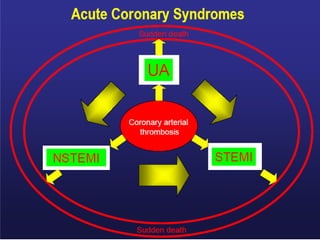
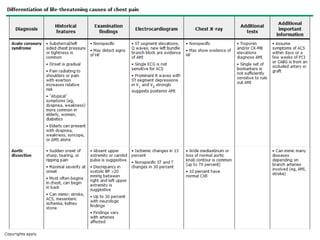
• Acute coronary syndrome
• Aortic dissection
• Pulmonary embolism
• Tension pneumothorax
• Pericardial tamponade
• Mediastinitis
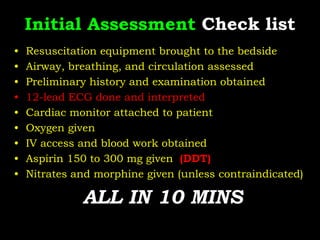
Initial Assessment Check list
• Resuscitation equipment brought to the bedside
• Airway, breathing, and circulation assessed
• Preliminary history and examination obtained
• 12-lead ECG done and interpreted
• Cardiac monitor attached to patient
• Oxygen given
• IV access and blood work obtained
• Aspirin 150 to 300 mg given (DDT)
• Nitrates and morphine given (unless contraindicated)
ALL IN 10 MINS
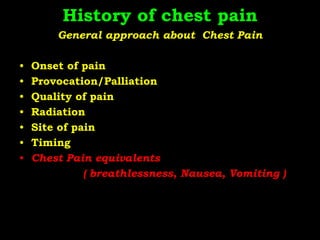
History of chest pain
General approach about Chest Pain
• Onset of pain
• Provocation/Palliation
• Quality of pain
• Radiation
• Site of pain
• Timing
• Chest Pain equivalents
( breathlessness, Nausea, Vomiting )
Important points on history…
 Worsening in the frequency, intensity, duration, and timing of prior
anginal or anginal equivalent symptoms
 New onset symptoms of shortness of breath, nausea, sweating,
extreme fatigue in a patient with a known history of cardiovascular
disease
 Onset of typical anginal symptoms in a previously asymptomatic Pt
 Age greater than 70 years
 Diabetes mellitus
 Women
 Extracardiac vascular disease (PVD, PAD, CVA)
Atypical Chest pain
• Pleuritic pain, sharp or knife-like pain related to
respiratory movements or cough
• Primary or sole location in the mid or lower abdominal
region
• Any discomfort localized with one finger
• Any discomfort reproduced by movement or palpation
• Constant pain lasting for days
• Fleeting pains lasting for a few seconds or less
• Pain radiating into the lower extremities or above the
mandible
Targeted History…..
• Diagnostic studies in the Past
• Comorbidities: hypertension, diabetes mellitus,
peripheral vascular disease, malignancy
• Recent events: trauma, major surgery or
medical procedures (eg, endoscopy), periods of
immobilization (eg, long plane ride)
• Other factors: cocaine use, cigarette use, family
history
• Contraindications to SK
Physical Examination
• Most often the physical examination is not helpful
• Anxious and distressed and may be diaphoretic and
dyspneic
• Differential Diagnosis
• Evidence of systemic hypoperfusion Cardiogenic shock
• Evidence of heart failure
• A screening neurologic examination Subtle/ ongoing
CVA (contraindication to SK)
ECG
• A standard 12-lead electrocardiogram (ECG) within
10 minutes
• A single ECG detects < 50 percent of AMIs
• Patients with normal or nonspecific ECGs have a 1
to 5 percent incidence of AMI and a 4 to 23 percent
incidence of unstable angina
• ECG should be repeated as frequently as every 10
minutes if the initial ECG is not diagnostic but
high clinical suspicion for AMI is there
• Prior ECGs are important
Normal ECG DOES NOT RULE OUT ACS
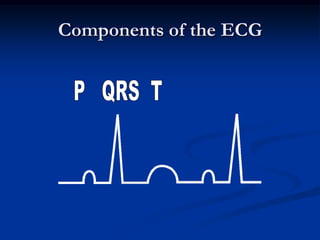
Components of the ECG
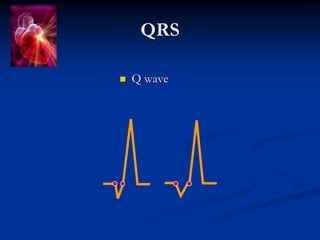
QRS
 Q wave
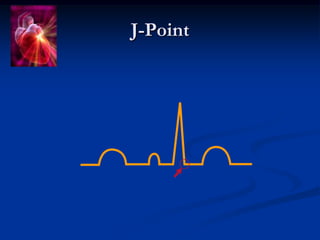
J-Point
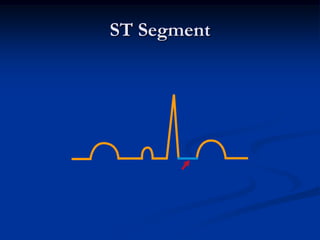
ST Segment
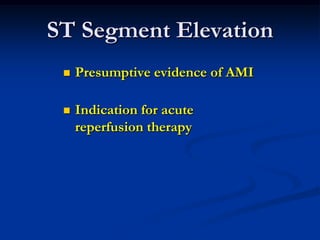
ST Segment Elevation
 Presumptive evidence of AMI
 Indication for acute
reperfusion therapy
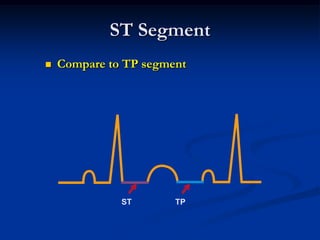
ST Segment
 Compare to TP segment
ST TP
Investigations
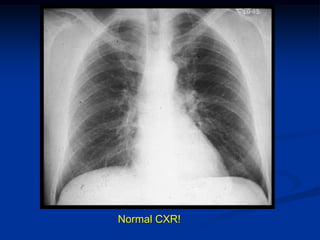
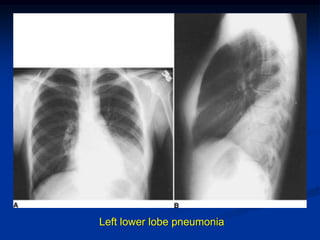
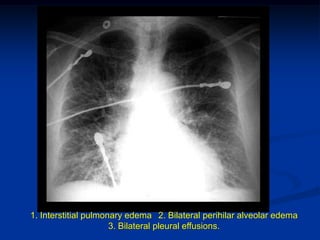
 Chest x-ray
 Usually non-diagnostic in ACS
 Helps to identify other important
conditions
 Congestive heart failure
 Pnuemonia
 Pnuemothorax
 Pleural effusion
 Widened mediastinum (aortic dissection)
Normal CXR!
Left lower lobe pneumonia
1. Interstitial pulmonary edema 2. Bilateral perihilar alveolar edema
3. Bilateral pleural effusions.
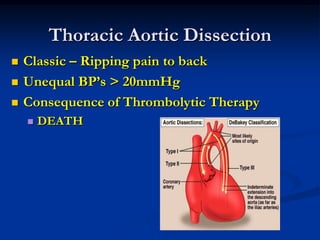
Thoracic Aortic Dissection
 Classic – Ripping pain to back
 Unequal BP’s > 20mmHg
 Consequence of Thrombolytic Therapy
 DEATH
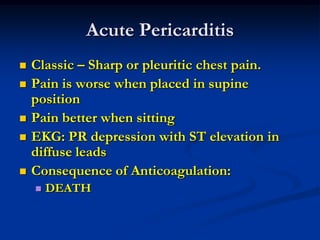
Acute Pericarditis
 Classic – Sharp or pleuritic chest pain.
 Pain is worse when placed in supine
position
 Pain better when sitting
 EKG: PR depression with ST elevation in
diffuse leads
 Consequence of Anticoagulation:
 DEATH
Ventricular Aneurysm
 Classic – History of old Myocardial
Infarction.
 Diagnostic Q – Waves on EKG with raised
ST
 Consequence of Anticoagulation:
 NONE
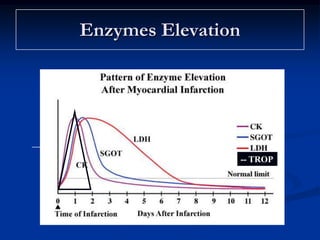
Cardiac Enzymes
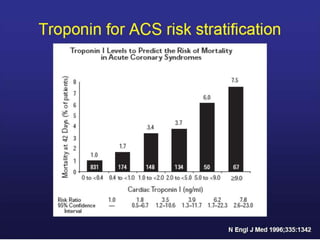
 Cardiac Troponins
 Blood levels rise after 3-6 hours (can be negative at initial
assessment!)
 Peak at 12-20 hours
 Creatine Kinase (CK)
 May rise earlier than troponin, but less specific for cardiac
muscle
 ALWAYS repeat in 6-8 hours if suspicious for acute
cardiac event (ie, non-STEMI)
 Loop Holes
Enzymes Elevation
-- TROP
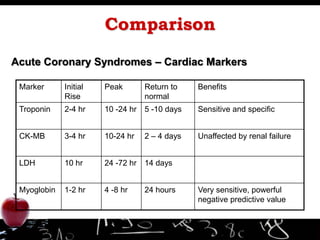
Comparison
Acute Coronary Syndromes – Cardiac Markers
Marker Initial
Rise
Peak Return to
normal
Benefits
Troponin 2-4 hr 10 -24 hr 5 -10 days Sensitive and specific
CK-MB 3-4 hr 10-24 hr 2 – 4 days Unaffected by renal failure
LDH 10 hr 24 -72 hr 14 days
Myoglobin 1-2 hr 4 -8 hr 24 hours Very sensitive, powerful
negative predictive value
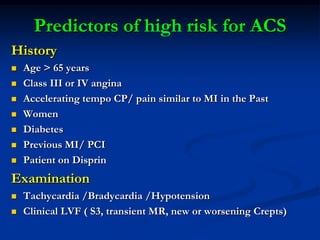
Predictors of high risk for ACS
History
 Age > 65 years
 Class III or IV angina
 Accelerating tempo CP/ pain similar to MI in the Past
 Women
 Diabetes
 Previous MI/ PCI
 Patient on Disprin
Examination
 Tachycardia /Bradycardia /Hypotension
 Clinical LVF ( S3, transient MR, new or worsening Crepts)
Predictors of high risk for ACS
ECG
 Dynamic ST changes
 ST deviation > 0.5 mm
 Multiple leads involvement
 LBBB
 SVT
 Positive cardiac biomarker
CAD Equivalents
( DM, Carotid AD, Abd Aortic aneurysm, Symptomatic PVD)
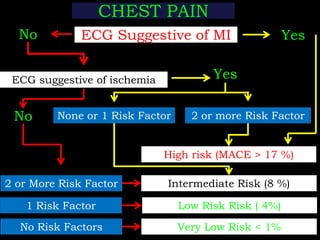
CHEST PAIN
ECG Suggestive of MI Yes
ECG suggestive of ischemia
No
Yes
No None or 1 Risk Factor 2 or more Risk Factor
Intermediate Risk (8 %)
High risk (MACE > 17 %)
Very Low Risk < 1%
Low Risk Risk ( 4%)
No Risk Factors
1 Risk Factor
2 or More Risk Factor
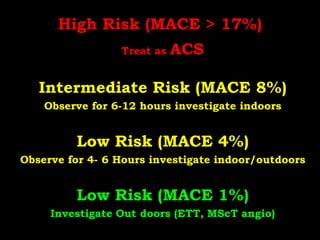
High Risk (MACE > 17%)
Treat as ACS
Intermediate Risk (MACE 8%)
Observe for 6-12 hours investigate indoors
Low Risk (MACE 4%)
Observe for 4- 6 Hours investigate indoor/outdoors
Low Risk (MACE 1%)
Investigate Out doors (ETT, MScT angio)
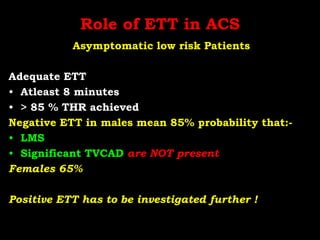
Role of ETT in ACS
Asymptomatic low risk Patients
Adequate ETT
• Atleast 8 minutes
• > 85 % THR achieved
Negative ETT in males mean 85% probability that:-
• LMS
• Significant TVCAD are NOT present
Females 65%
Positive ETT has to be investigated further !
Role of MScT Angio
Low to intermediate risk
Triple rule out
• LMS
• TVCAD
• PE
Prerequisites
• Tolerant to B blockers
• Closed space
• Sinus rhythm (regular)
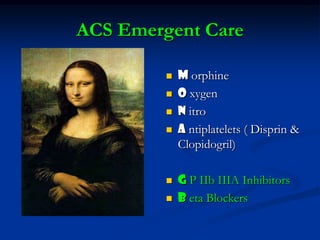
ACS Emergent Care
 M orphine
 O xygen
 N itro
 A ntiplatelets ( Disprin &
Clopidogril)
 G P IIb IIIA Inhibitors
 B eta Blockers
Post discharge Care
 ABCDE
A – Antiplatelets & Antianginals
B – Beta blocker, Blood pressure control
C – Cholesterol lowering, Cigarettes cessation
D – Diabetes control, Diet
E – Education & Exercise ( Life style modifications)

Approach to Chest Pain

  • 2.
    An Approach to CHESTPAIN at ER….? SHAHID ABBAS MBBS, FCPS (MED), FCPS (CARD) Interventional Cardiologist & Medical Specialist
  • 3.
    The Road Map! Atherosclerosis IHD EncounteringChest Pain Investigations involved Red flags and Loop holes Summary Conclusion
  • 4.
    A Patient walksin to your ER with chest Pain
  • 5.
    Brain Storming ! •60 % of chest pain diagnoses were not "organic • Musculoskeletal 36 % of all diagnoses • Costochondritis -13 % • Reflux esophagitis -13% • Stable angina pectoris -11 % • Unstable angina or myocardial infarction -1.5 %
  • 6.
    Better Safe ThenSorry Life-threatening conditions • Acute coronary syndrome • Aortic dissection • Pulmonary embolism • Tension pneumothorax • Pericardial tamponade • Mediastinitis
  • 8.
    Initial Assessment Checklist • Resuscitation equipment brought to the bedside • Airway, breathing, and circulation assessed • Preliminary history and examination obtained • 12-lead ECG done and interpreted • Cardiac monitor attached to patient • Oxygen given • IV access and blood work obtained • Aspirin 150 to 300 mg given (DDT) • Nitrates and morphine given (unless contraindicated) ALL IN 10 MINS
  • 9.
    History of chestpain General approach about Chest Pain • Onset of pain • Provocation/Palliation • Quality of pain • Radiation • Site of pain • Timing • Chest Pain equivalents ( breathlessness, Nausea, Vomiting )
  • 10.
    Important points onhistory…  Worsening in the frequency, intensity, duration, and timing of prior anginal or anginal equivalent symptoms  New onset symptoms of shortness of breath, nausea, sweating, extreme fatigue in a patient with a known history of cardiovascular disease  Onset of typical anginal symptoms in a previously asymptomatic Pt  Age greater than 70 years  Diabetes mellitus  Women  Extracardiac vascular disease (PVD, PAD, CVA)
  • 11.
    Atypical Chest pain •Pleuritic pain, sharp or knife-like pain related to respiratory movements or cough • Primary or sole location in the mid or lower abdominal region • Any discomfort localized with one finger • Any discomfort reproduced by movement or palpation • Constant pain lasting for days • Fleeting pains lasting for a few seconds or less • Pain radiating into the lower extremities or above the mandible
  • 12.
    Targeted History….. • Diagnosticstudies in the Past • Comorbidities: hypertension, diabetes mellitus, peripheral vascular disease, malignancy • Recent events: trauma, major surgery or medical procedures (eg, endoscopy), periods of immobilization (eg, long plane ride) • Other factors: cocaine use, cigarette use, family history • Contraindications to SK
  • 13.
    Physical Examination • Mostoften the physical examination is not helpful • Anxious and distressed and may be diaphoretic and dyspneic • Differential Diagnosis • Evidence of systemic hypoperfusion Cardiogenic shock • Evidence of heart failure • A screening neurologic examination Subtle/ ongoing CVA (contraindication to SK)
  • 14.
    ECG • A standard12-lead electrocardiogram (ECG) within 10 minutes • A single ECG detects < 50 percent of AMIs • Patients with normal or nonspecific ECGs have a 1 to 5 percent incidence of AMI and a 4 to 23 percent incidence of unstable angina • ECG should be repeated as frequently as every 10 minutes if the initial ECG is not diagnostic but high clinical suspicion for AMI is there • Prior ECGs are important Normal ECG DOES NOT RULE OUT ACS
  • 15.
  • 16.
  • 17.
  • 18.
  • 19.
    ST Segment Elevation Presumptive evidence of AMI  Indication for acute reperfusion therapy
  • 20.
    ST Segment  Compareto TP segment ST TP
  • 21.
    Investigations  Chest x-ray Usually non-diagnostic in ACS  Helps to identify other important conditions  Congestive heart failure  Pnuemonia  Pnuemothorax  Pleural effusion  Widened mediastinum (aortic dissection)
  • 22.
  • 23.
    Left lower lobepneumonia
  • 24.
    1. Interstitial pulmonaryedema 2. Bilateral perihilar alveolar edema 3. Bilateral pleural effusions.
  • 27.
    Thoracic Aortic Dissection Classic – Ripping pain to back  Unequal BP’s > 20mmHg  Consequence of Thrombolytic Therapy  DEATH
  • 28.
    Acute Pericarditis  Classic– Sharp or pleuritic chest pain.  Pain is worse when placed in supine position  Pain better when sitting  EKG: PR depression with ST elevation in diffuse leads  Consequence of Anticoagulation:  DEATH
  • 29.
    Ventricular Aneurysm  Classic– History of old Myocardial Infarction.  Diagnostic Q – Waves on EKG with raised ST  Consequence of Anticoagulation:  NONE
  • 30.
    Cardiac Enzymes  CardiacTroponins  Blood levels rise after 3-6 hours (can be negative at initial assessment!)  Peak at 12-20 hours  Creatine Kinase (CK)  May rise earlier than troponin, but less specific for cardiac muscle  ALWAYS repeat in 6-8 hours if suspicious for acute cardiac event (ie, non-STEMI)  Loop Holes
  • 32.
  • 33.
    Comparison Acute Coronary Syndromes– Cardiac Markers Marker Initial Rise Peak Return to normal Benefits Troponin 2-4 hr 10 -24 hr 5 -10 days Sensitive and specific CK-MB 3-4 hr 10-24 hr 2 – 4 days Unaffected by renal failure LDH 10 hr 24 -72 hr 14 days Myoglobin 1-2 hr 4 -8 hr 24 hours Very sensitive, powerful negative predictive value
  • 34.
    Predictors of highrisk for ACS History  Age > 65 years  Class III or IV angina  Accelerating tempo CP/ pain similar to MI in the Past  Women  Diabetes  Previous MI/ PCI  Patient on Disprin Examination  Tachycardia /Bradycardia /Hypotension  Clinical LVF ( S3, transient MR, new or worsening Crepts)
  • 35.
    Predictors of highrisk for ACS ECG  Dynamic ST changes  ST deviation > 0.5 mm  Multiple leads involvement  LBBB  SVT  Positive cardiac biomarker CAD Equivalents ( DM, Carotid AD, Abd Aortic aneurysm, Symptomatic PVD)
  • 36.
    CHEST PAIN ECG Suggestiveof MI Yes ECG suggestive of ischemia No Yes No None or 1 Risk Factor 2 or more Risk Factor Intermediate Risk (8 %) High risk (MACE > 17 %) Very Low Risk < 1% Low Risk Risk ( 4%) No Risk Factors 1 Risk Factor 2 or More Risk Factor
  • 37.
    High Risk (MACE> 17%) Treat as ACS Intermediate Risk (MACE 8%) Observe for 6-12 hours investigate indoors Low Risk (MACE 4%) Observe for 4- 6 Hours investigate indoor/outdoors Low Risk (MACE 1%) Investigate Out doors (ETT, MScT angio)
  • 38.
    Role of ETTin ACS Asymptomatic low risk Patients Adequate ETT • Atleast 8 minutes • > 85 % THR achieved Negative ETT in males mean 85% probability that:- • LMS • Significant TVCAD are NOT present Females 65% Positive ETT has to be investigated further !
  • 39.
    Role of MScTAngio Low to intermediate risk Triple rule out • LMS • TVCAD • PE Prerequisites • Tolerant to B blockers • Closed space • Sinus rhythm (regular)
  • 40.
    ACS Emergent Care M orphine  O xygen  N itro  A ntiplatelets ( Disprin & Clopidogril)  G P IIb IIIA Inhibitors  B eta Blockers
  • 41.
    Post discharge Care ABCDE A – Antiplatelets & Antianginals B – Beta blocker, Blood pressure control C – Cholesterol lowering, Cigarettes cessation D – Diabetes control, Diet E – Education & Exercise ( Life style modifications)