Starting an Electric Motor can require
starting current demands as high as
850% or more above its rated operating
current !
Utilizing a Soft Start can only decrease
that demand to 2 or 3 times more than
the rated operating current and are
expensive.
VSD’s are not practical for eliminating
starting current demands and can create
other detrimental factors in the system.
These starting current demands require
the utility to maintain additional capacity
that result in higher electricity costs.
The

Manning

Starter

System

(MSS) is a new electric motor
starting system that reduces
the instantaneous current draw
during the starting of any
electric motor to no more than
its rated operating current.
The MSS series provides $$ saving
benefits over conventional reduced
voltage starters
•Lower Motor Starter Equipment Cost
•Reduced Installation Cost by eliminating the need

for expensive conventional reduced voltage starters
and over sizing of switching and electrical circuits.

•Provides Increased Motor Operating Capacity from

existing circuits

•Reduce Utility Interconnect Cost and Electricity Bills
•Can be installed on ANY Induction or Synchronous

Motor

•Reduces Wear and Tear on Motor Windings
•Used in conjunction with ANY existing motor, motor

controls or reduced voltage starters and can be
integrated into any existing control system.
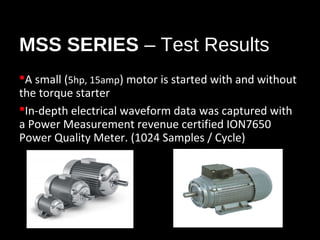
MSS SERIES – Test Results
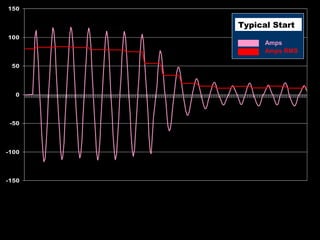
A small (5hp, 15amp) motor is started with and without
the torque starter
In-depth electrical waveform data was captured with
a Power Measurement revenue certified ION7650
Power Quality Meter. (1024 Samples / Cycle)
150

Typical Start
100

Amps
Amps RMS

50

0

-50

-100

-150

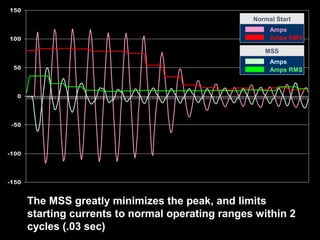
Starting an Electrical Motor
requires an instantaneous current
draw of 6-8 times that of the
150

Normal Start
100

Amps
Amps RMS
MSS

50

Amps
Amps RMS

0

-50

-100

-150

The MSS greatly minimizes the peak, and limits
starting currents to normal operating ranges within 2
cycles (.03 sec)
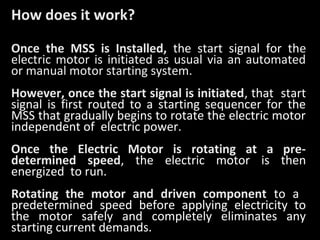
How does it work?
Once the MSS is Installed, the start signal for the
electric motor is initiated as usual via an automated
or manual motor starting system.
However, once the start signal is initiated, that start
signal is first routed to a starting sequencer for the
MSS that gradually begins to rotate the electric motor
independent of electric power.
Once the Electric Motor is rotating at a predetermined speed, the electric motor is then
energized to run.
Rotating the motor and driven component to a
predetermined speed before applying electricity to
the motor safely and completely eliminates any
starting current demands.
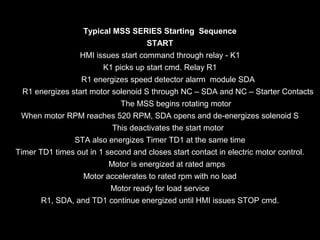
Typical MSS SERIES Starting Sequence
START
HMI issues start command through relay - K1
K1 picks up start cmd. Relay R1
R1 energizes speed detector alarm module SDA
R1 energizes start motor solenoid S through NC – SDA and NC – Starter Contacts
The MSS begins rotating motor
When motor RPM reaches 520 RPM, SDA opens and de-energizes solenoid S
This deactivates the start motor
STA also energizes Timer TD1 at the same time
Timer TD1 times out in 1 second and closes start contact in electric motor control.
Motor is energized at rated amps
Motor accelerates to rated rpm with no load
Motor ready for load service
R1, SDA, and TD1 continue energized until HMI issues STOP cmd.
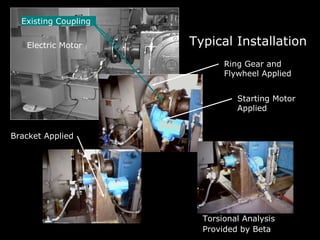
Existing Coupling
Electric Motor

Typical Installation
Ring Gear and
Flywheel Applied
Starting Motor
Applied

Bracket Applied

Torsional Analysis
Provided by Beta
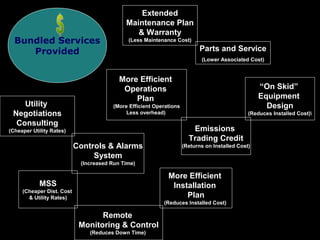
Bundled Services
Provided

Extended
Maintenance Plan
& Warranty
(Less Maintenance Cost)

Parts and Service
(Lower Associated Cost)

Utility
Negotiations
Consulting

More Efficient
Operations
Plan

“On Skid”
Equipment
Design

(More Efficient Operations
Less overhead)

(Cheaper Utility Rates)

Controls & Alarms
System

(Reduces Installed Cost)

Emissions
Trading Credit
(Returns on Installed Cost)

(Increased Run Time)

More Efficient
Installation
Plan

MSS
(Cheaper Dist. Cost
& Utility Rates)

(Reduces Installed Cost)

Remote
Monitoring & Control
(Reduces Down Time)
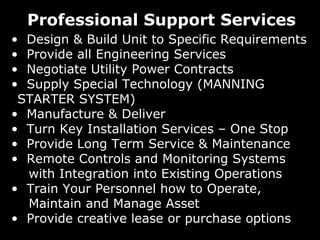
Professional Support Services
• Design & Build Unit to Specific Requirements
• Provide all Engineering Services
• Negotiate Utility Power Contracts
• Supply Special Technology (MANNING
STARTER SYSTEM)
• Manufacture & Deliver
• Turn Key Installation Services – One Stop
• Provide Long Term Service & Maintenance
• Remote Controls and Monitoring Systems
with Integration into Existing Operations
• Train Your Personnel how to Operate,
Maintain and Manage Asset
• Provide creative lease or purchase options

zimtech

  • 2.
    Starting an ElectricMotor can require starting current demands as high as 850% or more above its rated operating current ! Utilizing a Soft Start can only decrease that demand to 2 or 3 times more than the rated operating current and are expensive. VSD’s are not practical for eliminating starting current demands and can create other detrimental factors in the system. These starting current demands require the utility to maintain additional capacity that result in higher electricity costs.
  • 3.
    The Manning Starter System (MSS) is anew electric motor starting system that reduces the instantaneous current draw during the starting of any electric motor to no more than its rated operating current.
  • 4.
    The MSS seriesprovides $$ saving benefits over conventional reduced voltage starters •Lower Motor Starter Equipment Cost •Reduced Installation Cost by eliminating the need for expensive conventional reduced voltage starters and over sizing of switching and electrical circuits. •Provides Increased Motor Operating Capacity from existing circuits •Reduce Utility Interconnect Cost and Electricity Bills •Can be installed on ANY Induction or Synchronous Motor •Reduces Wear and Tear on Motor Windings •Used in conjunction with ANY existing motor, motor controls or reduced voltage starters and can be integrated into any existing control system.
  • 5.
    MSS SERIES –Test Results A small (5hp, 15amp) motor is started with and without the torque starter In-depth electrical waveform data was captured with a Power Measurement revenue certified ION7650 Power Quality Meter. (1024 Samples / Cycle)
  • 6.
    150 Typical Start 100 Amps Amps RMS 50 0 -50 -100 -150 Startingan Electrical Motor requires an instantaneous current draw of 6-8 times that of the
  • 7.
    150 Normal Start 100 Amps Amps RMS MSS 50 Amps AmpsRMS 0 -50 -100 -150 The MSS greatly minimizes the peak, and limits starting currents to normal operating ranges within 2 cycles (.03 sec)
  • 8.
    How does itwork? Once the MSS is Installed, the start signal for the electric motor is initiated as usual via an automated or manual motor starting system. However, once the start signal is initiated, that start signal is first routed to a starting sequencer for the MSS that gradually begins to rotate the electric motor independent of electric power. Once the Electric Motor is rotating at a predetermined speed, the electric motor is then energized to run. Rotating the motor and driven component to a predetermined speed before applying electricity to the motor safely and completely eliminates any starting current demands.
  • 9.
    Typical MSS SERIESStarting Sequence START HMI issues start command through relay - K1 K1 picks up start cmd. Relay R1 R1 energizes speed detector alarm module SDA R1 energizes start motor solenoid S through NC – SDA and NC – Starter Contacts The MSS begins rotating motor When motor RPM reaches 520 RPM, SDA opens and de-energizes solenoid S This deactivates the start motor STA also energizes Timer TD1 at the same time Timer TD1 times out in 1 second and closes start contact in electric motor control. Motor is energized at rated amps Motor accelerates to rated rpm with no load Motor ready for load service R1, SDA, and TD1 continue energized until HMI issues STOP cmd.
  • 10.
    Existing Coupling Electric Motor TypicalInstallation Ring Gear and Flywheel Applied Starting Motor Applied Bracket Applied Torsional Analysis Provided by Beta
  • 11.
    Bundled Services Provided Extended Maintenance Plan &Warranty (Less Maintenance Cost) Parts and Service (Lower Associated Cost) Utility Negotiations Consulting More Efficient Operations Plan “On Skid” Equipment Design (More Efficient Operations Less overhead) (Cheaper Utility Rates) Controls & Alarms System (Reduces Installed Cost) Emissions Trading Credit (Returns on Installed Cost) (Increased Run Time) More Efficient Installation Plan MSS (Cheaper Dist. Cost & Utility Rates) (Reduces Installed Cost) Remote Monitoring & Control (Reduces Down Time)
  • 12.
    Professional Support Services •Design & Build Unit to Specific Requirements • Provide all Engineering Services • Negotiate Utility Power Contracts • Supply Special Technology (MANNING STARTER SYSTEM) • Manufacture & Deliver • Turn Key Installation Services – One Stop • Provide Long Term Service & Maintenance • Remote Controls and Monitoring Systems with Integration into Existing Operations • Train Your Personnel how to Operate, Maintain and Manage Asset • Provide creative lease or purchase options