Nutrition: The Truth about Portion Sizes
In the chaotic lifestyles most of us lead it is hard to truly figure out what health
magazine article is correct. Not to mention nutrition experts tend to publish new and conflicting
articles almost daily regarding portions at meals. It can be hard to find the truth in all of these
possible published truths. Regardless of what the latest diet trend is there is one place that has
successfully outline what a healthy diet should look like, and that is the American Dietetic
Association (ADA). Recently they have updated their look and made a much more user friendly
site. Their goal is to promote a healthy lifestyle for people of all ages.
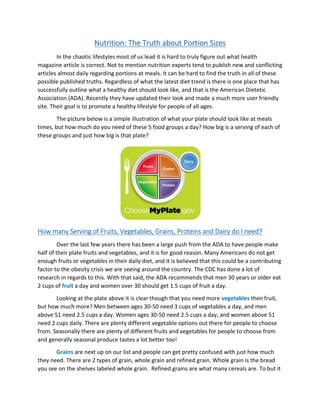
The picture below is a simple illustration of what your plate should look like at meals
times, but how much do you need of these 5 food groups a day? How big is a serving of each of
these groups and just how big is that plate?
How many Serving of Fruits, Vegetables, Grains, Proteins and Dairy do I need?
Over the last few years there has been a large push from the ADA to have people make
half of their plate fruits and vegetables, and it is for good reason. Many Americans do not get
enough fruits or vegetables in their daily diet, and it is believed that this could be a contributing
factor to the obesity crisis we are seeing around the country. The CDC has done a lot of
research in regards to this. With that said, the ADA recommends that men 30 years or older eat
2 cups of fruit a day and women over 30 should get 1.5 cups of fruit a day.
Looking at the plate above it is clear though that you need more vegetables then fruit,
but how much more? Men between ages 30-50 need 3 cups of vegetables a day, and men
above 51 need 2.5 cups a day. Women ages 30-50 need 2.5 cups a day, and women above 51
need 2 cups daily. There are plenty different vegetable options out there for people to choose
from. Seasonally there are plenty of different fruits and vegetables for people to choose from
and generally seasonal produce tastes a lot better too!
Grains are next up on our list and people can get pretty confused with just how much
they need. There are 2 types of grain, whole grain and refined grain. Whole grain is the bread
you see on the shelves labeled whole grain. Refined grains are what many cereals are. To but it
somewhat simply whole grains are generally less processed and refined grains come from more
of your processed grain foods, like white bread. Both men and women need to get at least half
of their grains from whole grains. Men aged 31-50 years old need 7 ounces of grain a day, and
men 51 or older need 6 ounces daily. Women aged 31-50 need 6 ounces a day and women
aged 51 and above need 5 ounces daily. Like previously stated, half of these should be from
whole grains.
What is an ounce of grain though?
To give you a few examples each of these will give amount to 1 ounce of grain:
- 1 piece of regular sliced bread
- 5 whole wheat crackers
- ½ a muffin
- 1 pancake (4 ½ diameter)
- 1 mini bagel (a regular sized bagel would give you 4 ounces)
Protein is next up. Men aged 31-50 years old need 6 ounces of protein and men 51 years or
above need 5.5 ounces of protein daily. Women aged 31 or above need 5 ounces of protein.
Although red meat is not bad, it is recommended to get more lean white meat or fish. Salmon is
a wonderful lean protein with a lot of extra health benefits!
Here are some common protein sources and how much protein they contained?
- 1 small steak (the size of a card deck) is equal to 3.5-4 ounces
- 1 small chicken breast (the size of a card deck) is equal to 3 ounces
- 1 egg is equal to 1 ounce
- 1 salmon steak is equal to 4-6 ounces
Last but certainly not least, Dairy products! It is the easiest to remember, everyone needs 3
cups a day. Men and women of all ages are recommended to have 3 cups a day. Make it a habit
of having some sort of dairy product at each meal, whether that is milk, cheese, yogurt, milk
based dessert or even ice cream!
What counts as a cup of milk?
- 1/3 of a cup of shredded cheese
- 1 cup of milk
- 2 cups cottage cheese
- 1 ½ cup ice cream
For each of these groups it can be easy to get confused and even harder to figure out where
you can go to get clear cut information. For more information about any of these things and
other recommendations go to ChooseMyPlate.gov

YMCA portion article

  • 1.
    Nutrition: The Truthabout Portion Sizes In the chaotic lifestyles most of us lead it is hard to truly figure out what health magazine article is correct. Not to mention nutrition experts tend to publish new and conflicting articles almost daily regarding portions at meals. It can be hard to find the truth in all of these possible published truths. Regardless of what the latest diet trend is there is one place that has successfully outline what a healthy diet should look like, and that is the American Dietetic Association (ADA). Recently they have updated their look and made a much more user friendly site. Their goal is to promote a healthy lifestyle for people of all ages. The picture below is a simple illustration of what your plate should look like at meals times, but how much do you need of these 5 food groups a day? How big is a serving of each of these groups and just how big is that plate? How many Serving of Fruits, Vegetables, Grains, Proteins and Dairy do I need? Over the last few years there has been a large push from the ADA to have people make half of their plate fruits and vegetables, and it is for good reason. Many Americans do not get enough fruits or vegetables in their daily diet, and it is believed that this could be a contributing factor to the obesity crisis we are seeing around the country. The CDC has done a lot of research in regards to this. With that said, the ADA recommends that men 30 years or older eat 2 cups of fruit a day and women over 30 should get 1.5 cups of fruit a day. Looking at the plate above it is clear though that you need more vegetables then fruit, but how much more? Men between ages 30-50 need 3 cups of vegetables a day, and men above 51 need 2.5 cups a day. Women ages 30-50 need 2.5 cups a day, and women above 51 need 2 cups daily. There are plenty different vegetable options out there for people to choose from. Seasonally there are plenty of different fruits and vegetables for people to choose from and generally seasonal produce tastes a lot better too! Grains are next up on our list and people can get pretty confused with just how much they need. There are 2 types of grain, whole grain and refined grain. Whole grain is the bread you see on the shelves labeled whole grain. Refined grains are what many cereals are. To but it
  • 2.
    somewhat simply wholegrains are generally less processed and refined grains come from more of your processed grain foods, like white bread. Both men and women need to get at least half of their grains from whole grains. Men aged 31-50 years old need 7 ounces of grain a day, and men 51 or older need 6 ounces daily. Women aged 31-50 need 6 ounces a day and women aged 51 and above need 5 ounces daily. Like previously stated, half of these should be from whole grains. What is an ounce of grain though? To give you a few examples each of these will give amount to 1 ounce of grain: - 1 piece of regular sliced bread - 5 whole wheat crackers - ½ a muffin - 1 pancake (4 ½ diameter) - 1 mini bagel (a regular sized bagel would give you 4 ounces) Protein is next up. Men aged 31-50 years old need 6 ounces of protein and men 51 years or above need 5.5 ounces of protein daily. Women aged 31 or above need 5 ounces of protein. Although red meat is not bad, it is recommended to get more lean white meat or fish. Salmon is a wonderful lean protein with a lot of extra health benefits! Here are some common protein sources and how much protein they contained? - 1 small steak (the size of a card deck) is equal to 3.5-4 ounces - 1 small chicken breast (the size of a card deck) is equal to 3 ounces - 1 egg is equal to 1 ounce - 1 salmon steak is equal to 4-6 ounces Last but certainly not least, Dairy products! It is the easiest to remember, everyone needs 3 cups a day. Men and women of all ages are recommended to have 3 cups a day. Make it a habit of having some sort of dairy product at each meal, whether that is milk, cheese, yogurt, milk based dessert or even ice cream! What counts as a cup of milk? - 1/3 of a cup of shredded cheese - 1 cup of milk - 2 cups cottage cheese - 1 ½ cup ice cream For each of these groups it can be easy to get confused and even harder to figure out where you can go to get clear cut information. For more information about any of these things and other recommendations go to ChooseMyPlate.gov