The soldering iron
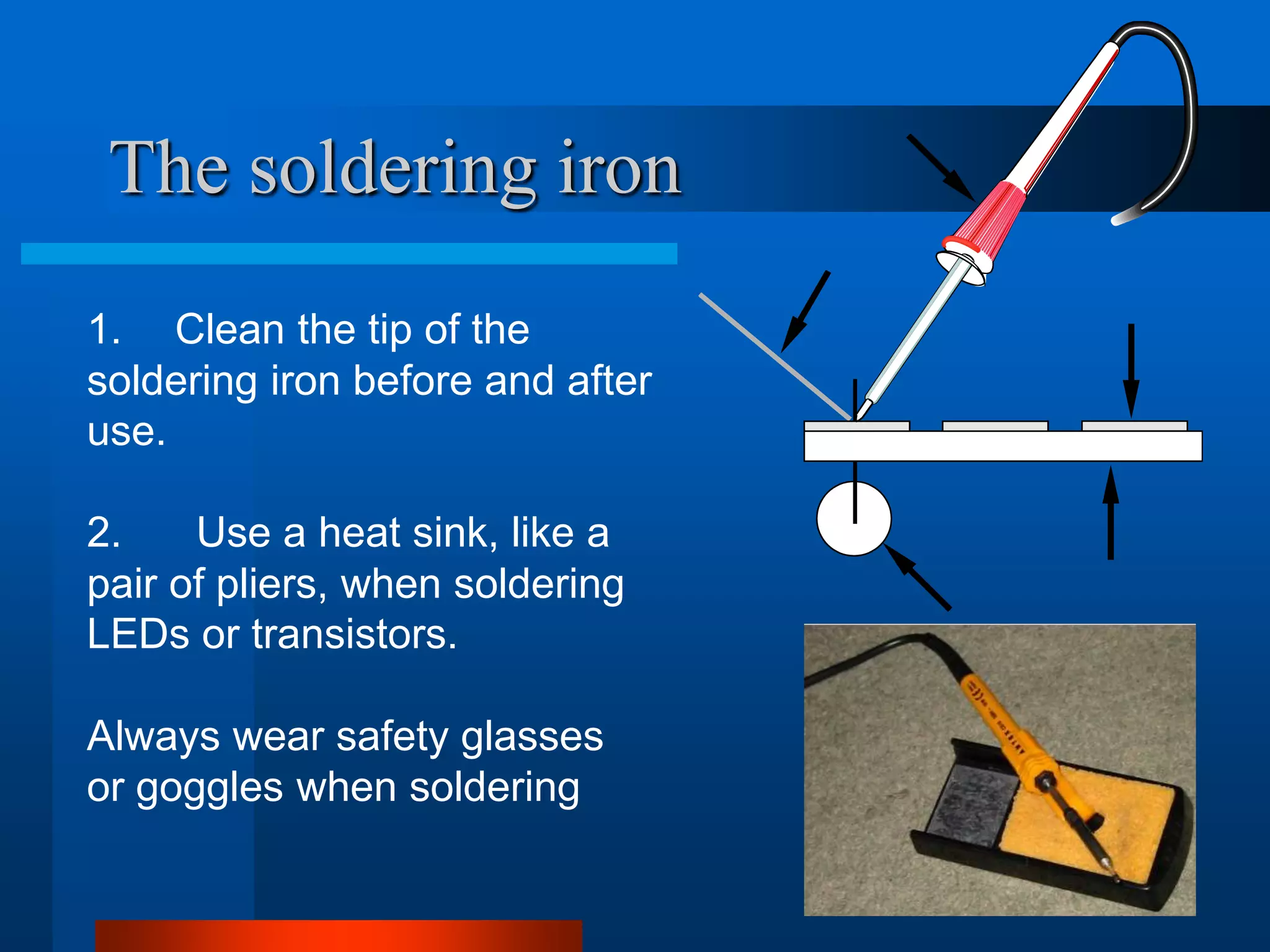
1. Clean the tip of the
soldering iron before and after
use.

2.    Use a heat sink, like a
pair of pliers, when soldering
LEDs or transistors.

Always wear safety glasses
or goggles when soldering
Soldering
How to Solder

   First a few safety precautions:
   Never touch the element or tip of the soldering iron.
    They are very hot (about 400 C) and will give you a nasty burn.
   Take great care to avoid touching the mains flex with the tip of the
    iron.
    The iron should have a heatproof flex for extra protection. An
    ordinary plastic flex will melt immediately if touched by a hot iron
    and there is a serious risk of burns and electric shock.
   Always return the soldering iron to its stand when not in use.
    Never put it down on your workbench, even for a moment!
   Work in a well-ventilated area.
    The smoke formed as you melt solder is mostly from the flux and
    quite irritating. Avoid breathing it by keeping you head to the side
    of, not above, your work.
   Wash your hands after using solder.
    Solder contains lead which is a poisonous metal.
Preparing the soldering iron:

   Place the soldering iron in its stand and plug in.
    The iron will take a few minutes to reach its operating temperature of
    about 400 C.
   Dampen the sponge in the stand.
    The best way to do this is to lift it out the stand and hold it under a cold
    tap for a moment, then squeeze to remove excess water. It should be
    damp, not dripping wet.
   Wait a few minutes for the soldering iron to warm up.
    You can check if it is ready by trying to melt a little solder on the tip.
   Wipe the tip of the iron on the damp sponge.
    This will clean the tip.
   Melt a little solder on the tip of the iron.
    This is called 'tinning' and it will help the heat to flow from the iron's tip to
    the joint. It only needs to be done when you plug in the iron, and
    occasionally while soldering if you need to wipe the tip clean on the
    sponge.
You are now ready to start
soldering:
   Hold the soldering iron like a pen, near the base of the handle.
    Imagine you are going to write your name! Remember to never touch the
    hot element or tip.
   Touch the soldering iron onto the joint to be made.
    Make sure it touches both the component lead and the track. Hold the tip
    there for a few seconds and...
   Feed a little solder onto the joint.
    It should flow smoothly onto the lead and track to form a volcano shape as
    shown in the diagram. Apply the solder to the joint, not the iron.
   Remove the solder, then the iron, while keeping the joint still.
    Allow the joint a few seconds to cool before you move the circuit board.
   Inspect the joint closely.
    It should look shiny and have a 'volcano' shape. If not, you will need to
    reheat it and feed in a little more solder. This time ensure that both the
    lead and track are heated fully before applying solder.
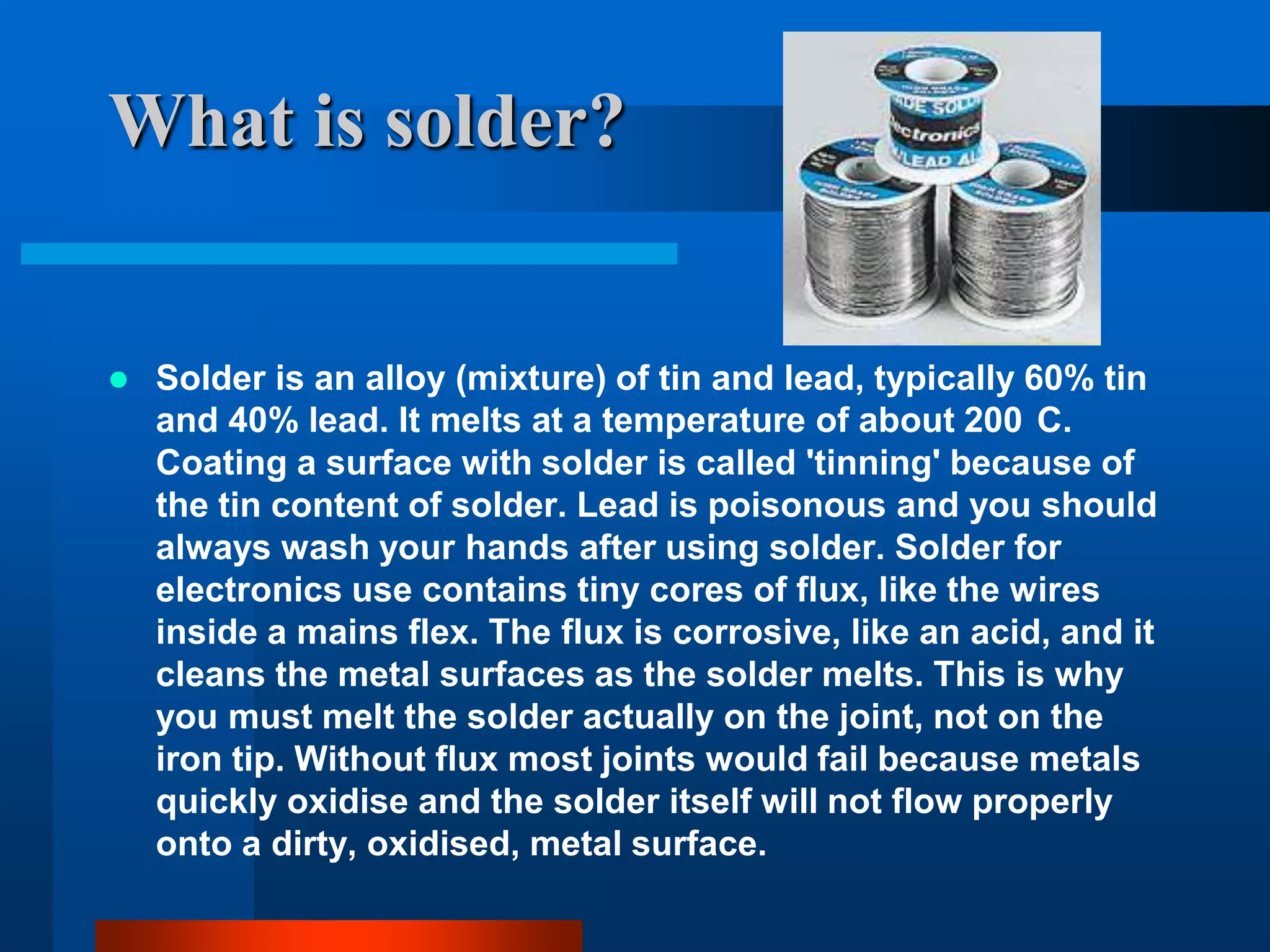
What is solder?


   Solder is an alloy (mixture) of tin and lead, typically 60% tin
    and 40% lead. It melts at a temperature of about 200 C.
    Coating a surface with solder is called 'tinning' because of
    the tin content of solder. Lead is poisonous and you should
    always wash your hands after using solder. Solder for
    electronics use contains tiny cores of flux, like the wires
    inside a mains flex. The flux is corrosive, like an acid, and it
    cleans the metal surfaces as the solder melts. This is why
    you must melt the solder actually on the joint, not on the
    iron tip. Without flux most joints would fail because metals
    quickly oxidise and the solder itself will not flow properly
    onto a dirty, oxidised, metal surface.

Year 8 – soldering

  • 1.
    The soldering iron 1.Clean the tip of the soldering iron before and after use. 2. Use a heat sink, like a pair of pliers, when soldering LEDs or transistors. Always wear safety glasses or goggles when soldering
  • 2.
    Soldering How to Solder  First a few safety precautions:  Never touch the element or tip of the soldering iron. They are very hot (about 400 C) and will give you a nasty burn.  Take great care to avoid touching the mains flex with the tip of the iron. The iron should have a heatproof flex for extra protection. An ordinary plastic flex will melt immediately if touched by a hot iron and there is a serious risk of burns and electric shock.  Always return the soldering iron to its stand when not in use. Never put it down on your workbench, even for a moment!  Work in a well-ventilated area. The smoke formed as you melt solder is mostly from the flux and quite irritating. Avoid breathing it by keeping you head to the side of, not above, your work.  Wash your hands after using solder. Solder contains lead which is a poisonous metal.
  • 3.
    Preparing the solderingiron:  Place the soldering iron in its stand and plug in. The iron will take a few minutes to reach its operating temperature of about 400 C.  Dampen the sponge in the stand. The best way to do this is to lift it out the stand and hold it under a cold tap for a moment, then squeeze to remove excess water. It should be damp, not dripping wet.  Wait a few minutes for the soldering iron to warm up. You can check if it is ready by trying to melt a little solder on the tip.  Wipe the tip of the iron on the damp sponge. This will clean the tip.  Melt a little solder on the tip of the iron. This is called 'tinning' and it will help the heat to flow from the iron's tip to the joint. It only needs to be done when you plug in the iron, and occasionally while soldering if you need to wipe the tip clean on the sponge.
  • 4.
    You are nowready to start soldering:  Hold the soldering iron like a pen, near the base of the handle. Imagine you are going to write your name! Remember to never touch the hot element or tip.  Touch the soldering iron onto the joint to be made. Make sure it touches both the component lead and the track. Hold the tip there for a few seconds and...  Feed a little solder onto the joint. It should flow smoothly onto the lead and track to form a volcano shape as shown in the diagram. Apply the solder to the joint, not the iron.  Remove the solder, then the iron, while keeping the joint still. Allow the joint a few seconds to cool before you move the circuit board.  Inspect the joint closely. It should look shiny and have a 'volcano' shape. If not, you will need to reheat it and feed in a little more solder. This time ensure that both the lead and track are heated fully before applying solder.
  • 5.
    What is solder?  Solder is an alloy (mixture) of tin and lead, typically 60% tin and 40% lead. It melts at a temperature of about 200 C. Coating a surface with solder is called 'tinning' because of the tin content of solder. Lead is poisonous and you should always wash your hands after using solder. Solder for electronics use contains tiny cores of flux, like the wires inside a mains flex. The flux is corrosive, like an acid, and it cleans the metal surfaces as the solder melts. This is why you must melt the solder actually on the joint, not on the iron tip. Without flux most joints would fail because metals quickly oxidise and the solder itself will not flow properly onto a dirty, oxidised, metal surface.