Bark beetles are common pests of many 
trees. Some of the most damaging attacks 
occur to pines and other conifers. Trees already 
stressed by drought, disease, or mechanical damage 
are most likely to suffer. Insecticide sprays can’t save 
infested trees. Instead, promptly remove infested trees 
and protect healthy ones with proper cultural care. 
Identifying bark beetles and their damage. 
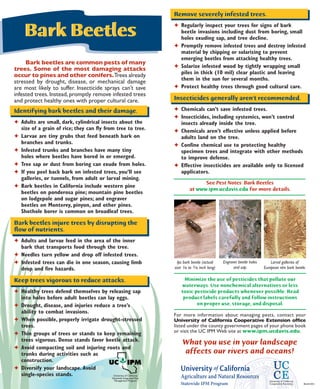
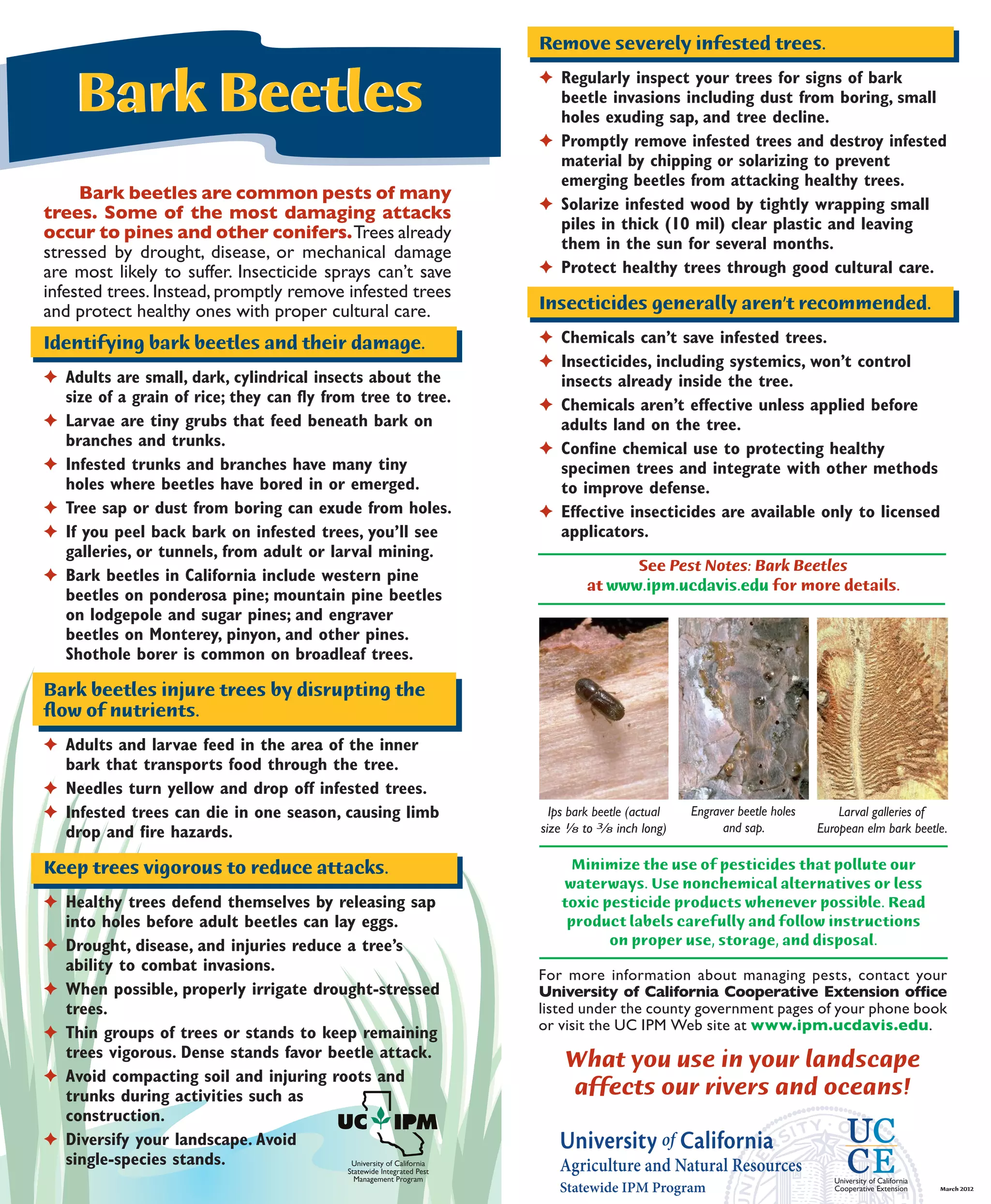
✦ Adults are small, dark, cylindrical insects about the 
size of a grain of rice; they can fly from tree to tree. 
✦ Larvae are tiny grubs that feed beneath bark on 
branches and trunks. 
✦ Infested trunks and branches have many tiny 
holes where beetles have bored in or emerged. 
✦ Tree sap or dust from boring can exude from holes. 
✦ If you peel back bark on infested trees, you’ll see 
galleries, or tunnels, from adult or larval mining. 
✦ Bark beetles in California include western pine 
beetles on ponderosa pine; mountain pine beetles 
on lodgepole and sugar pines; and engraver 
beetles on Monterey, pinyon, and other pines. 
Shothole borer is common on broadleaf trees. 
Bark beetles injure trees by disrupting the 
flow of nutrients. 
✦ Adults and larvae feed in the area of the inner 
bark that transports food through the tree. 
✦ Needles turn yellow and drop off infested trees. 
✦ Infested trees can die in one season, causing limb 
drop and fire hazards. 
Keep trees vigorous to reduce attacks. 
✦ Healthy trees defend themselves by releasing sap 
into holes before adult beetles can lay eggs. 
✦ Drought, disease, and injuries reduce a tree’s 
ability to combat invasions. 
✦ When possible, properly irrigate drought-stressed 
trees. 
✦ Thin groups of trees or stands to keep remaining 
trees vigorous. Dense stands favor beetle attack. 
✦ Avoid compacting soil and injuring roots and 
trunks during activities such as 
construction. 
✦ Diversify your landscape. Avoid 
single-species stands. 
BBaarrkk BBeeeettlleess 
University of California 
Statewide Integrated Pest 
Management Program 
Remove severely infested trees. 
✦ Regularly inspect your trees for signs of bark 
beetle invasions including dust from boring, small 
holes exuding sap, and tree decline. 
✦ Promptly remove infested trees and destroy infested 
material by chipping or solarizing to prevent 
emerging beetles from attacking healthy trees. 
✦ Solarize infested wood by tightly wrapping small 
piles in thick (10 mil) clear plastic and leaving 
them in the sun for several months. 
✦ Protect healthy trees through good cultural care. 
Insecticides generally aren’t recommended. 
✦ Chemicals can’t save infested trees. 
✦ Insecticides, including systemics, won’t control 
insects already inside the tree. 
✦ Chemicals aren’t effective unless applied before 
adults land on the tree. 
✦ Confine chemical use to protecting healthy 
specimen trees and integrate with other methods 
to improve defense. 
✦ Effective insecticides are available only to licensed 
applicators. 
Minimize the use of pesticides that pollute our 
waterways. Use nonchemical alternatives or less 
toxic pesticide products whenever possible. Read 
product labels carefully and follow instructions 
on proper use, storage, and disposal. 
For more information about managing pests, contact your 
University of California Cooperative Extension office 
listed under the county government pages of your phone book 
or visit the UC IPM Web site at www.ipm.ucdavis.edu. 
See Pest Notes: Bark Beetles 
at www.ipm.ucdavis.edu for more details. 
What you use in your landscape 
affects our rivers and oceans! 
University of California 
Statewide IPM Program Cooperative Extension March 2012 
Larval galleries of 
European elm bark beetle. 
Ips bark beetle (actual 
size 1⁄8 to 3⁄8 inch long) 
Engraver beetle holes 
and sap.

Bark Beetles Quick Tips Natural Pest Control

  • 1.
    Bark beetles arecommon pests of many trees. Some of the most damaging attacks occur to pines and other conifers. Trees already stressed by drought, disease, or mechanical damage are most likely to suffer. Insecticide sprays can’t save infested trees. Instead, promptly remove infested trees and protect healthy ones with proper cultural care. Identifying bark beetles and their damage. ✦ Adults are small, dark, cylindrical insects about the size of a grain of rice; they can fly from tree to tree. ✦ Larvae are tiny grubs that feed beneath bark on branches and trunks. ✦ Infested trunks and branches have many tiny holes where beetles have bored in or emerged. ✦ Tree sap or dust from boring can exude from holes. ✦ If you peel back bark on infested trees, you’ll see galleries, or tunnels, from adult or larval mining. ✦ Bark beetles in California include western pine beetles on ponderosa pine; mountain pine beetles on lodgepole and sugar pines; and engraver beetles on Monterey, pinyon, and other pines. Shothole borer is common on broadleaf trees. Bark beetles injure trees by disrupting the flow of nutrients. ✦ Adults and larvae feed in the area of the inner bark that transports food through the tree. ✦ Needles turn yellow and drop off infested trees. ✦ Infested trees can die in one season, causing limb drop and fire hazards. Keep trees vigorous to reduce attacks. ✦ Healthy trees defend themselves by releasing sap into holes before adult beetles can lay eggs. ✦ Drought, disease, and injuries reduce a tree’s ability to combat invasions. ✦ When possible, properly irrigate drought-stressed trees. ✦ Thin groups of trees or stands to keep remaining trees vigorous. Dense stands favor beetle attack. ✦ Avoid compacting soil and injuring roots and trunks during activities such as construction. ✦ Diversify your landscape. Avoid single-species stands. BBaarrkk BBeeeettlleess University of California Statewide Integrated Pest Management Program Remove severely infested trees. ✦ Regularly inspect your trees for signs of bark beetle invasions including dust from boring, small holes exuding sap, and tree decline. ✦ Promptly remove infested trees and destroy infested material by chipping or solarizing to prevent emerging beetles from attacking healthy trees. ✦ Solarize infested wood by tightly wrapping small piles in thick (10 mil) clear plastic and leaving them in the sun for several months. ✦ Protect healthy trees through good cultural care. Insecticides generally aren’t recommended. ✦ Chemicals can’t save infested trees. ✦ Insecticides, including systemics, won’t control insects already inside the tree. ✦ Chemicals aren’t effective unless applied before adults land on the tree. ✦ Confine chemical use to protecting healthy specimen trees and integrate with other methods to improve defense. ✦ Effective insecticides are available only to licensed applicators. Minimize the use of pesticides that pollute our waterways. Use nonchemical alternatives or less toxic pesticide products whenever possible. Read product labels carefully and follow instructions on proper use, storage, and disposal. For more information about managing pests, contact your University of California Cooperative Extension office listed under the county government pages of your phone book or visit the UC IPM Web site at www.ipm.ucdavis.edu. See Pest Notes: Bark Beetles at www.ipm.ucdavis.edu for more details. What you use in your landscape affects our rivers and oceans! University of California Statewide IPM Program Cooperative Extension March 2012 Larval galleries of European elm bark beetle. Ips bark beetle (actual size 1⁄8 to 3⁄8 inch long) Engraver beetle holes and sap.