Beat the Bugs: Protecting Your
Trees from Summer Pests
Who doesn’t love summer? Not only is school out (which the kids
love) but it’s the time nature comes into its own after spending all
spring growing, and that everyone can enjoy. The trees in
particular stand out come summer, standing tall, lush, and
healthy in your landscapes and gardens. Not only do they provide
a shaded sanctuary to beat the summer heat, but they add an
undeniable appeal to your outdoor spaces during the season.
However, this peak period of growth and beauty is also the prime
season for a host of opportunistic pests that can threaten the
health and vitality of your precious trees. Protecting your trees
from these summer invaders is less about going all-out on these
unwelcome intruders, and more about cultivating a resilient
environment through vigilance, proactive care, and timely,
thoughtful intervention. This guide offers a comprehensive
approach to help you beat the bugs and ensure your trees thrive
throughout the summer and beyond.
It’s important to keep in mind before you even start that the
cornerstone of pest management is not a spray bottle, but a
healthy tree. Pests are often drawn to trees that are already under
stress from other factors, such as drought, nutrient deficiency, or
physical damage. A strong, vigorous tree has its own sophisticated
defence mechanisms to fend off many would-be attackers.
Therefore, the most effective pest control program begins long
before you ever see a bug.
Part 1: The Foundation of Defence: Proactive Tree Care
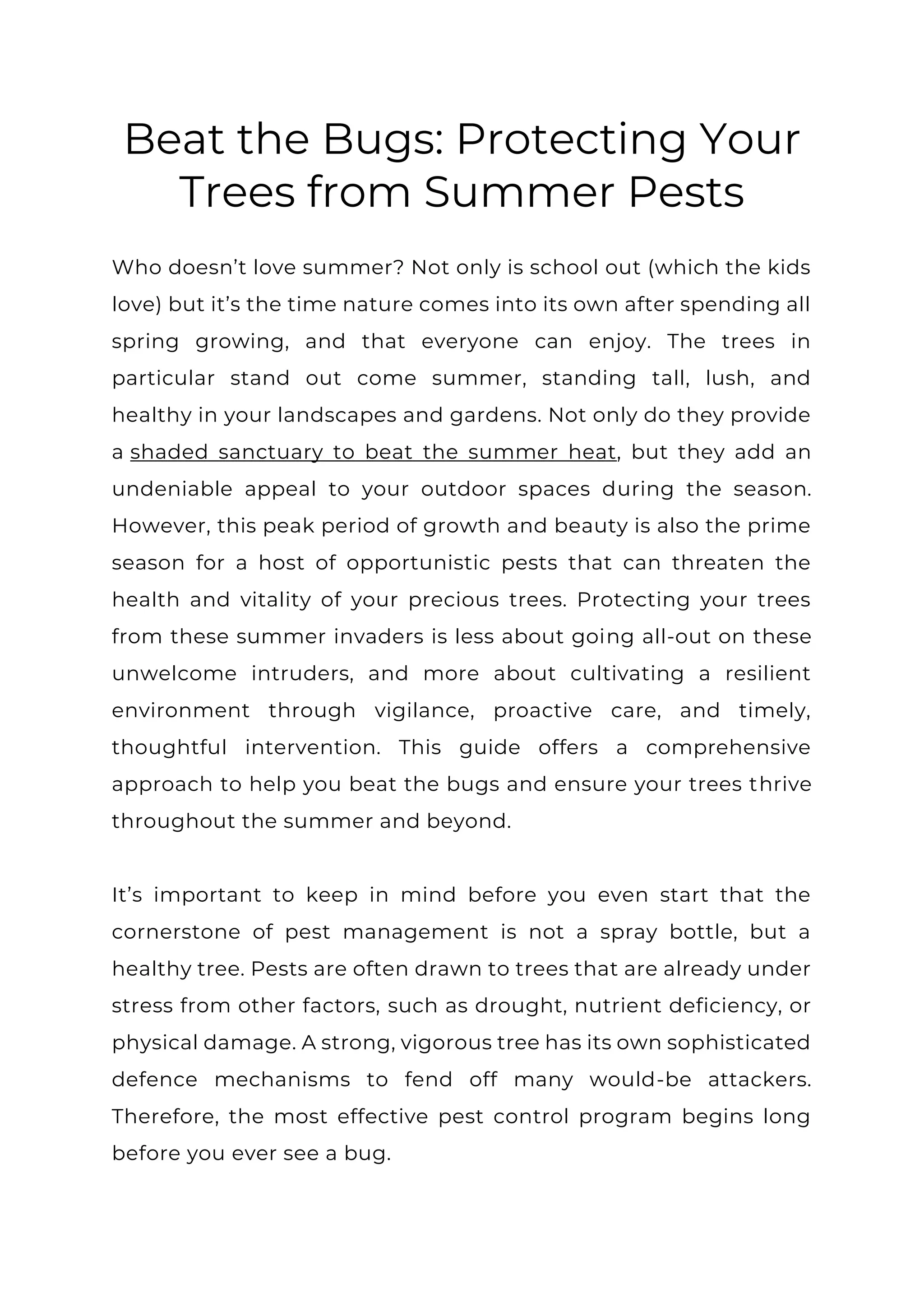
Building a tree’s resilience is an ongoing process. By focusing on
its fundamental needs, you create an environment where it is less
likely to become a target for pests.
1. Deep and Deliberate Watering:
Summer heat can quickly lead to drought stress, which can
significantly weaken a tree’s defences and leave it susceptible to
infestation and infection. Shallow, frequent watering is a common
contributor to this condition, as it only moistens the top layer of
soil and encourages a tree to develop a shallow root system. Your
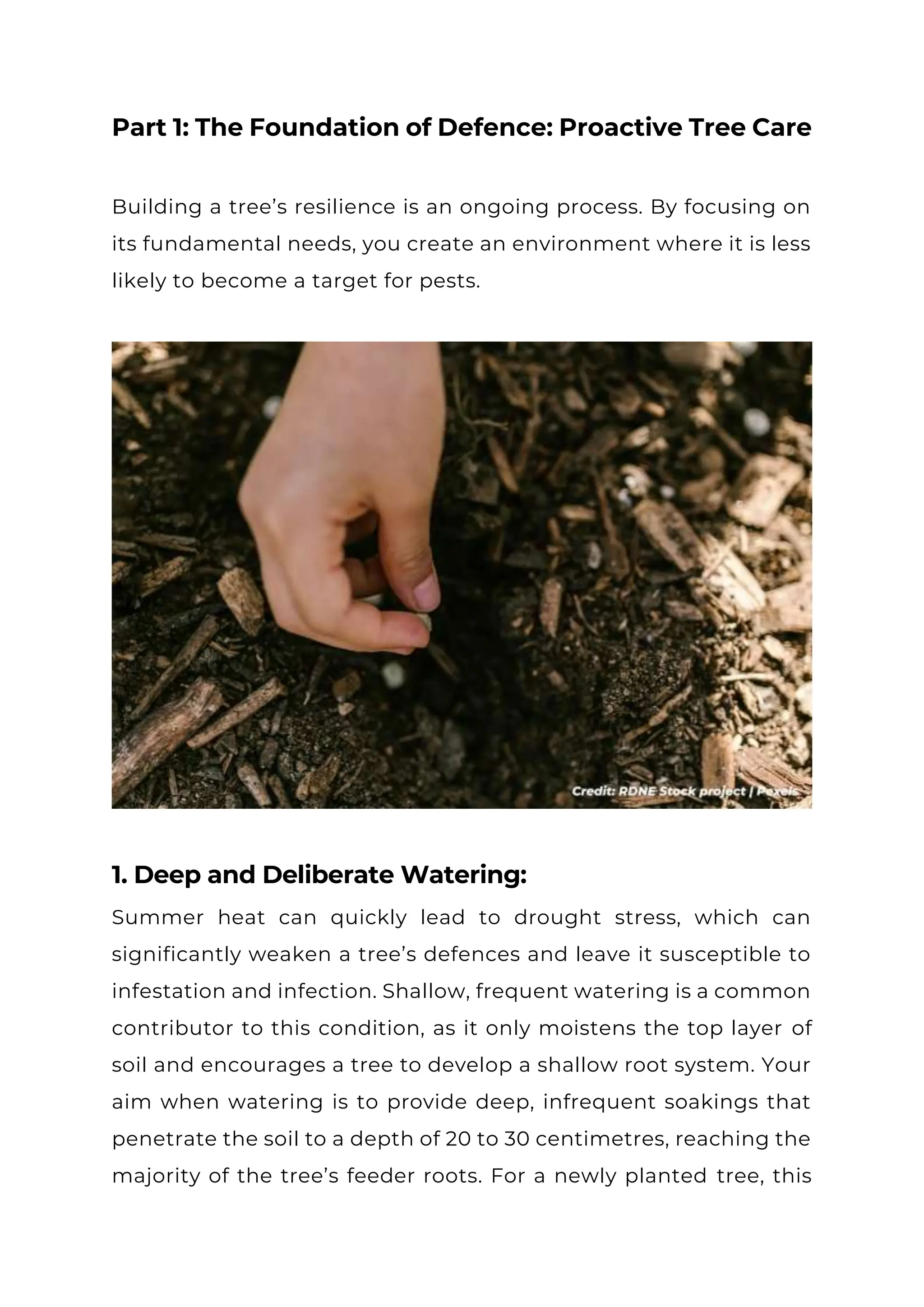
aim when watering is to provide deep, infrequent soakings that
penetrate the soil to a depth of 20 to 30 centimetres, reaching the
majority of the tree’s feeder roots. For a newly planted tree, this
might mean 40 to 60 litres of water applied slowly once or twice a
week. For established trees, a long, slow trickle from a hose for
several hours over the root zone (but away from the trunk) every
few weeks during dry spells is ideal. Another trick to remember is
to allow the soil to partially dry out between waterings to ensure
roots get enough oxygen.
2. The Magic of Mulch:
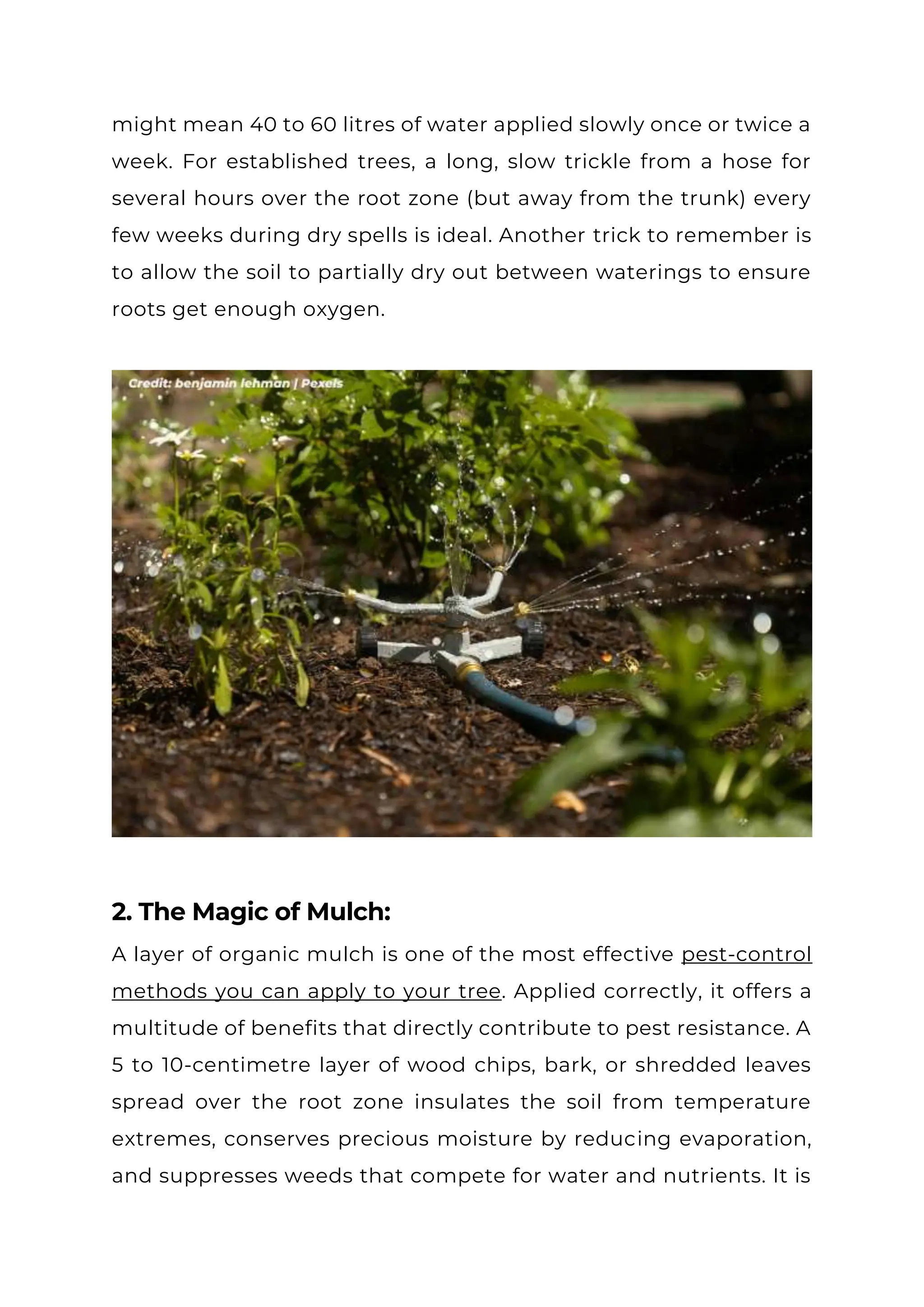
A layer of organic mulch is one of the most effective pest-control
methods you can apply to your tree. Applied correctly, it offers a
multitude of benefits that directly contribute to pest resistance. A
5 to 10-centimetre layer of wood chips, bark, or shredded leaves
spread over the root zone insulates the soil from temperature
extremes, conserves precious moisture by reducing evaporation,
and suppresses weeds that compete for water and nutrients. It is
crucial, however, to keep the mulch from piling up against the tree
trunk. Maintain a small, mulch-free circle of about 10 to 15
centimetres around the base of the trunk to prevent moisture
buildup, which can lead to rot and create a welcoming habitat for
pests and diseases.
3. Strategic Fertilization:
The instinct to feed a struggling plant is strong, but with trees,
more is not always better. Over-fertilizing, especially with high-
nitrogen formulas, can stimulate rapid, weak, and succulent new
growth that is exceptionally attractive to sap-sucking insects like
aphids. Before applying any fertilizer, it is wise to understand your
soil’s composition. A simple soil test can reveal any specific
nutrient deficiencies. If fertilization is needed, opt for a slow-
release granular product or a natural compost, which provides a
balanced diet over time without promoting the weak growth that
pests love.
4. Prudent Pruning for Health and Airflow:
Pruning is a critical maintenance task that directly impacts a
tree’s susceptibility to pests; for this reason, it pays to familiarize
yourself with some of the dos and don’ts of proper pruning to
ensure you’re doing the job correctly. The primary goal of pruning
for tree health is to remove any branches that are dead, damaged,
or diseased. These weak limbs are prime entry points for boring
insects and fungal diseases. Furthermore, strategically thinning a
dense canopy improves air circulation and sunlight penetration.
This creates a less humid, quicker-drying environment that is far
less hospitable to fungal diseases and many types of insects that
thrive in damp, stagnant conditions. While major structural
pruning is best done in the dormant season, the summer is a good
time to remove any newly damaged or infested branches you
spot.
Part 2: Active Vigilance and Identification
Once you have established a foundation of good health, the next
step is regular monitoring. A weekly stroll through your garden to
carefully inspect the leaves, branches, and trunk of your trees can
help you catch infestations early, when they are much easier to
manage. Knowing what to look for is half the battle.
1. Look for Discolouration and Distortion:
Yellowing leaves (a condition known as chlorosis), stippling (tiny
yellow or white spots), or curled, twisted, and stunted foliage are
often the first signs of trouble. These symptoms are commonly
caused by sap-sucking insects like aphids and spider mites, which
can drain the vital fluids from the leaves.
2. Inspect for the Insects Themselves (and Their
Residue):
Many pests are small but visible upon close inspection. Check the
undersides of leaves, a favourite hiding spot for aphids, mites, and
scale insects. You may also notice a sticky, clear substance called
honeydew on leaves and branches. This is the excretion of sap-
sucking insects, and it often leads to the growth of a black,
powdery fungus known as sooty mould, which, while not directly
harmful, can block sunlight and signal a pest problem.
3. Identify Chewing Damage:
Holes in leaves, skeletonized foliage where only the veins remain,
or entirely stripped branches are clear signs of chewing insects.
Caterpillars, including tent caterpillars and gypsy moths, are
common culprits. Look for the caterpillars themselves, their silken
tents, or their droppings (frass).
4. Check for Signs of Borers:
Wood-boring insects are among the most destructive, as they
damage the tree’s vital circulatory system. Signs of borers can be
subtle. Look for small, D-shaped or round exit holes in the bark,
fine sawdust-like material (frass) accumulating at the base of the
tree or in bark crevices, and sections of bark that appear to be
dying or flaking off.
Part 3: Gentle and Effective Control Measures
When you do find a pest problem, a measured response is always
best. Reaching immediately for a strong chemical pesticide
should be the absolute last resort, as these products can harm
beneficial insects, pollinators, and the wider ecosystem.
1. Mechanical and Physical Controls:
For smaller infestations, the simplest methods are often the most
effective. Larger pests like caterpillars can be picked off by hand
and dropped into a bucket of soapy water. A strong jet of water
from a garden hose can be remarkably effective at dislodging
colonies of aphids and spider mites from leaves and stems. For
localized infestations on specific branches, simply pruning out the
affected part can stop the problem from spreading.
2. Harnessing Nature’s Helpers:
Your garden is an ecosystem, and you can encourage a natural
pest patrol. Ladybugs, lacewings, and certain predatory wasps are
voracious predators of common tree pests. You can attract these
beneficial insects by planting a diverse garden with pollen- and
nectar-rich flowers like yarrow, dill, fennel, and cosmos. Avoiding
broad-spectrum pesticides is essential to protect these valuable
allies.
While you’re at it, you may also want to attract birds to your
landscape as well. Not only can these feathered guests brighten
your external spaces and provide some birdsong to please the ear,
many species also feed on common garden pests and can go a
long way to keeping pest populations under control. Some of
the steps you can take to make your garden that much more bird-
friendly include setting up feeder trays, installing bird baths, or
building nestboxes.
3. Softer Insecticidal Sprays:
When a pest population becomes too large for physical removal,
targeted, low-impact sprays are the next step.
Insecticidal Soap:
This specially formulated soap is not the same as household dish
soap. It works by dissolving the outer protective layer of soft-
bodied insects like aphids, mites, and thrips, causing them to
dehydrate. It is a contact spray, meaning it must directly coat the
pests to be effective, so thorough coverage, especially on the
undersides of leaves, is vital.
Horticultural Oil:
Lightweight summer or superior-grade horticultural oils are
highly refined mineral or vegetable oils that work by suffocating
pests and their eggs. They are effective against a wide range of
pests, including mites, scale, and aphids. It is critical to apply them
on a calm, cool day when temperatures are below 30°C to avoid
damaging the tree’s leaves.
—
The secret to keeping your trees safe from summer pests isn’t to
reach for the insecticide right away; the real trick is vigilance and
preparation to keep the pests at bay to begin with. By building a
strong foundation of health for your tree, practising regular
vigilance, and choosing gentler and more effective control
methods, you can protect your leafy companions from harm. And
the reward for your careful vigilance and effort is the satisfaction
of a healthy, thriving landscape that provides beauty, shade, and
enjoyment all summer long.
When you need a shade tree to help you stay cool during the
summer, look no further than Caledon Treeland. We carry a wide
range of different tree species to suit your needs and soil type for
your comfort and convenience. Call us now at (905) 880-1828 and
visit our tree farm to find the right tree.

Beat the Bugs- Protecting Your Trees from Summer Pests.pdf

  • 1.
    Beat the Bugs:Protecting Your Trees from Summer Pests Who doesn’t love summer? Not only is school out (which the kids love) but it’s the time nature comes into its own after spending all spring growing, and that everyone can enjoy. The trees in particular stand out come summer, standing tall, lush, and healthy in your landscapes and gardens. Not only do they provide a shaded sanctuary to beat the summer heat, but they add an undeniable appeal to your outdoor spaces during the season. However, this peak period of growth and beauty is also the prime season for a host of opportunistic pests that can threaten the health and vitality of your precious trees. Protecting your trees from these summer invaders is less about going all-out on these unwelcome intruders, and more about cultivating a resilient environment through vigilance, proactive care, and timely, thoughtful intervention. This guide offers a comprehensive approach to help you beat the bugs and ensure your trees thrive throughout the summer and beyond. It’s important to keep in mind before you even start that the cornerstone of pest management is not a spray bottle, but a healthy tree. Pests are often drawn to trees that are already under stress from other factors, such as drought, nutrient deficiency, or physical damage. A strong, vigorous tree has its own sophisticated defence mechanisms to fend off many would-be attackers. Therefore, the most effective pest control program begins long before you ever see a bug.
  • 2.
    Part 1: TheFoundation of Defence: Proactive Tree Care Building a tree’s resilience is an ongoing process. By focusing on its fundamental needs, you create an environment where it is less likely to become a target for pests. 1. Deep and Deliberate Watering: Summer heat can quickly lead to drought stress, which can significantly weaken a tree’s defences and leave it susceptible to infestation and infection. Shallow, frequent watering is a common contributor to this condition, as it only moistens the top layer of soil and encourages a tree to develop a shallow root system. Your aim when watering is to provide deep, infrequent soakings that penetrate the soil to a depth of 20 to 30 centimetres, reaching the majority of the tree’s feeder roots. For a newly planted tree, this
  • 3.
    might mean 40to 60 litres of water applied slowly once or twice a week. For established trees, a long, slow trickle from a hose for several hours over the root zone (but away from the trunk) every few weeks during dry spells is ideal. Another trick to remember is to allow the soil to partially dry out between waterings to ensure roots get enough oxygen. 2. The Magic of Mulch: A layer of organic mulch is one of the most effective pest-control methods you can apply to your tree. Applied correctly, it offers a multitude of benefits that directly contribute to pest resistance. A 5 to 10-centimetre layer of wood chips, bark, or shredded leaves spread over the root zone insulates the soil from temperature extremes, conserves precious moisture by reducing evaporation, and suppresses weeds that compete for water and nutrients. It is
  • 4.
    crucial, however, tokeep the mulch from piling up against the tree trunk. Maintain a small, mulch-free circle of about 10 to 15 centimetres around the base of the trunk to prevent moisture buildup, which can lead to rot and create a welcoming habitat for pests and diseases. 3. Strategic Fertilization: The instinct to feed a struggling plant is strong, but with trees, more is not always better. Over-fertilizing, especially with high- nitrogen formulas, can stimulate rapid, weak, and succulent new growth that is exceptionally attractive to sap-sucking insects like aphids. Before applying any fertilizer, it is wise to understand your soil’s composition. A simple soil test can reveal any specific nutrient deficiencies. If fertilization is needed, opt for a slow- release granular product or a natural compost, which provides a balanced diet over time without promoting the weak growth that pests love. 4. Prudent Pruning for Health and Airflow: Pruning is a critical maintenance task that directly impacts a tree’s susceptibility to pests; for this reason, it pays to familiarize yourself with some of the dos and don’ts of proper pruning to ensure you’re doing the job correctly. The primary goal of pruning for tree health is to remove any branches that are dead, damaged, or diseased. These weak limbs are prime entry points for boring insects and fungal diseases. Furthermore, strategically thinning a dense canopy improves air circulation and sunlight penetration.
  • 5.
    This creates aless humid, quicker-drying environment that is far less hospitable to fungal diseases and many types of insects that thrive in damp, stagnant conditions. While major structural pruning is best done in the dormant season, the summer is a good time to remove any newly damaged or infested branches you spot. Part 2: Active Vigilance and Identification Once you have established a foundation of good health, the next step is regular monitoring. A weekly stroll through your garden to carefully inspect the leaves, branches, and trunk of your trees can help you catch infestations early, when they are much easier to manage. Knowing what to look for is half the battle. 1. Look for Discolouration and Distortion: Yellowing leaves (a condition known as chlorosis), stippling (tiny yellow or white spots), or curled, twisted, and stunted foliage are often the first signs of trouble. These symptoms are commonly caused by sap-sucking insects like aphids and spider mites, which can drain the vital fluids from the leaves. 2. Inspect for the Insects Themselves (and Their Residue): Many pests are small but visible upon close inspection. Check the undersides of leaves, a favourite hiding spot for aphids, mites, and
  • 6.
    scale insects. Youmay also notice a sticky, clear substance called honeydew on leaves and branches. This is the excretion of sap- sucking insects, and it often leads to the growth of a black, powdery fungus known as sooty mould, which, while not directly harmful, can block sunlight and signal a pest problem. 3. Identify Chewing Damage: Holes in leaves, skeletonized foliage where only the veins remain, or entirely stripped branches are clear signs of chewing insects. Caterpillars, including tent caterpillars and gypsy moths, are common culprits. Look for the caterpillars themselves, their silken tents, or their droppings (frass). 4. Check for Signs of Borers: Wood-boring insects are among the most destructive, as they damage the tree’s vital circulatory system. Signs of borers can be subtle. Look for small, D-shaped or round exit holes in the bark, fine sawdust-like material (frass) accumulating at the base of the tree or in bark crevices, and sections of bark that appear to be dying or flaking off. Part 3: Gentle and Effective Control Measures When you do find a pest problem, a measured response is always best. Reaching immediately for a strong chemical pesticide should be the absolute last resort, as these products can harm beneficial insects, pollinators, and the wider ecosystem.
  • 7.
    1. Mechanical andPhysical Controls: For smaller infestations, the simplest methods are often the most effective. Larger pests like caterpillars can be picked off by hand and dropped into a bucket of soapy water. A strong jet of water from a garden hose can be remarkably effective at dislodging colonies of aphids and spider mites from leaves and stems. For localized infestations on specific branches, simply pruning out the affected part can stop the problem from spreading. 2. Harnessing Nature’s Helpers: Your garden is an ecosystem, and you can encourage a natural pest patrol. Ladybugs, lacewings, and certain predatory wasps are voracious predators of common tree pests. You can attract these beneficial insects by planting a diverse garden with pollen- and nectar-rich flowers like yarrow, dill, fennel, and cosmos. Avoiding broad-spectrum pesticides is essential to protect these valuable allies. While you’re at it, you may also want to attract birds to your landscape as well. Not only can these feathered guests brighten your external spaces and provide some birdsong to please the ear, many species also feed on common garden pests and can go a long way to keeping pest populations under control. Some of the steps you can take to make your garden that much more bird- friendly include setting up feeder trays, installing bird baths, or building nestboxes.
  • 8.
    3. Softer InsecticidalSprays: When a pest population becomes too large for physical removal, targeted, low-impact sprays are the next step. Insecticidal Soap: This specially formulated soap is not the same as household dish soap. It works by dissolving the outer protective layer of soft- bodied insects like aphids, mites, and thrips, causing them to dehydrate. It is a contact spray, meaning it must directly coat the pests to be effective, so thorough coverage, especially on the undersides of leaves, is vital. Horticultural Oil: Lightweight summer or superior-grade horticultural oils are highly refined mineral or vegetable oils that work by suffocating pests and their eggs. They are effective against a wide range of pests, including mites, scale, and aphids. It is critical to apply them on a calm, cool day when temperatures are below 30°C to avoid damaging the tree’s leaves. — The secret to keeping your trees safe from summer pests isn’t to reach for the insecticide right away; the real trick is vigilance and preparation to keep the pests at bay to begin with. By building a strong foundation of health for your tree, practising regular vigilance, and choosing gentler and more effective control methods, you can protect your leafy companions from harm. And
  • 9.
    the reward foryour careful vigilance and effort is the satisfaction of a healthy, thriving landscape that provides beauty, shade, and enjoyment all summer long. When you need a shade tree to help you stay cool during the summer, look no further than Caledon Treeland. We carry a wide range of different tree species to suit your needs and soil type for your comfort and convenience. Call us now at (905) 880-1828 and visit our tree farm to find the right tree.