Spider Mites 
Although related to insects, mites aren’t 
insects but arachnids, similar to spiders and 
ticks. Mites are tiny and difficult to see. If you see 
stippling or webbing on leaves, check the undersides 
to see if spider mites are present. Sprays of water, 
insecticidal oils, or soaps can be used for management. 
Spider mites have many natural enemies that often limit 
their numbers. 
✦ To the naked eye, spider mites look like tiny, 
moving dots. Use a magnifying lens to see them. 
✦ Adults are less than 1⁄20 inch long and have eight 
legs, an oval body, and two colored eyespots near 
the end of the head. 
✦ Spider mites live in colonies, mostly on the under 
surfaces of leaves; a single colony can contain 
hundreds of mites. 
✦ When numbers are high, dense webbing can cover 
leaves, twigs, and fruit. 
✦ A small number of mites usually isn’t cause 
for concern, but very high populations can be 
damaging, especially to annual plants. 
✦ Often, damage first appears as a stippling of 
light dots on the leaves; sometimes leaves turn 
a bronze color. Heavily infested leaves can turn 
yellow and drop off. 
✦ Damage usually is most severe in hot, dusty 
conditions and on water-stressed plants. 
✦ Spider mites have many natural enemies, which 
prevent them from becoming pests in many 
landscapes, especially when undisturbed by 
pesticide sprays. 
✦ Key predators include predatory mites, which are 
about the same size as plant-feeding mites but 
have longer legs and are more active. 
✦ Other common predators include thrips, 
lacewings, and minute pirate bugs. 
✦ Keep dust down. Plant ground covers, 
use mulches, and irrigate regularly. 
✦ Avoid using insecticides that kill 
natural enemies. 
University of California 
Statewide Integrated Pest 
Management Program 
What to look for: 
Mites cause damage by sucking cell 
contents from leaves. 
Protect spider mite natural enemies. 
How do I control spider mites? 
✦ Water plants sufficiently to avoid drought stress, 
which increases mites and their damage. 
✦ Most woody plants can tolerate low to moderate 
mite populations, and natural enemies often are 
abundant. 
✦ If plants are infested, apply a water spray or 
mist to the undersides of leaves at least once a 
day. 
✦ If you wish to use an insecticide, a good choice 
is an insecticidal oil or soap (or a combination 
of the two) applied so you completely cover the 
undersides of leaves. Be sure mites are present 
before treating. Don’t spray when plants are 
water stressed or if it is very hot. 
✦ Spider mites frequently become a problem after 
applying persistent insecticides such as carbaryl 
or pyrethroids; not only are these insecticides not 
very effective against mites, they often kill off 
natural enemies and stimulate mite reproduction. 
March 2014 
See Pest Notes: Spider Mites 
at www.ipm.ucanr.edu for more details. 
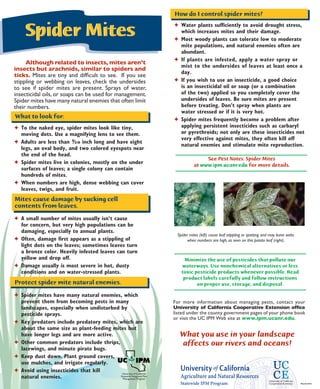
Spider mites (left) cause leaf stippling or spotting and may leave webs 
when numbers are high, as seen on this potato leaf (right). 
Minimize the use of pesticides that pollute our 
waterways. Use nonchemical alternatives or less 
toxic pesticide products whenever possible. Read 
product labels carefully and follow instructions 
on proper use, storage, and disposal. 
For more information about managing pests, contact your 
University of California Cooperative Extension office 
listed under the county government pages of your phone book 
or visit the UC IPM Web site at www.ipm.ucanr.edu. 
What you use in your landscape 
affects our rivers and oceans! 
University of California 
Statewide IPM Program Cooperative Extension

Spider Mites Quick Tips Natural Pest Control

  • 1.
    Spider Mites Althoughrelated to insects, mites aren’t insects but arachnids, similar to spiders and ticks. Mites are tiny and difficult to see. If you see stippling or webbing on leaves, check the undersides to see if spider mites are present. Sprays of water, insecticidal oils, or soaps can be used for management. Spider mites have many natural enemies that often limit their numbers. ✦ To the naked eye, spider mites look like tiny, moving dots. Use a magnifying lens to see them. ✦ Adults are less than 1⁄20 inch long and have eight legs, an oval body, and two colored eyespots near the end of the head. ✦ Spider mites live in colonies, mostly on the under surfaces of leaves; a single colony can contain hundreds of mites. ✦ When numbers are high, dense webbing can cover leaves, twigs, and fruit. ✦ A small number of mites usually isn’t cause for concern, but very high populations can be damaging, especially to annual plants. ✦ Often, damage first appears as a stippling of light dots on the leaves; sometimes leaves turn a bronze color. Heavily infested leaves can turn yellow and drop off. ✦ Damage usually is most severe in hot, dusty conditions and on water-stressed plants. ✦ Spider mites have many natural enemies, which prevent them from becoming pests in many landscapes, especially when undisturbed by pesticide sprays. ✦ Key predators include predatory mites, which are about the same size as plant-feeding mites but have longer legs and are more active. ✦ Other common predators include thrips, lacewings, and minute pirate bugs. ✦ Keep dust down. Plant ground covers, use mulches, and irrigate regularly. ✦ Avoid using insecticides that kill natural enemies. University of California Statewide Integrated Pest Management Program What to look for: Mites cause damage by sucking cell contents from leaves. Protect spider mite natural enemies. How do I control spider mites? ✦ Water plants sufficiently to avoid drought stress, which increases mites and their damage. ✦ Most woody plants can tolerate low to moderate mite populations, and natural enemies often are abundant. ✦ If plants are infested, apply a water spray or mist to the undersides of leaves at least once a day. ✦ If you wish to use an insecticide, a good choice is an insecticidal oil or soap (or a combination of the two) applied so you completely cover the undersides of leaves. Be sure mites are present before treating. Don’t spray when plants are water stressed or if it is very hot. ✦ Spider mites frequently become a problem after applying persistent insecticides such as carbaryl or pyrethroids; not only are these insecticides not very effective against mites, they often kill off natural enemies and stimulate mite reproduction. March 2014 See Pest Notes: Spider Mites at www.ipm.ucanr.edu for more details. Spider mites (left) cause leaf stippling or spotting and may leave webs when numbers are high, as seen on this potato leaf (right). Minimize the use of pesticides that pollute our waterways. Use nonchemical alternatives or less toxic pesticide products whenever possible. Read product labels carefully and follow instructions on proper use, storage, and disposal. For more information about managing pests, contact your University of California Cooperative Extension office listed under the county government pages of your phone book or visit the UC IPM Web site at www.ipm.ucanr.edu. What you use in your landscape affects our rivers and oceans! University of California Statewide IPM Program Cooperative Extension