Aphids 
Almost every plant has one or more 
aphid species that occasionally feed on it, but 
low to moderate numbers of aphids usually 
aren’t damaging to gardens or landscape 
trees. Although aphids can curl leaves and produce 
sticky honeydew, they rarely kill plants and you usually 
can wash them off with water. When aphid numbers 
get high, natural enemies frequently feed on them, 
eliminating the need for pesticides. When pesticides are 
necessary, use less toxic products such as insecticidal 
soaps and oils. 
Aphids are common in your garden because: 
✦ Aphids like lush new growth. Don’t over fertilize. 
Use organic or slow-release products. 
✦ Aphids build up on flowering plums, roses, tulip 
trees, crape myrtles, apples, and many vegetables. 
Expect aphids when you grow these plants. 
✦ Ants protect aphids from their natural enemies. 
Keep ants off plants to help beneficials do their job. 
To reduce aphids: 
✦ Prune out infested leaves and stems. 
✦ Knock aphid populations off plants by shaking the 
plant or spraying it with a strong stream of water. 
✦ Protect seedlings with covers or aluminum foil 
mulches. 
✦ Wait for hot weather; most aphids are heat-intolerant 
and will be gone by mid-June. 
Protect aphids’ natural enemies: 
✦ Lady beetles, both adults and larvae; 
✦ Lacewings; 
✦ Syrphid fly larvae; 
✦ Soldier beetles; and 
✦ Parasitic mini-wasps that turn aphids into crusty 
mummies. 
Beneficial insects such as lady beetles and lacewings 
will come into your garden naturally when aphids are 
abundant. Protect these good bugs by avoiding the use 
of insecticides that can be toxic to a broad variety of 
insects. 
University of California 
Statewide Integrated Pest 
Management Program 
If insecticides seem necessary, use the safest 
products. 
✦ Use nonchemical pest control methods first to 
manage aphid populations. However, if you feel 
insecticides are necessary, choose less toxic 
products. 
✦ Insecticidal oils and soaps are the safest products. 
When properly used, these materials solve most 
problems. 
✦ Oils and soaps work by smothering aphids, so 
apply these products thoroughly. Don’t apply them 
to drought-stressed plants or when it is very hot. 
A few plants are sensitive to these products. 
✦ Apply insecticidal soaps, soap-pyrethrum mixtures, 
or neem oils on vegetables or small bushes such 
as roses. 
✦ Narrow range horticultural oils—such as supreme 
or superior oils—are appropriate for larger trees. 
✦ Oils and soaps don’t kill aphids hidden within 
curled leaves. Prune these out. Systemic 
insecticides can kill hidden aphids, but they are 
much more toxic and might kill honey bees and 
parasites on flowering plants. 
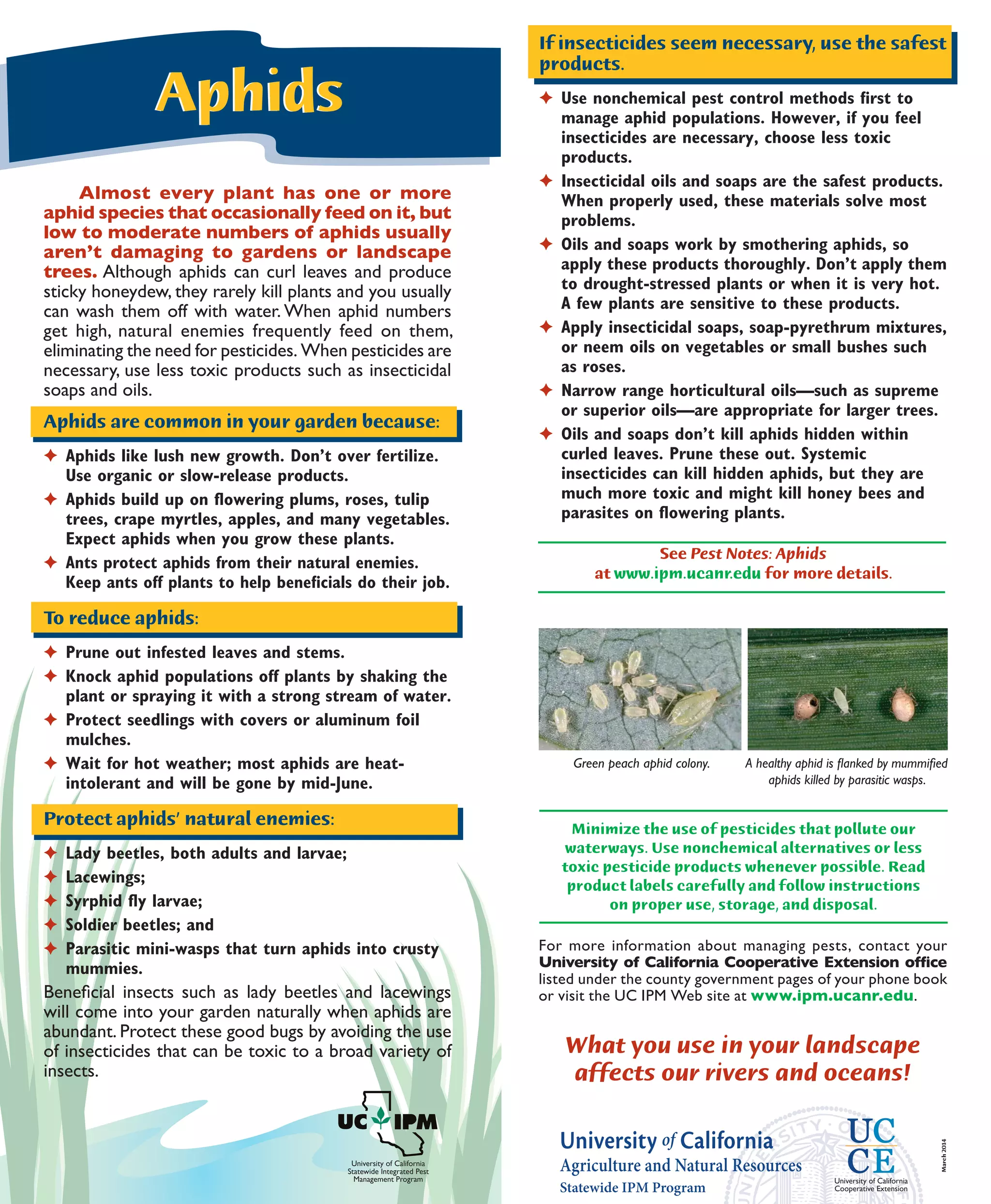
A healthy aphid is flanked by mummified 
March 2014 
See Pest Notes: Aphids 
at www.ipm.ucanr.edu for more details. 
aphids killed by parasitic wasps. 
Green peach aphid colony. 
Minimize the use of pesticides that pollute our 
waterways. Use nonchemical alternatives or less 
toxic pesticide products whenever possible. Read 
product labels carefully and follow instructions 
on proper use, storage, and disposal. 
For more information about managing pests, contact your 
University of California Cooperative Extension office 
listed under the county government pages of your phone book 
or visit the UC IPM Web site at www.ipm.ucanr.edu. 
What you use in your landscape 
affects our rivers and oceans! 
University of California 
Statewide IPM Program Cooperative Extension

Aphids Quick Tips Natural Pest Control

  • 1.
    Aphids Almost everyplant has one or more aphid species that occasionally feed on it, but low to moderate numbers of aphids usually aren’t damaging to gardens or landscape trees. Although aphids can curl leaves and produce sticky honeydew, they rarely kill plants and you usually can wash them off with water. When aphid numbers get high, natural enemies frequently feed on them, eliminating the need for pesticides. When pesticides are necessary, use less toxic products such as insecticidal soaps and oils. Aphids are common in your garden because: ✦ Aphids like lush new growth. Don’t over fertilize. Use organic or slow-release products. ✦ Aphids build up on flowering plums, roses, tulip trees, crape myrtles, apples, and many vegetables. Expect aphids when you grow these plants. ✦ Ants protect aphids from their natural enemies. Keep ants off plants to help beneficials do their job. To reduce aphids: ✦ Prune out infested leaves and stems. ✦ Knock aphid populations off plants by shaking the plant or spraying it with a strong stream of water. ✦ Protect seedlings with covers or aluminum foil mulches. ✦ Wait for hot weather; most aphids are heat-intolerant and will be gone by mid-June. Protect aphids’ natural enemies: ✦ Lady beetles, both adults and larvae; ✦ Lacewings; ✦ Syrphid fly larvae; ✦ Soldier beetles; and ✦ Parasitic mini-wasps that turn aphids into crusty mummies. Beneficial insects such as lady beetles and lacewings will come into your garden naturally when aphids are abundant. Protect these good bugs by avoiding the use of insecticides that can be toxic to a broad variety of insects. University of California Statewide Integrated Pest Management Program If insecticides seem necessary, use the safest products. ✦ Use nonchemical pest control methods first to manage aphid populations. However, if you feel insecticides are necessary, choose less toxic products. ✦ Insecticidal oils and soaps are the safest products. When properly used, these materials solve most problems. ✦ Oils and soaps work by smothering aphids, so apply these products thoroughly. Don’t apply them to drought-stressed plants or when it is very hot. A few plants are sensitive to these products. ✦ Apply insecticidal soaps, soap-pyrethrum mixtures, or neem oils on vegetables or small bushes such as roses. ✦ Narrow range horticultural oils—such as supreme or superior oils—are appropriate for larger trees. ✦ Oils and soaps don’t kill aphids hidden within curled leaves. Prune these out. Systemic insecticides can kill hidden aphids, but they are much more toxic and might kill honey bees and parasites on flowering plants. A healthy aphid is flanked by mummified March 2014 See Pest Notes: Aphids at www.ipm.ucanr.edu for more details. aphids killed by parasitic wasps. Green peach aphid colony. Minimize the use of pesticides that pollute our waterways. Use nonchemical alternatives or less toxic pesticide products whenever possible. Read product labels carefully and follow instructions on proper use, storage, and disposal. For more information about managing pests, contact your University of California Cooperative Extension office listed under the county government pages of your phone book or visit the UC IPM Web site at www.ipm.ucanr.edu. What you use in your landscape affects our rivers and oceans! University of California Statewide IPM Program Cooperative Extension