Snails & Slugs 
Snails and slugs rank among our most 
despised garden pests. These slimy mollusks 
emerge from hiding at night and chew holes in leaves and 
flowers of many succulent garden plants and fruit. Slugs 
and snails are similar in structure and biology, except 
slugs lack the snails’ external spiral shell. Management 
requires a vigilant and integrated approach that includes 
eliminating moisture and hiding spots, trapping, setting 
up barriers, and handpicking. Baits can be helpful but by 
themselves don’t provide adequate control in gardens 
that contain plenty of shelter, food, and moisture. 
How do you know snails and slugs are 
causing damage? 
✦ You might not observe these pests at first, 
because they feed at night and hide during the 
day. Go out at night or in the early morning to 
view them in action. 
✦ Other pests can cause holes in leaves, flowers, and 
fruit. Look for the shiny, slimy trails slugs and 
snails leave behind. 
What must be done to reduce snails and slugs? 
✦ Remove daytime hiding places—ivy, weedy areas, 
debris, and boards. 
✦ Regularly remove snails from shelters you can’t 
eliminate such as low ledges on fences, undersides 
of decks, and meter boxes. 
✦ Place traps in your garden and dispose of trapped 
snails and slugs daily. 
✦ Reduce moist surfaces by switching to drip 
irrigation or sprinkling in the morning rather than 
later in the day. 
✦ Consider snail-proof plants such as impatiens, 
geraniums, begonias, lantana, nasturtiums, and 
many plants with stiff leaves and highly scented 
foliage such as sage, rosemary, and lavender. 
University of California 
Statewide Integrated Pest 
Management Program 
How can I manage snails and slugs without 
using pesticides? 
✦ Make sure the garden is mollusk-free before 
planting. Then erect a copper barrier around it. 
Use a 4- to 6-inch wide band of copper, buried an 
inch below the soil and bent over at the top or 
attached around the edge of a raised bed. 
✦ Place your garden in the sunniest spot possible. 
Remove garden objects or adjacent plants or 
ground cover that can serve as shady shelter. 
Reduce moist surfaces as much as possible. 
✦ Build a trap using a 12- by 15-inch board raised off 
the ground by 1-inch runners. As mollusks collect 
under the board, scrape them off and destroy daily. 
What about baits? 
✦ Baits won’t be very effective unless you also 
remove shelter, food, and moisture. 
✦ Metaldehyde baits are especially poisonous to dogs 
and birds. Metaldehyde also loses its effectiveness 
rapidly in sunlight and after rain or irrigation. 
✦ Iron phosphate baits are safe for use around dogs, 
children, and wildlife. 
✦ Irrigate before applying bait and apply in the 
evening on warm days when mollusks are active. 
✦ Scatter, don’t pile, bait around sprinklers and in 
moist, protected areas where mollusks travel. 
March 2014 
See Pest Notes: Snails and Slugs 
at www.ipm.ucanr.edu for more details. 
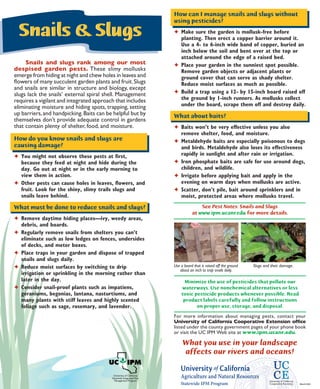
Use a board that is raised off the ground Slugs and their damage. 
about an inch to trap snails daily. 
Minimize the use of pesticides that pollute our 
waterways. Use nonchemical alternatives or less 
toxic pesticide products whenever possible. Read 
product labels carefully and follow instructions 
on proper use, storage, and disposal. 
For more information about managing pests, contact your 
University of California Cooperative Extension office 
listed under the county government pages of your phone book 
or visit the UC IPM Web site at www.ipm.ucanr.edu. 
What you use in your landscape 
affects our rivers and oceans! 
University of California 
Statewide IPM Program Cooperative Extension

Snails and Slugs Quick Tips Natural Pest Control

  • 1.
    Snails & Slugs Snails and slugs rank among our most despised garden pests. These slimy mollusks emerge from hiding at night and chew holes in leaves and flowers of many succulent garden plants and fruit. Slugs and snails are similar in structure and biology, except slugs lack the snails’ external spiral shell. Management requires a vigilant and integrated approach that includes eliminating moisture and hiding spots, trapping, setting up barriers, and handpicking. Baits can be helpful but by themselves don’t provide adequate control in gardens that contain plenty of shelter, food, and moisture. How do you know snails and slugs are causing damage? ✦ You might not observe these pests at first, because they feed at night and hide during the day. Go out at night or in the early morning to view them in action. ✦ Other pests can cause holes in leaves, flowers, and fruit. Look for the shiny, slimy trails slugs and snails leave behind. What must be done to reduce snails and slugs? ✦ Remove daytime hiding places—ivy, weedy areas, debris, and boards. ✦ Regularly remove snails from shelters you can’t eliminate such as low ledges on fences, undersides of decks, and meter boxes. ✦ Place traps in your garden and dispose of trapped snails and slugs daily. ✦ Reduce moist surfaces by switching to drip irrigation or sprinkling in the morning rather than later in the day. ✦ Consider snail-proof plants such as impatiens, geraniums, begonias, lantana, nasturtiums, and many plants with stiff leaves and highly scented foliage such as sage, rosemary, and lavender. University of California Statewide Integrated Pest Management Program How can I manage snails and slugs without using pesticides? ✦ Make sure the garden is mollusk-free before planting. Then erect a copper barrier around it. Use a 4- to 6-inch wide band of copper, buried an inch below the soil and bent over at the top or attached around the edge of a raised bed. ✦ Place your garden in the sunniest spot possible. Remove garden objects or adjacent plants or ground cover that can serve as shady shelter. Reduce moist surfaces as much as possible. ✦ Build a trap using a 12- by 15-inch board raised off the ground by 1-inch runners. As mollusks collect under the board, scrape them off and destroy daily. What about baits? ✦ Baits won’t be very effective unless you also remove shelter, food, and moisture. ✦ Metaldehyde baits are especially poisonous to dogs and birds. Metaldehyde also loses its effectiveness rapidly in sunlight and after rain or irrigation. ✦ Iron phosphate baits are safe for use around dogs, children, and wildlife. ✦ Irrigate before applying bait and apply in the evening on warm days when mollusks are active. ✦ Scatter, don’t pile, bait around sprinklers and in moist, protected areas where mollusks travel. March 2014 See Pest Notes: Snails and Slugs at www.ipm.ucanr.edu for more details. Use a board that is raised off the ground Slugs and their damage. about an inch to trap snails daily. Minimize the use of pesticides that pollute our waterways. Use nonchemical alternatives or less toxic pesticide products whenever possible. Read product labels carefully and follow instructions on proper use, storage, and disposal. For more information about managing pests, contact your University of California Cooperative Extension office listed under the county government pages of your phone book or visit the UC IPM Web site at www.ipm.ucanr.edu. What you use in your landscape affects our rivers and oceans! University of California Statewide IPM Program Cooperative Extension