SERVER VIRTUALIZATION
Server Virtualization - History
 Single standalone servers
 One server per application
 Development environment for each production
environment
Server Virtualization (1)
• VMWare Infrastructure Enterprise v3
▫ Single pane of glass to monitor, configure, and provision new
servers (VirtualCenter)
▫ “VMotion” technology to move virtual machines between
VMWare servers
▫ Virtual machines will be “SMP” capable
▫ Cluster aware filesystem (VMFS)
▫ High Availability (VirtualCenter)
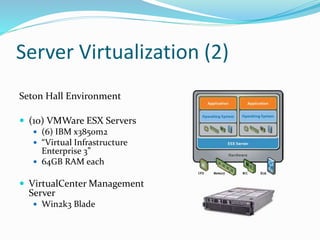
Server Virtualization (2)
Seton Hall Environment
 (10) VMWare ESX Servers
 (6) IBM x3850m2
 “Virtual Infrastructure
Enterprise 3”
 64GB RAM each
 VirtualCenter Management
Server
 Win2k3 Blade
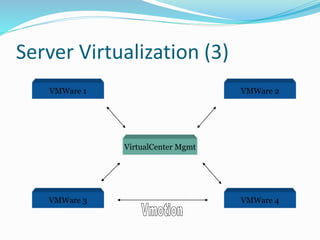
Server Virtualization (3)
VMWare 1
VMWare 3 VMWare 4
VMWare 2
VirtualCenter Mgmt
TYPES OF VIRTUALIZATIONS
Currently, most of the activity in the virtualization world focuses
on server virtualization —– the data centres or server farms. The
three main types of server virtualization are:
 Operating system virtualization : Creates self-contained
representations of underlying operating system in order to
provide applications in isolated execution environments. Each
self-contained environment (container) reflects the underlying
operating system version and patch level.
 Hardware emulation: Represents a computer hardware
environment in software so that multiple operating systems can
be installed on a single computer.
 Para virtualization: A thin software layer that coordinates
access from multiple operating systems to underlying hardware.
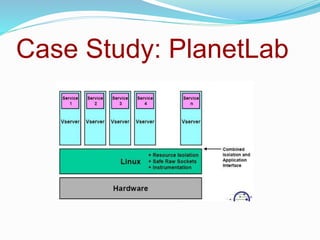
Case Study: PlanetLab
• Distributed cluster across universities
 – Used for experimental research by students
and faculty in
networking and distributed systems
• Uses a virtualized architecture
 – Linux V servers
 – Node manager per machine
 – Obtain a “slice” for an experiment: slice
creation service
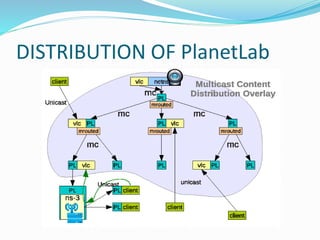
DISTRIBUTION OF PlanetLab
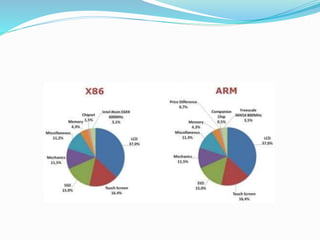
x86
 In the 1980s and early 1990s when
the 8088 and 80286 was still in common use the term
x86 usually represented any 8086 compatible CPU.
Today, however, x86 usually implies a binary
compatibility also with the 32-bit instruction set of the
80386. This is due to the fact that this instruction set
has become something of a lowest common
denominator for many modern operating systems and
probably also because the term became
common afterthe introduction of the 80386 in 1985.
Modern x86
 Modern x86 is relatively uncommon in embedded
systems, however, and small low power applications
(using tiny batteries) as well as low-cost
microprocessor markets, such as home appliances and
toys, lack any significant x86 presence. Simple 8-bit
and 16-bit based architectures are common here,
although the x86-compatible VIA C7, VIA
Nano, AMD's Geode, Athlon Neo and Intel Atom are
examples of 32- and 64-bit designs used in
some relatively low power and low cost segments.
BHISHAJ SHARMA

Server Virtulization

  • 1.
  • 2.
    Server Virtualization -History  Single standalone servers  One server per application  Development environment for each production environment
  • 3.
    Server Virtualization (1) •VMWare Infrastructure Enterprise v3 ▫ Single pane of glass to monitor, configure, and provision new servers (VirtualCenter) ▫ “VMotion” technology to move virtual machines between VMWare servers ▫ Virtual machines will be “SMP” capable ▫ Cluster aware filesystem (VMFS) ▫ High Availability (VirtualCenter)
  • 4.
    Server Virtualization (2) SetonHall Environment  (10) VMWare ESX Servers  (6) IBM x3850m2  “Virtual Infrastructure Enterprise 3”  64GB RAM each  VirtualCenter Management Server  Win2k3 Blade
  • 5.
    Server Virtualization (3) VMWare1 VMWare 3 VMWare 4 VMWare 2 VirtualCenter Mgmt
  • 6.
    TYPES OF VIRTUALIZATIONS Currently,most of the activity in the virtualization world focuses on server virtualization —– the data centres or server farms. The three main types of server virtualization are:  Operating system virtualization : Creates self-contained representations of underlying operating system in order to provide applications in isolated execution environments. Each self-contained environment (container) reflects the underlying operating system version and patch level.  Hardware emulation: Represents a computer hardware environment in software so that multiple operating systems can be installed on a single computer.  Para virtualization: A thin software layer that coordinates access from multiple operating systems to underlying hardware.
  • 7.
  • 8.
    • Distributed clusteracross universities  – Used for experimental research by students and faculty in networking and distributed systems • Uses a virtualized architecture  – Linux V servers  – Node manager per machine  – Obtain a “slice” for an experiment: slice creation service
  • 9.
  • 10.
    x86  In the1980s and early 1990s when the 8088 and 80286 was still in common use the term x86 usually represented any 8086 compatible CPU. Today, however, x86 usually implies a binary compatibility also with the 32-bit instruction set of the 80386. This is due to the fact that this instruction set has become something of a lowest common denominator for many modern operating systems and probably also because the term became common afterthe introduction of the 80386 in 1985.
  • 11.
    Modern x86  Modernx86 is relatively uncommon in embedded systems, however, and small low power applications (using tiny batteries) as well as low-cost microprocessor markets, such as home appliances and toys, lack any significant x86 presence. Simple 8-bit and 16-bit based architectures are common here, although the x86-compatible VIA C7, VIA Nano, AMD's Geode, Athlon Neo and Intel Atom are examples of 32- and 64-bit designs used in some relatively low power and low cost segments.
  • 13.