Wri$ng 
scie$fic 
papers 
04-­‐11-­‐14 
prof. 
dr. 
Andreas 
Voss 
RUNMC 
& 
CWZ 
Nijmegen 
The 
Netherlands 
www.aricjournal.com 
www.biomedcentral.com 
¤ A 
major 
task 
you 
fear? 
Begin 
with 
small 
steps 
ICAN 
2014 
1
Wri$ng 
scie$fic 
papers 
04-­‐11-­‐14 
1. Look 
around 
and 
reflect 
on 
the 
ques$ons 
that 
arise 
day 
to 
day 
in 
your 
clinical 
and 
educa$onal 
ac$vi$es. 
Take 
notes 
and 
jot 
down 
ideas 
of 
interest. 
2. Consider 
past 
presenta$ons 
from 
different 
venues, 
such 
as 
case 
conferences 
or 
grand 
rounds. 
Many 
of 
these 
exis$ng 
talks 
can 
be 
transformed 
into 
a 
targeted 
review 
ar$cle 
that 
might 
help 
launch 
a 
more 
substan$al 
original 
research 
project. 
Pree$ 
N. 
Malani 
Journal 
of 
Graduate 
Medical 
Educa$on, 
December 
2012 
3. Reconsider 
those 
unfinished, 
‘‘back 
burner’’ 
projects, 
such 
as 
preliminary 
data 
presented 
as 
a 
poster 
at 
a 
mee$ng 
but 
never 
wrien 
in 
manuscript 
form. 
4. If 
at 
all 
possible, 
select 
a 
subject 
of 
personal 
interest. 
Are 
you 
willing 
to 
put 
in 
the 
necessary 
$me 
reading, 
exploring, 
and 
ul$mately 
wri$ng 
about 
a 
par$cular 
subject. 
Having 
a 
personal 
interest 
in 
a 
topic 
can 
improve 
the 
likelihood 
of 
success 
Pree$ 
N. 
Malani 
Journal 
of 
Graduate 
Medical 
Educa$on, 
December 
2012 
5. Iden$fy 
a 
trusted 
colleague 
to 
help 
guide 
the 
process. 
Success 
with 
wri$ng, 
comes 
easier 
with 
good 
mentorship. 
Having 
mul$ple 
mentors/ 
collaborators 
with 
different 
skills 
and 
perspec$ves 
is 
useful. 
Pree$ 
N. 
Malani 
Journal 
of 
Graduate 
Medical 
Educa$on, 
December 
2012 
Pree$ 
N. 
Malani 
Journal 
of 
Graduate 
Medical 
Educa$on, 
December 
2012 
Pree$ 
N. 
Malani 
Journal 
of 
Graduate 
Medical 
Educa$on, 
December 
2012 
ICAN 
2014 
2
Wri$ng 
scie$fic 
papers 
04-­‐11-­‐14 
Pree$ 
N. 
Malani 
Journal 
of 
Graduate 
Medical 
Educa$on, 
December 
2012 
Pree$ 
N. 
Malani 
Journal 
of 
Graduate 
Medical 
Educa$on, 
December 
2012 
Pree$ 
N. 
Malani 
Journal 
of 
Graduate 
Medical 
Educa$on, 
December 
2012 
Pree$ 
N. 
Malani 
Journal 
of 
Graduate 
Medical 
Educa$on, 
December 
2012 
When 
star1ng 
any 
research 
project 
you 
should 
(and 
can) 
already 
write 
most 
of 
the 
paper: 
¤ Research 
what 
is 
done 
already 
(introduc$on 
& 
discusssion) 
¤ Have 
a 
look 
at 
the 
methods 
used 
by 
others 
(methods) 
¤ What 
do 
I 
want 
to 
“see” 
(results) 
² 
tables 
and 
graphs 
you 
would 
like 
to 
see 
ICAN 
2014 
3
Wri$ng 
scie$fic 
papers 
04-­‐11-­‐14 
¤ 
What 
journal? 
² 
Na$onal 
versus 
interna$onal 
² 
Specialized 
versus 
broader 
² 
Costs 
/open 
access 
² 
Impact 
factor 
versus 
“influence” 
o 
NEJM, 
BMJ, 
… 
have 
both 
o 
Academically 
achievable 
o 
Local 
influence 
¤ Title 
¤ Authors 
and 
Affilia$on 
¤ Abstract 
¤ Introduc$on 
¤ Methods 
¤ Results 
¤ Discussion 
¤ Acknowledgments 
¤ Literature 
¤ 
Write 
what 
comes 
into 
your 
mind 
– 
you 
may 
jump 
back 
and 
forth 
between 
the 
different 
sec$ons 
¤ 
Write/take 
note 
while 
you 
read 
¤ 
Start 
with 
a 
couple 
of 
sentences 
² Aim 
(This 
paper 
explores 
…) 
² Method 
(This 
study 
was 
conducted 
…) 
² What’s 
new 
(This 
paper 
contributes 
to 
…) 
¤ 
Examines 
/ 
analyses 
¤ 
Reports 
on 
/ 
Outlines 
¤ 
Argues 
/ 
jus$fies 
/ 
recommands 
¤ 
Compares 
/ 
contrasts 
¤ 
Discusses 
/ 
demonstrates 
¤ 
Shows 
/ 
refutes 
¤ 
Highlights 
/ 
illustrates 
ICAN 
2014 
4
Wri$ng 
scie$fic 
papers 
04-­‐11-­‐14 
¤ 
Start 
with 
… 
² 
Aim: 
This 
paper 
explores 
… 
² 
Main 
argument: 
In 
this 
paper 
we 
argue 
… 
² 
Method: 
The 
study 
was 
conducted 
… 
² 
What’s 
new: 
This 
paper 
contributes 
to 
… 
¤ 
Put 
a 
lot 
of 
energy 
into 
the 
“Abstract”! 
² 
This 
is 
your 
first 
impression 
² 
Make 
it 
interes$ng 
² 
Ensure 
correct 
use 
of 
language 
¤ 
You 
don’t 
have 
to 
wait 
un$l 
you 
think 
your 
first 
dram 
is 
perfect 
à 
get 
advice/comments 
early 
on 
¤ 
Style 
is 
(in 
part) 
a 
maer 
of 
taste 
à 
you 
don’t 
have 
to 
follow 
all 
suggested 
changes 
with 
regard 
to 
“style” 
¤ 
Do 
I 
have 
enough 
(new) 
literature? 
¤ 
Is 
my 
data 
sufficient 
to 
the 
claims 
I 
am 
making 
¤ 
Am 
I 
being 
sufficiently 
specula$ve 
¤ 
Did 
I 
follow 
the 
authors’ 
instruc$ons 
¤ 
Did 
all 
co-­‐authors 
contribute 
to 
the 
manuscript 
¤ 
If 
not 
100% 
sure, 
never 
start 
with: 
“This 
is 
the 
first 
case 
…” 
¤ 
First 
thing 
reviewers 
might 
do 
is 
to 
prove 
you 
wrong 
Never 
copy 
& 
paste. 
Editors 
and 
reviewers 
will 
recognize 
the 
change 
in 
style 
and 
start 
to 
distrust 
even 
your 
own 
text 
Lile/sloppy 
mistakes 
make 
a 
big/bad 
impression 
! 
ICAN 
2014 
5
Wri$ng 
scie$fic 
papers 
04-­‐11-­‐14 
Dear 
Dr. 
Voss, 
Dear author, 
Thank you for submitting your 
manuscript. We are “sorry” to 
say that we could not accepted 
your attempt of an article. 
Please find attached a rejection 
letter for the present and your 
future submission. 
¤ 
Outrage 
& 
unprofessional 
comments 
¤ 
Incomprehension 
& 
complaints 
to 
colleagues 
¤ 
More 
outrage 
¤ 
One 
or 
two 
of 
the 
comments 
might 
make 
sense 
¤ 
There’s 
a 
bit 
of 
truth 
in 
that 
one 
¤ 
I’ll 
just 
have 
a 
go 
at 
doing 
what 
they 
said 
to 
do 
¤ 
Actually, 
the 
paper 
is 
a 
whole 
lot 
beer 
for 
all 
those 
revisions 
ICAN 
2014 
6

Writing scientific paper

  • 1.
    Wri$ng scie$fic papers 04-­‐11-­‐14 prof. dr. Andreas Voss RUNMC & CWZ Nijmegen The Netherlands www.aricjournal.com www.biomedcentral.com ¤ A major task you fear? Begin with small steps ICAN 2014 1
  • 2.
    Wri$ng scie$fic papers 04-­‐11-­‐14 1. Look around and reflect on the ques$ons that arise day to day in your clinical and educa$onal ac$vi$es. Take notes and jot down ideas of interest. 2. Consider past presenta$ons from different venues, such as case conferences or grand rounds. Many of these exis$ng talks can be transformed into a targeted review ar$cle that might help launch a more substan$al original research project. Pree$ N. Malani Journal of Graduate Medical Educa$on, December 2012 3. Reconsider those unfinished, ‘‘back burner’’ projects, such as preliminary data presented as a poster at a mee$ng but never wrien in manuscript form. 4. If at all possible, select a subject of personal interest. Are you willing to put in the necessary $me reading, exploring, and ul$mately wri$ng about a par$cular subject. Having a personal interest in a topic can improve the likelihood of success Pree$ N. Malani Journal of Graduate Medical Educa$on, December 2012 5. Iden$fy a trusted colleague to help guide the process. Success with wri$ng, comes easier with good mentorship. Having mul$ple mentors/ collaborators with different skills and perspec$ves is useful. Pree$ N. Malani Journal of Graduate Medical Educa$on, December 2012 Pree$ N. Malani Journal of Graduate Medical Educa$on, December 2012 Pree$ N. Malani Journal of Graduate Medical Educa$on, December 2012 ICAN 2014 2
  • 3.
    Wri$ng scie$fic papers 04-­‐11-­‐14 Pree$ N. Malani Journal of Graduate Medical Educa$on, December 2012 Pree$ N. Malani Journal of Graduate Medical Educa$on, December 2012 Pree$ N. Malani Journal of Graduate Medical Educa$on, December 2012 Pree$ N. Malani Journal of Graduate Medical Educa$on, December 2012 When star1ng any research project you should (and can) already write most of the paper: ¤ Research what is done already (introduc$on & discusssion) ¤ Have a look at the methods used by others (methods) ¤ What do I want to “see” (results) ² tables and graphs you would like to see ICAN 2014 3
  • 4.
    Wri$ng scie$fic papers 04-­‐11-­‐14 ¤ What journal? ² Na$onal versus interna$onal ² Specialized versus broader ² Costs /open access ² Impact factor versus “influence” o NEJM, BMJ, … have both o Academically achievable o Local influence ¤ Title ¤ Authors and Affilia$on ¤ Abstract ¤ Introduc$on ¤ Methods ¤ Results ¤ Discussion ¤ Acknowledgments ¤ Literature ¤ Write what comes into your mind – you may jump back and forth between the different sec$ons ¤ Write/take note while you read ¤ Start with a couple of sentences ² Aim (This paper explores …) ² Method (This study was conducted …) ² What’s new (This paper contributes to …) ¤ Examines / analyses ¤ Reports on / Outlines ¤ Argues / jus$fies / recommands ¤ Compares / contrasts ¤ Discusses / demonstrates ¤ Shows / refutes ¤ Highlights / illustrates ICAN 2014 4
  • 5.
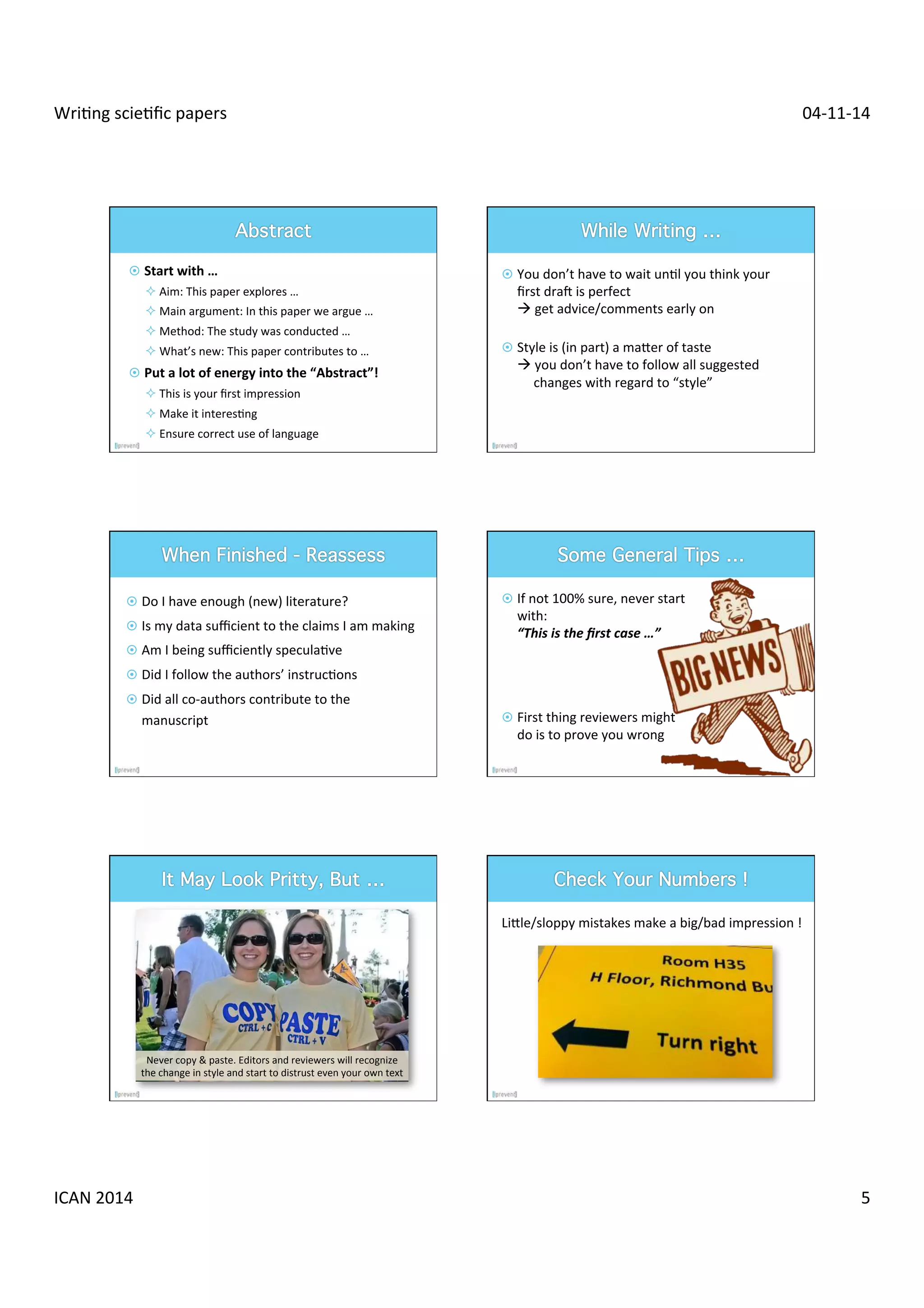
    Wri$ng scie$fic papers 04-­‐11-­‐14 ¤ Start with … ² Aim: This paper explores … ² Main argument: In this paper we argue … ² Method: The study was conducted … ² What’s new: This paper contributes to … ¤ Put a lot of energy into the “Abstract”! ² This is your first impression ² Make it interes$ng ² Ensure correct use of language ¤ You don’t have to wait un$l you think your first dram is perfect à get advice/comments early on ¤ Style is (in part) a maer of taste à you don’t have to follow all suggested changes with regard to “style” ¤ Do I have enough (new) literature? ¤ Is my data sufficient to the claims I am making ¤ Am I being sufficiently specula$ve ¤ Did I follow the authors’ instruc$ons ¤ Did all co-­‐authors contribute to the manuscript ¤ If not 100% sure, never start with: “This is the first case …” ¤ First thing reviewers might do is to prove you wrong Never copy & paste. Editors and reviewers will recognize the change in style and start to distrust even your own text Lile/sloppy mistakes make a big/bad impression ! ICAN 2014 5
  • 6.
    Wri$ng scie$fic papers 04-­‐11-­‐14 Dear Dr. Voss, Dear author, Thank you for submitting your manuscript. We are “sorry” to say that we could not accepted your attempt of an article. Please find attached a rejection letter for the present and your future submission. ¤ Outrage & unprofessional comments ¤ Incomprehension & complaints to colleagues ¤ More outrage ¤ One or two of the comments might make sense ¤ There’s a bit of truth in that one ¤ I’ll just have a go at doing what they said to do ¤ Actually, the paper is a whole lot beer for all those revisions ICAN 2014 6