20-­‐11-­‐14 
1 
Andreas 
Voss, 
MD, 
PhD 
Senior 
Consultant 
Clinical 
Microbiology 
Canisius-­‐Wilhelmina 
Hospital 
Professor 
of 
Infec@on 
Control 
Radboud 
University 
Medical 
Centre 
Nijmegen, 
The 
Netherlands 
¤ 
First 
report 
in 
Europe 
(1988) 
¤ 
Endogenous 
flora 
was 
considered 
only 
source 
for 
a 
long 
@me 
¤ 
Role 
of 
environment 
UQley 
et 
al. 
Lancet 
1988;57-­‐58 
• Enterococci 
in 
45% 
of 
the 
samples. 
• Mostly 
chicken 
meat 
(65.4%) 
• VRE 
in 
29% 
of 
the 
samples 
• Highest 
prevalence 
of 
VRE 
in 
chicken 
meat 
(76.5%) 
Pavia 
et 
al. 
J 
Food 
Protect 
2000;63:912 
VRE 
coloniza6on 
of 
Vegans 
versus 
meat 
eaters: 
0 
versus 
6% 
Schouten 
et 
al. 
Lancet 
1997:349:1258 
¤ 
Range 
2-­‐4% 
Endtz 
et 
al. 
J 
Clin 
Microbiol 
1997;35:3026
20-­‐11-­‐14 
2 
Meningitis 
Neonatal infection 
sepsis 
pneumonia 
UTI 
Surgical infection 
sepsis 
meningitis 
endocarditis 
UTI 
Intra-abd. infections 
… 
frequently 
one 
of 
a 
bunch! 
Wound infections 
Patient: underlying diseases, antibiotics, veel co-morbidity 
UQley 
et 
al. 
Lancet 
1988;57-­‐58 
Care 
or 
Not? 
I 
wish 
VRE 
control 
would 
be 
possible 
• Between 
August 
2004 
and 
December 
2010, 
Less 
45 
pa@VRE 
ents 
– 
outbreaks 
occurred 
in 
21 
of 
the 
38 
AP-­‐HP 
s6hospitals 
ll 
outbreaks! 
• An 
ins@tu@onal 
control 
programme 
was 
implemented 
• The 
number 
of 
cases 
per 
outbreak 
was 
significantly 
lower 
ager 
implementa@on 
of 
the 
programme. 
… 
thus 
maybe 
Mike 
isn’t 
that 
mad 
... 
… 
if 
VRE 
has 
established 
itself 
outside 
of 
the 
hospital 
and 
in 
the 
community, 
we’re 
going 
to 
see 
a 
lot 
more 
VMRSA. 
And 
an 
epidemic 
strain 
only 
has 
to 
get 
lucky 
once…
20-­‐11-­‐14 
3 
Did 
anyone 
check 
Guinness 
for 
VRE? 
NL: 
only 
interested 
in 
VR-­‐E. 
faecium 
(possibly 
certain 
CC’s)
20-­‐11-­‐14 
4 
NL: 
es6mated 
number 
of 
infec6ons: 
500, 
number 
of 
death: 
33 
when 
prevalence 
is 
40% 
at 
1% 
= 
12.5 
cases 
and 
1.2 
death 
¤ 
Not 
one 
reason, 
but 
the 
consequence 
of 
mul@ple, 
small 
factors 
à 
Swiss-­‐Cheese-­‐Accident 
Model 
(hand)hygiene 
antibiotics 
cleaning 
Maintenance 
Werk pressure 
Bad luck 
Low 
compliance 
(Hand) hygiene 
antibiotics 
cleaning 
Not 
good 
enough 
Maintenance 
Work pressure 
Bad luck 
CC17, 
bed-­‐pan 
washers 
Too 
much 
Cipro 
Not 
good 
enough 
Too 
high, 
trainees
20-­‐11-­‐14 
5 
Low 
compliance 
(Hand) hygiene 
antibiotics 
cleaning 
Not 
good 
enough 
Maintenance 
Work pressure 
Bad luck 
VRE 
outbreak 
CC17, 
bed-­‐pan 
washers 
Too 
much 
Cipro 
Not 
good 
enough 
Too 
high, 
trainees 
¤ 
Roomservice 
¤ 
Roomservice-­‐plus 
¤ 
Registered 
nurse 
¤ 
Nurse 
asistant 
¤ 
Cleaning 
¤ 
Bedpan 
VRE+ 
despite 
washers 
were 
tested 
and 
validated 
! 
Not 
our 
model 
¤ 
Bed-­‐pan 
washers 
according 
to 
EU 
norm 
A60 
² 
A60 
= 
the 
effect 
of 
1 
min 
80°C 
A0 
value 
of 
outbreak 
strain: 
= 
160 
(2 
min, 
80C) 
… 
no 
one 
told 
us 
that 
we 
have 
to 
die 
at 
A60
20-­‐11-­‐14 
6 
• Weekly audits including feedback 
• Are screening cultures* negative 
• Are bed pans visible clean à later dropped when 
switch to disposable bed-pans 
• Do HCWs regard HH-rules and show no mistakes 
during observation of contact isolation 
• Are all flagged patients actually in isolation (SR or 
cohort) 
• Only trained nurses taking care of VRE patients 
* Weekly microbiological screening of the environment and all patients in affected units (n=8) 
Ward 
Cultures 
(pats 
& 
en.) 
Cleaning 
HH-­‐rules 
& 
isola6on 
Flagging/ 
sor6ng 
Trained 
HCWs 
A 
B 
C 
D 
E 
Reported 
to 
medical 
head, 
unit 
manger, 
head 
nurse, 
CEO 
…. 
cleaning 
flagging 
cleaning 
Week 
Cultures 
(pats 
& 
en.) 
Cleaning 
HH-­‐rules 
& 
isola6on 
Flagging/ 
sor6ng 
Trained 
HCWs 
1 
2 
3 
4 
5 
6 
7 
…. 
A 
long 
6me
20-­‐11-­‐14 
7 
¤ 
14 
month 
outbreak 
VRE 
HERE 
à 
VRE tiredness 
¤ 
450+ 
cases 
(coloniza@on) 
¤ Financial pressure – insurance contracts 
¤ 
28.000 
PCRs, 
7.000 
extra 
cultures 
¤ 
Extra 
cleaners 
& 
new 
detergent 
& 
wipes 
¤ 
New 
products 
& 
business 
cases 
¤ 
Endless 
audits 
& 
training 
sessions 
¤ 
Change 
of 
an@bio@c 
formulary 
¤ 
S@gma@za@on 
& 
uncertainty 
¤ 
Problems 
in 
returning 
to 
nursing 
homes/home 
hospital 
¤ 
VRE-­‐posi@ve 
for 
> 
1 
year 
¤ 
Cases 
with 
BSI: 
5 
(4 
cured, 
1 
died 
with 
VRE) 
IS VRE A REAL PROBLEM 
Mammatus 
Clouds
20-­‐11-­‐14 
8 
Is 
that 
possible 
once 
we 
eat 
it? 
Yes, 
but 
ac6ve 
surveillance? 
Always 
good? 
But 
need 
to 
reduce 
MRSA 
first! 
No 
need 
in 
vanB! 
¤ 
LiQle 
clinical 
impact 
(at 
least 
in 
most 
units) 
¤ 
High 
cost 
of 
control 
¤ 
S@gma@za@on 
of 
pa@ents 
¤ 
Lack 
of 
decoloniza@on 
possibili@es 
¤ 
Community 
spread 
including 
our 
food 
¤ 
Need 
to 
waist 
energy 
to 
clean 
bedpans 
at 
2 
min/80C 
(or 
invest 
in 
disposable 
system) 
¤ 
AMS 
changes 
(stop 
SDD?) 
may 
protect 
us 
from 
VRE 
but 
select 
for 
something 
else, 
far 
worse 
Not 
really 
6me 
to 
give 
up, 
but 
certainly 
6me 
to 
stop 
making 
such 
a 
fuzz 
about 
it 
! 
VRE 
should 
not 
be 
seen 
as 
an 
An6bio6c 
Resistance 
Threat 
but 
as 
an 
indicator 
of 
a 
failing 
preven6ve 
system

Give up on VRE?

  • 1.
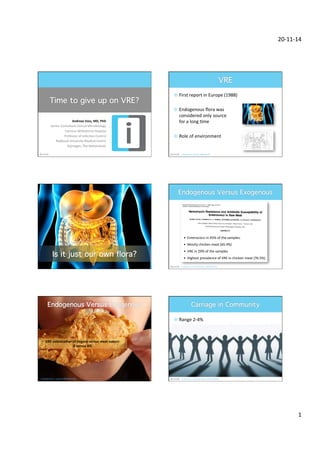
    20-­‐11-­‐14 1 Andreas Voss, MD, PhD Senior Consultant Clinical Microbiology Canisius-­‐Wilhelmina Hospital Professor of Infec@on Control Radboud University Medical Centre Nijmegen, The Netherlands ¤ First report in Europe (1988) ¤ Endogenous flora was considered only source for a long @me ¤ Role of environment UQley et al. Lancet 1988;57-­‐58 • Enterococci in 45% of the samples. • Mostly chicken meat (65.4%) • VRE in 29% of the samples • Highest prevalence of VRE in chicken meat (76.5%) Pavia et al. J Food Protect 2000;63:912 VRE coloniza6on of Vegans versus meat eaters: 0 versus 6% Schouten et al. Lancet 1997:349:1258 ¤ Range 2-­‐4% Endtz et al. J Clin Microbiol 1997;35:3026
  • 2.
    20-­‐11-­‐14 2 Meningitis Neonatal infection sepsis pneumonia UTI Surgical infection sepsis meningitis endocarditis UTI Intra-abd. infections … frequently one of a bunch! Wound infections Patient: underlying diseases, antibiotics, veel co-morbidity UQley et al. Lancet 1988;57-­‐58 Care or Not? I wish VRE control would be possible • Between August 2004 and December 2010, Less 45 pa@VRE ents – outbreaks occurred in 21 of the 38 AP-­‐HP s6hospitals ll outbreaks! • An ins@tu@onal control programme was implemented • The number of cases per outbreak was significantly lower ager implementa@on of the programme. … thus maybe Mike isn’t that mad ... … if VRE has established itself outside of the hospital and in the community, we’re going to see a lot more VMRSA. And an epidemic strain only has to get lucky once…
  • 3.
    20-­‐11-­‐14 3 Did anyone check Guinness for VRE? NL: only interested in VR-­‐E. faecium (possibly certain CC’s)
  • 4.
    20-­‐11-­‐14 4 NL: es6mated number of infec6ons: 500, number of death: 33 when prevalence is 40% at 1% = 12.5 cases and 1.2 death ¤ Not one reason, but the consequence of mul@ple, small factors à Swiss-­‐Cheese-­‐Accident Model (hand)hygiene antibiotics cleaning Maintenance Werk pressure Bad luck Low compliance (Hand) hygiene antibiotics cleaning Not good enough Maintenance Work pressure Bad luck CC17, bed-­‐pan washers Too much Cipro Not good enough Too high, trainees
  • 5.
    20-­‐11-­‐14 5 Low compliance (Hand) hygiene antibiotics cleaning Not good enough Maintenance Work pressure Bad luck VRE outbreak CC17, bed-­‐pan washers Too much Cipro Not good enough Too high, trainees ¤ Roomservice ¤ Roomservice-­‐plus ¤ Registered nurse ¤ Nurse asistant ¤ Cleaning ¤ Bedpan VRE+ despite washers were tested and validated ! Not our model ¤ Bed-­‐pan washers according to EU norm A60 ² A60 = the effect of 1 min 80°C A0 value of outbreak strain: = 160 (2 min, 80C) … no one told us that we have to die at A60
  • 6.
    20-­‐11-­‐14 6 •Weekly audits including feedback • Are screening cultures* negative • Are bed pans visible clean à later dropped when switch to disposable bed-pans • Do HCWs regard HH-rules and show no mistakes during observation of contact isolation • Are all flagged patients actually in isolation (SR or cohort) • Only trained nurses taking care of VRE patients * Weekly microbiological screening of the environment and all patients in affected units (n=8) Ward Cultures (pats & en.) Cleaning HH-­‐rules & isola6on Flagging/ sor6ng Trained HCWs A B C D E Reported to medical head, unit manger, head nurse, CEO …. cleaning flagging cleaning Week Cultures (pats & en.) Cleaning HH-­‐rules & isola6on Flagging/ sor6ng Trained HCWs 1 2 3 4 5 6 7 …. A long 6me
  • 7.
    20-­‐11-­‐14 7 ¤ 14 month outbreak VRE HERE à VRE tiredness ¤ 450+ cases (coloniza@on) ¤ Financial pressure – insurance contracts ¤ 28.000 PCRs, 7.000 extra cultures ¤ Extra cleaners & new detergent & wipes ¤ New products & business cases ¤ Endless audits & training sessions ¤ Change of an@bio@c formulary ¤ S@gma@za@on & uncertainty ¤ Problems in returning to nursing homes/home hospital ¤ VRE-­‐posi@ve for > 1 year ¤ Cases with BSI: 5 (4 cured, 1 died with VRE) IS VRE A REAL PROBLEM Mammatus Clouds
  • 8.
    20-­‐11-­‐14 8 Is that possible once we eat it? Yes, but ac6ve surveillance? Always good? But need to reduce MRSA first! No need in vanB! ¤ LiQle clinical impact (at least in most units) ¤ High cost of control ¤ S@gma@za@on of pa@ents ¤ Lack of decoloniza@on possibili@es ¤ Community spread including our food ¤ Need to waist energy to clean bedpans at 2 min/80C (or invest in disposable system) ¤ AMS changes (stop SDD?) may protect us from VRE but select for something else, far worse Not really 6me to give up, but certainly 6me to stop making such a fuzz about it ! VRE should not be seen as an An6bio6c Resistance Threat but as an indicator of a failing preven6ve system