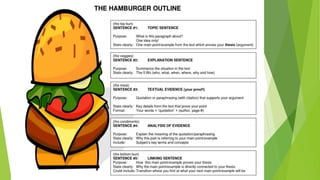
PARAGRAPH WRITING
By Bhavya Ramdas
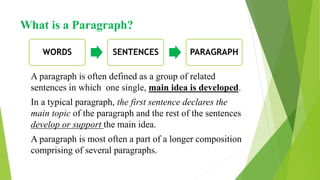
What is a Paragraph?
A paragraph is often defined as a group of related
sentences in which one single, main idea is developed.
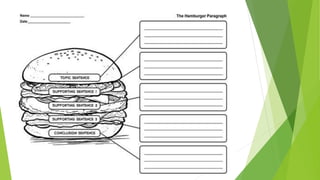
In a typical paragraph, the first sentence declares the
main topic of the paragraph and the rest of the sentences
develop or support the main idea.
A paragraph is most often a part of a longer composition
comprising of several paragraphs.
WORDS SENTENCES PARAGRAPH
In short, a paragraph is. . .
 A group of sentences
 A clear main idea
 Supporting information
 Part of a longer composition
 A miniature essay!
A good paragraph has . . .
 Unity
 Support
 Coherence
 Good Language
 Variety of Structures
Unity
 One main idea
 Topic Sentence
 Other sentences support
Coherence
 Well organized details
• Spatial
• Chronological
• Importance
• logical
 A clear, sensible connection
 Linkers/connectors
Activity 1
Rearrange the below sentences:-
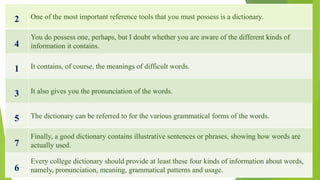
1. It contains, of course, the meanings of difficult words.
2. One of the most important reference tools that you must possess is a
dictionary.
3. It also gives you the pronunciation of the words.
4. You do possess one, perhaps, but I doubt whether you are aware of the
different kinds of information it contains.
5. The dictionary can be referred to for the various grammatical forms of the
words.
6. Every college dictionary should provide at least these four kinds of
information about words, namely, pronunciation, meaning, grammatical
patterns and usage.
7. Finally, a good dictionary contains illustrative sentences or phrases, showing
how words are actually used.
2 One of the most important reference tools that you must possess is a dictionary.
4
You do possess one, perhaps, but I doubt whether you are aware of the different kinds of
information it contains.
1 It contains, of course, the meanings of difficult words.
3 It also gives you the pronunciation of the words.
5 The dictionary can be referred to for the various grammatical forms of the words.
7
Finally, a good dictionary contains illustrative sentences or phrases, showing how words are
actually used.
6
Every college dictionary should provide at least these four kinds of information about words,
namely, pronunciation, meaning, grammatical patterns and usage.
2
One of the most important reference tools that you must possess is a dictionary.
4
You do possess one, perhaps, but I doubt whether you are aware of the different
kinds of information it contains.
1
It contains, of course, the meanings of difficult words.
3
It also gives you the pronunciation of the words.
5
The dictionary can be referred to for the various grammatical forms of the words.
7
Finally, a good dictionary contains illustrative sentences or phrases, showing how
words are actually used.
6
Every college dictionary should provide at least these four kinds of information
about words, namely, pronunciation, meaning, grammatical patterns and usage.
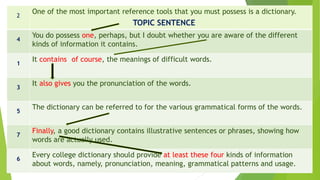
TOPIC SENTENCE
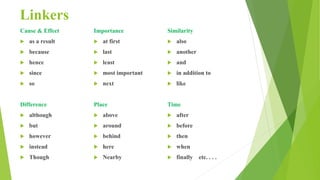
Linkers
Cause & Effect
 as a result
 because
 hence
 since
 so
Difference
 although
 but
 however
 instead
 Though
Importance
 at first
 last
 least
 most important
 next
Place
 above
 around
 behind
 here
 Nearby
Similarity
 also
 another
 and
 in addition to
 like
Time
 after
 before
 then
 when
 finally etc. . . .
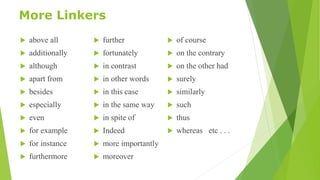
More Linkers
 above all
 additionally
 although
 apart from
 besides
 especially
 even
 for example
 for instance
 furthermore
 further
 fortunately
 in contrast
 in other words
 in this case
 in the same way
 in spite of
 Indeed
 more importantly
 moreover
 of course
 on the contrary
 on the other had
 surely
 similarly
 such
 thus
 whereas etc . . .
Support
 Supporting ideas
 Evidence
 Examples
 Detail
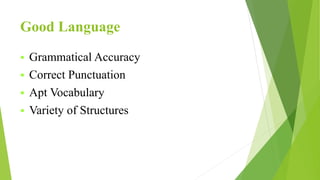
Good Language
 Grammatical Accuracy
 Correct Punctuation
 Apt Vocabulary
 Variety of Structures
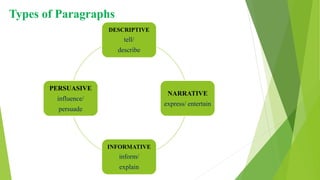
Types of Paragraphs
DESCRIPTIVE
tell/
describe
NARRATIVE
express/ entertain
INFORMATIVE
inform/
explain
PERSUASIVE
influence/
persuade
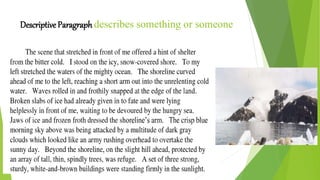
Descriptive Paragraph describes something or someone
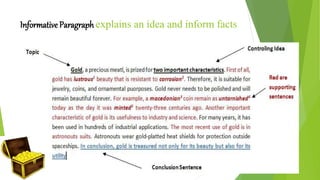
Informative Paragraph explains an idea and inform facts
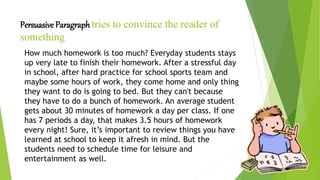
Persuasive Paragraph tries to convince the reader of
something
How much homework is too much? Everyday students stays
up very late to finish their homework. After a stressful day
in school, after hard practice for school sports team and
maybe some hours of work, they come home and only thing
they want to do is going to bed. But they can't because
they have to do a bunch of homework. An average student
gets about 30 minutes of homework a day per class. If one
has 7 periods a day, that makes 3.5 hours of homework
every night! Sure, it’s important to review things you have
learned at school to keep it afresh in mind. But the
students need to schedule time for leisure and
entertainment as well.
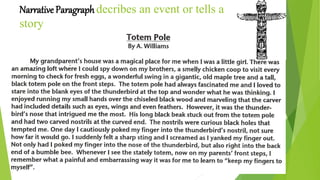
Narrative Paragraph decribes an event or tells a
story
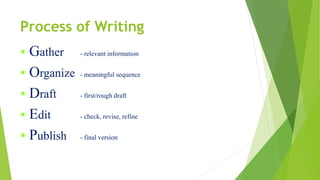
Process of Writing
 Gather - relevant information
 Organize - meaningful sequence
 Draft - first/rough draft
 Edit - check, revise, refine
 Publish - final version
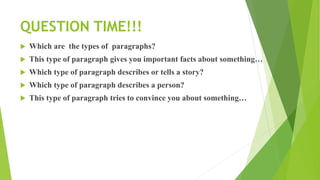
QUESTION TIME!!!
 Which are the types of paragraphs?
 This type of paragraph gives you important facts about something…
 Which type of paragraph describes or tells a story?
 Which type of paragraph describes a person?
 This type of paragraph tries to convince you about something…
Activity 2
Write a paragraph in 100-120 words using the
hints below:
English – global language – more than a 100 countries –
nearly 50% world population – internal and international
communication – library language – research and
publications – web language
Paragraph Writing
Paragraph Writing

Paragraph Writing

  • 1.
  • 2.
    What is aParagraph? A paragraph is often defined as a group of related sentences in which one single, main idea is developed. In a typical paragraph, the first sentence declares the main topic of the paragraph and the rest of the sentences develop or support the main idea. A paragraph is most often a part of a longer composition comprising of several paragraphs. WORDS SENTENCES PARAGRAPH
  • 3.
    In short, aparagraph is. . .  A group of sentences  A clear main idea  Supporting information  Part of a longer composition  A miniature essay!
  • 4.
    A good paragraphhas . . .  Unity  Support  Coherence  Good Language  Variety of Structures
  • 5.
    Unity  One mainidea  Topic Sentence  Other sentences support
  • 6.
    Coherence  Well organizeddetails • Spatial • Chronological • Importance • logical  A clear, sensible connection  Linkers/connectors
  • 7.
    Activity 1 Rearrange thebelow sentences:- 1. It contains, of course, the meanings of difficult words. 2. One of the most important reference tools that you must possess is a dictionary. 3. It also gives you the pronunciation of the words. 4. You do possess one, perhaps, but I doubt whether you are aware of the different kinds of information it contains. 5. The dictionary can be referred to for the various grammatical forms of the words. 6. Every college dictionary should provide at least these four kinds of information about words, namely, pronunciation, meaning, grammatical patterns and usage. 7. Finally, a good dictionary contains illustrative sentences or phrases, showing how words are actually used.
  • 8.
    2 One ofthe most important reference tools that you must possess is a dictionary. 4 You do possess one, perhaps, but I doubt whether you are aware of the different kinds of information it contains. 1 It contains, of course, the meanings of difficult words. 3 It also gives you the pronunciation of the words. 5 The dictionary can be referred to for the various grammatical forms of the words. 7 Finally, a good dictionary contains illustrative sentences or phrases, showing how words are actually used. 6 Every college dictionary should provide at least these four kinds of information about words, namely, pronunciation, meaning, grammatical patterns and usage.
  • 9.
    2 One of themost important reference tools that you must possess is a dictionary. 4 You do possess one, perhaps, but I doubt whether you are aware of the different kinds of information it contains. 1 It contains, of course, the meanings of difficult words. 3 It also gives you the pronunciation of the words. 5 The dictionary can be referred to for the various grammatical forms of the words. 7 Finally, a good dictionary contains illustrative sentences or phrases, showing how words are actually used. 6 Every college dictionary should provide at least these four kinds of information about words, namely, pronunciation, meaning, grammatical patterns and usage. TOPIC SENTENCE
  • 10.
    Linkers Cause & Effect as a result  because  hence  since  so Difference  although  but  however  instead  Though Importance  at first  last  least  most important  next Place  above  around  behind  here  Nearby Similarity  also  another  and  in addition to  like Time  after  before  then  when  finally etc. . . .
  • 11.
    More Linkers  aboveall  additionally  although  apart from  besides  especially  even  for example  for instance  furthermore  further  fortunately  in contrast  in other words  in this case  in the same way  in spite of  Indeed  more importantly  moreover  of course  on the contrary  on the other had  surely  similarly  such  thus  whereas etc . . .
  • 12.
    Support  Supporting ideas Evidence  Examples  Detail
  • 13.
    Good Language  GrammaticalAccuracy  Correct Punctuation  Apt Vocabulary  Variety of Structures
  • 14.
    Types of Paragraphs DESCRIPTIVE tell/ describe NARRATIVE express/entertain INFORMATIVE inform/ explain PERSUASIVE influence/ persuade
  • 15.
    Descriptive Paragraph describessomething or someone
  • 16.
    Informative Paragraph explainsan idea and inform facts
  • 17.
    Persuasive Paragraph triesto convince the reader of something How much homework is too much? Everyday students stays up very late to finish their homework. After a stressful day in school, after hard practice for school sports team and maybe some hours of work, they come home and only thing they want to do is going to bed. But they can't because they have to do a bunch of homework. An average student gets about 30 minutes of homework a day per class. If one has 7 periods a day, that makes 3.5 hours of homework every night! Sure, it’s important to review things you have learned at school to keep it afresh in mind. But the students need to schedule time for leisure and entertainment as well.
  • 18.
    Narrative Paragraph decribesan event or tells a story
  • 19.
    Process of Writing Gather - relevant information  Organize - meaningful sequence  Draft - first/rough draft  Edit - check, revise, refine  Publish - final version
  • 20.
    QUESTION TIME!!!  Whichare the types of paragraphs?  This type of paragraph gives you important facts about something…  Which type of paragraph describes or tells a story?  Which type of paragraph describes a person?  This type of paragraph tries to convince you about something…
  • 22.
    Activity 2 Write aparagraph in 100-120 words using the hints below: English – global language – more than a 100 countries – nearly 50% world population – internal and international communication – library language – research and publications – web language