Jennifer Evans 
Assistant Director ELA 
St.ClairCounty RESA 
Evans.jennifer@sccresa.org 
http://www.protopage.com/evans.jennifer#Untitled/Home
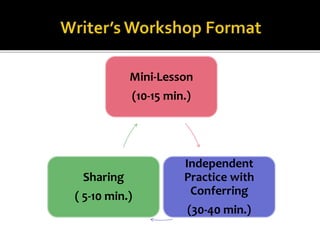
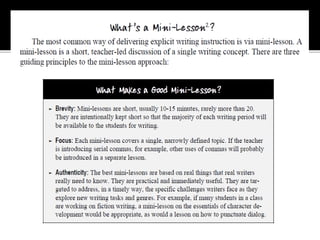
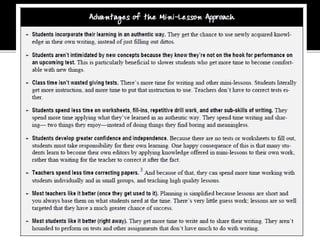
Mini-Lesson 
(10-15 min.) 
Independent 
Practice with 
Conferring 
(30-40 min.) 
Sharing 
( 5-10 min.)
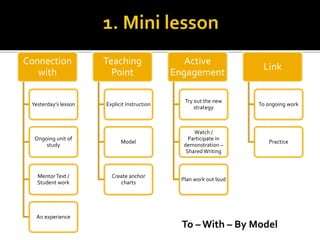
Connection 
with 
Yesterday’s lesson 
Ongoing unit of 
study 
Mentor Text / 
Student work 
An experience 
Teaching 
Point 
Explicit Instruction 
Model 
Create anchor 
charts 
Active 
Engagement 
Try out the new 
strategy 
Watch / 
Participate in 
demonstration – 
Shared Writing 
Plan work out loud 
Link 
To ongoing work 
Practice 
To – With – By Model
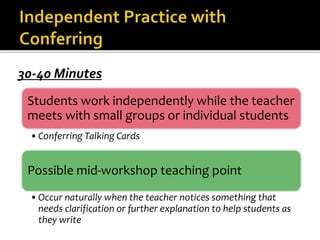
30-40 Minutes 
Students work independently while the teacher 
meets with small groups or individual students 
•Conferring Talking Cards 
Possible mid-workshop teaching point 
• Occur naturally when the teacher notices something that 
needs clarification or further explanation to help students as 
they write
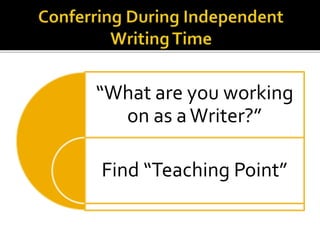
“What are you working 
on as a Writer?” 
Find “Teaching Point”
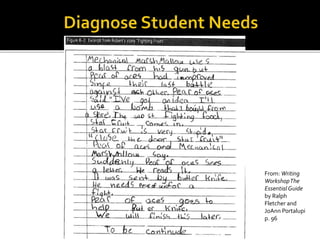
From: Writing 
Workshop The 
Essential Guide 
by Ralph 
Fletcher and 
JoAnn Portalupi 
p. 96
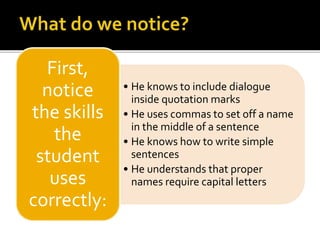
• He knows to include dialogue 
inside quotation marks 
• He uses commas to set off a name 
in the middle of a sentence 
• He knows how to write simple 
sentences 
• He understands that proper 
names require capital letters 
First, 
notice 
the skills 
the 
student 
uses 
correctly:
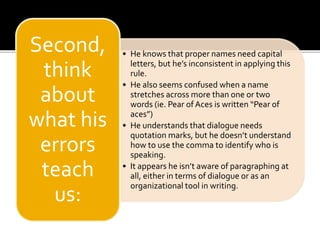
• He knows that proper names need capital 
letters, but he’s inconsistent in applying this 
rule. 
• He also seems confused when a name 
stretches across more than one or two 
words (ie. Pear of Aces is written “Pear of 
aces”) 
• He understands that dialogue needs 
quotation marks, but he doesn’t understand 
how to use the comma to identify who is 
speaking. 
• It appears he isn’t aware of paragraphing at 
all, either in terms of dialogue or as an 
organizational tool in writing. 
Second, 
think 
about 
what his 
errors 
teach 
us:
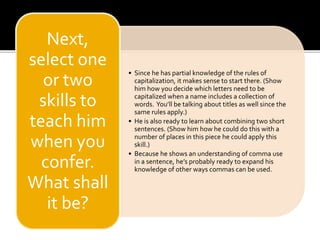
• Since he has partial knowledge of the rules of 
capitalization, it makes sense to start there. (Show 
him how you decide which letters need to be 
capitalized when a name includes a collection of 
words. You’ll be talking about titles as well since the 
same rules apply.) 
• He is also ready to learn about combining two short 
sentences. (Show him how he could do this with a 
number of places in this piece he could apply this 
skill.) 
• Because he shows an understanding of comma use 
in a sentence, he’s probably ready to expand his 
knowledge of other ways commas can be used. 
Next, 
select one 
or two 
skills to 
teach him 
when you 
confer. 
What shall 
it be?
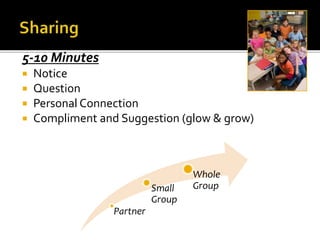
5-10 Minutes 
 Notice 
 Question 
 Personal Connection 
 Compliment and Suggestion (glow & grow) 
Partner 
Small 
Group 
Whole 
Group
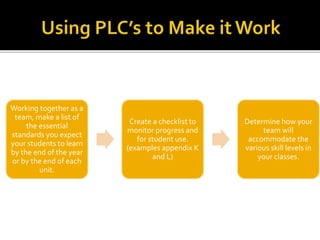
Working together as a 
team, make a list of 
the essential 
standards you expect 
your students to learn 
by the end of the year 
or by the end of each 
unit. 
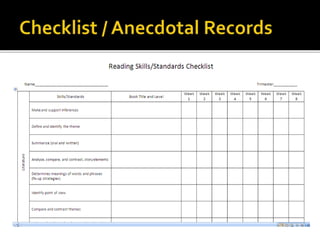
Create a checklist to 
monitor progress and 
for student use. 
(examples appendix K 
and L) 
Determine how your 
team will 
accommodate the 
various skill levels in 
your classes.
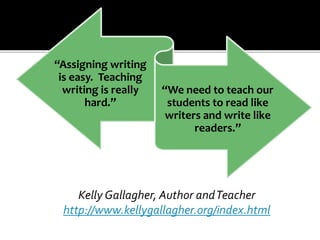
“Assigning writing 
is easy. Teaching 
writing is really 
hard.” 
“We need to teach our 
students to read like 
writers and write like 
readers.” 
Kelly Gallagher, Author and Teacher 
http://www.kellygallagher.org/index.html
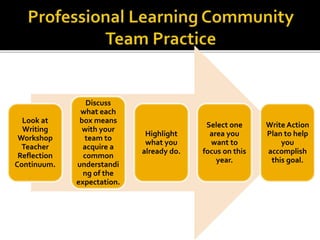
Look at 
Writing 
Workshop 
Teacher 
Reflection 
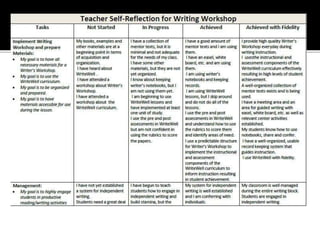
Continuum. 
Discuss 
what each 
box means 
with your 
team to 
acquire a 
common 
understandi 
ng of the 
expectation. 
Highlight 
what you 
already do. 
Select one 
area you 
want to 
focus on this 
year. 
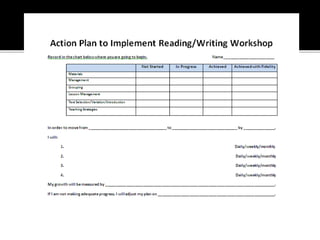
Write Action 
Plan to help 
you 
accomplish 
this goal.
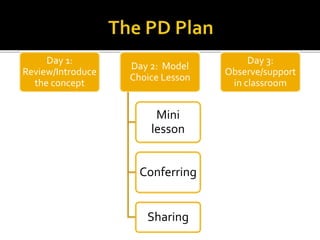
Day 1: 
Review/Introduce 
the concept 
Day 2: Model 
Choice Lesson 
Mini 
lesson 
Conferring 
Sharing 
Day 3: 
Observe/support 
in classroom
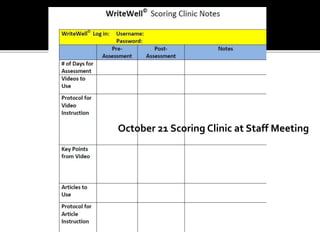
October 21 Scoring Clinic at Staff Meeting
 Reading Strategies Flipbook

Writer’s workshop small group presentation

  • 1.
    Jennifer Evans AssistantDirector ELA St.ClairCounty RESA Evans.jennifer@sccresa.org http://www.protopage.com/evans.jennifer#Untitled/Home
  • 3.
    Mini-Lesson (10-15 min.) Independent Practice with Conferring (30-40 min.) Sharing ( 5-10 min.)
  • 5.
    Connection with Yesterday’slesson Ongoing unit of study Mentor Text / Student work An experience Teaching Point Explicit Instruction Model Create anchor charts Active Engagement Try out the new strategy Watch / Participate in demonstration – Shared Writing Plan work out loud Link To ongoing work Practice To – With – By Model
  • 7.
    30-40 Minutes Studentswork independently while the teacher meets with small groups or individual students •Conferring Talking Cards Possible mid-workshop teaching point • Occur naturally when the teacher notices something that needs clarification or further explanation to help students as they write
  • 8.
    “What are youworking on as a Writer?” Find “Teaching Point”
  • 9.
    From: Writing WorkshopThe Essential Guide by Ralph Fletcher and JoAnn Portalupi p. 96
  • 10.
    • He knowsto include dialogue inside quotation marks • He uses commas to set off a name in the middle of a sentence • He knows how to write simple sentences • He understands that proper names require capital letters First, notice the skills the student uses correctly:
  • 11.
    • He knowsthat proper names need capital letters, but he’s inconsistent in applying this rule. • He also seems confused when a name stretches across more than one or two words (ie. Pear of Aces is written “Pear of aces”) • He understands that dialogue needs quotation marks, but he doesn’t understand how to use the comma to identify who is speaking. • It appears he isn’t aware of paragraphing at all, either in terms of dialogue or as an organizational tool in writing. Second, think about what his errors teach us:
  • 12.
    • Since hehas partial knowledge of the rules of capitalization, it makes sense to start there. (Show him how you decide which letters need to be capitalized when a name includes a collection of words. You’ll be talking about titles as well since the same rules apply.) • He is also ready to learn about combining two short sentences. (Show him how he could do this with a number of places in this piece he could apply this skill.) • Because he shows an understanding of comma use in a sentence, he’s probably ready to expand his knowledge of other ways commas can be used. Next, select one or two skills to teach him when you confer. What shall it be?
  • 13.
    5-10 Minutes Notice  Question  Personal Connection  Compliment and Suggestion (glow & grow) Partner Small Group Whole Group
  • 14.
    Working together asa team, make a list of the essential standards you expect your students to learn by the end of the year or by the end of each unit. Create a checklist to monitor progress and for student use. (examples appendix K and L) Determine how your team will accommodate the various skill levels in your classes.
  • 17.
    “Assigning writing iseasy. Teaching writing is really hard.” “We need to teach our students to read like writers and write like readers.” Kelly Gallagher, Author and Teacher http://www.kellygallagher.org/index.html
  • 18.
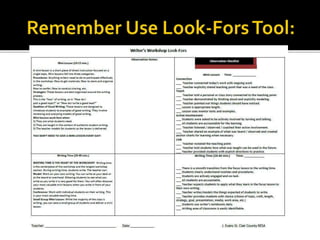
    Look at Writing Workshop Teacher Reflection Continuum. Discuss what each box means with your team to acquire a common understandi ng of the expectation. Highlight what you already do. Select one area you want to focus on this year. Write Action Plan to help you accomplish this goal.
  • 22.
    Day 1: Review/Introduce the concept Day 2: Model Choice Lesson Mini lesson Conferring Sharing Day 3: Observe/support in classroom
  • 23.
    October 21 ScoringClinic at Staff Meeting
  • 24.

Editor's Notes

  • #4 Structure similar to 90-minute reading block – whole group, small group, independent work
  • #15 Scan, copy, print appendix K and L from Writing Workshop The Essential Guide by Ralph Fletcher and JoAnn Portalupi
  • #18 Assign and assess writing does not teach students the knowledge and skills needed to become better writers WriteWell is designed around the format of Writer’s Workshop where teachers teach students minilessons as well as teach them to read like writers and write like readers.
  • #24 Assessment Fidelity suggestion