Presented by
Dr. Ummay Sumaiya
ICU DOCTOR| IQARUS | Medical Treatment Facility (UN MTF IQARUS
) / IQARUS - Cox’s Bazar - Bangladesh
Wound dressing & management
2
What is Wound??
an injury to the body (as from violence, accident, or surgery) that
typically involves laceration or breaking of a membrane (such as the
skin) and usually damage to underlying tissues. b : a cut or breach in a
plant usually due to an external agent.
3
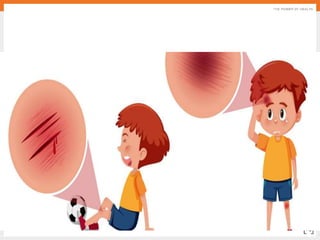
Wound types
• Open Wound - Open wounds are the wounds with exposed
underlying tissue/ organs and open to the outside environment, for
example, penetrating wounds.
• Closed - Wounds - closed wounds are the wounds that occur
without any exposure to the underlying tissue and organs.
5
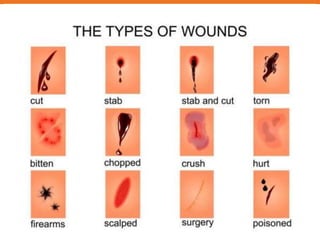
Types of Wound
•Penetrating wounds
•Puncture wounds
•Surgical wounds and incisions
•Thermal, chemical or electric burns
•Bites and stings
•Gunshot wounds, or other high velocity projectiles that can penetrate
the body.
•Blunt force trauma
•Abrasions
•Lacerations
•Skin tears.
7
Principles of Wound Dressing
Dressing is an essential element of standard wound care. The main
purpose of wound dressing is:
a) provide a temporary protective physical barrier,
b) absorb wound drainage, and
c) provide the moisture necessary to optimize re-epithelialization.
9
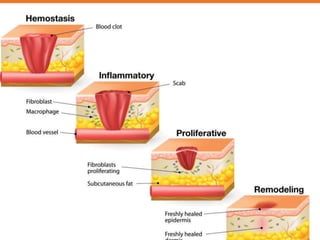
Management of a Wound
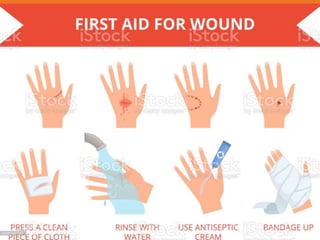
The basic principles for the management of a wound or laceration
are:
•Haemostasis.
•Cleaning the wound.
•Analgesia.
•Skin closure.
•Dressing and follow-up advice.
11
Equipment required
•A clear available work space, such as a stainless steel trolley. The
space must be big enough for the dressing pack to be opened on
•A sterile dressing/procedure pack
•Access to hand washing sink or alcohol hand wash
•Non-sterile gloves to remove old dressing
•Apron
•Appropriate dressings
•Appropriate solution for cleaning the wound, if needed.
12
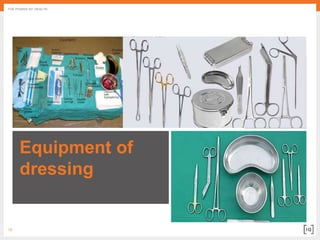
Equipment of
dressing
13
Preparation
•Introduce yourself to the patient and explain what you are doing and
why. If possible, provide privacy.
•Position the patient comfortably and make sure the surrounding area is
clean and tidy before you start.
•Check the patient's care notes to update yourself on any changes in
the patient's condition and to make sure the dressing is due to be
changed.
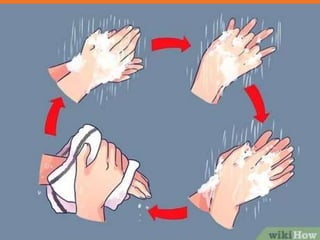
•Wash your hands and put on an apron.
15
Preparation
•Clean the trolley using soap and water, or disinfectant, and a cloth.
Start at the top of the trolley and work down to the bottom legs of the
trolley using single strokes with your damp cloth.
•Place the sterile dressing/procedure pack on the top of the trolley.
•Open the sterile dressing pack on top of the trolley. Open the sterile
field using the corners of the paper.
•Open any other sterile items needed onto the sterile field without
touching them.
18
Removing an old dressing
• Wash your hands and put on non-sterile gloves (to protect yourself)
before removing an old dressing. Dispose of this dressing in a
separate dirty clinical waste bag.
• Complete a wound assessment. This includes a visual check and
comparing and evaluating the smell, amount of blood or ooze
(excretions) and their colour, and the size of the wound.
• If the site has not improved as expected, then the treating physician
or senior charge nurse must be informed so they too can evaluate it
and consider changing the care plan.
19
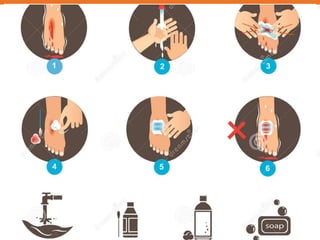
Cleaning and dressing the wound
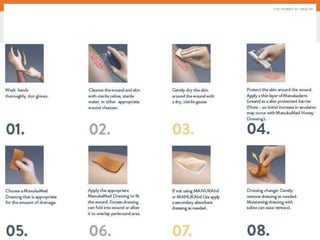
• Make sure that you have selected the correct dressing type and
materials to provide full and appropriate coverage of the type, size and
location of the wound as per the care plan or the physician or senior
charge nurse's recommendations.
• Wash your hands and put on sterile gloves. If the gloves become
desterilised, remove them, re-wash your hands and put on new sterile
gloves. This is best practice, but where resources are not available,
safe modifications to this process can be made, for example by using
non-sterile gloves to protect the nurse while removing the dressing and
then washing the hands with gloves on and using alcohol gel on the
gloves to make them clean enough to clean the wound and redo the
dressing. This then protects both the nurse and the patient.
20
Cleaning and dressing the wound
• Start from the dirty area and then move out to the clean area. Be
very careful when doing this as the tissue or skin may be tender and
there may also be sutures in place. Clean the area without causing
further damage or distress to the patient.
• Make sure you do not re-introduce dirt or ooze by ensuring that
cleaning materials (i.e. gauze, cotton balls) are not over-used.
Change them regularly (use once only if possible) and never re-
introduce them to a clean area once they have been contaminated.
22
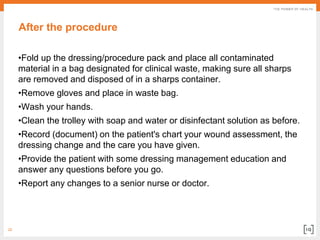
After the procedure
•Fold up the dressing/procedure pack and place all contaminated
material in a bag designated for clinical waste, making sure all sharps
are removed and disposed of in a sharps container.
•Remove gloves and place in waste bag.
•Wash your hands.
•Clean the trolley with soap and water or disinfectant solution as before.
•Record (document) on the patient's chart your wound assessment, the
dressing change and the care you have given.
•Provide the patient with some dressing management education and
answer any questions before you go.
•Report any changes to a senior nurse or doctor.
Community Health Journal, London

Wound dressing

  • 1.
    Presented by Dr. UmmaySumaiya ICU DOCTOR| IQARUS | Medical Treatment Facility (UN MTF IQARUS ) / IQARUS - Cox’s Bazar - Bangladesh Wound dressing & management
  • 2.
    2 What is Wound?? aninjury to the body (as from violence, accident, or surgery) that typically involves laceration or breaking of a membrane (such as the skin) and usually damage to underlying tissues. b : a cut or breach in a plant usually due to an external agent.
  • 3.
    3 Wound types • OpenWound - Open wounds are the wounds with exposed underlying tissue/ organs and open to the outside environment, for example, penetrating wounds. • Closed - Wounds - closed wounds are the wounds that occur without any exposure to the underlying tissue and organs.
  • 5.
    5 Types of Wound •Penetratingwounds •Puncture wounds •Surgical wounds and incisions •Thermal, chemical or electric burns •Bites and stings •Gunshot wounds, or other high velocity projectiles that can penetrate the body. •Blunt force trauma •Abrasions •Lacerations •Skin tears.
  • 7.
    7 Principles of WoundDressing Dressing is an essential element of standard wound care. The main purpose of wound dressing is: a) provide a temporary protective physical barrier, b) absorb wound drainage, and c) provide the moisture necessary to optimize re-epithelialization.
  • 9.
    9 Management of aWound The basic principles for the management of a wound or laceration are: •Haemostasis. •Cleaning the wound. •Analgesia. •Skin closure. •Dressing and follow-up advice.
  • 11.
    11 Equipment required •A clearavailable work space, such as a stainless steel trolley. The space must be big enough for the dressing pack to be opened on •A sterile dressing/procedure pack •Access to hand washing sink or alcohol hand wash •Non-sterile gloves to remove old dressing •Apron •Appropriate dressings •Appropriate solution for cleaning the wound, if needed.
  • 12.
  • 13.
    13 Preparation •Introduce yourself tothe patient and explain what you are doing and why. If possible, provide privacy. •Position the patient comfortably and make sure the surrounding area is clean and tidy before you start. •Check the patient's care notes to update yourself on any changes in the patient's condition and to make sure the dressing is due to be changed. •Wash your hands and put on an apron.
  • 15.
    15 Preparation •Clean the trolleyusing soap and water, or disinfectant, and a cloth. Start at the top of the trolley and work down to the bottom legs of the trolley using single strokes with your damp cloth. •Place the sterile dressing/procedure pack on the top of the trolley. •Open the sterile dressing pack on top of the trolley. Open the sterile field using the corners of the paper. •Open any other sterile items needed onto the sterile field without touching them.
  • 18.
    18 Removing an olddressing • Wash your hands and put on non-sterile gloves (to protect yourself) before removing an old dressing. Dispose of this dressing in a separate dirty clinical waste bag. • Complete a wound assessment. This includes a visual check and comparing and evaluating the smell, amount of blood or ooze (excretions) and their colour, and the size of the wound. • If the site has not improved as expected, then the treating physician or senior charge nurse must be informed so they too can evaluate it and consider changing the care plan.
  • 19.
    19 Cleaning and dressingthe wound • Make sure that you have selected the correct dressing type and materials to provide full and appropriate coverage of the type, size and location of the wound as per the care plan or the physician or senior charge nurse's recommendations. • Wash your hands and put on sterile gloves. If the gloves become desterilised, remove them, re-wash your hands and put on new sterile gloves. This is best practice, but where resources are not available, safe modifications to this process can be made, for example by using non-sterile gloves to protect the nurse while removing the dressing and then washing the hands with gloves on and using alcohol gel on the gloves to make them clean enough to clean the wound and redo the dressing. This then protects both the nurse and the patient.
  • 20.
    20 Cleaning and dressingthe wound • Start from the dirty area and then move out to the clean area. Be very careful when doing this as the tissue or skin may be tender and there may also be sutures in place. Clean the area without causing further damage or distress to the patient. • Make sure you do not re-introduce dirt or ooze by ensuring that cleaning materials (i.e. gauze, cotton balls) are not over-used. Change them regularly (use once only if possible) and never re- introduce them to a clean area once they have been contaminated.
  • 22.
    22 After the procedure •Foldup the dressing/procedure pack and place all contaminated material in a bag designated for clinical waste, making sure all sharps are removed and disposed of in a sharps container. •Remove gloves and place in waste bag. •Wash your hands. •Clean the trolley with soap and water or disinfectant solution as before. •Record (document) on the patient's chart your wound assessment, the dressing change and the care you have given. •Provide the patient with some dressing management education and answer any questions before you go. •Report any changes to a senior nurse or doctor.
  • 25.