Wafer Aldulaimi
Wash the wound
Sumerians used beer and oil to the wound
Oil –bacteria grow poorly in oil and dressings become
non adherent
Honey: Now known to be antibacterial
Grease (animal fat): Barrier to bacteria
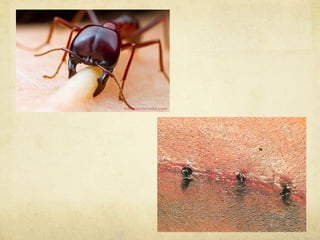
Wound edges were held together with thorns or linen
strips soaked in gum (steri strips!) or ant pincers
Also bound ulcerating lesions with figs that contain
papain( proteinase)
Hippocrates (2500 years ago) wrote of:
Washing wound with wine and vinegar (acetic acid)
Relieving pressure to avoid cutaneous wounds
(pressure ulcers)
Described surgical drainage of pus with piece of tin
pipe
Aurelius Celsus :Described four cardinal signs of
inflammation Rubor, Calor, Dolor and Tumor
Believed in keeping wound moist so wound would
close
Wound cavities were filled with sea sponges
,sometimes soaked in wine or vinegar
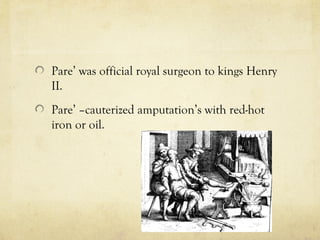
Pare’ was official royal surgeon to kings Henry
II.
Pare’ –cauterized amputation’s with red-hot
iron or oil.
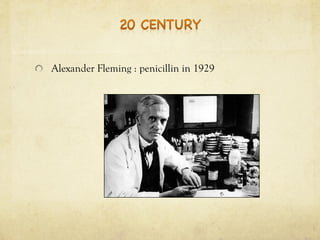
Alexander Fleming : penicillin in 1929
Topical products :Hydrocolloids , Hydrogels ,Calcium
alginates/hydrofibers , Foams , Starch dressings , Enzymatic debriders
Antibiotics
Surgical debridement
Renewed interest in ancient remedies honey→
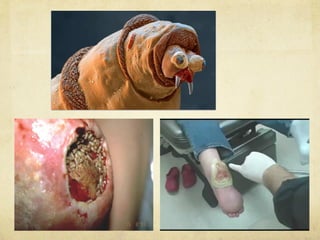
Renewed interest in maggots (“Biosurgery” )
Ultraviolet light
Laser
Hydrotherapy
Electrical stimulation
Ultrasound
Growth factors impregnated dressings
Skin substitutes synthetic and biologic→
Growth factor revolution –actively manipulate wound
healing angiogenesis→
Gen therapy
Nanotechnology : Drugs directed to specific aspects of
wounds , Manipulating of angiogenesis
By time of healing
By morphology
By etiology
Acute
An acute wound is an injury to the skin that occurs
suddenly rather than over time.
It heals at a predictable and expected rate according to
the normal wound healing process
Examples:
Surgical wounds (surgical)
Traumatic wounds (puncture wounds, cuts, abrasions,
burns, frostbite, chemical burns , radiation etc.)
Infection-related wounds
Chronic Wounds
A chronic wound develops when any acute wound fails
to heal in the expected time frame for that type of
wound, which might be a couple of weeks or up to 12
weeks in some cases.
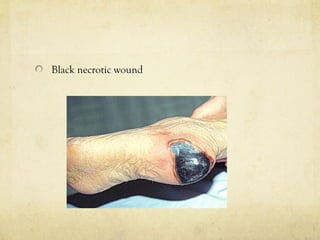
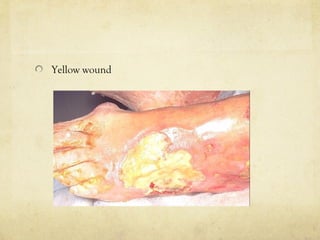
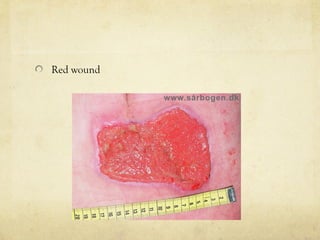
The black, yellow and red wound
Black necrotic wound
Yellow wound
Red wound
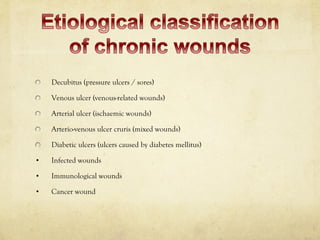
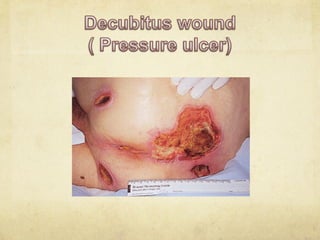
Decubitus (pressure ulcers / sores)
Venous ulcer (venous-related wounds)
Arterial ulcer (ischaemic wounds)
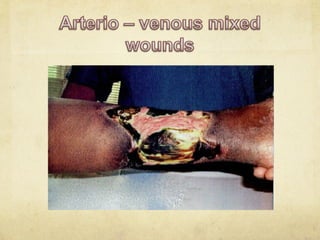
Arterio-venous ulcer cruris (mixed wounds)
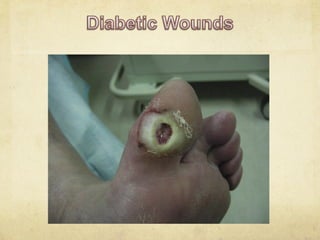
Diabetic ulcers (ulcers caused by diabetes mellitus)
• Infected wounds
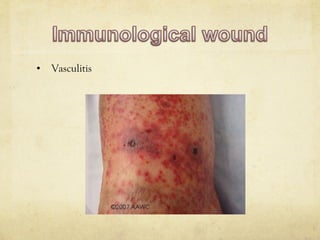
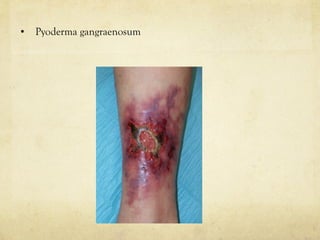
• Immunological wounds
• Cancer wound
Etiology
In 1860, Florence Nightingale wrote :
“If he has a bedsore, it is generally the
fault not of the disease but of the nursing.”
The main cause is unrelieved pressure to a location of skin
on the body. This constant pressure inflicts damage by
decreasing the area’s blood supply and traumatizing the skin.
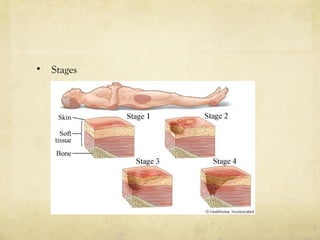
• Stages
• Treatment
– Debridement of all necrotic tissue
– Maintenance of a favorable moist wound environment
– Relief of pressure
– Addressing host issues such as nutritional, metabolic, and
circulatory status
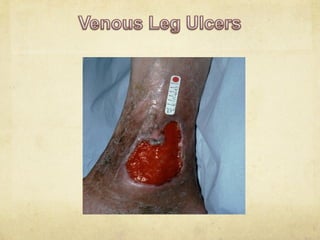
• Venous ulcers are the most common type of ulcers
occurring in the lower limbs.
• Venous insufficiency  leakage of :
– Fibrinogen perivascular cuffing that affects oxygen
exchange  loss of subcutaneous fat
– Leakage of hemoglobin  brownish pigmentation
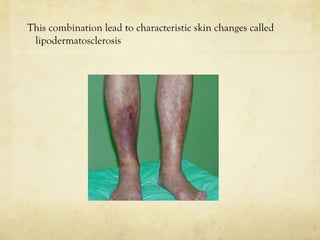
This combination lead to characteristic skin changes called
lipodermatosclerosis
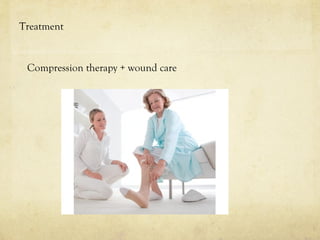
Treatment
Compression therapy + wound care
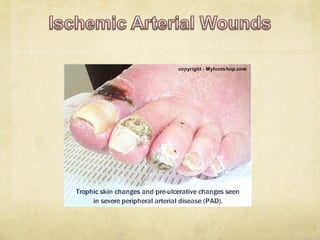
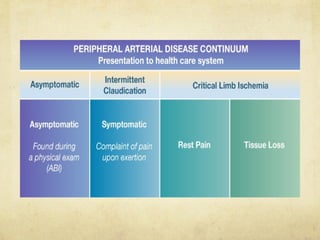
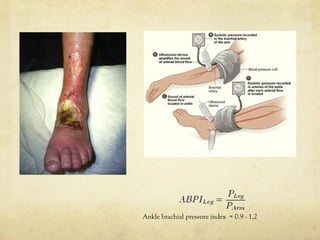
• Symptoms of peripheral ischemic changes :
– Intermittent claudication
– Rest pain
– Night pain
– Diminished or absent pulses,
– Decreased ankle-brachial index
Poor formation of granulation tissue
– Dryness of skin
– Hair loss ,Scaling
– Pallor
– The wound itself usually is shallow with smooth margins, and a
pale base and surrounding skin
Ankle brachial pressure index = 0.9 - 1,2
Treatment
Revascularization + Wound care
• These ulcers cause considerable pain and distress for patients
and pose a difficult wound-management problem for health
professionals.
• Many patients have significant oedema due to venous
insuficiency that needs to be controlled but also have some
degree of arterial disease (atherosclerosis) where compression
bandaging is contraindicated.
Treatment
• Reduced compression strength
• No compression when ankle pressure below 80 mmHg or ABI
below 0.7
• If the ankle pressure is below 60 mmHg or the ABI is below
0.5, revascularization is recommended.
• Wound care
Etiology
• 60 to 70% are due to neuropathy
• 15 to 20% are due to ischemia
• 15 to 20% are due to a combination of both
• The neuropathy is both sensory and motor, and is secondary to
persistently elevated glucose levels
• The loss of sensory function allows unrecognized injury to occur
from ill-fitting shoes, foreign bodies, or other trauma
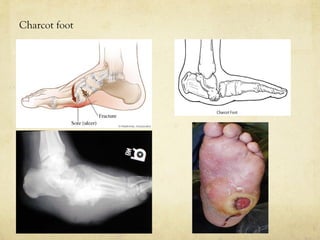
• The motor neuropathy or Charcot foot leads to collapse or
dislocation of the tarsometatarsal or metatarsophalangeal joints
• There is also severe micro- and macrovascular circulatory impairment
Charcot foot
Treatment
• Adequate blood sugar levels
• Wound care
• Charcot foot: splinting and non weight bearing
• Prevention: regular check , non compressing shoe , etc.
Traditionally, wound microbiology has been described in
three phases:
– Contamination refers to the presence of bacteria that
are not multiplying.
– Colonization refers to bacteria which are growing within
the wound but not causing tissue damage.
Infection : Bacteria causing tissue damage and clinical
signs of infection.
Treatment
• Debridment
• Antibiotics
• Consider biofilm !
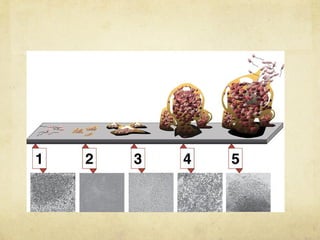
Biofilm
• It is an aggregate of microorganisms embedded within a self-
produced matrix of extracellular polymeric substance (EPS).
• Bacteria embedded within biofilms are resistant to both
immunological and non- specific defence mechanisms of the
body.
• Treatment is by mechanical removal
• Vasculitis
• Pyoderma gangraenosum
Treatment
1. Corticosteroids and immune modulators
2. Gentle wound care
3. Avoid surgery ! It make it worse !
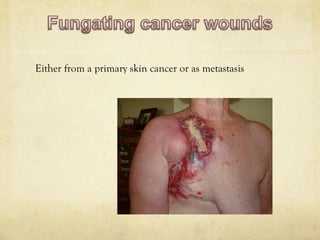
Either from a primary skin cancer or as metastasis
Treatment
1. Elective Surgery
2. Elective Radiation
3. Elective chemotherapy
4. Wound care
Wound Care

Wound Care

  • 1.
  • 3.
    Wash the wound Sumeriansused beer and oil to the wound Oil –bacteria grow poorly in oil and dressings become non adherent
  • 5.
    Honey: Now knownto be antibacterial Grease (animal fat): Barrier to bacteria Wound edges were held together with thorns or linen strips soaked in gum (steri strips!) or ant pincers Also bound ulcerating lesions with figs that contain papain( proteinase)
  • 8.
    Hippocrates (2500 yearsago) wrote of: Washing wound with wine and vinegar (acetic acid) Relieving pressure to avoid cutaneous wounds (pressure ulcers) Described surgical drainage of pus with piece of tin pipe
  • 10.
    Aurelius Celsus :Describedfour cardinal signs of inflammation Rubor, Calor, Dolor and Tumor Believed in keeping wound moist so wound would close Wound cavities were filled with sea sponges ,sometimes soaked in wine or vinegar
  • 12.
    Pare’ was officialroyal surgeon to kings Henry II. Pare’ –cauterized amputation’s with red-hot iron or oil.
  • 13.
    Alexander Fleming :penicillin in 1929
  • 14.
    Topical products :Hydrocolloids, Hydrogels ,Calcium alginates/hydrofibers , Foams , Starch dressings , Enzymatic debriders Antibiotics Surgical debridement Renewed interest in ancient remedies honey→ Renewed interest in maggots (“Biosurgery” ) Ultraviolet light Laser Hydrotherapy Electrical stimulation Ultrasound Growth factors impregnated dressings
  • 16.
    Skin substitutes syntheticand biologic→ Growth factor revolution –actively manipulate wound healing angiogenesis→ Gen therapy Nanotechnology : Drugs directed to specific aspects of wounds , Manipulating of angiogenesis
  • 17.
    By time ofhealing By morphology By etiology
  • 18.
    Acute An acute woundis an injury to the skin that occurs suddenly rather than over time. It heals at a predictable and expected rate according to the normal wound healing process
  • 19.
    Examples: Surgical wounds (surgical) Traumaticwounds (puncture wounds, cuts, abrasions, burns, frostbite, chemical burns , radiation etc.) Infection-related wounds
  • 20.
    Chronic Wounds A chronicwound develops when any acute wound fails to heal in the expected time frame for that type of wound, which might be a couple of weeks or up to 12 weeks in some cases.
  • 21.
    The black, yellowand red wound
  • 22.
  • 23.
  • 24.
  • 25.
    Decubitus (pressure ulcers/ sores) Venous ulcer (venous-related wounds) Arterial ulcer (ischaemic wounds) Arterio-venous ulcer cruris (mixed wounds) Diabetic ulcers (ulcers caused by diabetes mellitus) • Infected wounds • Immunological wounds • Cancer wound
  • 27.
    Etiology In 1860, FlorenceNightingale wrote : “If he has a bedsore, it is generally the fault not of the disease but of the nursing.” The main cause is unrelieved pressure to a location of skin on the body. This constant pressure inflicts damage by decreasing the area’s blood supply and traumatizing the skin.
  • 28.
  • 29.
    • Treatment – Debridementof all necrotic tissue – Maintenance of a favorable moist wound environment – Relief of pressure – Addressing host issues such as nutritional, metabolic, and circulatory status
  • 31.
    • Venous ulcersare the most common type of ulcers occurring in the lower limbs. • Venous insufficiency  leakage of : – Fibrinogen perivascular cuffing that affects oxygen exchange  loss of subcutaneous fat – Leakage of hemoglobin  brownish pigmentation
  • 32.
    This combination leadto characteristic skin changes called lipodermatosclerosis
  • 33.
  • 36.
    • Symptoms ofperipheral ischemic changes : – Intermittent claudication – Rest pain – Night pain – Diminished or absent pulses, – Decreased ankle-brachial index Poor formation of granulation tissue – Dryness of skin – Hair loss ,Scaling – Pallor – The wound itself usually is shallow with smooth margins, and a pale base and surrounding skin
  • 37.
    Ankle brachial pressureindex = 0.9 - 1,2
  • 38.
  • 40.
    • These ulcerscause considerable pain and distress for patients and pose a difficult wound-management problem for health professionals. • Many patients have significant oedema due to venous insuficiency that needs to be controlled but also have some degree of arterial disease (atherosclerosis) where compression bandaging is contraindicated.
  • 41.
    Treatment • Reduced compressionstrength • No compression when ankle pressure below 80 mmHg or ABI below 0.7 • If the ankle pressure is below 60 mmHg or the ABI is below 0.5, revascularization is recommended. • Wound care
  • 43.
    Etiology • 60 to70% are due to neuropathy • 15 to 20% are due to ischemia • 15 to 20% are due to a combination of both
  • 44.
    • The neuropathyis both sensory and motor, and is secondary to persistently elevated glucose levels • The loss of sensory function allows unrecognized injury to occur from ill-fitting shoes, foreign bodies, or other trauma • The motor neuropathy or Charcot foot leads to collapse or dislocation of the tarsometatarsal or metatarsophalangeal joints • There is also severe micro- and macrovascular circulatory impairment
  • 45.
  • 46.
    Treatment • Adequate bloodsugar levels • Wound care • Charcot foot: splinting and non weight bearing • Prevention: regular check , non compressing shoe , etc.
  • 47.
    Traditionally, wound microbiologyhas been described in three phases: – Contamination refers to the presence of bacteria that are not multiplying. – Colonization refers to bacteria which are growing within the wound but not causing tissue damage. Infection : Bacteria causing tissue damage and clinical signs of infection.
  • 48.
  • 49.
    Biofilm • It isan aggregate of microorganisms embedded within a self- produced matrix of extracellular polymeric substance (EPS). • Bacteria embedded within biofilms are resistant to both immunological and non- specific defence mechanisms of the body. • Treatment is by mechanical removal
  • 51.
  • 52.
  • 53.
    Treatment 1. Corticosteroids andimmune modulators 2. Gentle wound care 3. Avoid surgery ! It make it worse !
  • 54.
    Either from aprimary skin cancer or as metastasis
  • 55.
    Treatment 1. Elective Surgery 2.Elective Radiation 3. Elective chemotherapy 4. Wound care