
 Muhammad umair
Arshad mahmood
Muhammad Mudeser khalid
Waqas ahmad
Fazal youasaf khan
 Time of Great Change
 Technology, Human Rights, Culture
 Growing Populations
 Expansionist Idea
 Nationalism
 Competition between Nations
 Militarism
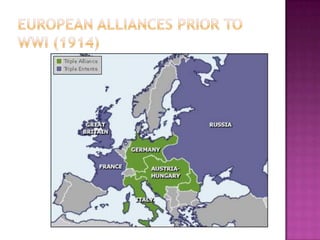
 Alliances
 Pride in ones own country
 Unifying factor within a country
 Own country is seen as superior
 Causes tension between nations
 Countries Competing for Dominance
 Colonization of new lands
 Competitive Industry and Technology
 Competing to be the Best
 The Buildup of the Armed Forces
 New Technology
 New Weapons
 Population Increase
 Allows for Bigger Armies
 Austria-Hungary declares war on Serbia after
assassination.
 Serbia turns to Russia for help and this forms
new alliances in Europe.
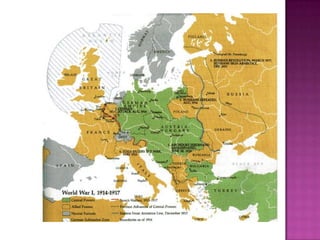
 Central Powers-Austria-Hungary and Germany
 Allied Powers-Serbia, Russia, France and
Great Britain
 Germany sends troops into Belgium and
France. The Allies stop the Germans just
outside of Paris
 Russia attacks Germany from the East,
hoping to force Germany to fight on two
sides of Europe and limiting their resources,
which would hopefully end the war quickly.
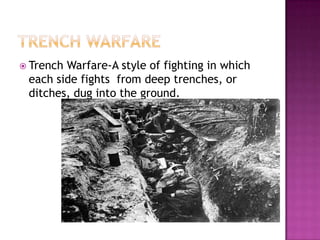
 Trench Warfare-A style of fighting in which
each side fights from deep trenches, or
ditches, dug into the ground.
 Machine Guns
 Poison Gas
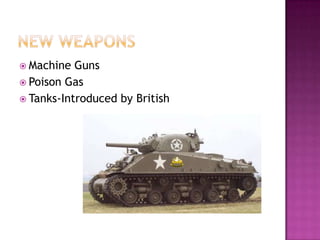
 Tanks-Introduced by British
 In 1917 America enters the war after
repeated attacks on American ships by
German U Boats
 America’s help to the Allies gave them a
fresh advantage.
 Russia pulls out of the war soon after
America enters
 In the fall of 1918 the Central Powers
surrender.
 US and President Woodrow Wilson called for
a just peace-fair not harsh or causing anger
in the losing countries.
 Other Allied leaders wanted to punish
Germany for their actions.
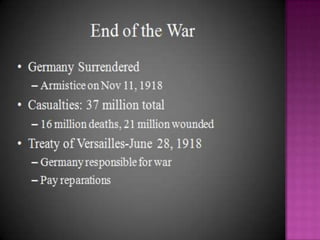
 The Treaty of Versailles was the final peace
settlement officially ending WWI
 Under the Treaty Germany had to:
 Accept blame for starting the war
 Slash the size of it’s army
 Give up their overseas colonies
 Pay Billions of Dollars for the damages
caused by the war
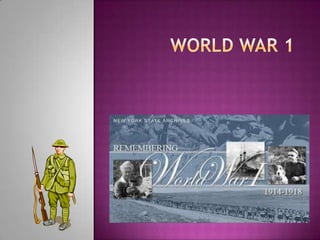
World War 1

World War 1

  • 2.
     Muhammad umair Arshadmahmood Muhammad Mudeser khalid Waqas ahmad Fazal youasaf khan
  • 4.
     Time ofGreat Change  Technology, Human Rights, Culture  Growing Populations  Expansionist Idea
  • 5.
     Nationalism  Competitionbetween Nations  Militarism  Alliances
  • 6.
     Pride inones own country  Unifying factor within a country  Own country is seen as superior  Causes tension between nations
  • 7.
     Countries Competingfor Dominance  Colonization of new lands  Competitive Industry and Technology  Competing to be the Best
  • 8.
     The Buildupof the Armed Forces  New Technology  New Weapons  Population Increase  Allows for Bigger Armies
  • 10.
     Austria-Hungary declareswar on Serbia after assassination.  Serbia turns to Russia for help and this forms new alliances in Europe.  Central Powers-Austria-Hungary and Germany  Allied Powers-Serbia, Russia, France and Great Britain
  • 11.
     Germany sendstroops into Belgium and France. The Allies stop the Germans just outside of Paris  Russia attacks Germany from the East, hoping to force Germany to fight on two sides of Europe and limiting their resources, which would hopefully end the war quickly.
  • 13.
     Trench Warfare-Astyle of fighting in which each side fights from deep trenches, or ditches, dug into the ground.
  • 14.
     Machine Guns Poison Gas  Tanks-Introduced by British
  • 15.
     In 1917America enters the war after repeated attacks on American ships by German U Boats  America’s help to the Allies gave them a fresh advantage.  Russia pulls out of the war soon after America enters  In the fall of 1918 the Central Powers surrender.
  • 16.
     US andPresident Woodrow Wilson called for a just peace-fair not harsh or causing anger in the losing countries.  Other Allied leaders wanted to punish Germany for their actions.  The Treaty of Versailles was the final peace settlement officially ending WWI
  • 17.
     Under theTreaty Germany had to:  Accept blame for starting the war  Slash the size of it’s army  Give up their overseas colonies  Pay Billions of Dollars for the damages caused by the war