WORLD PEACE 
2nd October--THE MOST PEACEFUL DAY OF THE YEAR
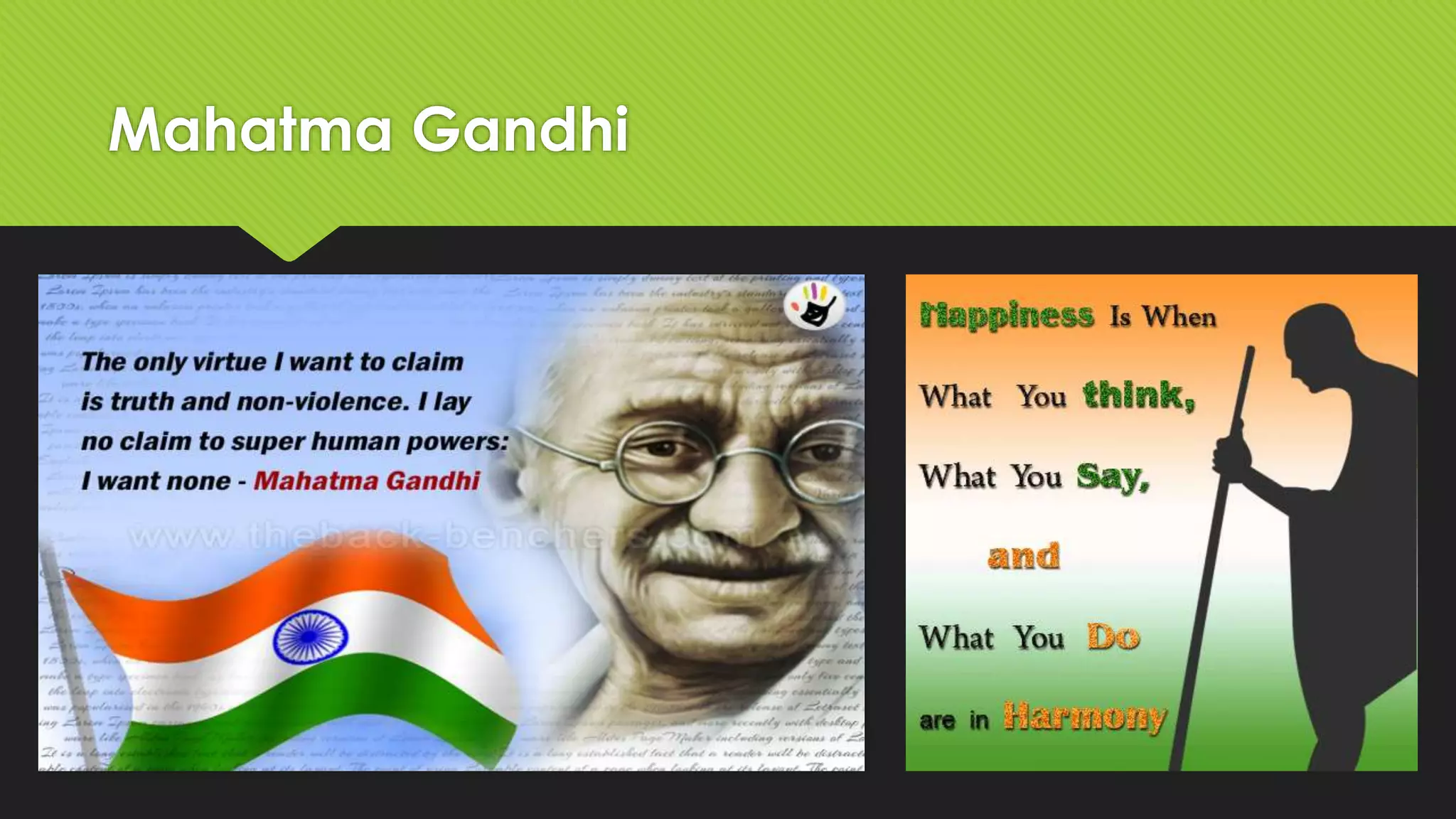
Mahatma Gandhi
Some Info about him and his activities 
 Mohandas Karamchand Gandhi (October 1869 – 30 January 1948) was the preeminent 
leader of Indian independence movement in British-ruled India. Employing nonviolent civil 
disobedience, Gandhi led India to independence and inspired movements for civil rights 
and freedom across the world. The honorific Mahatma applied to him first in 1914 in South 
Africa,is now used worldwide. He is also called Bapu in India. 
 Born and raised in a Hindu merchant caste family in coastal Gujarat, western India, and 
trained in law at the Inner Temple, London, Gandhi first employed nonviolent civil 
disobedience as an expatriate lawyer in South Africa, in the resident Indian community's 
struggle for civil rights. After his return to India in 1915, he set about organising peasants, 
farmers, and urban labourers to protest against excessive land-tax and discrimination. 
Assuming leadership of the Indian National Congress in 1921, Gandhi led nationwide 
campaigns for easing poverty, expanding women's rights, building religious and ethnic 
amity, ending untouchability, but above all for achieving Swaraj or self-rule.
Oath Ceremony
THANK YOU
PROUD TO BE AN INDIAN…….. 
MADE BY 
JOSHUA AND MUSTANSIR 
OF GRADE 9F

World peace.

  • 1.
    WORLD PEACE 2ndOctober--THE MOST PEACEFUL DAY OF THE YEAR
  • 2.
  • 4.
    Some Info abouthim and his activities  Mohandas Karamchand Gandhi (October 1869 – 30 January 1948) was the preeminent leader of Indian independence movement in British-ruled India. Employing nonviolent civil disobedience, Gandhi led India to independence and inspired movements for civil rights and freedom across the world. The honorific Mahatma applied to him first in 1914 in South Africa,is now used worldwide. He is also called Bapu in India.  Born and raised in a Hindu merchant caste family in coastal Gujarat, western India, and trained in law at the Inner Temple, London, Gandhi first employed nonviolent civil disobedience as an expatriate lawyer in South Africa, in the resident Indian community's struggle for civil rights. After his return to India in 1915, he set about organising peasants, farmers, and urban labourers to protest against excessive land-tax and discrimination. Assuming leadership of the Indian National Congress in 1921, Gandhi led nationwide campaigns for easing poverty, expanding women's rights, building religious and ethnic amity, ending untouchability, but above all for achieving Swaraj or self-rule.
  • 5.
  • 7.
  • 8.
    PROUD TO BEAN INDIAN…….. MADE BY JOSHUA AND MUSTANSIR OF GRADE 9F