Learning Objectives 
• To know that forgiveness, and peaceful means, can be 
more effective than revenge and violence. 
• Why and how rules and laws are made and enforced, 
why different rules are needed in different situations 
and how to take part in making and changing rules 
• To think about the lives of people living in other places 
and times, and people with different values and 
customs. 
• To realise the nature and consequences of racism, 
teasing, bullying and aggressive behaviours, and how 
to respond to them and ask for help.
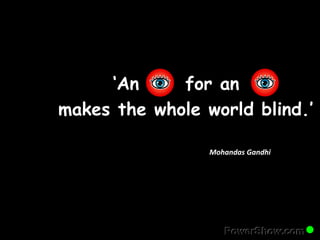
‘An for an 
makes the whole world blind.’ 
Mohandas Gandhi
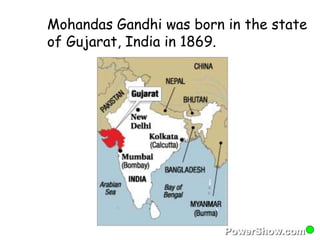
Mohandas Gandhi was born in the state 
of Gujarat, India in 1869.
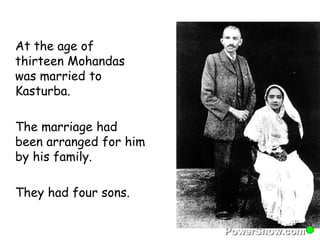
At the age of 
thirteen Mohandas 
was married to 
Kasturba. 
The marriage had 
been arranged for him 
by his family. 
They had four sons.
When he was 18 Gandhi came to London 
to train as a barrister. 
He tried behaving like an Englishman and 
took up ballroom dancing. We know that 
he took a dislike to his landlady’s boiled 
cabbage! 
In these days he got ‘stage fright’ when 
speaking in court.
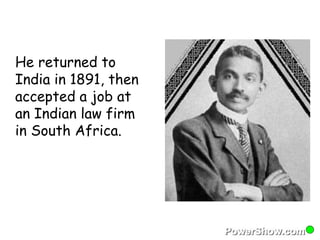
He returned to 
India in 1891, then 
accepted a job at 
an Indian law firm 
in South Africa.
His experience of racism in South Africa 
proved to be a turning point in his life. 
He was refused admission to hotels, beaten up 
when he refused to give up his seat to a white 
man on a stage coach ….. 
…and thrown off a train when he refused to 
move to a third class compartment, after he 
had paid for a first class ticket.
When he was about to 
return to India, he heard 
that a law was going 
to be passed to prevent 
Indian people from voting. 
He decided to draw attention to this 
injustice and became an activist.
However, Gandhi said: 
‘There are many causes that I am 
prepared to die for, but no causes that 
I am prepared to kill for.’ 
He developed a new non-violent way to 
make things right, by getting lots of 
people to disobey unfair laws, and to be 
unco-operative with rulers who were 
treating them badly.
Over the next seven years Gandhi led a 
non-violent campaign of resistance to 
laws which were unfair to ‘coloured’ 
people. 
During this time thousands of Indians, 
including Gandhi, were flogged or jailed, 
and many were shot for striking or 
burning their registration cards.
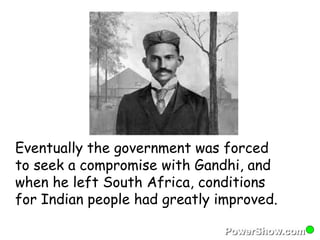
Eventually the government was forced 
to seek a compromise with Gandhi, and 
when he left South Africa, conditions 
for Indian people had greatly improved.
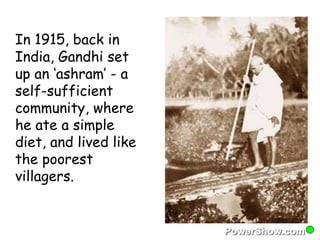
In 1915, back in 
India, Gandhi set 
up an ‘ashram’ - a 
self-sufficient 
community, where 
he ate a simple 
diet, and lived like 
the poorest 
villagers.
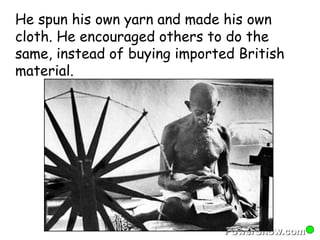
He spun his own yarn and made his own 
cloth. He encouraged others to do the 
same, instead of buying imported British 
material.
At this time Indian villagers were poorly 
paid, and many were dying of famine. 
In 1918 Gandhi began a campaign to get 
them to stand up for themselves against 
the British who were ruling India.
It was at this time that 
Gandhi became known as 
Mahatma, 
which means ‘Great Soul’.
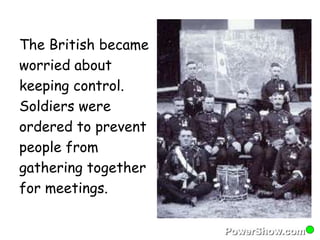
The British became 
worried about 
keeping control. 
Soldiers were 
ordered to prevent 
people from 
gathering together 
for meetings.
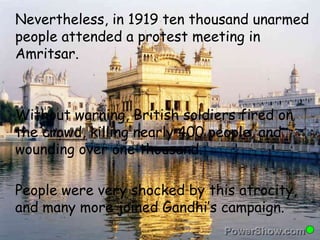
Nevertheless, in 1919 ten thousand unarmed 
people attended a protest meeting in 
Amritsar. 
Without warning, British soldiers fired on 
the crowd, killing nearly 400 people, and 
wounding over one thousand. 
People were very shocked by this atrocity, 
and many more joined Gandhi’s campaign.
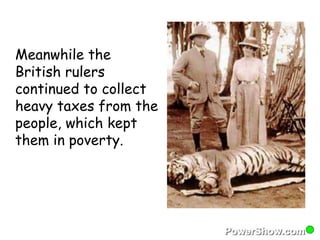
Meanwhile the 
British rulers 
continued to collect 
heavy taxes from the 
people, which kept 
them in poverty.
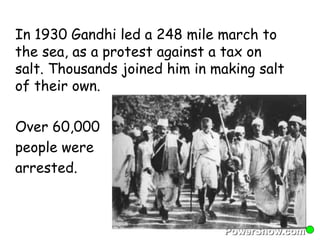
In 1930 Gandhi led a 248 mile march to 
the sea, as a protest against a tax on 
salt. Thousands joined him in making salt 
of their own. 
Over 60,000 
people were 
arrested.
However, the British government was 
forced to negotiate with Gandhi, and 
they agreed to release political 
prisoners if he stopped his campaign of 
non-co-operation.
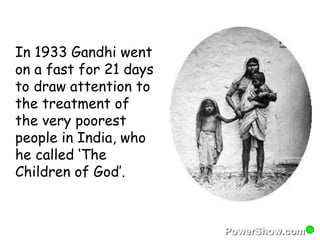
In 1933 Gandhi went 
on a fast for 21 days 
to draw attention to 
the treatment of 
the very poorest 
people in India, who 
he called ‘The 
Children of God’.
During the second World War, Gandhi 
and his followers made it clear that 
they wouldn’t support Britain unless 
India was granted independence. 
In 1942 Gandhi was arrested by the 
British, and imprisoned for two years.
By 1947 Gandhi’s campaign had weakened 
the British government’s hold on the 
country, but with independence looming, 
killings and riots raged between Hindus 
and Muslims who hoped to take control of 
the new Indian government.
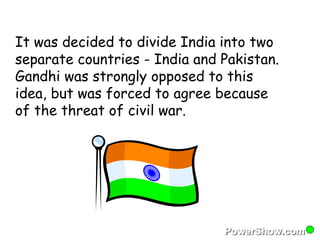
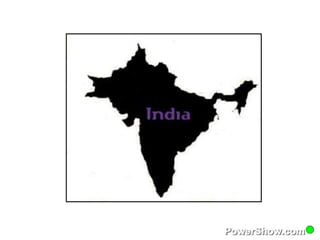
It was decided to divide India into two 
separate countries - India and Pakistan. 
Gandhi was strongly opposed to this 
idea, but was forced to agree because 
of the threat of civil war.
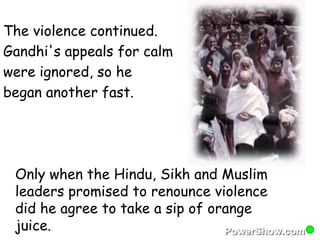
The violence continued. 
Gandhi's appeals for calm 
were ignored, so he 
began another fast. 
Only when the Hindu, Sikh and Muslim 
leaders promised to renounce violence 
did he agree to take a sip of orange 
juice.
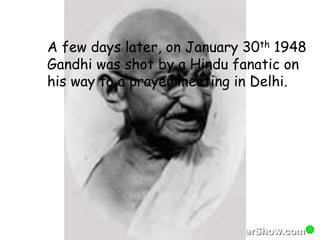
A few days later, on January 30th 1948 
Gandhi was shot by a Hindu fanatic on 
his way to a prayer meeting in Delhi.
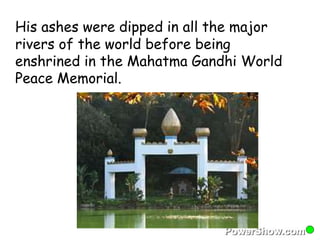
His ashes were dipped in all the major 
rivers of the world before being 
enshrined in the Mahatma Gandhi World 
Peace Memorial.
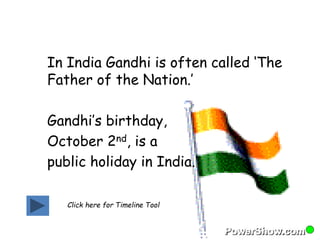
In India Gandhi is often called ‘The 
Father of the Nation.’ 
Gandhi’s birthday, 
October 2nd, is a 
public holiday in India. 
Click here for Timeline Tool
‘Be the Change you want to 
see in the World!’ 
Mohandas Gandhi
Glossary 
• negotiate – discuss, co-operate 
• fast – stop eating 
• co-operation – teamwork, mutual 
support 
• independence – self-government 
• civil war – a conflict between two 
groups within the same country 
• revenge -getting your own back
Activities to complete this lesson include: 
Rate this lesson here. 
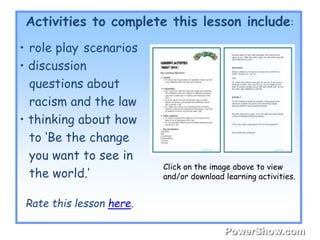
Click on the image above to view 
and/or download learning activities. 
• role play scenarios 
• discussion 
questions about 
racism and the law 
• thinking about how 
to ‘Be the change 
you want to see in 
the world.’
If you enjoyed this lesson, why not try: 
Sacrificing All for the Dream 
How Martin Luther King achieved change through 
peaceful protest. The nature of prejudice. 
Pioneering Nurses 
How Mary Seacole and Florence Nightingale overcame 
prejudice in order to help others. The importance of 
good hygiene, particularly in hospitals.
Useful Web Links 
• http://www.facinghistory.org/campus/BeTheChange - Be The Change-learn 
about today’s activists and how you can be the change 
• http://www.dosomething.org/ - a website for young people about taking 
action 
• http://www.idealist.org/teachers/index.html - idealists without borders – 
resources and activities for teachers 
• http://www.idealist.org/kt/index.html - idealists without borders –website 
for children 
• http://www.indianchild.com/mahatma_gandhi.htm - information about 
Mahatma Ghandi 
• http://www.myhero.com – teaching resources and thousands of stories of 
remarkable individuals written by children and adults alike 
• http://www.bethechange.org/ - posts, ideas and information on how to 
bring about positive change
Gandhi ji ki maha gatha

Gandhi ji ki maha gatha

  • 1.
    Learning Objectives •To know that forgiveness, and peaceful means, can be more effective than revenge and violence. • Why and how rules and laws are made and enforced, why different rules are needed in different situations and how to take part in making and changing rules • To think about the lives of people living in other places and times, and people with different values and customs. • To realise the nature and consequences of racism, teasing, bullying and aggressive behaviours, and how to respond to them and ask for help.
  • 2.
    ‘An for an makes the whole world blind.’ Mohandas Gandhi
  • 3.
    Mohandas Gandhi wasborn in the state of Gujarat, India in 1869.
  • 4.
    At the ageof thirteen Mohandas was married to Kasturba. The marriage had been arranged for him by his family. They had four sons.
  • 5.
    When he was18 Gandhi came to London to train as a barrister. He tried behaving like an Englishman and took up ballroom dancing. We know that he took a dislike to his landlady’s boiled cabbage! In these days he got ‘stage fright’ when speaking in court.
  • 6.
    He returned to India in 1891, then accepted a job at an Indian law firm in South Africa.
  • 7.
    His experience ofracism in South Africa proved to be a turning point in his life. He was refused admission to hotels, beaten up when he refused to give up his seat to a white man on a stage coach ….. …and thrown off a train when he refused to move to a third class compartment, after he had paid for a first class ticket.
  • 8.
    When he wasabout to return to India, he heard that a law was going to be passed to prevent Indian people from voting. He decided to draw attention to this injustice and became an activist.
  • 9.
    However, Gandhi said: ‘There are many causes that I am prepared to die for, but no causes that I am prepared to kill for.’ He developed a new non-violent way to make things right, by getting lots of people to disobey unfair laws, and to be unco-operative with rulers who were treating them badly.
  • 10.
    Over the nextseven years Gandhi led a non-violent campaign of resistance to laws which were unfair to ‘coloured’ people. During this time thousands of Indians, including Gandhi, were flogged or jailed, and many were shot for striking or burning their registration cards.
  • 11.
    Eventually the governmentwas forced to seek a compromise with Gandhi, and when he left South Africa, conditions for Indian people had greatly improved.
  • 12.
    In 1915, backin India, Gandhi set up an ‘ashram’ - a self-sufficient community, where he ate a simple diet, and lived like the poorest villagers.
  • 13.
    He spun hisown yarn and made his own cloth. He encouraged others to do the same, instead of buying imported British material.
  • 14.
    At this timeIndian villagers were poorly paid, and many were dying of famine. In 1918 Gandhi began a campaign to get them to stand up for themselves against the British who were ruling India.
  • 15.
    It was atthis time that Gandhi became known as Mahatma, which means ‘Great Soul’.
  • 16.
    The British became worried about keeping control. Soldiers were ordered to prevent people from gathering together for meetings.
  • 17.
    Nevertheless, in 1919ten thousand unarmed people attended a protest meeting in Amritsar. Without warning, British soldiers fired on the crowd, killing nearly 400 people, and wounding over one thousand. People were very shocked by this atrocity, and many more joined Gandhi’s campaign.
  • 18.
    Meanwhile the Britishrulers continued to collect heavy taxes from the people, which kept them in poverty.
  • 19.
    In 1930 Gandhiled a 248 mile march to the sea, as a protest against a tax on salt. Thousands joined him in making salt of their own. Over 60,000 people were arrested.
  • 20.
    However, the Britishgovernment was forced to negotiate with Gandhi, and they agreed to release political prisoners if he stopped his campaign of non-co-operation.
  • 21.
    In 1933 Gandhiwent on a fast for 21 days to draw attention to the treatment of the very poorest people in India, who he called ‘The Children of God’.
  • 22.
    During the secondWorld War, Gandhi and his followers made it clear that they wouldn’t support Britain unless India was granted independence. In 1942 Gandhi was arrested by the British, and imprisoned for two years.
  • 23.
    By 1947 Gandhi’scampaign had weakened the British government’s hold on the country, but with independence looming, killings and riots raged between Hindus and Muslims who hoped to take control of the new Indian government.
  • 24.
    It was decidedto divide India into two separate countries - India and Pakistan. Gandhi was strongly opposed to this idea, but was forced to agree because of the threat of civil war.
  • 26.
    The violence continued. Gandhi's appeals for calm were ignored, so he began another fast. Only when the Hindu, Sikh and Muslim leaders promised to renounce violence did he agree to take a sip of orange juice.
  • 27.
    A few dayslater, on January 30th 1948 Gandhi was shot by a Hindu fanatic on his way to a prayer meeting in Delhi.
  • 28.
    His ashes weredipped in all the major rivers of the world before being enshrined in the Mahatma Gandhi World Peace Memorial.
  • 29.
    In India Gandhiis often called ‘The Father of the Nation.’ Gandhi’s birthday, October 2nd, is a public holiday in India. Click here for Timeline Tool
  • 30.
    ‘Be the Changeyou want to see in the World!’ Mohandas Gandhi
  • 31.
    Glossary • negotiate– discuss, co-operate • fast – stop eating • co-operation – teamwork, mutual support • independence – self-government • civil war – a conflict between two groups within the same country • revenge -getting your own back
  • 32.
    Activities to completethis lesson include: Rate this lesson here. Click on the image above to view and/or download learning activities. • role play scenarios • discussion questions about racism and the law • thinking about how to ‘Be the change you want to see in the world.’
  • 33.
    If you enjoyedthis lesson, why not try: Sacrificing All for the Dream How Martin Luther King achieved change through peaceful protest. The nature of prejudice. Pioneering Nurses How Mary Seacole and Florence Nightingale overcame prejudice in order to help others. The importance of good hygiene, particularly in hospitals.
  • 34.
    Useful Web Links • http://www.facinghistory.org/campus/BeTheChange - Be The Change-learn about today’s activists and how you can be the change • http://www.dosomething.org/ - a website for young people about taking action • http://www.idealist.org/teachers/index.html - idealists without borders – resources and activities for teachers • http://www.idealist.org/kt/index.html - idealists without borders –website for children • http://www.indianchild.com/mahatma_gandhi.htm - information about Mahatma Ghandi • http://www.myhero.com – teaching resources and thousands of stories of remarkable individuals written by children and adults alike • http://www.bethechange.org/ - posts, ideas and information on how to bring about positive change