The World Is Too Much with Us
by William Wordsworth
ANALYSIS
Brief Overview
● "The World Is Too Much with Us" is a sonnet by William
Wordsworth that critiques the materialism of the First
Industrial Revolution and encourages appreciation of
nature. The poem is written in iambic pentameter with 14
lines and reflects Wordsworth's Romantic ideology. The
message is that people should not become too absorbed in
material pursuits and should instead appreciate the beauty
and importance of nature.
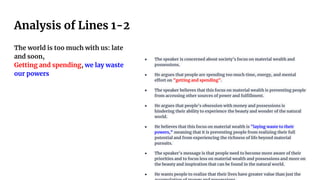
Analysis of Lines 1-2
The world is too much with us: late
and soon,
Getting and spending, we lay waste
our powers
● The speaker is concerned about society's focus on material wealth and
possessions.
● He argues that people are spending too much time, energy, and mental
effort on "getting and spending".
● The speaker believes that this focus on material wealth is preventing people
from accessing other sources of power and fulfillment.
● He argues that people's obsession with money and possessions is
hindering their ability to experience the beauty and wonder of the natural
world.
● He believes that this focus on material wealth is "laying waste to their
powers," meaning that it is preventing people from realizing their full
potential and from experiencing the richness of life beyond material
pursuits.
● The speaker's message is that people need to become more aware of their
priorities and to focus less on material wealth and possessions and more on
the beauty and inspiration that can be found in the natural world.
● He wants people to realize that their lives have greater value than just the
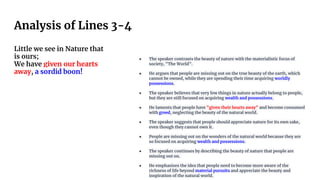
Analysis of Lines 3-4
Little we see in Nature that
is ours;
We have given our hearts
away, a sordid boon!
● The speaker contrasts the beauty of nature with the materialistic focus of
society, "The World".
● He argues that people are missing out on the true beauty of the earth, which
cannot be owned, while they are spending their time acquiring worldly
possessions.
● The speaker believes that very few things in nature actually belong to people,
but they are still focused on acquiring wealth and possessions.
● He laments that people have "given their hearts away" and become consumed
with greed, neglecting the beauty of the natural world.
● The speaker suggests that people should appreciate nature for its own sake,
even though they cannot own it.
● People are missing out on the wonders of the natural world because they are
so focused on acquiring wealth and possessions.
● The speaker continues by describing the beauty of nature that people are
missing out on.
● He emphasizes the idea that people need to become more aware of the
richness of life beyond material pursuits and appreciate the beauty and
inspiration of the natural world.
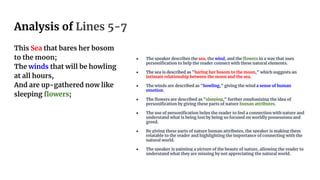
Analysis of Lines 5-7
This Sea that bares her bosom
to the moon;
The winds that will be howling
at all hours,
And are up-gathered now like
sleeping flowers;
● The speaker describes the sea, the wind, and the flowers in a way that uses
personification to help the reader connect with these natural elements.
● The sea is described as "baring her bosom to the moon," which suggests an
intimate relationship between the moon and the sea.
● The winds are described as "howling," giving the wind a sense of human
emotion.
● The flowers are described as "sleeping," further emphasizing the idea of
personification by giving these parts of nature human attributes.
● The use of personification helps the reader to feel a connection with nature and
understand what is being lost by being so focused on worldly possessions and
greed.
● By giving these parts of nature human attributes, the speaker is making them
relatable to the reader and highlighting the importance of connecting with the
natural world.
● The speaker is painting a picture of the beauty of nature, allowing the reader to
understand what they are missing by not appreciating the natural world.
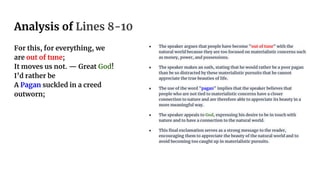
Analysis of Lines 8-10
For this, for everything, we
are out of tune;
It moves us not. — Great God!
I’d rather be
A Pagan suckled in a creed
outworn;
● The speaker argues that people have become "out of tune" with the
natural world because they are too focused on materialistic concerns such
as money, power, and possessions.
● The speaker makes an oath, stating that he would rather be a poor pagan
than be so distracted by these materialistic pursuits that he cannot
appreciate the true beauties of life.
● The use of the word "pagan" implies that the speaker believes that
people who are not tied to materialistic concerns have a closer
connection to nature and are therefore able to appreciate its beauty in a
more meaningful way.
● The speaker appeals to God, expressing his desire to be in touch with
nature and to have a connection to the natural world.
● This final exclamation serves as a strong message to the reader,
encouraging them to appreciate the beauty of the natural world and to
avoid becoming too caught up in materialistic pursuits.
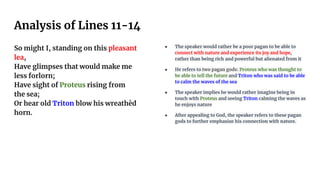
Analysis of Lines 11-14
So might I, standing on this pleasant
lea,
Have glimpses that would make me
less forlorn;
Have sight of Proteus rising from
the sea;
Or hear old Triton blow his wreathèd
horn.
● The speaker would rather be a poor pagan to be able to
connect with nature and experience its joy and hope,
rather than being rich and powerful but alienated from it
● He refers to two pagan gods: Proteus who was thought to
be able to tell the future and Triton who was said to be able
to calm the waves of the sea
● The speaker implies he would rather imagine being in
touch with Proteus and seeing Triton calming the waves as
he enjoys nature
● After appealing to God, the speaker refers to these pagan
gods to further emphasize his connection with nature.
The End

world is too much with us.pptx

  • 1.
    The World IsToo Much with Us by William Wordsworth ANALYSIS
  • 2.
    Brief Overview ● "TheWorld Is Too Much with Us" is a sonnet by William Wordsworth that critiques the materialism of the First Industrial Revolution and encourages appreciation of nature. The poem is written in iambic pentameter with 14 lines and reflects Wordsworth's Romantic ideology. The message is that people should not become too absorbed in material pursuits and should instead appreciate the beauty and importance of nature.
  • 3.
    Analysis of Lines1-2 The world is too much with us: late and soon, Getting and spending, we lay waste our powers ● The speaker is concerned about society's focus on material wealth and possessions. ● He argues that people are spending too much time, energy, and mental effort on "getting and spending". ● The speaker believes that this focus on material wealth is preventing people from accessing other sources of power and fulfillment. ● He argues that people's obsession with money and possessions is hindering their ability to experience the beauty and wonder of the natural world. ● He believes that this focus on material wealth is "laying waste to their powers," meaning that it is preventing people from realizing their full potential and from experiencing the richness of life beyond material pursuits. ● The speaker's message is that people need to become more aware of their priorities and to focus less on material wealth and possessions and more on the beauty and inspiration that can be found in the natural world. ● He wants people to realize that their lives have greater value than just the
  • 4.
    Analysis of Lines3-4 Little we see in Nature that is ours; We have given our hearts away, a sordid boon! ● The speaker contrasts the beauty of nature with the materialistic focus of society, "The World". ● He argues that people are missing out on the true beauty of the earth, which cannot be owned, while they are spending their time acquiring worldly possessions. ● The speaker believes that very few things in nature actually belong to people, but they are still focused on acquiring wealth and possessions. ● He laments that people have "given their hearts away" and become consumed with greed, neglecting the beauty of the natural world. ● The speaker suggests that people should appreciate nature for its own sake, even though they cannot own it. ● People are missing out on the wonders of the natural world because they are so focused on acquiring wealth and possessions. ● The speaker continues by describing the beauty of nature that people are missing out on. ● He emphasizes the idea that people need to become more aware of the richness of life beyond material pursuits and appreciate the beauty and inspiration of the natural world.
  • 5.
    Analysis of Lines5-7 This Sea that bares her bosom to the moon; The winds that will be howling at all hours, And are up-gathered now like sleeping flowers; ● The speaker describes the sea, the wind, and the flowers in a way that uses personification to help the reader connect with these natural elements. ● The sea is described as "baring her bosom to the moon," which suggests an intimate relationship between the moon and the sea. ● The winds are described as "howling," giving the wind a sense of human emotion. ● The flowers are described as "sleeping," further emphasizing the idea of personification by giving these parts of nature human attributes. ● The use of personification helps the reader to feel a connection with nature and understand what is being lost by being so focused on worldly possessions and greed. ● By giving these parts of nature human attributes, the speaker is making them relatable to the reader and highlighting the importance of connecting with the natural world. ● The speaker is painting a picture of the beauty of nature, allowing the reader to understand what they are missing by not appreciating the natural world.
  • 6.
    Analysis of Lines8-10 For this, for everything, we are out of tune; It moves us not. — Great God! I’d rather be A Pagan suckled in a creed outworn; ● The speaker argues that people have become "out of tune" with the natural world because they are too focused on materialistic concerns such as money, power, and possessions. ● The speaker makes an oath, stating that he would rather be a poor pagan than be so distracted by these materialistic pursuits that he cannot appreciate the true beauties of life. ● The use of the word "pagan" implies that the speaker believes that people who are not tied to materialistic concerns have a closer connection to nature and are therefore able to appreciate its beauty in a more meaningful way. ● The speaker appeals to God, expressing his desire to be in touch with nature and to have a connection to the natural world. ● This final exclamation serves as a strong message to the reader, encouraging them to appreciate the beauty of the natural world and to avoid becoming too caught up in materialistic pursuits.
  • 7.
    Analysis of Lines11-14 So might I, standing on this pleasant lea, Have glimpses that would make me less forlorn; Have sight of Proteus rising from the sea; Or hear old Triton blow his wreathèd horn. ● The speaker would rather be a poor pagan to be able to connect with nature and experience its joy and hope, rather than being rich and powerful but alienated from it ● He refers to two pagan gods: Proteus who was thought to be able to tell the future and Triton who was said to be able to calm the waves of the sea ● The speaker implies he would rather imagine being in touch with Proteus and seeing Triton calming the waves as he enjoys nature ● After appealing to God, the speaker refers to these pagan gods to further emphasize his connection with nature.
  • 8.