WORLD BREAST FEEDING WEEKS
FROM 1-8 OF AUGUST 2022
Dr. Anjalatchi Muthukumaran
Vice principal
Era college of nursing
INTRODCUTION
 The World Health Organization recommends
exclusive breastfeeding for the first 6 months
of life, followed by continued breastfeeding
with appropriate complementary foods for up
to 2 years and beyond.
 WHO also recommends early and
uninterrupted skin-to-skin contact, rooming-in
and kangaroo mother care which significantly
improve neonatal survival and reduce
morbidity.
WBW CELEBRATION
 Week :From August 1 to August 7, World
Breastfeeding Week is observed every year
across the world.
 Goal :It is a celebration of Motherhood and the
healthy life of the newborn.
 Objective : As breastfeeding is of utmost
importance for growth and healthy development
of infants, the week is celebrated to spread
awareness regarding early breastfeeding.
THEME OF THE YEAR 2022
 This year's theme for World Breastfeeding
Week is 'Step Up for Breastfeeding: Educate
and Support.
 World Breastfeeding Week was first celebrated
in 1992.
 Initially just 70 countries participated in the
celebration but now the number has been
increased to 170 countries.
 Let's know more about its History and
significance in detail.
WORLD BREASTFEEDING WEEK 2022:
SIGNIFICANCE
 The purpose of World Breastfeeding Week is to
promote breastfeeding and bring the
breastfeeding community together.
 It is advised that mothers nurse their babies for
six months after birth. Breast milk contains
antibodies that help the infant's body fight off
infections and bacteria.
 infants breastfed for six months have zero
danger of getting ear infections, respiratory
issues, or diarrhoea. Breastfed infants are less
likely to develop asthma or allergies.
WORLD WBW IMPORTANCE
 WBW2022 will focus on strengthening the
capacity of actors that have to protect,
promote and support breastfeeding across
different levels of society.
 These actors make up the warm chain of
support for breastfeeding.
TARGET AUDIENCE
 Target audiences including governments,
health systems, workplaces and communities
will be informed, educated and empowered
to strengthen their capacity to provide and
sustain breastfeeding-friendly environments
for families in the post pandemic world.
HORMONES RESPONSIBLE FOR MILK
SEGREGATION
 Prolactin is the hormone that produces milk.
You'll notice your milk production increases
dramatically at this stage. It's often referred to
as milk “coming in.
 However, milk is not secreted then,
because progesterone and oestrogen, the
hormones of pregnancy, block this action of
prolactin.
 After delivery, levels of progesterone and
oestrogen fall rapidly, prolactin is no longer
blocked, and milk secretion begins.
COLOSTRUMS
LET DOWN REFLEX
THE MILK EJECTION REFLEX
BREAST MILK COMPOSITION
 Human milk consists of 87% water, 1%
protein, 4% lipid, and 7%
carbohydrate (including 1 to 2.4%
oligosaccharides) (Figure 1). It also contains
many minerals (Calcium, Phosphorus,
Magnesium, Potassium, Sodium, etc…) and
many vitamins.
QUANTITY OF MILK PER DAY
 A typical range of milk intake is 19 oz to 30 oz
(570 ml to 900 ml) per day.
 Fore milk :Milk expressed at the beginning of
feeding is known as foremilk
 Hind milk : that at the end of feeding is known
as hindmilk.
 As hind milk contains higher fat, vitamins A
and E, and higher calories than foremilk,
feeding only hind milk initially and reserving
foremilk for later are practiced in some neonatal
intensive care units.
COMPONENTS ARE RICH IN BREAST MILK?
 The most abundant proteins are casein, α-
lactalbumin, lactoferrin, secretory
immunoglobulin IgA, lysozyme, and
serum albumin. Non-protein nitrogen-
containing compounds, including urea, uric
acid, creatine, creatinine, amino acids, and
nucleotides, comprise ~25% of human milk
nitrogen.
TEN STEPS TO SUCCESS OF BF
BENEFIT S FOR BREAST MILK
CONTINUED
BREASTFEEDING POSITIONS
 Lie your baby across your lap, facing you.
 Place your baby's head on your forearm –
nose towards your nipple. Your hand should
support the length of their body.
 Place your baby's lower arm under yours.
 Check to make sure your baby's ear,
shoulder and hip are in a straight line.
POST NATAL CARE
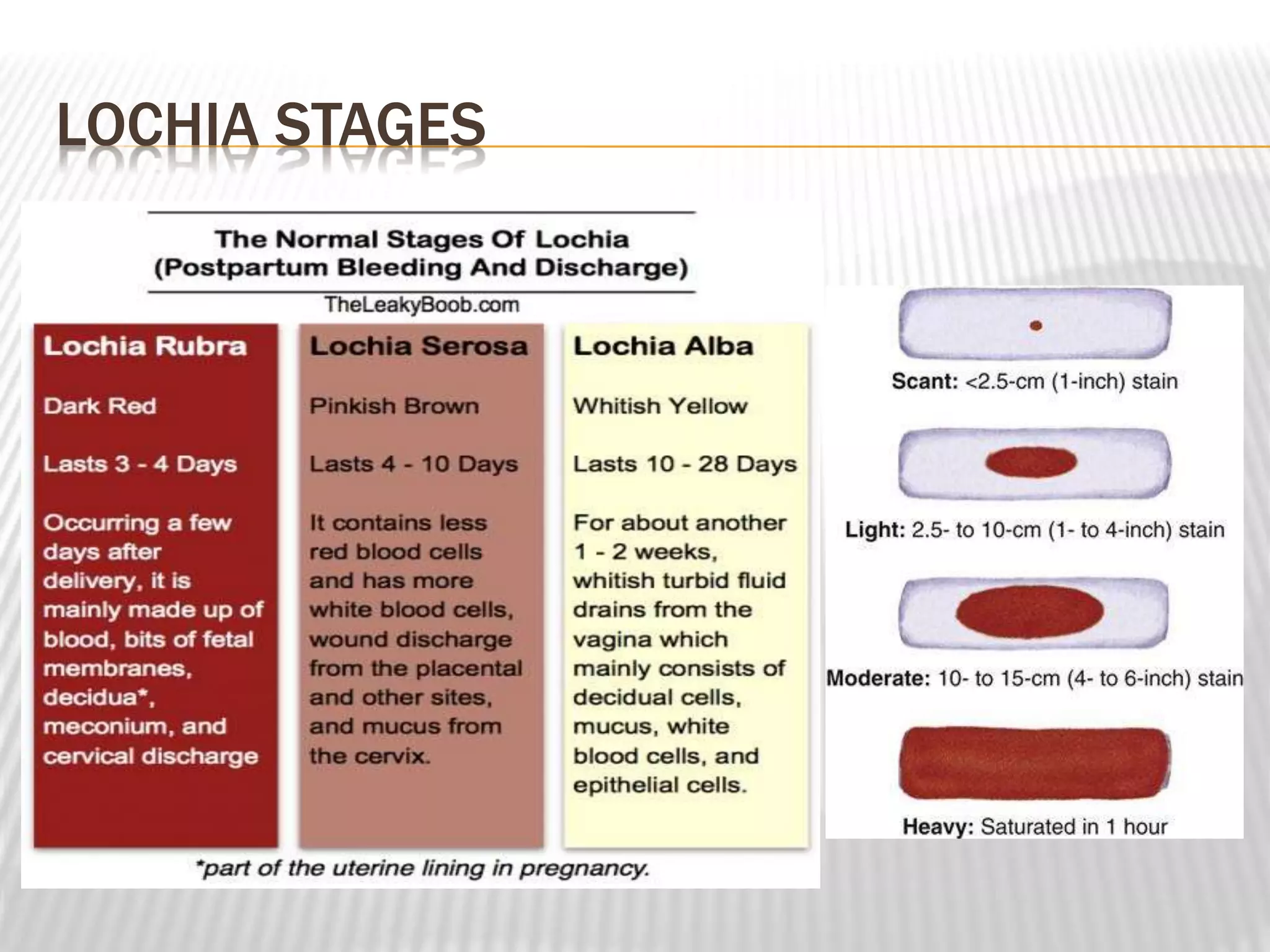
LOCHIA STAGES
REEDA EVALUATION
INVOLUTION OF UTERUS
POST NATAL DIET
POST NATAL DRUG
CARE OF RIGHT AFTER BIRTH
QUESTIONS TIME …..
 What is breast feeding ?
 What is the name of first milk secreted in human
mother ?
 The quantity of milk per day secret ?
 Composition of milk ?
 What is hind milk?
 What is fore milk
 What is colostrums ?
 Which hormones is responsible for milk ejection
?
ANY DOUBTS ?
THANK YOU …

World breast feeding weeks.pptx

  • 1.
    WORLD BREAST FEEDINGWEEKS FROM 1-8 OF AUGUST 2022 Dr. Anjalatchi Muthukumaran Vice principal Era college of nursing
  • 2.
    INTRODCUTION  The WorldHealth Organization recommends exclusive breastfeeding for the first 6 months of life, followed by continued breastfeeding with appropriate complementary foods for up to 2 years and beyond.  WHO also recommends early and uninterrupted skin-to-skin contact, rooming-in and kangaroo mother care which significantly improve neonatal survival and reduce morbidity.
  • 3.
    WBW CELEBRATION  Week:From August 1 to August 7, World Breastfeeding Week is observed every year across the world.  Goal :It is a celebration of Motherhood and the healthy life of the newborn.  Objective : As breastfeeding is of utmost importance for growth and healthy development of infants, the week is celebrated to spread awareness regarding early breastfeeding.
  • 4.
    THEME OF THEYEAR 2022  This year's theme for World Breastfeeding Week is 'Step Up for Breastfeeding: Educate and Support.  World Breastfeeding Week was first celebrated in 1992.  Initially just 70 countries participated in the celebration but now the number has been increased to 170 countries.  Let's know more about its History and significance in detail.
  • 5.
    WORLD BREASTFEEDING WEEK2022: SIGNIFICANCE  The purpose of World Breastfeeding Week is to promote breastfeeding and bring the breastfeeding community together.  It is advised that mothers nurse their babies for six months after birth. Breast milk contains antibodies that help the infant's body fight off infections and bacteria.  infants breastfed for six months have zero danger of getting ear infections, respiratory issues, or diarrhoea. Breastfed infants are less likely to develop asthma or allergies.
  • 6.
    WORLD WBW IMPORTANCE WBW2022 will focus on strengthening the capacity of actors that have to protect, promote and support breastfeeding across different levels of society.  These actors make up the warm chain of support for breastfeeding.
  • 7.
    TARGET AUDIENCE  Targetaudiences including governments, health systems, workplaces and communities will be informed, educated and empowered to strengthen their capacity to provide and sustain breastfeeding-friendly environments for families in the post pandemic world.
  • 8.
    HORMONES RESPONSIBLE FORMILK SEGREGATION  Prolactin is the hormone that produces milk. You'll notice your milk production increases dramatically at this stage. It's often referred to as milk “coming in.  However, milk is not secreted then, because progesterone and oestrogen, the hormones of pregnancy, block this action of prolactin.  After delivery, levels of progesterone and oestrogen fall rapidly, prolactin is no longer blocked, and milk secretion begins.
  • 9.
  • 12.
  • 13.
  • 14.
    BREAST MILK COMPOSITION Human milk consists of 87% water, 1% protein, 4% lipid, and 7% carbohydrate (including 1 to 2.4% oligosaccharides) (Figure 1). It also contains many minerals (Calcium, Phosphorus, Magnesium, Potassium, Sodium, etc…) and many vitamins.
  • 15.
    QUANTITY OF MILKPER DAY  A typical range of milk intake is 19 oz to 30 oz (570 ml to 900 ml) per day.  Fore milk :Milk expressed at the beginning of feeding is known as foremilk  Hind milk : that at the end of feeding is known as hindmilk.  As hind milk contains higher fat, vitamins A and E, and higher calories than foremilk, feeding only hind milk initially and reserving foremilk for later are practiced in some neonatal intensive care units.
  • 16.
    COMPONENTS ARE RICHIN BREAST MILK?  The most abundant proteins are casein, α- lactalbumin, lactoferrin, secretory immunoglobulin IgA, lysozyme, and serum albumin. Non-protein nitrogen- containing compounds, including urea, uric acid, creatine, creatinine, amino acids, and nucleotides, comprise ~25% of human milk nitrogen.
  • 18.
    TEN STEPS TOSUCCESS OF BF
  • 20.
    BENEFIT S FORBREAST MILK
  • 21.
  • 22.
    BREASTFEEDING POSITIONS  Lieyour baby across your lap, facing you.  Place your baby's head on your forearm – nose towards your nipple. Your hand should support the length of their body.  Place your baby's lower arm under yours.  Check to make sure your baby's ear, shoulder and hip are in a straight line.
  • 24.
  • 26.
  • 27.
  • 28.
  • 29.
  • 31.
  • 32.
    CARE OF RIGHTAFTER BIRTH
  • 35.
    QUESTIONS TIME ….. What is breast feeding ?  What is the name of first milk secreted in human mother ?  The quantity of milk per day secret ?  Composition of milk ?  What is hind milk?  What is fore milk  What is colostrums ?  Which hormones is responsible for milk ejection ?
  • 36.
  • 37.