



ACCULTURATIONACCULTURATION
CARLOS F. CAMARGO, PH.D.CARLOS F. CAMARGO, PH.D. THE NEW AMERICA FOUNDATIONTHE NEW AMERICA FOUNDATION
CROSS-CULTURAL TRAININGCROSS-CULTURAL TRAINING
FOR NEWCOMER &FOR NEWCOMER &
MICRO-ENTERPRISEMICRO-ENTERPRISE
PRACTIONERSPRACTIONERS
Classic Definition
““Acculturation comprehends thoseAcculturation comprehends those
phenomena which result when groups ofphenomena which result when groups of
individuals having different cultures comeindividuals having different cultures come
into continuous first hand contact withinto continuous first hand contact with
subsequent changes in the originalsubsequent changes in the original
culture patternsculture patterns
of either or both groups.”of either or both groups.”
Redfield, Linton, and Herskovitz (1936)
Measures of Acculturation
• broader world view
• reduction in ethnocentrisms
• greater self-awareness and self esteem
• attitudes toward host culture
• psychological distress
• perceptual maturity
• mood states
• health evaluations
• feelings of acceptance and satisfaction
• nature and extent of interactions with
hosts
Measures of
Acculturation
• acquisition of culturally
appropriate behaviors and
skills
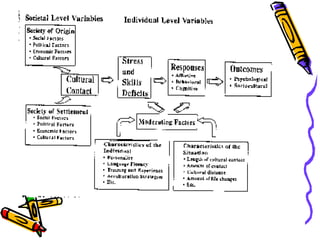
• academic competence
• job performance
Models of
Adaptation/Acculturation
• Recuperation model—based on culture
shock (Oberg)
• Learning model (Guthrie, Taylor)
• Journey model—(Bennett)
• Equilibrium model ((Grove and Torbiorn)
Anderson’s
Types of Adjusters
1. Returnees
2. Escapers
3. Time servers
4. Beavers
5. Adjusters
6. Participators
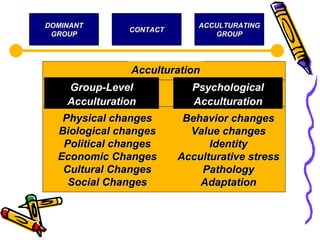
DOMINANTDOMINANT
GROUPGROUP
CONTACTCONTACT
ACCULTURATINGACCULTURATING
GROUPGROUP
AcculturationAcculturation
Group-LevelGroup-Level
AcculturationAcculturation
PsychologicalPsychological
AcculturationAcculturation
Physical changesPhysical changes
Biological changesBiological changes
Political changesPolitical changes
Economic ChangesEconomic Changes
Cultural ChangesCultural Changes
Social ChangesSocial Changes
Behavior changesBehavior changes
Value changesValue changes
IdentityIdentity
Acculturative stressAcculturative stress
PathologyPathology
AdaptationAdaptation
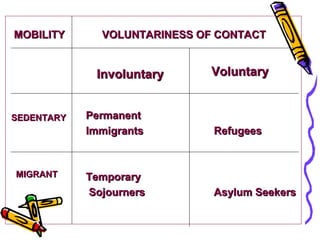
MOBILITYMOBILITY VOLUNTARINESS OF CONTACTVOLUNTARINESS OF CONTACT
VoluntaryVoluntaryInvoluntaryInvoluntary
SEDENTARYSEDENTARY
MIGRANTMIGRANT
PermanentPermanent
ImmigrantsImmigrants RefugeesRefugees
TemporaryTemporary
SojournersSojourners Asylum SeekersAsylum Seekers
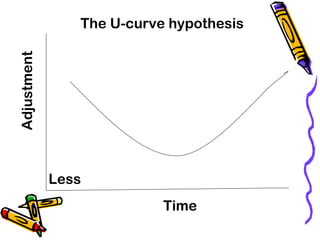
The U-curve hypothesisAdjustment
Time
Less
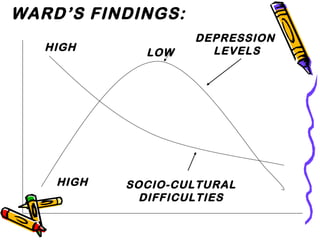
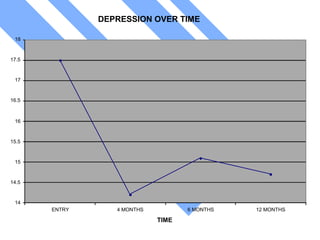
WARD’S FINDINGS:
DEPRESSION
LEVELS
SOCIO-CULTURAL
DIFFICULTIES
HIGH
HIGH LOW
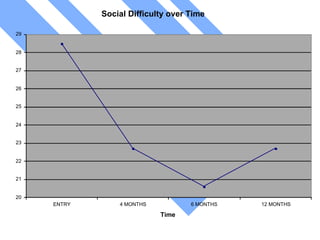
Social Difficulty over Time
20
21
22
23
24
25
26
27
28
29
ENTRY 4 MONTHS 6 MONTHS 12 MONTHS
Time
SCAS
DEPRESSION OVER TIME
14
14.5
15
15.5
16
16.5
17
17.5
18
ENTRY 4 MONTHS 6 MONTHS 12 MONTHS
TIME
SDS
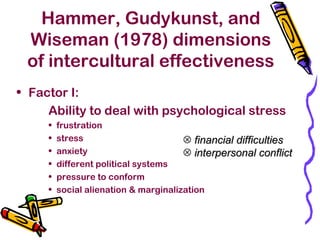
Hammer, Gudykunst, and
Wiseman (1978) dimensions
of intercultural effectiveness
• Factor I:
Ability to deal with psychological stress
• frustration
• stress
• anxiety
• different political systems
• pressure to conform
• social alienation & marginalization
⊗ financial difficultiesfinancial difficulties
⊗ interpersonal conflictinterpersonal conflict
Hammer, Gudykunst,
&Wiseman
dimensions of intercultural
effectiveness (1978)
• Factor II: Ability to communicate
effectively
– ability to enter into meaningful dialogue
– ability to initiate interaction with a
stranger
– ability to deal with communication
misunderstandings
– ability to effectively deal with different
communication styles
Hammer, Gudykunst, and
Wiseman (1978)
dimensions of intercultural
effectiveness
• Factor III: Ability to establish interpersonal
relationships
• ability to develop satisfying interpersonal relationships
• ability to maintain satisfying interpersonal relationships
• ability to accurately understand the feelings of other
people
• ability to effectively work with other people
Ward’s 2 factor theory
Ward and Chang, IJIR,
1997
• Psychological adjustment: refers to
psychological well-being or
emotional satisfaction
• socio-cultural adjustment: ability to
negotiate the host-culture, or
general intercultural competence
Predictors of Ward’s
Factors
• Psychological adjustment
– personality, life changes, social support
• socio-cultural adjustment
– amount of contact with host nationals, length
of residence in a new culture, cultural
identity, and cultural distance
Cultural Fit Hypothesis
Ward and Change, 1997
• Distress is a function of the difference
between certain personality
characteristics of the person and the
host country norms
• These levels of distress will be unrelated
to socio-cultural difficulties
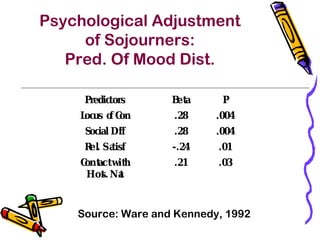
Psychological Adjustment
of Sojourners:
Pred. Of Mood Dist.
Predictors Beta P
Locus of Con .28 .004
Social Diff .28 .004
Rel. Satisf -.24 .01
Contactwith
Host.Nat
.21 .03
Source: Ware and Kennedy, 1992
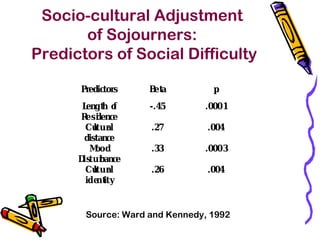
Socio-cultural Adjustment
of Sojourners:
Predictors of Social Difficulty
Predictors Beta p
Length of
Residence
-.45 .0001
Cultural
distance
.27 .004
Mood
Disturbance
.33 .0003
Cultural
identity
.26 .004
Source: Ward and Kennedy, 1992
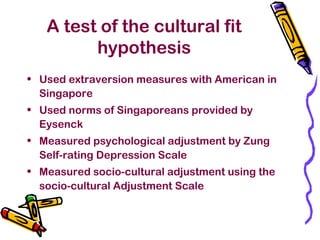
A test of the cultural fit
hypothesis
• Used extraversion measures with American in
Singapore
• Used norms of Singaporeans provided by
Eysenck
• Measured psychological adjustment by Zung
Self-rating Depression Scale
• Measured socio-cultural adjustment using the
socio-cultural Adjustment Scale
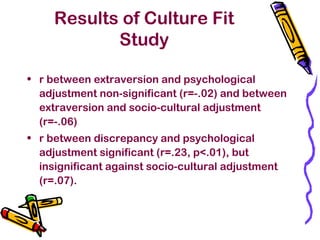
Results of Culture Fit
Study
• r between extraversion and psychological
adjustment non-significant (r=-.02) and between
extraversion and socio-cultural adjustment
(r=-.06)
• r between discrepancy and psychological
adjustment significant (r=.23, p<.01), but
insignificant against socio-cultural adjustment
(r=.07).
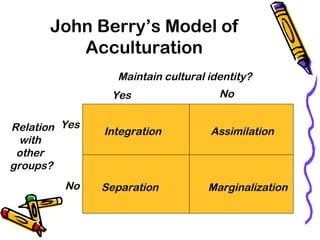
John Berry’s Model of
Acculturation
Maintain cultural identity?
Yes No
Relation
with
other
groups?
Yes
No
Integration
Separation
Assimilation
Marginalization
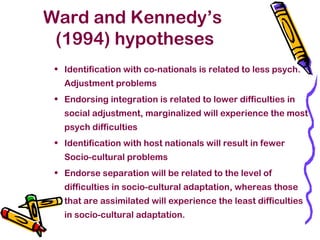
Ward and Kennedy’s
(1994) hypotheses
• Identification with co-nationals is related to less psych.
Adjustment problems
• Endorsing integration is related to lower difficulties in
social adjustment, marginalized will experience the most
psych difficulties
• Identification with host nationals will result in fewer
Socio-cultural problems
• Endorse separation will be related to the level of
difficulties in socio-cultural adaptation, whereas those
that are assimilated will experience the least difficulties
in socio-cultural adaptation.
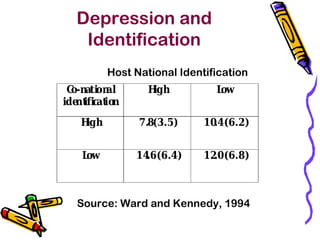
Depression and
Identification
Co-national
identification
High Low
High 7.8(3.5) 10.4(6.2)
Low 14.6(6.4) 12.0(6.8)
Host National Identification
Source: Ward and Kennedy, 1994
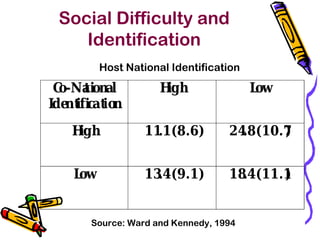
Social Difficulty and
Identification
Co-National
Identification
High Low
High 11.1(8.6) 24.8(10.7)
Low 13.4(9.1) 18.4(11.1)
Host National Identification
Source: Ward and Kennedy, 1994
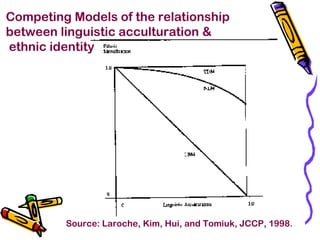
Competing Models of the relationship
between linguistic acculturation &
ethnic identity
Source: Laroche, Kim, Hui, and Tomiuk, JCCP, 1998.
A measure of linguistic
acculturation
• How often do you use (English, Spanish)
• with spouse
• with children
• with relatives
• when at work
• when watching TV
• when listening to radio
• when reading newspapers
A measure of linguistic
acculturation
• How often do you use (English, Spanish)
– when reading magazines
– when shopping
– with close friends
– when at school
A measure of ethnic
identification
– I consider myself to be Anglophone
– I consider myself to be Hispanophone
– I consider myself to be Salvadoran
American
– I consider myself to be Colombian
– I consider myself to be American
Factors affecting
acculturation
• Society of origin:
– Ethnographic characteristics
– Political situation
– Economic Conditions
– Demographic factors (e.g., crowding,
population explosion.)
Factors affecting
acculturation
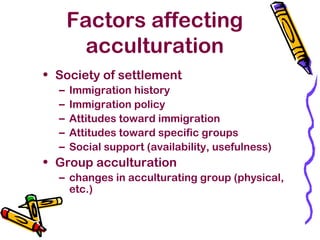
• Society of settlement
– Immigration history
– Immigration policy
– Attitudes toward immigration
– Attitudes toward specific groups
– Social support (availability, usefulness)
• Group acculturation
– changes in acculturating group (physical,
etc.)
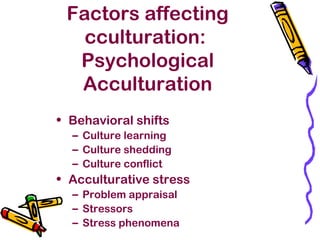
Factors affecting
cculturation:
Psychological
Acculturation
• Behavioral shifts
– Culture learning
– Culture shedding
– Culture conflict
• Acculturative stress
– Problem appraisal
– Stressors
– Stress phenomena
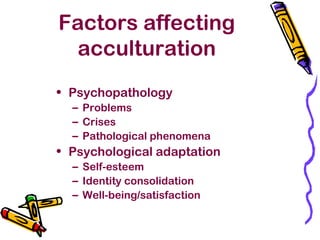
Factors affecting
acculturation
• Psychopathology
– Problems
– Crises
– Pathological phenomena
• Psychological adaptation
– Self-esteem
– Identity consolidation
– Well-being/satisfaction
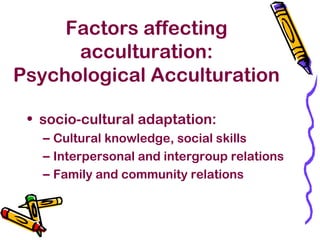
Factors affecting
acculturation:
Psychological Acculturation
• socio-cultural adaptation:
– Cultural knowledge, social skills
– Interpersonal and intergroup relations
– Family and community relations
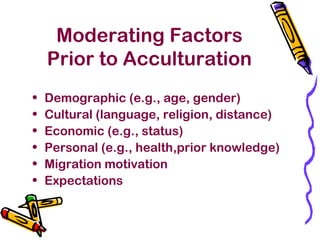
Moderating Factors
Prior to Acculturation
• Demographic (e.g., age, gender)
• Cultural (language, religion, distance)
• Economic (e.g., status)
• Personal (e.g., health,prior knowledge)
• Migration motivation
• Expectations
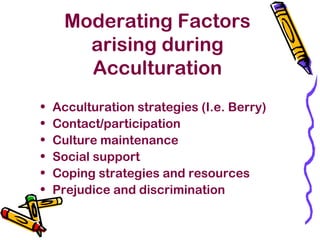
Moderating Factors
arising during
Acculturation
• Acculturation strategies (I.e. Berry)
• Contact/participation
• Culture maintenance
• Social support
• Coping strategies and resources
• Prejudice and discrimination

Workshop-Acculturation-cfc

  • 1.
    ACCULTURATIONACCULTURATION CARLOS F. CAMARGO,PH.D.CARLOS F. CAMARGO, PH.D. THE NEW AMERICA FOUNDATIONTHE NEW AMERICA FOUNDATION CROSS-CULTURAL TRAININGCROSS-CULTURAL TRAINING FOR NEWCOMER &FOR NEWCOMER & MICRO-ENTERPRISEMICRO-ENTERPRISE PRACTIONERSPRACTIONERS
  • 2.
    Classic Definition ““Acculturation comprehendsthoseAcculturation comprehends those phenomena which result when groups ofphenomena which result when groups of individuals having different cultures comeindividuals having different cultures come into continuous first hand contact withinto continuous first hand contact with subsequent changes in the originalsubsequent changes in the original culture patternsculture patterns of either or both groups.”of either or both groups.” Redfield, Linton, and Herskovitz (1936)
  • 3.
    Measures of Acculturation •broader world view • reduction in ethnocentrisms • greater self-awareness and self esteem • attitudes toward host culture • psychological distress • perceptual maturity • mood states • health evaluations • feelings of acceptance and satisfaction • nature and extent of interactions with hosts
  • 4.
    Measures of Acculturation • acquisitionof culturally appropriate behaviors and skills • academic competence • job performance
  • 5.
    Models of Adaptation/Acculturation • Recuperationmodel—based on culture shock (Oberg) • Learning model (Guthrie, Taylor) • Journey model—(Bennett) • Equilibrium model ((Grove and Torbiorn)
  • 6.
    Anderson’s Types of Adjusters 1.Returnees 2. Escapers 3. Time servers 4. Beavers 5. Adjusters 6. Participators
  • 7.
    DOMINANTDOMINANT GROUPGROUP CONTACTCONTACT ACCULTURATINGACCULTURATING GROUPGROUP AcculturationAcculturation Group-LevelGroup-Level AcculturationAcculturation PsychologicalPsychological AcculturationAcculturation Physical changesPhysical changes BiologicalchangesBiological changes Political changesPolitical changes Economic ChangesEconomic Changes Cultural ChangesCultural Changes Social ChangesSocial Changes Behavior changesBehavior changes Value changesValue changes IdentityIdentity Acculturative stressAcculturative stress PathologyPathology AdaptationAdaptation
  • 8.
    MOBILITYMOBILITY VOLUNTARINESS OFCONTACTVOLUNTARINESS OF CONTACT VoluntaryVoluntaryInvoluntaryInvoluntary SEDENTARYSEDENTARY MIGRANTMIGRANT PermanentPermanent ImmigrantsImmigrants RefugeesRefugees TemporaryTemporary SojournersSojourners Asylum SeekersAsylum Seekers
  • 9.
  • 10.
  • 11.
    Social Difficulty overTime 20 21 22 23 24 25 26 27 28 29 ENTRY 4 MONTHS 6 MONTHS 12 MONTHS Time SCAS
  • 12.
  • 13.
    Hammer, Gudykunst, and Wiseman(1978) dimensions of intercultural effectiveness • Factor I: Ability to deal with psychological stress • frustration • stress • anxiety • different political systems • pressure to conform • social alienation & marginalization ⊗ financial difficultiesfinancial difficulties ⊗ interpersonal conflictinterpersonal conflict
  • 14.
    Hammer, Gudykunst, &Wiseman dimensions ofintercultural effectiveness (1978) • Factor II: Ability to communicate effectively – ability to enter into meaningful dialogue – ability to initiate interaction with a stranger – ability to deal with communication misunderstandings – ability to effectively deal with different communication styles
  • 15.
    Hammer, Gudykunst, and Wiseman(1978) dimensions of intercultural effectiveness • Factor III: Ability to establish interpersonal relationships • ability to develop satisfying interpersonal relationships • ability to maintain satisfying interpersonal relationships • ability to accurately understand the feelings of other people • ability to effectively work with other people
  • 17.
    Ward’s 2 factortheory Ward and Chang, IJIR, 1997 • Psychological adjustment: refers to psychological well-being or emotional satisfaction • socio-cultural adjustment: ability to negotiate the host-culture, or general intercultural competence
  • 18.
    Predictors of Ward’s Factors •Psychological adjustment – personality, life changes, social support • socio-cultural adjustment – amount of contact with host nationals, length of residence in a new culture, cultural identity, and cultural distance
  • 19.
    Cultural Fit Hypothesis Wardand Change, 1997 • Distress is a function of the difference between certain personality characteristics of the person and the host country norms • These levels of distress will be unrelated to socio-cultural difficulties
  • 20.
    Psychological Adjustment of Sojourners: Pred.Of Mood Dist. Predictors Beta P Locus of Con .28 .004 Social Diff .28 .004 Rel. Satisf -.24 .01 Contactwith Host.Nat .21 .03 Source: Ware and Kennedy, 1992
  • 21.
    Socio-cultural Adjustment of Sojourners: Predictorsof Social Difficulty Predictors Beta p Length of Residence -.45 .0001 Cultural distance .27 .004 Mood Disturbance .33 .0003 Cultural identity .26 .004 Source: Ward and Kennedy, 1992
  • 22.
    A test ofthe cultural fit hypothesis • Used extraversion measures with American in Singapore • Used norms of Singaporeans provided by Eysenck • Measured psychological adjustment by Zung Self-rating Depression Scale • Measured socio-cultural adjustment using the socio-cultural Adjustment Scale
  • 23.
    Results of CultureFit Study • r between extraversion and psychological adjustment non-significant (r=-.02) and between extraversion and socio-cultural adjustment (r=-.06) • r between discrepancy and psychological adjustment significant (r=.23, p<.01), but insignificant against socio-cultural adjustment (r=.07).
  • 24.
    John Berry’s Modelof Acculturation Maintain cultural identity? Yes No Relation with other groups? Yes No Integration Separation Assimilation Marginalization
  • 25.
    Ward and Kennedy’s (1994)hypotheses • Identification with co-nationals is related to less psych. Adjustment problems • Endorsing integration is related to lower difficulties in social adjustment, marginalized will experience the most psych difficulties • Identification with host nationals will result in fewer Socio-cultural problems • Endorse separation will be related to the level of difficulties in socio-cultural adaptation, whereas those that are assimilated will experience the least difficulties in socio-cultural adaptation.
  • 26.
    Depression and Identification Co-national identification High Low High7.8(3.5) 10.4(6.2) Low 14.6(6.4) 12.0(6.8) Host National Identification Source: Ward and Kennedy, 1994
  • 27.
    Social Difficulty and Identification Co-National Identification HighLow High 11.1(8.6) 24.8(10.7) Low 13.4(9.1) 18.4(11.1) Host National Identification Source: Ward and Kennedy, 1994
  • 28.
    Competing Models ofthe relationship between linguistic acculturation & ethnic identity Source: Laroche, Kim, Hui, and Tomiuk, JCCP, 1998.
  • 29.
    A measure oflinguistic acculturation • How often do you use (English, Spanish) • with spouse • with children • with relatives • when at work • when watching TV • when listening to radio • when reading newspapers
  • 30.
    A measure oflinguistic acculturation • How often do you use (English, Spanish) – when reading magazines – when shopping – with close friends – when at school
  • 31.
    A measure ofethnic identification – I consider myself to be Anglophone – I consider myself to be Hispanophone – I consider myself to be Salvadoran American – I consider myself to be Colombian – I consider myself to be American
  • 32.
    Factors affecting acculturation • Societyof origin: – Ethnographic characteristics – Political situation – Economic Conditions – Demographic factors (e.g., crowding, population explosion.)
  • 33.
    Factors affecting acculturation • Societyof settlement – Immigration history – Immigration policy – Attitudes toward immigration – Attitudes toward specific groups – Social support (availability, usefulness) • Group acculturation – changes in acculturating group (physical, etc.)
  • 34.
    Factors affecting cculturation: Psychological Acculturation • Behavioralshifts – Culture learning – Culture shedding – Culture conflict • Acculturative stress – Problem appraisal – Stressors – Stress phenomena
  • 35.
    Factors affecting acculturation • Psychopathology –Problems – Crises – Pathological phenomena • Psychological adaptation – Self-esteem – Identity consolidation – Well-being/satisfaction
  • 36.
    Factors affecting acculturation: Psychological Acculturation •socio-cultural adaptation: – Cultural knowledge, social skills – Interpersonal and intergroup relations – Family and community relations
  • 37.
    Moderating Factors Prior toAcculturation • Demographic (e.g., age, gender) • Cultural (language, religion, distance) • Economic (e.g., status) • Personal (e.g., health,prior knowledge) • Migration motivation • Expectations
  • 38.
    Moderating Factors arising during Acculturation •Acculturation strategies (I.e. Berry) • Contact/participation • Culture maintenance • Social support • Coping strategies and resources • Prejudice and discrimination