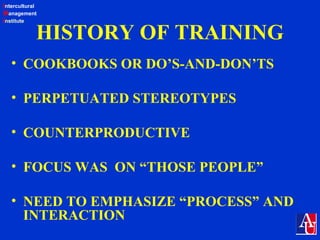
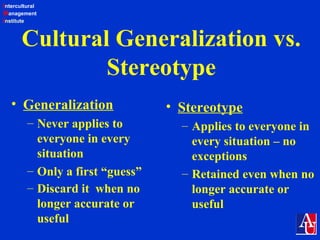
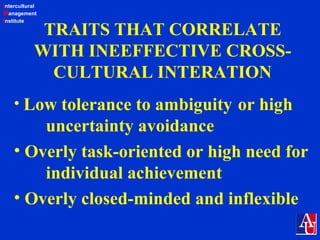
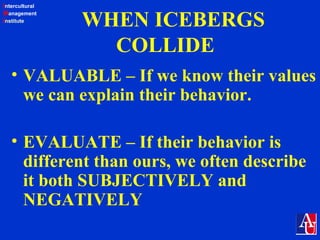
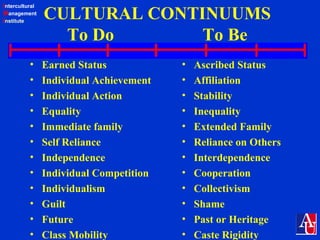
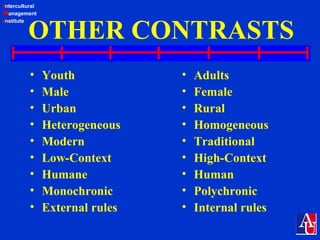
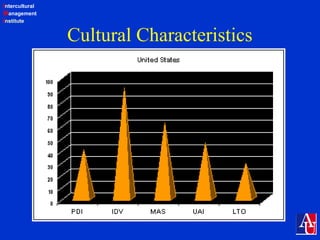
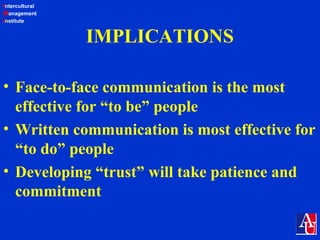
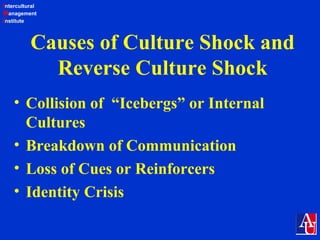
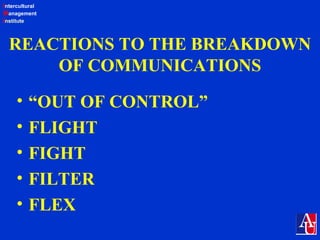
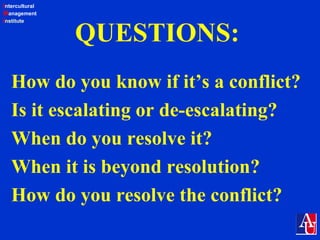
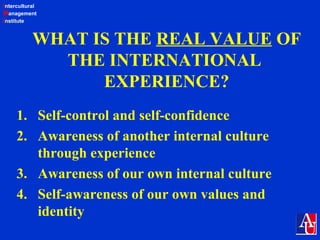
This document discusses overcoming barriers to cross-cultural communication. It notes that past training approaches perpetuated stereotypes and focused too much on cultural differences rather than the interaction process. Effective cross-cultural interaction requires flexibility, an understanding of cultural generalizations versus stereotypes, and an awareness that cultures influence behaviors, beliefs, values and thought patterns. The document also outlines some common causes of culture shock when moving between cultural environments and strategies for managing cross-cultural conflicts.